|
By: Paul S Cilwa |
Posted: 3/24/2026 |
|
Page Views: 258 |
| Hashtags: #CosmicDistanceLadder #Parallax #CepheidVariables #Redshift #HubbleConstant #CosmicMicrowaveBackground #StellarEvolution #HertzsprungRussellDiagram #TypeIaSupernovae #AgeoftheUniverse |
| How astronomers measure the age of the universe and its celestial objects, from nearby stars to the edge of everything. |
| Estimated reading time: 8 minute(s) (1674 words) |
You can't carbon-date a galaxy. You can't dig a trench through a nebula
and count the layers. Instead, astronomers have built something called
the cosmic distance ladder—a chain of techniques, each one calibrated
against the last, that lets us measure distances and ages across scales
that make the human brain want to file a complaint.
How far away is that star, and why does it matter?
Distance and time are tangled together in astronomy in a way they aren't
on Earth. Light from the Sun takes about eight minutes to reach us. Light
from the nearest star beyond the Sun, Proxima Centauri, takes about four
years. Light from the Andromeda galaxy takes roughly 2.5 million years.
So when you look at Andromeda, you're seeing it as it was when our
ancestors were still figuring out stone tools.
This means every telescope is a time machine. The farther you look, the
further back in time you see. And if you can measure how far away
something is, you can say how long ago the light you're seeing was
emitted. Distance is dating.
The catch is that space doesn't come with mile markers. Nobody left a
tape measure between here and the Crab Nebula. So astronomers had to get
creative.
The first rung: parallax
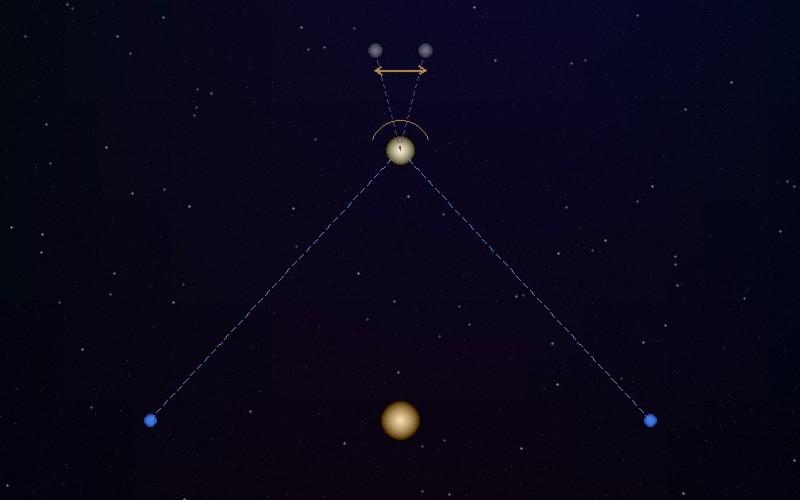
The most basic distance measurement is parallax—the same principle that
makes your thumb appear to jump when you look at it with one eye, then
the other. As Earth orbits the Sun, nearby stars appear to shift slightly
against the background of more distant ones. Measure that shift, and
simple geometry gives you the distance.
This works beautifully for stars within a few thousand light-years. The
European Space Agency's Gaia spacecraft has measured parallaxes for
nearly two billion stars with absurd precision—down to
millionths of an arcsecond. That's like measuring the width of a human
hair from a thousand kilometers away.
But parallax has a range limit. Beyond a few tens of thousands of
light-years, the shift becomes too tiny to measure reliably, even for
Gaia. You need a longer ruler.
Standard candles: stars that advertise their own brightness
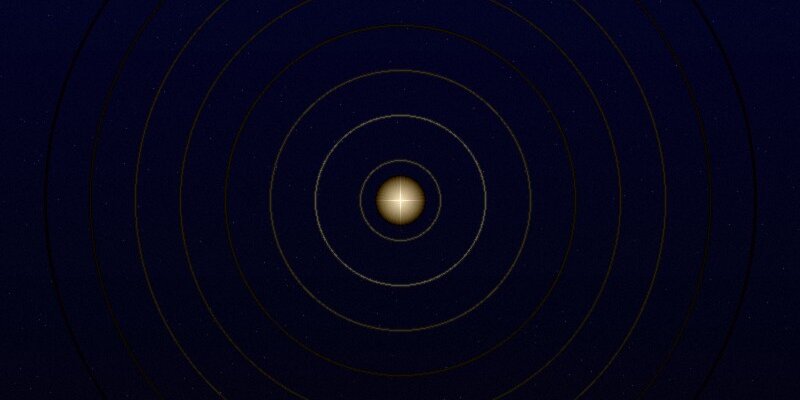
This is where it gets clever. Some stars are what astronomers call
"standard candles"—objects whose true brightness (luminosity) can be
figured out independently. If you know how bright something actually is
and you measure how bright it appears, the difference tells you
how far away it is. Same principle as seeing headlights on a dark
highway—dim headlights are farther away.
The first major standard candle was the Cepheid variable. These are
pulsating stars whose brightness rises and falls on a regular cycle.
In 1908, Henrietta Swan Leavitt—a woman working as a "computer" at
Harvard Observatory, paid 25 cents an hour to catalog
photographic plates—discovered that brighter Cepheids pulsate more
slowly. Measure the period, and you know the luminosity. Measure the
apparent brightness, and you know the distance.
Leavitt's discovery was one of the most important in all of astronomy.
It gave Edwin Hubble the tool he needed to prove, in 1924, that the
Andromeda "nebula" was actually a separate galaxy far outside our own
Milky Way. The universe suddenly got very, very large.
Type Ia supernovae: the universe's brightest yardstick
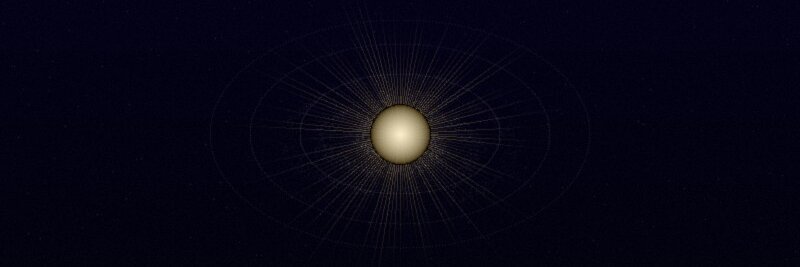
Cepheids work out to maybe 100 million light-years. Beyond that, even
the brightest pulsating star is too faint to pick out. So astronomers
needed an even brighter standard candle. They found one in a particular
type of exploding star.
A Type Ia supernova happens when a white dwarf—the dense remnant of a
dead star—accumulates enough material from a companion star to cross a
critical mass threshold (the Chandrasekhar limit, about 1.4 times the
mass of our Sun). The result is a thermonuclear explosion so uniform
that each one produces roughly the same peak brightness. One event,
briefly outshining an entire galaxy.
Because they're so bright, Type Ia supernovae can be spotted billions of
light-years away. And because they're roughly the same brightness every
time, they serve as distance markers across truly cosmic scales. It was
Type Ia supernovae that led to the 1998 discovery that the expansion of
the universe is accelerating—a finding so unexpected it won the Nobel
Prize in 2011.
Redshift: the universe is stretching
Here's where distance and age get truly entangled. In 1929, Edwin Hubble
(using Cepheid distances and the earlier work of Vesto Slipher on galaxy
spectra) showed that almost every galaxy is moving away from us—and the
farther away it is, the faster it's receding. This isn't because
galaxies are flying through space like shrapnel. Space itself is
expanding, carrying the galaxies with it.
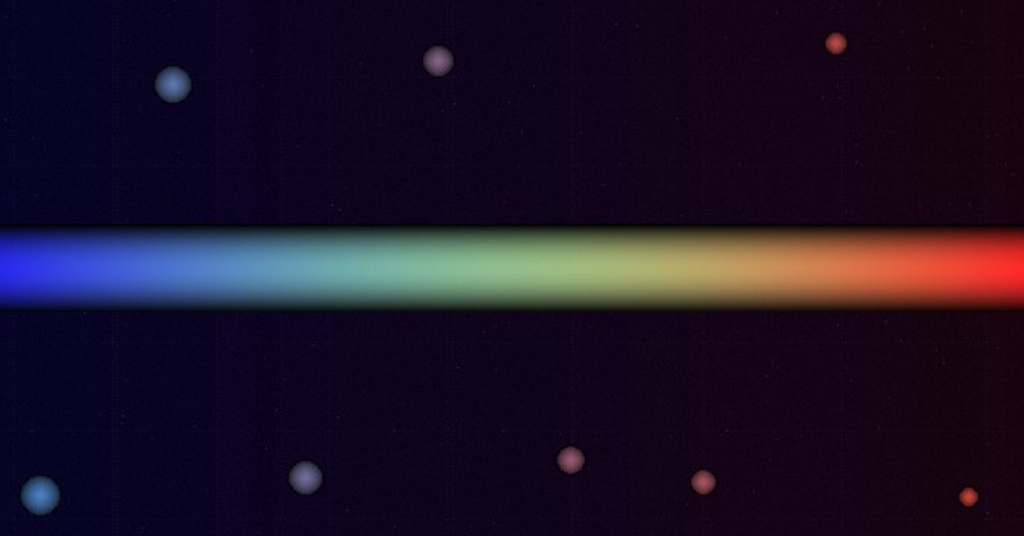
We detect this expansion through redshift. Light from a receding object
gets stretched to longer (redder) wavelengths, just as the pitch of a
siren drops as an ambulance drives away. The more redshifted a galaxy's
light, the farther away it is and the further back in time we're
looking.
The relationship between distance and recession speed is captured by the
Hubble constant. If you know the Hubble constant and you run the
expansion backward, you get an estimate of when everything was in the
same place—the Big Bang. Current measurements put that at about 13.8
billion years ago, though the exact value of the Hubble constant is
still being argued about with the kind of intensity usually reserved for
sports rivalries.
The cosmic microwave background: the baby picture
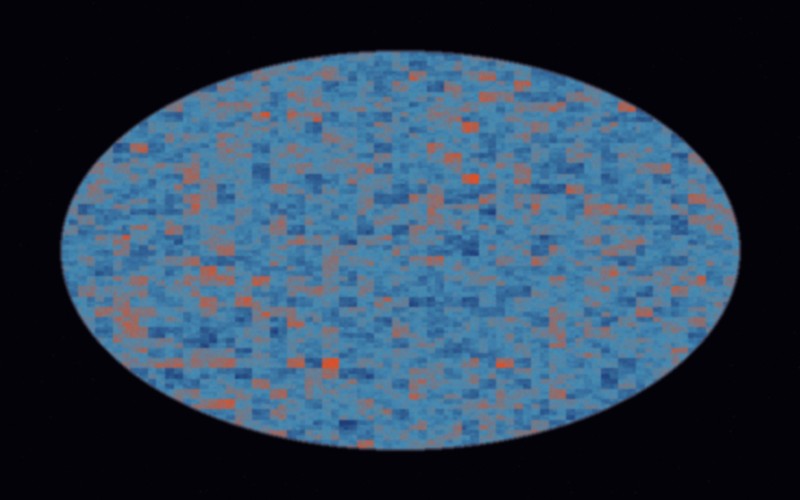
The most direct evidence for the age of the universe comes from the
cosmic microwave background (CMB)—a faint glow of microwave radiation
that fills all of space. It's the afterglow of the moment, about 380,000
years after the Big Bang, when the universe cooled enough for atoms to
form and light to travel freely for the first time.
The CMB is astonishingly uniform—the same temperature in every
direction, to about one part in 100,000. But those tiny variations
encode a staggering amount of information. By analyzing the pattern of
hot and cold spots (their sizes, spacing, and statistical properties),
cosmologists can extract the age, composition, geometry, and expansion
history of the universe. It's like reading the medical chart of a
newborn and deducing the patient's entire life expectancy.
The Planck satellite, which mapped the CMB with extraordinary precision,
gave us the current best estimate: 13.797 billion years, plus or minus
about 20 million. That's a margin of error of roughly 0.15%. For
something that happened before stars existed, that's not bad.
How old is that star?
The universe has an age. But individual stars have their own birthdays,
and those are estimated differently. The main tool is stellar evolution
theory—our understanding of how stars are born, burn through their fuel,
and die.
A star's mass determines almost everything about its life. Heavy stars
burn hot and blue and die young—sometimes in just a few million years.
Lightweight stars burn cool and red and can last hundreds of billions of
years. Our Sun, a middle-of-the-road yellow dwarf, is about 4.6 billion
years old and roughly halfway through its hydrogen-burning phase.
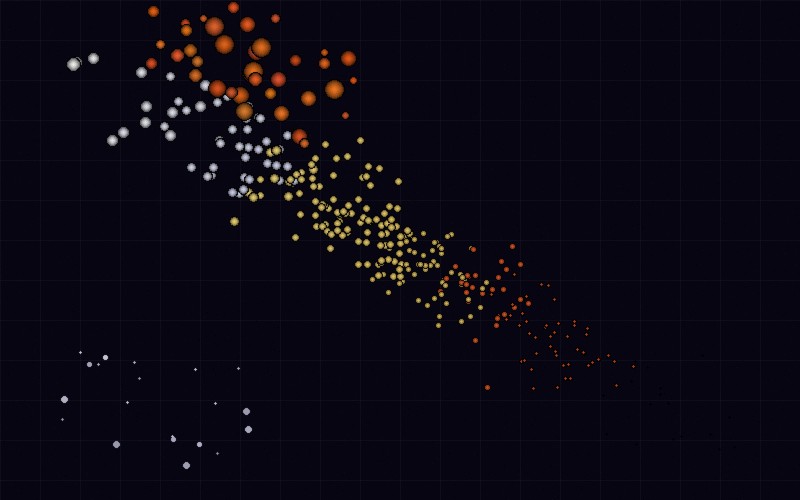
Astronomers plot stars on the Hertzsprung-Russell diagram, which maps
brightness against temperature. A cluster of stars born at the same time
will gradually peel off the main sequence as the heaviest members burn
out first. The "turnoff point"—where the cluster's stars start leaving
the main sequence—tells you the age. It's like estimating how long a
candle has been burning by measuring how much is left.
The oldest known stars in our galaxy are in globular clusters—dense,
ancient balls of stars that orbit the Milky Way. Some of these clusters
appear to be about 12 to 13 billion years old, which is reassuringly
close to (but safely younger than) the age of the universe itself.
The tension: not everyone agrees on the numbers
One of the most active debates in modern cosmology is the "Hubble
tension." Different methods of measuring the Hubble constant give
slightly different answers. Measurements based on the CMB (looking at
the early universe) give a lower value than measurements based on
Cepheids and supernovae (looking at the nearby universe). The
discrepancy is small but stubbornly persistent, and nobody is quite sure
whether it's a measurement problem, a calibration issue, or a hint that
our model of the universe is missing something.
This is the kind of disagreement that makes science exciting rather than
broken. When two reliable methods give different answers, something
interesting is hiding in the gap.
From thumbs to the edge of everything
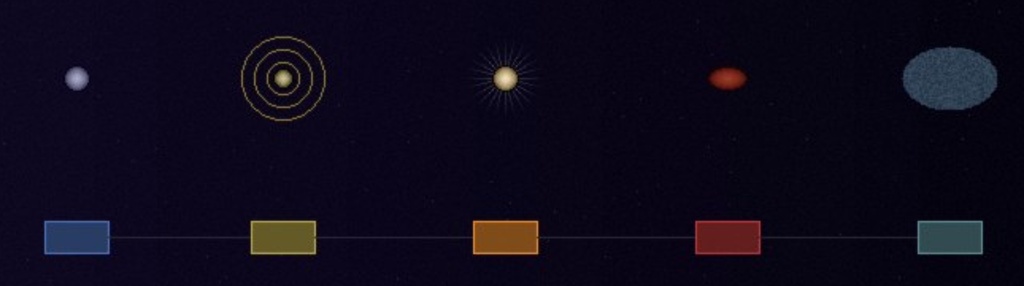
What's remarkable about the whole enterprise is the chain of trust. You
measure a few nearby stars with parallax. You use those to calibrate
Cepheid distances. You use Cepheids to calibrate supernovae. You use
supernovae to measure the expansion rate. You check everything against
the CMB. Each rung depends on the one below it, and each one has been
tested, refined, cross-checked, and argued about for decades.
It's not a single measurement. It's an interlocking web of methods that
all have to agree—or explain why they don't. And that web stretches
from a thumb held at arm's length all the way to the faint afterglow of
the birth of everything.
We can't visit these places. We can't touch these objects. We can only
catch the light they sent our way and read the story it tells. And yet,
from nothing more than photons and math, we've built a timeline of the
cosmos that is precise to a fraction of a percent. If that isn't the
most audacious act of detective work in human history, I'd like to know
what is.