|
By: Paul S. Cilwa |
Posted: 6/3/2026 |
|
Page Views: 25 |
| Hashtags: #HistoricalFiction #LucianOfSamosata #Alexandria #Nile #Krocodilopolis |
| An investigation into grain theft leads to a crocodile's judgment. |
| Estimated reading time: 28 minute(s) (6478 words) |
"As I implied last night, I need your help," Celer announced. "As someone who sees things. Or through
things. Here's the situation."
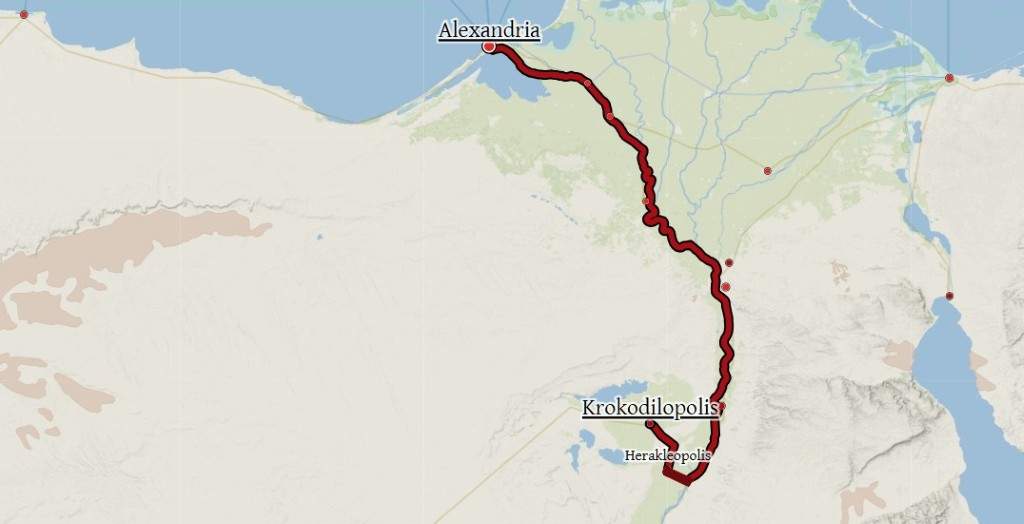
The Arsinoite district—Egypt's richest grain region—had submitted its taxes on schedule. Celer
had received them personally. But the amount that reached Rome was consistently short. Not by
much. Just enough that the discrepancies would likely hide themselves in the chaos of imperial accounting.
But when the auditors came asking questions, the numbers didn't match. Somewhere between
Krocodilopolis and Rome, grain was vanishing.
"The district administrator is being blamed," Celer explained as they walked. "Rome
sees only the gap. If I investigate openly, he'll panic and flee, which looks like guilt, which will
start a rebellion. If I do nothing, Rome will descend upon him and he'll be
summarily executed, and that will trigger a rebellion.
I'm holding a wolf's ears here—I can't let go, and I can't keep holding on."
"I acknowledge your problem, but what can I do about it?" Lucian asked.
"Someone in the Prefect's office is involved in this. Someone with access to
shipment records, someone with authority. I need an outsider who can ask questions without
triggering alarms, and who can add those answers up to obtain a meaningful sum.
I need you to go to Krocodilopolis, verify what was actually sent,
and trace where the missing grain went."
Demetrios, ever practical, asked, "So, how do we get to this Krocodilopolis place?"
Celer paused. "It's up the Nile, naturally, as everything is.
I'm sending you with someone who is also concerned. Gaius Proculus. He's a grain
inspector, knows the trade intimately. He'll help you navigate the records.
If you can pack lightly for the trip, meet me at the docks at dawn."
The River
Their travelings packs loaded, and the horses having been given to the care of a reputable
stable, Lucian, Demetrios and Veritas arrived at the river docks as Apollo's Chariot had barely kissed the horizon on
its daily journey across the sky. Celer's grain inspector spotted them first and
made his way to them to introduce himself.
The moment Veritas saw him, he hid behind Lucian's head while screaming until
Lucian finally had to hand Veritas over to Demetrios just to be able to hear what the man
had to say.
Gaius Proculus was a man of perhaps fifty, with the weathered face of someone who'd spent
decades around sun and dust. He was helpful, knowledgeable, and possessed of a nervous energy
that he tried to hide beneath professional courtesy. His hands moved frequently, as if they needed
something to do. When he thought no one was watching, he looked as if he were working sums
in his head.
They hired a modest riverboat and departed Alexandria at dawn. As the city receded, Lucian
stood at the bow and watched the delta flatten into agricultural plain. The Nile's rhythm took
over—the steady push of the southward wind in the sails against the north-flowing current,
the way the river moved through the land like something alive and patient. It was the opposite of the hurried chaos of
the harbor. Here, the river set the pace, and everything else adapted.
Demetrios had brought papyrus, ink, wax tablets, and stylus. The tablets were used for temporary
notes; important conclusions were then copied to the more lasting papyrus.
He transcribed what Proculus told them about
grain weights, measurements, transit times. Veritas climbed the mast, screeched at cormorants,
and stole bread from the ship's stores.
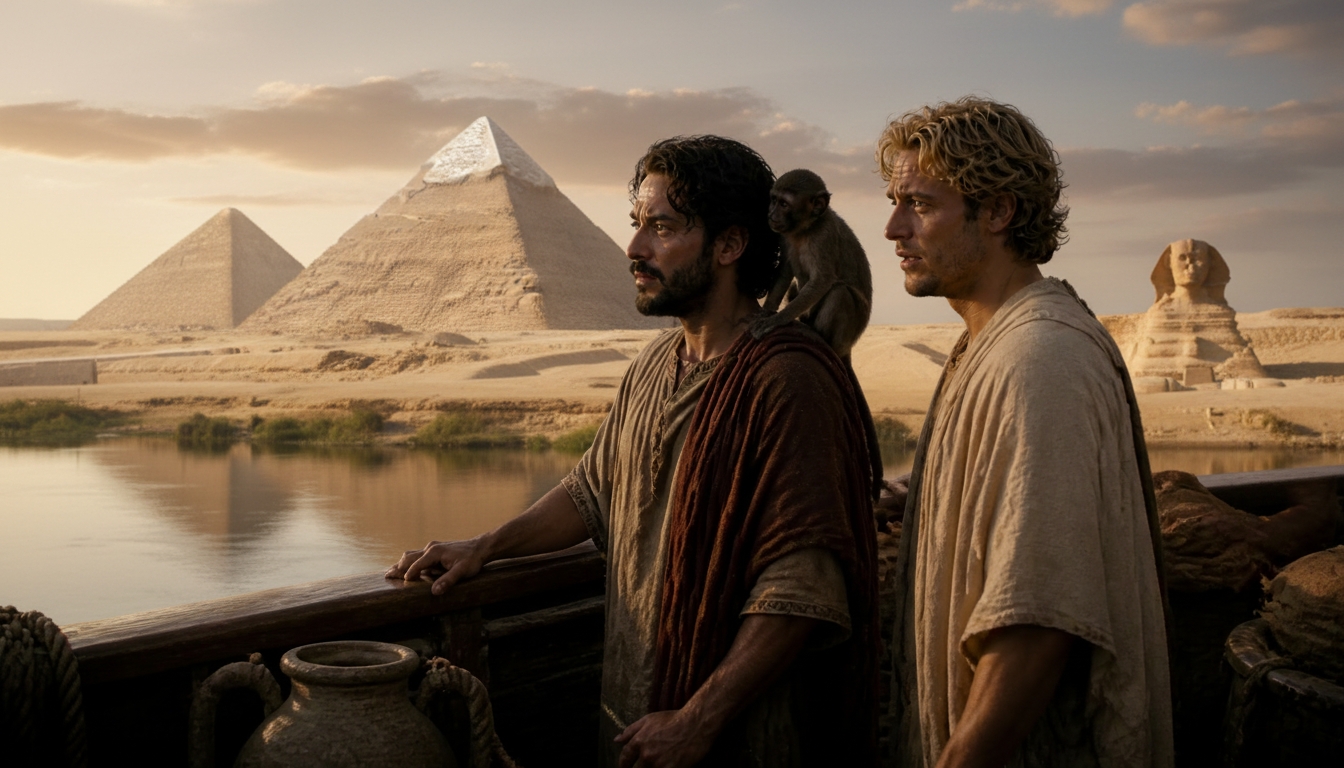
On the second day, they saw the Pyramids! Lucian had heard about them—every educated person
had—but hearing and seeing were different things entirely. They rose from the desert with mathematical
certainty, as if the dead had decided to reshape eternity into stone. Three massive tombs, or so
Herodotus claimed. Thousands of years old. Still standing, still perfect, still utterly inexplicable.
The boat slowed as they approached. The crew fell silent. Even the sounds of labor—the oars, the
sailors' calls—seemed quieter in the presence of those monuments.
Demetrios stood at the rail, staring. "How old are they?" he asked.
"Ancient," Lucian said. "As old as Egypt, according to Herodotus."
"I thought we weren't listening to Herodotus anymore."
Lucian shrugged. "I've never read another explanation. Everyone else repeats his."
"Who built them?"
Lucian looked at the largest pyramid, trying to imagine the ambition required to conceive of such a
thing, much less execute it. "If you go by Herodotus, three ancient Egyptian kings," he said.
"But, the last I heard, no explorations of its interior have turned up a body. Or a mummy.
Or even a mummified monkey."
"How is that possible?" Demetrios asked. "Someone built these. Someone organized tens of thousands
of workers, quarried millions of blocks, moved them, stacked them. Surely there's a record. Surely
someone wrote down who did this."
"Maybe they did," Lucian said. "Maybe the records were destroyed. Or maybe the people who built
them thought they were so obviously great, so obviously eternal, that there was no need to explain.
They are the explanation. They stand here and prove that someone, once, had the power to create
mountains."
The river carried them closer. The structures were coated with a white alabaster surface
that only extended downward about a third of the way, giving the impression of a snow-covered
Alp. Below that, even at this distance, Lucian could see the precision of the stonework—blocks so perfectly
fitted that he'd heard a blade couldn't pass between them. This wasn't the work of a casual ambition. This was
the work of obsession. Of a civilization organized entirely around the idea of death, of preservation,
of permanence.
"How long will they last?" Demetrios wondered.
"Forever, probably," Lucian said. "Certainly long after we're gone. Long after Rome has fallen, long
after even Egypt is nothing but a memory. These things will still be standing, still perfect, still telling
the world that someone once had power enough to build monuments like this."
He chuckled. "Even if we aren't sure who."
"That's terrifying," Demetrios said. "Not the pyramids themselves. The fact that we don't know who built them.
That someone did something so enormous, so permanent, and now we don't even know their names.
That anyone…that mighty…could disappear."
Lucian hadn't thought of it that way. But Demetrios was right. The pyramids were monuments to
ambition—as well as to ambition's futility. Whoever built them had been completely forgotten. Their
accomplishment remained, perfect and eternal. But they, themselves, were dust. Even if Herodotus' pharaohs' names
were accurate, who now knew a thing about them? Their deeds? The reason so many resources could
be devoted to their monument? All that was lost, leaving just the silent, inscrutable stone to speak for them.
Then the Sphinx lay ahead, its human head strange and damaged. One ear was gone. The nose—completely
gone, the face left blank and noseless in the center. Lucian wondered who had done that damage,
and when, and why. Some act of war or vandalism, some moment when someone had decided even stone
should be destroyed.
"No one even knows for sure whose face that was," Lucian remarked.
Proculus stood beside him, unusually quiet. When Lucian glanced over, the grain inspector was
watching the damaged monument with an intensity that seemed personal. "Whoever it was, someone
must've hated him a lot to go to such lengths to deface even his stone images after his death," Proculus said.
Crocodile
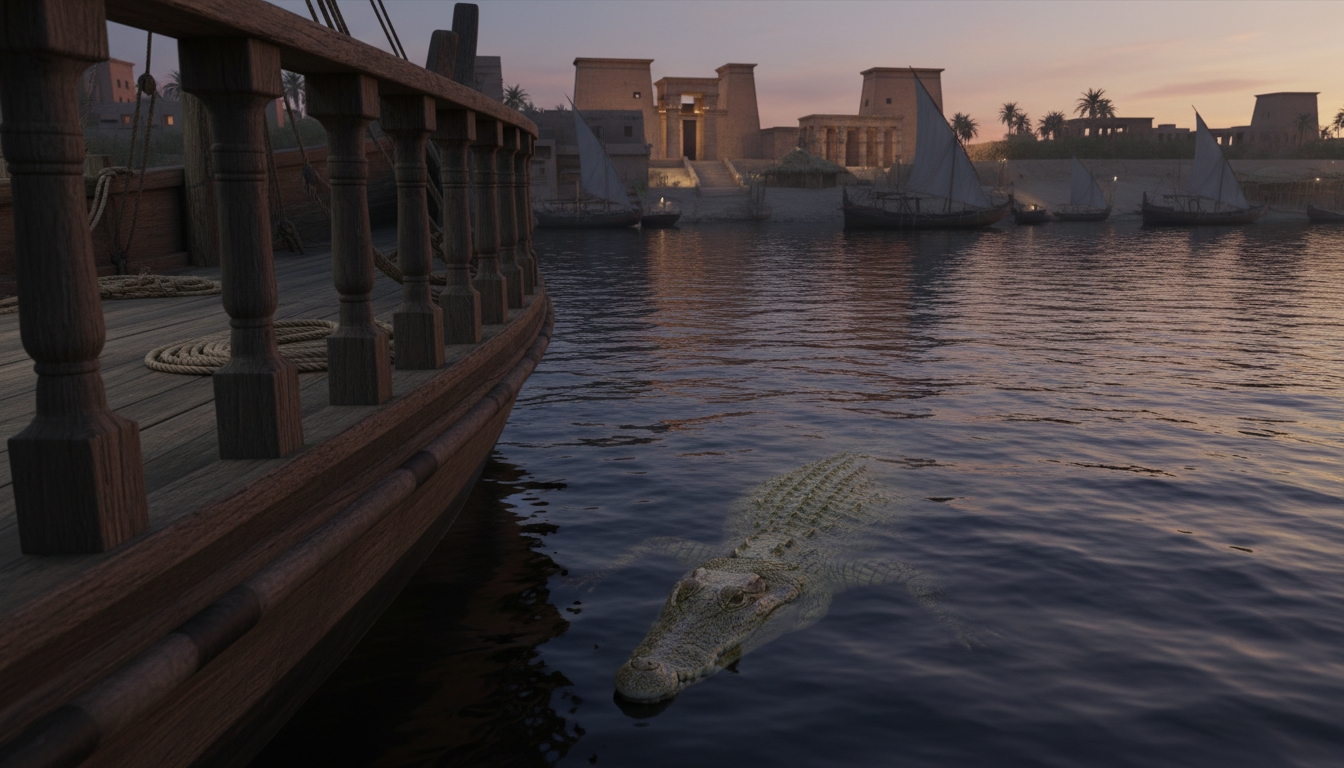
On the third day, as they approached Krocodilopolis, the boatmen became cautious. "Crocodiles,"
one said simply. "The god's guardians. They hunt here."
Lucian leaned over the rail, suddenly alert. He'd heard of crocodiles his entire life—stories from
merchants, descriptions in old texts, tales from travelers. But he'd never seen one. The Nile was
supposed to be full of them, but so far he'd seen nothing.
Demetrios joined him at the rail, eyes scanning the muddy water. "How big are they?" he asked,
with the tone of someone asking about a curiosity, not a threat.
"Big enough," one of the boatmen said. "But they mostly leave you alone if you leave them alone."
Veritas scampered to the rail beside them, chattering with excitement. He'd spotted something in the
water—a ripple, a shape. The monkey pointed, screeching.
"There," Lucian said. "Is that one?"
The shape was long, dark, moving just beneath the surface. It looked like a floating log. Lucian
watched it for a moment, unimpressed. "It doesn't seem very threatening," he remarked.
Proculus approached to join them, and Veritas dropped off the rail at once, scrambling around behind
Demetrios to put a body between himself and the grain inspector.
Proculus, either not noticing or long used to it, leaned on the rail. "You want to know about crocodiles?"
he asked. "I'll tell you. They're patient. Endlessly
patient. They'll wait in the water for hours, days even, without moving. Just watching. Just waiting
for something tasty to come close enough." He smiled, and there was something unsettling in that smile.
"And when they strike, it's so fast you can't see it. One moment you're drinking at the water's
edge. The next moment you're being dragged down, your legs flailing, your voice screaming, and then—" He
made a dismissive gesture. "Gone. Beneath the water. Just like that."
"But the boatman said they leave you alone if you leave them alone," Demetrios said.
"That's true," Proculus said. "As long as you respect them. As long as you understand what they are.
Dreadful creatures, with no honor, no mercy. They kill because that's what they do. Not out of anger
or even hunger, necessarily. Just because they're able to kill, and something came within range."
He gripped the rail, his knuckles white. "The trick is to remember that. To never forget what you're
dealing with. Never turn your back. Never assume you're safe."
Another shape moved in the water. This one was larger. Veritas chittered a warning and retreated—not
by the shortest path, but in a wide half-circle that kept Proculus on the far side of him the whole way.
"Wise monkey," Proculus said, watching the monkey settle as far from him as the deck allowed. "He
understands danger when he sees it." Something flickered behind his eyes as he said it—there and
gone before Lucian could put a name to it.
Walking In Memphis
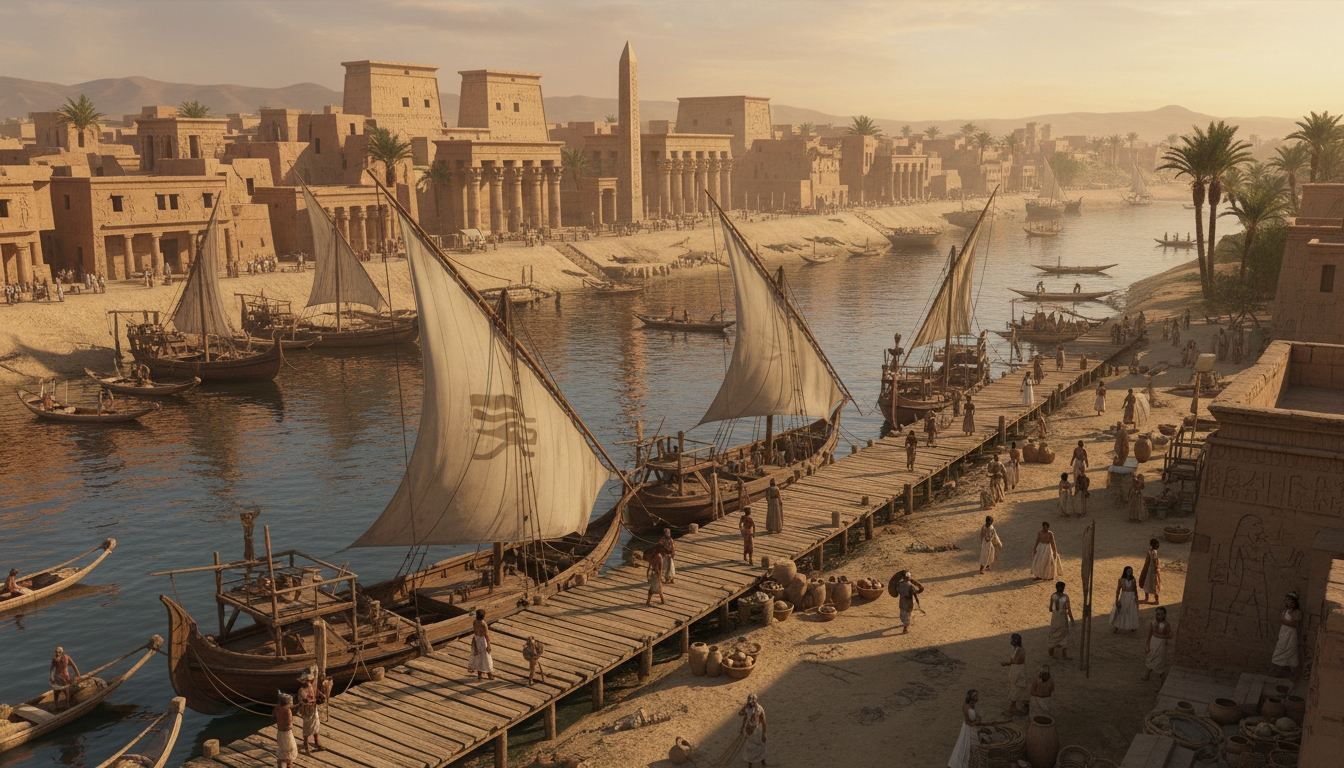
They stopped in Memphis the next evening. It was a normal stop—supplies, crew changes, the routine business
of river travel. Demetrios went to arrange fresh water while Lucian wandered the docks with Proculus,
who'd offered to point out where the better produce markets were.
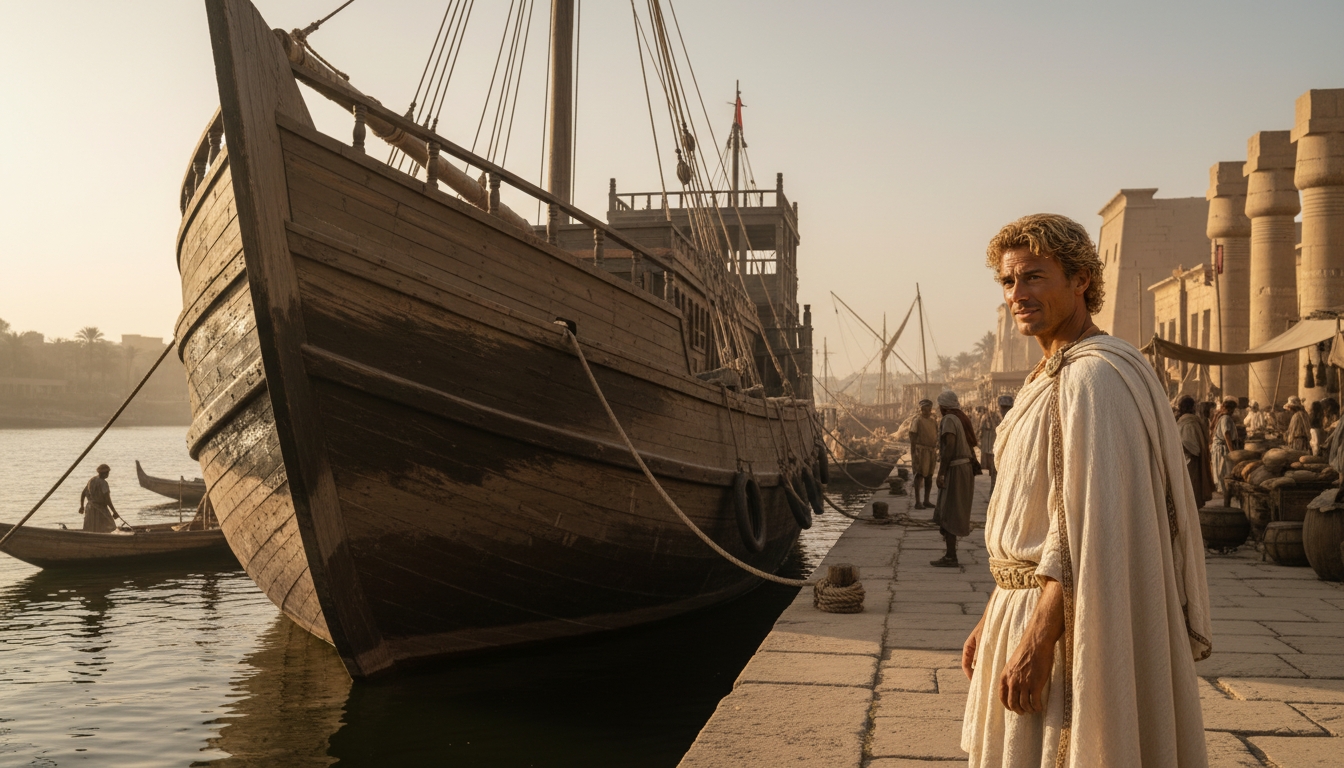
Lucian noticed a grain ship, clearly part of a merchant fleet, with its hull glistening wet above the
waterline. Unusual. The wood was dark with recent water, as if cargo had been removed in the night.
He watched for a moment, idly curious. Ships unloaded cargo from dawn to dusk but rarely did they
try to work in the dark, especially in the presence of the crocodiles every sailor knew about.
"Is Memphis a big grain market?" Lucian asked, nodding toward the wet-hulled ship. "That one looks like
it was unloaded last night."
Proculus barely glanced at it. "Memphis? No, no. A little local trade, that's all—temple stores,
household granaries. The real grain goes straight through to Alexandria and on to Rome. Nothing stops
here but the boats themselves." He said it smoothly, the way a man recites something he's said before.
"You'll see plenty of unloading along the way. Crews work odd hours. Current's easier at night,
sometimes, depending on the wind."
"At night? With crocodiles in the water?"
"They keep torches," Proculus said, a beat too quickly. Then, as if catching himself, he added a small
laugh and clapped Lucian on the shoulder. "You've got a sailor's curiosity, I'll say that. Come, the
fish market's this way—far more interesting than wet planks."
He steered them off toward the stalls, but Lucian noticed, just before they turned, that Proculus
glanced back once at the ship—and that his hand, resting on the strap of his satchel, hadn't
stopped moving the whole time he'd been talking.
Krocodilopolis
The capital of the Arsinoite district was exactly what Lucian expected: orderly, efficient, the work of
an administrator who'd spent decades managing complex systems. The landscape had
transformed entirely—the river narrowed, the green deepened, irrigation channels crossed the land
like veins. This was where Egypt's wealth was grown.
The administrator, a man named Khenti, received them with the brisk courtesy of someone glad for
capable help. He was perhaps sixty, with a line in his face for each one of the many impossible
problems he'd had to solve. If Celer's letter had told him Rome considered the shortfall serious
enough to send an investigator, it apparently hadn't told him that he himself was the one Rome
suspected of causing it.
"Celer sent you," Khenti said, ushering them into his office. "Good. Three months now, and I still
can't make the numbers explain themselves. I welcome anyone who can."
Veritas, who had ridden into the city on Demetrios's shoulder, leaped across to Khenti's the moment
the administrator turned to lead them inside. Khenti laughed, startled, and let the monkey settle there.
"To verify the records," Lucian said. "We are trying to understand what happened to the grain shipments
after they leave you."
Khenti's expression shifted—something between relief and the wariness of a man who'd learned not
to trust good news too quickly. "I have sent accurate reports for forty years," he said. "Forty years
in this position. Never a discrepancy. Never a shortage. The Arsinoite pays what Rome demands, always.
Whatever has gone wrong, I promise you it did not start at my desk."
"I have to go by facts, not promises," Lucian said. "I'm sure you understand.
I'll examine your records. That will tell me what we need to know."
Over the next hour, Lucian and Khenti walked through the collection process, and the places where it happened.
The administrator was methodical, precise. He showed them the granaries—massive buildings of stone and wood, designed
for maximum capacity. He showed them the scales used to weigh grain, the measures used to assess
volume. Everything was marked with official seals. Everything was certified.
"This is how it works," Khenti explained. "Grain comes in from the harvest. My people weigh
it, measure it, document it. Once it's certified, it goes to the dock. The merchant receives it
there, with official paperwork confirming the amount—and a copy goes ahead to the Prefect's
office in Alexandria, so Rome has its own record of what was loaded, independent of whatever the
merchant later reports. From the dock onward, the merchant is responsible."
"Which merchant handles the shipments?" Lucian asked.
Khenti hesitated. "It was Sextus Apollonius for many years—he held the contract for the
tax-grain shipping. Reliable, honest. Then three years ago, the Prefect's office recommended a
new company for the contract, Marcellus Trading Company. The Prefect said they could offer
better rates, so I approved it."
Proculus, standing nearby, cleared his throat. "The measurement standards vary," he said.
"Perhaps there was a misunderstanding about how grain is calculated in transit. Weight versus
volume. Different water content can affect the numbers significantly. The grain swells slightly
in humid conditions. It loses weight in dry conditions. These are natural variations, not theft."
Khenti's face tightened. "The amounts are certified official," he said firmly. "Not estimates. Not
approximations. Certified exact. The merchant receives sealed documentation. The amount that leaves
this dock is exactly the amount listed on that documentation."
Lucian watched Proculus. The grain inspector nodded, accepting this, but his eyes had gone flat.
Whatever he was thinking, he was hiding it well.
Lucian considered the man beside him instead—the seals checked twice without being asked, the
genuine bafflement whenever a number didn't behave, the monkey now dozing contentedly on his shoulder.
None of it fit a thief.
"I don't think it's you," Lucian said.
Khenti went still. "I beg your pardon?"
"You were told there's a shortfall. I don't think Celer told you that Rome considers you the
likeliest explanation for it. I expect he was trying to spare you that, in case it turned out to be
unfounded. I don't believe it is unfounded—I believe it's wrong. A man hiding theft this massive
doesn't keep records this clean. He buries the gaps. You've shown me every seam in this system
without once flinching."
Something in Khenti's shoulders came down, as if a weight he hadn't let himself name had finally been
set on the ground. "Then—you'll help me prove it?"
"I intend to. But I'll need everything. Not just what you think I should see.
Because, however this is happening, it's a clever new scheme or it would already have
been caught and remedied."
"Whatever you need," Khenti said. "Ask me anything."
The Records
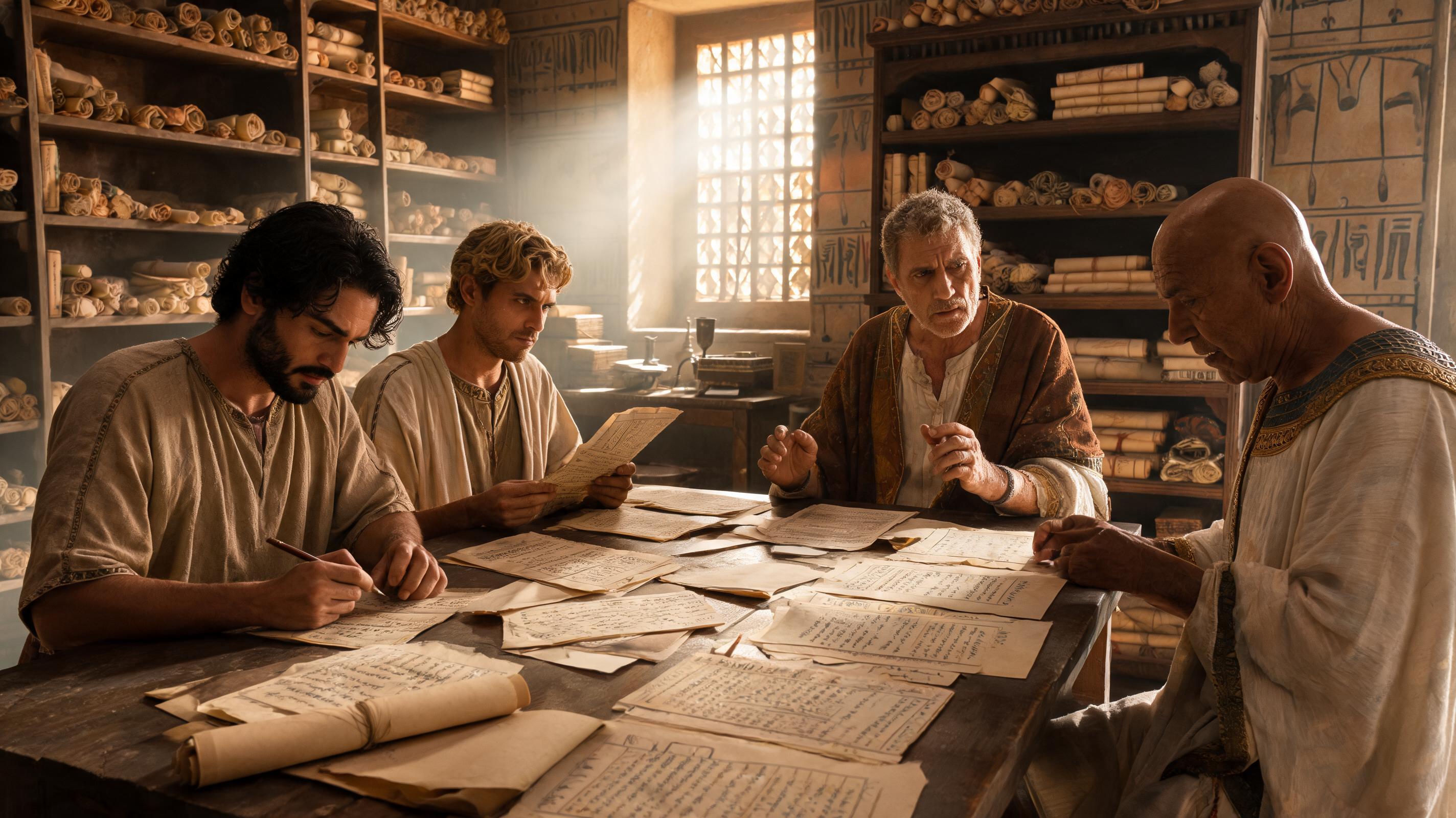
The archive occupied an entire building. Rows of papyri, carefully organized, documenting every
grain shipment for the past five years. Lucian and Demetrios spent the first full day simply
reading, learning the system. Each shipment carried two figures: the weight Khenti's own clerks
certified at the dock when the grain was loaded, sealed before any merchant touched it, and the
figure that came back later in a confirmation letter from the Prefect's office in Alexandria,
crediting the district with whatever the merchant claimed to have delivered. Under an honest
arrangement, the two were simply the same number, twice.
Proculus hovered nearby, offering commentary. "You see how regular this is?" he said. "Nothing
suspicious. Grain comes in, grain goes out. The system works exactly as it's supposed to."
Lucian asked Khenti to bring both sets of books for the last five years—the district's own
dock certifications, and the confirmation letters that had come back from Alexandria.
That's when the pattern emerged. The documents were spread across the table like a history written in ink.
"Sextus Apollonius," Lucian said, reading the names. "Sextus Apollonius, Sextus Apollonius,
Sextus Apollonius.…and then?"
"Marcellus Trading Company," Khenti said quietly.
"From here on, it's all Marcellus?"
"Yes.…" Khenti's voice trailed off. He understood what Lucian was seeing.
Proculus interjected quickly: "A common arrangement. Merchants retire, new ones take over.
It's perfectly normal. Nothing suspicious about it. These things happen in business."
"Every merchant replaces their entire operation at once?" Lucian asked.
"Sometimes," Proculus said. But his jaw tightened.
Lucian spent the second day examining the amounts recorded. He asked Khenti for the historical
average—how much grain typically left the Arsinoite district in a year?
"Roughly 10,000 bushels," Khenti said. "Sometimes more in good years, less in poor ones. But
that's been the average over decades."
Lucian traced his finger down Khenti's own certifications first. They moved exactly as grain
should—up in a good season, down in a lean one, the same restless variation they'd shown
all through the Apollonius years. Khenti's people, at least, were still weighing honestly.
Then he laid the confirmation letters from Alexandria beside them. Under Apollonius, the two
columns had risen and fallen together, shipment for shipment, year for year. Under Marcellus,
Khenti's certified weights kept moving—but the credited amount didn't. The same number,
every single time, no matter what the district's own seals swore had gone aboard.
"That's odd," Lucian said.
"What's odd?" Proculus asked quickly.
"Your weights still vary, season to season," Lucian said to Khenti. "Exactly as they should.
But whatever Alexandria credits you with delivering doesn't move at all, not once in three years.
It's as if what leaves your dock stopped having anything to do with what gets counted at the
other end."
"That can't be," Khenti said. "I certified those loads myself. I watched the grain go aboard."
"I believe you," Lucian said. "Which means the grain matching your numbers really did leave here,
every time. Something happens to it afterward—before whoever's writing these confirmations
ever sees it."
"So the full weight really does leave Krocodilopolis," Demetrios said. "But somewhere before
anyone counts it again, some of it disappears—always exactly enough to land on whatever
number Marcellus had already decided to claim."
"Which means whoever's taking it knows in advance what number they need to hit," Lucian said.
"That's not a crew helping themselves to a sack or two along the way. That's arithmetic, planned
well before the grain ever reaches the boat."
"Then where does it actually go missing?"
"That's what we need to find out." Lucian asked Khenti a simple question. "These confirmation letters—do they
ever acknowledge receiving your certifications? Or do they only ever state what Marcellus
says it delivered?"
Khenti went through several, frowning harder with each one. "They only ever confirm Marcellus's
figure," he admitted slowly. "I assumed mine were simply filed without comment, once they arrived."
"Has anyone in Alexandria ever written back acknowledging that one of your copies arrived at all?"
Khenti searched again, and didn't find one. Whatever composure he'd been holding onto slipped. "No,"
he said. "I never thought to ask."
"Someone made sure you wouldn't need to," Lucian said. "Without your certification on file in
Alexandria, there's nothing in Rome to weigh Marcellus's claim against. Officially, the only
number that exists is theirs. Whatever they say they delivered is, as far as the Prefect's
office is concerned, the truth—and the gap between that and what a district this rich ought
to produce falls on whoever's left holding the dock seal. You."
"But I certified the grain left," Khenti protested. "I personally supervised it."
"You supervised the loading," Lucian said. "Under Apollonius and under Marcellus both. The
difference is that Apollonius's deliveries matched what you certified, every single time, and
somebody made sure Marcellus's never had to."
Khenti's face went pale. "I trusted that my word would carry as far as Rome. It seems it never
even left Alexandria."
The Revelation
That evening, Lucian went out alone to clear his head, leaving Demetrios hunched over their notes by
lamplight. He'd gone only a few streets before the feeling settled over him—that prickle at the
back of the neck that means eyes, somewhere behind. He paused at a stall, pretending interest in a
basket of dates, and caught, from the corner of his eye, a man across the street stopping too,
suddenly absorbed in a blank wall.
Lucian walked on, turning corners at random until the street narrowed between warehouses and the
lamps grew scarce. He ducked behind a stone column and waited, back pressed to the cold stone.
Footsteps followed—hesitant, the gait of a man who'd just lost sight of what he was chasing and
didn't want to admit it. The moment they drew level, Lucian sprang, caught a fistful of tunic, and
slammed the man back against the opposite wall, forearm across his throat.
"Who sent you?" Lucian demanded. "Why are you following me?"
The man—a weathered boatman of perhaps sixty, with the look of someone who'd carried a secret too
long and was tired of the weight—didn't fight back. He raised both hands, palms out, wheezing.
"No one sent me! I swear it! I only—I heard you've been asking questions. About Marcellus
Trading Company. I wasn't going to hurt you. I just—I might know something you'd be interested
in knowing as well."
Lucian held him a moment longer, reading the man's face for the lie and not finding one—only
fear, and underneath it, something almost like relief at having finally been caught. He eased his
arm back, though he kept his grip on the tunic.
"Then talk," Lucian said. "Here, or somewhere quieter. Your choice. But you talk now."
The boatman looked around at the empty street, then nodded toward a lit doorway further down the
lane. "There's a tavern. We should talk there. Not out here."
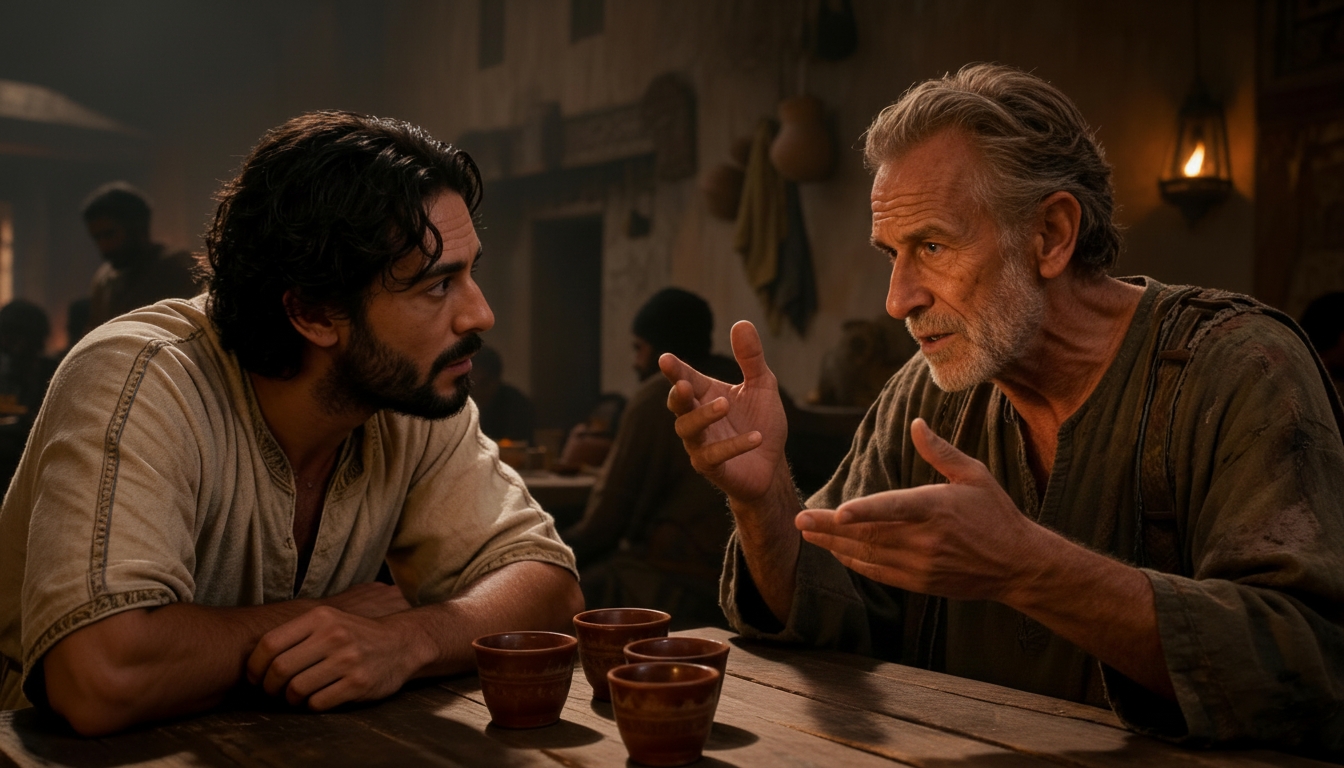
They found a quiet corner away from the other patrons. Lucian bought wine. The boatman's hands hadn't
quite stopped shaking as he drank—gathering courage, or perhaps just recovering from the wall.
"I hired on with them," the boatman finally grunted. "Three months ago. I was on a grain boat that stopped
in Memphis. Normal stop. But when we got there, the dock manager pulled me aside, me and two
other guys. They made us work all night, rearranging the cargo."
"Rearranging it? How?" Lucian asked.
"Empty boxes," the boatman said. "Wooden crates, empty, underneath the sacks of grain. We stacked
them so the hold looked full, but there was air underneath."
Lucian felt something click into place.
"Now, you understand, ships never set out less than full. It's too wasteful.So
when I asked what we were doing, what the purpose was," the boatman continued, "they fired me.
Threw me off the boat in Memphis! No coin, no recommendation. Just told me to keep my mouth shut,
if I knew what was good for me."
"But you've opened it for me," Lucian said.
"I have no idea what it means. I work with grain, I know boats,
I know ropes and knots. But I don't know why anyone would want to make a boat
look full when it's not. All I know is it was wrong, and they didn't
want me talking about it."
He finished his wine and stood. "That's all I can tell you. It's all I know, anyway. I hope it helps."
When he woke the next morning, Lucian still felt the wine from the night before. He made his way to find
Demetrios and report what he'd learned.
"Empty boxes under the grain," Demetrios said, considering this. "So the boat looks full when it's
being loaded or inspected, but it's actually carrying less."
"In Memphis," Lucian added. "They do it in Memphis, where I noticed that ship with the wet hull."
"Someone removes some of the grain in Memphis," Demetrios said, "and replaces it with empty boxes
so no one notices the weight difference."
"And they take exactly enough to match Marcellus's number," Lucian said. "Not a sack more, not
a sack less. The boat leaves here at Khenti's true weight and arrives in Alexandria at whatever
Marcellus already told Rome to expect. No discrepancy on their books. Just on Khenti's."
They sat in silence, each considering what this meant.
"We need to know who's selling the grain in Memphis," Lucian said. "And who in the Prefect's office
had the authority to make sure Khenti's own certifications never made it into the official file."
"I spent the afternoon on the docks," Demetrios said. "Watching the boats. The Marcellus boats
leave Krocodilopolis sitting low in the water—fully loaded."
Lucian sat back. "The grain is being removed in Memphis."
"But Memphis is just a normal stop," Demetrios said.
"Why would anyone remove imperial grain there?"
"Because someone is selling it there," Lucian explained excitedly. "On the black market. The boats sit
low leaving here, sit high continuing from Memphis. The difference between those two states is the
missing grain."
They sat in silence, each considering the implications.
"We need to confirm what actually happens in Memphis," Lucian said. "And we need to know who in
the Prefect's office has the authority to cover this up."
Bit In The Ass
The next morning, Lucian asked Khenti to meet with him, Demetrios, and Proculus in the administrator's
office. He laid out everything: the merchant switch from Apollonius to Marcellus, Marcellus's
delivery figures that never moved no matter what Khenti certified, the empty boxes beneath
the grain, the boats sitting high in the water after Memphis, and Khenti's own certifications
that had never once reached Alexandria's files.
"It appears this is a whole conspiracy involving the Prefect's office," Lucian said. "Someone with
authority recommended the switch to Marcellus. Someone with access made sure Khenti's certifications
never reached the official file. Someone high up had to have organized the whole thing."
He turned to Proculus. "So the question is: who, exactly, was it
who recommended the switch to Marcellus? Do you know?"
Proculus, face white, stood abruptly and ran out the door.
"Stop him!" Lucian shouted, but Proculus was already gone, his footsteps echoing down the corridor.
Lucian and Demetrios ran after him. Veritas, who'd been sitting peacefully on a shelf, suddenly awoke and
scampered after them with a screech of outrage at being left behind.
Proculus ran through the streets of Krocodilopolis, toward the docks. He knew where he was going—toward
the river, toward a boat, toward escape. But he was an old man, and Lucian was faster.
The space between them closed, Demetrios close behind.
As Proculus ran down a narrow street lined with low trees, Veritas—still catching up—leaped from a branch
directly onto the grain inspector's head. The monkey wrapped his arms around Proculus's face, screaming,
no, laughing triumphantly as he covered the man's eyes. It was the first time Veritas had ever
gone near the man.
Blind and off-balance, Proculus couldn't see the uneven cobblestones. His foot caught. He stumbled. He fell
hard, the wind knocked from his lungs, Veritas still clinging to his head.
By the time Lucian caught up, Proculus was sprawled on the ground, gasping for breath. Veritas scampered over
to Demetrios, and chittered with satisfaction at a job well done.
Proculus lay there for a moment, then tried to rise. His hand went to the knife at his belt. "If you're
going to turn me in," he said, his voice flat, "just do it. Because Rome will have me executed for
this. That's what happens to grain thieves. Execution. Probably a slow one. So if you're going to
take me in, understand what you're condemning me to."
He staggered to his feet and looked toward the docks. The river was close. The water gleamed in the morning
light. Proculus suddenly bolted from where he'd fallen. He ran toward the dock, toward the boats, toward the river. Lucian
ran after him. "Stop, man!" he called. "You won't make it! There's nowhere to go! You just need a good
advocate!"
But Proculus wasn't thinking clearly. Fear and desperation had stripped away reason. He needed escape, needed
water, needed a boat. He ran onto the dock where small boats were tied, looking frantically for one he
could steal, one he could get loose before anyone could stop him.
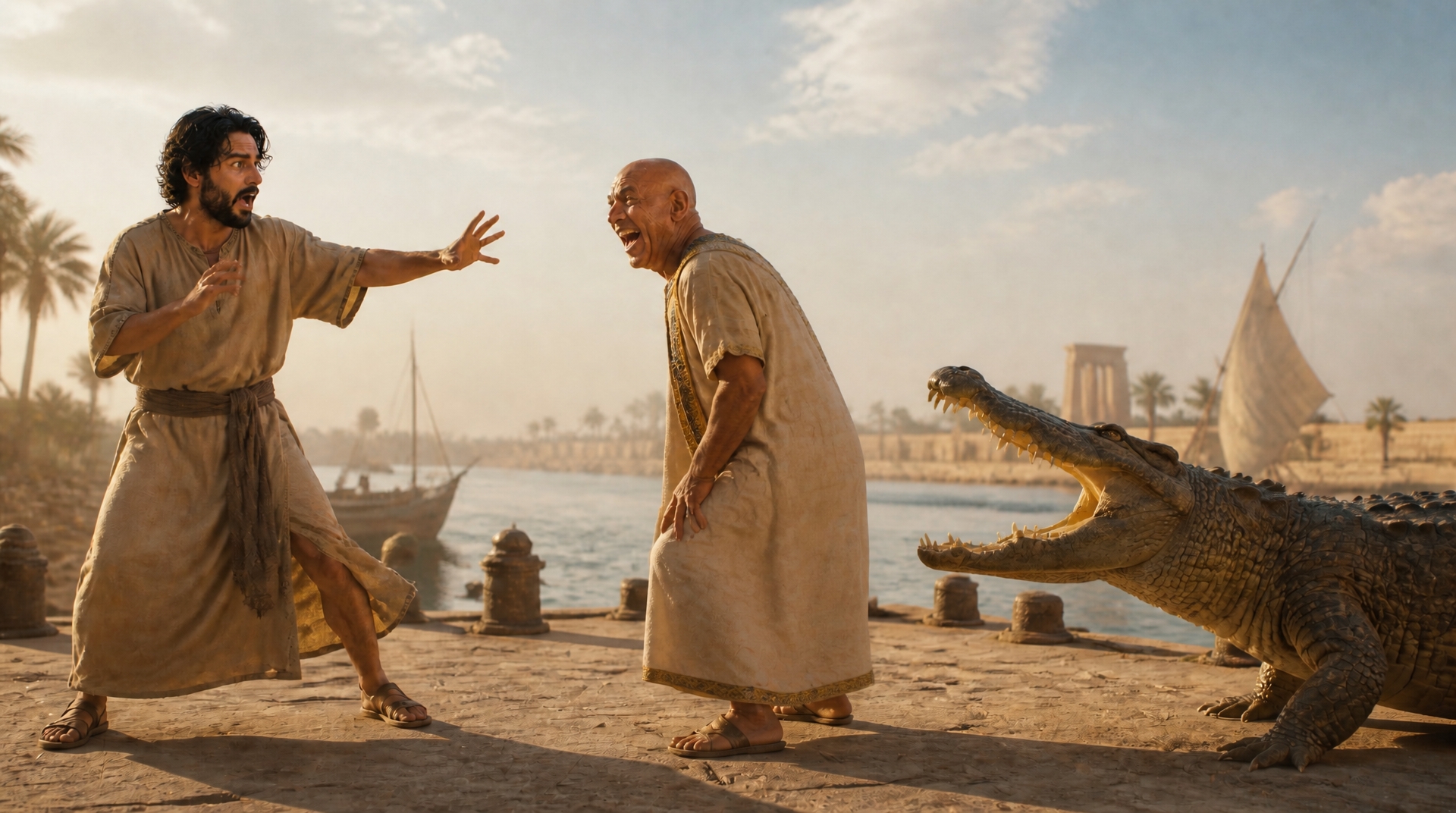
Lucian saw movement in the water at the dock's edge. "Watch out, man! Crocodile!" he
called out. "Come back from the water!"
Proculus laughed harshly—a sound of desperation and defiance. "I won't fall for that old trick!"
Lucian couldn't even think of anything to say. He just kept backing up toward solid land.
But Proculus, eyes fixed on the boats, on escape, on the desperate fantasy that he might somehow get away,
took another step forward. And another.
The crocodile leapt from the water like judgment. It had been waiting there, patient and hungry, watching the
dock as it watched everything. Its massive jaws opened and closed around Proculus's buttocks with the force
of stone gates slamming shut.
Proculus screamed—a shriek of pure primal terror. He thrashed, he fought, he tried to slash at the creature
with the knife still in his hand. But the crocodile was stronger, and older, and knew what it was doing. It
pulled him into the water with the weight of ancient certainty. In seconds, Proculus was gone. The Nile,
patient and hungry, had taken him.
Demetrios came running to the dock at the sound of the scream. He found Lucian standing at the edge, jaw agape, watching
the water settle over where a man had been.
"Was that—" Demetrios began.
"Yes," Lucian said, his jaw hanging in disbelief. "A real crocodile. He didn't believe me. I warned him."
Veritas arrived at the dock a moment later, out of breath, chittering angrily as if to say: I would have bitten
him again if he'd needed it.
That afternoon, Lucian and Demetrios returned to Khenti's office. The administrator was sitting at his desk,
looking smaller than he had when they'd arrived. The fear had worn him down.
When he saw them, he stood. "Did you catch him? Where is he?"
"Well," Lucian said, "yes, I caught him. But a crocodile got him right after."
"A crocodile?" Khenti asked, his voice barely a whisper. "But…where does that leave me?"
"In the clear," Lucian said. "We have proof that the grain left here complete and certified.
We have proof that it was diverted in Memphis. We have proof that empty boxes were used to hide the shortage.
And we have proof that someone in the Prefect's office organized it all; and at this point I'm
guessing it was Proculus, since he pretty much confessed before the crocodile bit his ass."
Khenti's face went pale, then flooded with relief.
He sat down heavily. "Then the charges against me…?"
"Will be dropped," Lucian said. "You did your job perfectly. Your records are impeccable. Your supervision
was thorough. This wasn't your failure. It was someone else's crime."
Khenti put his head in his hands. For a moment, Lucian thought he might cry. When he looked up, his eyes were wet.
"Three months of watching numbers I couldn't explain," Khenti said, "wondering what was wrong with my
own work. I didn't know, until you told me yourself, that Rome had already decided whose neck to put it
on. I won't forget that you chose to tell me the truth instead of just letting me wonder." He looked at
Lucian with something close to gratitude. "You saved my life."
"Celer asked me to find out what happened to the grain," Lucian said. "I did. The truth will protect you."
"But it's not all resolved," Demetrios said. "Is it? Marcellus Trading Company is still operating. Someone in
Alexandria is still running it. The conspiracy is bigger than just Proculus."
"Yes," Lucian said. "But that's not our job anymore. That's for the Prefect to uncover. We've done what we came
to do: we've verified what left here, and we've traced where it went. The rest is for Rome to handle."
Khenti nodded slowly, understanding. "The whole job isn't done," he said.
"No," Lucian agreed. "But your part of it is resolved. You're innocent. That's what matters."
The Return
Three days after returning to Alexandria, Syriacus summoned Lucian, Celer and Demetrios to his office.
The Prefect of Egypt was standing behind his desk when they entered,looking
older than when they'd left, as if the knowledge of the conspiracy had aged him.
"You found them," Syriacus said. It wasn't a question. "Celer has briefed me. Empty boxes
beneath the grain. Memphis as the diversion point. I've had men checking the records. It all aligns."
"What happens now?" Celer asked.
"We arrest who we can identify. Three officials have already been taken into custody. The Marcellus Trading
Company is being dissolved, records seized."
"Was Proculus truly behind it?" Demetrios asked. "Or just paid to look away?"
Syriacus's expression hardened. "Marcellus's books name him plainly. He'd been paid, quietly,
for three years—ever since he recommended them for the contract. Fifteen years inspecting
grain shipments for this office, and the Prefect trusted his judgment absolutely. No one ever
thought to inspect the inspector." He shook his head. "That's what makes a conspiracy work.
Not cunning. Trust, misused."
Syriacus was quiet a moment, looking at something past them, past the room itself. "I dined with
that man twice a month, for years," he said. "He asked after my children by name. Advised me on
matters I'd never have trusted to a stranger. I considered him a friend, not merely useful." His
jaw tightened. "I've been searching my memory since Celer's message arrived, for some sign I
should have caught. I find none. Perhaps that's the worst part of it—that he was good enough
at being trusted that even now, grieving him comes as naturally as being angry at him."
"Poor Proculus," was all Lucian could say.
"Dead," Syriacus said flatly. "Eaten by a crocodile. Appropriate, perhaps.
The Nile keeps its own justice. And Sobek the crocodile is the god of the Nile."
Demetrios shifted uncomfortably. "What about Khenti? Is he really cleared?"
"Cleared entirely," Syriacus said. "Your evidence proves the grain left his district complete
and certified. He's a victim here, not a perpetrator. Rome will know it. His name will be restored."
Lucian felt some of the weight lift. At least that much was resolved.
"The stolen grain itself," Syriacus continued, "already sold on black markets. We can't recover
it. But the operation is exposed, and that's what matters. Rome takes grain theft seriously.
Taxation is inevitable; and if one attempts to cheat, death is also inevitable. The Marcellus
Trading Company is finished."
He gestured to them. "You've done what was asked. You verified what left Krocodilopolis and traced
where it went. The rest is Rome's burden. I thank you, and Rome thanks you."
There was a moment of quiet in the office.
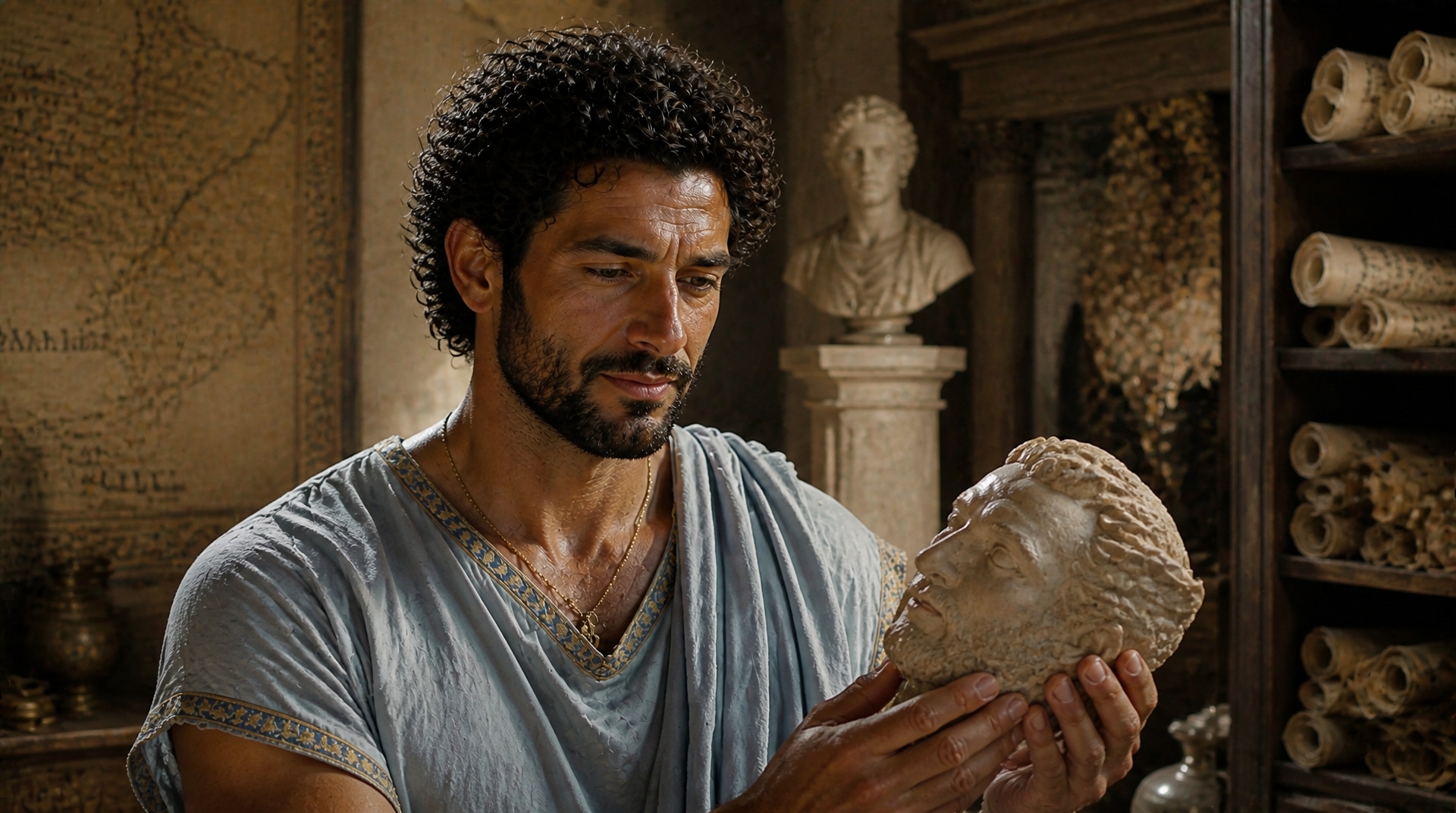
Syriacus fell silent for a moment, then glanced toward a shelf beside his desk. On it sat a small
sculpture—a satyr's head, finely carved, with an expression that held both mockery and wisdom.
Lucian's breath caught. He stood and walked over to it, reaching out but not quite touching. "Where
did you get this?"
"You recognize it?" Syriacus asked.
"It's my uncle's work. From Samosata. This is from one of his patterns."
Syriacus rose and joined him at the shelf. "I acquired it two years ago. The craftsman had recently
died. His family was dispersed." He paused, shaking his head. "I lost family to the plague as well. My sister,
her children. All in a single month. I understand what it means to be crushed by loss."
Lucian turned to look at the Prefect. There was genuine sympathy in his eyes.
"But you know," Syriacus continued, "I heard something peculiar. About the
time the plague hit Samosata, there was a raid. Parthians attacked and took many slaves.
I can't say whether any of your relatives were taken, but it's possible.
And, if they were, they may still live."
Lucian felt the world tilt slightly. He stared at the sculpture—perhaps his
uncle's last work, sitting in the Prefect's office in Alexandria,
while somewhere in the world, his mother or sister or even father he'd mourned might still be
alive. His uncle's letter had been clear, but how clear was he with slave raids
and plagues coming down all around him?
Syria wasn't that far away. But now, instead of dreading his return, he could barely stand to delay
another minute.