|
By: Paul S. Cilwa |
Posted: 5/30/2026 |
|
Page Views: 19 |
| Hashtags: #HistoricalFiction #LucianOfSamosata #Mauretania |
| Lucian must find a way to stop a tribe from dying from a mysterious malady. |
| Estimated reading time: 20 minute(s) (4672 words) |
What happened was that the woman swung down off the gray horse, crossed the ring of silent riders
in four strides, took the Roman by the front of his cloak, and kissed him on the mouth.
It was not a brief kiss. Celer—Titus Aelius Celer, military courier of the imperial service,
a man Lucian had watched correct the price of Egyptian grain before he had finished waking, a man
of the approximate warmth and spontaneity of a sundial—stood absolutely rigid for the length
of it, his bound hands hanging at his sides, his pale eyes open. When she released him he
took a breath, straightened his cloak with one hand, and said, in the flat tone of a man noting
the weather, "You might have sent word."
"I sent six riders and a rope," the woman said in heavily accented Latin. "That is how I send word."
Lucian looked at Demetrios. Demetrios was looking at Lucian. Both stood with jaws agape.
Her name was Tala, and the six riders cut their bonds before the sun had moved a hand's width.
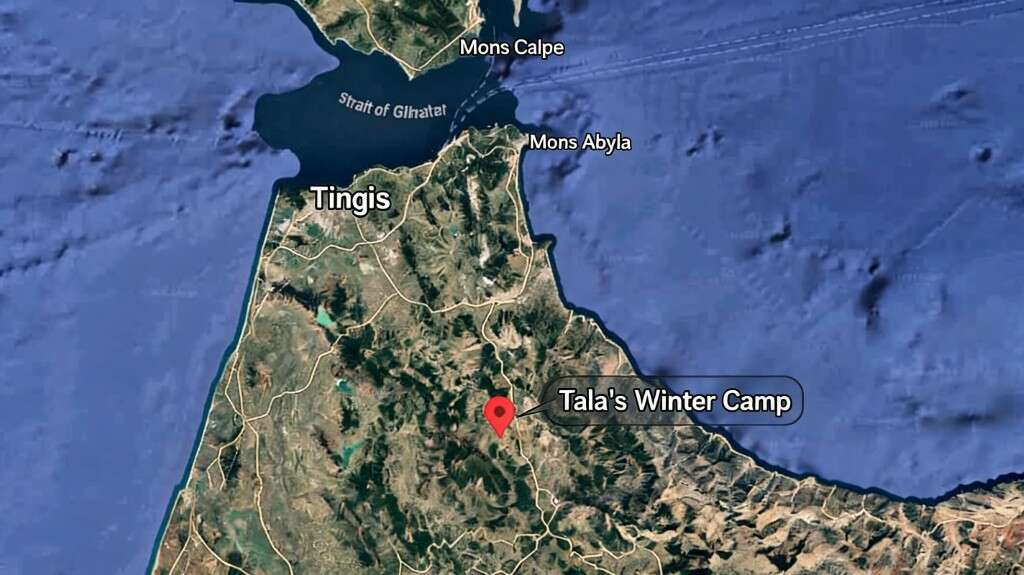
She was a war-leader of a Baquates clan—one of the mountain peoples the procurators at
Volubilis addressed as kings. She had perhaps forty years on her, a face weathered to the color and texture of
good saddle-leather, blue tattooing in fine lines down her chin, and the particular economy of
motion that Lucian had learned, on the mountain track from Tarraco, to associate with people who
could kill him and had decided, for the present, not to.
The staged abduction, Celer explained as they rode—unbound now, but no less bewildered—was
a courtesy to all three of them. A military courier of Rome cannot be seen to ride willingly into
the camp of an unconquered tribe; that is how a courier becomes, in the eyes of a tribunal, a
traitor. But six riders dragging three captives off the road is a raid, and a raid explains
everything and implicates no one. "If anyone asks," Celer said, "we were taken. We were
fortunate to escape with our lives. You will both be very convincing, because for the first part
of it you were not acting."
"And why now?" Demetrios asked. "Why the rope and not a letter?"
"Sickness in the camp," Celer said.
Lucian's stomach dropped. The letter from Samosata was eleven months old and had not aged a day.
"The plague?"
"The flux, so Tala's people read it," Celer said. "They have not seen the plague themselves;
if they had they would have run, not sent for me. But the diagnosis is from a frightened layman.
We will look properly when we arrive."
He went on. "The Plague hits everyone, but this ailment, whatever it is, seems to affect children,
mostly. It started with October's eclipse and has not stopped. The
tribe's diviner has the people convinced it is the gods, angry over something or other, and a
faction is calling for more sacrifices and fewer Romans. The young men across the strait want to
take it out on Baetica. Tala is their warlord (or warlady, if I am to use proper
Latin). She's a good person and does not want the war she
would have to lead. She sent for me, because I am the only Roman she trusts to ride in here without
an army."
"She…also seems very fond of you," Demetrios added cattily.
Celer sat very straight in his saddle. "You'd be surprised at the demands made
on a military courier. Women run this country, and Rome, which gave up on conquering
them, requires those of us in its service, to do whatever is required to keep the peace."
"Well, then, what does she expect us to do about a sickness?" Lucian asked.
"They may not like Rome, but even they have to admit Rome's superiority in
medicine and other technologies. So Tala hopes we can think of some way to help,
other than capturing and sacrificing Romans to the gods as the diviner is recommending."
Tala rode at the head of their little caravan, and Celer rode beside her. They did not touch as they rode.
But every so often she would say something to him low
in her own tongue, and he would answer in the same, and once—Lucian saw it—the corner of
Celer's mouth moved in a way Lucian had spent a whole winter trying to provoke and never managed.
Whatever "this" was, it had been going on for years.
The morning would not commit. The fog had come in off the Outer Sea before dawn and had not yet
decided to leave, and a fine cold Atlantic rain was being thrown at them in handfuls and then
withdrawn, and Lucian exhaled fog when he spoke.
"It is chilly," Lucian announced, to no one in particular.
"It is cool," Demetrios said. That was not an agreement. In the folk scale used by the
Romans, chilly was a step colder than cool, and cool was a step colder than warm,
and warm was a step colder than hot. The gradations were understood even though they
were imprecise.
"Chilly."
"Cool."
Celer, riding ahead, did not turn his head. "It is cool," he said. "The next set
of mountains will be chilly. Words have meaning."
They crossed a stream that ran down off the hills, and the horses stepped over it daintily,
as if to minimize wetting their legs.
A mile on they crossed a second stream, smaller and quicker, and all three horses
stopped abruptly to drink greedily.
The Curse
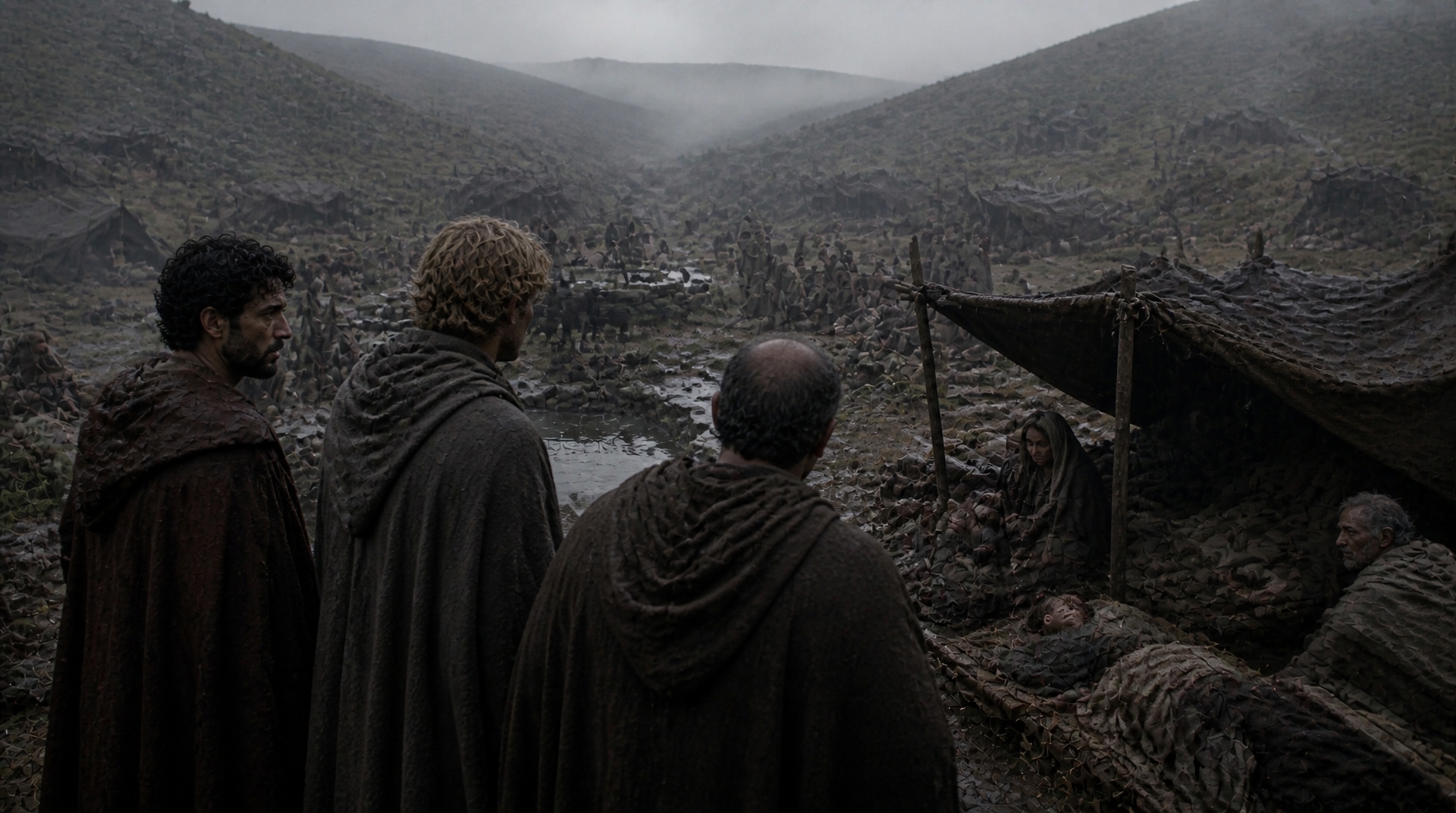
Lucian smelled the sickness before he understood it—the particular sour reek of a place where too
many people had been too sick for too long, of soiled bedding and vinegar-smoke and the sweetish
under-smell that Lucian had last met in a letter from Samosata and did not like to meet again.
He stood very still. He had crossed an ocean to be away from that smell, and now he had ridden
into it. He went to the nearest pallet—a boy of perhaps eight, wasted, lips cracked—
and looked at the boy's face, his neck, the backs of his hands. He went to the next. The third.
The seventh. None of them had the marks of the plague. After the seventh pallet, Lucian had to step into the
lee of an awning and put a hand against the post until the dizziness of the relief had passed.
It was the flux. It was only the flux.
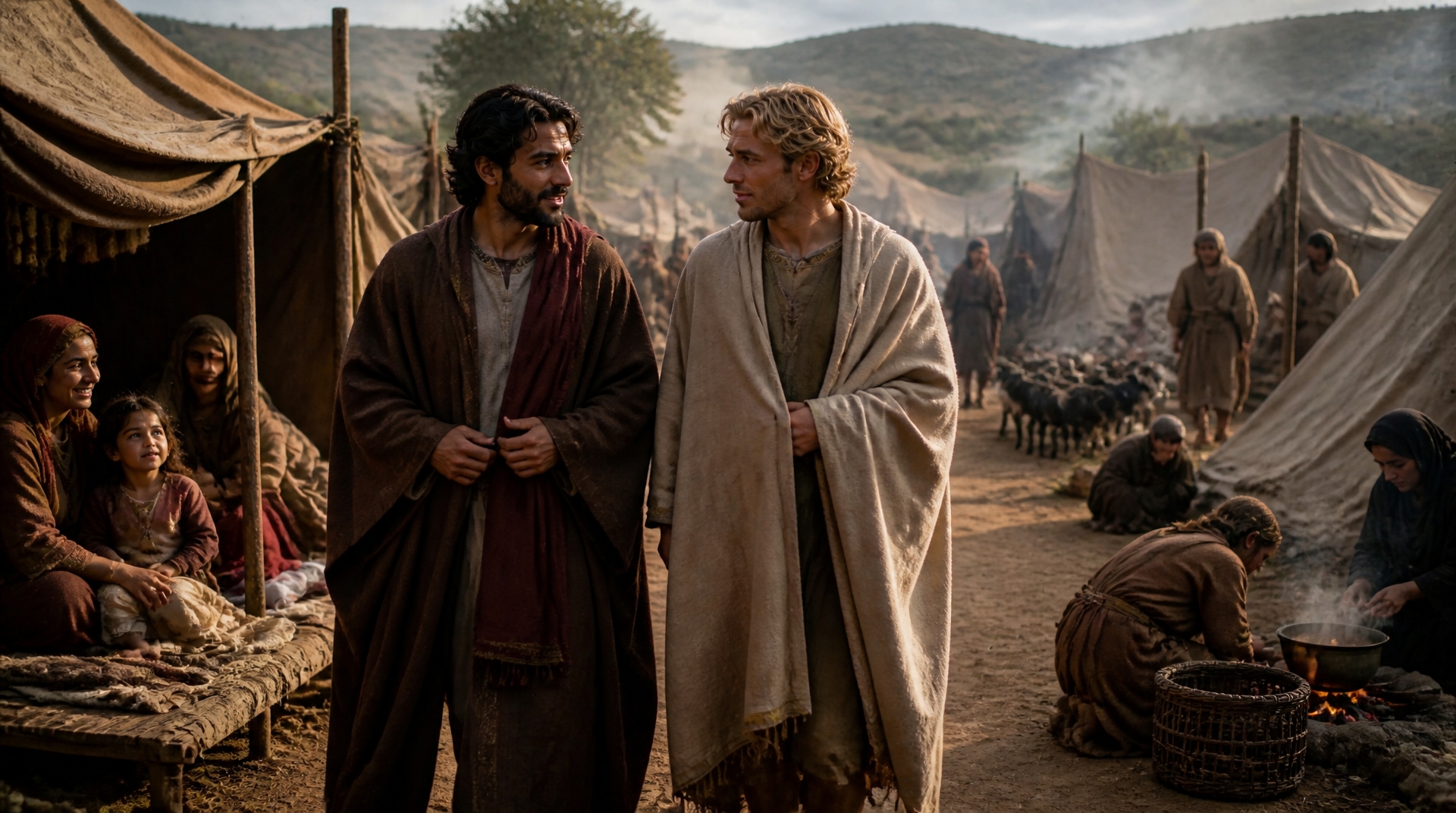
The camp was not large: a scatter of dark tents in a fold of the hills, pens of goats and a few
thin cattle, a horse-line, a stone-rimmed pool at the open ground's center fed by a little stream that
came down off the slope above, and, around the pool, more sick than a place that size should have
been able to produce. They lay on pallets under awnings, the worst of them. Children,
mostly. The old. The kind of griping, draining sickness that empties a body
of everything it holds and then, when there is nothing left, empties it of its life.
Tala dismounted and went straight to a particular awning, and knelt by a small pallet,
and the appraising war-leader was gone and in her place was a woman looking at a child. The child
was perhaps six. The child was losing.
Celer stood very still beside Lucian. "Her sister's daughter," he said quietly. "That is
why the rope. She would not have pulled me off the road for a treaty."
An old woman came out to meet them, wiping her hands on a cloth—broad, gray, stooped, with the
flat exhausted calm of someone who had been doing everything she knew for weeks and watching it
not be enough. This was Damya, the healer of the clan, who had her tent at the camp's eastern edge.
She and Celer spoke; she looked the two
Greeks over without much hope; she went back to her patients. She moved among them the way a good
physician moves. She knew her work. She had a treatment, and she was applying it
with the doggedness of the genuinely skilled, while patients died anyway.
And then there was Mastan, the clan's diviner, who had been telling everyone for weeks that he
had told them so. He was tired and aggrieved—the only person in the camp who knew exactly
what was happening and exactly whose fault it was—and he was prepared to share that knowledge
with anyone who would listen and most of the people who would not. The gods, he kept saying, had
given the signs—two of them, in October, the greatest in living memory—and the people
had failed to read them, and this was the price.
Lucian got the story in pieces, through Celer, over that first evening: how in the autumn the moon
had gone dark and bloody one night, and then, before the moon had finished frightening them, the
sun had gone dark also, in the middle of a clear morning—two darkenings inside a single
month, the sky itself snuffing both its lamps. Mastan had known at once that something was owed.
There had been sacrifices. There had been a great deal of sacrifice. And then, as the cold came on,
the children had begun to void their lives into the dirt, and had not stopped, and every death was
another debt unpaid, and the debt was owed—Mastan was clear on this, and growing clearer—
to gods who had been angered by a people grown too friendly with Rome.
The cure he prescribed was more sacrifice, harder propitiation, a turning-away from the
foreigners whose nearness had fouled them in the gods' eyes.
There had been talk in the first week of breaking quarters and riding higher, away from the bad
place; Mastan had answered that the gods, having found a man once, would find him again. So the
clan stayed. There was a faction that liked this cure. It ended, if you followed it far enough, in
spears, and in the strait, and in the burning of the green Baetican country Celer had spent the
winter dreading.
When Lucian heard this, he burst out laughing in spite of himself. "Do you think you are the only
people on Earth?" he said. "I saw the same two darkenings, we call them 'eclipses', in Europe.
And we have not been sick."
He looked at the dark sky over the camp, where the gods were said to be keeping their accounts, and
then he looked down at the dirt, where the children were dying, and he thought: the answer is
not up there.
The Question Nobody Asked
The trouble was that he could not say so.
Lucian had crossed half the world on the strength of his tongue. He had talked his way onto ships
and out of debts and into the houses of men who should have known better. And here, in a camp of
dying children, his tongue was a dead thing in his mouth. He knew perhaps thirty words of their
language, all of them learned that day, none of them useful. The one weapon he had never been
without was gone.
But he could watch.
He watched for a day. He watched Damya work, and what he saw was a healer who deserved better luck:
she purged the sick to empty the poison—mustard seed pounded into wine, a hard swift emetic—
and then she fought to put the water back into them that the flux had wrung out, cup after patient
cup, hour after hour, water mixed with whey, which helped keep it down. It was, Lucian thought,
exactly right. It was what he would have wanted done for himself. Yet the patients got worse.
He watched who got worse. And, because he had once spent a winter copying medical texts for
a Platonist in Smyrna and had read, among much else, an old treatise on airs and waters and places
that held that the water of a country could carry its diseases, he watched what they drank.
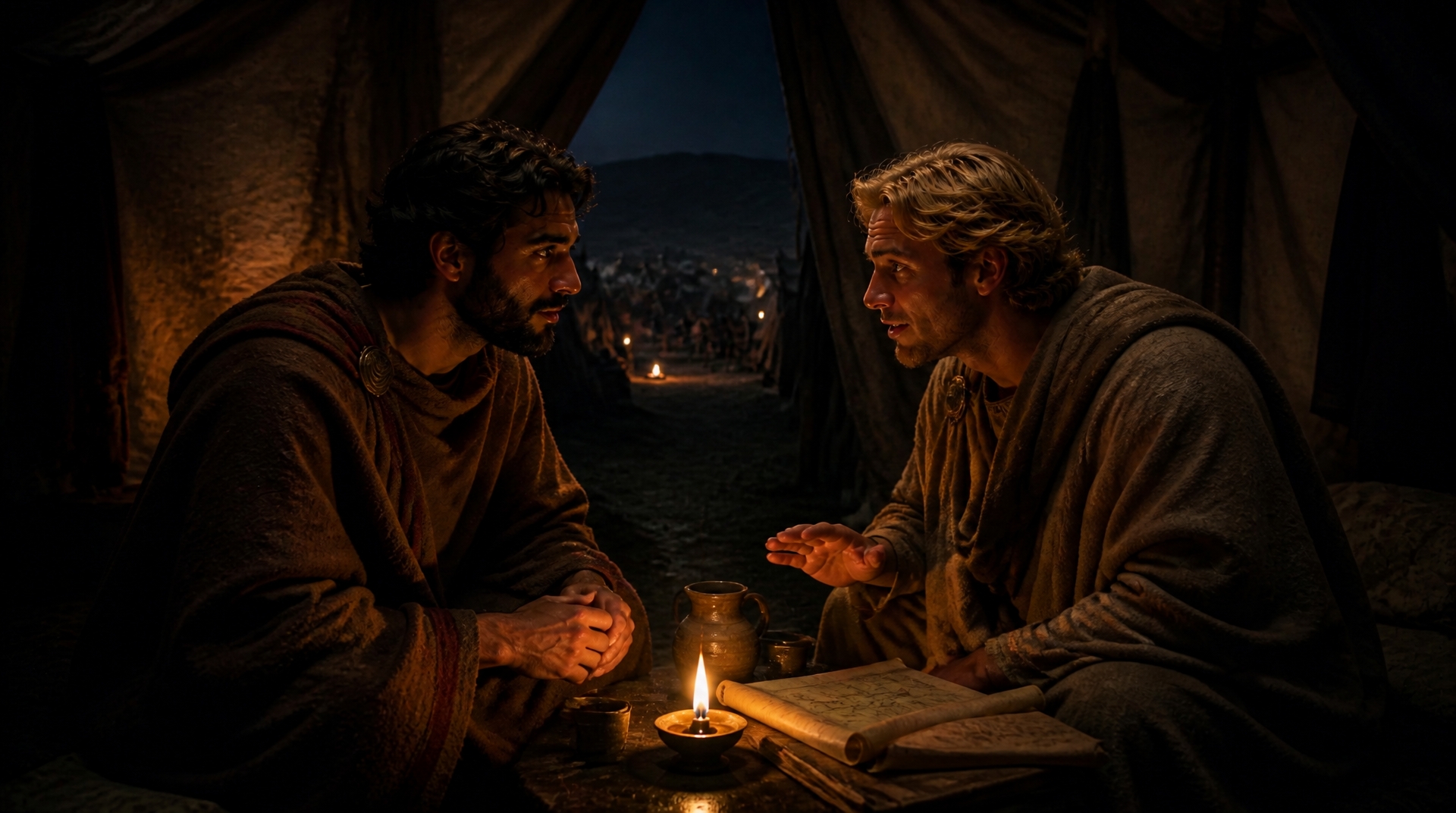
He spent the day watching. By evening he suspected Demetrios had been doing the same.
"That's an interesting expression," Demetrios observed.
"So is yours. —I've been making a list."
"So have I. Have you noticed that infants at the breast don't seem to get sick, even when their
mothers do?"
"The old man with the missing eye, right across from the pool," Lucian said. "He
cuts his water with wine, Greek-style. I watched him do it. He is fine, unless you count the missing eye."
"The households on the eastern side of the camp," Demetrios said. "I walked over there
this afternoon. They have their own stream running past their tents. None of them is sick
either."
"And Damya's tent is among them."
"Damya has been three feet from the dying every day for six weeks. Not so much as a fever."
A long silence between them. Then Lucian frowned. "What about Tala? She is not sick. Nor
any of the men with her."
"Tala's tent is on the east side," Demetrios said. "So are her captains'. They drink
from the eastern stream, like Damya and the other eastern households."
Lucian put his face in his hands.
"It is the pool," Demetrios said. "The half of the camp that drinks from it is sick. The
half that does not is fine."
"The western stream," Lucian said, "is the one that feeds it."
The clan had come down to this fold of the hills as they did every winter, driven out of higher
pasture by the cold, to the winter quarters they had used for generations, with the dry-stone pens
already standing where they had always stood. The western stream had filled the pool at the camp's
center for as long as anyone in the clan could remember. The water had always been good. That was
what made it so hard to question.
"The horses," Lucian said. "On the ride in. Do you remember they didn't stop at the
first stream we came to, but drank from the second just a few moments later? If
those are the same streams that supply this camp, the western one would be the main supply
for the camp. The one that fills the stone pool."
"And the more eastern one, that they did drink out of, should be the eastern creek here."
A child coughed under one of the awnings.
"Something is upstream," Demetrios said.
"In country no one walks," Lucian agreed. "Because the water comes down clean-looking and
cold, and what more does a thirsty people ask of a stream?"
Demetrios stood up. "Saddle up!"
Upstream
They saddled before the camp had woken—the two of them, their two horses, the coil of rope
they had bought from the goatherd's wife in Carteia and never had occasion to use, and a day's food
they did not expect to need. They filled their water skins from the eastern stream.
The fog had not entirely left the cleft. They rode out on the trail
they had come in on, and where it crossed the western stream a mile above the camp they turned off
it and started up the watercourse.
The cleft was narrow and the going slow. They dismounted and led the horses, picking through scrub
and over wet stones, the stream tumbling small and clean-looking past them, dropping down and away
toward the unseen camp.
Then they smelled it, well before they saw it.
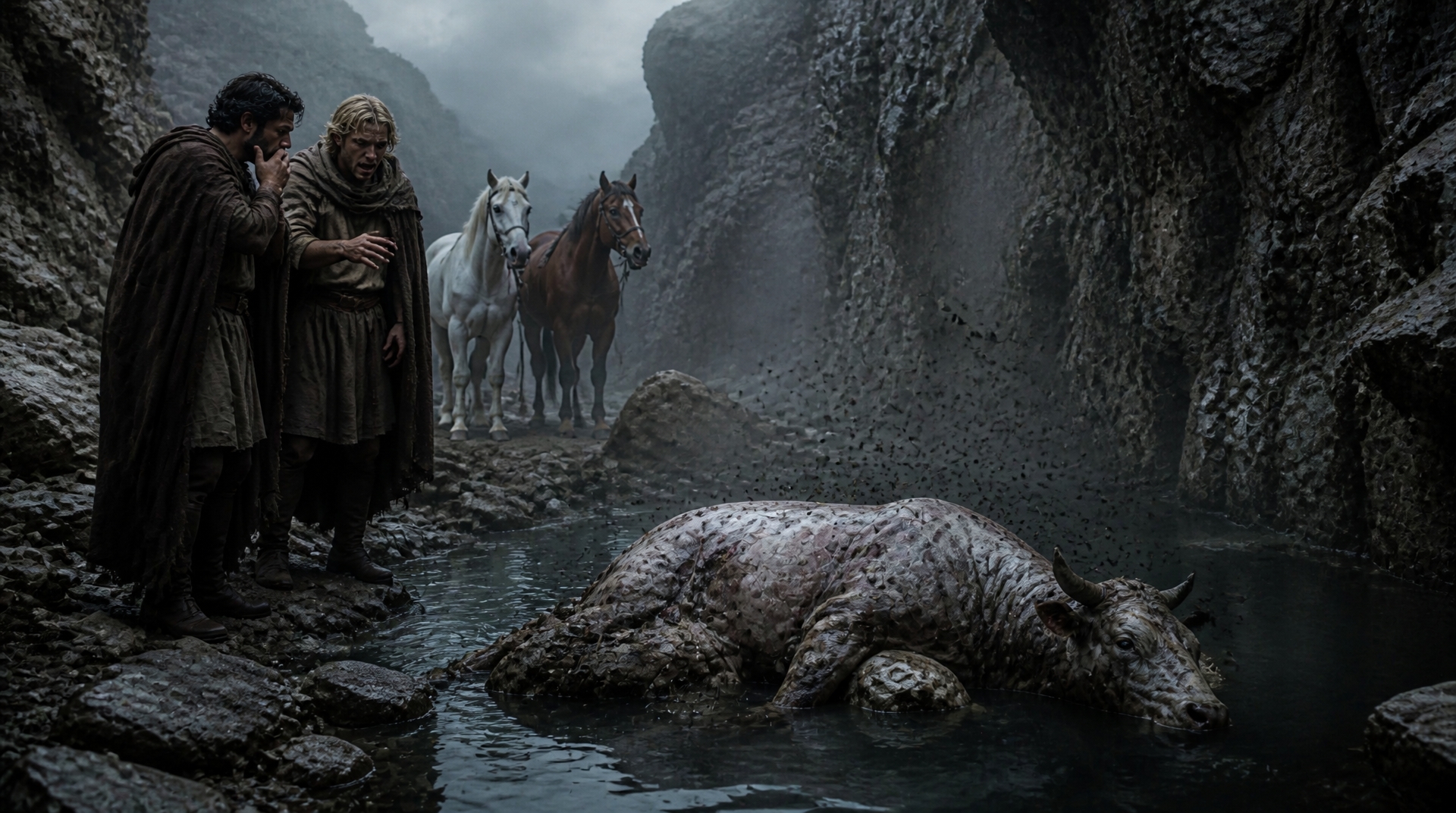
It was not a smell a man forgot. It was the thick, sweetish, closed smell of a dead animal that
had been decomposing for a long time. Lucian put the back of his hand to his mouth
and went on. A little farther up they began to see the flies—not the lazy flies at a
kitchen window, but a low rising cloud of them, thick and unbothered by the cold, hanging over a
spot in the cleft just beyond the next bend.
Beyond the bend was a rocky basin—a deep cold pool in a cleft, fed from below, the kind of
pool that does not move much and does not flush. And in the pool, half on the rock and half in the
water, swollen and wrong and months into its work, was a very dead ox.
A clan beast, by the size of it and the long curve of its horns. A beast that had strayed up here
in the autumn, climbed after the green that grew at the water's edge, got mired in the soft margin of
the pool, and died, and been decaying ever since, in a slow brown bloom that every household in the
camp had been dipping up and carrying home and giving, cup by loving cup, to its children.
The pool breathed its smell at them. Below, out of sight, the camp drank.
"Well," Demetrios said, in the bright brittle voice of a man not being sick by an act of
will, "I have seen the source of the curse, and it has four legs and I would like to never see
it again."
"I would like to never smell it again," Lucian said. "But we cannot leave it where
it is. Let's get busy."
Getting the carcass out was the foulest work Lucian had done in his life, and he had apprenticed to a
sculptor and crossed the Middle Sea in the hold of a garum ship. They worked the rope
around what was left of the carcass—the neck and the hocks, both, to share the
load—and led the two horses down the cleft until the rope was taut, and asked them, kindly,
to pull. The ox came up out of the
basin and over the rim, coming apart as it came, and they led it—the horses straining, the
rope humming—up out of the cleft and far down the far side of the ridge, into a dry gully
where no water ran. There they cut the rope (no point trying to clean it; the goatherd's wife had
wanted to be rid of it, and now she had her wish) and left the ox to be unmade by the sun and the
patient flies.
Then they went back to the pool, and they cleared from it what they could, and they let the cold
western stream run, and run, and run.
The Cure
They rode back into the camp with the smell of the cleft still on their hands. Celer met them at
the horse-line, took one look at them, and asked nothing. Tala took two. They told her, through
Celer, what they had found and what they had done with it; she heard them out without a word, and
went to fetch Damya.
He went to her—through Celer, slowly, carefully, with none of the performer's flourish, because
this was the one conversation of his life he could not afford to win by charm—and he told her
that she had been right. Her medicine was right. The purge was right; the long patient work of
pouring the water back into the wrung-out bodies was right. She had done everything correctly, and
her patients had died, and it was not her fault, and there was one thing only that had been wrong.
She had been giving them the water from the poisoned stream.
He watched her face as Celer turned the words over into her tongue, and he watched her understand
it—watched the healer in her run back over every cup she had lifted to every cracked pair of
lips, every patient labor of mercy that had carried the bad water down into the very people she was
killing herself to save. It was a terrible thing to give a person, that understanding. He had
thought hard about whether to give it to her at all. He had decided she was owed the truth, because
she was the only other person in the camp who dealt in truths, and because she would need to know
exactly what had changed, so that she would trust the change.
She did not weep. She was too old and had buried too many that month. She simply nodded, once, and
went and got fresh water—clean water, carried up from the eastern stream that ran past the
eastern-edge tents, the one the beasts approved—and she mixed it with whey from the goats, and she
began again. The same purge. The same patient pouring. The only difference the one no one had been
able to see.
The worst cases improved within the hour.
Not all lived. A few had been too long sick before Lucian ever rode in, and they went out quietly
in the hours after Damya began again. But the rest, who that morning had been dying, by evening
were keeping down clean water and whey, and by the next morning were asking, in the small outraged
voices of recovering children, why they could not get up. Among them, blinking at her mother with
a kind of affronted surprise, was Tala's niece.
It is a particular thing, to watch people stop dying. Lucian had moved crowds to tears and to
laughter and once to a riot. He had never before stood in the middle of a thing like this—
quiet, unspectacular, a few dozen people simply continuing to be alive who that morning had not
expected to be—and he found it was worth more than every theater he had ever filled.
By the second day, when it was past denying that the children drinking the water from the western spring were the
children who had died, and the children drinking the water from the eastern spring were the children getting up,
Mastan the Diviner
had already arrived at the only conclusion his world allowed him. The gods, he explained, had sent the
darkenings as a warning. The people had failed to read them. And so the gods, in their mercy, had
sent a stranger from across the sea, an instrument, to show them the rot they had let into their
own water through their own carelessness. The cure was the gods' cure. Lucian was the gods'
hand. Everything Mastan had said was confirmed, and the offerings would of course continue.
Lucian started to laugh, and stopped himself, because he had heard this before. He had heard it
from a Platonist in a portico in Smyrna, years ago, explaining that the Forms could not be seen or
measured or tested but could only be remembered, so that no failure to find them could ever count
against them. A belief that explains every outcome equally—the sickness and the cure, the
silence of the gods and their mercy—is a belief that has arranged never to be wrong. You
cannot argue a man out of it, because there is no fact it does not already appear to contain.
He said as much to Demetrios that night, quietly, the two of them at the edge of the firelight.
"At Consabura I pointed at the sky and told them the gods were speaking, and they believed me,
and I was proud of it. Here I pointed at the ground and told them the gods were silent, and a dead
ox proved it, and they thank the gods anyway." He turned a cup in his hands. "I think I have
liked myself better these three days than in all the years I spent being clever."
Demetrios considered this. "You were still clever," he said. "You were only clever with the
top end of yourself for a change."
Back to Tingis
They stayed three more days, until the worst cases were plainly mending and the rest were drinking
and arguing with their mothers. Then it was time to go back. The sea was not open yet—the sea
would not be open for another month—but neither was there any further reason to keep three
Greek men in a Baquates winter camp, and Celer's letters to Alexandria were not getting any younger
sitting in a saddlebag in the mountains.
Tala gave Lucian a thing he did not expect: a flat oval of green stone on a leather cord,
old, worn smooth, the kind of thing that is given when a debt is meant and words are not trusted to
carry it. She said something, and Celer translated, and for once Lucian believed Celer was
softening nothing.
"She says: the beasts knew the water was bad, and the diviner did not, and you are the first man
she has met who would rather know a thing the way a horse knows it than believe it the way a priest
believes it. She says it is a rare kind of mind and she is sorry to see it wasted on a Greek."
Lucian smiled his most dazzling smile. "Tell her that is the finest thing anyone has ever said to me, and that I
intend to repeat it for the rest of my life and claim I thought of it."
Celer told her. Tala laughed—the only time Lucian heard her laugh—and the matter was
closed.
Their mission of mercy thus successfully concluded, the Tingis contingent prepared to return.
"I don't know how long it will take for the water to run clean again," he said as Celer translated.
"But surely it will be all right by the time you return here next winter." The three mounted their
horses, and set off for the coast.
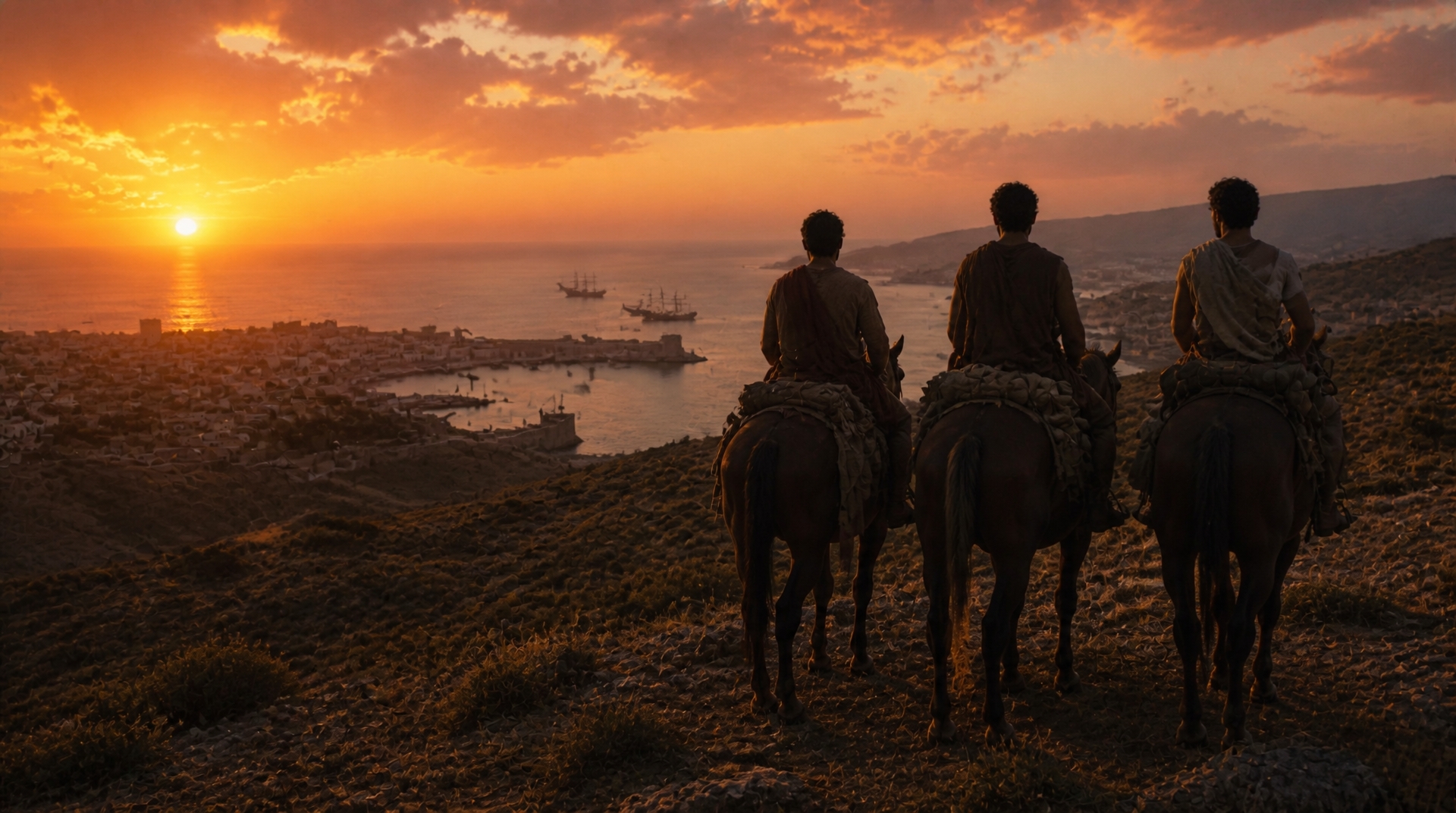
They came down out of the hills on the third day and smelled the sea before they saw it, and there
was Tingis below them with its harbor full of ships still waiting on the season; and beyond the
strait, invisible, the whole circle of the Middle Sea waited—Carthage, and Cyrene, and
Alexandria, where a courier had a desk waiting that Lucian was now almost certain Celer would hate.
The fog had burned back, and the morning was warming—Mauretanian winter at its
kindest, which was not very kind, but Lucian was feeling generous.
"Pleasantly warm," he tried.
"Cool with a tendency to nice," Demetrios said. "The trouble with our scale is that it has
no degrees in it. We quarrel about which word to use, and the air does not care. A man ought to be
able to put a number on the warmth of the air the way he puts one on a sack of grain. The air must
hold its heat the way a purse holds coin—some days more, some days fewer. If a man could
devise a thing that read off how many coins of heat the air held this morning, the argument would
end. We would simply look at the thing."
Lucian considered him. "You may have just invented something."
"Probably someone already has," Demetrios said. "Or no one ever will. It does not matter.
Someday I'll come up with something that will make my fortune!"
The harbor lay beneath them with its ships still at their winter ropes—the season had not
yet released them, or the gods had not, depending on whom one asked—and beyond the strait
the long curve of the African coast waited east, and Carthage beyond, and beyond Carthage the road
towards a home that no longer existed.