|
By: Paul S Cilwa |
Posted: 1/7/2026 |
|
Page Views: 48 |
| Hashtags: #CarringtonEvent #SolarStorm #CoronalMassEjection #GeomagneticStorm #InfrastructureVulnerability #PowerGridFailure #GPSdisruption #DisasterPreparedness |
| An in-depth exploration of the 1859 Carrington Event, the science behind extreme solar storms, and how a modern geomagnetic disaster could impact satellites, power grids, GPS, aviation, and global infrastructure -- along with what recovery and preparedness would require. |
| Estimated reading time: 8 minute(s) (1815 words) |

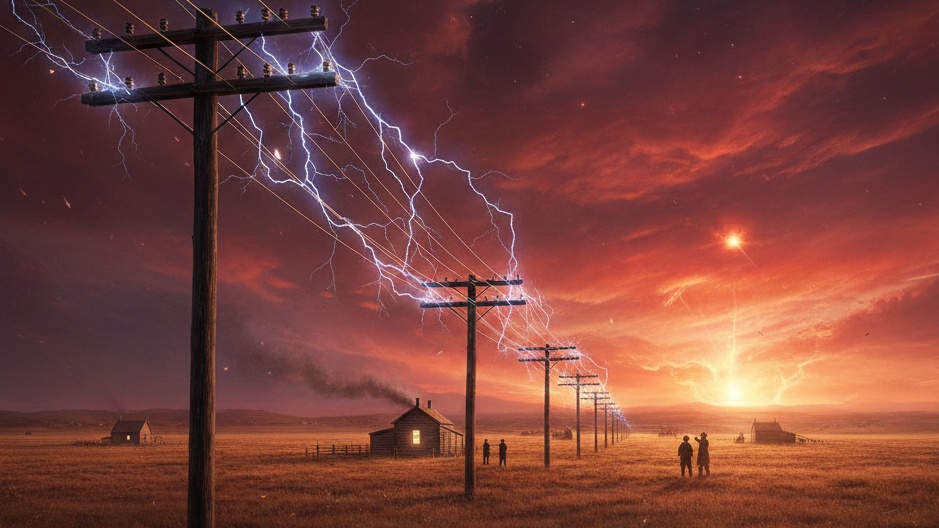
At 11:18 a.m. on September 1, 1859, telegraph operator Samuel Whitaker sat alone in the small
wooden relay office outside Baltimore, tapping out routine commercial messages. The room smelled of
hot metal and ink, the usual scent of a late-summer workday. Then, without warning, the sounder
snapped sharply and the line voltage surged so violently that sparks leapt from the key. Samuel
jerked his hands back as a blue-white arc sizzled across the brass contacts. The battery had been
disconnected minutes earlier for maintenance—yet the system was alive, humming with a
strange, insistent current that felt as if the earth itself had taken hold of the wire. When he
cautiously touched the key again, the shock stung his fingertips. Outside, the sky was still
bright, but something in the air felt charged, uncanny, as if a storm were gathering without
clouds.
Within the hour, operators across the eastern United States were reporting the same
impossible phenomenon: telegraph lines running on their own, powered by invisible forces. Some
found they could send messages with their batteries completely removed; others watched paper tape
catch fire as induced currents overheated the equipment. In Boston, an operator wrote that the
sparks flew like a Fourth of July celebration,
while in Pittsburgh, a man was knocked off
his stool when his sounder discharged violently. Many assumed it was a lightning strike somewhere
along the line, or a fault in the new long-distance circuits. A few, unnerved by the eerie glow
beginning to form on the northern horizon, whispered that it might be a sign from God.
By nightfall, the rest of the world understood something extraordinary was happening. People from Cuba
to the Rocky Mountains stepped outside to find the sky ablaze with auroras so bright they could
read newspapers at midnight. Farmers in the Midwest thought dawn had come early. Miners in the
Rockies woke to a crimson sky and rushed to prepare breakfast before realizing it was still the
middle of the night. In the cities, crowds gathered on rooftops and street corners, staring upward
as curtains of green, red, and violet light rippled overhead like celestial fire. Most had no idea
that the same spectacle was wreaking havoc on the telegraph network—or that the strange
currents that startled Samuel Whitaker were the first hints of the most powerful solar storm ever
recorded.
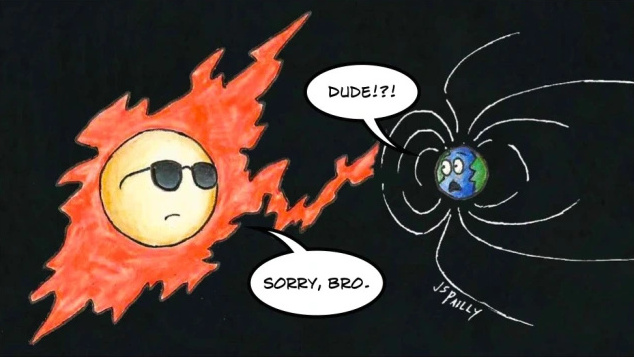
A solar storm is the broad term for a burst of activity from the Sun that disrupts Earth's magnetic
field. These storms come in several forms. Solar flares are sudden flashes of electromagnetic
radiation, while coronal mass ejections (CMEs) are enormous eruptions of magnetized plasma hurled
into space. CMEs are the real troublemakers: when one is aimed at Earth, it can slam into our
magnetosphere and generate a geomagnetic storm, a global disturbance that drives auroras, induces
electrical currents in long conductors, and disrupts satellites and radio communication. Most CMEs
miss Earth entirely, and even the ones that do hit are usually mild. But every so often, the Sun
launches a fast, massive CME directly at us—the kind that can compress the magnetosphere,
supercharge auroras, and overload electrical systems.
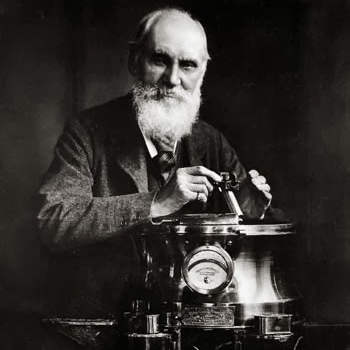
The Carrington Event of September 1859 was
one of these rare, extreme storms. It was caused by a very fast CME that reached Earth in just 17.6
hours, far quicker than the usual several-day transit. The event is named after Richard Carrington,
the British astronomer who, along with Richard Hodgson, independently observed and sketched the
brilliant white-light solar flare that preceded the storm—the first time anyone had ever
recorded a solar flare at all. When the geomagnetic storm hit the next day, it produced global
auroras and wreaked havoc on telegraph systems. Carrington connected the flare he saw with the
geomagnetic disturbance that followed, establishing the first known link between solar activity and
effects on Earth.
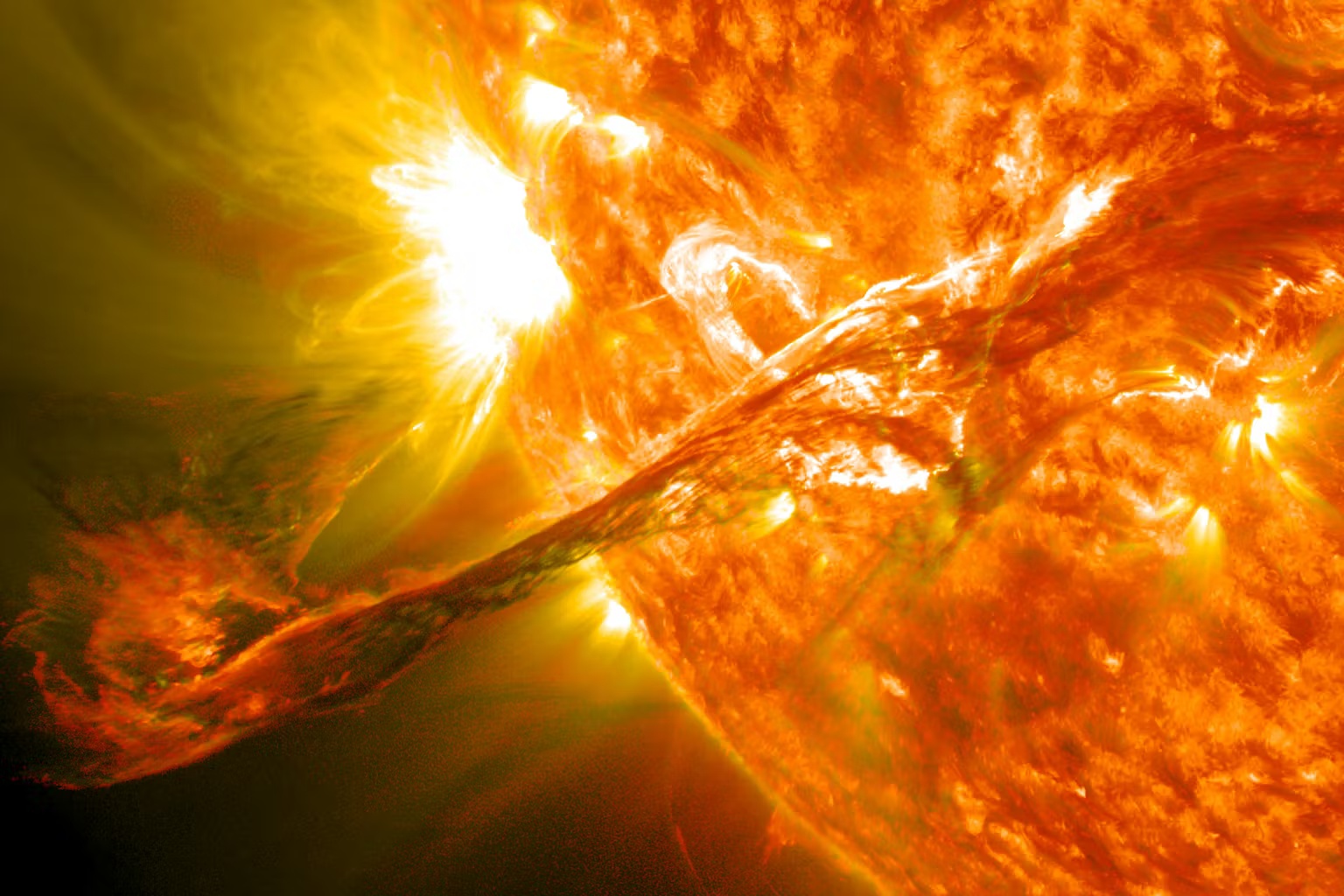
Events of this magnitude are rare, but not unique. The Sun produces powerful
CMEs far more often than Earth happens to be in their path. For example, a July 2012 CME was
comparable in strength to the Carrington Event but missed Earth by about a week of orbital
position. As for earlier storms, there is strong evidence that similar or even larger events
occurred long before telegraphs existed. Historical aurora records—especially unusually
low-latitude sightings—hint at past geomagnetic storms. And beyond written accounts,
scientists have found cosmogenic isotope spikes (such as carbon-14 and beryllium-10) in tree rings
and ice cores that correspond to ancient solar superstorms. These natural archives show that Earth
has been hit by extreme solar events for millennia; the Carrington Event is simply the first one
humanity was technologically vulnerable enough to notice in detail.
But it's not likely to be the last.
And we are far more vulnerable today than we ever were when a few telegraph wires were the
height of our technology.
A modern Carrington?class geomagnetic storm would strike a world built on electrical
grids, satellites, GPS timing, and tightly interlocked digital systems. The physics is the same as
in 1859—but our technological "attack surface" is infinitely larger. Modern
infrastructure is already known to be vulnerable: geomagnetic storms can disrupt satellites, GPS,
radio communication, and power transmission systems.
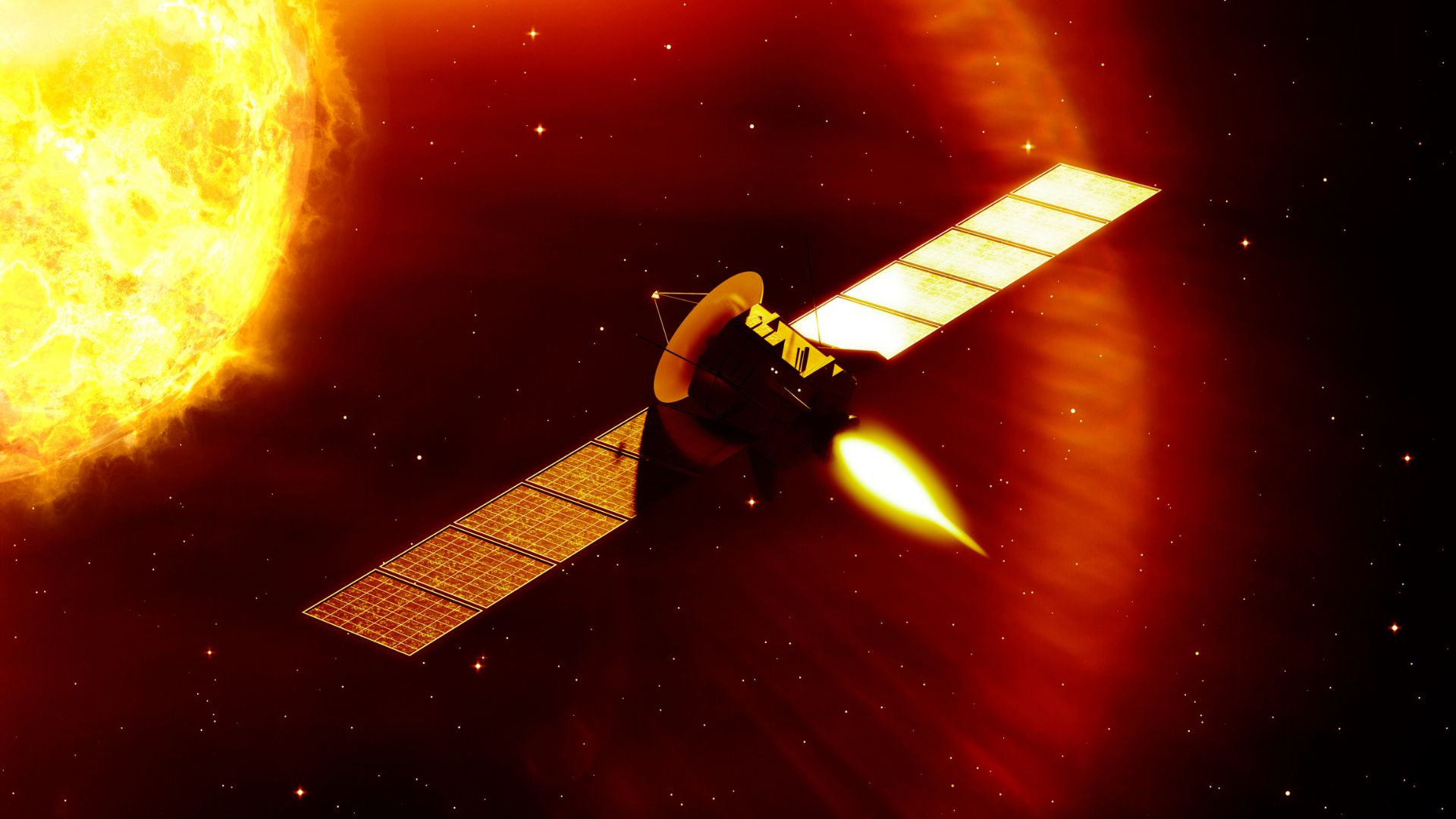
If a Carrington?scale solar storm struck tomorrow, the first signs would appear far above us, in
the satellites that quietly run the modern world. High?energy particles would rattle their
electronics, forcing many into safe mode and blinding the sensors that keep them oriented. Starlink
satellites, which orbit low and rely on precise control, would be especially vulnerable; some might
tumble, others might lose power, and a few could even begin drifting downward as the storm
thickened the upper atmosphere. GPS signals would warp and scatter in the disturbed ionosphere,
turning precise navigation into guesswork. The moment GPS falters, everything built on top of it
falters too: Google Maps, aviation routing, shipping logistics, cell?tower timing, financial
transaction timestamps. The digital world depends on a clock in the sky, and when that clock
stutters, the systems beneath it begin to wobble.
On the ground, the effects would ripple outward
in ways most people never think about. Electric cars would still be drivable, but their navigation
systems would be blind, their traffic?aware features confused, and their charging networks
unreliable if the grid began to flicker. Teslas don't require Starlink to operate, but they do rely
on GPS, cellular data, and cloud?based routing; without those, they become ordinary cars with large
batteries and no sense of direction. Airplanes would face even greater challenges. Modern aviation
leans heavily on satellite navigation and timing, and, while pilots can fly without GPS, the loss of
satellite?based systems would force rerouting, delays, and groundings across entire regions. Even
the internet itself, which seems so earthbound, depends on satellites for timing and on
long?distance fiber repeaters that require stable power. A severe geomagnetic storm doesn't just
break one thing—it breaks the assumptions that allow everything else to function.
The deepest damage, though, would come from the electrical grid. Long transmission lines act like
antennas during geomagnetic storms, picking up slow, powerful currents that transformers were never
designed to handle. A storm on the scale of the Carrington Event could push some of these massive
transformers into overheating or failure. They are not easily replaced; each one is custom?built,
weighs hundreds of tons, and takes months to manufacture even in normal times. If enough of them
failed at once, large regions could face prolonged blackouts. And once the grid falters, the
cascade begins: water systems stop pumping, fuel distribution grinds to a halt, hospitals run on
limited generator fuel, and food supply chains lose refrigeration and routing. Modern life is a
stack of interdependent technologies, each resting on the one below it. In 1859, the telegraph was
the only layer that mattered. Today, a solar storm of the same magnitude would shake the entire
stack at once.
A civilization?scale solar storm wouldn't be the end of the world, but it would force us into a
kind of technological reboot—a slow, uneven climb back toward normalcy. Recovery would
begin the moment the storm passed, when engineers could finally assess what had survived. Some
regions would be lucky: grids with shorter transmission lines, hardened transformers, or simply
better geography might come back online within days. Others, especially those that lost multiple
extra?high?voltage transformers, would face months of darkness. Manufacturing new transformers
would become a global priority, with factories retooled, military airlift repurposed, and
international agreements hammered out under pressure. In the meantime, communities would rediscover
older, simpler methods: local generators, microgrids, paper records, analog communication, and the
kind of neighbor?to?neighbor cooperation that modern life often obscures. Human beings are
remarkably adaptable; the shock would be immense, but the instinct to rebuild is older than any
technology we've invented.
Long?term recovery would depend on restoring the technological "stack" in the right order.
Electricity first, because nothing else works without it. Then
water systems, fuel distribution, and basic communication. Once those foundations were stable,
satellites could be replaced, navigation systems recalibrated, and the digital infrastructure
slowly reassembled. It wouldn't be a clean, linear process—more like a patchwork of
restored regions gradually knitting themselves back together. Some technologies might leapfrog
forward rather than backward: microgrids, distributed solar, and hardened infrastructure would
suddenly look far more attractive than the sprawling, fragile systems we rely on today. A
catastrophe of this scale would expose every hidden dependency in our modern world, but it would
also give us the chance to rebuild with those vulnerabilities in mind.
Avoiding such a disaster is not a matter of stopping the Sun—it's a matter of preparing for
its moods. We already have
early?warning systems that can detect incoming solar storms hours in advance, but the real
protection lies in hardening the infrastructure that matters most. Power grids can be equipped with
better grounding, surge?blocking devices, and transformer designs that tolerate geomagnetically
induced currents. Satellites can be built with more shielding and safer orbital margins. Critical
systems—from hospitals to water plants—can maintain local backup power that lasts
more than a few days. And perhaps most importantly, we can design our technologies to fail
gracefully rather than catastrophically, with redundancies that don't all depend on the same
fragile timing signals or the same long?distance power lines.
Another Carrington?scale event is
inevitable on a long enough timeline. Whether it becomes a historical footnote or a generational
trauma depends entirely on how seriously we take the warning the Sun already gave us once.