|
By: Paul S Cilwa |
Posted: 11/16/2025 |
|
Page Views: 241 |
| Hashtags: #Genetics #AdamandEve #GeneticBottleneck #MinimumViablePopulation #InbreedingDepression #GeneticDrift #PolygenicTraits #Evolution #TobaEruption #Deextinction |
| How two progenitors is not enough to populate a species, and why there was never a 'first human'. |
| Estimated reading time: 7 minute(s) (1603 words) |
Genesis 4:14?17 (New International Version):
14 Today you are driving me from the land, and I will be hidden from your presence; I will be a
restless wanderer on the earth, and whoever finds me will kill me.
15 But the LORD said to
him, Not so; anyone who kills Cain will suffer vengeance seven times over.
Then the LORD put
a mark on Cain so that no one who found him would kill him.
16 So Cain went out from the LORD's presence and lived in the land of Nod, east of Eden.
17 Cain made love to his wife, and she became pregnant and gave birth to Enoch.
Cain was then building a city, and he named it after his son Enoch.
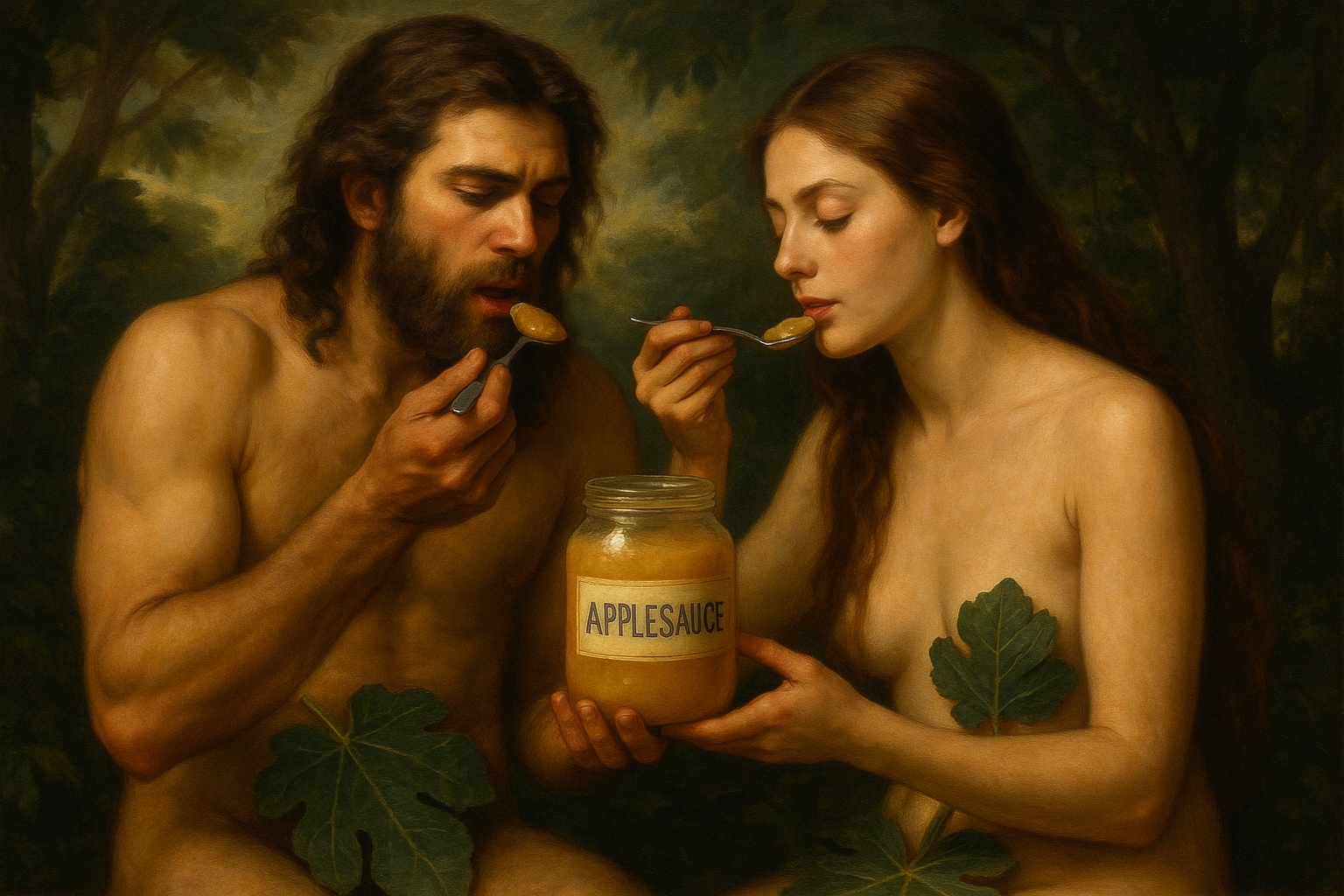
The idea that life can spring from a single pair of beings is one of the oldest stories we tell.
Adam and Eve
in the Bible; Deucalion and Pyrrha in Greek myth; Ask and Embla in Norse legend. A man and a woman,
standing at the edge of the world, tasked with filling it with offspring and cities
and insurance companies.
It's a powerful image: Two figures, united, carrying the weight of all future generations. But
biology doesn't bend so easily to symbolism.
Sperm and eggs are produced through specialized cell divisions called meiosis, each carrying half
the genetic material. When they fuse during fertilization, they form a zygote with a complete set
of chromosomes. Each gene comes in pairs—one from each parent—and recessive traits
appear only if both copies have them.
That's what they told us in high school, but the reality, as always, is more complex than that.
For example, you know about dominant and recessive genes. But there are also genes that provide
a spectrum value of a trait, for example skin color, height, or intelligence—where multiple
genes each contribute small effects that add up to a continuous range rather than an either/or outcome.
These are called polygenic traits, and they don't follow the simple dominant?recessive pattern.
Instead, dozens or even hundreds of genes interact, each nudging the trait in one direction or another.
That's why human height isn't just tall
or short,
but spread across a wide distribution,
and why skin tones blend into a gradient rather than falling into a few fixed categories.
A Bottleful of Bottlenecks
Start with one male and one female. Their children must mate with each other. That means brothers
and sisters, cousins, all sharing cards from the same limited genetic deck. Inbreeding exposes harmful
recessive traits. It narrows the gene pool until variation disappears. Without variation, there's
no resilience. A single disease, a shift in climate, or even bad luck can wipe out the line.
Science calls this the problem of genetic drift. With too few individuals, chance overwhelms
adaptation.
In genetics, a bottleneck is a condition under which a species nearly goes through
extinction, but not quite. Humans have faced bottlenecks before. The Toba eruption 74,000
years ago may have reduced our numbers to a few thousand. It triggered a volcanic winter
that may have reduced the global human population to as few as 10,000 survivors.
Genetic evidence shows that even in our leanest times, there were thousands of breeding individuals.
Enough to keep diversity alive. Enough to avoid the trap of extinction.
The myth of Adam and Eve is symbolic. The science of population bottlenecks is statistical.
Both speak to origins, but in different languages.
Cheetah's Remorse
Ecologists use a benchmark called the minimum viable population. It's the smallest number of
individuals needed for a species to survive long-term. One rule of thumb is the 50/500 rule. At
least 50 individuals are required to avoid inbreeding depression. At least 500 to avoid genetic drift.
In practice, the numbers vary. Some insects can bounce back from a few dozen. Large mammals often need
thousands. But the principle is the same: survival requires a community, not a couple.
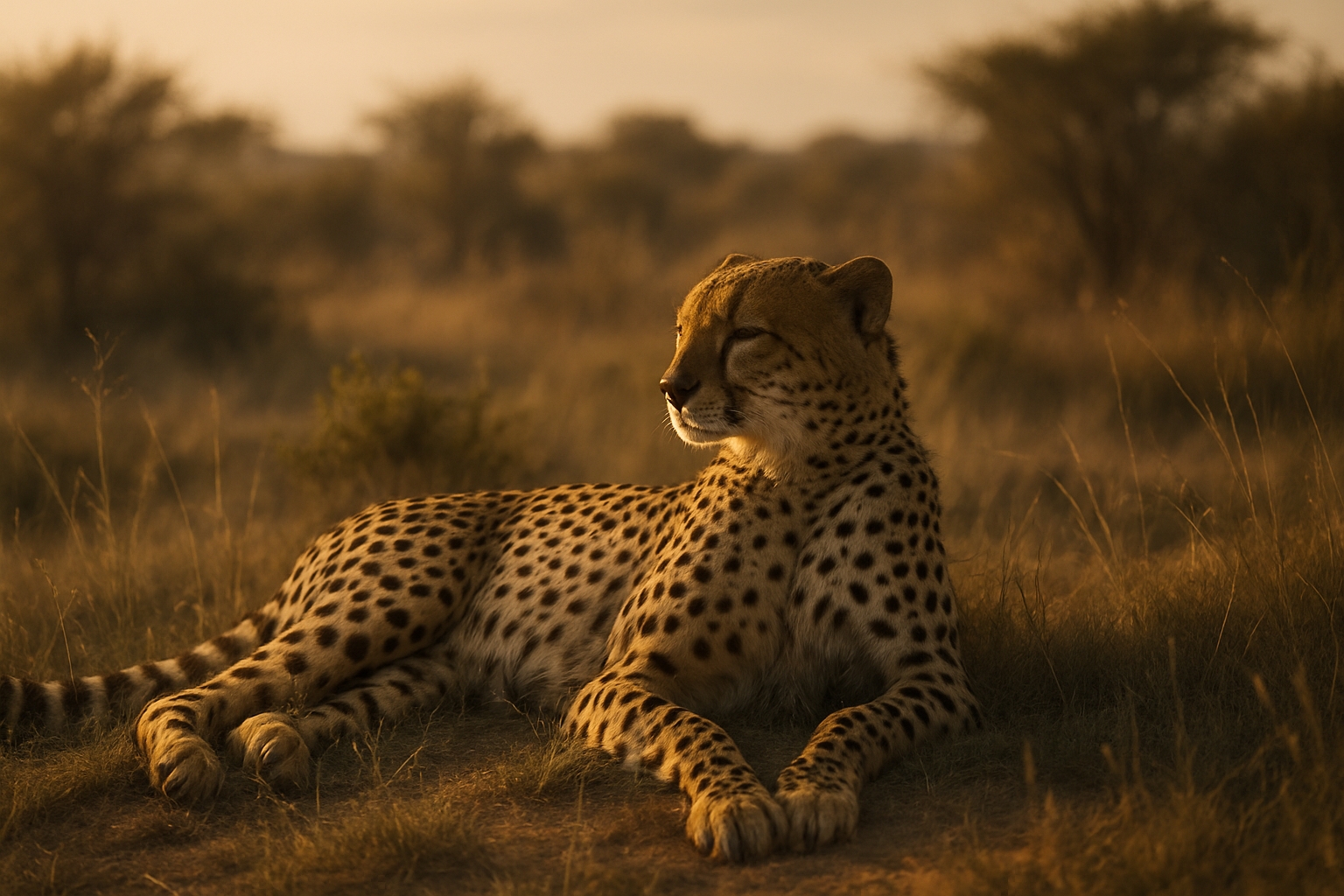
Cheetahs are famous for their genetic uniformity. They passed through severe bottlenecks thousands
of years ago. Today, they are so alike that skin grafts between unrelated cheetahs don't trigger
rejection! It sounds neat, but it's dangerous. Lack of diversity makes them vulnerable to disease
and fertility problems. They may be fast, but, genetically, they're fragile.
The cheetah shows what happens when a species comes too close to the Adam-and-Eve model.
Survival hangs by a thread.
It Takes A Village, And More
Wolves need packs. Bees need colonies. Humans need tribes. Even solitary species get
together to mate. Social species rely on numbers not just for breeding, but for survival
strategies. Hunting, defense, raising young—all require groups.
The founding pair is a story. The functioning population is reality.
When we talk about the first human,
it's tempting to imagine a single individual waking
up one morning with the sudden desire to play golf or open a restaurant. But evolution
doesn't work in sharp boundaries. It's a process of gradual change across populations,
not sudden leaps in individuals.
Our species, Homo sapiens, evolved from earlier members of the genus Homo,
such as Homo erectus and Homo heidelbergensis. These ancestors already
walked upright, used tools, and had large brains. Over hundreds of thousands of years,
small genetic changes accumulated. Skull shapes shifted. Language capacity expanded.
Social structures grew more complex. But these changes didn't all happen at once,
and they didn't happen in isolation.
Instead of a single first human,
there were many individuals in overlapping populations who
carried traits we now call modern.
Some had more archaic features, some more advanced.
Fossils show this mosaic clearly: early Homo sapiens skulls from Morocco (about 300,000 years ago)
look modern in some ways but primitive in others.
Genetics adds another layer. Studies show that modern humans are the result of mixing between
multiple ancestral populations in Africa. One group contributed about 80% of our DNA, another about
20%. Later, we also interbred with Neanderthals and Denisovans. This means our lineage is not a
straight line but a braided stream.
So why no first human
? Because species are defined by populations, not individuals.
Evolutionary change is continuous, while the labels we use—human,
ape,
Neanderthal,
investment banker
—are static categories we impose after the fact.
At some point, enough traits clustered together that scientists classify those populations as
Homo sapiens. But there was no single person who crossed a finish line into humanity.
Conserving Genes
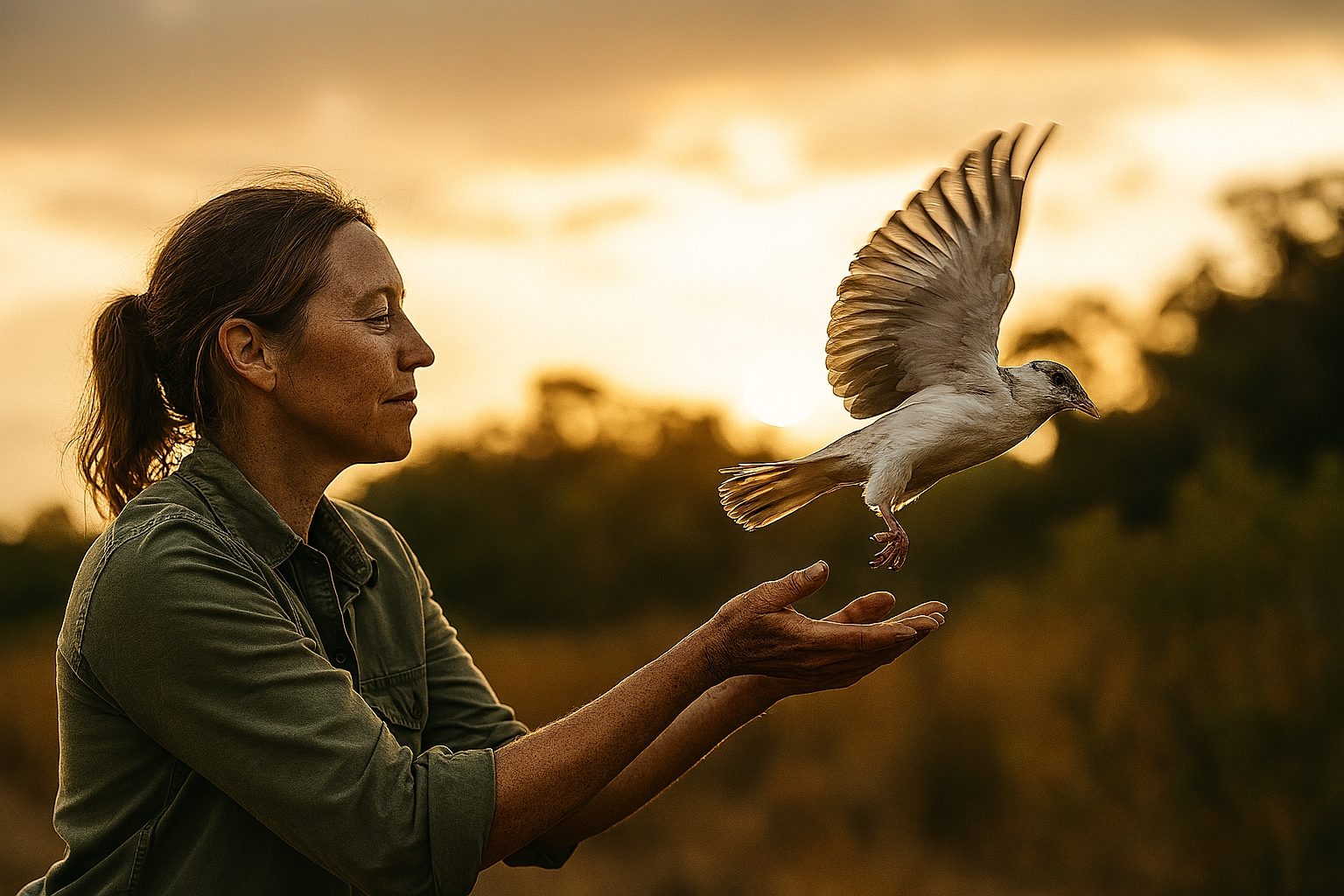
Endangered species force us to confront the math.
The heath hen dwindled below 100 individuals and vanished. The Laysan duck survived with
seven adults in 1912, but only through careful management. Pandas, tigers, elephants—all
require thousands of living individuals to remain viable.
Captive breeding programs must juggle genetics like accountants. Wildlife reserves must
support populations above the minimum threshold. Genetic rescue—introducing
individuals from other populations—can restore diversity.
Conservation is the science of avoiding the Adam-and-Eve trap.
Don't Dodo It Alone
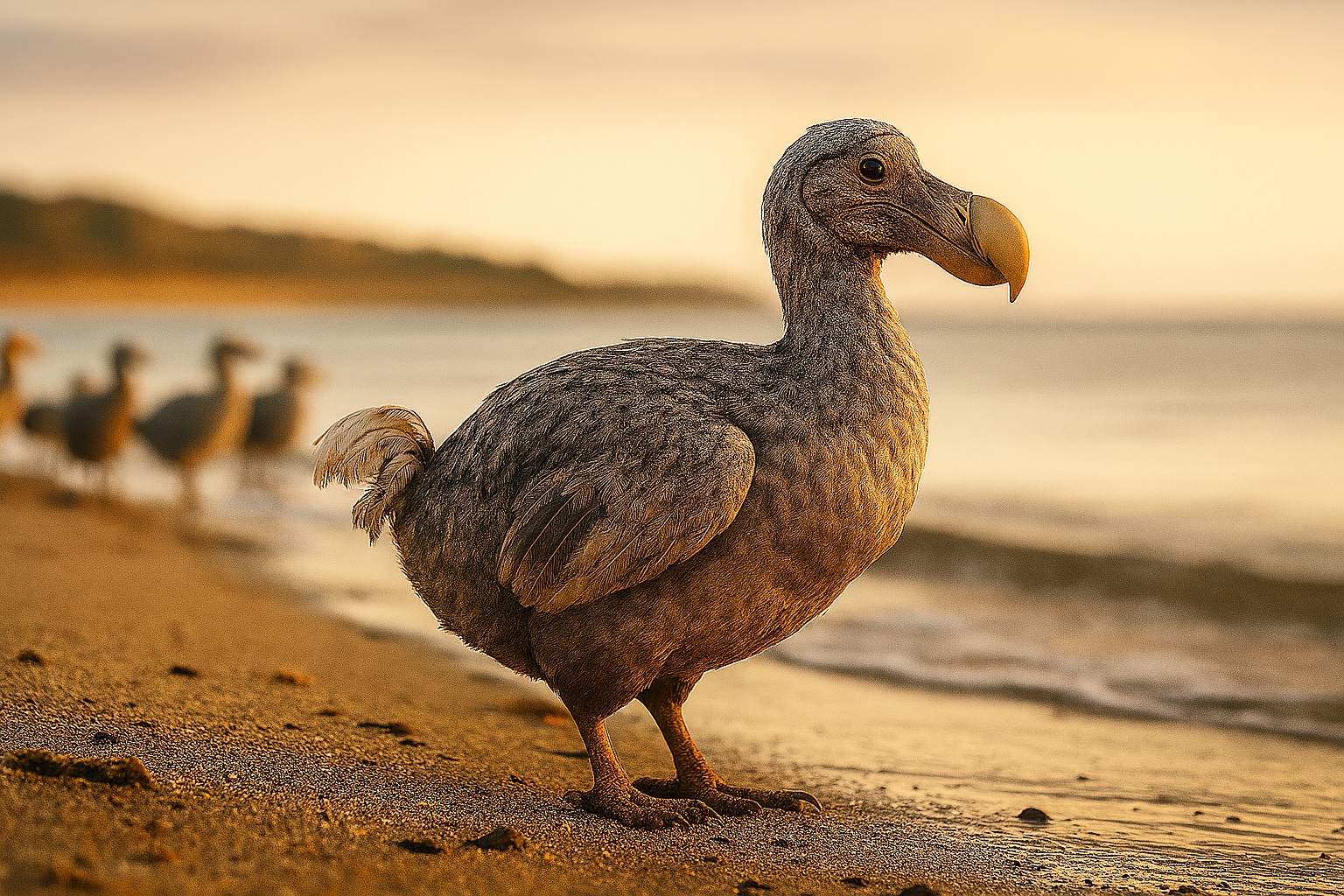
The dodo is the poster child for extinction. A plump, flightless bird from Mauritius, it vanished
in the 1600s thanks to hunting and invasive predators. Today, scientists are trying to bring it
back through de?extinction—sequencing its DNA, editing the genome of its closest living
relative, and hatching engineered chicks.
But here's the catch: one dodo isn't enough. A single bird would be a curiosity, not a species.
Even a handful would struggle. Without a breeding population, genetic diversity collapses,
inbreeding takes over, and survival chances plummet.
You also have to consider the struggle of a single dodo to survive without home
schooling from its parent. Whatever host species provided the egg and nest wouldn't
have any idea how to "be" a dodo.
Ecologists talk about the minimum viable population—the smallest number of individuals needed
for a species to survive long?term. For birds like the dodo, that means dozens at the very least,
and, ideally, hundreds. Anything less is a genetic dead end.
That's why de?extinction efforts focus on building a founding flock, not just one bird. Scientists
plan to edit multiple lines of Nicobar pigeon DNA, hatch multiple chicks, and restore habitat in
Mauritius so the dodo can live as part of a community. The goal isn't a mascot—it's a
population.
The lesson ties straight back to the Adam?and?Eve myth. Stories imagine beginnings with a single
pair. Science insists on numbers. Whether it's humans after the Toba eruption or dodos in a lab,
survival depends on communities, not couples.
From Pair to Population
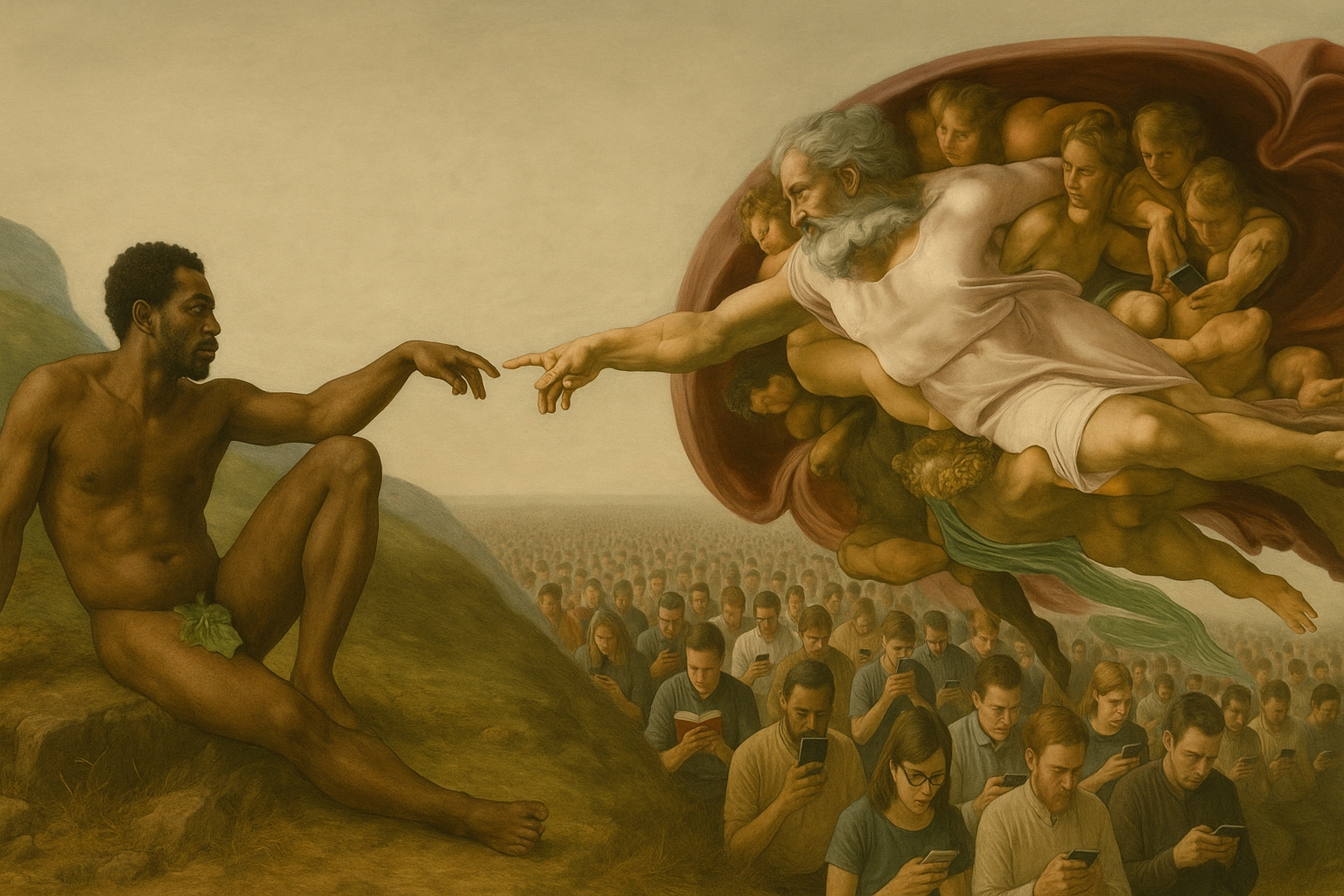
Adam and Eve represent unity, shared origin, and cultural lessons. Science represents mechanism,
probability, and resilience. The myth captures the feeling of common ancestry. The science
explains the mechanics of survival.
In the end, myth and science don't cancel each other. They complement.
Together, they remind us that while we may imagine our origins in pairs, our survival depends
on the many.