|
By: Paul S Cilwa |
Posted: 2/25/2026 |
|
Page Views: 247 |
| Hashtags: #IronAge #History #Technology #MeteoricIron #Furnaces |
| How meteorites and a cultural crash led to the Iron Age. |
| Estimated reading time: 10 minute(s) (2259 words) |

Roughly five thousand years ago, a fragment of metallic asteroid entered
the Earth's atmosphere over what is now Egypt. Friction ignited its
surface, and it streaked across the sky in a burning arc bright enough to
turn night into a startled imitation of day. The desert, usually patient
and quiet, suddenly received a visitor that arrived with sound, light, and
authority.
To observers on the ground, the event would have looked less like a rock
and more like a message. A trail of fire, a roar in the air, and a final
impact that shook the sand would have signaled that something not of this
world had arrived. Ancient cultures were not short on imagination, but
they were rich in attention. They watched the sky carefully because the
sky often decided their fate.
Such a fall would not be forgotten. Long before telescopes or physics,
people understood that ordinary stones did not blaze through the heavens.
A rock that fell from the sky was, by definition, extraordinary. That made
it worth finding.
Ancient Egyptians who witnessed such a fall would have organized a search.
Curiosity is one of humanity's oldest traits, and expeditions form
whenever something strange lands nearby. Eventually someone would uncover
a dense metallic object unlike anything normally found in desert sand.
The material did not resemble copper ore or gold nuggets. It was heavier,
harder, and strangely resistant to ordinary tools. Egyptians called it
biꜣ-n-pet, meaning 'iron of the sky' or 'metal of heaven.' The name was
not poetry; it was classification. The substance clearly came from above;
it belonged to the domain of the gods.
In a culture where divine authority was expected to descend
from the heavens, a metal
that literally fell from the sky carried symbolic power. It was not just
rare. It was cosmically endorsed. That made it suitable for ritual
objects, royal artifacts, and anything meant to suggest a connection
between rulers and the divine.
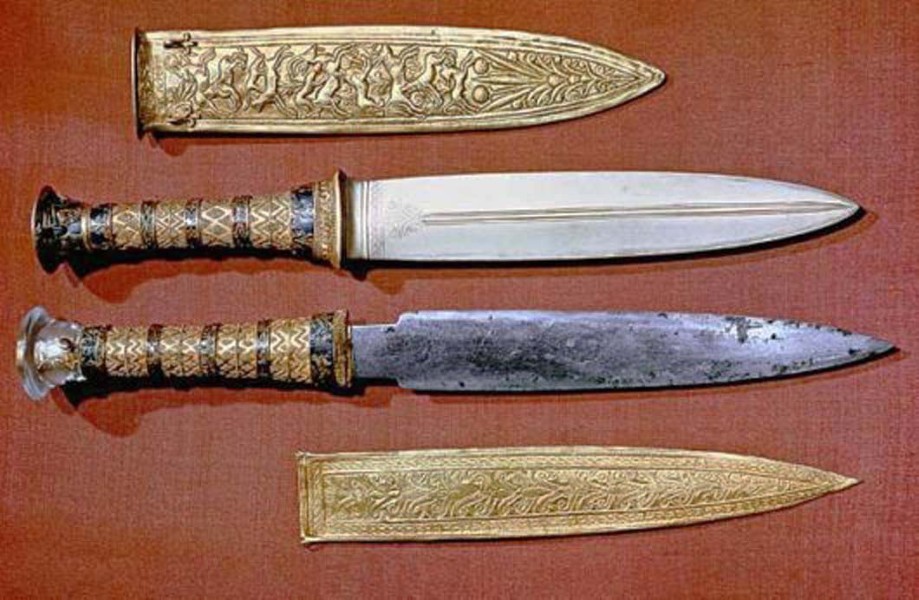
Early meteoritic iron artifacts from Egypt include beads, blades, and
small ornamental objects. These were not mass produced tools; they were
prestige items, carefully shaped and preserved. A famous example is the
iron dagger buried with Tutankhamun, whose composition shows the nickel
content typical of meteoritic metal.
Another early find comes from Gerzeh, where tube shaped beads dating to
about 3200 BCE were formed by hammering meteoritic iron into thin sheets
and rolling them. This required patience and skill, because the metal
could not be melted and poured like copper. It had to be persuaded into
shape.
These objects reveal a key fact: early ironworking did not begin as an
industrial craft. It began as a luxury art. The metal was too scarce and
too mysterious for everyday use. For those ancient Egyptians,
iron was less a material and more a miracle.
Egypt was not alone. Archaeological finds from Anatolia, Syria, and the
Levant show that other Bronze Age societies also used meteoritic iron for
prestige objects. These artifacts are rare, but they appear often enough
to show a pattern: when iron fell from the sky, people made stuff from it.
In the Arctic, Inuit communities used fragments from the Cape York
meteorites as a major iron source, hammering pieces into tools long before
European trade metals arrived. When technology cannot produce a material,
nature sometimes supplies it.
Across cultures, meteoritic iron carried an aura of strangeness and value.
It was metal that had not been mined, smelted, or traded. It had simply
appeared. In ancient economies, that counted as a pretty good origin
story.
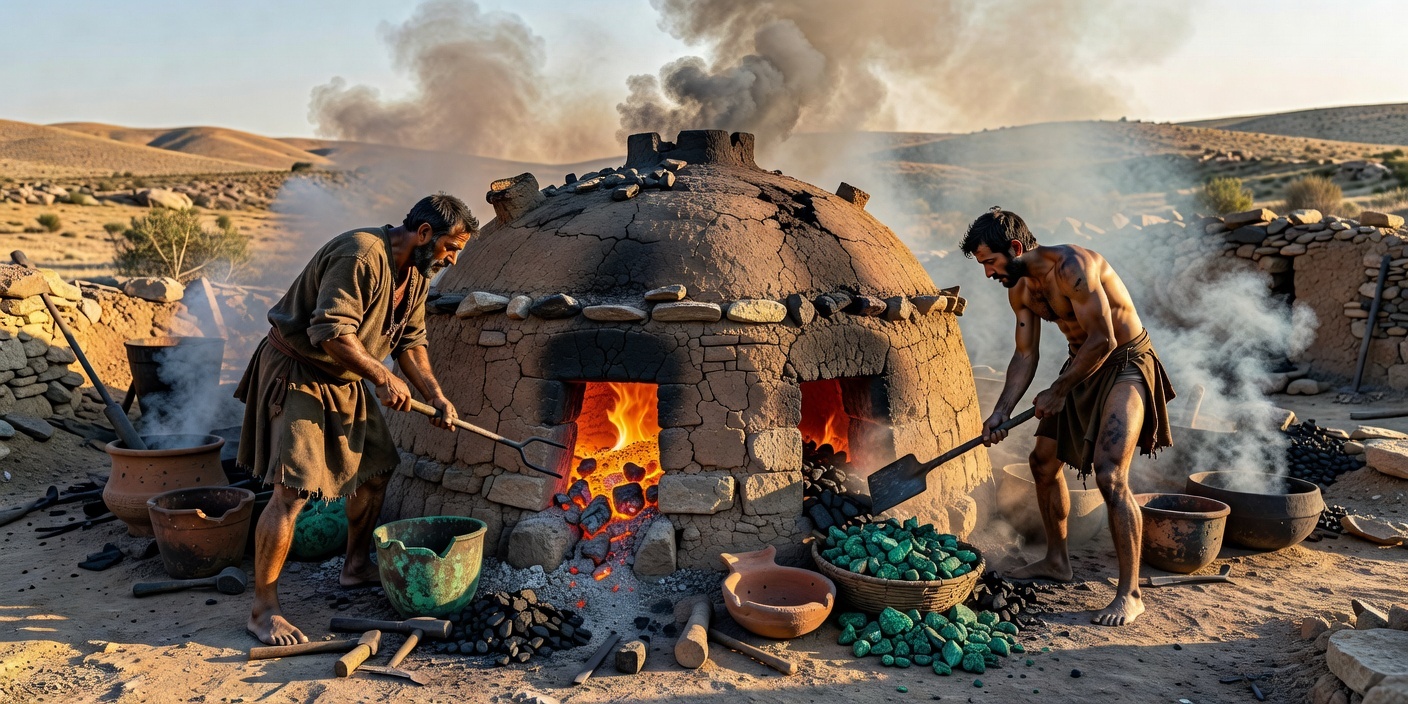
Exciting as finding what we now know as iron in meteorites was certainly
glamorous. But, unknown to the early hammerers of iron, iron was, in
fact practically everywhere around them—in the form of iron ore.
Copper and tin, the components of most bronze, melt at very different temperatures:
copper requires a blazing 1085°C to liquefy, while tin melts at a much
gentler 232°C, a contrast that made early alloying both feasible and transformative for
ancient metalworkers, but it was not hot enough to smelt iron from the rocks
experimenters undoubtedly tossed in to see what would happen.
Iron melts at about 1538°C, far hotter
than early furnaces could reliably reach. Copper and bronze melt at lower
temperatures, which is why they dominated early metallurgy. Iron, by
contrast, behaves like a stubborn guest who refuses to leave until the
room is much hotter than anyone planned.
For centuries, this limitation kept iron rare. People knew it existed,
knew it was useful, and knew it was hard to make. That combination tends
to delay mass adoption until technology catches up.
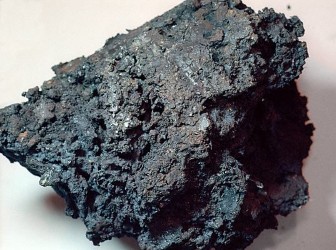
Furnace technology improved gradually through the long experience of
working copper and bronze. Each improvement in airflow, insulation, and
charcoal quality raised achievable temperatures. Eventually furnaces
became hot enough, not to melt iron, but to release it from ore as a spongy
mass called a bloom.
Regions of Anatolia between roughly 1500 and 1200 BCE show early evidence
of this transition. These areas already had strong metallurgical
traditions and active trade networks, which meant they possessed both the
knowledge and the incentive to experiment with new materials.
The result was a slow technological turning point. Iron could now be
produced from common rocks instead of waiting for meteorites. Once that
happened, scarcity stopped being iron's defining feature.
What Broke The Bronze Age System?
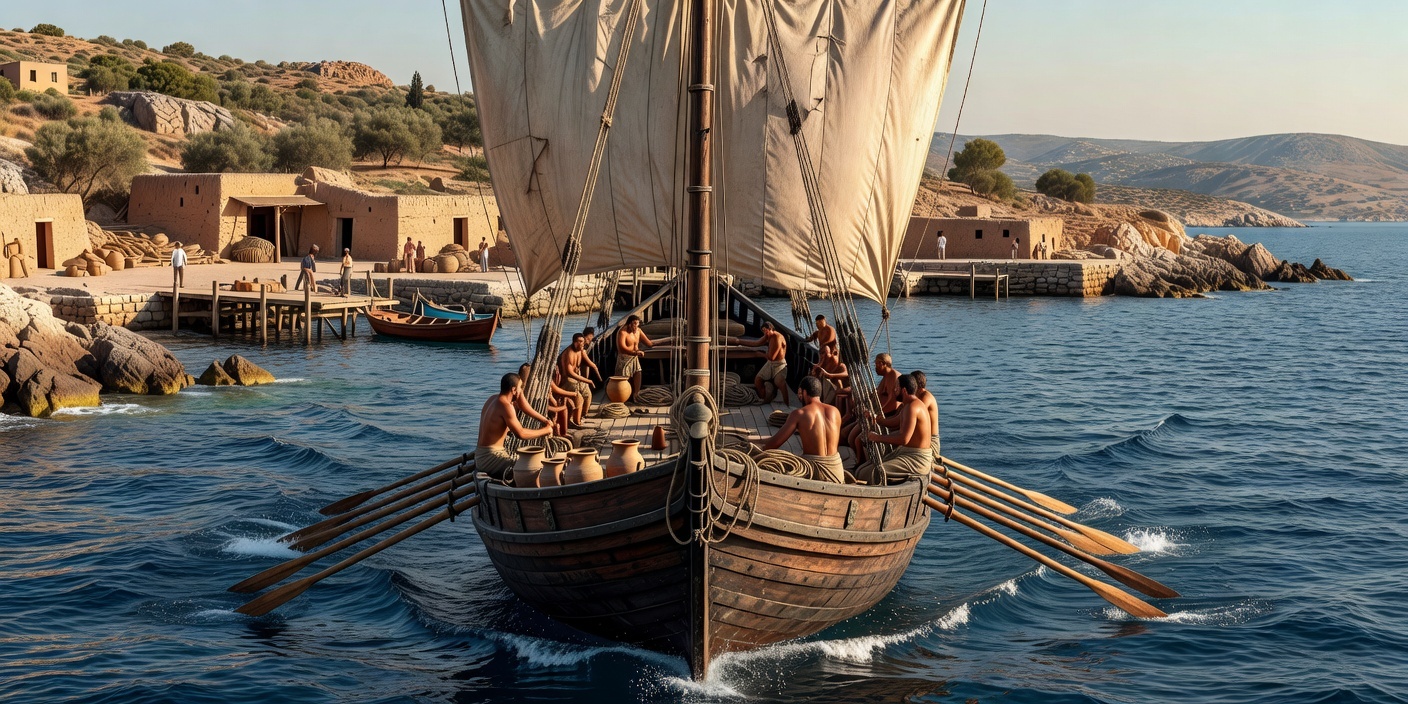
Late Bronze Age civilization depended on a long distance trade web built
on trust, treaties, and ships. Tin traveled from distant regions such as
Central Asia or Anatolia. Copper came from places like Cyprus and the
Sinai. Palace economies coordinated shipments, protected merchants, and
distributed metal.
Between about 1250 and 1150 BCE, that system unraveled. Cities burned.
Trade routes failed. Palace centers collapsed. Mycenaean Greece
fragmented, the Hittite state fell apart, and urban life declined across
much of the eastern Mediterranean.
Writing systems disappeared in some regions, diplomatic correspondence
ceased, and populations shrank or relocated. The collapse was not a single
event but a chain reaction. Once enough links broke, the network could no
longer hold.

Most scholars explain the collapse as a combination of stresses rather
than a single cause. Evidence points to drought, famine, earthquakes,
migration, and warfare interacting in ways that destabilized already
complex states. Highly centralized palace systems proved efficient but
fragile.
When such systems fail, they fail dramatically. Administrative centers
stop functioning, trade halts, and local communities must improvise new
ways to survive. The same interconnectedness that once fueled prosperity
can amplify crisis.
Other interpretations, most famously those proposed by linguist Zecharia
Sitchin, argue that ancient texts describe literal wars among advanced
beings. Passages from Mesopotamian laments that speak of storms, fire, or
destruction are read as accounts of technological warfare rather than
symbolic language.
For example, a Sumerian lament describes devastation with the line:
The storm that annihilates the land rose up; the great storm howling
over the earth, it smashed the cities.
The imagery
is vivid and unsettling, but mainstream scholarship, which has yet to
admit even the existence of extraterrestrial visitors—despite
centuries of eyewitness accounts—much less granting
them a role in our history, interprets such
language as poetic description of invasion or catastrophe, not advanced
weaponry.
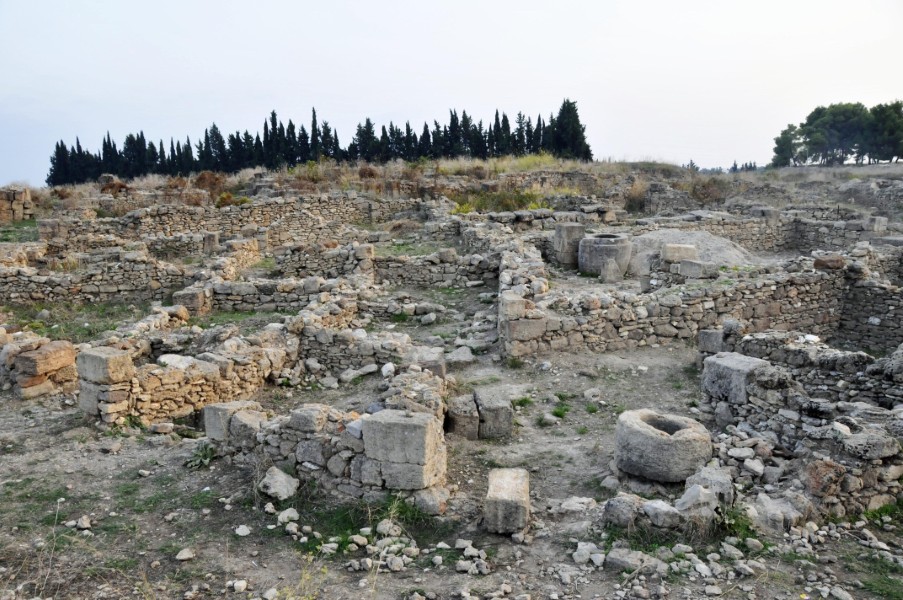
Still, Middle Eastern Bronze Age cities destroyed around 1200 BCE—such as
Ugarit, Hattusa, Mycenae, Troy VIIa, and
Enkomi—appear in the archaeological record as broad, low, rubble-filled burn layers,
giving the impression of settlements abruptly flattened and left in ruins. Their walls are toppled
outward or inward, roofs collapsed into courtyards, and entire palace complexes reduced to
charcoal-rich debris. Mainstream archaeologists insist this is the result of
fire, siege, or earthquake—anything but what they most resemble, a
nuclear-type event. What is striking is the suddenness and
scale of destruction across the Eastern Mediterranean, which leaves
these cities looking eerily uniform in their final, burned, collapsed state.
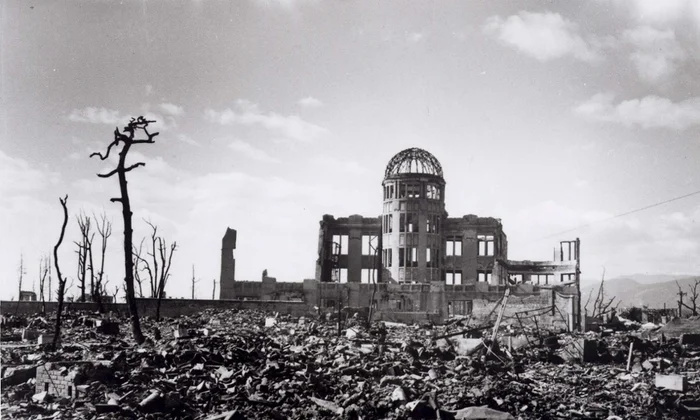
A modern parallel comes from journalist Wilfred Burchett's description of
Hiroshima: "It looks as if a monster steamroller had passed over it and
squashed it out of existence." Both ancient and modern witnesses reach for
extreme metaphors when confronting overwhelming destruction.
After the collapse of palace trade networks, bronze became difficult to
produce because its ingredients rarely occurred together locally. Iron
ore, however, was widely available. Even small communities could gather
it, burn charcoal, and operate hot enough furnaces, once they knew how.
This made iron the practical choice for a fractured world. It required no
international treaties, no royal fleets, and no diplomatic gift exchanges.
Villages could produce their own tools and weapons without relying on
distant elites.
As smiths experimented, techniques improved. Bloomery furnaces became more
efficient. Carbon control produced harder edges. Forging methods became
standardized. Within a few centuries, iron surpassed bronze in hardness,
edge retention, availability, and scalability.
Iron spread most rapidly in regions where Bronze Age systems had collapsed
most severely. In those areas, the advantages of a locally available metal
were impossible to ignore. Technology followed necessity, not prestige.
Texts from many cultures remember this period as one of cosmic struggle:
Mesopotamian epics, Near Eastern storm myths, Egyptian chaos narratives,
and early Greek heroic traditions all describe worlds shaken by conflict.
These stories may preserve the emotional memory of societal breakdown.
Or, they may simply be the eyewitness accounts of primitive people trying
to describe what they've seen and experienced.
Meanwhile, other regions followed different timelines. Much of the
Americas did not develop iron smelting before European contact, though
Arctic peoples used meteoritic iron. Parts of sub Saharan Africa developed
iron industries independently, demonstrating that metallurgy does not
follow a single global schedule.
In northern India, the Painted Grey Ware culture, roughly 1200 to 600 BCE,
shows early Iron Age development in village based societies. Iron tools
appear alongside emerging towns, suggesting a gradual technological shift
rather than a sudden revolution.
China followed a different path. There, metallurgists developed blast
furnaces capable of producing cast iron earlier than in the Mediterranean.
They then learned to refine brittle cast iron into workable forms, turning
what first looked like a flaw into a metallurgical advantage.
These regional variations demonstrate that the Iron Age was not a single
moment. It was a mosaic of local solutions shaped by geography, resources,
and cultural priorities.
Furnaces
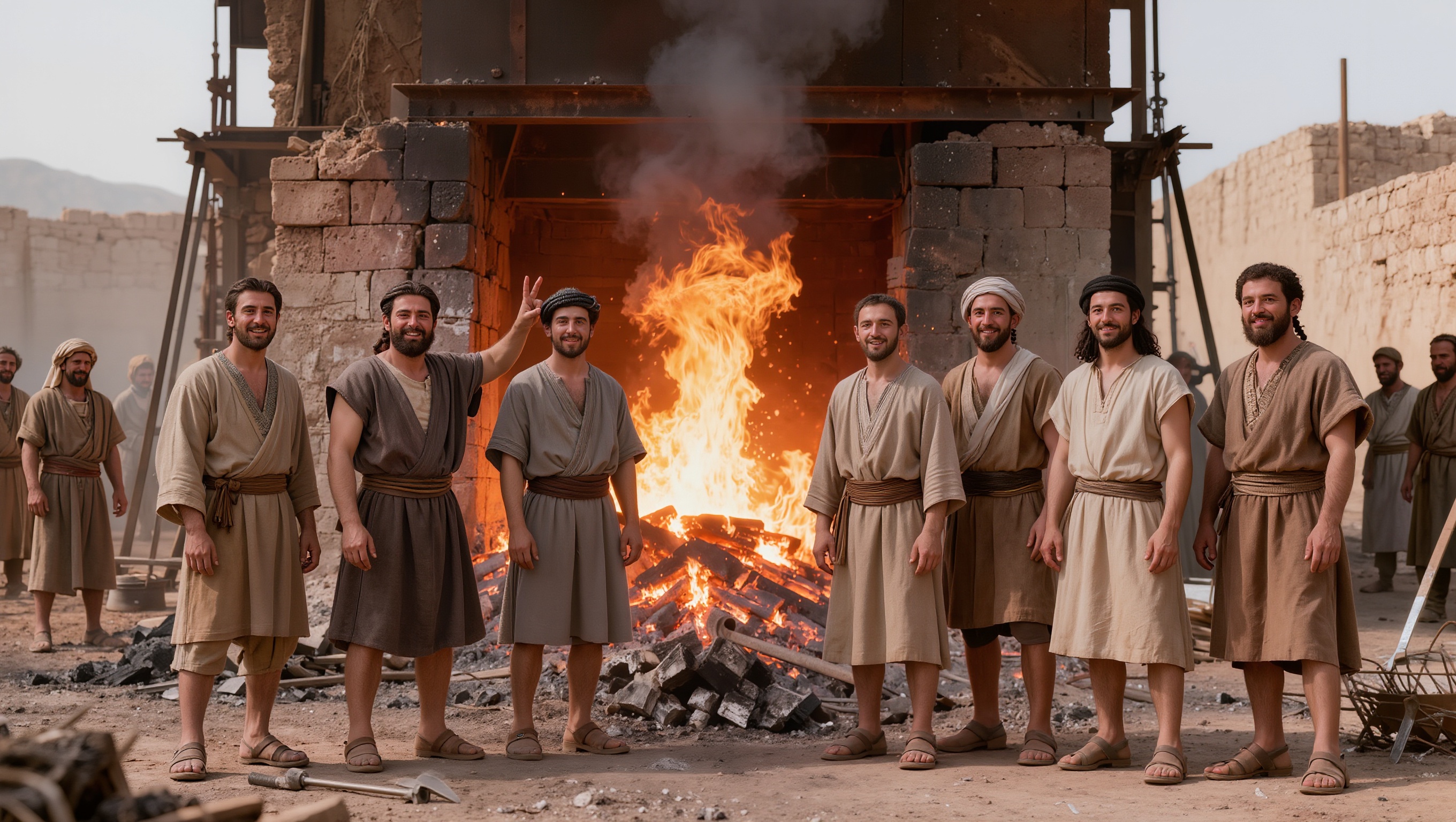
Early furnaces began as simple pits and bowl shaped structures. Over time
they grew taller and more insulated, becoming shaft furnaces that retained
heat more efficiently. Bellows improved airflow, raising temperatures and
allowing more reliable smelting.
Bloomery furnaces produced solid blooms that smiths forged into tools. In
China, blast furnaces reached even higher temperatures and produced liquid
iron that could be cast. Each design represented a step toward greater
control over heat and chemistry.
These improvements did more than refine technique. They changed society.
When metal becomes easier to produce, it becomes easier to distribute. And
when tools become easier to obtain, innovation tends to accelerate.
Pure iron is relatively soft, but when smiths learned to control carbon
content, they discovered steel. By adjusting heat and carbon levels, they
could create blades that were both hard and resilient. This turned iron
from a serviceable material into a superior one.
As steel production improved, iron based metallurgy moved beyond survival
mode and into optimization. Weapons held sharper edges. Tools lasted
longer. Construction became more ambitious. The material that once fell
from the sky was now engineered on demand.
The transition from bronze to iron to steel was not simply technological.
It was civilizational. Each step expanded what societies could build,
defend, and imagine.
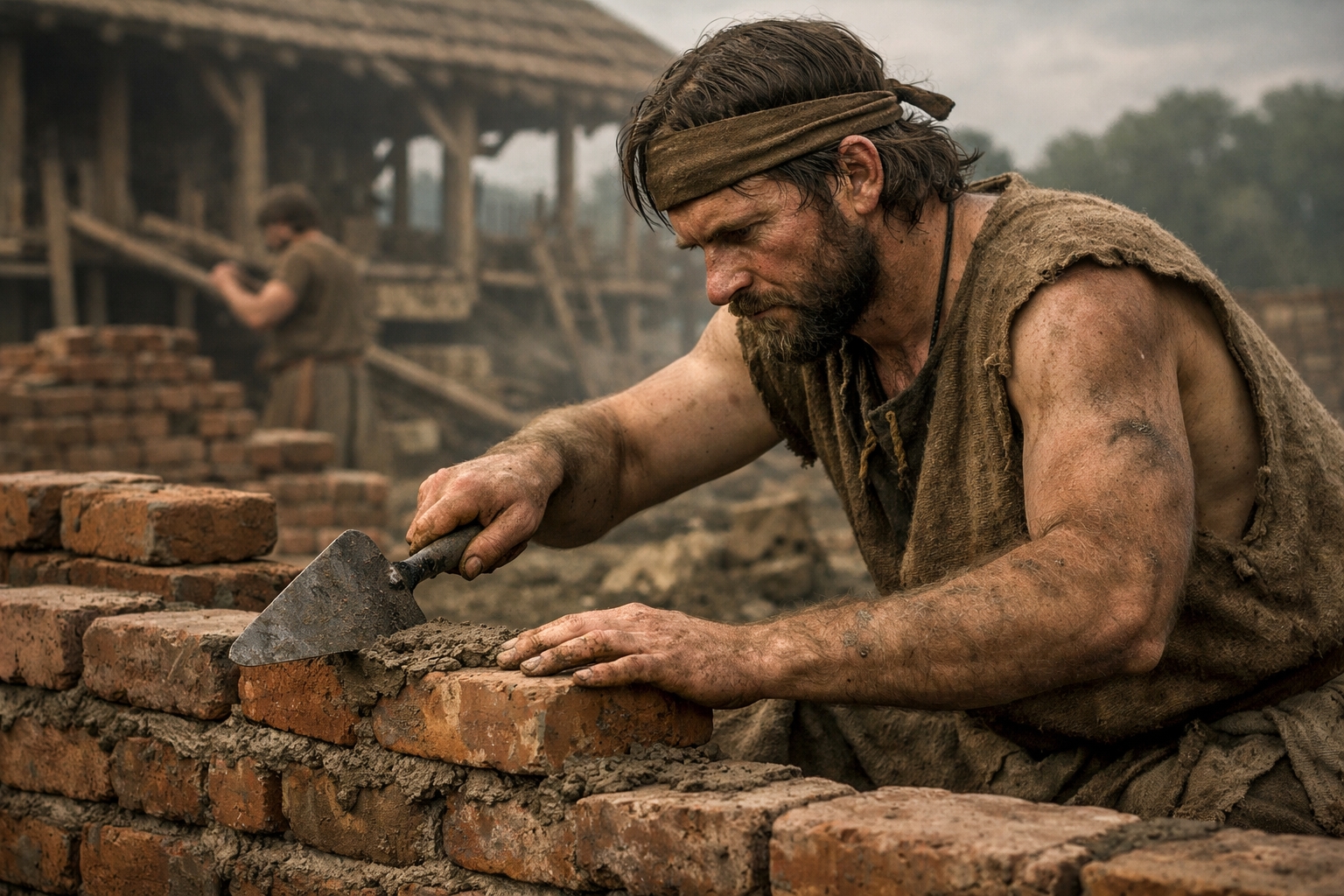
By the early first millennium BCE, iron had become the backbone of major
states such as the Neo Assyrian Empire. Armies marched with iron weapons,
farmers tilled with iron tools, and builders shaped landscapes with iron
implements. The metal was no longer rare or divine. It was practical.
Yet history rarely stops at practicality. Once humans mastered iron and
steel, attention shifted to a new form of power: chemical energy. The next
great turning point would come not from ore or furnace, but from powder.
Saltpeter, sulfur, and charcoal would eventually combine to announce the
Gunpowder Age, and the sky would once again play a role in human history.