|
By: Paul S Cilwa |
Posted: 2/24/2026 |
|
Page Views: 42 |
| Hashtags: #Science #History #Technology #Bronze #ArsenicalBronze #TinBronze |
| How bronze replaced copper and started the Bronze Age. |
| Estimated reading time: 9 minute(s) (2007 words) |
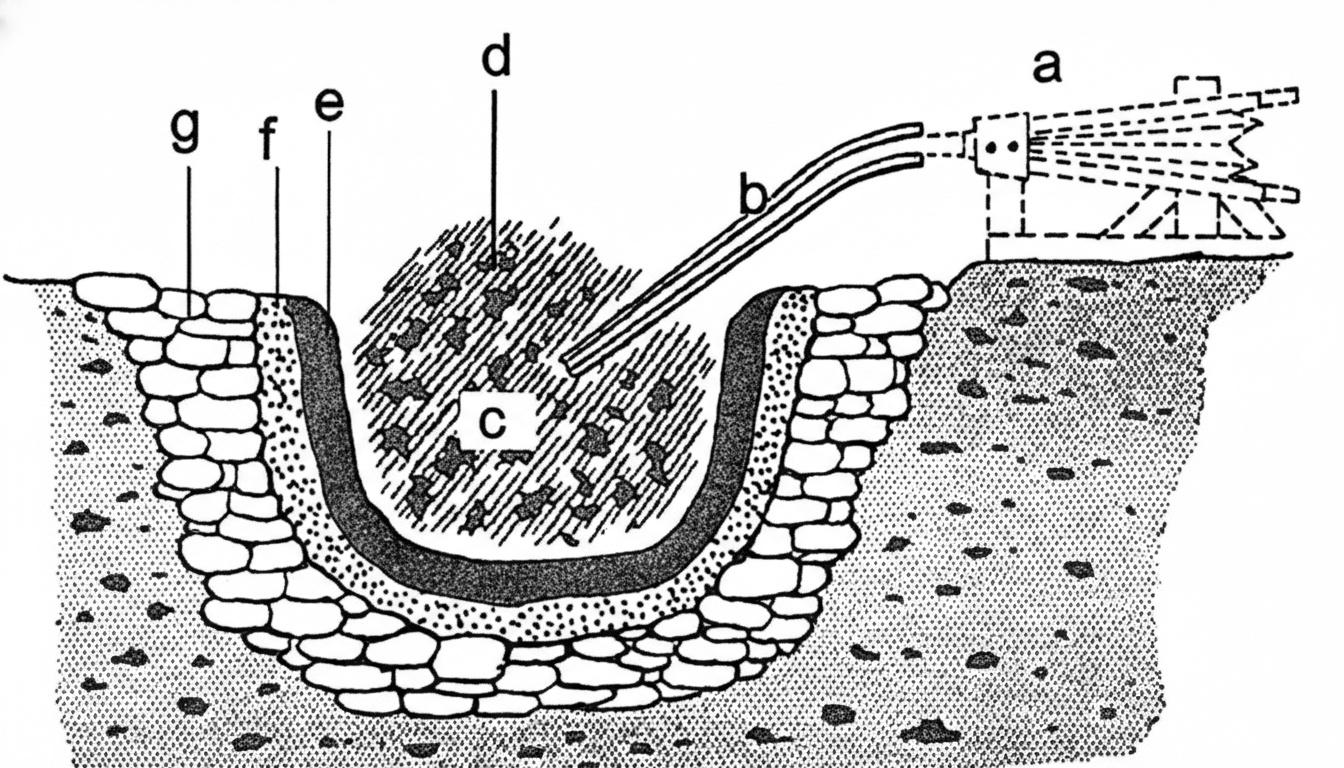
As I explained in the previous essay,
copper was one of the first metals people could work because native copper
sometimes occurs in metallic form and can be hammered cold into small objects.
Early smelting came later, when people learned that certain colorful stones
were ores and that heat plus charcoal could separate metal from them. At
first, this knowledge was uneven and local, with many communities still relying
mostly on stone tools.
The transition to bronze was difficult because metalworkers were not starting
from a clean periodic table. They had to sort useful ore from beautiful but
useless minerals, manage furnace temperatures, and deal with ore impurities
that changed the final metal. In practice, some of the earliest copper alloys
were probably produced partly by accident when mixed ores or impurity-rich
ores were smelted together.
Once craftspeople noticed that some copper-based metals cast better or held an
edge longer, experimentation became purposeful. That is the real engine of the
Bronze Age transition: not just finding arsenic or tin, but learning a repeatable craft
system that linked ore selection, smelting, alloying, casting, hammering, and
reheating into a reliable technology.
What is an alloy, and why do we call arsenic copper 'bronze'?
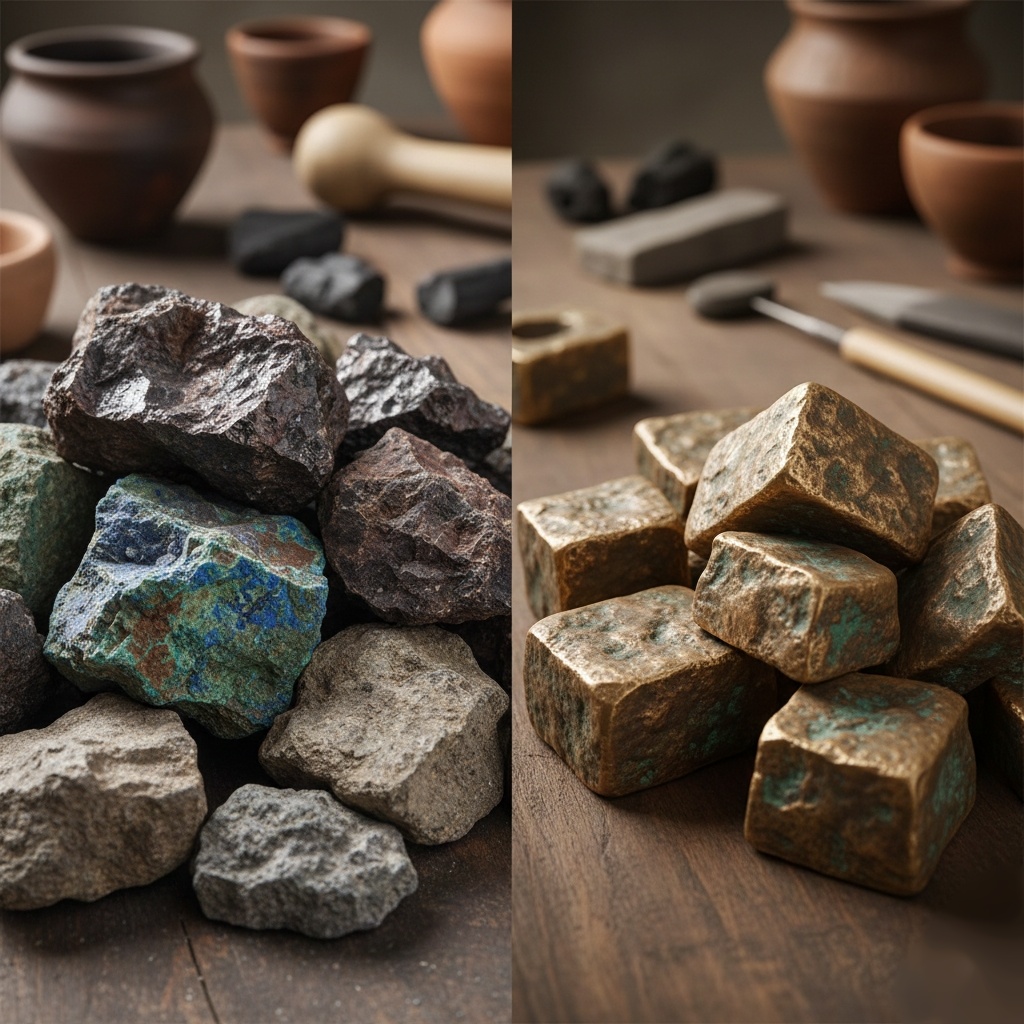
An alloy is a metal made by combining a base metal with one or more other
elements to change its properties. In modern technical language, bronze
usually means a copper alloy, traditionally copper plus tin; but historical
usage is broader. Archaeologists and historians often use the word bronze for
important early copper alloys even when tin was not the alloying element.
That is why 'arsenical bronze' (or arsenic bronze) is still called bronze. The
label is partly practical and partly historical: it identifies a copper alloy that
performed better than pure copper and played a major role in early metallurgy
before tin bronze became dominant in many regions. Ancient craftspeople
themselves often thought of these materials as kinds of copper rather than as
sharply separate categories.
Southwest Asia, including the Iranian
Plateau, preserves very early bronze traditions, and some of the earliest
copper alloys in the wider region were arsenic-bearing. The terminology we use
now is a modern classification system layered on top of ancient practice, so
it is no surprise that the ancient and modern labels do not line up perfectly.
As it happens, the first places to work with copper, were also relatively close to
places that had arsenic. In fact, in Iran, arsenic ore and copper ore were mixed
to "stretch" the more expensive copper, not unlike the time a few years
back, when it was found a Chinese baby formula company was exporting formula
"stretched" with chalk (which is cheaper than milk). Never underestimate the
craftiness, nor overestimate the honesty, of company owners.
Yet, in a surprise twist (and unlike the chalked baby formula), it turns
out that copper dosed with arsenic creates a better metal!
Arsenic can increase hardness and strength compared with relatively pure
copper, which helps tools keep a working edge and resist deformation.
Arsenical copper alloys can also improve casting behavior in some situations,
making it easier to produce shapes that would be less practical in very soft
copper. Those gains are a big reason arsenic alloys spread before tin bronze
became common in many places.
Another practical advantage is that early metalworkers could encounter
arsenic-bearing ores without needing a separate tin supply chain. If the ore
body already contained arsenic minerals (which it often did), a useful alloy might appear during
smelting even before anyone understood why the product behaved differently.
That makes arsenical bronze a plausible bridge between simple copper smelting
and deliberate alloy design.
There was a serious downside, though: arsenic fumes and dust can be toxic.
Ancient metalworkers did not have modern industrial hygiene, so repeated
smelting and refining of arsenic-rich materials likely carried real health
risks. That does not mean toxicity alone explains the shift to tin bronze.
For one thing, the coughing was tolerable for awhile; and years would pass
before the worst symptoms manifested. But I can definitely see where a young
man looking for work in metals might be more drawn to the tin bronze variety,
just because working there would be more pleasant, or at least, less awful.
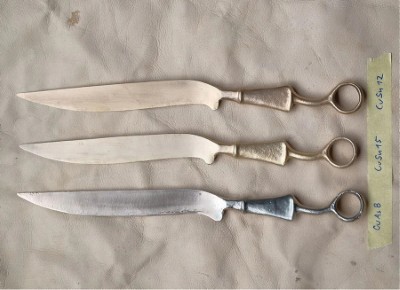
Tin bronze usually gave metalworkers a stronger package of advantages than
pure copper and, in many cases, a more controllable package than arsenical
bronze. Bronze made with tin is harder than copper, more fusible (easier to
melt and cast), and generally better suited to repeatable casting of tools,
weapons, and vessels. In short, tin bronze improved both performance and
manufacturing.
This mattered because the Bronze Age was not only about sharper blades. It was
also about scale and specialization. If a workshop can cast more consistent
axes, chisels, spearheads, molds, fittings, and ritual objects, then labor can
be organized more efficiently and elite or state institutions can standardize
production. Bronze helped create systems, not just objects.
Tin was the catch. It is much less common than copper, so tin bronze depends
on trade routes, access to distant deposits, and political stability. That
scarcity is one reason bronze technology spread in very different ways across
the ancient world and why regional Bronze Ages do not all look the same.
Tin bronze's most immediate difference was mechanical performance. Copper tools can be
useful, but they are softer and deform more easily under heavy work. Bronze
tools and weapons held edges better, stayed straighter longer, and
tolerated repeated use more effectively. For crafts such as woodworking,
farming, and warfare, that difference changes productivity and reliability.
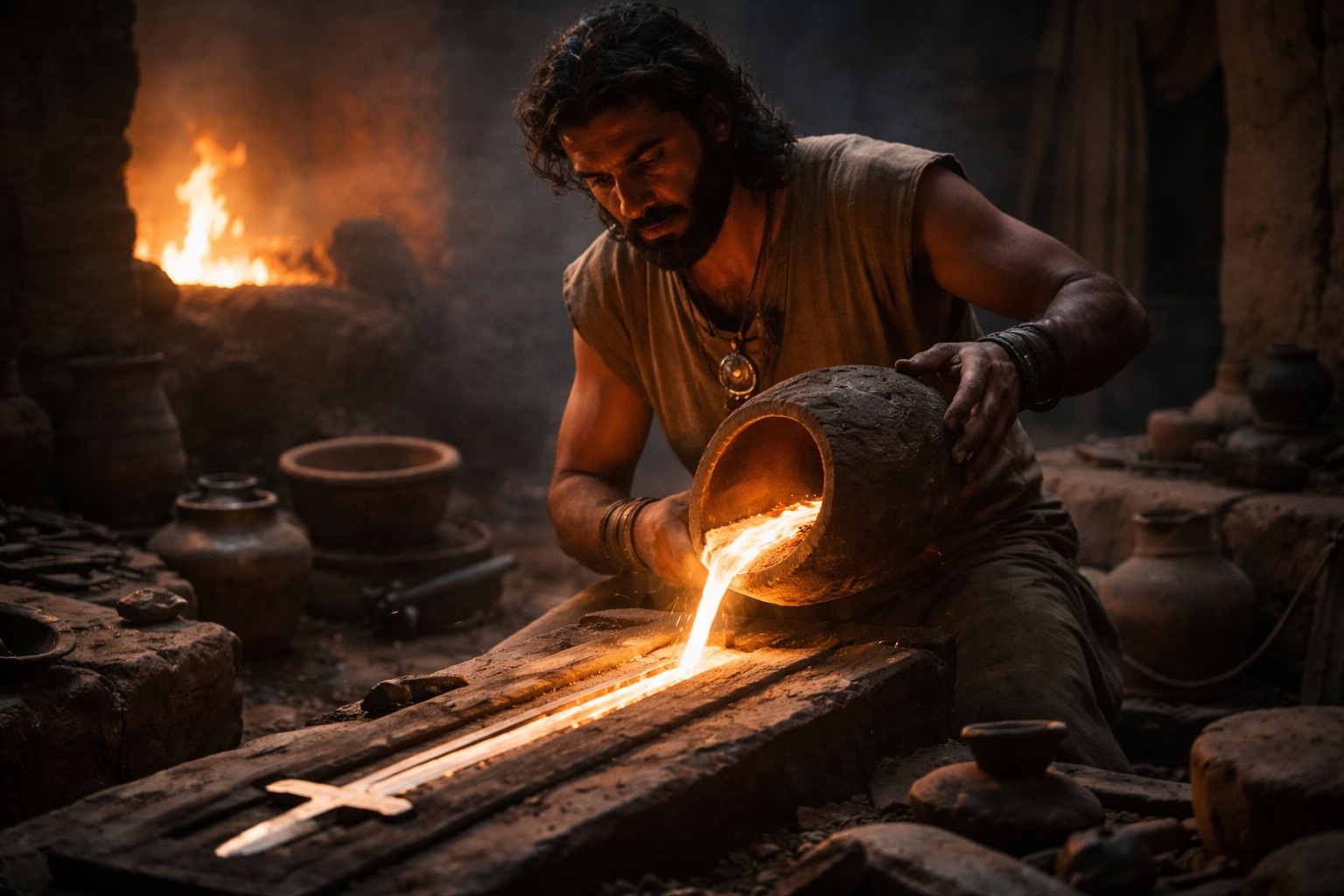
Bronze also helped with casting complex shapes. Because bronze is more fusible
than copper, it flows into molds more readily and supports more detailed
castings. That enabled not just practical tools but also decorated vessels,
fittings, bells, and symbols of authority. In many societies, bronze became
both an engineering material and a political material.
It is worth noting that people still combined techniques. Many bronze objects
were cast, then hammered, sharpened, and reheated in cycles to tune hardness
and toughness. Bronze Age metallurgy was already a craft science, even if it
was not written in modern chemical equations.
Bronze in the Americas
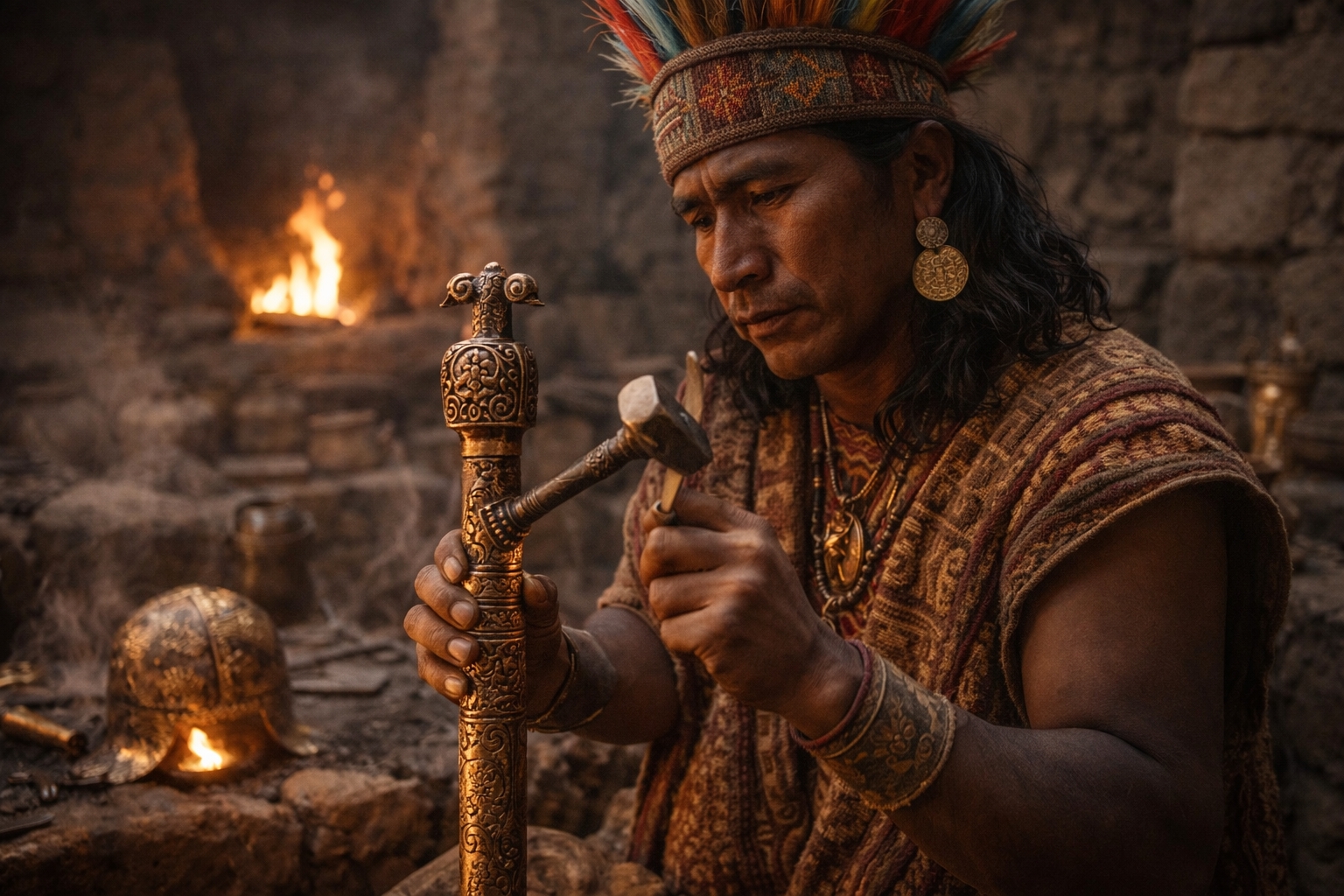
There was no single pan-American Bronze Age that matches the classic Old World
sequence, but there were important metalworking traditions in the Americas. In
the Great Lakes region, the Old Copper culture worked native copper very
early, mainly by cold hammering and related methods. This was a true
copper-working tradition, but it did not evolve into a broad bronze-based age in
the same way as many Eurasian societies.
In the Andes, however, copper alloying did develop, including arsenical bronze
and later tin bronze in some areas and periods. Andean metallurgy produced
both utilitarian and ceremonial objects, and in certain regions arsenical
bronze replaced copper for tools such as knives and chisels. So parts of South
America did have real bronze technology, even if historians do not always map
Old World period names onto the Americas one-to-one.
The best way to frame it is this: the Americas had multiple metal histories,
not one universal timeline. Some regions remained stone- and copper-dominant,
some developed sophisticated precious-metal work, and some Andean societies
developed bronze metallurgy with regional goals and meanings that do not fit a
simple European-style period label.
The First Bronze Age Weapons
In these essays, I haven't gone much into weaponry because, prior to the Bronze Age,
combatants more or less just threw stuff at each other. But bronze didn't just replace
stone and copper—it rewrote the logic of combat. Once metalworkers
learned to alloy copper with tin, they produced blades that were harder, sharper, and far more
durable than anything that had come before. A stone axe could shatter on impact; a pure copper
blade bent like warm clay. But bronze held an edge, took a point, and could be cast into shapes
that stone simply couldn't imitate. By the height of the Bronze Age, warriors carried bronze
swords, spearheads, axes, and daggers, each one a small technological revolution in its own
right.
Shields evolved alongside these new weapons. Contrary to the Hollywood image of gleaming
metal discs, most Bronze Age shields were built around a wooden core, faced with leather or
rawhide, and reinforced with bronze rims, bosses, or plates. This hybrid design mattered. Wood
absorbed shock, leather prevented cracks from spreading, and bronze protected the edges where blows
landed hardest. A full bronze shield would have been way too heavy to maneuver, but a bronze-faced or
bronze-rimmed shield hit the perfect balance of strength and agility.
The first combat encounters between
bronze and the older materials must have been startlingly one-sided. Imagine a fighter stepping
forward with a stone blade—obsidian sharp, yes, but brittle—and striking the rim of a
bronze-reinforced shield. The stone edge would chip or shatter instantly, leaving the wielder
holding a stick with a broken blade. Copper fared no better. A copper sword striking bronze would
deform on contact, its edge curling or denting while the shield absorbed the blow with barely a
complaint. Even a modest bronze plate on the shield's face could turn the older weapons into
liabilities.
Against bronze weapons, the contest became more even; but the shield still held the
advantage. The wood-leather-bronze sandwich structure soaked up the energy of a strike, while the
bronze fittings prevented catastrophic failure. Bronze swords could bite into wood, but they rarely
broke a shield outright. The real purpose of the shield wasn't to be invincible—it was to
keep the warrior alive long enough to strike back. And in that role, the Bronze Age shield was a
masterpiece of practical engineering.
Bronze smelting pushed communities to build better furnaces—taller shafts, stronger bellows,
hotter charcoal beds. Once you can reliably hit 1,000-1,100°C, you're only a few engineering
tweaks away from the 1,200-1,300°C needed to reduce iron ore. They didn't set out to smelt
iron; they simply built furnaces that accidentally got close enough to make iron experimentation
possible.
Besides, copper ores often occur alongside iron minerals. When Bronze Age smelters cleaned out their
furnaces, they sometimes found spongy, metallic lumps—iron-rich bloom mixed with slag.
They didn't know it yet, but they were just one extra-hot furnace away from
mankind's next great technological leap.