|
By: Paul S Cilwa |
Posted: 2/23/2026 |
|
Page Views: 51 |
| Hashtags: #Science #History #Technology #Copper |
| How a Stone Age accident changed the course of history. |
| Estimated reading time: 10 minute(s) (2265 words) |
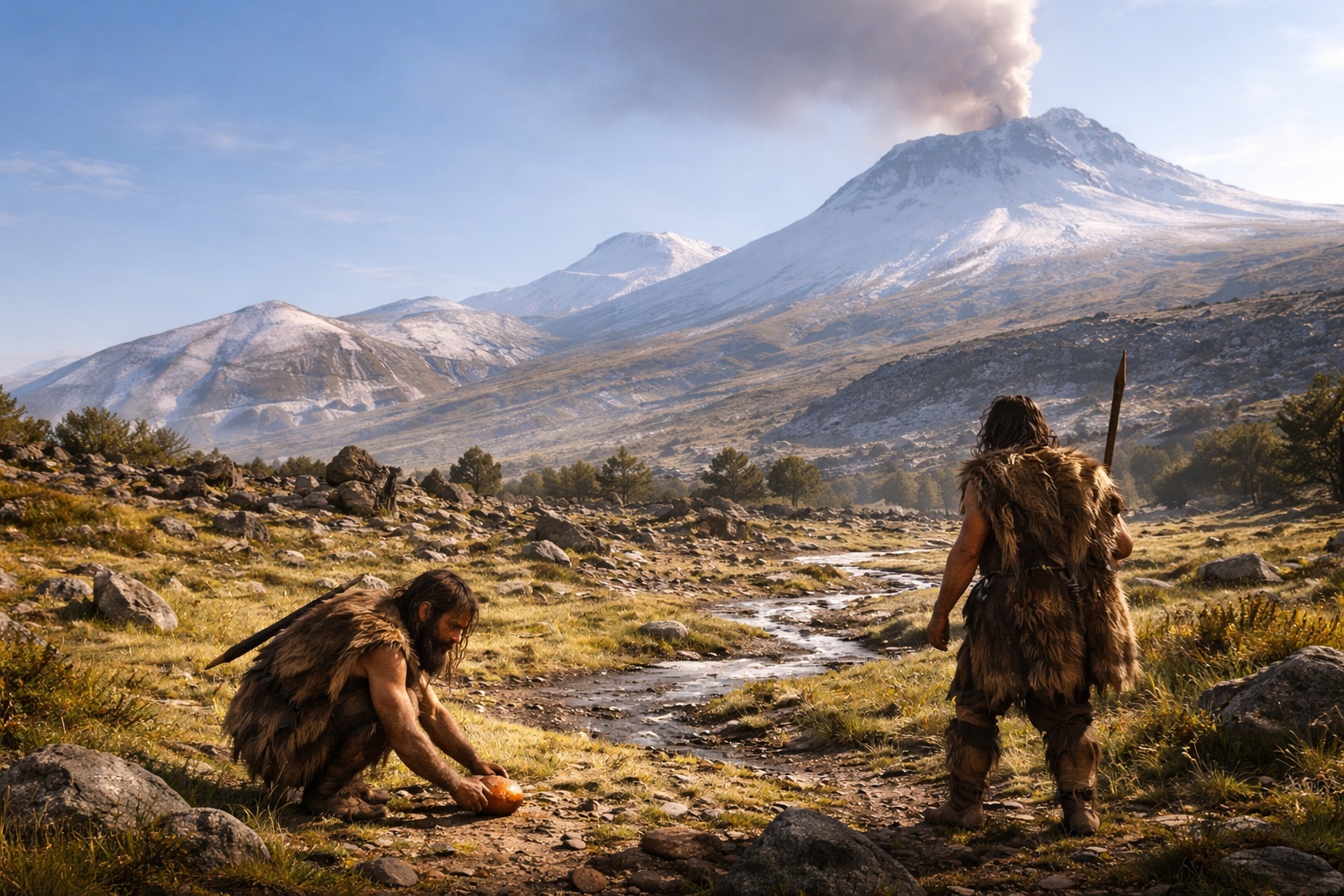
That happened several times in unrelated places. But it took place first in
Anatolia (today's Turkey) about 9000 years ago. But that couldn't have happened
if, some 20 million years earlier, there hadn't been a whole lot of volcanoes.
Twenty million years ago, Earth was in the middle of a tectonic identity crisis. Continents were
shifting, plates were grinding, and the crust was stretching and cracking like a loaf of bread
rising too fast. When the crust stretches, the mantle decompresses; when the mantle decompresses,
it melts; and when it melts, it looks for a way out. The result was a planet dotted with volcanic
fields—not a single global cataclysm, but a long, restless period when magma kept finding
excuses to reach the surface. Anatolia was one of those places. Arizona was another. They didn't
know each other existed, but they were both caught up in the same planetary mood swing.
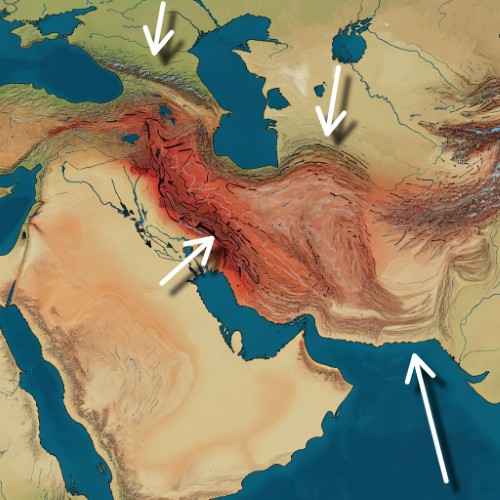
In Anatolia, the trouble began when the Arabian Plate slammed into Eurasia. That collision didn't just
raise mountains—it squeezed the entire region sideways. The landmass that would one day be
Turkey was shoved westward like a bar of soap squeezed between your hands. Cracks opened. Faults
slipped. Magma surged upward through the new plumbing. Over millions of years, volcanoes built
layer upon layer of basalt, andesite, and rhyolite across the landscape. These weren't gentle
cones; they were sprawling volcanic provinces, fed by deep hydrothermal systems that circulated
hot, mineral-rich fluids through the fractured rock. Wherever those fluids cooled, they left behind
veins of copper.
Meanwhile, on the other side of the world, the American Southwest was having its
own volcanic renaissance. The Laramide mountain-building era had ended, and the crust began to
collapse under its own weight. Arizona stretched, thinned, and sagged into the Basin-and-Range
Province—a geological hammock that encouraged magma to rise. Volcanoes erupted across what
is now Chandler, Phoenix, and up to the Mogollon Rim (stretching near Payson and Sedona).
The chemistry was different from Anatolia's, but
the outcome was the same: hydrothermal fluids infiltrated the volcanic rock, depositing copper in
cracks, cavities, and oxidized caps. The copper industry that would one day define Arizona was
being written into the bedrock.
Volcanoes don't produce pure copper directly; they produce
the conditions that make copper available to humans. The heat drives the fluids. The fluids carry the metals.
The fractures give them places to settle. Over millions of years, erosion does the rest: rivers
carve through the volcanic layers, exposing the veins, freeing nodules, scattering green-stained
stones across the surface. By the time humans arrived, the hard work was already done. The copper
was waiting.
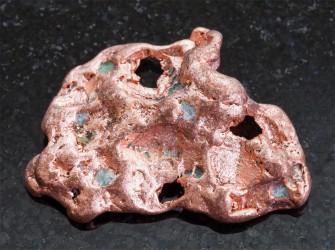
That's right; in some cases, it could be seen lying around on the ground. To someone unfamiliar
with it, it would have looked like a distinctive rock: Reddish and shiny, but rock-shaped and rock-sized
and likely to be picked up by any rock hound looking to pick up the raw stones for the next round
of Stone Age tool-making.
One of the main uses of rocks was in pounding, or tenderizing meat.
This was done by placing the meat on a broad, flattish stone, and then pounding
it with a smaller stone.
This was an especially important task, since fire hadn't yet been tamed.
But once, by accident, some Stone Age lady, tried to smash meat with a stone,
got distracted by one of her kids and missed the meat. When the stone struck
the boulder, something very un-rock-like occurred: The stone flattened.
Rocks don't do that. They smash, or they shatter. Seeing a stone flatten would be seeing something
impossible. And there was no way these people, without YouTube or Facebook to distract them,
and so who spent many hours experimenting with rocks—what happens if they're heated? What
happens if they're soaked in water?—there's no way they wouldn't have subjected the weird
rock to all kinds of experiments to see what it could do.
And, apparently, the first use they put to it was making beads.
Now, beads predate copper. That's right, our Stone Age ancestors were fashionistas.
Long before anyone in Anatolia ever picked up a piece of native copper, bead-making was already one
of humanity's oldest and most sophisticated crafts. The earliest beads we know of—tiny
Nassarius shells from Africa and the Levant, dating back more than 100,000 years—were
deliberately perforated so they could be strung or sewn. They show polish around the holes and
abrasion marks from fiber, proof that early humans weren't just collecting pretty objects; they
were engineering wearable jewelry.
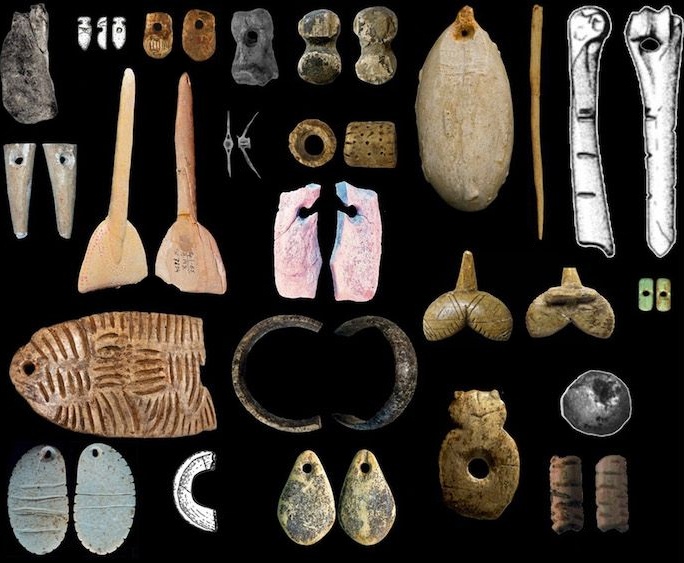
Over the next tens of thousands of years, bead-making became a
fully developed tradition. People drilled bone, carved stone, and shaped ostrich eggshell into tiny
discs, each with a carefully made central hole. Some strings contain hundreds of beads, all uniform
in size, all intentionally pierced. These weren't casual decorations. They were identity markers,
social signals, and heirlooms—a trove of meaning long before metals entered the
picture.
So when native copper was finally noticed in the Neolithic world, it didn't start a new
tradition; it joined an ancient one. Copper beads from early Anatolian sites were rolled, folded,
or pierced in exactly the same way as their shell, bone, and stone predecessors. The innovation
wasn't the bead; it was the material. Humans already knew how to make things meant to be
worn. Copper simply offered them a new substance that bent instead of breaking, and that small
difference changed everything.
Early users of native copper didn't jump straight to metallurgy, but they absolutely went beyond
beads. Once people realized this strange red "stone" could be hammered, shaped, and sharpened
without shattering, they began experimenting in every direction their Stone-Age toolkit allowed.
What emerges is a small but fascinating catalog of objects—all made without smelting,
casting, or furnaces, just cold-hammering and annealing.
They made awls and perforators,
some of the earliest true copper tools. These were small, sharp points used for piercing leather,
basketry, and hides. In a world where sewing and binding were essential, a copper awl was a quiet
revolution: it stayed sharp longer than bone and didn't snap like flint. They also made small
knives and cutting edges, usually by flattening a nugget into a leaf-shaped blade. These weren't
battlefield weapons; they were domestic tools for scraping, trimming, and preparing food or
hides.
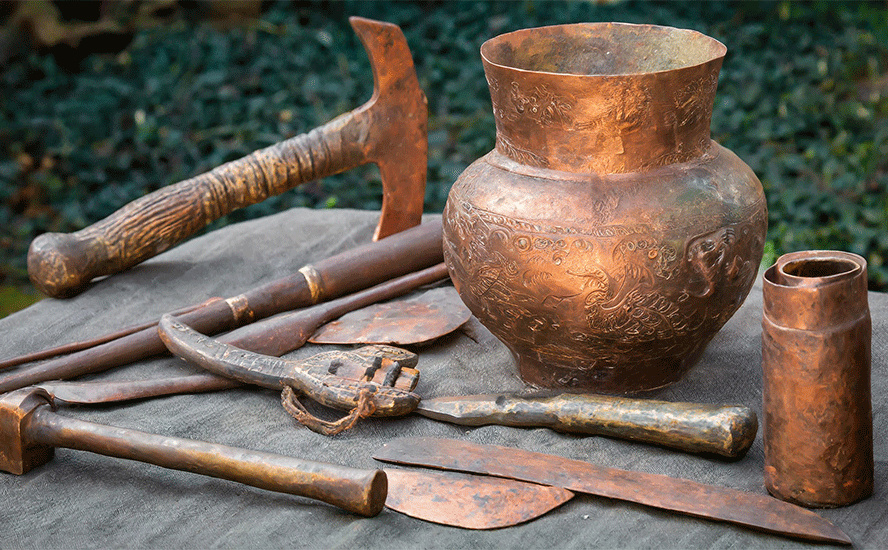
Another category was hooks and fish gorges. Copper's bendability made it perfect for
shaping simple fishing gear, and several early sites show exactly that: curved, hammered
pieces with sharpened points. People also made bracelets, rings, and pendants, often by hammering a
sheet and curling it into a loop. These weren't just decorations; they were status markers. In
societies where most tools and decorations were stone, wearing metal was a statement.
And finally, they made small
axes and adze-like forms, though these were rare and often more symbolic than functional. Without
smelting, copper was too soft to compete with good stone for heavy chopping, but the idea was
there: a shaped, hafted metal tool, thousands of years before bronze made it practical.
So the picture is clear: early copper use wasn't a single invention but a wave of curiosity. People tried
points, blades, hooks, ornaments, and even proto-axes—all before anyone learned to melt
ore. Copper didn't replace stone overnight, but it opened a door, and once humans stepped through,
they never went back.
So using native (found) copper, awesome as it was, was not enough to lift people out of the Stone
Age. That couldn't happen until smelting was developed.
Smelting couldn't have happened without pottery, another Stone Age invention that quietly
transformed what humans could do with heat. Any lump of clay that happened to sit next to a
hot enough fire, would harden. Once people learned to shape clay and fire it hard
enough to hold boiling water, they accidentally created the first controlled high-temperature
environments. A pit full of glowing coals could cook food, but a clay-lined vessel or kiln could
concentrate heat, retain it, and push temperatures far beyond anything an open fire could reach.
That was the technological doorway through which smelting would eventually walk.
Early potters didn't just invent containers; they invented high-temperature environments. A
well-built kiln could reach 700-900°C, which is exactly the temperature range where
malachite—the bright green copper carbonate used for beads and pigment—begins to decompose.
If a bead, a pigment lump, or even a dusting of malachite slipped into the coals or onto a kiln
floor, it would turn black, then glow, and finally "sweat" tiny metallic droplets. In other
words, a potter could accidentally witness the first stage of smelting without having the slightest
intention of making metal, or even knowing what "metal" was.
There's no direct archaeological evidence that someone intentionally
decorated a pot with beads and fired them (which was my initial guess, and it still could have
happened that way), but there is evidence that potters routinely worked with
pigments, crushed minerals, and small decorative objects around their kilns. In that environment,
it would take only one accident—a bead rolling off a work mat, a pinch of green pigment
falling into the fire—for someone to notice that this particular stone behaved differently.
It didn't burn. It didn't crack. It transformed. And once that transformation was seen, repeating
the experiment would have been irresistible.
So while we can't point to a single pot with a fused
bead stuck to it, the logic is sound: pottery created the temperatures, malachite provided the
chemistry, and chance provided the spark. Smelting wasn't a leap of imagination; it was the natural
next step after a potter watched a green bead turn into that familiar red "rock" that refused to break.
Once people learned to smelt copper from the green and blue minerals lying on the
ground—malachite, azurite, chrysocolla—the Copper Age didn't creep into existence; it blossomed.
You can see it happen in places like Çatalhöyük in central Anatolia around 6000 BCE, or in the
Vinča culture along the Danube a little later. Suddenly, communities that had spent thousands of
years knapping flint and polishing stone discovered a material that could be melted, poured,
reshaped, repaired, and sharpened in ways stone never allowed. The shift wasn't instant, but it was
unmistakable: copper became a new category of possibility.
As smelting spread, copper became a cultural signal as much as a technological one. In the
Caucasus, early smiths hammered and annealed copper into elegant tanged daggers. In the Levant,
small socketed axes and chisels appeared centuries before bronze. And in the Balkans, the
Vinča culture produced some of the earliest true metal workshops—places where ore was
roasted, slag was dumped, and copper was shaped into tools that circulated far beyond the villages
that made them. The Copper Age became a Thing, not because copper was better than stone in
every way, but because it was different—a material that could be melted and reborn, a
substance that invited experimentation.
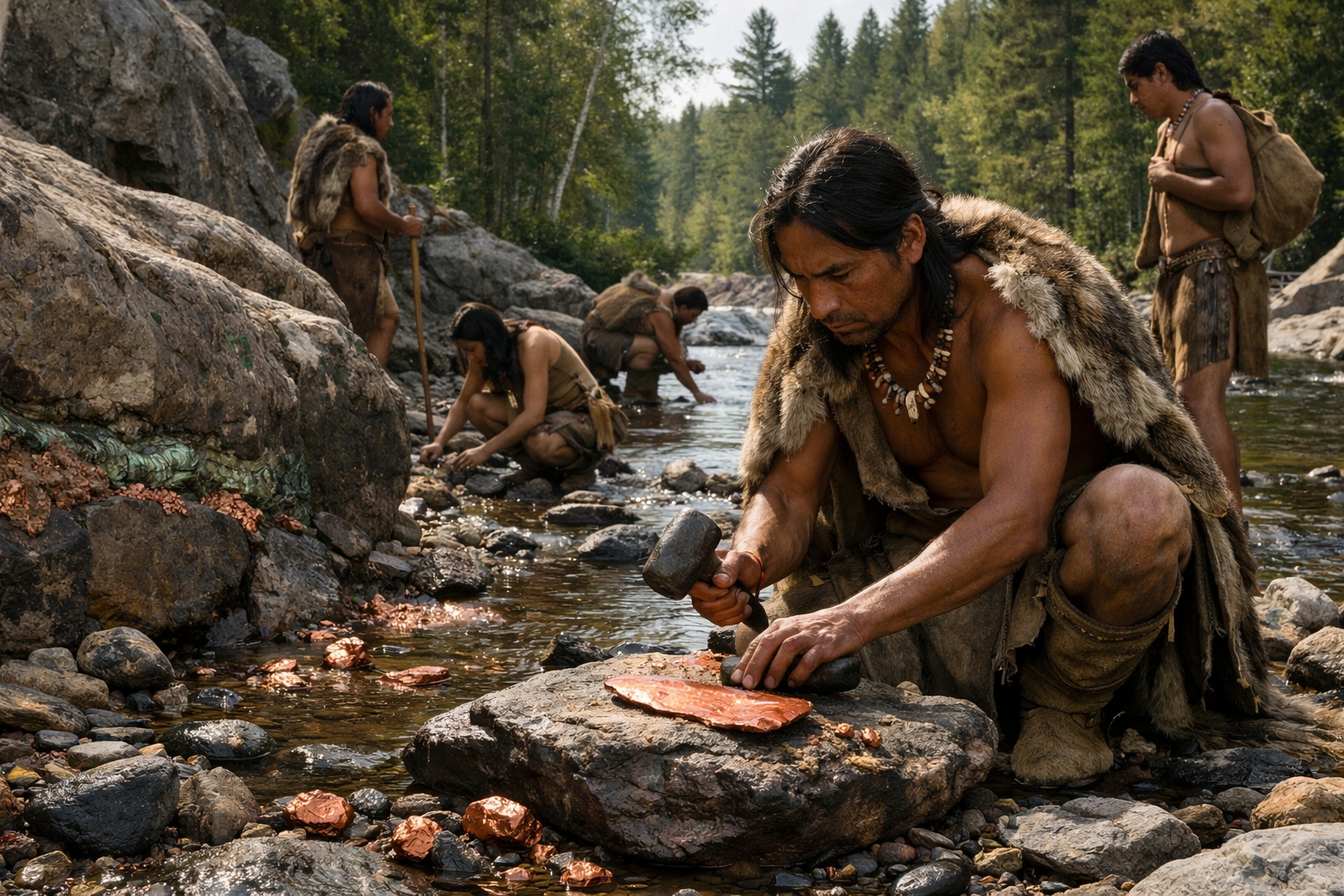
Around Lake Superior, Native Americans developed one of the most remarkable independent
metalworking traditions in the ancient world, working native copper thousands of years before
smelting reached the region. Beginning as early as 4000 BCE, people of the Old Copper Complex
traveled the Keweenaw Peninsula, Isle Royale, and the south-shore riverbeds where glaciers had
scraped pure copper from the bedrock and left it scattered in boulders, sheets, and nuggets. They
cold-hammered this metal into practical tools—awls, knives, fishhooks, spear points, and
chisels—objects that were tougher and more resilient than bone yet easier to repair than
stone. Some pieces were utilitarian, others beautifully shaped for ceremony or status, and all were
made without furnaces, molds, or smelting. This was a copper culture born directly from the
landscape, a technological tradition that flourished for millennia before fading as trade networks
shifted and new materials arrived.
China came late to the
copper party, around 3000-2500 BCE, but they lived in regions where copper and tin occurred
together. Without knowing the difference between the ores, early experimenters accidentally
produced tin-bronze—a metal far harder and more useful than pure copper. As a result, China
skipped the long, gradual Copper Age seen in Anatolia and Europe and vaulted almost directly into a
full Bronze Age. Where the Near East spent millennia learning what copper alone could do, China
discovered the alloy first and built an entirely different metallurgical tradition on top of it
(which we'll cover in more detail in my next essay on the Bronze Age).
The Copper Age didn't begin because someone got lucky. It
began because Earth had spent tens of millions of years preparing the stage. The volcanoes of the
Miocene built the mineral landscapes of Anatolia. Erosion revealed them. Curiosity did the rest.
When a Neolithic person picked up a strange reddish "stone" and struck it with another rock,
the metal flattened instead of shattering—and the world changed. Copper wasn't just a
discovery. It was an inevitability written into the planet long before humans ever walked across
it.
As was the next step: mixing tin with copper to make bronze, the next step in our technological
evolution.