|
By: Agnes Steinberg |
|
|
Page Views: 27 |
| Hashtags: #AgnesSteinberg #Yonkers #NewYork |
| Chapter 6 of my dead ex-mother-in-law's memoirs. |
| Estimated reading time: 10 minute(s) (2165 words) |
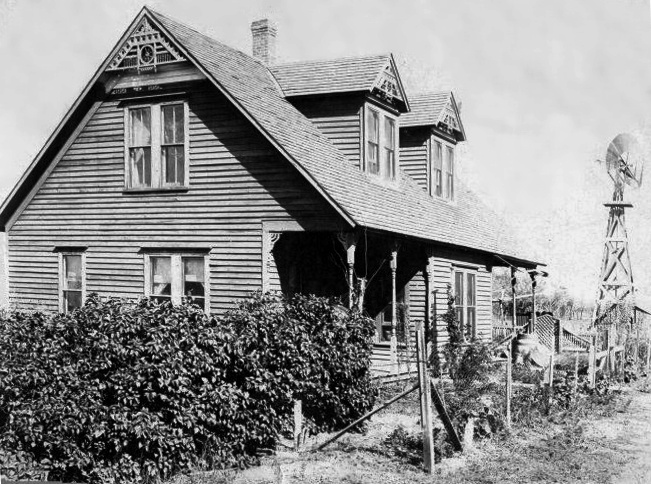
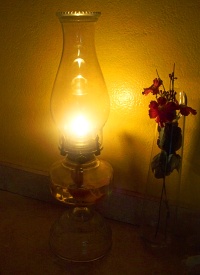
Supper waited. We must sit down at once. The hanging lamp stirred
slightly in the breeze, and cast a mellow glow that flowed around
the table to bind us close together.
Our hostess, swathed in blue checked apron and chatting briskly
all the while, served her country fare—each dish a product of the
farm. A fowl, pot-roasted brown and tender and swimming in a soup
tureen of gravy, was placed upon the trivet. Covered vegetable
dishes kept hot the "parsley potatoes", steamed dried corn, and new
peas plump and green. Jellies and pickles set about in dishes spiced
the meal. From the oven came a loaf of well-browned bread. A butter
 pat of roses passed from place to place. Strawberries picked that
afternoon and rich with cream rounded out the feast.
pat of roses passed from place to place. Strawberries picked that
afternoon and rich with cream rounded out the feast.
Nor had the pantry been neglected. Later, when aunt Ida had gone
home, the items needed for next morning's breakfast were discovered
ready on its shelves.
It had been a strenuous day, but one with a lovely ending. At
last we climbed the narrow stairs. The rooms above were cool and
filled with honeysuckle scent. Rag rugs were scattered on the
floors. Each bed was covered with a patchwork quilt, and sheets and
pillowcases had come from chests where basil leaf had left its
fragrance. We turned the oil lamp low and blew it out.
Inspection
A cock crowing announced the coming of morning. The eastern sky
grew gray, then white. Pink clouds appeared above the flat horizon.
Then, in a burst of flame-red glory, the sun was fully up. The day
would be extremely hot.
How clear and fresh the sunlight, reflected in every trembling
drop of dew! How sweet the air blowing through the kitchen door! Its
gray-painted walls, subdued and restful, tempted one to linger over
breakfast. But who would tarry with the whole world waiting just
outside?
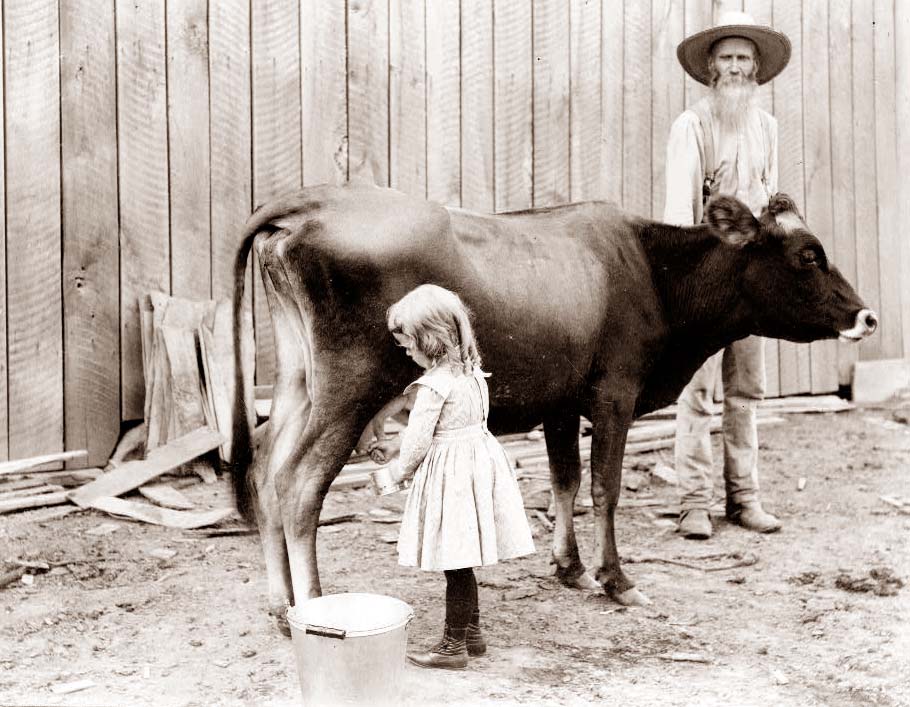
Milking time was over and cows were being watered and led to and
fro for staking in green pasture. The barn, being of major
importance, merited my first attention. Yes, it was very much the
same. Each horse still had his own large stall. Jed munched his feed
contentedly, oblivious of my visit. Light brown in color, of sturdy
build and tenuous of muscle, he drew the heaviest of loads. At my
approach, Dick rolled his eyes, laid back his ears and moved
uneasily. Thin and black, high-strung and nervous, he responded well
to the hand of a kind and firm master, but should never be harnessed
for a woman's driving. Ah, Jerry! My favorite, stable and
even-tempered, put down his head to have the white star on his
forehead rubbed. Hay-wagon shaft, carriage harness or plowshare were
all the same to him as long as he was moving. Jerry asked no favors
but his food and water. Sugar, an apple, or fresh grass were always
lifted from my palm with utmost delicacy and the faintest tickling
touch of his soft nuzzle. We understood each other very well.
The two cats, now rubbing their sides against the stalls, had
accompanied me ostensibly motivated by pure friendship, but really
with an eye to forgotten milk pans or to any mouse that might stick
its silly head out of the hayloft to see what all this commotion was
about.
Outside in the yard, the poultry roamed, each family a separate
social unit. The Rhode Island Red and her nearly full-grown brood
chose the flower bed and scrutinized the stalks and leaves for bugs.
The Plymouth Rock, heavy and overbearing, her chicks half-grown,
would hold the fort right here in the grass plot! Let other families
move about! The Leghorn, light and graceful, with tiny, fluffy
offspring, withdrew into seclusion. Up and down the garden rows they
pecked their way, the babies chirping shrilly. Each brood received
its morning lesson from the mother hen. This was the better way to
scratch. These were the choicest morsels. A reluctant worm might be
induced to leave his ground hole thus. Dogs need not be avoided, but
cats were temperamental. One never knew; it was best to keep out of
their way, especially when chicks were very young. This was the
water pan. The head was lifted, so, in drinking.
A family of ducks passed, too, waddling heavily from side to
side. The roosters strode alone, with plumy tails and most
insufferable airs.
Only the bull, of all the animals, remained in isolation,
tethered by a lengthy rope within a barbed-wire fenced. With him I
had no dealings, nor did I offer stalks of corn. I kept my distance,
too.
Last to be visited, and only for a few brief minutes, were the
pigs. With tails curled to perfection and little prancing hooves,
the young ones came to meet me at the fence and squealed loudly for
corn.
The sun was high. The morning was far spent, with little left to
see but the flowers. Across the flat top of the hedge the spider
hopefully spun his web. Within the yard were rows of dahlias and
gladioli not yet come to bloom. Upon a wire screen climbed tall
sweet peas of every hue, both pale and bright, that could be thought
of. A butter tub propped on a bed of rocks held cornflowers of the
deepest blue.
Listen! Across the acres between the other house and ours, deep
and mellow, came the steady ringing of a monster cow bell—the call
for all hired men to wash and come for lunch. It marked,
unconsciously, in a slow and measured rhythm, the tempo followed on
the farm by man and beast.
Sanctuary
Early afternoon was even warmer than morning. The buzzing of "hot
weather birds" increased the sense of heat. Naked fields vibrated
with it. Corn loved this weather. The stalks stretched in exultation
and seemed to grow taller by the minute. The shiny blades waved and
gloated in the scorching sun.
Row after row led to the edge of shady woodland, a sanctuary
where all things grew wild and good. Here socks and shoes were done
away with. Cool shallow water running swiftly over stones soothed my
burning feet. I splashed my face, a free young thing among free
young things. Moss formed a spongy bed on which to lie and view the
passing clouds above the topmost bow. All around, I had a feeling,
little eyes were watching to see if it were friend or foe who
lingered, uninvited, in their parlor. The brook whispered a tune,
accompanied by the rustling of the silken garments of the trees.
Nature guarded jealously her treasures. To those alone who would sit
down and visit with her were they shown. Here, if one waited long
enough, one might discover the universe anew and even find one's
self.
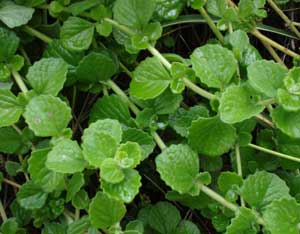
Here also was nature's candy counter. Fragrant mint grew at the
water's edge. Dark green leaves, protecting pure white berries, if
crushed, would fill the air with the scent of wintergreen. The root
of sassafras was good to nibble and young birch bark shoots were
delicate in flavor. A tangy gum had oozed from cracks along the
trunk of the wild cherry and hardened into lumps for chewing. All of
these, since time began, had quenched thirst on a summer's day.
Seated high up in the branches, out of sun and out of sight, I
could view the clearing which stretched from one wood to another.
Snuggled in between the gardens and the corn fields were eight
houses with their barns and sheds. These formed our little world.
Here we must live together in harmony, each family distinct, yet
each somewhat dependent on the other.
In the yellow house beyond our hedge lived an old Norwegian
seaman and his sweet daughter Ellen. A red beard framed his face
above a massive form. Their home was filled with things pertaining
to the sea. Those long white coops across the way sheltered chickens
by the thousands. A German, his Irish wife, and two sons owned this
"scientific" farm. Harder working folk we never saw nor a more
spotless kitchen. The English family in the gray stone cottage were
gay and yet reserved. Three generations lived within its ivy-covered
walls. The Polish family in the house next door had red-cheeked
children of all ages and all sizes. Those natives, like "our"
farmers, whose ancestors had lived upon the island since its
settling, came of a sturdy strain. Rugged, not easily discouraged,
enured to hardship, they possessed a simple, lovely quaintness that
much charmed the visitor.
Intermarriage here and there along the clearing had woven
life-long ties and bound the new arrivals from the Old World to the
earlier settlers in the New. These were our neighbors. With them, in
this little clearing, we formed a portion of our great country's
"melting pot."
Huckleberry Party
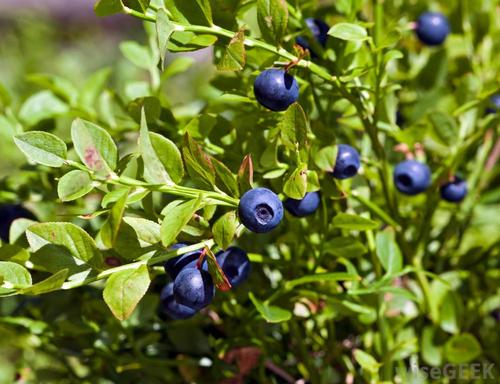
Word flew from door to door around the clearing. The huckleberry
bushes were ready, the fruit just waiting to be picked! Tomorrow
would be the day to gather, and ten, the hour. That evening pots and
pails and tubs were piled outside each kitchen door. Lunches were
packed and water crocks made ready for the morning.
By the time the last breakfast dish had slipped into place in the
closet and the blue apron had been hung upon its hook, a loud
"ha-loo!" sounded up and down the road. Beyond our hedge the empty
hay wagon was waiting. Jed and Dick swished their tails, impatient
to be going. Gyp and Rod dashed here and there excitedly. From all
the yards figures started moving. The grown-up passengers were
hauled aboard. Youngsters scrambled up themselves. In the group of
fifteen or twenty persons sitting on the long side boards, every
family was represented.
A clicking of the driver's tongue set everything in motion. The
horses trotted off. Dogs ran along beside us. Standing on the
doorsteps, the stay-at-homes waved us on our way. The pots, pans,
and crocks piled in the center of the wagon began to rattle and jig
in crazy fashion. Passengers clutched wildly to their seats to keep
from slipping off and to stop their teeth from chattering, as the
iron-bound wheels jolted over every pebble embedded in the road. The
trip was not too long; the riding none too easy. After a mile or two
the team turned into a sandy track that led straight through the
brush. They had been here before. A halt was called some fifty feet
beyond the road.
Everyone jumped down, leaving dish pans or tubs in the wagon.
Trees grew low and scarce. A white rag tied on the tallest branch
would serve as flag to guide us in our wanderings.
Misty, bluish berries crowded every branch. As each pail was
filled it was returned and emptied into the large containers. There
was no telling how many quarts went from hand to mouth. From time to
time, the loud "ha-loo!" was heard and answered to make sure that,
going off in different directions, no group had strayed too far
away.
When the sun was centered in the heavens, the pickers drifted
back, well-bitten by mosquitoes and with backs beginning to ache
from too much stooping. Sitting in a sandy circle, we ate our lunch
and drank cool water from the crocks. For some, a little nap was not
amiss. The dogs lay down and panted; the horses munched their oats.
After a while, refreshed, we scattered once again by twos and threes
to gather every berry that tub and pail could hold.
At three o'clock the call went out from hill to hill, from group
to group: "Come in! Come in!" Milking time was drawing close and we
must start for home. When all had been accounted for, we climbed
aboard and checked our treasure. Should any neighbor's pail lack
something of its quota, the shortage was made up from other
overflowing stock. How much longer seemed the road, returning; how
much heavier the load! The clearing reached, a stop was made at
every door. Those left at home came out to help with the unloading.
For a week the kettles would be boiling and the ovens baking all
day long. Pies and tarts would be the first reward of labor in the
brush and in the kitchen. Each summer numbered just one huckleberry
party, but the memory of it lasted all the winter through. Should
one forget, the jars of jams and spiced berries in the pantry would
start us thinking of the picking and listening for the shouting and
the laughter once again.