The Invention of Fonts
|
By: Paul S Cilwa |
Posted: 1/7/2026 |
|
Page Views: 20 |
| Hashtags: #Namtira #VisualBasic #VBNET #ClassLibrary #NamtiraLib #Fonts #Typography #MovableType #BiSheng #Blackletter #RenaissanceType #Italics #BoldType #Underlining #Serif #SansSerif #TypeDesign #PrintingHistory |
| A historical exploration of how fonts evolved from handwritten scripts to movable type and modern digital typography, tracing calligraphic origins, East Asian printing innovations, Renaissance italics, and the development of bold and underline as tools of emphasis. |
| Estimated reading time: 4 minute(s) (941 words) |
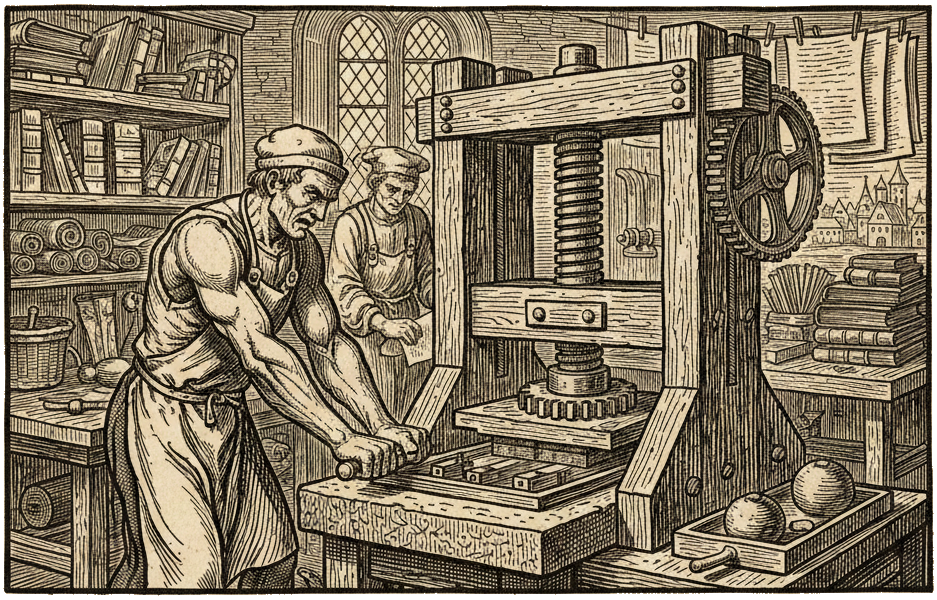
Printing began as a craft of translation: printers reproduced the familiar shapes readers already
knew from manuscripts, so the first printed books deliberately echoed scribal hands. In Europe this
is most visible in the mid?15th century, where the dense blackletter of early presses was chosen to
match the look of medieval bookhands and reassure buyers that printed books were legitimate
continuations of manuscript culture. That impulse—to make reproducible pieces that look like
handwriting—set the basic relationship between calligraphy and type: letterforms were not
invented in a vacuum but were abstracted, regularized, and simplified to survive the mechanical
processes of casting, setting, inking, and pressing.