|
By: Paul S Cilwa |
Posted: 4/9/2026 |
|
Page Views: 357 |
| Hashtags: #Writing #Fiction #Books #Opinion |
| Writing fiction requires at least six distinct skills. Most writers are good at two or three. Here's what to do about the rest. |
| Estimated reading time: 15 minute(s) (3550 words) |
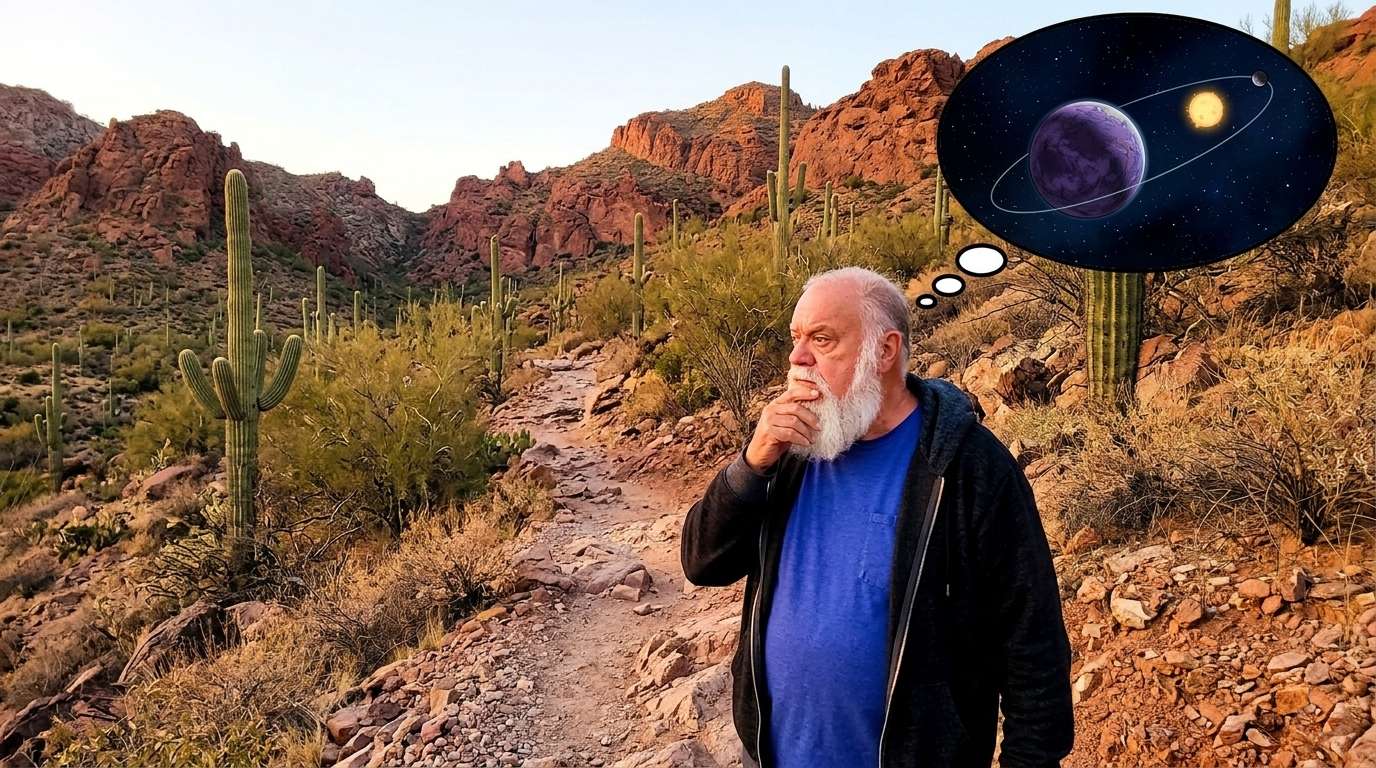
I know this because I have been writing fiction for fifty years (I'll be done soon!), and
because I have spent decades reading other people's fiction with a
professional eye, and because I once edited a novel that taught me more
about what can go wrong than any writing class ever could. More on that
in a moment.
Skill #1: The Idea
Every story begins with an idea. Not a plot—we will get to plot—but
the central thing that makes the story worth telling. The premise.
The "what if." What if a hard-boiled detective were hired to
find a jeweled statue and everyone around him started dying? What if a boy
discovered he was a wizard? What if the last man on Earth heard a knock at
the door?
"What if the fear of death is just a ploy for control? What would a world without
that fear look like?" is the idea behind my novel,
The Abode of Angels.
Any hack can construct a detective novel for the money, and some writers
are quite successful at it. But how many of them could have written
The Maltese Falcon? Hammett didn't just write a mystery. He
wrote a story about greed, loyalty, and the particular kind of loneliness
that comes from being smarter than everyone around you and trusting none of
them. The mystery was the delivery mechanism. The idea was the payload.
Ideas are the skill that cannot be taught. You either see the world as a
source of stories or you don't. The good news is that most people who
want to write fiction already have this skill in abundance. The bad news is
that having great ideas and no other skills is like having a garage full of
engine parts and no wrench.
AIs are good at suggesting ideas, though typically they're kind of random.
And it's okay to grab an idea that seems interesting and run with it. But
I would maintain that the only reason to want to write a novel is
because the idea is already in you, and you have to get it out.
Skill #2: The Characters
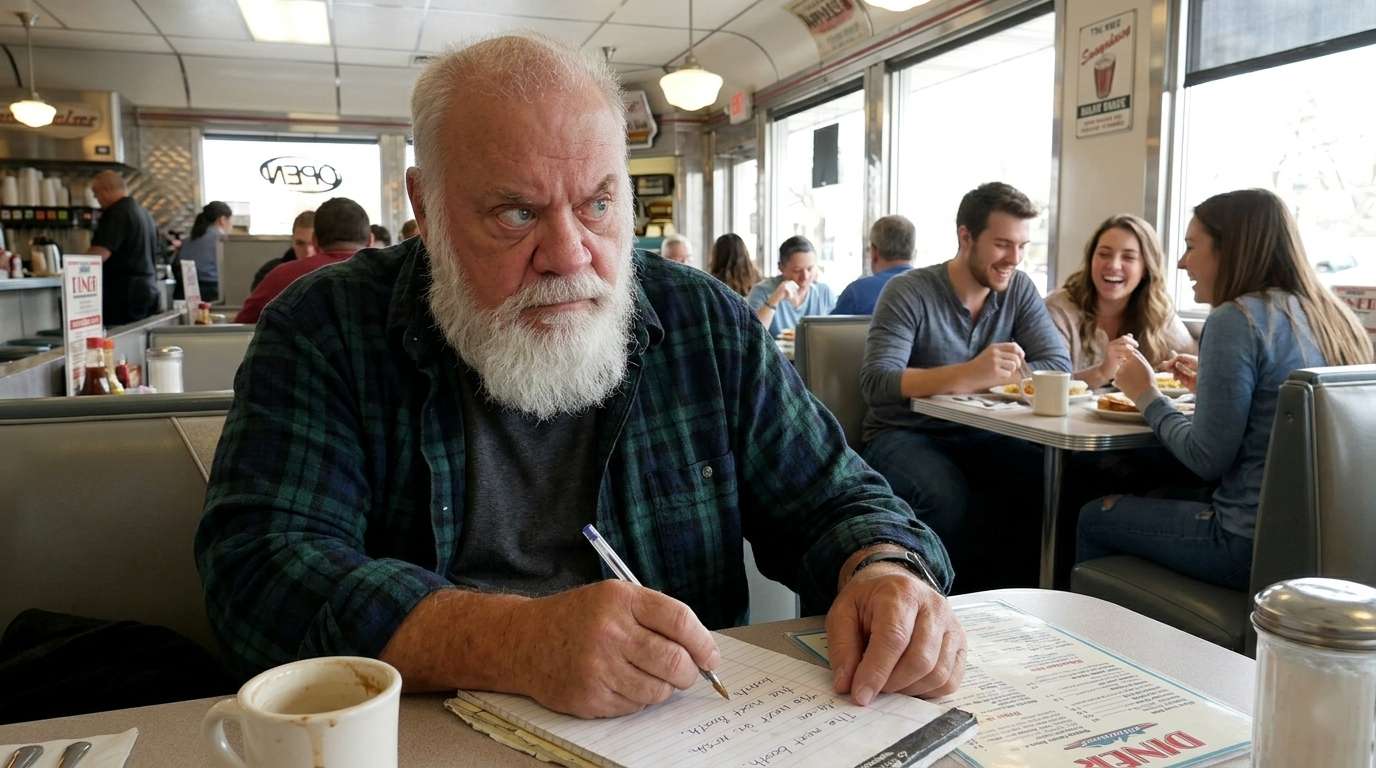
It takes a lot of non-judgmental observational hours with actual human beings
to be able to craft a believable character. You have to have sat in diners and
listened to how people really talk. You have to have noticed that your neighbor
always touches her left earring when she's lying. You have to understand,
in your bones, that people are contradictory—that the same person can be
generous and petty, brave and terrified, brilliant and catastrophically stupid,
sometimes in the same sentence.
This is a skill that a lot of writers are not good at, and it shows.
I have an old friend—old as in we have been friends a long time, and
also old as in she is my age, which is old—who once asked me to edit a
novel she had written. She is a sweetheart of a person, but she is one of those
people who does not get out much. The novel was set in Florida, where I used to
live, but she had never been there and had neglected to do any research
whatsoever. It was a detective story, but her policeman was a city cop
investigating a crime that took place in the country, which would have been a
sheriff's jurisdiction. In Florida, this distinction matters. In fiction,
getting it wrong tells every reader who does know the difference that
the author didn't care enough to find out.
But the worst was her lesbian character.
This character was based entirely, and I mean entirely, on what Fox News
told her that lesbians were like. She was angry. She was predatory. She had short hair
and no sense of humor and existed mainly to make the straight characters
uncomfortable. She was, in short, a cartoon drawn by someone who had never met
the subject and was working from a description provided by someone who hated
them. And of course—of course—the lesbian dies at the end.
Because in fiction written by people who don't know any gay people, we
always die at the end. It is one of the rules, apparently, like how the dog
always survives in a disaster movie but the Black guy doesn't.
She published her book. It won a couple of religious awards. And essentially
no one bought it, because religious awards do not, it turns out, constitute a
readership.
The lesson here is not "don't write characters unlike yourself."
The lesson is: if you are going to write a character unlike yourself,
(and unless you are writing about a castaway and his volleyball, there had
better be many characters unlike yourself!) you had
better go out and meet some of those people first. Buy them coffee.
Listen. Ask questions. Shut up and listen some more. Characters are not
constructed from opinions. They are constructed from observation.
One more point: Of course you have to make up characters, or risk being
sued if your characterization is so spot-on everyone can recognize who you were
copying. (Parodying is a different process; the reader is supposed to
recognize the character, but the character's traits are so magnified as to be
almost unrecognizable.) But the easy trick is to simply make the person you think would be
perfect for the role in your novel, look different! Amazingly, every
character trait you've wanted in your character, is possessed by individuals
of all genders, colors, sexual orientations, deformities or lack thereof. So if you need a really
short-tempered office manager just like Mrs. Hood over there,
move her out of her office, call him Mr. Pinkerton, a British transplant,
and you're in the clear!
(I would suggest, however that if you are white, you not make a Black or other racial person the
villain. It's too easy for stereotyping to slip in, and too important for it not to.
And unless you know a lot of people in the community to which your villain is a member
really well, you won't be able to write your villain
believably—and the villain's backstory and presentation is only a
slight second to the protagonist's in importance. To a lesser extent, don't write
about Wisconsin people if you've never spent time with Wisconsin people.
It's too easy to make it all about "Dontcha know?" and miss the subtleties that
would see it as real.)
Skill #3: The Dialog
I almost included this in the previous section, but they are distinct skills.
First of all, character traits (honesty, cowardice, greed) are not related to
the accents of their owners. Secondly, ever since the writings of Mark Twain,
people have expected the characters they read about to have accents appropriate
to their origins, and for those accents and associated speech patterns to show
up in print. When Huck Finn said, It warn't no time to be sentimentering,
it told you reams about Huck's attitudes as well as his origins.
Once readers became accustomed to seeing dialect on the page, they also became attuned
to the way speech patterns reveal layers of identity that go far beyond
birthplace. Syntax, rhythm, and word choice can signal education, confidence,
social aspiration, or the lack of it. A character who drops consonants might be
signaling informality or intimacy; one who over-enunciates might be masking
insecurity or striving for status. Writers quickly learned that dialect wasn't
just a matter of phonetic spelling—it was a tool for conveying psychology,
relationships, and power dynamics without ever breaking into exposition.
At the same time, the use of dialect in literature forced readers to confront their
own assumptions. A rough
accent didn't have to belong to a simple mind, and a
polished one didn't guarantee virtue. Twain himself played with this inversion
constantly: Huck's unvarnished speech masks a moral clarity that many of the
respectable
adults around him lack. By giving characters voices that felt
lived-in rather than generic, writers could challenge stereotypes,
complicate motives, and invite readers to listen more closely to the humanity
behind the words.
Today, dialect remains one of the most potent tools a writer can wield, but it's used
with greater awareness of authenticity and respect. Modern authors often
collaborate with speakers of the dialects they portray, or they lean on rhythm and
idiom rather than heavy phonetic spellings. The goal is the same as it was in
Chaucer's time and Twain's: to let characters speak in ways that feel true to
their worlds and themselves. When done well, dialect doesn't just decorate
dialogue—it deepens character, enriches setting, and reminds us that
language is as varied and alive as the people who use it.
Skill #4: The Plot
Writers who do not understand the need for a plot usually mistake it for the
story. But the plot is not the story. The plot is the mechanism—the
sequence of events, the structural scaffolding—that enables the idea to
unfold. When plot plus characters produces the idea, that is the story.
The story is the experience the reader has. The plot is the machine that
generates it. (I made that definition up, but I have not yet encountered a
better one, and I am open to suggestions.)
The Greeks knew this. They may not have had smartphones or indoor plumbing,
but they understood dramatic structure the way a watchmaker understands gears.
Christopher Booker, building on millennia of literary analysis, identified
seven basic plots that underlie essentially all of Western storytelling:
- Overcoming the Monster—The hero confronts and defeats a great
evil. Beowulf, Jaws, every Avengers movie.
- Rags to Riches—A humble protagonist rises to greatness.
Cinderella, Great Expectations, Trading Places.
- The Quest—The hero sets out on a journey to find something
vital. The Lord of the Rings, Raiders of the Lost Ark.
- Voyage and Return—The hero travels to a strange world and
comes back changed. Alice in Wonderland, The Wizard of Oz,
The Odyssey.
- Comedy—Not what we today would call "funny," but a story where confusion
and misunderstanding resolve into harmony. Most of Shakespeare's
comedies, most romantic comedies, most of P.G. Wodehouse.
- Tragedy—A flawed protagonist rises, then falls because of
that flaw. Macbeth, Breaking Bad, every Greek play where
someone puts their own eyes out.
- Rebirth—A protagonist trapped in darkness is redeemed.
A Christmas Carol, Beauty and the Beast,
Groundhog Day.
Every story you have ever loved fits one of these patterns, or combines two
or three of them. Star Wars is Overcoming the Monster plus The Quest
plus a dash of Rags to Riches. Pride and Prejudice is Comedy with
Rebirth undertones. Knowing the pattern does not make the story predictable
any more than knowing music has scales makes a symphony predictable. It
gives you the bones. The flesh is yours.
Skill #5: Place

It is not enough to say your story takes place in Florida. Whether you have
been there or not—and as we have established, you really should have
been there—you must convey in words the feel of the place. How
the air sits against the skin: heavy and damp in a Florida summer, so thick
you could wring it out like a washcloth. The scent of jasmine and asphalt
after a three-o'clock thunderstorm. The particular quality of light
that comes off the Gulf of Mexico at sunset, which is nothing like the light
off the Atlantic at sunrise even though they are the same sun and the same
water and the same state.
This applies equally whether your setting is real or invented. If your story
takes place on the planet M'Nar orbiting Beta Centauri (as I described in
The Abode of Angels), the reader
still needs to feel the alien wind on their face, smell whatever passes for
air, hear the sounds of whatever lives there. A made-up world requires
more sensory detail, not less, because of course you cannot expect the reader
to have been there before. You are their only guide, and if you do not make them feel
it, they will not believe it.
This is how you make a thousand words paint a picture: not by describing what
things look like, but by describing what they feel like, sound like,
smell like, taste like. Vision is the weakest sense for immersion. A reader
can look at a description and remain outside it. But tell them the air tastes
like pennies and their tongue will move.
Skill #6: The Words Themselves
And then, after all of that—the idea, the characters, the plot, the
sense of place—someone has to actually write it down. Someone
has to choose, word by word, sentence by sentence, paragraph by paragraph,
the specific sequence of English (or whatever language you are working in)
that will transmit the story from your skull into someone else's.
This is the skill that gets the least respect and requires the most stamina.
A great idea can arrive in a flash. A character can crystallize in an afternoon
of people-watching. A plot can be sketched on a napkin. But the writing
takes months, sometimes years, and it demands a command of language that goes
far beyond grammar. It demands rhythm. It demands knowing when a sentence
should be long and winding and when it should stop. Like that.
It demands knowing the difference between the right word and the
almost right word—which, as Mark Twain observed, is the
difference between lightning and a lightning bug. It demands the ability to
write dialogue that sounds like people talking without actually sounding like
people talking, because real speech is full of "um" and
"you know" and half-finished sentences that would be unreadable
on the page. Fiction dialogue is a translation of human speech into
something more efficient and more revealing, the way a portrait is a
translation of a face into something more true than a photograph.
The Inconvenient Math
Very few writers have mastered all six of these skills. The ones who have
are the ones we call great, and we call them great precisely because it is
so rare. Asimov had ideas and plot in such abundance that he wrote nearly
five hundred books, but his characters could be thin and his prose
workmanlike. Heinlein had ideas and characters and a narrative voice so
compelling you would follow him anywhere, but his plots occasionally
wandered off into the woods and never came back. Clarke had ideas and place
in such luminous combination that his descriptions of space still define how
we imagine it, but ask someone to name a memorable Clarke character
and watch them struggle.
And then there are writers who do have it all, or close enough that
the seams don't show.
- Bill Konigsberg,
whose YA novels combine vivid characters with prose so clean it reads like
water flowing downhill, makes the whole thing look effortless, which is the
surest sign that it is not.
- Sandra Valencia,
whose fiction builds worlds so immersive you can smell the air and hear the
conversations in the next room, does things with place and character that
make me envious in the most productive possible way.
- Jeanne Lyet Gassman,
who I met during a brilliant Obama graduation ceremony speech, has made the ancient
worlds her home. If you ever wondered what it was like to actually be
in ancient Rome, this is your writer.
These are not household
names—yet—but they are nothing short of brilliant, and I am lucky
enough to call them friends.
What To Do About the Gaps

So what does an aspiring writer do if they feel their skills are not all up
to speed? The obvious answer is: develop them. Read voraciously. Write daily.
Study the craft the way a carpenter studies joinery—not because
inspiration is not important, but because inspiration without technique is
just a very enthusiastic person waving their hands.
But what if you are genuinely strong in some areas and genuinely weak in
others? What if you have brilliant ideas and unforgettable characters but
your plots meander and your sense of place is a blank wall? That is usually
when one writer becomes two.
My novel,
The
Sun City Cannabis Club, was born this way. The idea and the character
concepts came from my friend, the late Jock McNeill. Jock had the premise,
the names, the general shape of who these people were. What he did not have
was the characterization—the backstories, the contradictions, the
small telling details that make a character feel like someone you've
met—or the actual putting-into-words. I provided those. The novel was
neither mine nor his. It was ours (attributed to a pseudonym,
"Armentine Duryea") in the way a building belongs
to both the architect and the contractor, because without either one of
them it is just a blueprint or just a pile of lumber.
Collaboration is not a compromise. It is an acknowledgment that the skills
required to produce something great are not always found in a single skull,
and that two people who are honest about their strengths and generous about
their weaknesses can produce something neither could have made alone.
The Amanuensis, Again
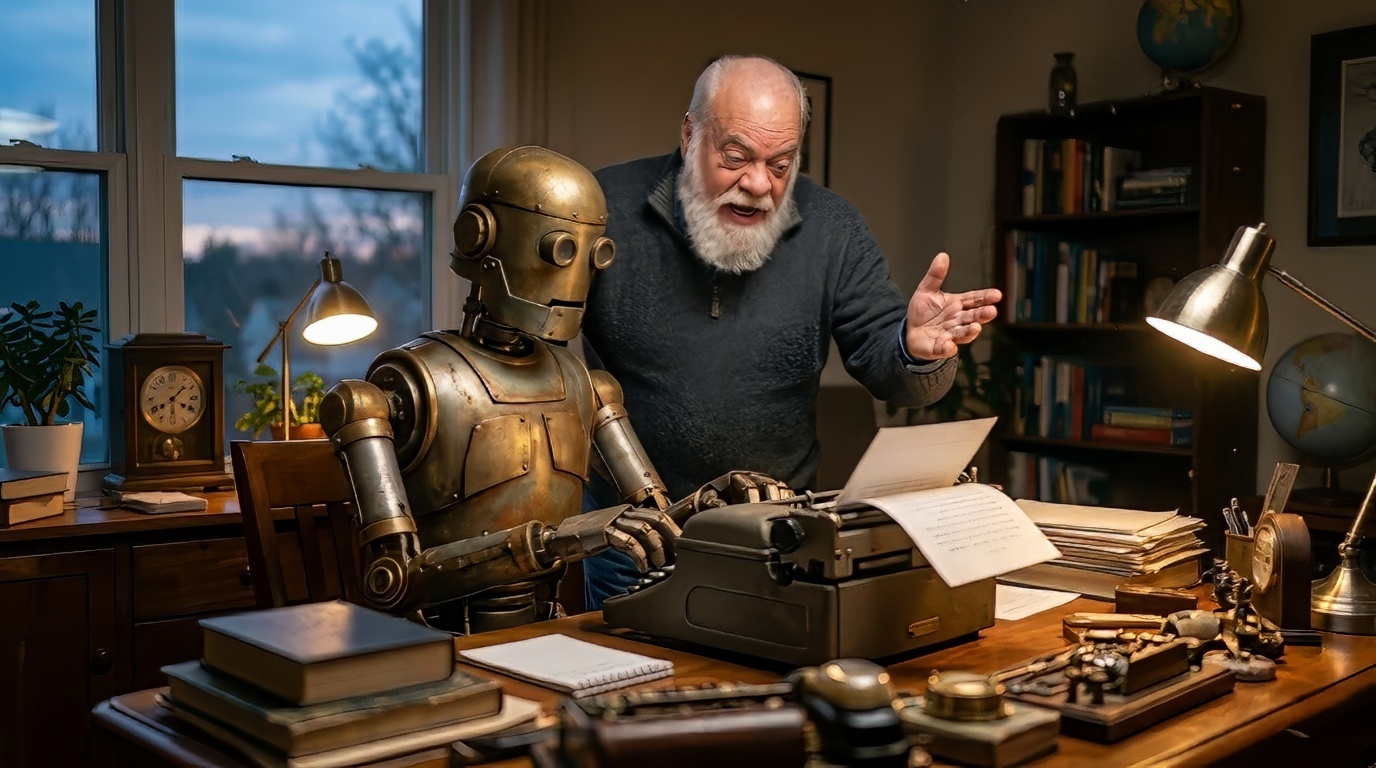
I keep coming back to this word—amanuensis—because it
keeps being the right one. In a previous essay I described how AI serves as
my computer program coding amanuensis, handling the mechanical translation of design into
syntax so that I can focus on the design itself. The same principle applies
to fiction, with one important caveat: the AI handles Skill #6—the
physical act of producing polished prose from my notes, outlines, and
verbal descriptions—while Skills #1 through #5 remain entirely,
stubbornly, irreducibly mine.
The ideas are mine. The characters are mine, built from decades of sitting
in diners and airports and hospital waiting rooms, watching people and
wondering and sometimes asking what their story is. The plots are mine, assembled from the same
seven patterns the Greeks identified and rearranged in ways that feel, if I
have done my job, inevitable. (The Abode of Angels is mostly a quest, although
the protagonist doesn't know what he's trying to find until he finds it.)
The sense of place is mine, drawn from a life
spent paying attention to how air feels and light falls and cities sound at
four in the morning.
What the AI does is type. Very, very well. And I review every word, because
the amanuensis is not the author, and the author's ear is the final
authority on whether a sentence sounds like a human being talking or like a
machine pretending to. That difference is Skill #6, and no amount of
artificial intelligence substitutes for the real thing.
But having a tireless, literate, endlessly patient typist who never needs
coffee and never judges my first drafts? That, I will take. Luckily, I can
do—and have done—the rest on my own.
Now if you'll excuse me, I have a novel to not write by myself.