|
By: Paul S Cilwa |
Posted: 3/25/2026 |
|
Page Views: 281 |
| Hashtags: #Autobiography #Aging #Longevity #Supplements #Senolytics #Fisetin #Science |
| On periodically clearing out your zombie cells with a flavonoid and a dream from the Enterprise D. |
| Estimated reading time: 8 minute(s) (1779 words) |
Forty years later, it turns out the idea was not as
outlandish as I thought.
Zombie Cells
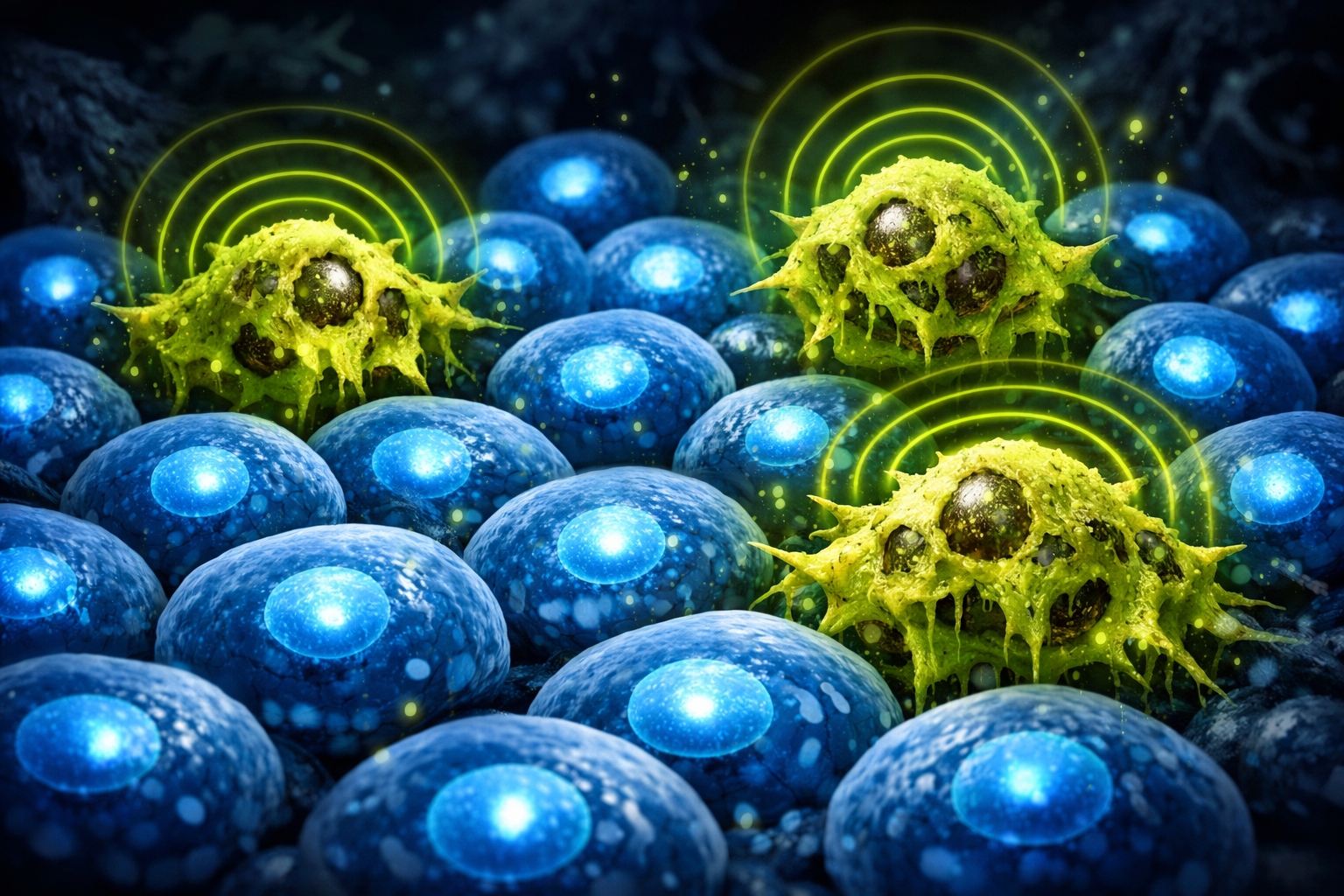
As you age, your body accumulates what researchers call
senescent cells—cells that have been damaged
and have stopped dividing, but refuse to die. In a young
body, the immune system clears these out efficiently. In
an older body, they pile up. They sit in your tissues like
squatters in an abandoned building, pumping out inflammatory
chemicals called the SASP—the Senescence-Associated
Secretory Phenotype, if you want the full name, and you
probably do not—that damage their neighbors and
recruit more cells into senescence. It is a cascade. The
zombie metaphor is not mine, but it is apt: these cells
are not alive in any useful sense, and they are turning
the cells around them!
The concept of clearing them out is called
senolysis, and the compounds that do it are called
senolytics. The most-studied senolytic combination
is dasatinib plus quercetin, which has been used in human
trials at the Mayo Clinic with promising results. But
dasatinib is a prescription chemotherapy drug, which puts
it out of reach for most of us who are doing this on our
own. The over-the-counter alternative that keeps showing
up in the research is a flavonoid called fisetin.
What Fisetin Actually Does
Fisetin is a plant flavonoid found naturally in
strawberries, apples, persimmons, and a few other fruits
and vegetables—in tiny amounts. You would need to
eat roughly thirty-seven pounds of strawberries to get
a senolytic dose, which, while not the worst way to spend
an afternoon, is not practical as a daily regimen.
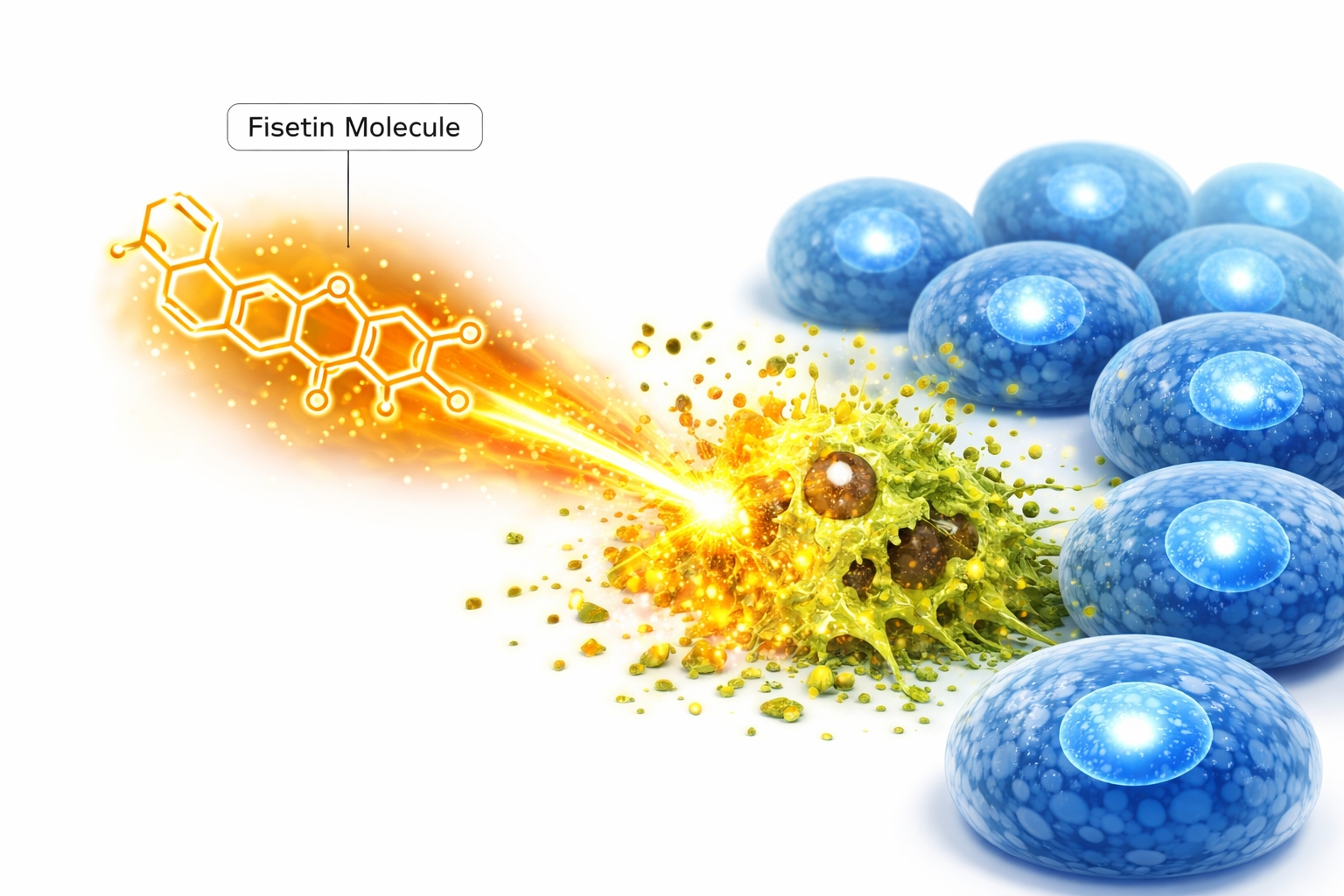
What makes fisetin interesting as a senolytic is that it
exploits a vulnerability specific to senescent cells.
Normal, healthy cells have robust survival pathways.
Senescent cells, having already shut down their normal
cell cycle, are dependent on a different, more fragile set
of anti-apoptotic pathways to keep themselves from
self-destructing. Fisetin interferes with those pathways.
The healthy cells shrug it off. The zombie cells, deprived
of their last survival trick, finally do what they should
have done years ago: they die.
It is, in principle, exactly what my dream transporter
was doing. Identify the damaged cells. Remove them. Let
the body replace them with something better. Geordi would
approve.
The Burst Protocol
Here is the part that surprised me when I first read
about it: you do not take fisetin every day. A small
daily dose acts mostly as an antioxidant, which is fine
but beside the point. To actually clear senescent cells,
you need to hit a threshold—a high enough
concentration in your tissues to trigger the apoptotic
cascade in those zombie cells. Below that threshold,
you are just eating an expensive strawberry extract.
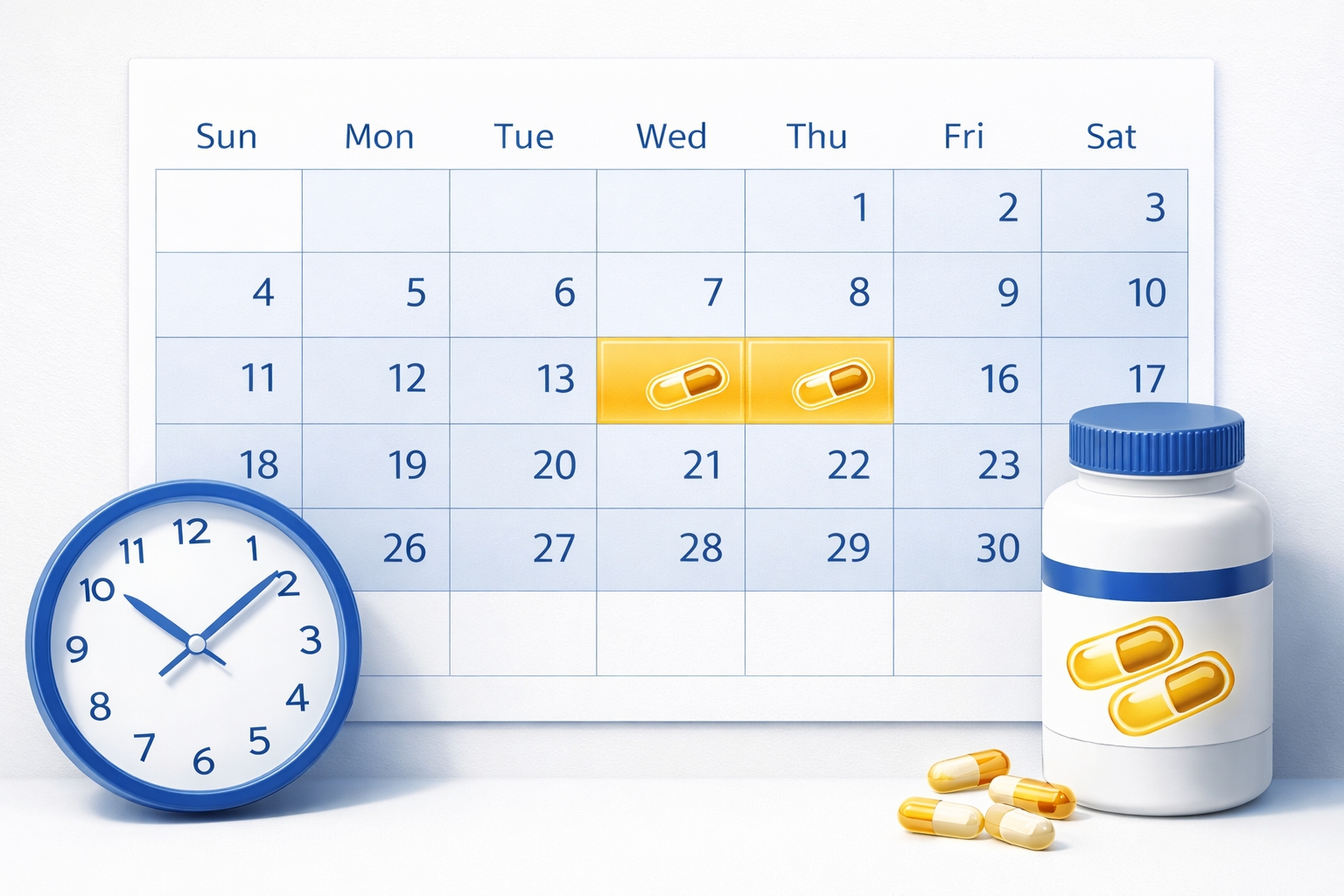
The protocol is called a burst or a
senolytic pulse: a high dose for two to three
consecutive days, then nothing for the rest of the month.
The burst clears the senescent cells. The rest period
gives your body time to clean up the debris and grow
replacements. Then you do it again next month.
The commonly cited target is about 20 milligrams per
kilogram of body weight per day during the burst. I
weigh about 230 pounds, which is roughly 104 kilograms,
giving me a target of about 2,080 milligrams per day.
That sounds like a lot of capsules.
But—and this is where it gets interesting—my
fisetin is liposomal.
The Liposomal Advantage
Standard fisetin has terrible bioavailability. It is
hydrophobic—it does not dissolve well in water,
which means your gut has trouble absorbing it, which
means most of what you swallow passes right through
without doing much of anything. This is the dirty secret
of a lot of supplements: the dose on the label is not the
dose your cells actually see.
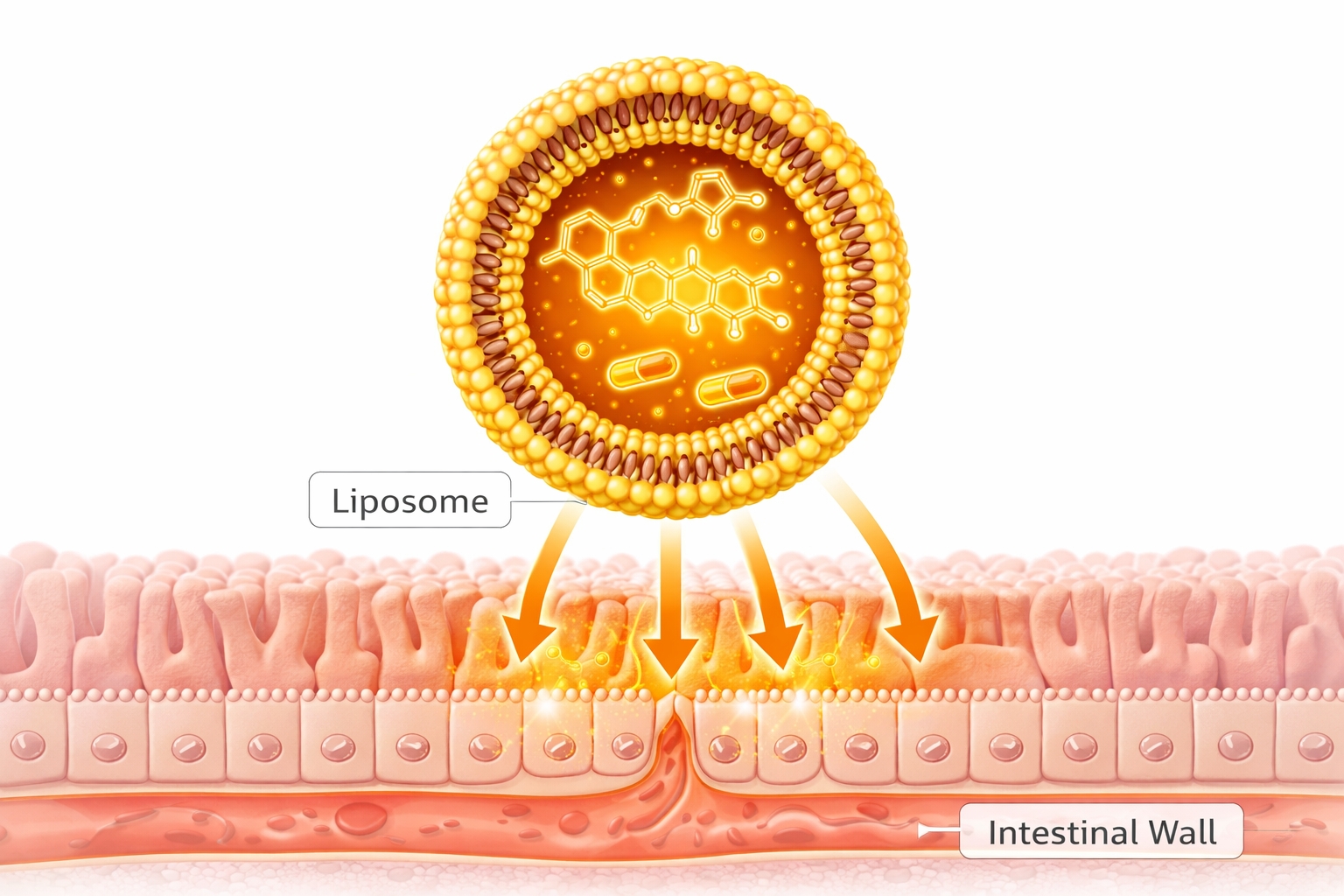
Liposomal delivery changes that equation. The fisetin is
encapsulated in tiny phospholipid spheres—essentially
little bubbles made of the same material as cell
membranes—which protect it through the digestive
tract and dramatically improve absorption. The estimates
vary, but liposomal formulations are generally considered
to provide roughly three to five times better
bioavailability than standard delivery.
So my 2,080 mg target, adjusted conservatively for a
three-times improvement in absorption, becomes about
700 mg. My capsules are 600 mg each. Which means my
burst protocol is almost comically simple:
Two capsules per day, for two consecutive days,
once a month.
Take them with a meal that includes some fat—fisetin
is fat-soluble, and even liposomal delivery benefits from
a little dietary fat to work with. Then stop, and wait for
next month.
What It Feels Like

If the burst works—if you are actually clearing
senescent cells—you might expect to feel it. And
some people do report a mild fatigue and brain fog a day
or two after the burst, which makes biological sense:
your immune system is moving in to clean up the cellular
debris, and that cleanup process involves the same
inflammatory signaling that makes you feel tired and foggy
when you are fighting a cold. Your body is saying,
I am busy right now, go sit down.
The timeline people describe is that you feel fine on the
burst days themselves, then a bit flat on day three or
four as the cleanup peaks. It passes. If it does not
pass, or if the fatigue is significant, that is worth
paying attention to.
Of course, the honest caveat is that the fatigue could
also be coincidence, or placebo, or mild GI stress from a
high dose of flavonoid. The human evidence is still
largely anecdotal. Feeling tired might mean it is
working. Feeling nothing does not mean it is not. The only
real measure is long-term: the lab work, the inflammatory
markers, the general trajectory of how you feel over
months and years.
The Transporter Problem

My dream from the 1980s was more precise than fisetin,
in at least one important way: the transporter filter
implied perfect discrimination. Identify every damaged
cell. Remove exactly those cells. Leave everything else
untouched. That is not what fisetin does. Fisetin exploits
a tendency—senescent cells are more
vulnerable to it than healthy cells—but it is not
perfectly selective. Some healthy cells probably take a
hit too, which is part of why the burst-then-rest protocol
matters. You are not hammering the system continuously.
You hit it, you back off, and you let the body do what
bodies are extraordinarily good at doing: repair.
Interestingly, researchers are working toward something
closer to the transporter ideal. CAR-T cell therapies—where
your own immune cells are engineered to hunt specific
targets—are being explored as precision senolytics.
Instead of a chemical that mostly targets senescent
cells, you would have immune cells programmed to recognize
them by their surface markers and eliminate them
specifically. It is the transporter filter, built out of
biology instead of tachyon beams.
We are not there yet. For now, we have fisetin: a
flavonoid from strawberries that, taken in a high dose for
two days a month, might—might—clear out
some of the zombie cells that are making us old faster
than we need to be. It is not the Enterprise. It is not
even a tricorder. But it is something, and something is
what you work with when the alternative is waiting for
perfect knowledge that will arrive after you are dead.
I took my first burst yesterday. Two capsules, liposomal,
600 mg each, with breakfast. I will take two more today.
Then I will wait, and watch, and see if I feel anything,
knowing that feeling nothing proves nothing either way.
Forty years ago, I dreamed about a machine that could do
this. It turns out the machine is a bottle of capsules from
Amazon
and a willingness to act on incomplete
evidence. It is less dramatic than a transporter room.
But Geordi, I think, would still approve.