|
By: Paul S Cilwa |
Posted: 3/29/2026 |
|
Page Views: 153 |
| Hashtags: #Autobiography #Aging #Health #EdgarCayce #Holistic #CastorOil #Almonds #Alkaline #Osteopathy #Spiritualism |
| Grading Edgar Cayce's health predictions against what modern science has found, fifty years after I first encountered his work. |
| Estimated reading time: 8 minute(s) (1694 words) |

Who Was Edgar Cayce?

For those who have not encountered him: Edgar Cayce
(1877–1945) was a photographer from Hopkinsville,
Kentucky, who discovered that when he put himself into a
trance state—essentially a self-induced hypnotic
sleep—he could diagnose illnesses and prescribe
treatments for people he had never met, using medical
terminology he did not know while awake. Over a period
of forty-three years, he gave over 14,000 documented
readings, about 9,000 of which dealt with health.
He was not a doctor. He had an eighth-grade education.
He was deeply religious—a Sunday school teacher
who read the Bible once for every year of his life—and
he was troubled by his own abilities. He gave readings
for free or for whatever people could afford, and he
died essentially broke.
The medical establishment of his day dismissed him.
The Journal of the American Medical Association,
however, later acknowledged that "the roots of
present-day holism probably go back 100 years to the
birth of Edgar Cayce." That is not an endorsement,
exactly, but it is not a dismissal either. It is the
grudging respect of a profession that found itself
arriving, decades later, at conclusions Cayce had
stated in his sleep.
The Grades
What follows is not comprehensive. Cayce gave thousands
of health readings, many of them tailored to specific
individuals. But certain themes recurred so often that
they constitute a general health philosophy. Here is
how that philosophy has held up.
Castor Oil Packs: A-

Cayce prescribed castor oil packs in over 1,800
readings—more than any other single remedy. He
recommended them for everything from liver congestion
to intestinal adhesions to general detoxification,
typically applied to the right side of the abdomen
over the liver.
Modern research has found that ricinoleic acid, the
primary fatty acid in castor oil, has demonstrated
anti-inflammatory and analgesic effects. A study
published in the Journal of Naturopathic Medicine
showed enhancement of T-11 immune cells seven hours
after a castor oil pack treatment. Animal studies have
found castor oil as effective as capsaicin in reducing
inflammation and edema.
The mechanism appears to involve stimulating the
lymphatic system and reducing substance P, a
neurotransmitter involved in pain signaling. This is
not exactly what Cayce said—he talked about
"vibrations" and "absorption"—but the practical
result is the same. He was right that they work. The
why he gave was poetic rather than biochemical,
which is why he gets an A-minus rather than a straight A.
Alkaline Diet: A

Cayce consistently recommended that the diet be
approximately 80 percent alkaline-forming foods
(fruits, vegetables, especially leafy greens) and
20 percent acid-forming foods (meats, starches,
sugars). He said this decades before anyone in
mainstream nutrition was talking about acid-alkaline
balance.
Modern research has largely validated this emphasis,
though not always for the reasons Cayce gave. The
typical Western diet is heavily acid-forming, and
chronic low-grade metabolic acidosis has been linked
to bone loss, muscle wasting, kidney stones, and
increased inflammation. A diet rich in fruits and
vegetables—Cayce's alkaline-forming
foods—is now universally recommended by
mainstream medicine. The specific 80/20 ratio has
not been clinically tested as a precise threshold,
but the direction is exactly right.
Osteopathic Manipulation: A

Cayce frequently recommended osteopathic adjustments,
particularly for conditions that modern medicine would
not associate with spinal alignment. He saw the spine
as a conduit—not just for nerves, but for what
he called "life force"—and believed that
misalignments could affect organs, glands, and the
immune system.
Osteopathic medicine is now fully mainstream.
Doctors of Osteopathic Medicine (DOs) are licensed
to practice in all fifty states, prescribe
medications, and perform surgery, just like MDs.
The idea that spinal health affects overall
health—which was considered fringe in Cayce's
day—is now taught in accredited medical schools.
The "life force" language was his, but the underlying
principle was sound.
Almonds and Cancer Prevention: B+
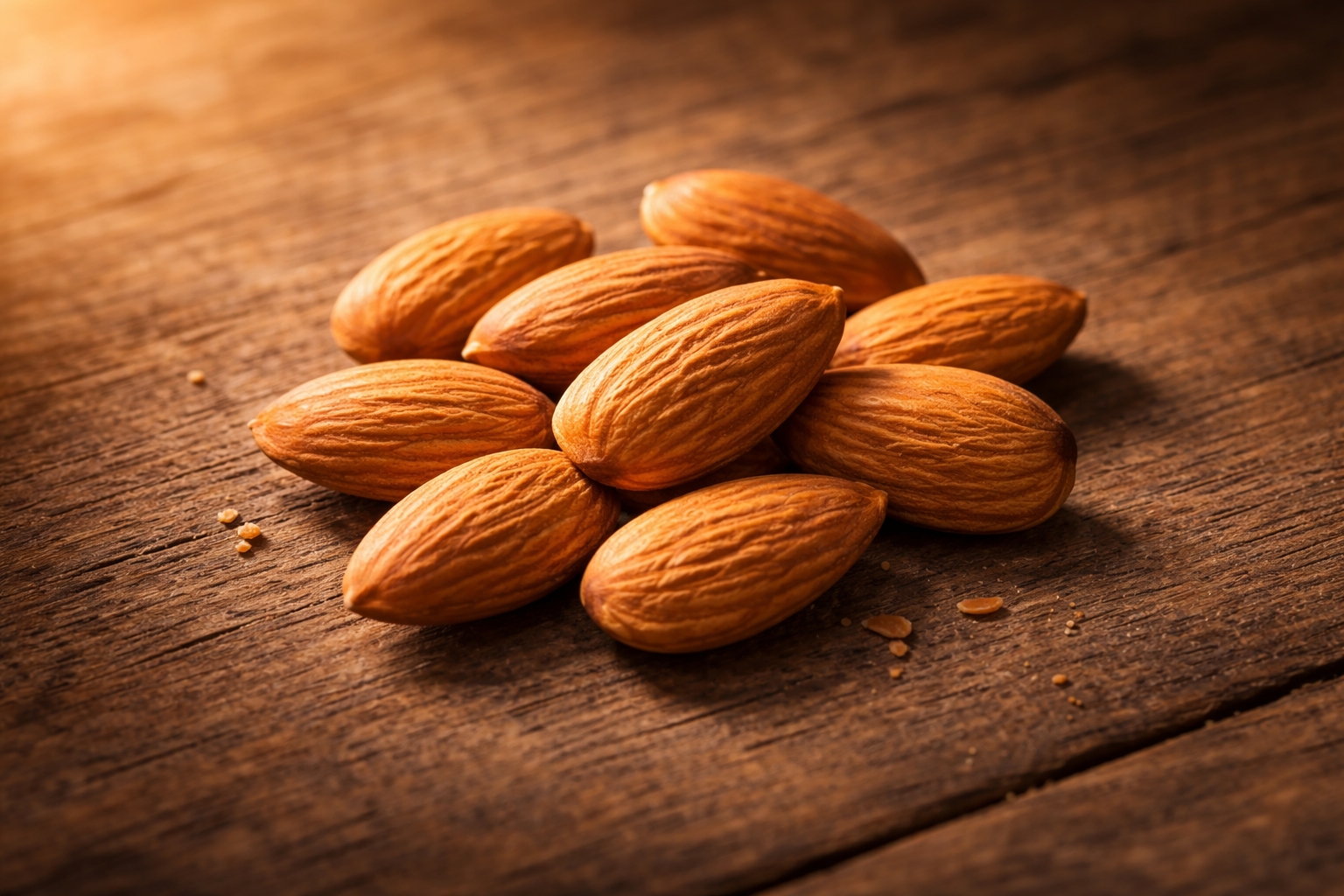
Cayce stated that anyone who eats two to three
almonds a day "need never fear cancer." He was
specific: sweet almonds, not bitter, and for
prevention, not cure. He attributed the effect to
a substance he described in terms that map onto what
we now call biotin.
Modern research has not proven that almonds prevent
cancer, but it has found suggestive evidence. A 2015
study found that regular almond consumption reduced
breast cancer risk by two to three times. Almonds
contain amygdalin, polyphenols, and antioxidants that
have shown anti-tumor activity in laboratory studies.
The B-plus reflects the fact that the research is
encouraging but not conclusive—and that "need
never fear cancer" is a stronger claim than the
evidence currently supports.
Elimination and Colonics: B
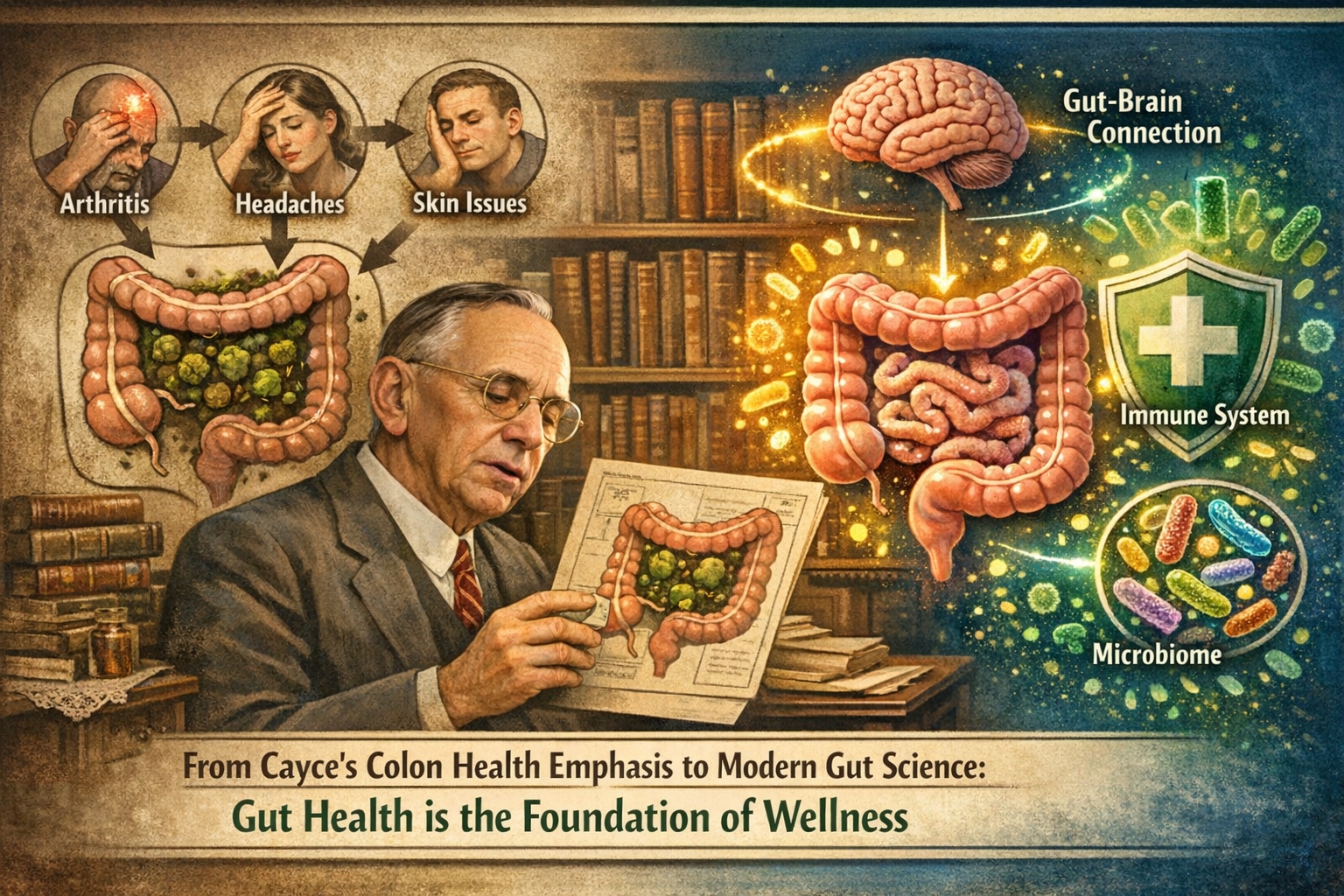
Cayce placed enormous emphasis on elimination.
He frequently prescribed colonics, enemas, and
laxative foods, arguing that a sluggish colon was
the root cause of many chronic conditions. He said
toxins reabsorbed through the colon wall were
responsible for arthritis, headaches, skin conditions,
and fatigue.
The modern gut microbiome revolution has vindicated
Cayce's general emphasis on intestinal health, though
not his specific methods. We now know that the gut
is intimately connected to the immune system, the
brain, and overall inflammation levels. Colonics
remain controversial—mainstream gastroenterology
generally does not recommend them—but the
underlying principle that gut health is foundational
to overall health is now well established.
The Endocrine System and Spiritual Centers: B+

One of Cayce's more esoteric claims was that the
endocrine glands—the pineal, pituitary, thyroid,
thymus, adrenals, cells of Leydig, and gonads—were
the physical counterparts of spiritual centers in the
body. His mapping corresponds remarkably well to the
traditional Hindu chakra system, which he almost
certainly had never heard of.
Modern endocrinology has confirmed that these glands
form an interconnected system far more complex than
was understood in Cayce's time. The pineal gland
produces melatonin and responds to light cycles.
The thymus is central to immune function. The adrenals
mediate the stress response. The idea that these
glands form a unified system affecting mood,
consciousness, and health is now mainstream
endocrinology. The "spiritual centers" part remains
unprovable by scientific methods, which is why
the grade is not higher. But the anatomy was right.
Meditation and Prayer: A

Cayce consistently recommended meditation and prayer
as components of health—not as alternatives to
treatment, but as essential complements. He said the
mind and body were not separate systems and that
emotional and spiritual states directly affected
physical health.
This is now so thoroughly validated that it barely
requires citation. Thousands of peer-reviewed studies
have demonstrated that meditation reduces cortisol,
lowers blood pressure, improves immune function,
reduces chronic pain, and alters brain structure in
measurable ways. The field of psychoneuroimmunology
exists largely to study the connections Cayce was
describing in his trance states eighty years ago.
Straight A.
Attitudes and Emotions: A
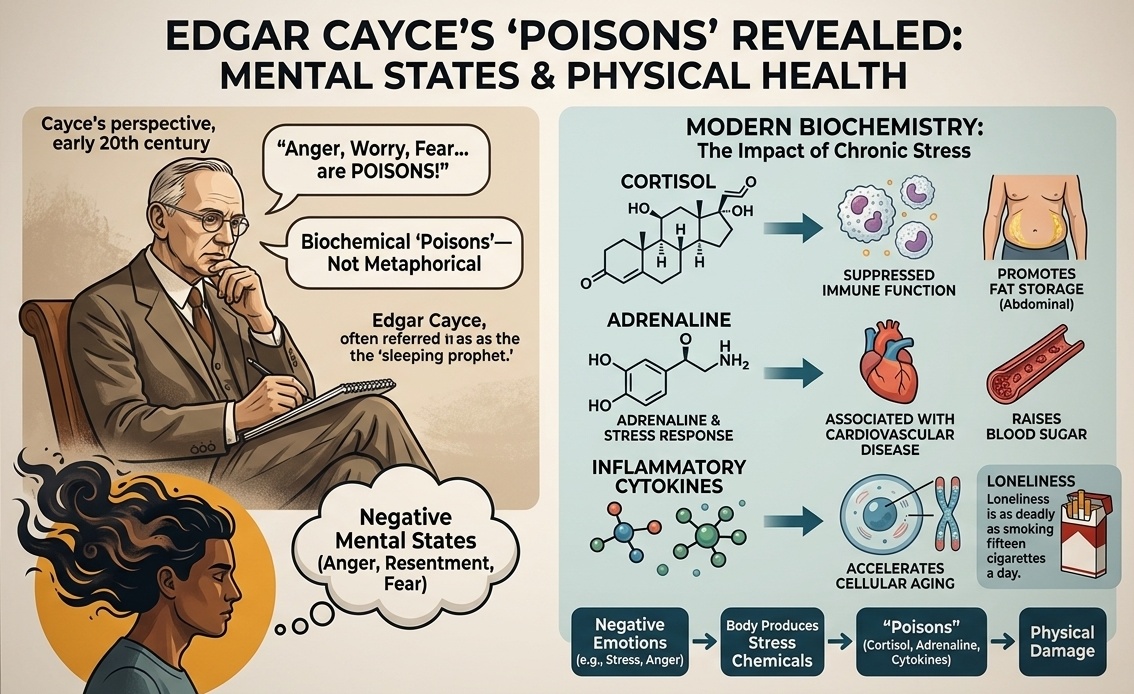
Cayce repeatedly warned that anger, resentment, fear,
and worry were as destructive to health as any physical
toxin. He called them "poisons" that the body produced
in response to negative mental states. He was not
being metaphorical. He meant it biochemically, decades
before the biochemistry existed to explain it.
We now know he was right. Chronic stress elevates
cortisol, which suppresses immune function, promotes
fat storage, raises blood sugar, and accelerates
cellular aging. Chronic anger is associated with
cardiovascular disease. Loneliness is as deadly as
smoking fifteen cigarettes a day. The body does not
distinguish between a physical threat and an emotional
one; it produces the same stress chemicals either way.
Cayce's "poisons" are cortisol, adrenaline, and
inflammatory cytokines. He was right.
The Misses

It would be dishonest to pretend Cayce's record is
unblemished. Some of his specific remedies—like
Atomidine (an iodine solution) taken internally, or
the use of radial appliances (low-voltage electrical
devices)—have not been validated and in some
cases could be harmful. His readings sometimes
contained anatomical descriptions that do not
correspond to known physiology. And his insistence
on very specific, idiosyncratic formulations
(particular brands, exact proportions, ingredients
that are no longer available) makes many of his
prescriptions impractical to replicate or test.
He also gave some readings that were simply wrong.
Not every diagnosis was accurate. Not every treatment
worked. Cayce himself acknowledged this and attributed
failures variously to the patient's attitude, the
wrong osteopath, or interference with the trance
state. These explanations are unfalsifiable, which
means they are not scientific explanations at all.
The Report Card
After fifty years of reading Cayce, trying some of
his recommendations on myself, and watching medical
science slowly catch up to conclusions he reached in
his sleep, here is my assessment:
| Subject | Grade |
|---|
| Castor Oil Packs | A- |
| Alkaline Diet | A |
| Osteopathic Manipulation | A |
| Almonds and Cancer | B+ |
| Elimination / Gut Health | B |
| Endocrine / Spiritual Centers | B+ |
| Meditation and Prayer | A |
| Attitudes and Emotions | A |
| Specific Remedies and Devices | C |
Overall GPA: somewhere around a 3.4. That is a solid B-plus.
For a man with an eighth-grade education who was asleep
when he said all of it, I would call that remarkable.
What I Learned from Marguerite

Marguerite Card did not just hand me a book. She
taught me how to think about the invisible. Not to
accept it uncritically—she was sharper than
that—but to stop rejecting things simply because
they did not fit the model I had been given. The model
is always incomplete. The map is never the territory.
And sometimes a man from Kentucky, asleep on a couch,
can see things that take the rest of us a hundred
years to verify.
I still eat my almonds.