|
By: Paul S Cilwa |
Posted: 3/22/2026 |
|
Page Views: 184 |
| Hashtags: #Humor #Reality #GetUsedToIt #Healthcare #Aging #PaulKnowsItAll |
| The modern medical phone system: designed by people who have never been sick. |
| Estimated reading time: 7 minute(s) (1604 words) |
The Ritual
You know how it goes. You dial the number. A voice answers—not a
human voice, of course, because humans cost money and medicine is now
a business and businesses have margins. A recorded voice.
A recorded voice that sounds like it was assembled from the syllables
of a person who died in 2003 and whose estate did not negotiate
residuals.
And this voice, this ghost of a temp worker past, begins to
read to you.
"Thank you for calling Desert Valley Medical Associates, a
division of Southwest Integrated Health Partners, affiliated with
Banner University Medical Group, in association with Aetna, BlueCross
BlueShield, Cigna, UnitedHealthcare, and Humana. If you are calling
about a life-threatening emergency, please hang up and dial 911 now!"
I would like to pause here. Not because the information is wrong, but
because someone, at some point, sat in a meeting and decided that the
correct response to a person who is having a heart attack is to
make them listen to a corporate org chart first. "If this is an
emergency, please hang up"—but only after you've heard
the full list of our insurance affiliations, because we wouldn't
want you to die without knowing whether you're in-network.
But it gets better. Because the voice is not finished with you.
Not even close.
"Our office is located at 4427 East Baseline Road, Suite 119,
Gilbert, Arizona, 85234. Our phone number is 480-555-0147."
Which you know. Because you just dialed it.
"Our fax number is 480-555-0148."
Fax. In 2026. In case you need to send them a document via a
technology that peaked during the Clinton administration. Perhaps
they'd also like your telegraph address.
"Our office hours are Monday through Thursday, 7:30 a.m. to
5:00 p.m., and Friday, 7:30 a.m. to 12:00 noon. We are closed
Saturday, Sunday, all major holidays, several minor ones, and any time
the doctor's cat is sick."
We are now forty-five seconds into this call and I have received
no information I needed, wanted, or did not already possess. I have
learned the ZIP code. I have learned the fax number. I have not yet
been offered the opportunity to do the one thing I called to do,
which is make an appointment. But the voice is still reading. It
is reading the way a flight attendant reads the safety card: dutifully,
thoroughly, and with the full awareness that no one is listening.
"If you are a new patient, please press 1. If you are an
existing patient, please press 2. If you need to refill a
prescription, please press 3. If you need medical records, please
press 4. For our billing department, please press 5. To hear these
options again, please press 6."
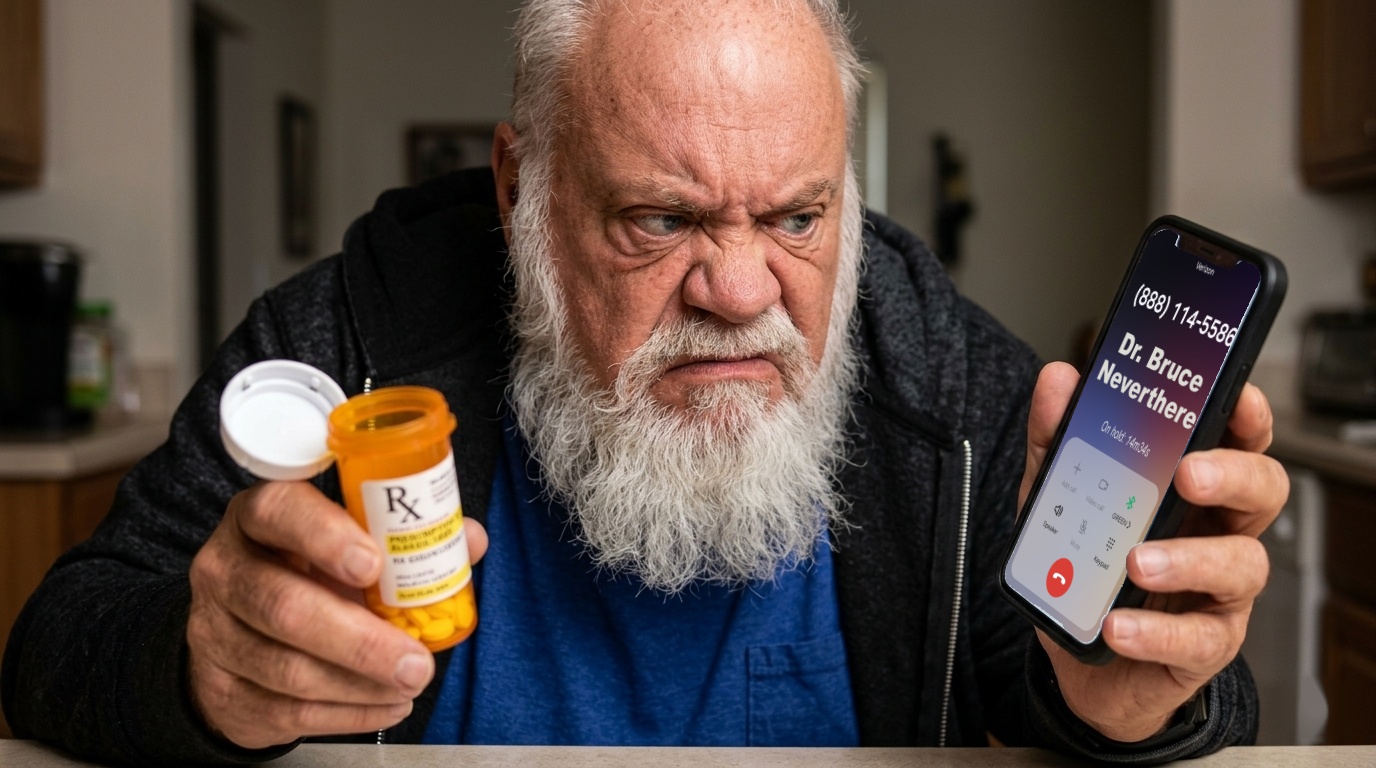
I press 2. I am an existing patient. I have been an existing patient
for six years. The computer does not care. It has more to say.
"Please listen carefully, as our menu options have changed."
They have not changed. They have never changed. No medical office
menu has ever changed. This sentence exists solely to prevent you
from pressing the number you already know works, because if you
press it too early the system interprets it as an error and hangs
up on you. The system is not on your side. The system is on
no one's side. The system is a nihilist.
The Hold
After navigating the menu—a journey that has now consumed
two full minutes of a life that is, actuarially speaking, not
getting any longer—you arrive at the promised land. The
appointment desk. Where a human being will answer and help you.
Just kidding. You are placed on hold.
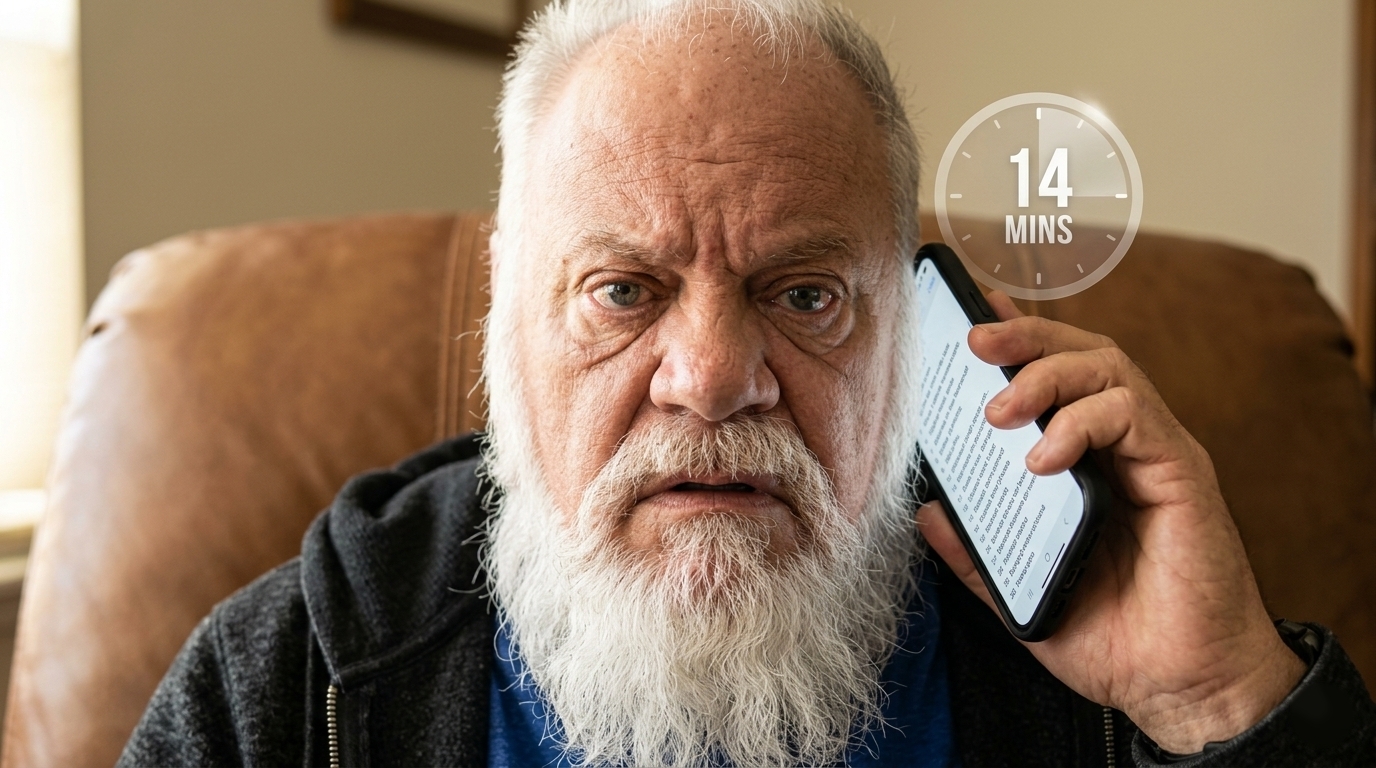
"Your call is very important to us. Please hold for the
next available representative. Your estimated wait time is…
seventeen minutes."
Seventeen minutes. I could drive to the office in seventeen
minutes. I could drive to the office, park, walk in, and stand at
the front desk where someone would be forced to acknowledge my
physical existence in seventeen minutes.
And in point of fact, I have done exactly that.
But I am seventy-four
and my hip hurts and the whole reason I am calling is that something
else also hurts, so I hold. I hold and I listen to a muzak
version of "Hotel California" that sounds like it was
recorded inside a tin can by a keyboard that is also having a
medical emergency.
Every ninety seconds, the muzak pauses and the voice returns to
remind me that my call is very important. If my call were very
important, someone would answer it. What my call actually
is, is revenue. My call represents a copay. My call is
important the way a twenty-dollar bill on the sidewalk is
important: worth picking up if you happen to walk by, but not
worth going out of your way for.
The Solution That No One Will Implement
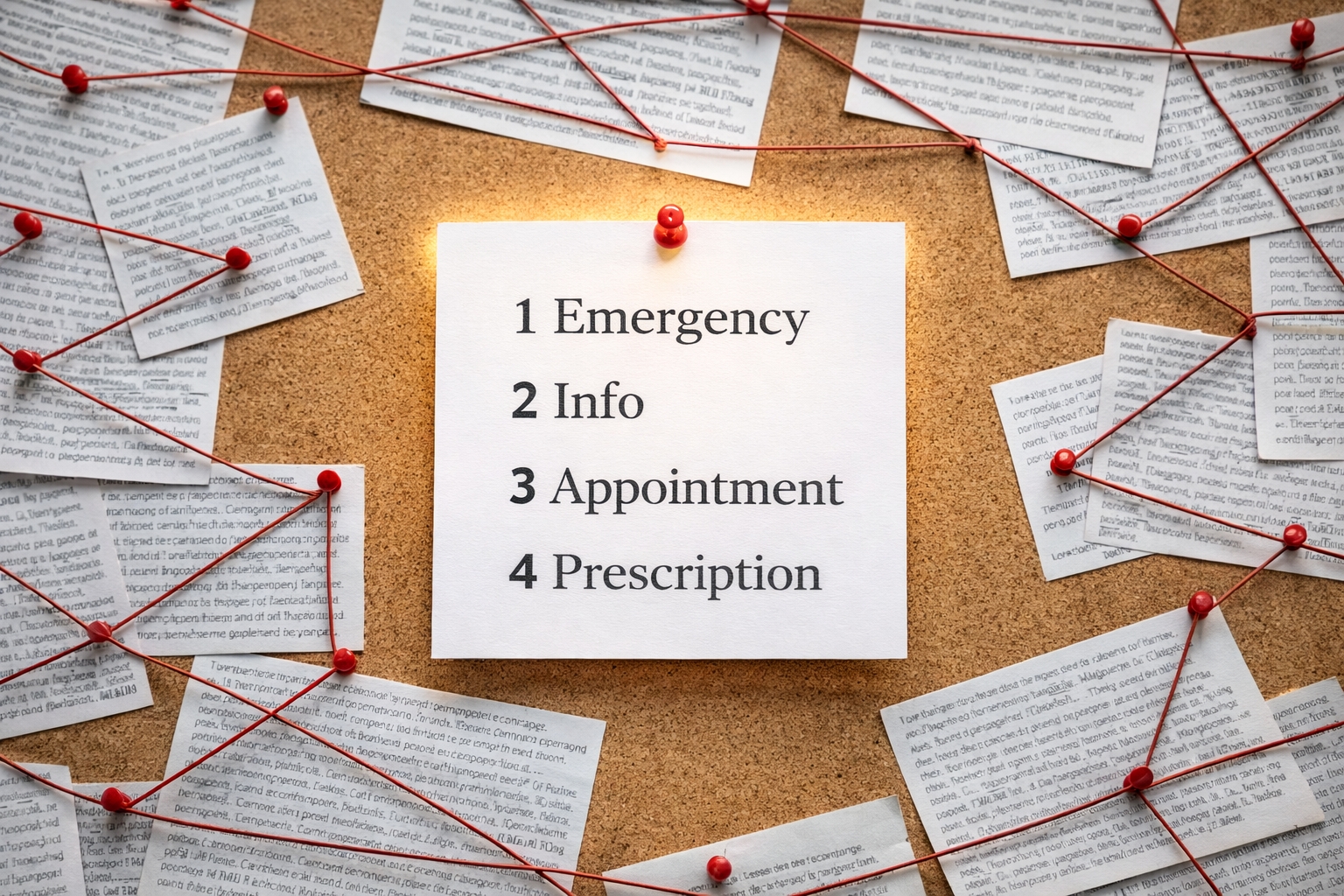
Here is what the phone system should say. I have designed
this. It took me forty seconds. It is free. No medical office will
ever use it.
"Welcome to Dr. Staywell's office.
If this is an emergency, press 1 now. To hear our address,
phone number, and office hours, press 2. To make or change an
appointment, press 3. To refill a prescription, press 4."
That's it. Four sentences. Eight seconds. And if someone
presses 1, you don't tell them to hang up and figure it
out themselves like an abandoned orphan in a Dickens novel—you
transfer them directly to 911, because you are a medical
office and presumably have some passing interest in people not
dying on hold.
Option 2 is where you put the ZIP code, the fax number, and the
kindergarten the doctor's kid attends. The people who need
that information can listen to it. The people who don't—which
is everyone—never have to hear it. The address and hours
exist for the one person a month who has lost the ability to Google
things, and God bless them, they deserve a menu option, but the
rest of us should not be held hostage to their needs.
The appointment line—Option 3, the reason ninety-five percent
of callers are calling—goes straight to a human. Or, if we
must, to a callback queue that actually calls you back, which some
offices have started doing and which is the single greatest
innovation in healthcare since the stethoscope.
The Marcus Welby Problem
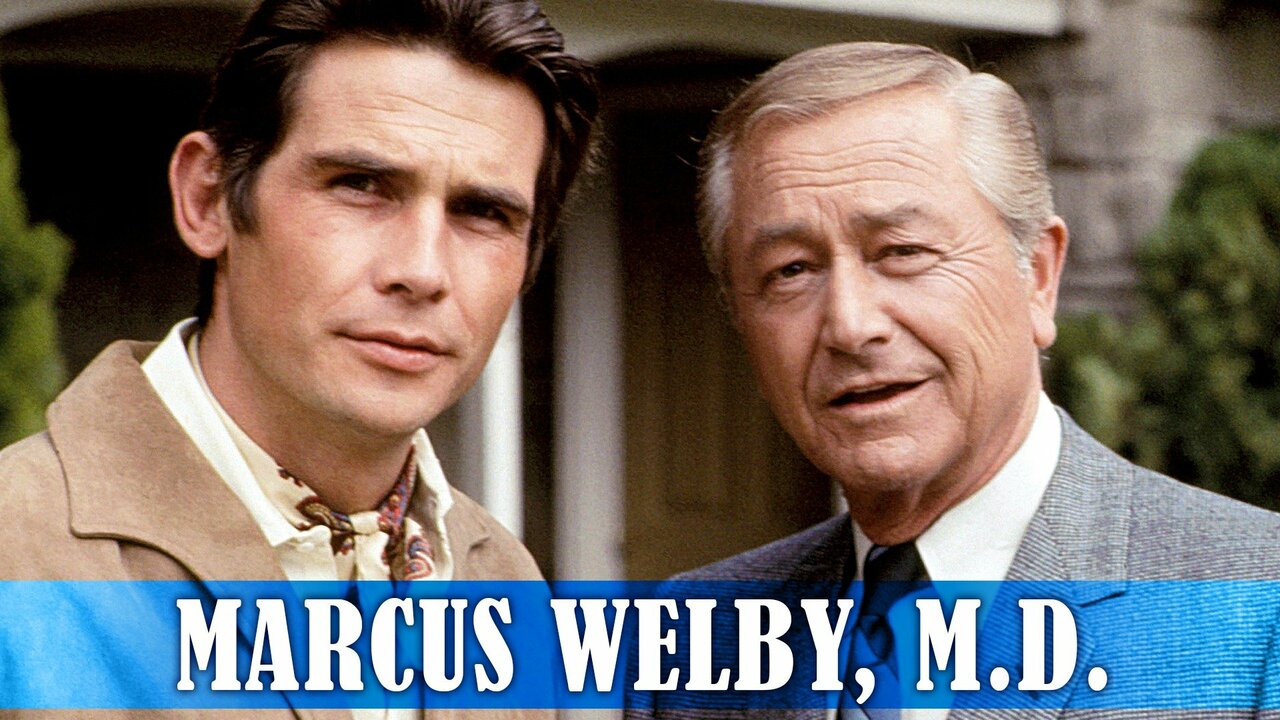
I am old enough to remember when going to the doctor was a human
experience from start to finish. You called the office. A person
answered. You said, "I'd like to see Dr. Wilson on
Thursday," and the person said, "How about 2:15?"
and you said, "That's fine," and the entire
transaction took less time than it now takes to get to the fax number.
Marcus Welby had a receptionist named Consuelo. She answered the
phone. She knew the patients by name. She did not ask you to press
1 for English. Marcus Welby was fictional, of course, but the
experience he represented was not. I had doctors like that.
Everyone my age had doctors like that. The doctor knew your name,
your history, your family. The receptionist knew your voice.
What happened was not complicated: medicine became a corporation.
Doctors stopped running practices and started being employed by
practices, which were owned by hospital groups, which were owned by
holding companies, which were answerable to shareholders who had
never met a patient and did not plan to start. The receptionist was
a line item. The phone system was a capital expense that could be
amortized. The fax number announcement was free. The patient's
time was not on the balance sheet.
And so here we are. The patient—the actual reason the entire
edifice exists—is the one person in the system whose time has
no value. The doctor's time is billed at four hundred dollars
an hour. The administrator's time is salaried. The
receptionist's time was eliminated entirely. And my time, the
patient's time? My time is hold music. My time is the fax
number. My time is "please listen carefully, as our menu options
have changed."
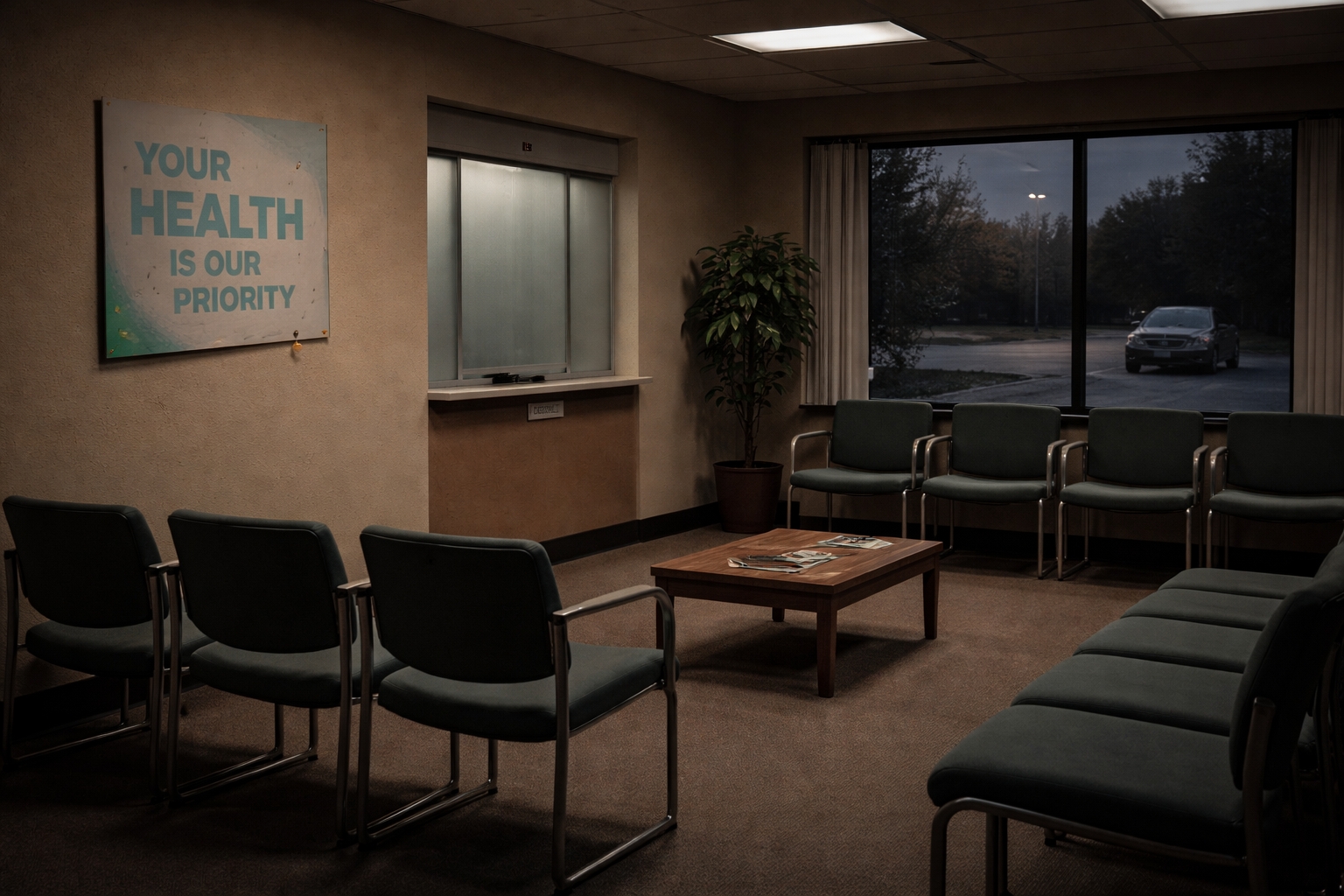
They have not changed.
I have.
I am older, and tireder, and less patient with systems that treat
patience as a renewable resource. I have less time now than
I did when these systems were invented, and yet the systems demand
more of it. There is a word for a business model that
requires its most vulnerable customers to spend the most effort.
Several words, actually, but the one I keep coming back to is
unsustainable.
You might prefer "broken".
If this is an emergency, please hang up.
If this is not an emergency, please hold.
If this is just a seventy-four-year-old man who would like to
see his doctor sometime before he no longer needs
one…well. Your call is very important to us.