|
By: Paul S Cilwa |
Posted: 3/20/2026 |
|
Page Views: 89 |
| Hashtags: #Humor #Reality #GetUsedToIt #Facebook #SocialMedia #Privacy #Scams #IdentityTheft |
| Those cute Facebook quizzes are not as innocent as they look. Here's why I don't play—even though my entire life is already online. |
| Estimated reading time: 8 minute(s) (1668 words) |

The Quiz
In case you have somehow avoided these, here is a typical
example. I have filled it out for your entertainment.
COPY AND PASTE — Don't be a chicken!!

States visited: 49 (still missing North Dakota)
Countries visited: 14
Surgeries: 7
Times broken a bone: 2
Trips to the Moon: 0, but at least once to Beta Centauri
Shot a gun: Yes, and got a medal
Quit a job: Yes, spectacularly
Fallen in love: 5 times, kept count, learned that you can count on dogs
Been in a car accident: 3
Ridden in an ambulance: 2
Favorite drink: Shasta Diet Cola (no Aspartame!)
Number of hysterectomies: Still 0, but the year is young
Favorite season: Fall in the Sonoran Desert
Last time you cried: Does watching the news count?
Favorite food: Shrimp fried rice
Pets: 2 wonderful dogs I inherited from my daughter and son
Concert: Peter, Paul, and Mary, sometime in the 1970s, I think
Tattoos: 1
Piercings: 1 (ear, 1990s, never regretted but got old, let it fill in)
Been to the ER: yes
Favorite city: Hana, Maui
First car: 1967 Plymouith Valiant
Maiden name of mother: Wouldn't you like to know
Name of first pet: Nice try

Now copy and paste and put YOUR answers!
See those last two? If you have ever set up a bank account,
recovered a password, or verified your identity over the
phone, you may recognize them. They are security questions.
And someone just asked you to post the answers publicly!
How the Scam Works

The quiz itself is not the scam. The quiz is the setup.
Here is how it plays out.
The quizzes are designed—sometimes by bored humans,
increasingly by organized fraud operations—to extract
specific categories of personal information that banks,
credit card companies, phone carriers, and government agencies
use to verify identity. Not all at once. Nobody posts a quiz
that says "Social Security number?" because even
the most rabid Facebook user would notice that. Instead,
the questions are scattered across dozens of quizzes over
months and years, each one pulling out a few more pieces:
- Your mother's maiden name (password recovery gold)
- The city you were born in
- Your first pet's name
- The make of your first car
- The street you grew up on
- Your high school mascot
- The year you graduated
These are not random nostalgia prompts. These are literally the
questions that Wells Fargo, Chase, AT&T, and the Social
Security Administration use to confirm that you are you. If
someone has collected your answers from three or four of
these quizzes—and your Facebook profile helpfully
provides your birthday, your hometown, and your
relatives—they have everything they need to call your
bank and become you.
The Phone Call Your Mother Gets

Here is the part that makes it personal. The fraud does not
always target you directly. Sometimes it targets the
people who love you.
Armed with details from your quiz answers and your public
profile—places you have traveled, your general age,
maybe a recent post about a trip—a scammer calls your
mother. Or your elderly aunt. Or your father who is not
great with technology. The conversation goes something like
this:
"Hi, this is Sergeant Williams with the U.S. Embassy
in London. Your son Paul has been in an accident and his
wallet was stolen. He's okay, but he needs $2,000
wired immediately to cover the hospital bill and a
replacement passport. He asked us to call you because
his phone was damaged."
Your mother, who knows from your Facebook that you have
traveled internationally, who knows you have been to
the ER before, who knows your birthday and your middle name
because the scammer casually drops them into the conversation
to sound legitimate—your mother panics. She does not
call you first because she has been told your phone is broken.
She wires the money. By the time anyone has figured out what
happened, the money is gone and the scammer has moved on to
the next quiz-taker's grandmother.
This is not hypothetical. The FBI's Internet Crime
Complaint Center logs thousands of these "grandparent
scams" every year, and the personal details that make
them convincing come overwhelmingly from social media. Those
cute quizzes are the supply chain.
The Other Uses
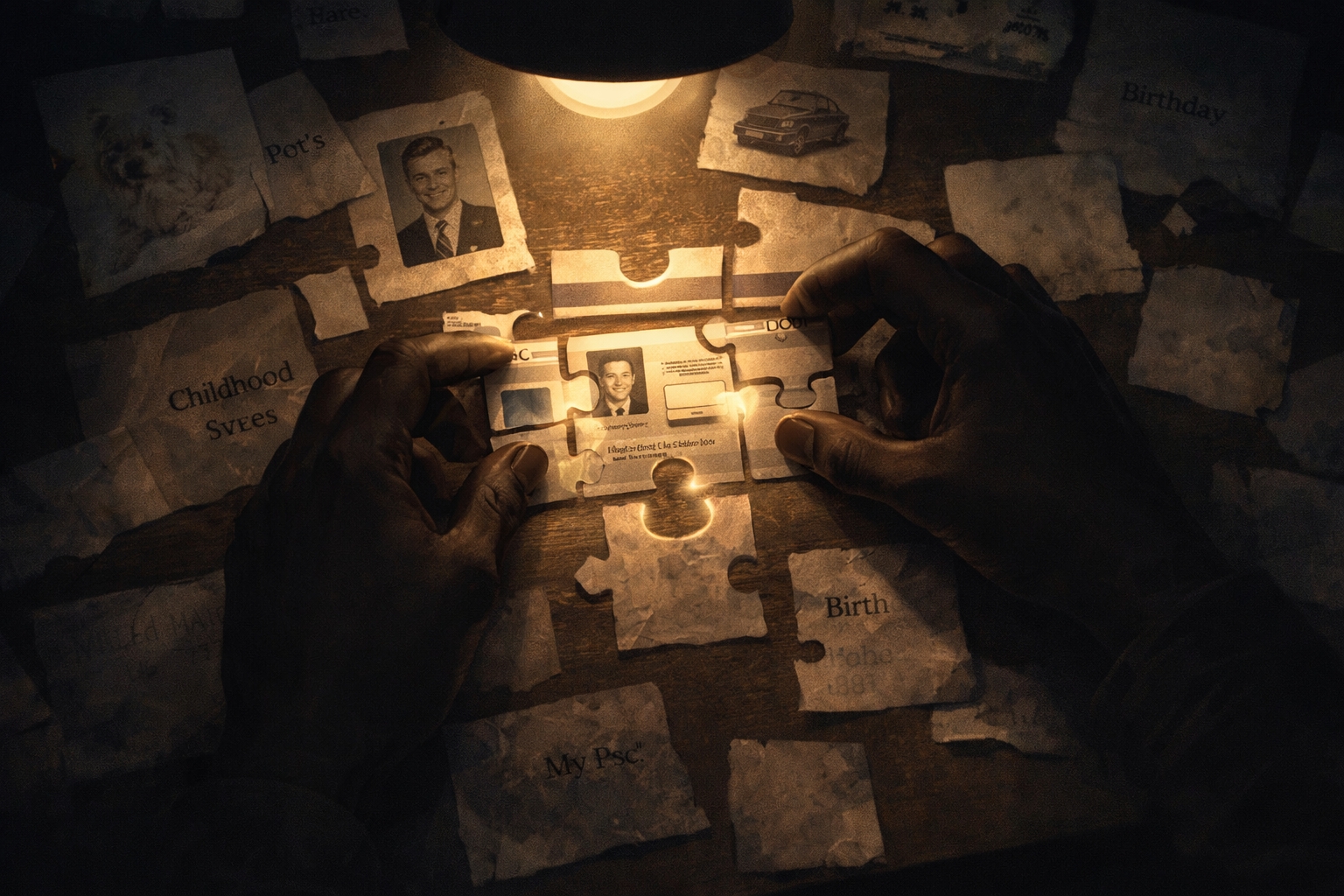
Identity verification fraud is the big one, but it is not
the only thing your quiz answers enable:
- Password cracking. If your password is your first
pet's name followed by your birth year—and
statistically, it might be—you have just handed
someone the key.
- Spear phishing. A targeted email that references
your actual hometown, your actual first car, and your
actual favorite city is enormously more convincing than
a generic "Dear Customer."
- Account recovery attacks. Most "forgot my
password" flows ask you to answer security
questions. If those answers are on your Facebook wall,
the attacker does not need your password at all.
- Synthetic identity fraud. Your real data gets
blended with a fake Social Security number to create a
new "person" who can open credit cards,
take out loans, and vanish. You do not find out until
a collection agency calls you about a debt you never
incurred.
But Paul, Your Entire Life Is Online!
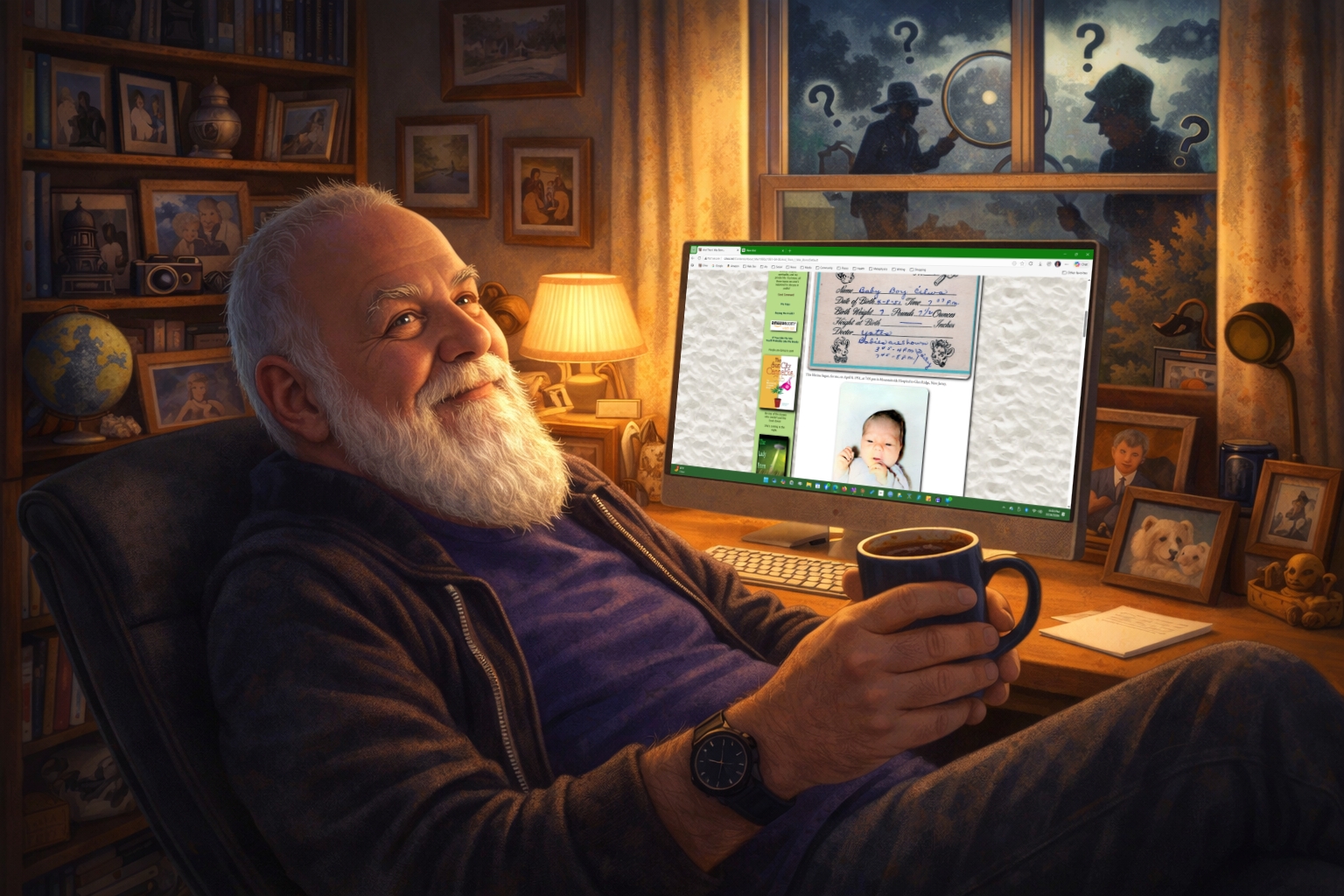
Yes. I am aware of the irony. I have maintained a personal
website since 1998 that documents, in considerable and
sometimes embarrassing detail, my travels, my relationships,
my medical adventures, my family, my opinions, and my dogs.
I have written about my marriages and my divorces, my necrotizing fasciitis
and my prescriptions, my first car and my first kiss.
If you want to know things about me, you do not need a
Facebook quiz. You need a search engine and an afternoon.
Or a month. (It could conceivably take you as long to read about my
life, as it's taken me to live it.)
The difference is that I have been trying for years to get
someone to steal my identity, so far with no luck. Apparently,
no one wants it. I choose to find this hurtful, but it probably boils
down to my having an empty bank account and a negative credit score.
But more seriously: the information on my website is
my choice, published deliberately, in a context I
control, on a platform I own. I know what is out there
because I put it there. The problem with Facebook quizzes is
not that they make information public—it is that they
trick people into making information public without
understanding what they are giving away or who is
collecting it. The fifty-seven-year-old woman in
Topeka who posts her mother's maiden name, her first
pet, and her childhood street in a quiz she copied from a
friend does not know that three months later, a stranger in
another country will use those answers to reset her email
password. She thinks she is playing a game. But it is not
a game.
What To Do Instead
I am not going to tell you to get off Facebook. I am
seventy-four years old (have I mentioned that? It's just that it still
surprises me) and I use Facebook to keep up with
my grandchildren, argue about politics, and post
pictures of sunsets. It has its uses. But here are a few
things worth doing:
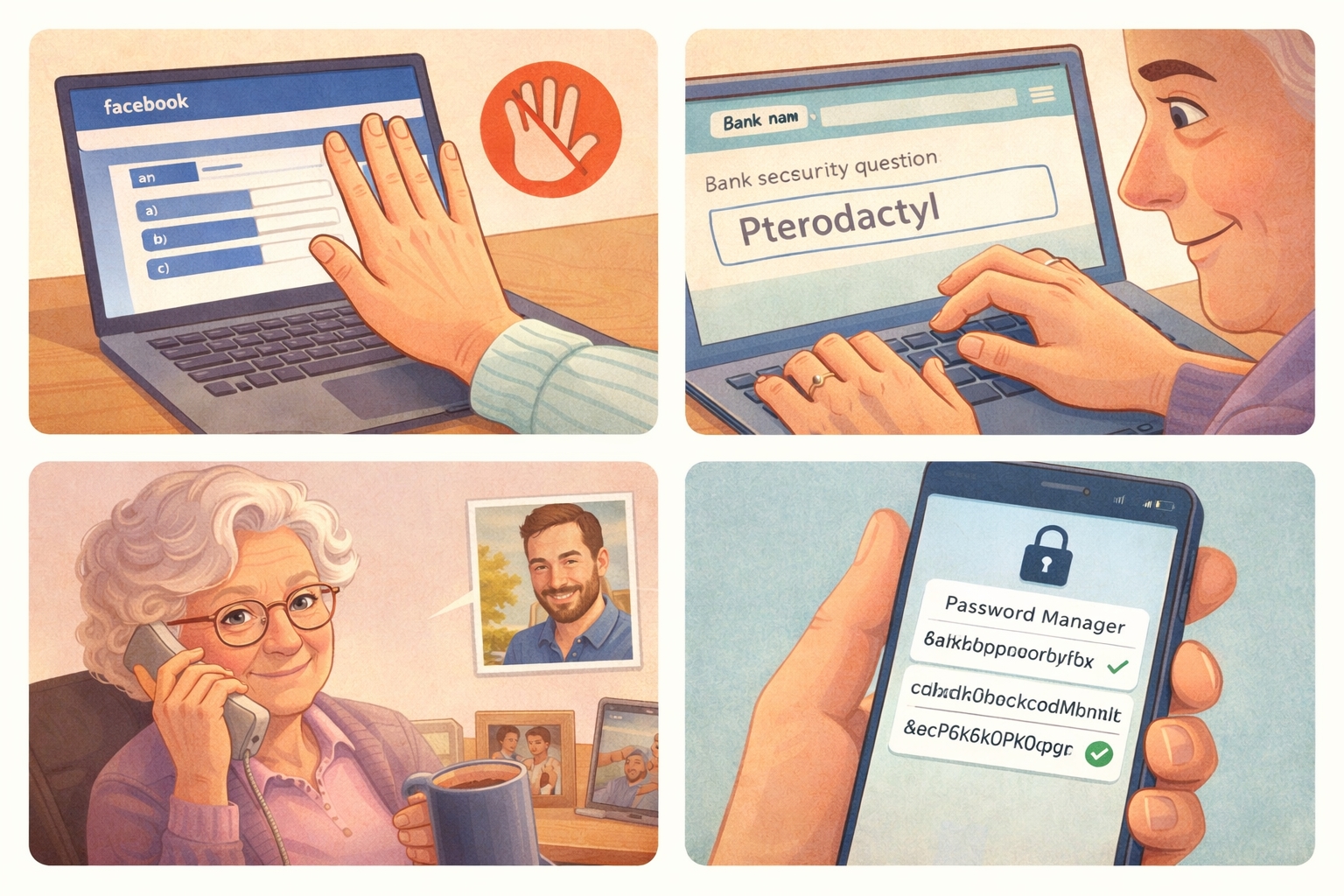
- Never fill out those quizzes. Not even the funny
ones. Not even the ones your best friend posted.
Especially not the ones your best friend posted,
because your best friend does not know where the quiz
originated either.
- Lie on your security questions. When a quiz
asks for your mother's maiden name, type
"Pterodactyl." When they ask for your
first pet, type "Zamboni." The point of answering these
phishing expeditions
is not that the answer is true—it is
actually intended to scam the scammers.
- Tell your parents about the grandparent scam.
Specifically. Describe how it works. Tell them: if
anyone ever calls claiming I am in trouble and need
money, hang up and call me directly. If they cannot
reach me, call my spouse, my kid, my neighbor. Do
not wire money to a stranger based on a phone
call, no matter how convincing the caller sounds.
- Use a password manager. If your passwords are
generated randomly and stored in an encrypted vault,
it does not matter how many quizzes you have filled
out. The answers to your security questions are not
your passwords, and your passwords are not guessable
from your biography.
The Uncomfortable Truth

The reason these scams work is not that people are stupid.
The reason they work is that people are trusting.
They trust their friends, who shared the quiz in good faith.
They trust Facebook, which allowed it to be posted. They
trust that a fun little chain-letter game is just a fun
little chain-letter game, because why would anyone go to
the trouble of designing a fake quiz just to learn their
mother's maiden name?
The answer is: because that maiden name, combined with a
birthday and a hometown, is worth money. Not a lot of money
per person—maybe a few hundred dollars, maybe a few
thousand—but multiplied across millions of willing
participants, it is an industry. A quiet, patient, profitable
industry that feeds on the gap between how much people
share and how little they understand about why it matters.
So the next time one of those quizzes shows up in your feed,
resist the urge to play along. Or if you absolutely cannot
resist, do what I did above: fill it in with jokes. Your
number of hysterectomies and trips to Beta Centauri are
unlikely to compromise your banking credentials.
Probably.