|
By: Paul S Cilwa |
Posted: 7/2/2007 |
|
Page Views: 1,152 |
| Hashtags: #Photography #DorothyWeemsBrown #Florida |
| The time I visited Jacksonville International Airport in 1970, when it was new. |
| Estimated reading time: 3 minute(s) (656 words) |
In 1968, the big news in St. Augustine was the newly-completed
Jacksonville International Airport.
St. Augustine had its own airport,
but there had never been commercial flights to or from it. So
Jacksonville Airport meant that St. Augustinians now had the option of flying
somewhere, rather than driving or taking a train or bus.
On June 5th of that year, my friend Joe McGrath's dad had me drive him to the
airport. Mr. McGrath owned a Cadillac and it was like driving a living room. But
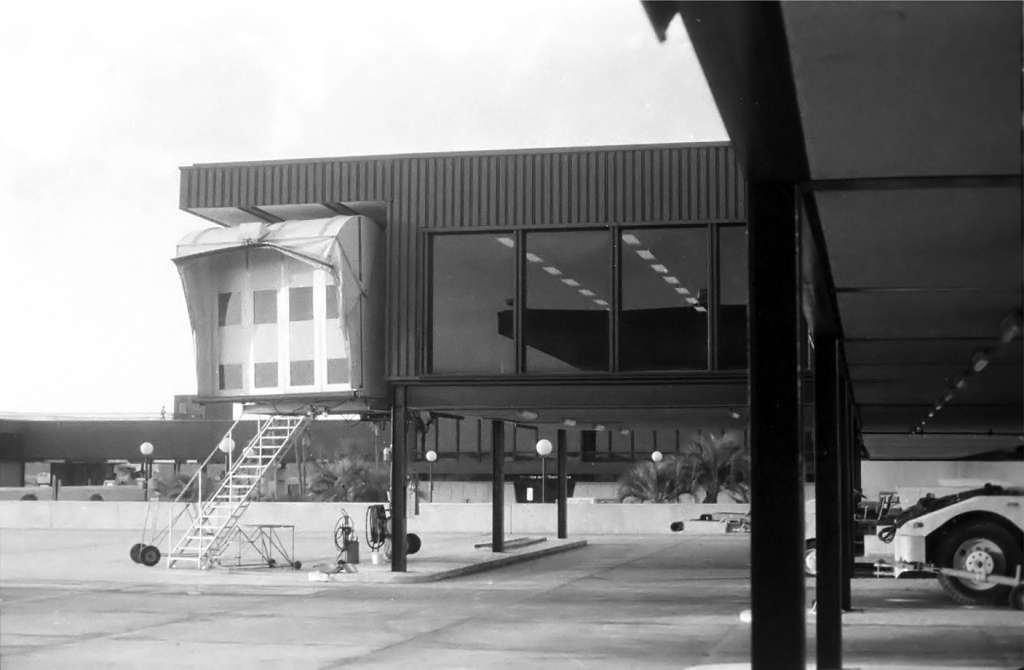
even more impressive was the airport, a marvel of modern design and sleek lines.
For me, it was like being in a space ship. Although an innovation that impressed
airport designers was its (then) unique approach of having entrances for
arriving and departing passengers on opposite sides, for me that was dwarfed by
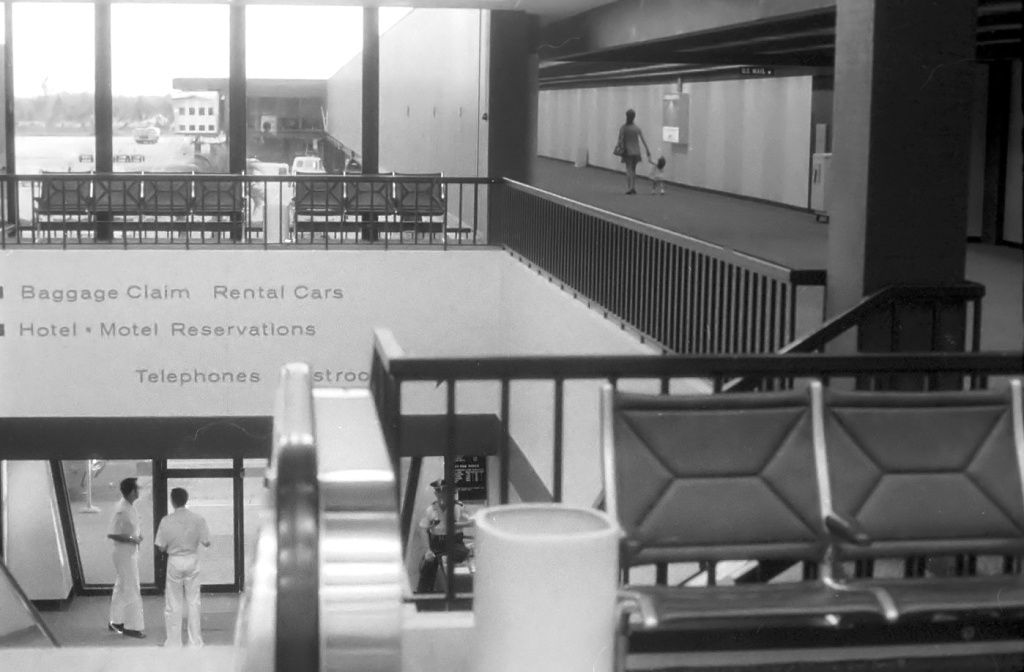
the presence of large color TV sets in the main lobby. I had seen very few color
TVs up to that point, and these were state-of-the-art, with screens that were
more rectangular than round.
It was on one of those screens, that day, after seeing Mr. McGrath off to his gate, that I watched the assassination of
Robert F. Kennedy.
In 1969, several of us from my class at school visited Jacksonville Airport
on a lark—that's how exciting it was. This was long before any kind of airport
security, of course; we could walk the halls and even go out on the roof to
watch the jets take off. As one was getting up speed, our friend Rosemary said,
"Wouldn't it be awful if we were watching and one of the jet's engines blew up
and it had to land?" As if on cue, a great puff of black smoke emitted from one
of the jet's engines; it took off, but circled and immediately landed. Rosemary,
unable to believe she had foreseen this, instead believed she had
caused the incident (I ask you, which is more likely??!) and remained
terribly upset the rest of the day, in spite of the fact that no harm was done
except to travelers' schedules.
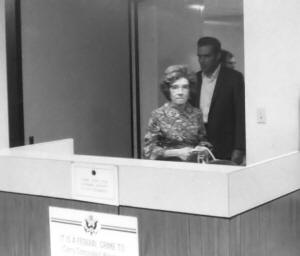
She left in July and the house certainly seemed strange without her. Finally,
the two weeks were over and Mom, my sister Mary Joan, and I left to pick her up
at the airport.
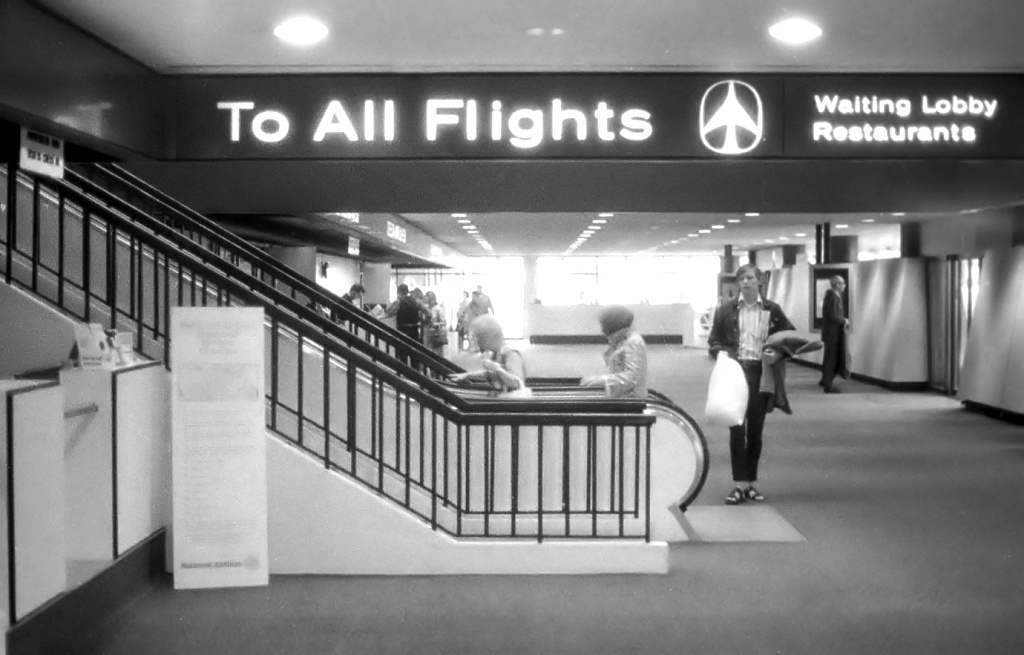
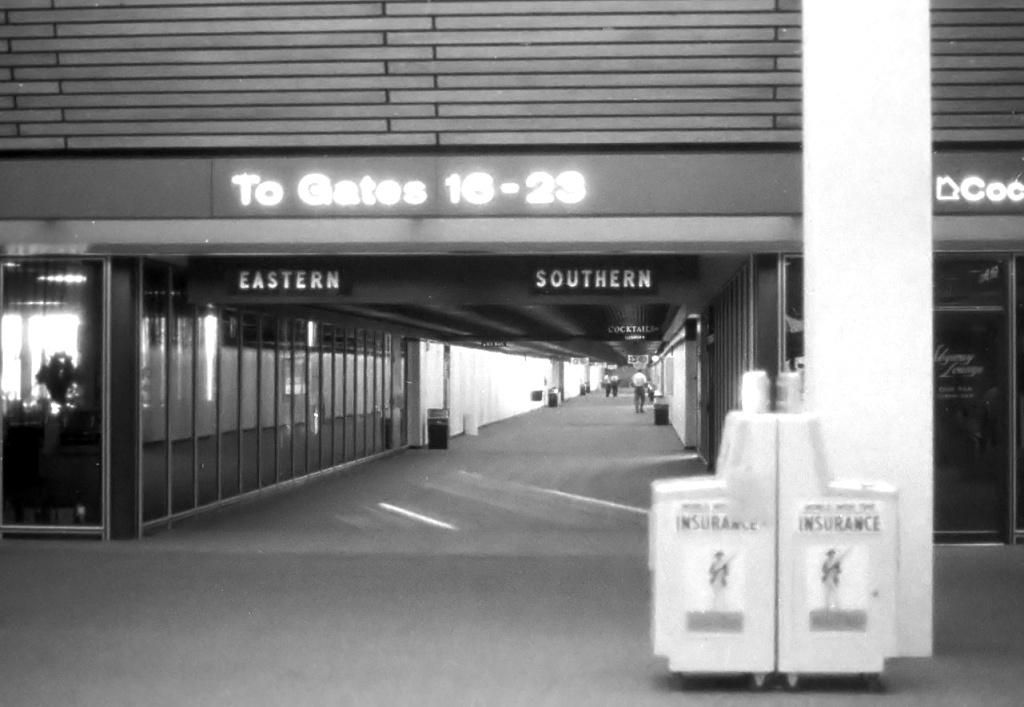
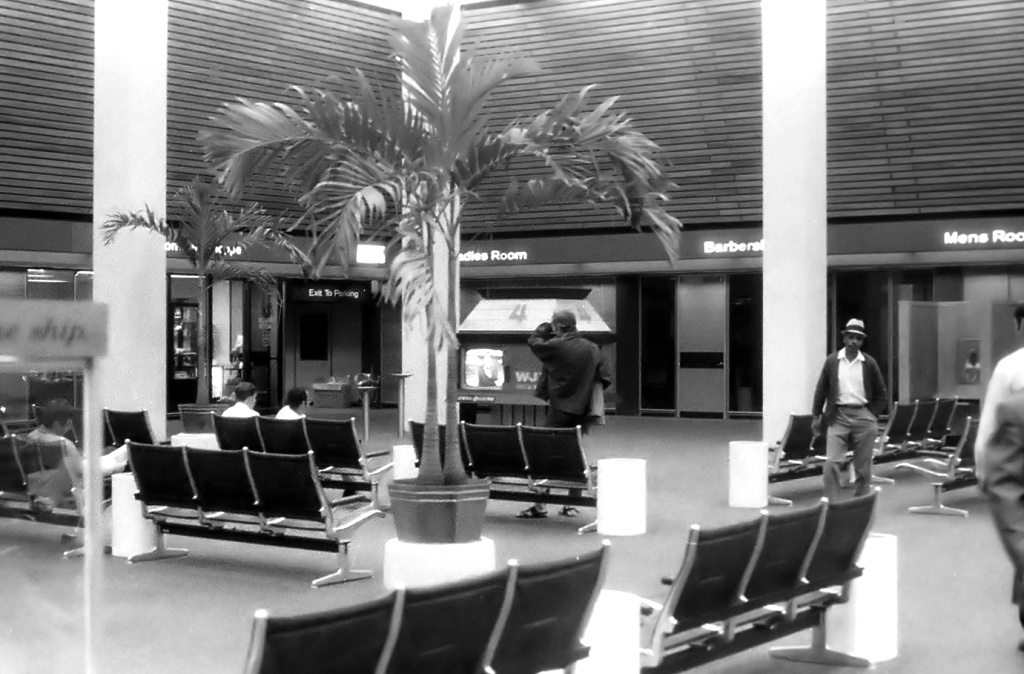
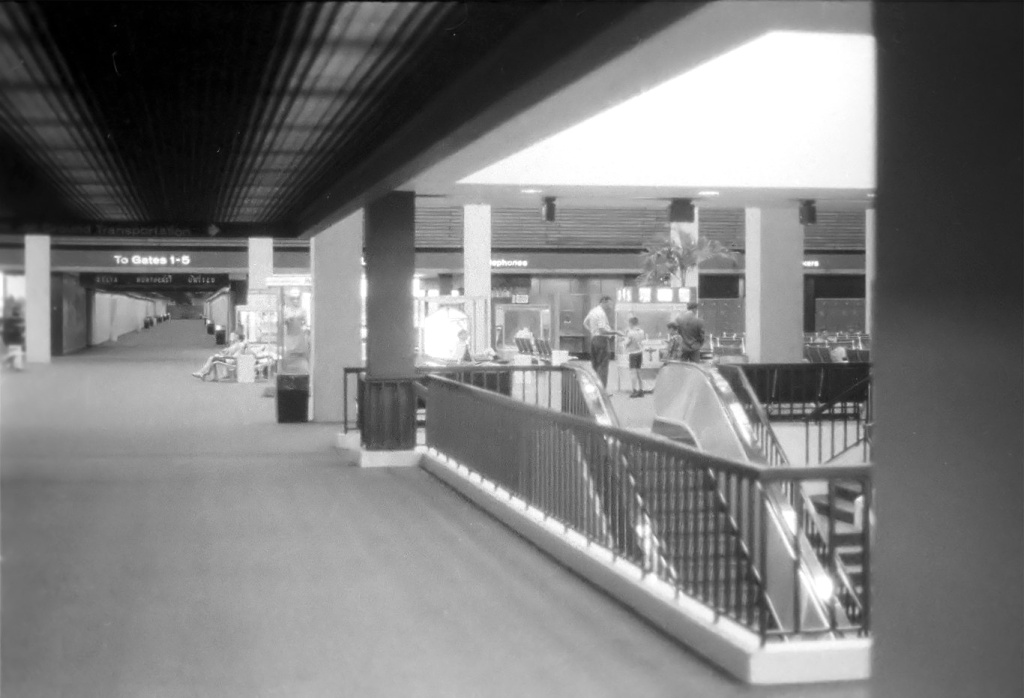
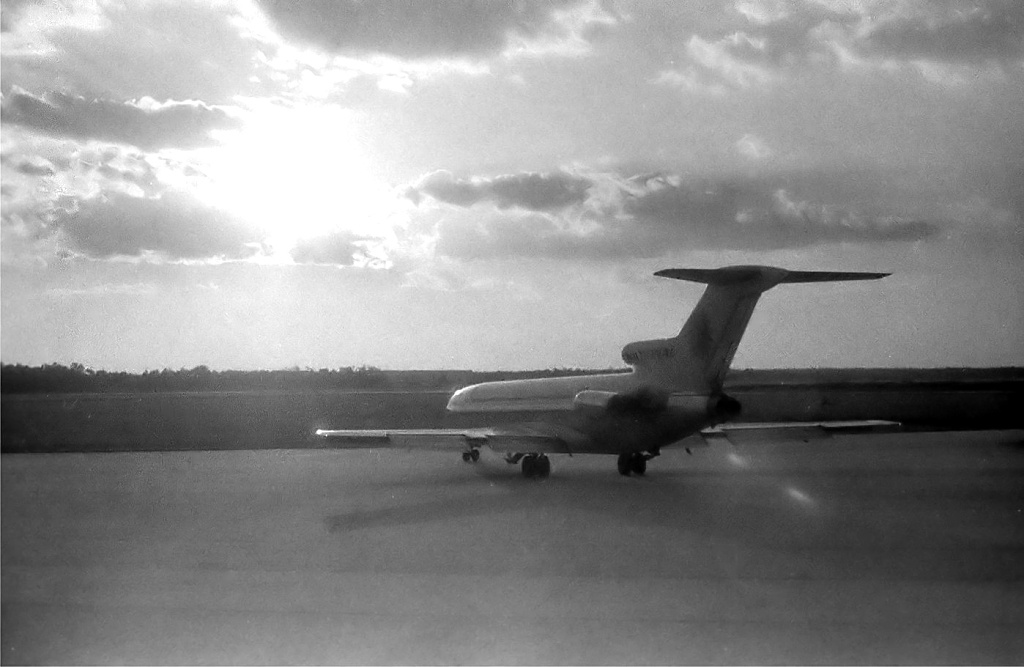
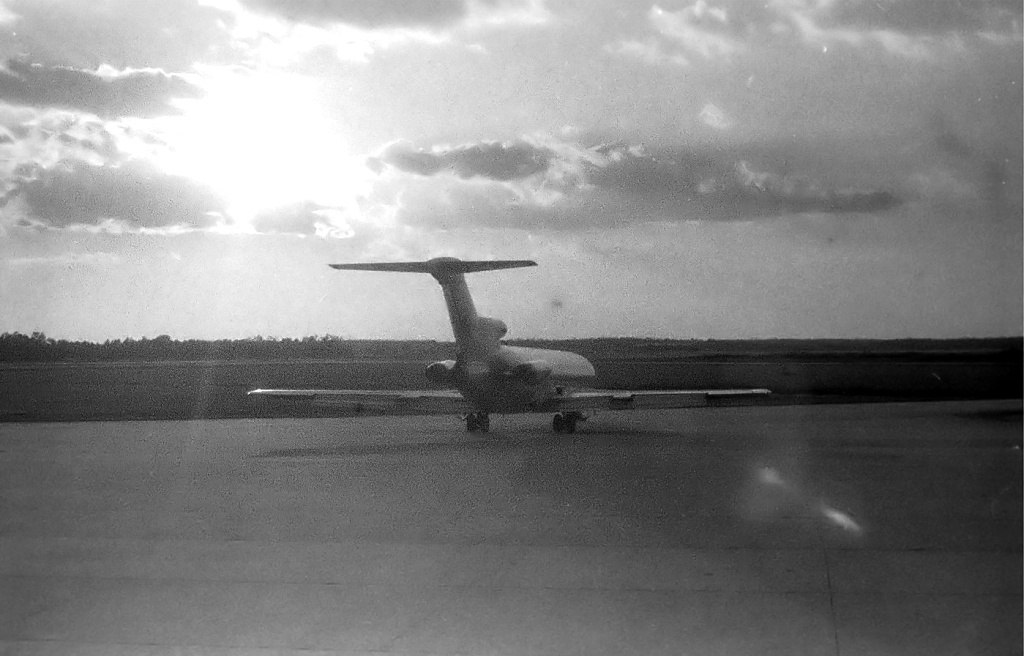
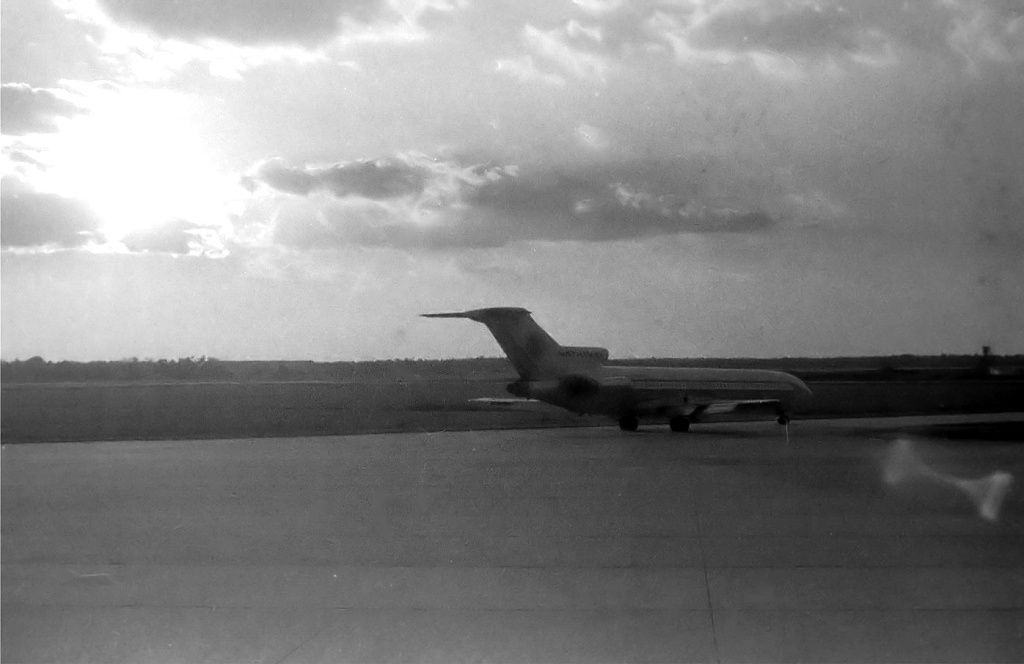
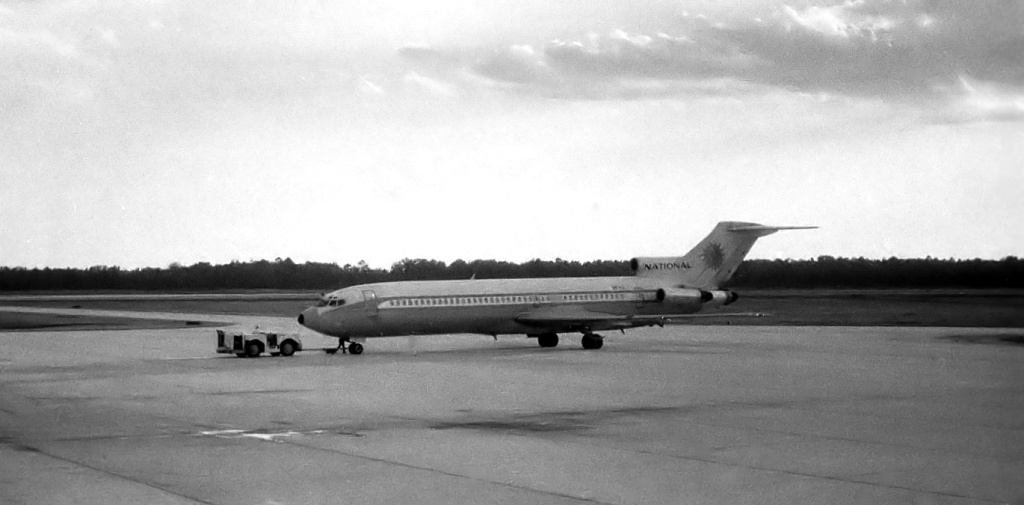
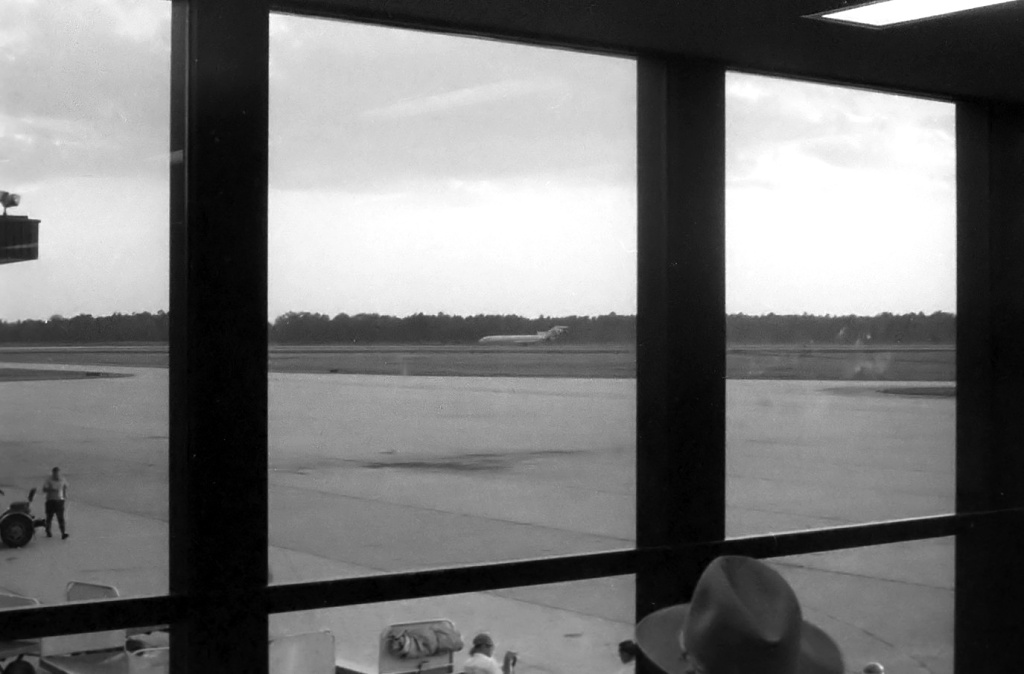
I went prepared with a special film I had discovered: a Kodak black-and-white
high-speed film, ASA 1200, that would permit me to take snapshots indoors
without a flash. I shot the entire roll at the airport, carefully saving one
shot for Gramma's actual arrival.
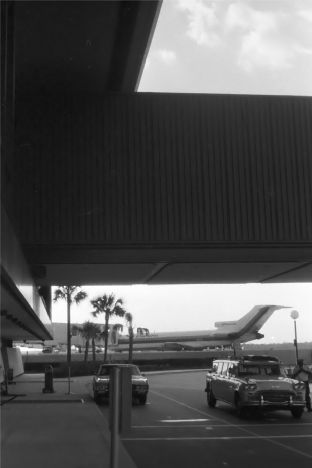
The downside, as I discovered when the prints came back from the drugstore, was that
the high-speed film was very grainy (a common artifact of high-speed films in
general). For some pictures, grain can be an interesting effect used
intentionally. For these, it was more distracting than anything else. Another
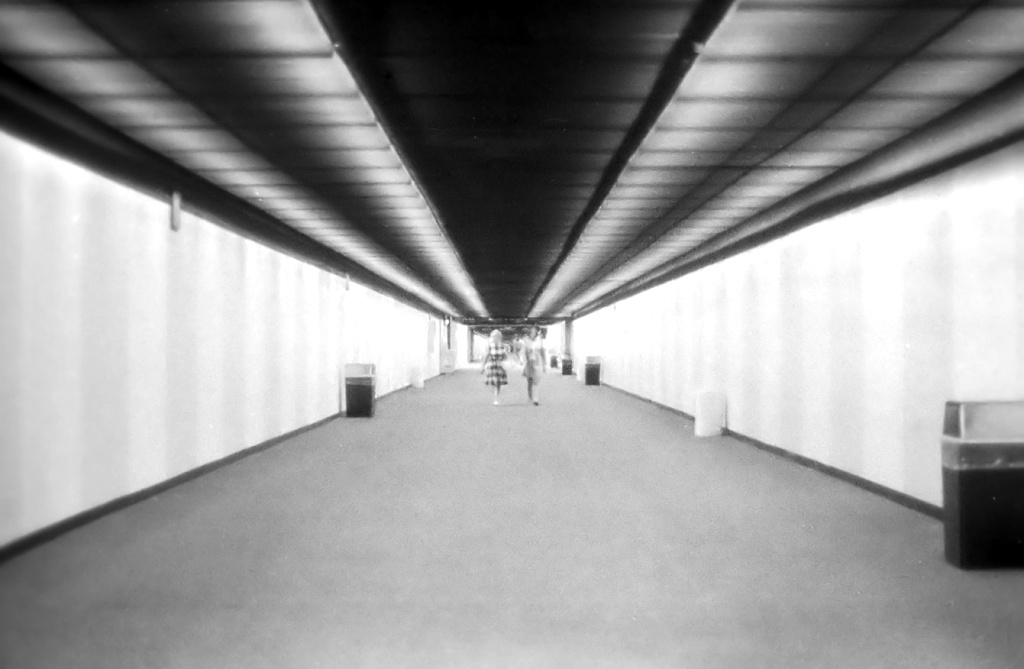
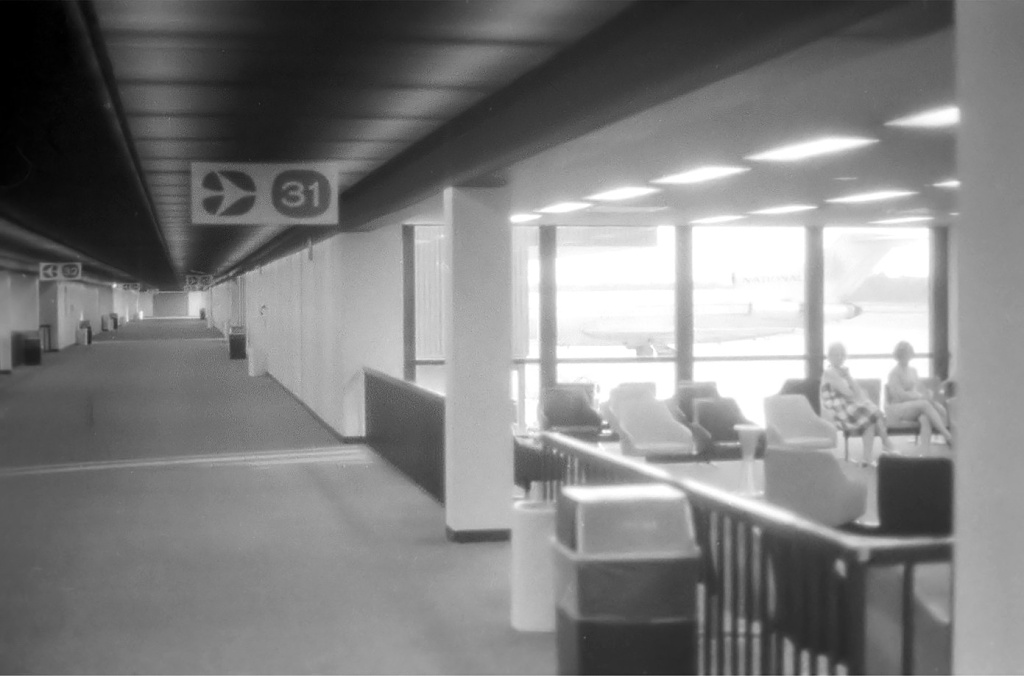
artifact was a kind of halo or glow around bright objects that I found
interesting. The result was not quite architectural photography, but a tad
ethereal than that—appropriately rendering the outer-space feeling I got from
the place.
These days, grain—which in digital photography is referred to as "noise"—can
now be added to or removed from a digital image as desired. After having
the original negatives digitized by Memories Renewed,
and removing dust and scratches with Microsoft PhotoDraw, I used the free program
Neat Image to remove the grain from that
roll (but retaining the halos), as seen in the photos below.