|
By: Paul S Cilwa |
Posted: 7/11/2006 |
|
Page Views: 5,103 |
| Hashtags: #Spirituality #GayRights #Metaphysics #History #Superman #Movies |
| Movie Review: Superman Returns, as does the Superman inside each of us. |
| Estimated reading time: 6 minute(s) (1406 words) |
We finally got in to see Superman Returns. It took two tries before we
could get in. Originally, we wanted to go on Saturday, but the showing we
planned to attend, and the two following, were sold out. So we went on Sunday
morning, arriving an hour before the movie started so we could have some
assurance of getting decent seats.
My daughter, Dottie, who is visiting from Virginia, was afraid her five-year-old
wouldn't sit still for the movie; so Dottie and Cailey went in to see Cars
(which they enjoyed) instead. The rest of us watched Superman: me,
Michael, daughter Karen, son John, seven-year-old grandson Zachary, and ex-wife
Mary, occupying most of the row.
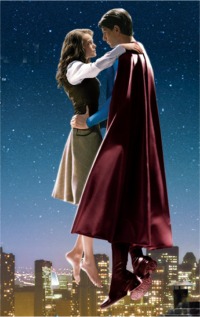
A lot of the reviews I've read criticize Superman Returns for its
apparent rehashing of Superman The Movie. And, on the surface, you can
see their point. The movie starts with Superman's spaceship crashing onto the
Kent farm; it includes a scene of young Clark discovering his powers; Lex Luthor
is the villain and he's got a real estate scheme that involves the deaths of
"billions" of people. Even Marlon Brando has a posthumous cameo as Superman's
father, Jor-El.
But this is not a rehash of the first Alexander Salkind film. Rather,
it's like the third act of an opera, where musical themes introduced in the
first act are brought into stunning focus by replaying them with different
subtexts. The spaceship holds an adult Superman who is returning from a
visit to the ruins of his birth planet. Luthor's real estate scheme builds off
the first two Salkind films and is truly original. And the Brando dialog, when
later repeated by Superman himself, will bring a tear to your eye.
This building onto what has gone before, is a microcosm of the Superman tale
as a whole. Sometimes a story is better than the one told by its original
authors. "Superman" was invented in the 1930s by two Cleveland teenagers, Jerry
Siegel and Joe Shuster; but it's taken seventy years for the seeds within their
somewhat simplistic invention to fully blossom.
Jerry Siegel was the son of a haberdasher who was shot and killed by a
robber. That undoubtedly influenced Jerry's creation of a bulletproof superhero.
There had been other comic book heroes; but Superman was the first to mix a
science-fiction origin with the Moses-in-the-bulrushes tale of abandonment and
redemption.
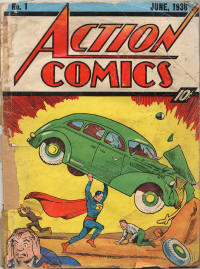
Comic book stories in the late 1930s were packed with one action scene after another, which
didn't allow much room for character development. As portrayed in his 1938 debut
in Action Comics, Superman was invulnerable but couldn't fly; he could
only jump an eighth of a mile and "leap over tall buildings at a single bound."
He had fantastic strength but his special vision powers didn't yet exist. He
worked at the Metropolis Daily Star in his secret identity as Clark
Kent, but was seldom seen there.
Nevertheless, Action Comics became a great success and its publisher
created a radio show based on Superman which hit the airwaves in 1940.
Because Superman's feats were so visual, his Clark Kent persona was enhanced.
The Daily Star (Joe Shuster had worked as a paper boy for the Toronto
Star) became the Daily Planet and the characters of Perry White and
Jimmy Olsen were introduced. Superman's X-ray vision and super-hearing
came into play and Kryptonite made its first appearance, not working its way
into the comics for another eight years.
More important than the enhancement of Superman's powers, though, was his
blossoming as a human being. Superman's birth father had originally been
described merely as a "scientist" on a world of scientists. Now, for the first
time, audiences heard Jor-L and his wife, Lara (played by Agnes Moorehead),
agonize over their planet's impending doom and the need to send their infant
into space for his own survival. (The spelling changed to Jor-El in later
years.) Superman's birth name was Kal-El, which meant "Star Child" in the
Kryptonian language.
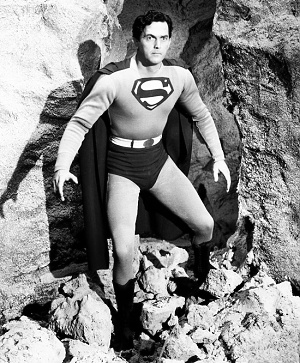
1940s movie serials starring Kirk Alyn as the Man of Steel, the 1950s TV show The
Adventures of Superman, the 1980s syndicated TV show Superboy, the
1990s Lois and Clark: The New Adventures of Superman, and the current
series Smallville have continued to enhance the story, largely by
concentrating on Superman's motivations, especially his conflicted relationships
with Lois Lane as both Superman and Clark Kent. The Alexander Salkind movie
series, starting with Superman The Movie and Bryan Singer's new film have
continued the trend. While the various series might contradict each other in
details, the essential tale of a super-powerful being of goodness hidden,
disguised, as a flawed human remains constant.
The Superman story has always struck a chord with closeted gay men, who felt
they had to live suppressed, mild-mannered "Clark Kent" lives that hid a
fabulous, cape-wearing inner self who could fly only if freed of that outer
persona. But I believe the universality of the story is that everyone
feels this way. Our public selves may fumble with the day's problems and
humiliate ourselves in front of the person we love, yet inside we know
there is an all-powerful being who, if only it could be freed, could easily
solve all those problems and be loved by all in return.
Alternative literature and late-night radio abounds with tales of the
superpowers we all possess. Once, before I met him, my husband Michael was
walking home late at night in Manhattan when a thug grabbed his wrist, probably
trying to steal his watch. To their mutual surprise, Michael levitated twelve
feet into the air and halfway down the block before alighting. The thug screamed
and ran the other way as Michael, attempting typical superhero repartee, shouted
after him, "My watch doesn't even work!" Needless to say, Michael has been
unable to duplicate this feat.
I have a similar story. When I was in junior college I had a pal, Craig, with
an artist roommate named Jeff. I despised Jeff, who was rude, self-centered and
self-absorbed; but I treated him civilly in deference to Craig. One day while
visiting the apartment they rented, I was alone in the living room and picked up
Craig's guitar and began to play. After a few minutes, Jeff came home with a
six-pack of Bud, completely ignored me, turned on the stereo, popped open a can
and sat in a big, overstuffed chair behind which were propped several rolled-up
canvases of his artwork.
If he'd said hello, if he'd mentioned that he wanted to listen to an album,
if he'd offered me a beer—any of the little niceties that we all take for
granted—I'd have had no complaint. Without them, though, I was royally pissed
off. Still, it was
his house; and I determined to just swallow my anger rather than sinking
to his level and punching him out as he so richly deserved.
Just at that moment, I felt a rush of—something—build up from my heart
and explode through my face. Jeff's heavy chair, easily weighing a hundred
pounds empty, flipped backwards, spinning on one foot and dropping sideways so
that Jeff's beer spilt all over his canvases.
My jaw dropped. I was at least ten feet away from his chair, but I knew
that, somehow, I was responsible. I had felt the energy erupt from my
face just before the easy chair had been flipped over. It felt like
cause-and-effect as surely as if I'd pressed a button to make it happen. And
Jeff's resentful glare in my direction showed that he felt it, too.
Could I prove it? Of course not. Have I ever been able to do it again,
intentionally? Nope. Clark Kent doesn't have the power to flip easy chairs at a
distance.
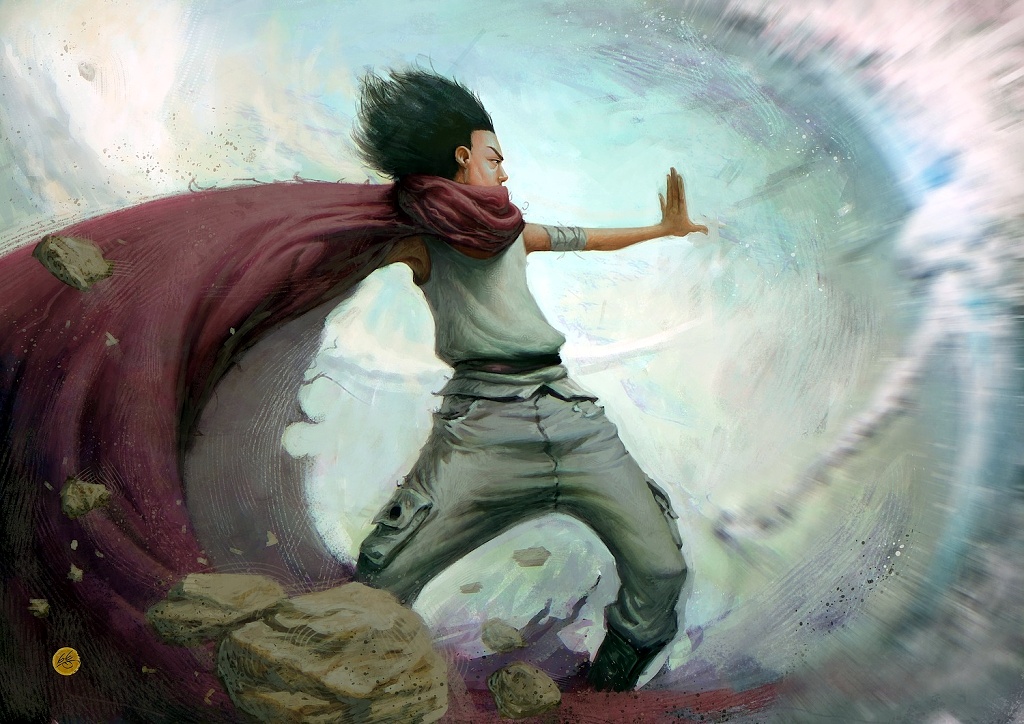
But sometimes, when we least expect it—the Superman inside us
returns.