|
By: Paul S Cilwa |
Posted: 3/5/2026 |
|
Page Views: 35 |
| Hashtags: #Science #History #Technology #SpaceAge #HumanFlight #Rockets #ApolloProgram #InternationalSpaceStation #SpaceTelescopes #SpaceExploration #MythologyandScience #Aeronautics |
| How we literally left our home world: The dawn of the Space Age. |
| Estimated reading time: 22 minute(s) (5191 words) |
In the Beginning: Gods, Elements, and a Very Bad Day for Icarus
To understand why flying felt so impossible to the ancient
Greeks, you have to understand how they thought the universe worked.
Their cosmos was built from four earthly elements: earth, water, fire,
and air. Heavy things—rocks, dirt, people—were made mostly of
earth, and earth's nature was to sink. Light things—smoke, flames—rose because they were made of fire and air. The stars and planets were
something else entirely, composed of a fifth element they called
aether: perfect, unchanging, eternal, and utterly beyond the
reach of anything as clunky and earth-laden as a human body.
Up there in the aether, the gods lived. Down here, we didn't fly. That
was just the natural order of things. Which makes the myth of Daedalus
and Icarus all the more remarkable, because somebody, a few thousand
years ago, looked up at a soaring bird and thought: what if?
The backstory, as these things go in Greek mythology, is wonderfully
convoluted. It starts with a bull. King Minos of Crete had prayed to
Poseidon for a magnificent white bull to sacrifice. Poseidon sent one.
Minos decided to keep it instead. Poseidon, being a god and therefore
constitutionally incapable of letting anything slide, cursed Queen
Pasiphae to fall in love with the bull. She commissioned Daedalus—the greatest inventor in the ancient world, essentially a one-man
Renaissance—to build her a wooden cow she could hide inside. (Don't
think too hard about that.) The result of this deeply unfortunate
situation was the Minotaur: half man, half bull, entirely nobody's
problem you wanted to deal with.
King Minos, embarrassed but practical, hired Daedalus to build the
Labyrinth: an underground maze so cunning that not even its architect
could easily escape it. The Minotaur was locked inside, fed a regular
diet of Athenian youths (tribute, long story), until the hero Theseus
arrived, killed the beast with some help from Minos' daughter Ariadne
and a very famous ball of thread, and sailed home. Minos, furious,
locked Daedalus and his son Icarus in a tower. Because the guy who
invented an (almost) unbreakable containment system couldn't possibly
find a way out of a tower, right?
Here's where it gets interesting. Daedalus looked out at the sea,
figured sailing away was impossible with Minos controlling all the
ships, and turned his eyes upward. He began collecting feathers—from
seabirds, probably, watching how their wings caught the air—and
fashioning them into wings with wax and thread. What he built was, in
all likelihood, something very much like a hang glider: a framework of
feathers arranged to catch thermals rising from the sun-warmed
Mediterranean cliffs. He made two sets. One for himself. One for Icarus.
He gave his son the famous instructions: don't fly too low, the sea
spray will soak the feathers. Don't fly too high, the sun will melt the
wax. Stay in the middle. The aether, those perfect eternal heavens of
the gods, was not for mortals. Stay in the middle.
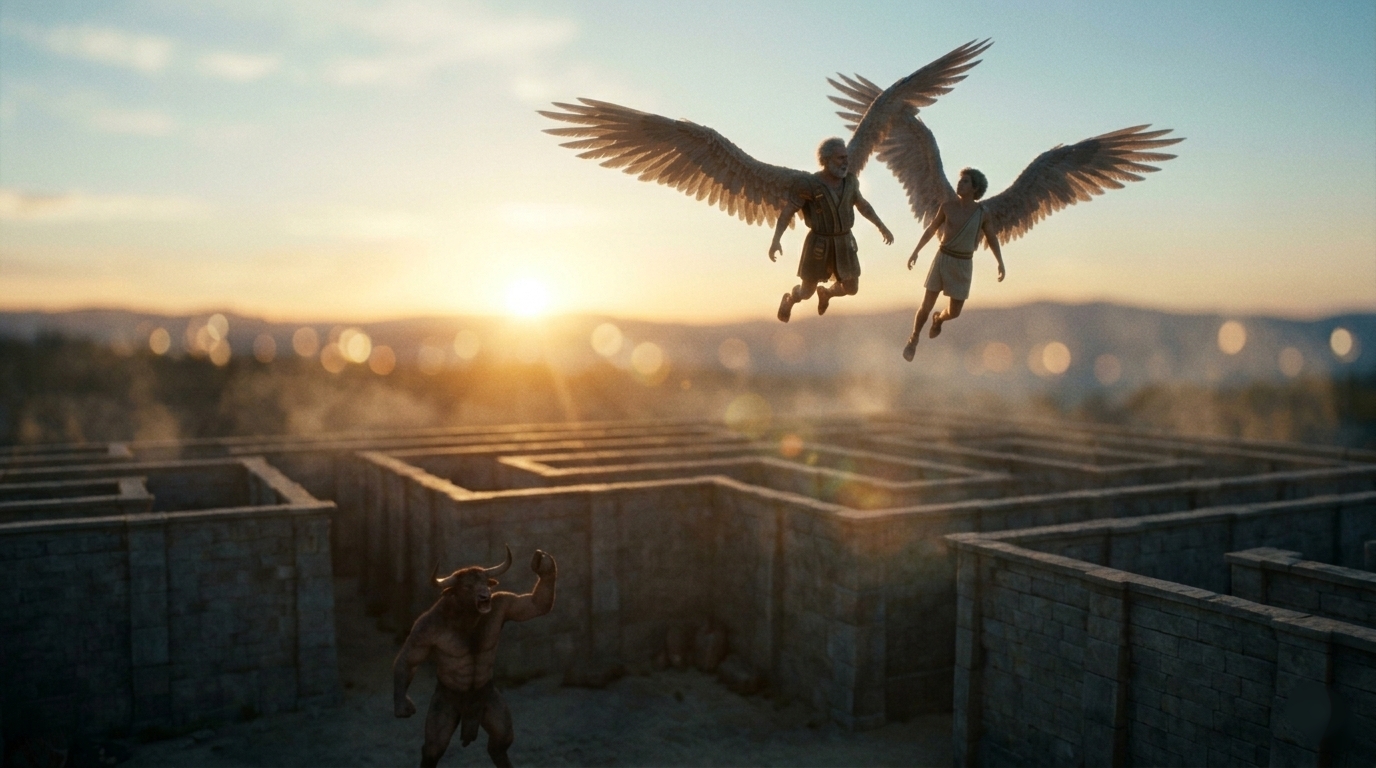
Icarus, being a teenager with a brand-new set of wings, did not stay in
the middle. He soared. He climbed. He probably felt like a god himself
right up until the moment the wax softened, the feathers scattered, and
he plunged into the sea. The body of water around the Greek island of
Icaria still bears his name.
But here is the part almost nobody talks about: Daedalus made it.
He followed his own advice, kept to the middle path, and landed safely
in Sicily (about 584 miles away). The world's first aviator didn't die. He retired to a quiet
life on a Mediterranean island, having proven—in myth if not in
practice—that a human being could, if he was clever and careful and
refused to let hubris get the better of him, slip free of the earth
entirely. The Greeks embedded in that story both the dream and the
warning. Reach for the aether, and you'll get burned. Respect the
physics, and you just might land.
Kites, Kettles, and the Long Road to Liftoff

For most of human history, the closest we got to flight was watching
someone else do it. Specifically, birds (and bats, and flying squirrels).
And the birds were infuriating, because they made it look effortless. Generations
of inventors studied them, tried to copy them, and failed—usually
because they were copying the wrong thing. Birds don't fly
because they flap their wings. They fly because their wings are
shaped to generate lift. The flapping is just the engine. The shape is
the secret. It took humanity an embarrassingly long time to figure that
out.
The Chinese were the first to crack partial flight, and they did it with
kites. As early as 400 BCE, Chinese engineers were flying kites large
enough to lift a man—not to go anywhere useful, mostly to spy on
enemy troops or signal across distances, but still. You could get off
the ground. The problem was you were tethered to it and went where
the wind took you. Still, kites proved the principle: a shaped surface,
angled into the wind, could generate lift. That was not a small achievement.
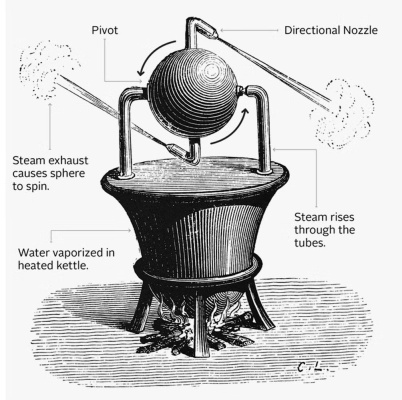 An aeolipile (from the Greek for "ball of Aeolus," god of wind)
works on the same principle as a lawn sprinkler: escaping fluid pushes
the nozzle in the opposite direction, spinning the device. Newton
wouldn't formalize this as his Third Law until 1687—Hero was just
playing around.
An aeolipile (from the Greek for "ball of Aeolus," god of wind)
works on the same principle as a lawn sprinkler: escaping fluid pushes
the nozzle in the opposite direction, spinning the device. Newton
wouldn't formalize this as his Third Law until 1687—Hero was just
playing around.
A little later, in Alexandria, around 100 CE, a brilliant engineer named
Hero was building toys that nobody quite recognized as revolutionary.
His aeolipile was a metal sphere mounted on a pivot above a
boiler; as steam escaped from two curved nozzles on the sphere, it
spun. Round and round, powered by nothing but boiling water.
Hero thought of it as a curiosity. What he had actually invented was
the reaction turbine—the fundamental principle behind every rocket
engine ever built! The Space Age was hiding inside a party trick,
waiting seventeen centuries for someone to take it seriously.
The medieval period welcomed Abbas ibn Firnas, a ninth-century Andalusian
polymath who apparently made a winged flight of sorts in 875 CE and
landed badly because he hadn't thought about how birds use their tails
to brake. And there was Eilmer of Malmesbury, an English monk who
strapped on homemade wings around 1010 CE, jumped from a tower, flew
about 200 meters, and broke both legs. He reportedly said afterward
that he had forgotten to give himself a tail. Points for analysis.
Then came Al-Djawhari, who attempted flight from a mosque roof in
Nishapur sometime in the eleventh century. He did not survive. Leonardo
da Vinci, in the late 1400s, filled notebook after notebook with
extraordinarily detailed flying machine designs: ornithopters, aerial
screws, hang gliders, and parachutes. He understood more about
aerodynamics than almost anyone of his era, but he was working with
human muscle power, which is simply not up to the job. A human being
can generate about a quarter-horsepower sustained. A hawk generates
several times more power relative to its weight. Not counting
Kryptonians, we are just not built for self-powered flight.
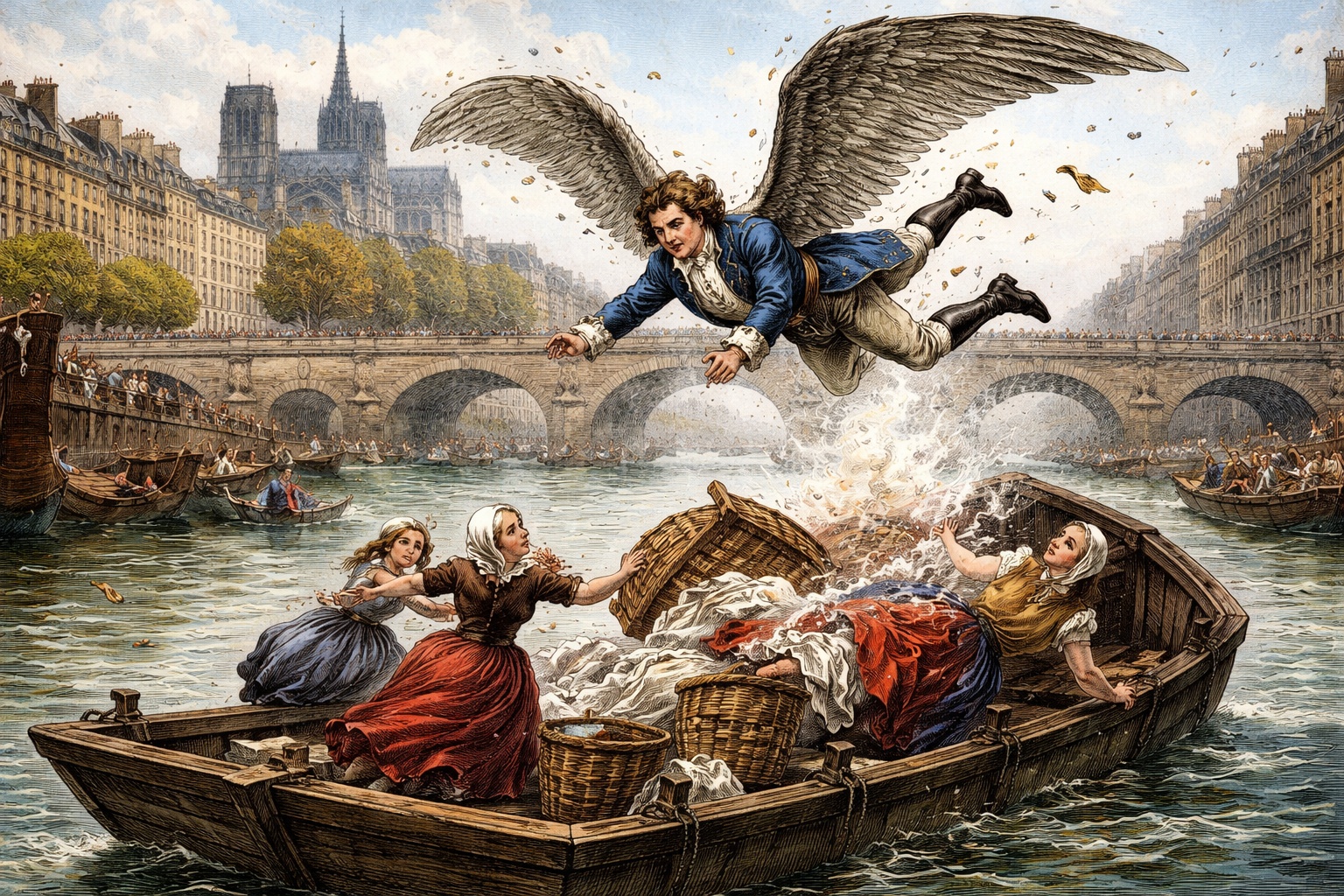
In 1678, a French locksmith named Besnier strapped pairs of hinged
paddles to his shoulders and ankles and reportedly glided short
distances. The Marquis de Bacqueville, in 1742, attempted to fly
across the Seine in Paris with wings strapped to his arms and legs.
He made it about halfway before crashing onto a washerwoman's barge.
She was fine. He broke his legs. In 1772, a French priest named
Pierre Desforges built a wicker gondola with wings and tried to fly
from a tower at Etampes. He did not fly, but he did contribute to the
general body of knowledge about what doesn't work, which is
genuinely valuable science even if it's embarrassing in the moment.
All of these brave, battered, occasionally fatal attempts had two things
in common: they tried to imitate bird flight, and they relied on human
muscle power. Both were dead ends. The breakthrough, when it finally
came, looked nothing like a bird.
Up, Up, and Away: 1783 and the First Free Flight
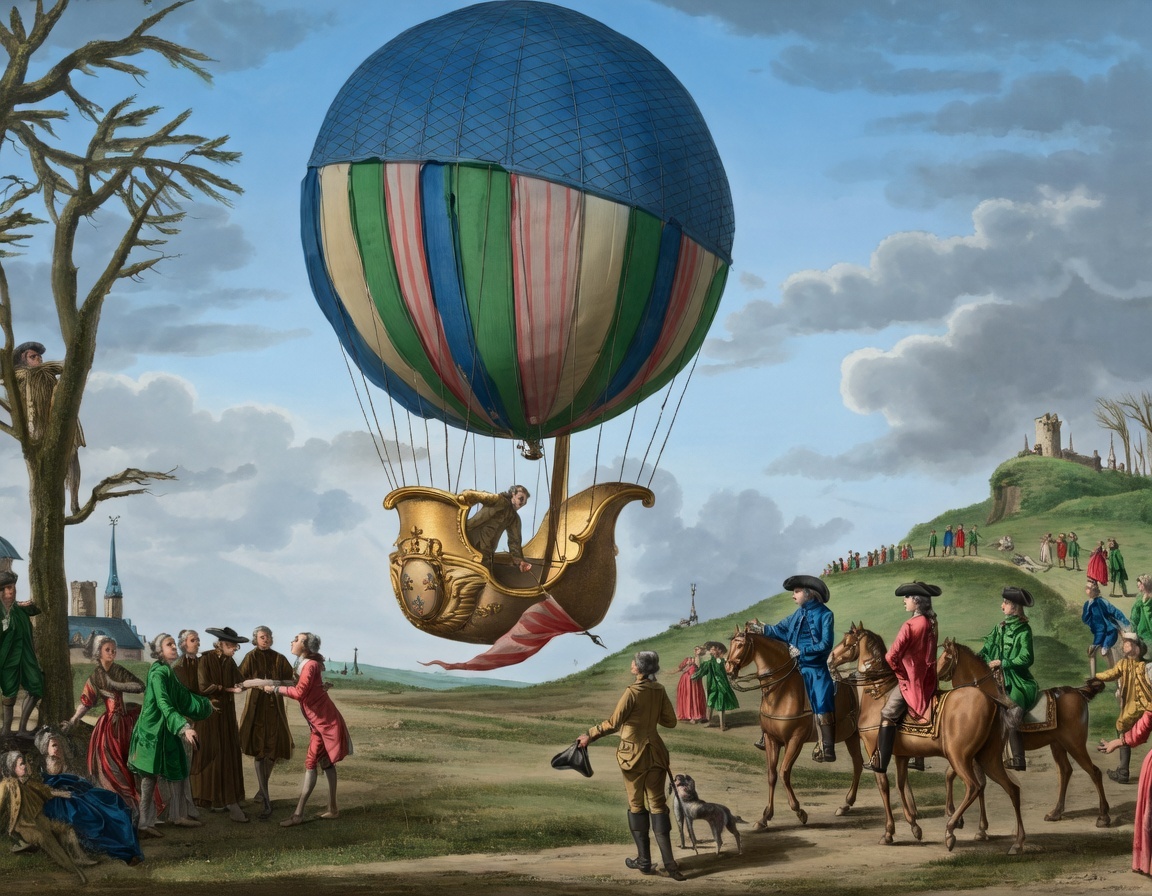
The first humans to fly freely through the air were a physician named
Jean-François Pilâtre de Rozier and an aristocrat named
the Marquis d'Arlandes, and they did it on November 21st, 1783, in
Paris, in a balloon built by the Montgolfier brothers. The crowd that
watched them rise above the rooftops included Benjamin Franklin, who,
when someone nearby scoffed "What use is it?", reportedly replied:
"What use is a newborn baby?"
The Montgolfier brothers, Joseph and Étienne, had hit upon the
secret the previous year while watching laundry dry over a fire. Smoke
rose. Heated air rose. What if you trapped it? They experimented with
paper bags over the fireplace, then with larger fabric bags, and found
that a bag full of hot air would reliably lift itself—and eventually,
a payload—off the ground. The physics are elegant: hot air is less
dense than cold air, so a balloon full of it is lighter than the same
volume of surrounding atmosphere, and it floats upward just like a
bubble in water.
The first passengers in a Montgolfier balloon were not humans. In
September 1783, before King Louis XVI at Versailles, the brothers sent
up a sheep, a duck, and a rooster. (The rooster was presumably there
to see if the altitude affected birds differently from earthbound
animals. It didn't. The rooster was fine.)
The balloon climbed to about 1,500 feet, stayed aloft for roughly 15 minutes, and landed safely
about two miles away. The animals survived and landed safely. That was enough to convince the Academy
of Sciences that humans might survive the experience.

De Rozier and d'Arlandes flew for about 25 minutes on that November 21st
morning, covering roughly nine kilometers across Paris at an altitude of
about 900 meters. D'Arlandes later wrote that he spent part of the
flight putting out small fires on the balloon's fabric with a wet sponge
while de Rozier fed more straw to the brazier keeping the air hot.
The world's first flight involved two men arguing over the fire
management while trying not to set themselves alight over the Seine.
Aviation has always had an element of improvisation.
The reaction was sheer wonder. Parisians who saw the balloon wept.
Villagers in the countryside, spotting the thing overhead, reportedly
attacked it with pitchforks when it landed, having decided it was a
monster. Poets wrote odes. The government issued a proclamation telling
people not to panic if they saw one. In a matter of months, ballooning
became a craze. People were crossing the English Channel in balloons.
Armies were using them for reconnaissance. The sky, it turned out, was
not the exclusive province of gods and birds, after all! It was just waiting for
someone to show up with a warm enough welcome.
Dirigibles, Biplanes, and the Need for Speed
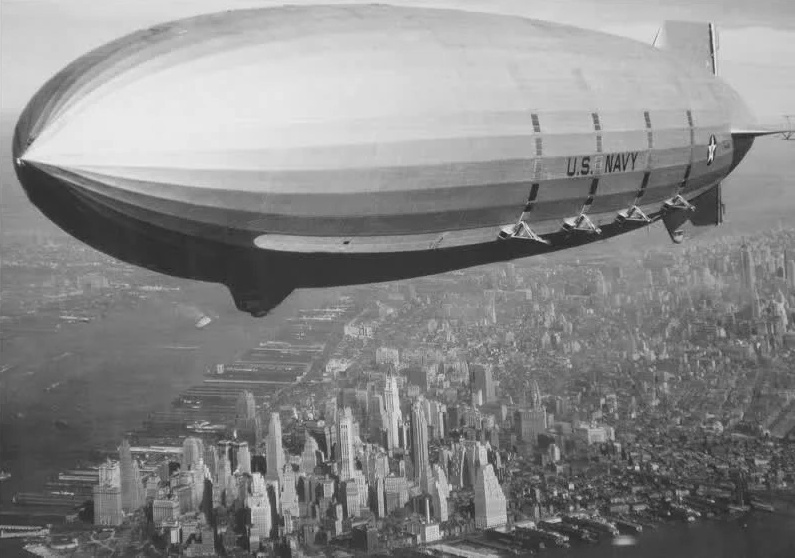
Balloons had one maddening flaw: you went where the wind wanted to go,
not where you wanted to go. The fix seemed obvious—put an
engine on it and steer. The result was the dirigible, or airship:
a long, cigar-shaped envelope of lifting gas with a gondola slung
beneath and a propeller up front. By the late 1800s, Count Ferdinand
von Zeppelin was building them in Germany on a grand scale, and for a
while, the airship looked like the future of long-distance travel. They
were enormous, stately, and genuinely luxurious—the ocean liner of
the sky, complete with dining rooms and promenades.
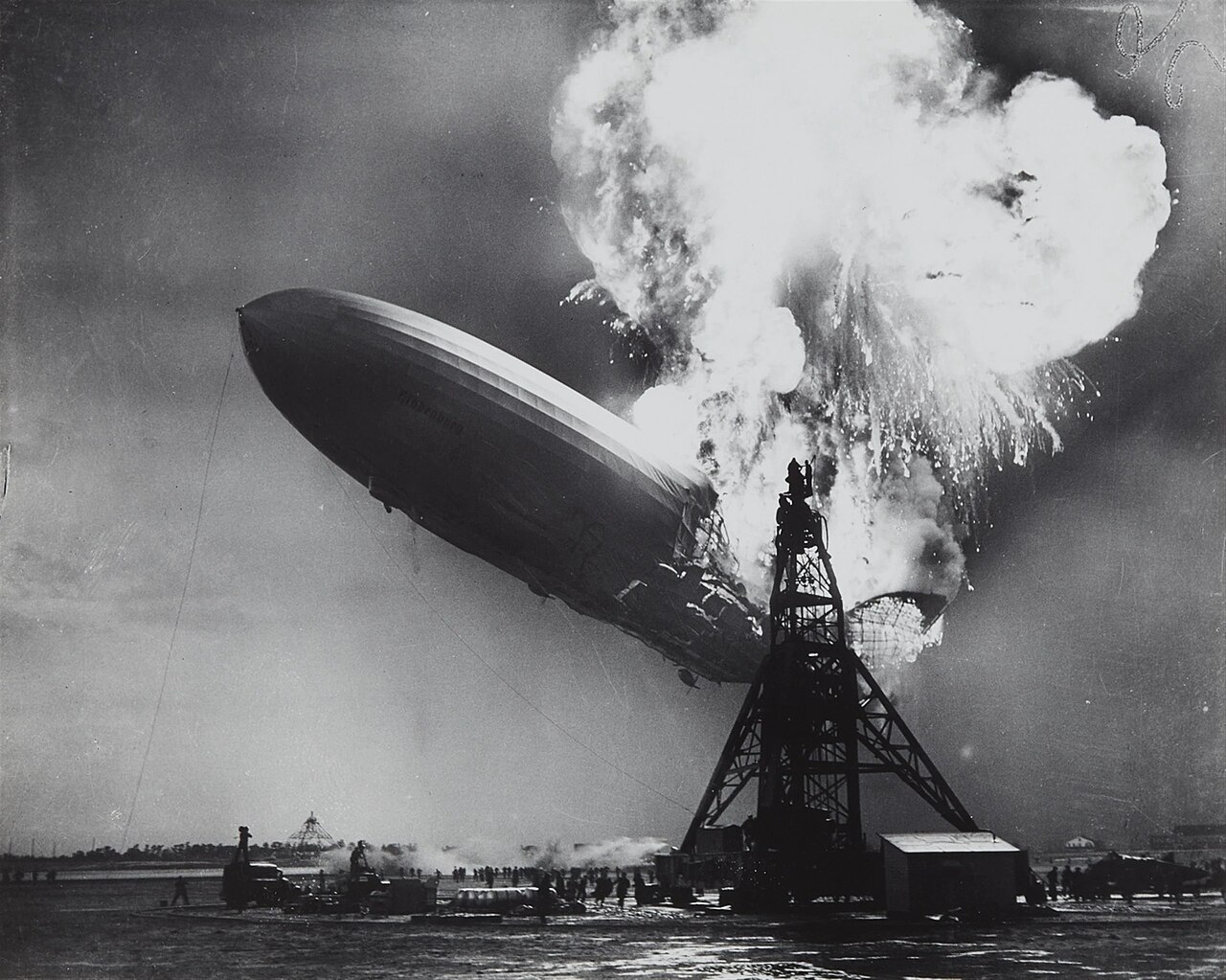
Then came May 6th, 1937, and the Hindenburg. The German zeppelin
caught fire while docking in Lakehurst, New Jersey, and burned to the
ground in 34 seconds, killing 36 people while a radio announcer
famously dissolved into tears on air. The footage was newsreel gold and
a public relations catastrophe from which airships never recovered.
Never mind that the Hindenburg's death toll was modest compared to
the ship disasters of the era—the image of that fireball
settled the argument. The age of the airship was over.
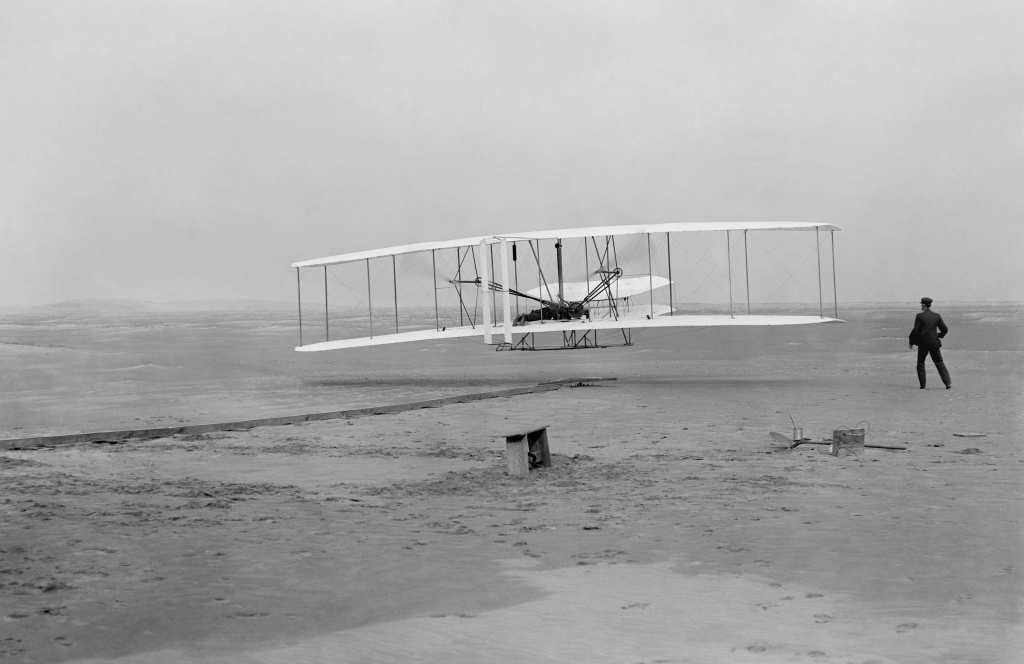
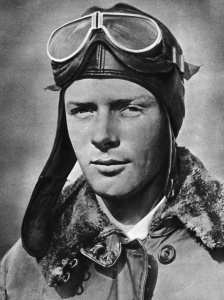
Which was just as well, because the airplane had already replaced it.
The Wright Brothers' 12-second hop at Kitty Hawk in December 1903—120 feet, roughly the wingspan of a modern 737—seems almost
comically modest until you remember that nobody had ever done it before.
Within a decade, aircraft were crossing the English Channel. Within two,
they were fighting wars. The First World War turned aviation from a
rich man's hobby into a serious engineering discipline, and by the time
Charles Lindbergh crossed the Atlantic solo in 1927, the airplane had
captured the public imagination completely.
The jet engine, developed independently in Britain and Germany in the
late 1930s, changed the game again. Piston engines have a ceiling:
thin air starves them of oxygen. Jets compress their own air and burn
fuel continuously, which means they thrive at altitude. By the 1950s,
jet airliners were shrinking the world—New York to London in eight
hours instead of five days by ship. The military pushed faster still:
the sound barrier fell in 1947, then Mach 2 (twice the speed of sound), then Mach 3. Once you
could build an engine powerful enough to punch through the atmosphere
at those speeds, you were most of the way to building one powerful
enough to leave it entirely.
Rockets' Red Glare: From Fireworks to the Final Frontier
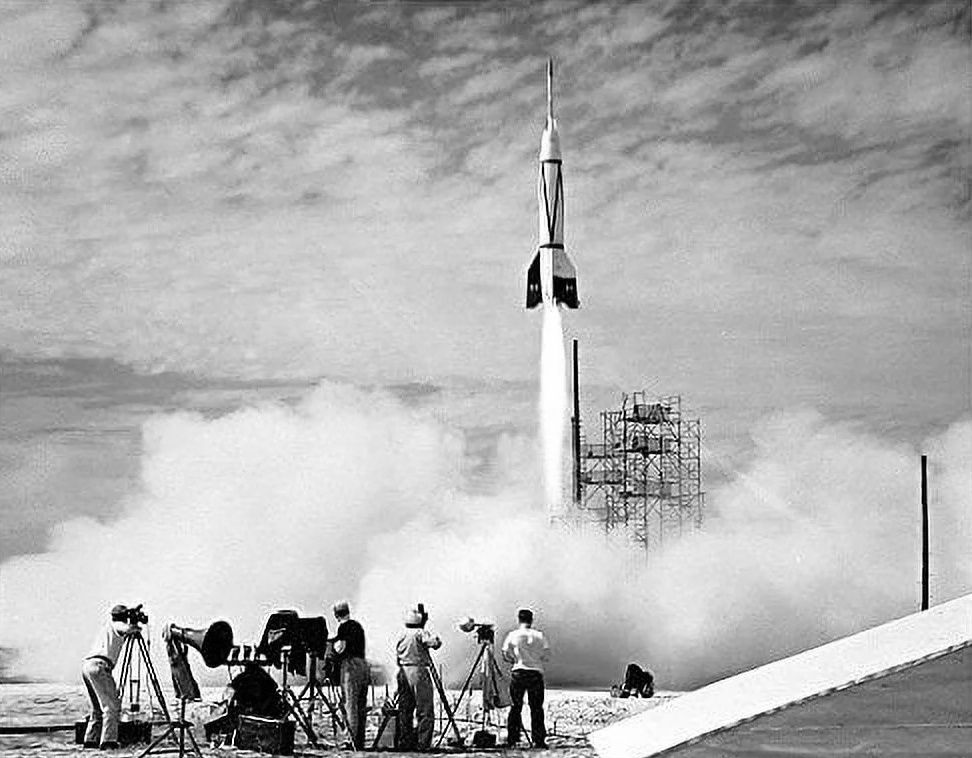
The Chinese had gunpowder rockets for warfare and celebration by the
13th century. The folks in India developed rocket-propelled weapons in the 18th
century that gave the British army a nasty surprise. William Congreve
standardized military rockets for European use around 1804—those are
the "rockets' red glare" in the American national anthem. But military
rockets were small, inaccurate, and not exactly pointed at the heavens.
The visionaries who pointed rockets at space came later. Konstantin
Tsiolkovsky, a Russian schoolteacher who was deaf from childhood and
mostly self-educated, worked out the mathematics of spaceflight in 1903—the same year the Wright brothers flew at Kitty Hawk. He understood
that you'd need liquid fuels, staged rockets to shed weight as you
climbed, and that the goal was not just altitude but orbital
velocity: going sideways fast enough that you keep missing the
Earth as you fall. Robert Goddard in America launched the first liquid-
fueled rocket in 1926. Hermann Oberth in Germany inspired a generation
of engineers, including a young, aristocratic, and utterly obsessed
Wernher von Braun.
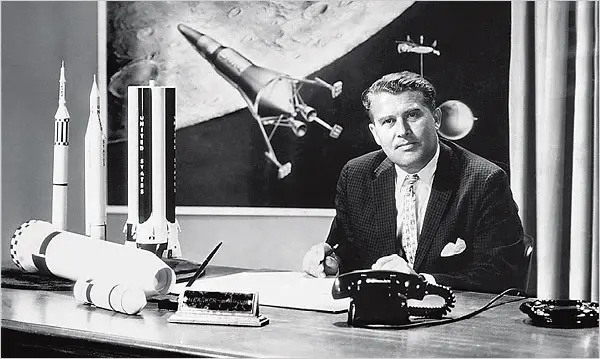
Von Braun and his team built the V-2 for Nazi Germany during World War
II—the first ballistic missile, the first man-made object to reach
space (technically; it crossed the Kármán line briefly on
its way to killing people in London and Antwerp). It was a nightmare
built by slave labor, and the moral ledger of the men behind it
is…complicated. But the technology was undeniable. When the war ended,
both the Americans and Soviets made a frantic scramble to grab as many
German rocket engineers as possible. The Americans got von Braun and
most of his key team, via a program called Operation Paperclip. The
Space Race had its engines.
The problems between Earth and space are not small. You need to
generate enough thrust to overcome gravity and atmospheric drag—which
demands enormous engines and enormous fuel. You need to land
again, which in the early days meant falling through a fireball of
atmospheric friction and hoping your heat shield held. You need to
protect your crew from radiation, since without Earth's magnetic field
and atmosphere, space is a constant shower of high-energy particles.
You need air, water, and food for the journey. You need to not go
insane in a tiny metal can far from everything you've ever known. Each
of these problems required its own engineering revolution.
Mercury and Apollo: Learning to Walk, Then Running Like Hell
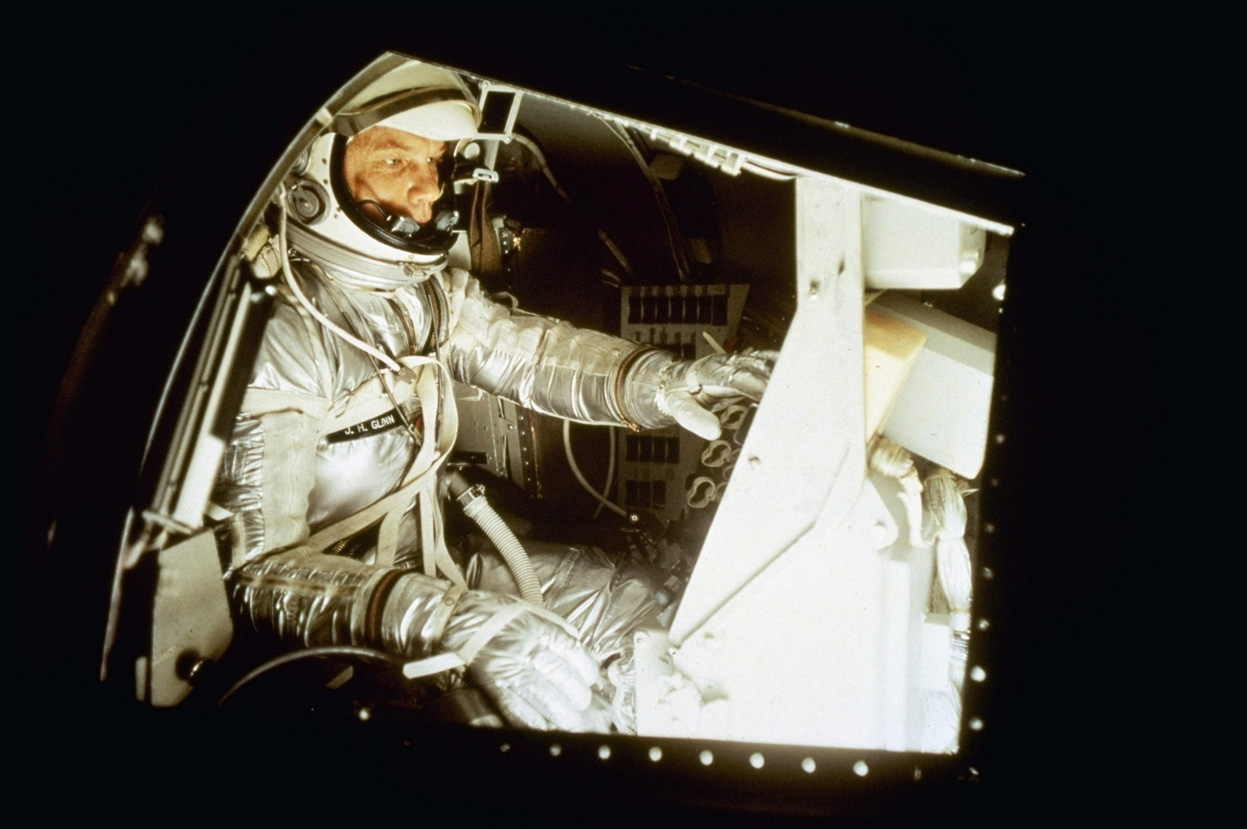
The Soviet Union drew first blood. Sputnik beeped its way around the
Earth in October 1957 and the United States, which had been feeling
pretty good about itself as the world's dominant technological power,
experienced a collective case of the cold sweats. Then the Soviets put
a dog in orbit (Laika, 1957). Then a man: Yuri Gagarin, April 12th,
1961, 108 minutes around the Earth, calm as a cucumber on the radio.
The Space Race was on in earnest.
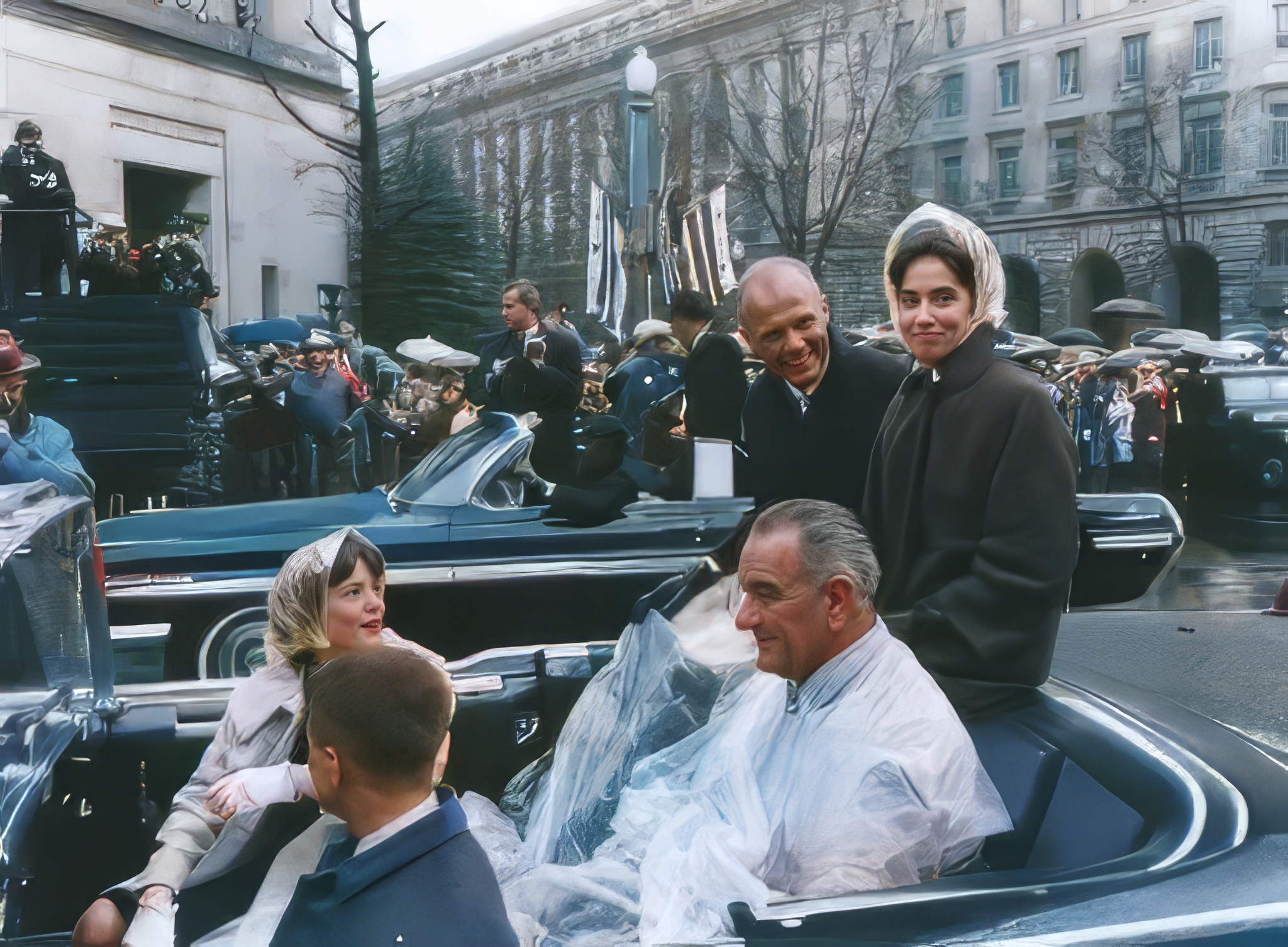
NASA's response was Project Mercury: six flights between 1961 and 1963,
designed to answer the basic question of whether a human being could
survive in space at all. Could your heart keep beating in zero gravity?
Could you eat, drink, think clearly, control a spacecraft? Nobody
actually knew. Alan Shepard went up on a 15-minute suborbital arc in
May 1961—basically a very expensive cannonball shot—and came back
intact. John Glenn became the first American to orbit the Earth in
February 1962, three times around in just under five hours, and landed
in the Atlantic to a hero's welcome that would embarrass most
rock stars.
Project Gemini followed: two-man crews, longer missions, spacewalks,
orbital rendezvous—all the skills you'd need if you were going to
the Moon. And then Apollo. President Kennedy had promised the Moon by
the end of the decade, which in 1961 was roughly as plausible as
promising to build a bridge to the Sun by Thursday. NASA went from
15-minute flights to lunar orbit in eight years. Apollo 8 took humans
to the Moon's vicinity in December 1968; the crew read from Genesis on
Christmas Eve and the whole world seemed to stop and listen. And then
Apollo 11, July 20th, 1969: Neil Armstrong's boot print in the lunar
dust, and the line that crackled across 384,000 kilometers of vacuum—"one small step for man, one giant leap for mankind."
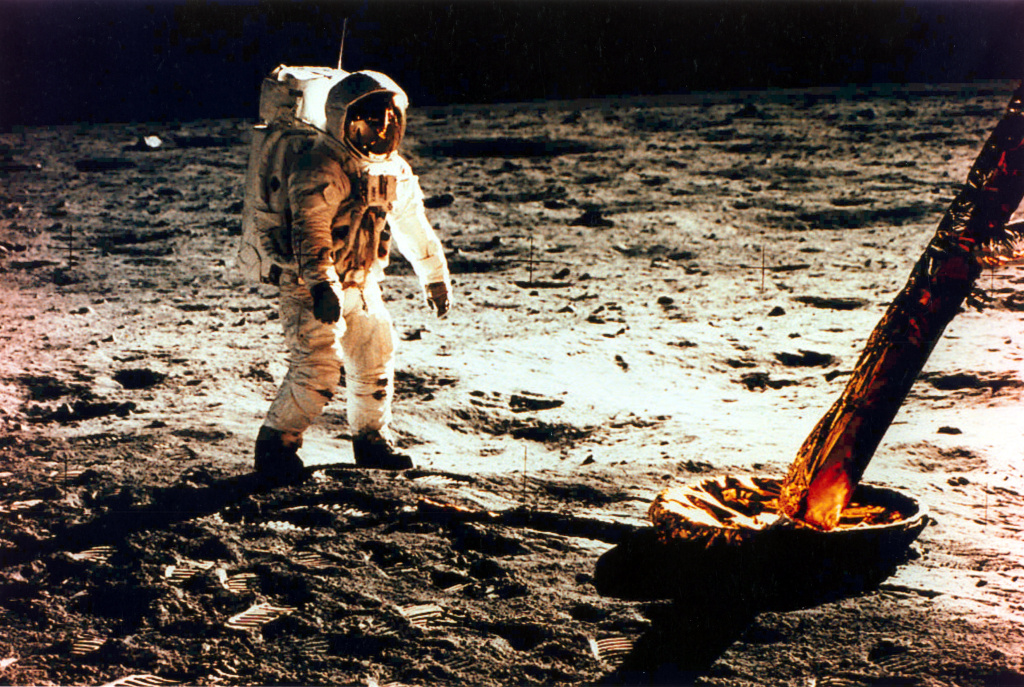
Six Apollo missions landed on the Moon between 1969 and 1972. Twelve
people walked on its surface. They brought back 382 kilograms of lunar
rocks, deployed seismometers and retroreflectors still in use today,
and drove around in an electric buggy that cost more than any car
you could afford. Apollo 13, famously, did not land—an oxygen tank exploded on
the way there, and the crew limped home using the lunar module as a
lifeboat in one of the most extraordinary feats of improvised
engineering in history. "Houston, we have a problem" is actually a
cleaned-up version of what was said, but the sentiment was accurate.
A House in the Sky: The International Space Station
After Apollo, the question became what to do next. The Moon
missions had been a sprint; space exploration needed to become a
marathon. The answer, after various national programs and the American
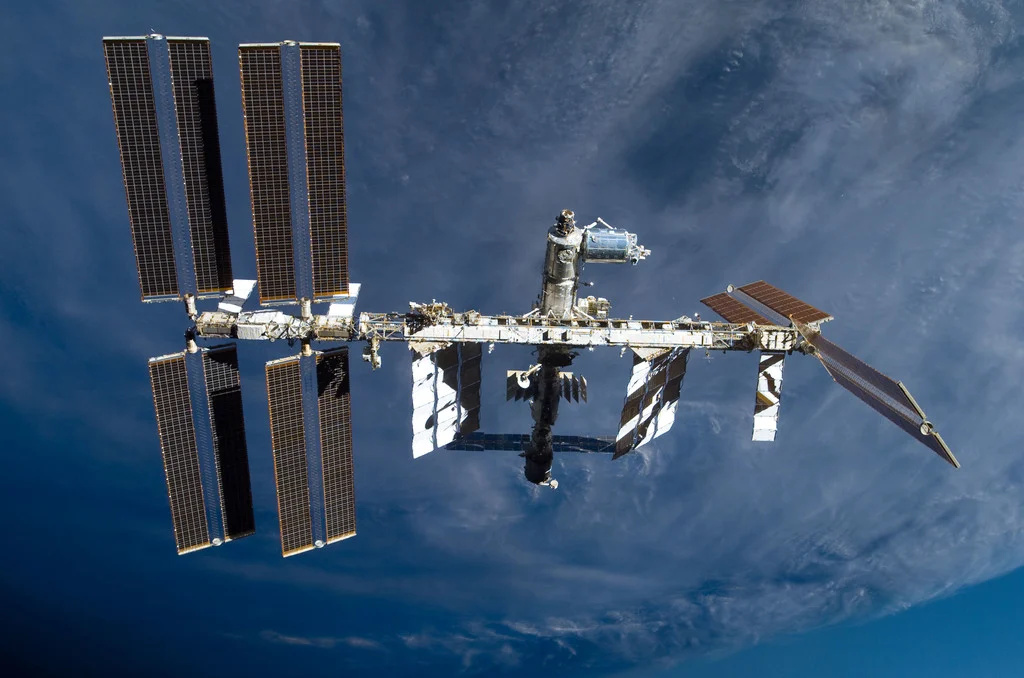
Skylab and Soviet Mir stations, was the International Space Station:
the most ambitious cooperative engineering project in human history,
and arguably the most expensive object ever built.
Assembly began in 1998. The first crew arrived in November 2000, and
the station has been continuously inhabited ever since—a
quarter-century of permanent human presence off the planet. The ISS is roughly
the size of an American football field, orbits at about 400 kilometers
altitude, and travels at 28,000 km/h, completing 16 orbits of Earth
every day. On a clear night, you can spot it with the naked eye as a
bright, fast-moving star—which never stops being a little uncanny
once you realize there are people up there.
The station involves agencies from the United States, Russia, Europe,
Japan, and Canada, and has hosted astronauts from 19 countries. At
various points during the Cold War, the idea that Americans and Russians
would share a kitchen in orbit would have sounded like science fiction.
Now it's Tuesday. The ISS has produced thousands of scientific studies
on everything from how crystals grow in microgravity to how the human
body changes after months without gravity. It has also taught us things
we didn't want to know, like the fact that extended spaceflight does
strange things to the human cardiovascular system and vision, problems
we'll need to solve before we send anyone to Mars.
Emissaries to the Planets: Our Robot Scouts
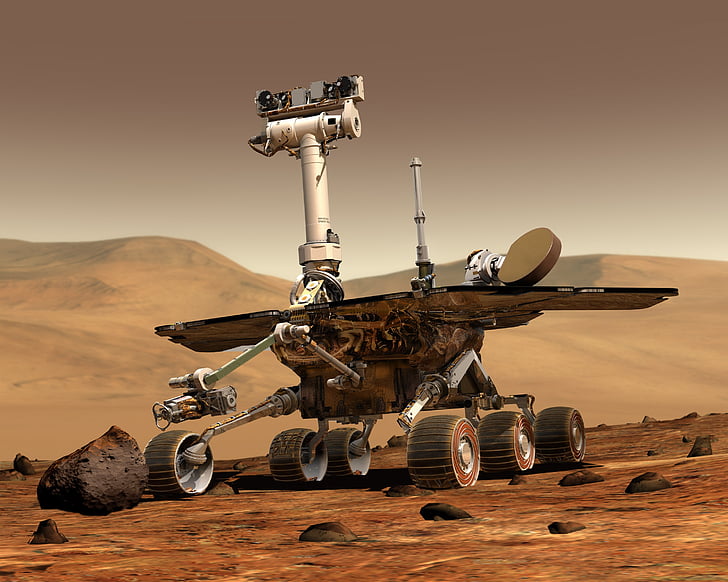
We have not sent humans beyond the Moon. But we have sent robots
everywhere. The robotic exploration of the solar system is one
of humanity's quietest and most astonishing achievements—a fleet of
machines launched over decades, sailing on the physics of orbital
mechanics to visit every planet and a remarkable number of the
odder corners of the solar system.
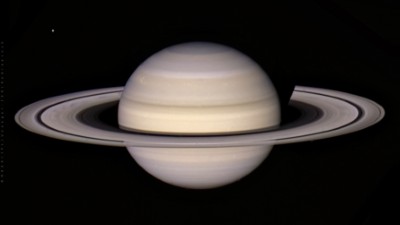
The Mariner missions in the 1960s and '70s flew past Mercury, Venus,
and Mars. Viking 1 and 2 landed on Mars in 1976 and searched for life
(inconclusive, still argued about). The twin Voyager probes, launched
in 1977, took advantage of a rare planetary alignment to tour the outer
solar system: Jupiter, Saturn, Uranus, Neptune, one after the other,
sending back photos that changed our understanding of what planets
actually look like. Voyager 1 is now, as of this writing, somewhere
around 23 billion kilometers from the Sun—the farthest human-made
object in existence, still phoning home on a 40-year-old radio.
Mars has become practically a suburb. The Curiosity rover has been
rolling around Gale Crater since 2012, and its successor Perseverance
is collecting rock samples for eventual return to Earth. The Cassini
mission spent 13 years orbiting Saturn and discovered that its moon
Enceladus has a liquid water ocean under its icy crust, venting plumes
into space—which is a polite way of saying we found a moon that might
plausibly support life, and then we crashed the spacecraft into Saturn
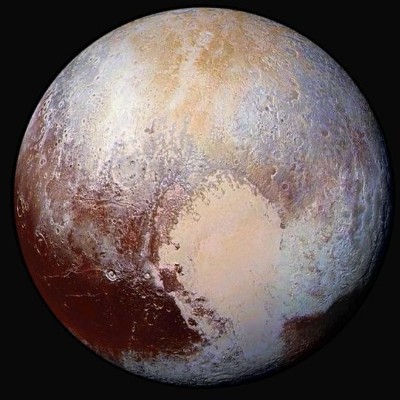
on purpose to avoid contaminating it (just in case). The New Horizons probe flew past
Pluto in 2015—yes, Pluto, the little world we spent decades treating
like a full planet before demoting it—and
revealed a world with nitrogen glaciers and a heart-shaped plain the
size of Texas. Space, it turns out, is strange and beautiful right down
to the edges.
Eyes at the Edge of Everything: Space Telescopes
Here on the ground, our view of the universe is blurred by the
atmosphere. Every star twinkles, not because it's magical, but because
its light is being bent by turbulent air. Yes, the air at the top of our
atmosphere experiences waves just like oceans do; and those waves are what make stars twinkle.
Put a telescope above all that, and the universe snaps into focus.
The Hubble Space Telescope launched in 1990 and immediately became
famous for being blurry—a tiny flaw in its mirror required a
dramatic repair mission in 1993, conducted by spacewalking astronauts
who installed corrective optics, like contact lenses for a giant eye. After
the fix, Hubble produced images that rewrote astronomy textbooks.
The Hubble Deep Field, a long exposure of a tiny patch of apparently
empty sky, revealed thousands of galaxies, each containing billions
of stars. That image did more to change the average person's sense of
the universe's scale than any words ever written.
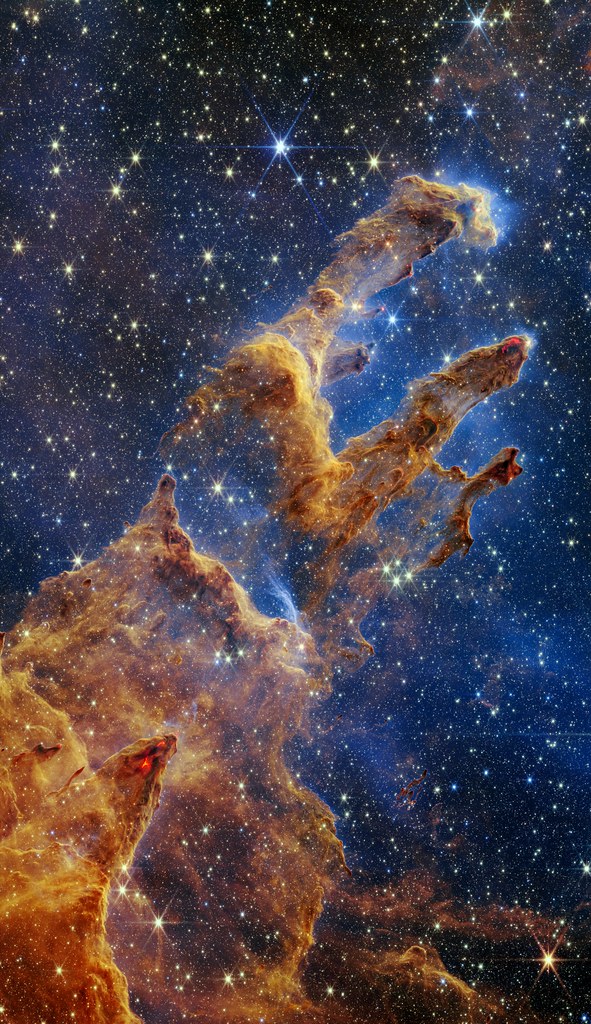
The James Webb Space Telescope, launched in December 2021 after decades
of development and cost overruns that would have given any accountant
a heart attack, sees in infrared and has pushed our vision to within
a few hundred million years of the Big Bang. Its first images landed
like a religious experience—galaxies formed when the universe was
barely an infant, gravitational lensing bending light around galaxy
clusters, the atmospheric chemistry of planets orbiting distant stars.
We are now, for the first time in history, able to analyze the air of
worlds circling other suns. The question of whether we are alone in
the universe has moved from philosophy to chemistry.
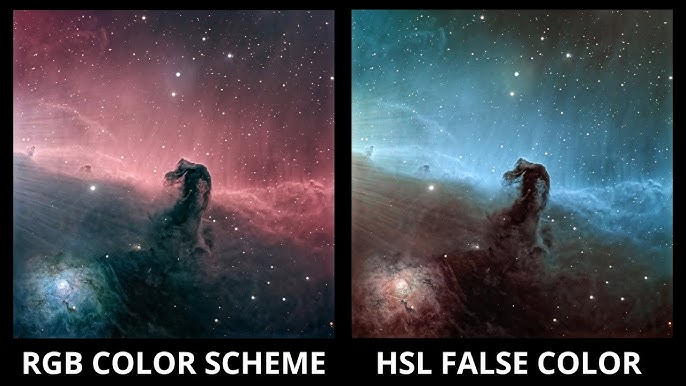
False-color astronomical images work by taking light that human eyes cannot see—infrared,
ultraviolet, X-ray, radio waves (which are also a form of light) and
mapping those wavelengths onto visible colors, so our brains can
interpret the structures, temperatures, and chemistry hidden in the raw data. Telescopes record
each wavelength band as a separate grayscale image; astronomers then assign a visible color (red,
green, blue, or more symbolic hues) to each band and combine them into a composite.
This isn't
"painting" the universe but translating information: long-wavelength infrared might be mapped
to red, mid-infrared to green, and near-infrared to blue, or the mapping might be chosen to
highlight temperature, chemical species, or shock fronts. The shift works because wavelength is
just a number—if a detector captures light at 4.5 microns, software can represent that band
as any RGB value. The result is a scientifically meaningful visualization where invisible
structures become visible, allowing us to see star-forming dust, cold molecular clouds, hot ionized
gas, and energetic jets that would otherwise be hidden.
So, while it's true that if you were sitting in Star Trek's 10-Forward, gazing out the window,
you wouldn't see the universe in the vibrant colors of a space telescope image. In visible light,
the universe is rather bland. But that shouldn't diminish the wonder of what space telescopes have revealed.
And if you find those images beautiful or awe-inspiring, that's not a bad thing either.
They are both scientifically informative and emotionally powerful,
and they have changed how we see our place in the cosmos.
How the Stars Came Down to Earth: Space Age Pop Culture

You cannot launch a species into space and expect it not to dream. The
Space Age didn't just happen in the sky; it reshaped culture in ways
we're still living with.
The Jetsons debuted on American television in 1962—a year after
Gagarin and Shepard flew, a year into the race to the Moon—and gave
a whole generation their first mental image of the future: flying cars,
robot maids, houses in the clouds, space-age furniture with that
particular optimistic swoopiness that made everything look like it was
already going somewhere. It was the Space Age rendered in Saturday
morning cartoon form, and it stuck. We're still making Jetsons jokes.
Science fiction, which had existed before as a somewhat marginal taste,
exploded into the mainstream. Arthur C. Clarke consulted with NASA.
Isaac Asimov was explaining orbital mechanics to general audiences.
Robert Heinlein was writing juveniles that sent young readers on moon
expeditions and convinced a generation that engineering was the most
exciting career in the universe. 2001: A Space Odyssey arrived in
theaters in 1968, the year before Apollo 11, and redefined what movies
could aspire to. Star Trek debuted in 1966 and introduced the
idea of a future in which humans had not destroyed themselves—which
in 1966 was a genuinely radical proposition.
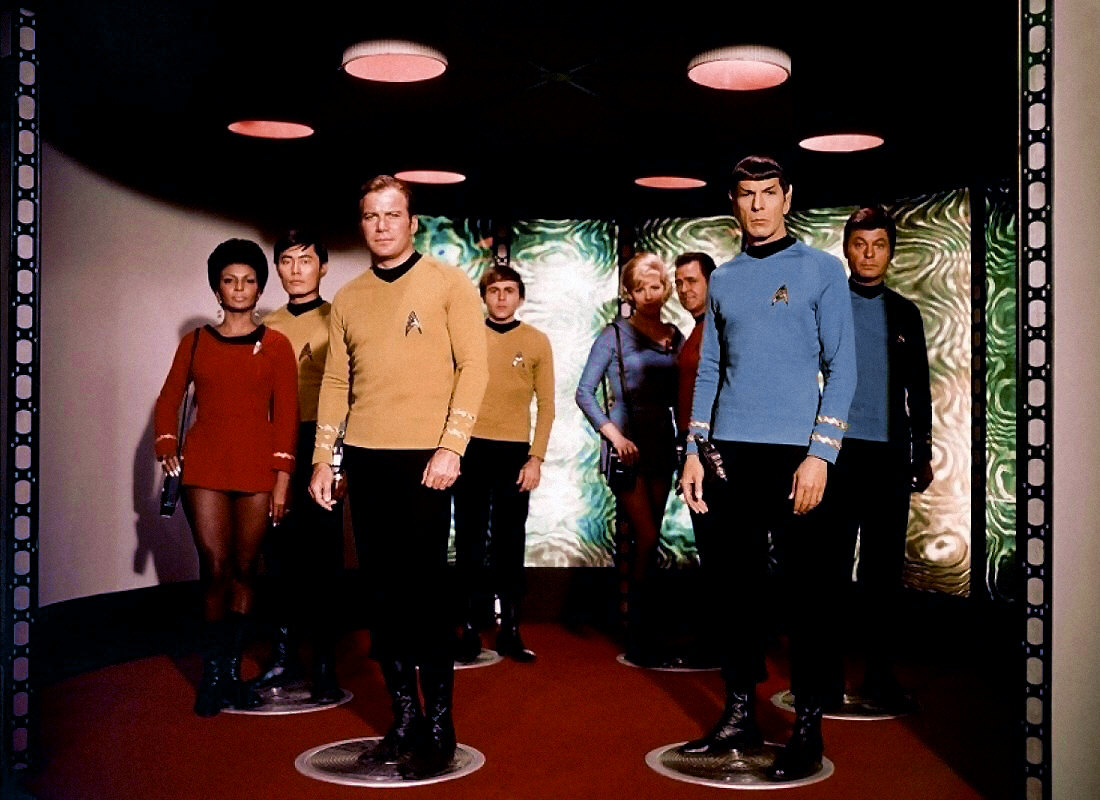
The Apollo missions themselves were pop cultural events of a magnitude
that's hard to imagine. An estimated 600 million people watched the
Moon landing live—a fifth of the entire human population—on
television sets that had existed for barely two decades. Rock bands
wrote albums about space. Fashion designers put models in spacesuits.
The word "launch" became a metaphor for anything ambitious. We put
little rocket shapes on everything from toys to cars to kitchen
appliances. The sky was no longer a ceiling; it was a door.
And underneath it all ran a new kind of faith: not religious, exactly,
but similarly hopeful. The faith that problems could be solved. That
if smart people worked hard enough and governments funded them
adequately, humans could do impossible things. We'd gone from Kitty
Hawk to the Sea of Tranquility in 66 years. What couldn't we do?
The Space Age sent us outward, into the physical universe, and changed
what we understood about our place in it. But even as the rockets were
flying, a different kind of revolution was stirring, quieter and slower
at first, and then all at once. The same technologies that guided
spacecraft—the computers, the communications satellites, the digital
networks—were beginning to weave the human species together in a
way that had no historical precedent.
We went to the Moon with computers less sophisticated than a modern
thermostat. But those computers were the seeds of something larger.
The next chapter of this story is not about going up, but about going
together—the slow, strange, world-altering growth of a
planetary nervous system, a global brain built from fiber and silicon
and the accumulated curiosity of eight billion people. Call it the
Connection Age. It changed everything the Space Age didn't—and then
some.