|
By: Agnes Steinberg |
|
|
Page Views: 29 |
| Hashtags: #AgnesSteinberg #Yonkers #NewYork |
| Chapter 4 of my dead ex-mother-in-law's memoirs. |
| Estimated reading time: 10 minute(s) (2190 words) |
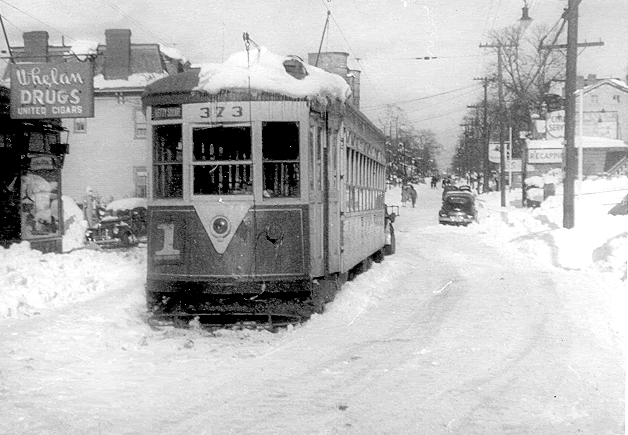
Sometimes tandems of four, straining against the gale, tugged
heavy coal trucks through ruts. Often the wheels, embedded in snow
to the hub, refused to turn. Drivers climbed down from their seats
to shove with the beasts, lashing, the while, the steaming flanks of
the horses who lurched in vain. In mute pity children stood watching
the sad plight of the servants of man. A truck stranded thus in the
morning might be left all day long in the blizzard, the horses
covered with blankets, their heads bending low against the sharp
wind, icicles hanging from nostrils and bits and forelocks. Then,
just before dusk, their poor backs would be stripped again for the
whip and more horses added. If this last effort failed, almost too
frozen to move, and sore from their beatings, the weary beasts would
be unhitched and led back to the stalls while the truck was left
blocking the street.
A cold spell, a slight thaw, a storm. So it continued for weeks
at a time. One forgot there were sidewalks beneath the uneven paths
through the snow. Milk was delivered frozen up and out through the
neck of the bottle. Sometimes, with the cold of evening increasing,
a match applied to the gas jet brought forth no answering "pop". The
gasoline had frozen, bringing annoyance to the grown-ups and pleasure
to myself, in my innocence excited at any change in routine.
Here and there we placed stub ends of candles, set into cups and
secured in their own hot drippings, in the room. Gigantic shadows
leapt to the walls, no longer fashioned of plaster but transformed
by a touch of imagination into the logs of a cabin. I imagined gusts
of snow beating against the window were but the brushing of an
Indian head dress. Stew ladled into bowls became the finest of bear
meat, caught last week in the forest. How much more exciting to live
so in the pages of history! Of course, imagination unbridled may
travel too far, so that my spine tingled with draughts from the dark
hallway, seemingly threatened as much by redskins as by cold.
How dark the street seemed without its accustomed lamplight! How
dim the flicker of flame seen in the houses of neighbors! How short
the evening!
On just such a night, then, settled deep under the quilts, I
might be dreamily watching the smoke from an extinguished candle as
it rose in eerie pattern against the white blur of the window, when
unexpected, unwanted, a high wail of terror pierced the air. The
signal of fire! Had someone tipped over a candle? Or moved it too
near a curtain? Whose house was in danger?
We leapt out of bed. Nearer and louder grew the shrill note of
warning. Our noses pressed flat against every pane, our shivering
bodies stood rigid while all eyes marked the progress of the flaming
chariot. Closer and closer it came, three beautiful beasts, as
though winged, bearing it on. The sparks struck from the tracks by
their hoofs were as bright as the fiery volcano pouring out of the
smoke stack. Oh, may they not slip, nor dash against one of the
pillars supporting the el! Now they had passed and were turning into
a side street. A dull red glow and a puffing of smoke above roof
tops marked the place of disaster.
The winter was hard. It was brutal; but color, emotion and
movement punctuated the nights and the days.
Breaking the monotony of the stinging March winds, came nights
when milder weather sent rivers of slush rushing down the gutters
and dense murky fog drifting overhead.
Then the foghorns, mournful and constant, created an uneasy,
tension within the house. Lifting her eyes from the darning, my
grandmother stirred restlessly in her chair. How often, a half
century before, had she listened to these same minor notes playing
over the New Bedford hillside? How often had they guided into harbor
my grandfather's whaling vessel returning from the churning waters
of distant seas? In those earlier days foghorns were harbingers of
news—of whale oil taken and scrimshaw carved, of profits made and
seamen lost. Now they denoted the restless stirring of winter which
presages the coming of spring.
Little by little the weather relented. Snow had withdrawn from
its last shaded holdout. Tiny green blades pierced the sod in the
iron-grilled garden nearby. April was gentle and warm. At the
wide-open windows white curtains puffed back into rooms where the
clean smell of suds and hot iron on clothing persisted.
Wherever I turned, signs of young life appeared. In store window
corrals, fluffy yellow chicks, and soft brown bunnies, gazed out in
innocent wonder upon a world they were so soon to leave. From flower
shop doorways, tall lilies nodded to the crowds. The organ-grinder's
monkey arrayed in gay-colored pants and bolero, danced in dappled
sunshine at the curb. No smug satisfaction of befurbelowed matron as
she joined the Easter parade could match the honest pride of my
Molly marching her freshly-preened kittens across the alley way. The
world was alive to the touch of spring.
Yet it was in the open, in garden and park and grassplot,
wherever a patch of black earth appeared, that life was most
abundant. Impossible, after the turmoil of winter, the storm's
desolation, the killing frost! Impossible, truly! But, look—cracking
the surface of the earth, setting at naught the cold death of
winter, the flowers were rising: fragile, undaunted, defiant of
weather and man, with a force and a sureness astounding.

Here sturdy hyacinths bordered a path; there, clustering daffodils nodded
in the breeze; beneath trees, wild violets hid in the grass. Like
the insistent words of a love song, repeated again and again, the
flowers were telling a story. Clothed in textures of rarest beauty,
in regal purples and gold, in delicate pink and blue, the flowers
were rising again in a response to a Summons Divine.
Spring slipped gently into summer.
Could anything ever be more restful than one of those summers
filled with day dreams and languid activity carried on beneath
friendly tree or hospitable awning?
On Sundays while the family sat chatting leisurely after dinner,
I was dispatched, hugging a shining dish of pressed glass, to the
ice-cream store nearby. Lucky indeed was she who found a vacant
place, for here, perched on high stools, for all the world like a
flock of crows on a fence, and leaning half-way across the marble
counter in impatient expectancy, were to be found most of the
children in the neighborhood. In unison, their heads followed the
scoop on its trips to right and left as it flashed, now poised above
mysterious icy depths, now plunging downward to reappear in a second
filled to overflowing. How horrible the thought that perhaps the
stock may be depleted before my turn arrived!
At long last I was waited upon. As the coin of barter offered
jumped in value from a nickel to a dime and, finally, to a quarter,
with each raise a goodly new portion of cream was dug out of the
deep bin and slapped into the waiting dish. Each extra nickel
warranted, too, the addition of a new flavor. By the time a
quarter's worth had been compiled and covered with a piece of white
paper, there was sufficient ice cream to feed a whole family and
colors enough to inspire the making of a patchwork quilt.
Pegasus, on his winged course, never traversed the airy by-ways
with greater speed than did I with this precious burden. Even in
flight, the paper was lifted again and again so that a surreptitious
thrust might catch some of the oozing luscious contents.
The sun crossed and recrossed the heavens. Sweltering days
passed. Nothing hurried.
Old Dobbin of snow-storm fame, wearing his straw hat at a rakish
angle and flickering his protruding ears, cast an indolent eye over
the top of the horse trough. Dobbin drank long, with a grateful nod
now and then in the direction of the driver who had called a halt in
the shade and let down the reigns. Then, with a devil-may-care shake
of his dripping head, he shambled off again refreshed, but with
sweat still trickling down his heaving sides, his legs stewing in
the heat waves that rose from the pavement.
Open trolley cars rattled along the avenues, the conductors
swinging from seat to seat in the pursuit of fare collection much as
monkeys swing on the bars at the zoo.
Like bees unwilling to leave one drop of sweetness ungarnered, we
gathered again as the long evening faded. A request for a chocolate
soda (purposely made in the presence of my friends) could scarcely
be refused. The nickel was handsomely given and the troupe clattered
off to the ice-cream parlor for a long, noisy session.
And now the last few cherished moments of freedom approached. On
the soft darkness of the night, thin gray-blue scrolls were traced
by smoke from Chinese punk sticks. Their glowing red tips and aroma
of sandalwood together with the flash and snap-snap of cap sticks
and the flare of hissing sparklers provided a dramatic finish to the
fullness of the day.
I said goodnight and reluctantly departed, trailing incense and
clasping to my heart the fabrics with which to weave dreams.
When the first cool breeze whispered to the summer that its hours
were numbered, people bestirred themselves. Feverish activity
replaced the lackadaisical life of the last few months. Apparently,
everyone had suddenly remembered some urgent business without the
completion of which the world might stop turning.
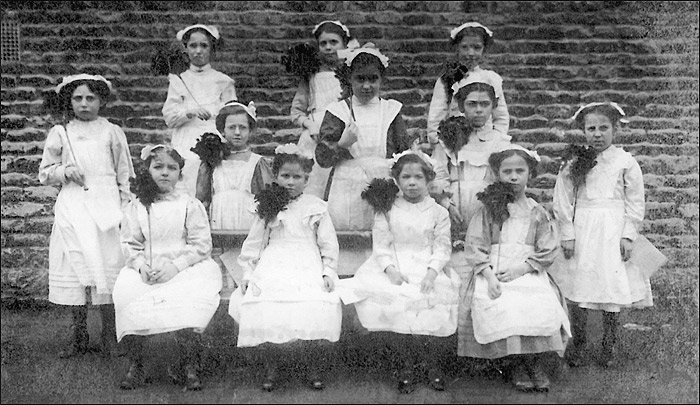
School clothes were fitted, lengthened and aired. With tempting
arrays of needed supplies shopkeepers lured unwary youngsters from
their play. The speed and delight with which the children bought
might lead one to believe that school was a fascinating place—that
is, if one were only six and had not been there before. Pads and
blankbooks were selected. School bags woven of hemp were fitted out
with rulers, erasers, crayons, sharpeners. No end of pencils were
crammed into black lacquered boxes, the key so securely stowed away
that it might never again be found. Was ever such eagerness for the
tools of learning before displayed? What masterful compositions,
what accurately solved problems, how many colored maps and correctly
listed dates would appear on these pages? With a flourish and vigor
would the first week's assignments be done, deceiving incredulous
teachers into believing that the millennium had come and that last
year's pupils had changed into scholars during the summer vacation.
Little need they wonder at the miracle, for the first burst of
enthusiasm would soon peter out and dwindle into a negligible and
unwilling effort, leaving teacher and pupil in their age-old status
quo.
Of more enduring nature was the activity of my mother and Aunt
Mary. Awnings, beginning to rattle in the brisk wind, were removed;
windows polished, woodwork scrubbed. As the covers were peeled off,
I remembered having seen the red plush furniture before. The figured
carpet looked familiar, too. What wonders were worked on the wide
gilt picture frame by a mere coating of powdered gold leaf and
banana oil! If no poles were available, the lace curtains could
stand of themselves like screens before the windows, such had been
their starching.
Sunlight entering the kitchen picked up the deep clear purple of
jelly and silhouetted the sticks of cinnamon imprisoned within each
glass. At closed windows, the mingled odors of grapes and spices
battled in vain to escape. Then, captured, they remained indoors to
tantalize and goad small children into pilfering a spoonful—or
two—or a jar.
With the lengthening of chilly nights, my old friend the rounded
stove stepped out of the closet and backed itself up against the
parlor wall. Here on a tin mat it would sit for many a day,
whistling contentedly while draughts sucked smoke through the long
black pipe. How good to note again the scent of burning wood.
Without, the temperature was dropping. The sighing winds were
housecleaning, too, dusting the branches of trees. Yellow leaves,
gliding to earth, turned to wave farewell to gray skies.
The house withdrew into itself as if unwilling to be friends with
winter again. Let the cold and the winds have their way. Within,
coziness awaited. Fires glowed red; shades were drawn; supper
simmered on the stove. Let the family draw close, for there was more
to be shared than the simple food before us. Meat and bread would
nourish for today and tomorrow but the spirit of home sustains the
heart for a lifetime.