|
By: Paul S Cilwa |
|
|
Page Views: 31 |
| Hashtags: #HumanOrigins #Lemuria #MadameBlavatsky #History |
| Did Lemuria ever really exist, and, if not, what are all those underwater stone monuments in the Pacific? |
| Estimated reading time: 11 minute(s) (2393 words) |
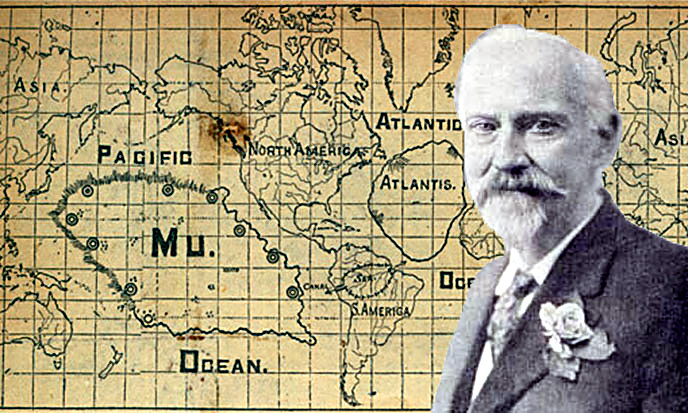
In 1926, James Churchward, an author whose only previously
published work was one on fly-fishing in Maine, rocked
the world with his claimed discovery of a "lost
continent" and civilization. Called alternatively MU and
Lemuria, this continent was supposed to have existed in
the Pacific Ocean and been home to humans for several
millions of years before its sinking 13,000 years ago,
when "gas belts" lying beneath it collapsed. (These same
gas belts were supposed to have ignited elsewhere,
forming mountains—according to Churchward, there were no
mountains on Earth before 11,000 BCE.)
As a side note, appropos of nothing, Churchward was a Freemason.
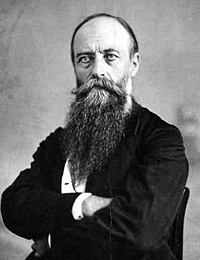
Churchward wasn't actually the first person to
mention MU/Lemuria. In 1886, a French physician named
Augustus Le Plongeon published a translation of the
Mayan Troano Codex, one of only three Mayan books that
escaped the fanatical hand of the Bishop Diego de Landa,
who had been assigned to "help" the Mayans convert
to Christianity. The facts that no one else has ever
translated the Mayan language, or that Le Plongeon's
work hasn't provided a dictionary useful for translating
the other Codexes, didn't stop him from publishing a
tale of the Queen M?o who supposedly ruled Atlantis
until a wartime defeat sent her to Egypt, where she
built the Sphinx. In Le Plongeon's tale, Mu was another
name for Atlantis, and "Lemuria" was never mentioned.
And, incidentally, Le Plongeon was a Freemason.
The name Lemuria was used for the first time the next
year, in 1887. Geologists were becoming aware of "land
bridges," stretches of land between islands or
continents that appear only occasionally, during ice
ages, when the sea level is low. An Austrian
paleontologist published a book describing such land
bridges, including one he proposed that once connected
India with Madagascar, and explaining how such land
bridges could facilitate the operation of evolution. A
German biologist named Ernst Heinrich Haekel, knowing
that lemurs, a primitive primate, abound on Madagascar,
proposed that this land bridge was the original home of
humankind, and that lemurs were our ancestors. An
English zoologist named Philip L. Sclater proposed the
name Lemuria for this sunken land bridge, and the name
stuck. As such, Lemuria is a perfectly good name for the
land bridge, which we now know did, in fact, exist
during the Permian geologic period, from 280 million to
225 million years ago. However, this Lemuria lies
beneath the waves of the Indian Ocean, not the Pacific;
and there were no humans on Earth to call it "Lemuria"
or anything else.
Churchward's alleged discovery was in the form of
stone tablets found in Mexico, and clay tablets found in
a secret Hindu monastery, at which he had befriended one
of the monks. The monk showed him the tablets and even
allowed him time to translate them. Although the monks
themselves had no idea what the tablets contained, and
in spite of his having no formal linguistics training
whatsoever, Churchward was able to translate the tablets
and so learned the history of Lemuria.
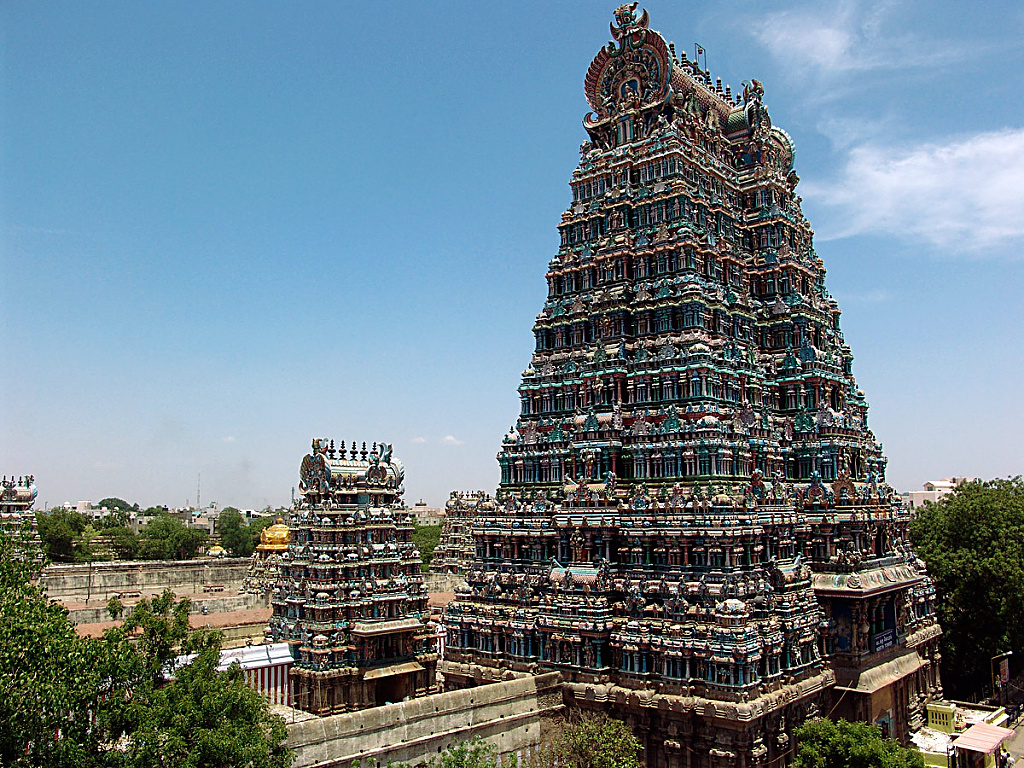
Since Churchward never revealed the location of the
monastery, and no monastery has admitted possessing
these tablets, they are lost to any modern study.
Churchward claimed he had shown a friend the tablets,
but no one has ever been able to identify this "friend"
as having ever existed.
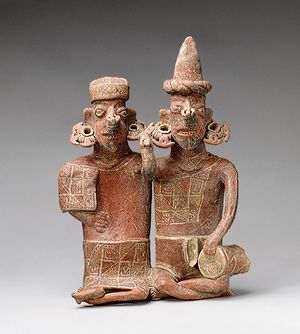
The Mexican "tablets," on the other hand, actually
exist…except that, no one but Churchward identifies
them as tablets. To everyone else, they are the
flattened figurines that the local peoples manufactured
by the thousands for prayer and worship. But to
Churchward, they are histories of the lost world…which
is sort of like a future archaeologist's examining a
thousand Barbie dolls to derive the history of the United States.
Churchward's translation includes information that
can be tested against current knowledge of geology. For
example, he claimed that Earth once consisted of flat
plains, until underground "gas belts" ignited, forming
mountain chains. Modern geology has found no evidence of
this, and the geological history of each mountain on
Earth has been studied. Plate tectonics and continental
drift, unknown in Churchward's time, have been proposed
and proven and provide ample explanation for every
mountain and, indeed, most other interesting geological
features such as volcanoes, earthquakes, sediment
layering, and so on.
Moreover, Churchward's claim that Lemuria was an
island continent in the Pacific, off the coast of South
America, is weak. The Pacific is the deepest of Earth's
oceans, with the thinnest crust—only about five miles
thick, as opposed to the 25 mile thickness
elsewhere—separating its floor from the Earth's magma
layer. The Sumerians believed that, when the planet
Tiamet was cracked in half, half became the Earth and
the Pacific basin was the leftover scar. (The other half
became the asteroid belt, which the Sumerians called
"the firmament" or "hammered bracelet")
We know now that continents do not abruptly sink or
rise, in terms of absolute distance from the center of
the earth. Certainly islands do; examples have
been reported in historical times (most recently, in
1963 an ocean floor volcano erupted, creating Surtsey
Island off the coast of Iceland). Such islands are
always volcanic; and, powerful as volcanoes are, one
large enough to create (or destroy) a continent would
destroy the entire Earth.
A continent, though, is composed of numerous tectonic
plates, jammed together; these plates jostle together in
slow motion, causing earthquakes and mountain ranges. A
plate may push under a neighboring plate; this would
cause the first plate to sink, but its neighbor to rise.
The continent itself doesn't disappear, but mountains are the result.
On the other hand, a continental mass can
disappear beneath the ocean…if the ocean level rises.
This may have happened to Atlantis. Satellite
measurements of the Atlantic floor show an undersea
highland right where Plato said Atlantis was located, in
the shape he claimed for Atlantis, and of the area he
claimed Atlantis occupied. This highland is located only
about 200 feet below the surface of the Atlantic…and
many estimates for the amount of water locked into
glaciers during the last ice age place sea level at 200
feet lower than it is today.
Unfortunately for the myth of Lemuria, there are no
such highlands in the Pacific.
Churchward was openly critical of the theory of
evolution, which he referred to as "monkey science."
Lemurian "history" bore him out; for humans, he
maintained, had been specially created in the Pliocene
epoch, which stretches from 12 million to 2 million
years ago. (Fossils do indicate that human ancestors, if not
Homo Sapiens, existed at the end of this epoch.)
Enter Helena Petrovna Blavatsky

The myth of Lemuria might have died a quiet death if
not for Madame Blavatsky. This woman, who made a career
of reinventing herself (she had held varied jobs from
sweatshop worker to circus bareback rider), discovered
she could find ready work as a Spiritualist medium. In
1875 she and her partner, Henry Steel Olcott, a New York
lawyer, founded the
Theosophical Society.
In 1882, Madame Blavatsky turned over to an
Anglo-Indian newspaper editor and the Indian government,
a series of letters she claimed were from her teacher,
one Koot Hoomi, although handwriting analysis later
showed she had written them herself. In these letters,
which contained a pastiche of Western occultism and
inaccurate Indian mysticism, she revealed a seven-based
cosmology in which there are seven plains of existence,
seven races of man, and seven cycles of existence. These
letters were later gathered into a book, entitled
The Secret Doctrine, which, among other things
large and small, included references to Atlantis and
MU/Lemuria.
According to The Secret Doctrine, Lemuria
had been inhabited by hermaphroditic people who laid
eggs—not very human-like, by our standards. When these
beings "discovered" sex, their downfall began.
(Blavatsky claimed, in her biography, to be a virgin, in
spite of her age, and the facts that she had been
married and had lived as mistress to a Slovenian singer,
an English businessman, a Russian baron, and a
Philadelphia merchant—though not at the same time.) The
offspring of the Lemurians' decadent coupling was the
fully human Atlanteans.
Although the Theosophical Society attracted many
sincere, talented, and even brilliant individuals, they
never seemed to see through Blavatsky's charade,
although she had made little effort to cover her tracks
and her true history is easily read by those who wish to
do so. The Theosophical Society issued a "biography" of
Blavatsky that ignored facts in favor of glorifying its
founder, and has maintained ever since that Blavatsky
was a saint, and that Lemuria once existed. The growing
scientific understanding of geology has resulted in a
larger and larger chasm between the beliefs of the
Theosophists and general knowledge. Although the Society
still exists, it isn't taken seriously by many outside
its membership.
Meanwhile...
Photos revealed to the world recently show an extensive underwater complex off the coast of Japan.
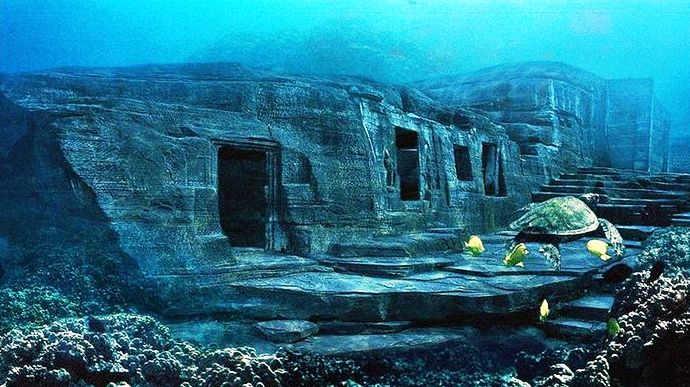
They were accompanied, of course, by headlines screaming that Lemuria had been discovered!
But let's not forget that Japan is a thousand miles or more from where Churchward claimed
Lemuria had been located; and also that, during the last ice age, sea levels were about 200 feet
lower than today so these ruins were well above water. Certainly there was some kind of
major civilization going on in the greater Japan area but it would never have been called "Lemuria."
Other Sources
Outside the Theosophical Society, many trance
channelers and non-trance channelers have revealed
information regarding Lemuria. It would be tempting to
throw all this information into the waste-basket, except
for the fact that a sizable portion of channeled
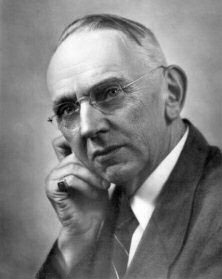
information can be verified. Edgar Cayce, who mentioned
the existence of Lemuria sparingly (and had much to say
regarding Atlantis), has a particularly strong track
record of accuracy in other matters. So, where does that
leave us regarding Lemuria?
I see two possibilities.
In the first, I suggest that the stories regarding Lemuria
did happen—at least, some of them—but
not in Lemuria. Few adults of this era have never heard of
Atlantis and Lemuria, and the type of person who is
likely to follow a career of channeling is particularly
likely to have engaged in discussions of lost continents
with friends sometime in his or her life. Edgar Cayce's
followers like to emphasize his ignorance; but the fact
is, he did attend college for awhile and was
very likely to have had discussions with other students
on the exciting subjects of the day, which included
Atlantis, evolution (pro and con), Theosophy, and
Lemuria.
In the second, I suggest that perhaps the Sumerian
cosmology is right, and that Earth is the remains of a
larger, water-bearing planet that was smashed in two,
four billion years ago. In that case, perhaps "Lemuria"
was a land that existed on the other half—above where
the Pacific ocean is now. It wouldn't have been called
"Lemuria", and certainly wouldn't have been populated by
humans; but it might have been populated by somebody.
Whoever that was, whatever life forms existed on the
original world, may have contributed DNA to the remains
of the catastrophe, and would thus, in a sense, be our
ancestors. The channeled histories of MU/Lemuria may be
attempts to recount their stories.
The fact is, the stories don't work well together.
Churchward's MU was populated by humans like us,
co-existing with the Atlanteans; Blavatsky's Lemuria was
inhabited by sexless egg-layers. Cayce's Lemuria was
inhabited by spirits that "descended into human
thought-forms." Everyone who channels a new history of
Lemuria is sincere and convinced his or her version is
the correct one—and yet, the stories conflict in basic
ways.
It seems likely to me that the various stories of
Lemuria are not from Earth at all. They may be separate
stories, of different peoples and times, of different
worlds and perhaps even of different universes. The
underlying truths of these tales may be important; there
is certainly a lot of energy involved in their
production. But, as long as we expect these stories to
be historically accurate in all details—including the
place of origin as Lemuria, here on Earth—the stories'
importance is masked by the obvious contradictions of
their basic premise.
As Edgar Evans Cayce, the seer's grandson, points out
in Mysteries of Atlantis Revealed,
On the other hand, Cayce speaks of Lemuria, but
only in passing; he speaks of the other "Root Races"
not at all. There is no sign of the seven subraces
of Atlantis. Cayce uses the term "Root Race," but to
refer to five entirely human stocks in different
parts of the world. As the Theosophists used
scientific terms to convey their concepts, Cayce
used Theosophical terms for his listeners. But to
equate the Cayce concepts with Theosophy or any
other occult doctrine is to misread Cayce. The
readings are not a rehash of earlier work, but
appear to build from that work to make concepts
clearer to those who were steeped in the occult lore
of the day.
George Lucas may have gotten it right. Instead of placing
Star Wars in Lemuria, he began the tale "Long,
long ago in a galaxy far, far away…" No one can argue
with the story's place or time, so we are free to glean
from it the truths that lie within, and are free of any
dependence on location.
Bibliography
Churchward, James, The Lost Continent of Mu, New York, Washburn, 1926-1933.
Blavatsky, Helena Petrovna, The Secret Doctrine (The Synthesis of Science, Religion & Philosophy), Adyar: Theosopholist Publishing House, 1888-1938, 6 volumes
De Camp, L. Sprague, Lost Continents (The Atlantis Theme in History, Science and Literature), New York, Dover Publications, 1954-1970.
Cayce, Schwartzer, Richards, Mysteries of Atlantis Revisited, New York, St. Martins Paperbacks, 1988.
Links