|
By: Paul S Cilwa |
Occurred: 11/12/2002 |
|
Page Views: 1,995 |
| Hashtags: #18Wheeler #TruckDriving #BigRigs #Schneider #TruckDriver |
| If the Donner Party had all survived, today's world would not be the same. |
| Estimated reading time: 7 minute(s) (1590 words) |
Tuesday, November 12, 2002
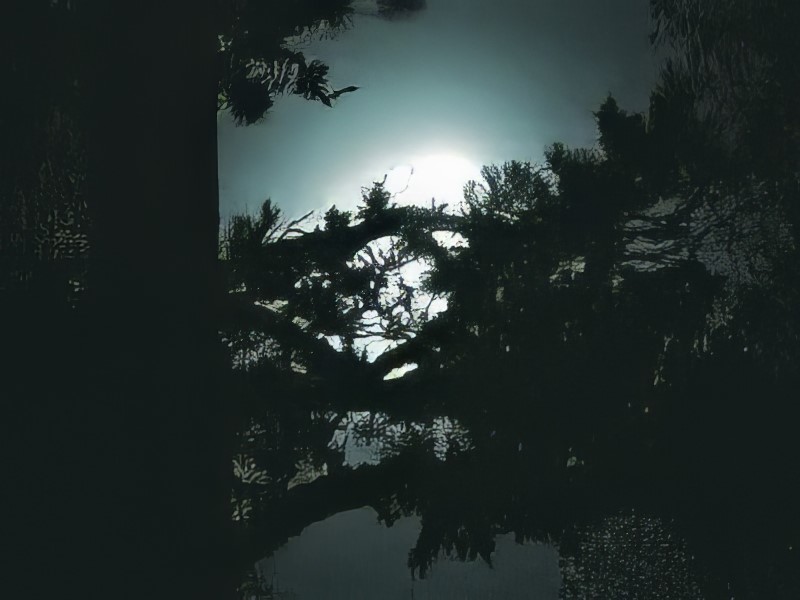
I spent last night in Donner Pass, at 7,326 feet above sea level,
with snow piled around in great white mounds that glowed faintly in
the moonlight. Tall pines towered higher still, their branches
combing the tendrils of cloud that drifted through them.
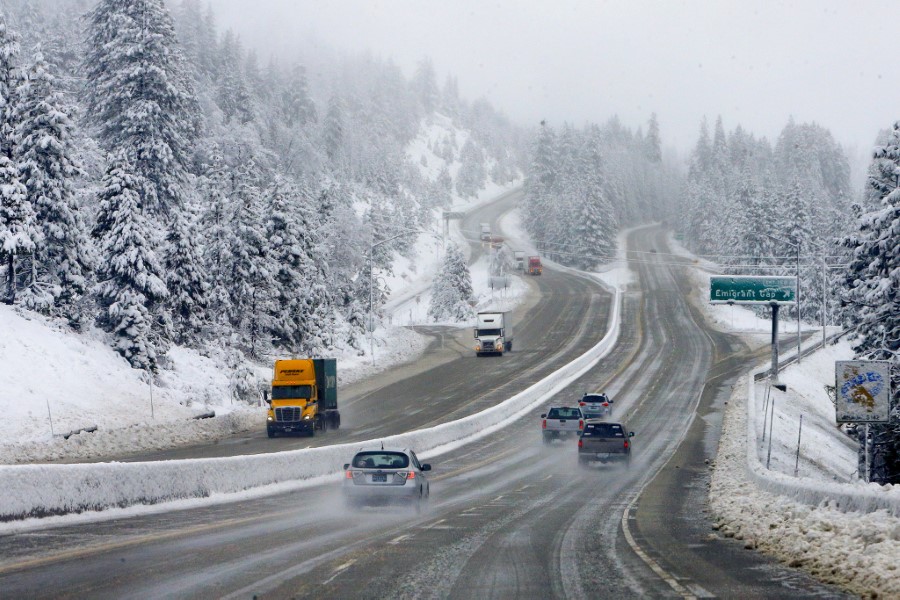
The pass, through which modern I-80 makes its way from Reno, Nevada to
Sacramento, California, is named after George Donner. Donner was the 19th
century's answer to Judy Garland and Mickey Rooney. Instead of deciding to put
on a show in the barn, he got together with a few of his friends, and said,
Hey—I know! Let's get some wagons and move to California!
And his friends
said, Yeah! Let's do that!
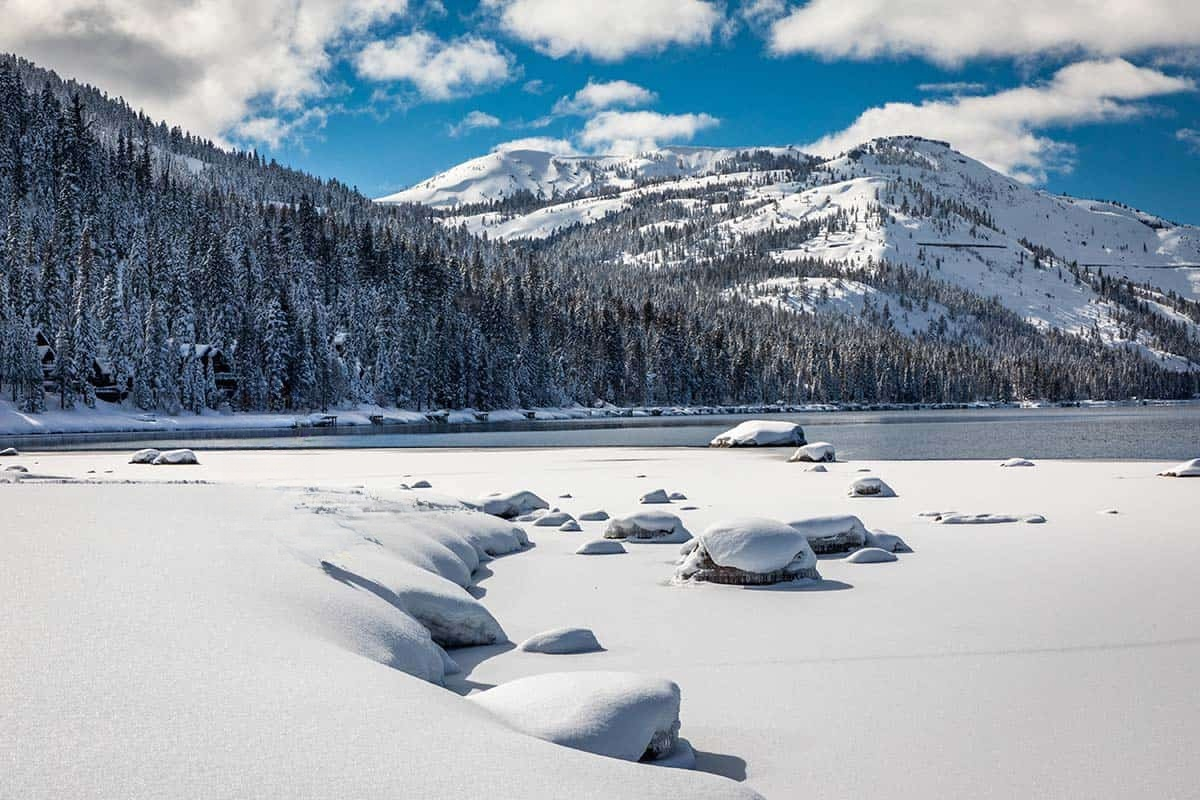
They set up camp, as they called it, near Truckee Lake—today called Donner
Lake—and, being the resourceful types, most built cabins in which to better
weather the weather (though the Donner family themselves made a brush tent
, a
sort of family-sized pup tent by throwing some pine branches together, then
covering them with the canopy of their wagon).
It was a severe winter. This was long before the onset of global warming, and
the snow fell feet at a time and then fell some more. The Donner Party had
brought supplies enough for the expected trip; there was inadequate surplus for
a winter's camp. They hunted, of course; but the game had moved to lower
elevations, and the remaining animals hibernated. The Donner party had to kill
and eat their own cattle, originally brought to start herds for the ranches they
planned to own in California. Then they had to kill and eat the horses.
With no more meat available, the travelers became hungrier and more
malnourished. For some reason the grown men began to die first; it may have been
that they gave their rations to their wives and children. However, the single
men died, too. Then the children began to die. The snow was so deep, the bodies
could only be buried in it a few feet deep. It didn't matter; in the
sub-freezing temperatures there was no decomposition, anyway.
With all the four-footed food supplies exhausted, it was inevitable that the
survivors start looking hungrily at those snow-covered mounds of perfectly
preserved meat.
When the Donner Party was finally discovered and rescued in May, thanks to
the generosity of none other than John Sutter, whose mill was the site of the
first gold find, the half-eaten carcasses revealed the manner in which the
survivors had managed to not die. The survivors resisted telling the tales,
however. People who've been driven to cannibalism to avoid starvation, have
always reported it to be a spiritually enriching experience. The Christian
practice of Communion, which of course is ritual cannibalism, echoes the
reality these people report. It seems likely that the Donner Party, having been
changed forever by the intimacy of consuming the flesh of their deceased loved
ones, knew they could never explain to the people of their day what they had
gone through and how it had affected them. Rather than cheapen it by releasing
to the press—as tawdry in their day as it is in ours—they simply kept quiet
about it. Unfortunately, that didn't stop the press from printing details they
had to make up.
Eventually, the Donner Party, now settled in California, drifted out of the
public eye, leaving behind Donner Pass, Donner Lake, and a few other place names
to immortalize their trying journey.
The adventure of the Donner Party is one that fires the imagination. I can
imagine going hunting in that pass, the silence so complete my own breath sounds
like a hurricane in my head. Every step in the unbroken snow crunches loudly,
the sound almost instantly swallowed by the thickness of the winter blanket and
the pine needles, on branches bent low beneath their white burden. I can imagine
the growing despair as days go by and I am unable to shoot as much as a rabbit
to feed my family.
I can imagine being the guy who tries to keep everyone's spirits up as the
months drag on and the supplies get lower and lower. I can imagine being the guy
who gets killed to be eaten, as it becomes clear that, when people are
experiencing a tragedy, no one likes a smart ass.
Thinking about the Donner Party as I wandered in the pre-dawn fog among the
pines and the snowdrifts, I realized that time has put a new perspective on the
affair. I can empathize, as if I were there, the anguish and guilt of those
wives as they watched their husbands and babies die of hunger. But it's now 156
years later, and those babies would be dead now even if they hadn't died
prematurely. What is premature death, anyhow? Is it more appropriate to die at
forty? Seventy? 150? Everyone on Earth dies, sooner or later. It seems to me
that how one lives is far more important than for how long.
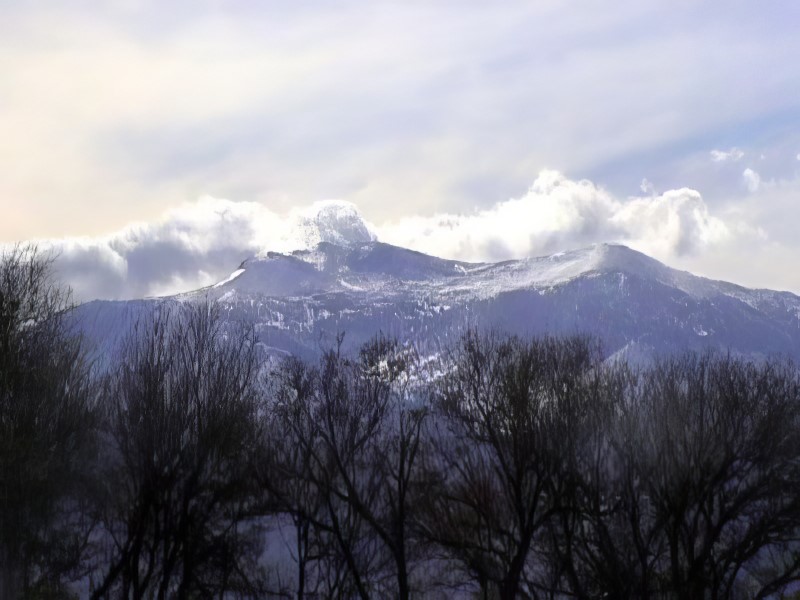
Sierra Nevada
means Snow Mountain in Spanish. If only the members of the Donner Party
had studied Spanish, they might have known to winter in the lower, more
hospitable lands of Nevada east of the mountains.
Our culture has fixated on a fear of death. We look back at
the ancient Egyptians and think they were obsessed with death, but
we are obsessed with fearing it. We don't speak of it. We don't
plan for it. We don't even like to see it coming, so we pack our old
folks off to retirement communities and assisted living centers, so
we won't have to actually see them pass on. We treat every death as
a tragedy, a trauma that is suppressed before it even occurs.
But everyone dies. It would be a poor god, it seems to me, who would
design an entire planet so that everyone on it had to undergo some awful sort of
transition ritual. It seems much more likely to me, that death isn't a bad thing
at all, when it comes; and our culture has made it a bad thing by fearing
it so much.
Those three and five-year-olds who were lost that fateful winter: Had they
lived, by now their descendants would number in the dozens, maybe even hundreds.
Those people would have married people that, in our reality, married others.
They would have had children. They would have taken jobs that went to other
people. In a small but measurable way, the world would be a different place than
it is. By dying when they did, the victims of the Donner Party helped create
the world of today. In a sense, they did today's world a favor.
Is there any tragedy of today that won't be looked on similarly in the
future? Are there any tragedies of the past that didn't contribute to the
world we know today? Isn't it true that, in this sense, every tragedy
does the world of the future a favor, by actually creating it?
The survivors of the Donner Party wrote in their journals that God saved
them, implying that God didn't choose to save the ones who didn't survive.
That's nonsense. I think those survivors, like many people who narrowly escape
death and then say that God blessed
them for some reason, have missed the
point, which is that death, for all our obsessing and fear, is not a big deal
for any true deity. Some of us live longer because it takes us longer to learn our lessons,
not because we are favored
by a deity. I do believe in a sentient universe, but I don't think
It personally cares whether I part my hair on the left or the right, or
die this week or next. The mechanism that selects my time of death may be
metaphysical, but I don't think any gods have to run it moment-by-moment any more than
the mayor personally controls when the traffic lights change from red to green.
Or that, as I eat my Egg McMuffin near Donner Lake, is how it seems to me.