|
By: Paul S Cilwa |
Occurred: 9/27/2002 |
|
Page Views: 1,916 |
| Hashtags: #18Wheeler #TruckDriving #BigRigs #Schneider #TruckDriver |
| I finally get to visit a place I'd previously only written about. |
| Estimated reading time: 9 minute(s) (1921 words) |
Friday, September 28, 2002
In the early 1990s I wrote a book called Midnight Harvest
(since then renamed The Lady From Heaven), in which I
started a section that takes place in Mt. Shasta National Park thus:
Mount Shasta is not large, as national parks go, but August is not its
busiest time and Abel had deliberately kept away from the more popular areas.
August fifth he started his hike, parking his car at an overlook area. He had
hiked for three days, deliberately pushing himself deeper and deeper into the
mountain's remotest regions, trying to put as many miles as possible between
himself and the rest of humanity. In a sense, of course, he was not really
alone; he had seen a million deer, a zillion squirrels and even the bear that
had been fishing in a mountain stream with careless abandon. Abel had watched
her, fascinated, for minutes before the wild creature had suddenly risen to
her full (and impressive!) height, sniffed the air, glowered in Abel's general
direction, and taken off up the hill on the other side of the stream. It was a
special experience for the young man, yet it just pointed out again that he
was an alien, a stranger in a strange land. A man with no friends. The thick,
impossibly alive forest seemed as barren as the Texas desert.
I had never been to Mt. Shasta, until today. Yet there were elements of the
character Abel's experience I could share. Driving is an amazingly solitary
occupation, in its way even more solitary than writing.
How could I write about something I had researched so little?
The first day's hiking had been strenuous, but not killing. Abel had
compromised on food supplies by buying a book which promised to reveal which
plants could be safely eaten. It is, of course, against National Park policy
to allow visitors to graze on the fragile park ecology. But Abel was used to
living close to the land. And so he ate reconstituted powdered eggs for
breakfast, and berries, roots, leaves, and nuts the rest of the day.
According to my computerized map, Mt. Shasta National Park is actually fairly
large, and of course the highway doesn't cut through it. There is, actually, a
great deal of wilderness area but I wouldn't see it today. The exposed rock
faces were coming more and more frequently, and, oddly, didn't look particularly
attractive to me. I usually revel in nature, but there was something strained in
what I saw.
The road got steeper as I rose into pass after pass. 6% grades were the norm,
which I had no problem navigating with my partial load (I had unloaded,
personally, two-thirds of the trailer's contents at my previous two stops) but I
traded sympathetic grins with the drivers I passed, who had to edge their way up
at low gear and an eye to the temperature gauge.
When one truck passes another, usually the drivers will glance at each other
and wave. It's a special wave, used only at these times: the hand that was
cradling the gearshift knob will rise, fingers extending, then return to their
grip. Sometimes the driver doesn't even turn his head, just offers that little
wave. I have seen it when, intent on what was in front of me, I didn't even
realize I was being passed until too late to look at the driver's face.
And sometimes there is nothing, no wave at all, just the impression that the
driver is so wrapped up in his own thoughts that nothing else exists.
Sometimes the drivers are really cute, too…not often, but often enough so I
keep looking just in case. Then again, I have seen some scary looking guys out
there, with wild, unkempt hair, missing teeth, and maniacal expressions.
Oh, wait, that was me, in the mirror.
I must admit I haven't taken as much care of my appearance as I once did. All
right, I was never that fussy about it, anyway. But when one finds
oneself frequently skipping a day's shower in favor of making more miles, one
has to figure one has lost it as far as personal hygiene is concerned.
Besides, why care for personal appearance if no one is going to see you,
anyhow? Keep your fingers clean for that little wave, and that should just about do it.
I wondered which of the hills I saw was Mt. Shasta itself? Or if I would even
know which one it was?
Suddenly, looking ahead of me, everything changed. I don't understand what
changed, exactly. It looked more or less like it did before. But now, suddenly,
instead of strained it all looked unspeakably beautiful.
And then, the road curved and led out over a long, high bridge, below which
was deep, blue, water in what was clearly a caldera lake. Lake Shasta.
Quietly he slipped beneath the surface, desperate that he not make a single
wave more than necessary. The pool was deep, at least the twenty feet deep
that was his maximum free-diving depth. Below about ten feet the water grew
too murky to see through; and, as chilled as it was at the surface, it was as
cold as December down below where the water seldom stirred.
This water wasn't murky, but it was deep. It was the kind of water one might
enter in SCUBA diving regalia, only to run out of light before running out of
depth. The lake itself was huge, big enough to support a marina and any number
of fairly large boats. I didn't see anyone swimming in it, though.
I took a break at a rest area, walked around barefoot on the grass, smelled
deeply of the pines and fresh air. It felt very strange to be having this
experience without anyone to share it with. It seemed almost selfish. And yet,
how can you share the feel of moist green grass between your toes? There's
nothing you can do but feel it, enjoy it, live it. Reluctantly, I put my sandals
back on and returned to the truck.
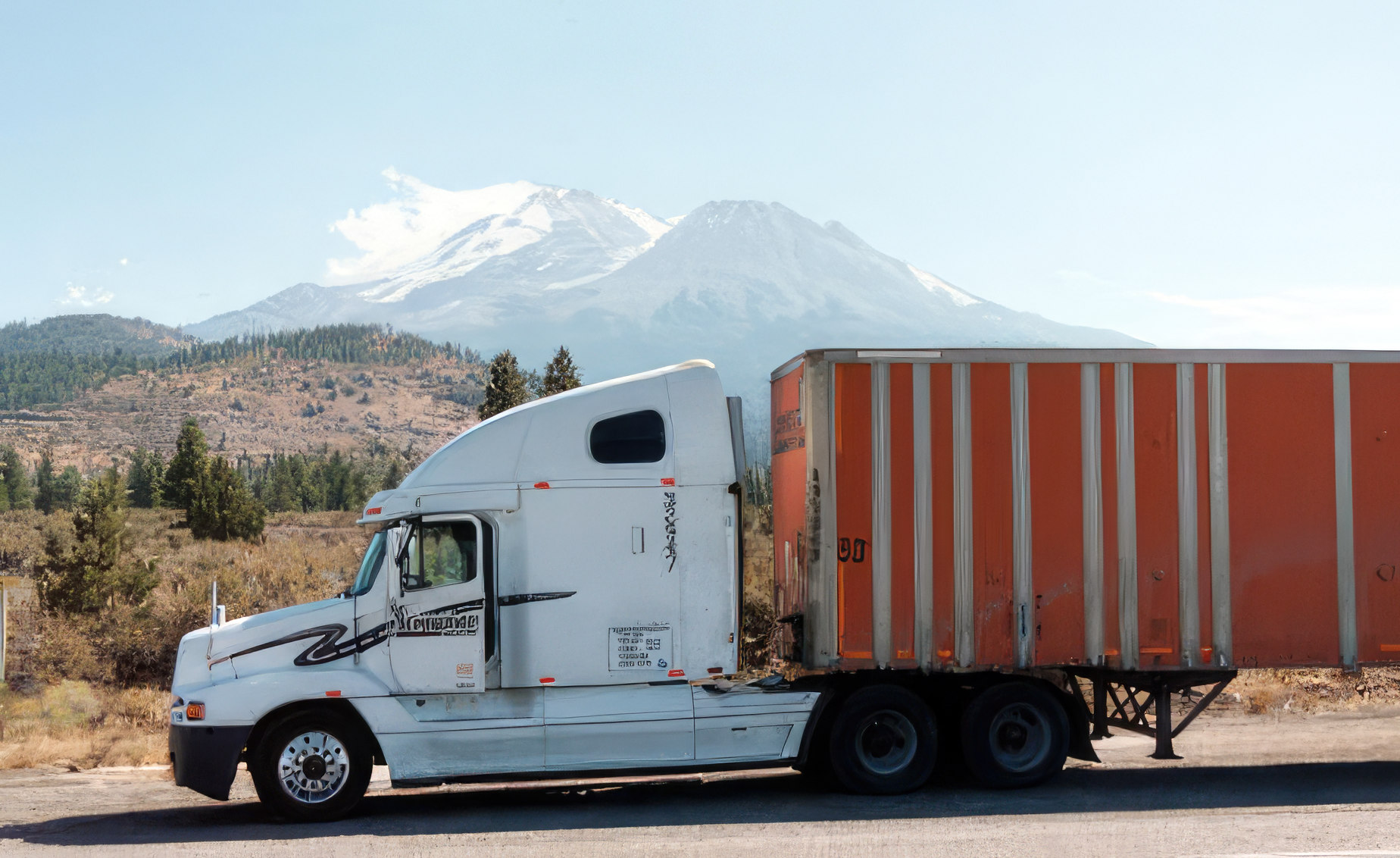
I had just about decided I would never know if I had seen Mt. Shasta or not,
when, unmistakably, there it was. A huge volcano, it loomed far into the
air, many miles from me yet still dominating the landscape. Nearer, far lesser
hills had hidden it from me till now. (And how often do we find that little
things have hidden from us the more important, big things?)
And, it was beautiful. Breathtaking. More beautiful, certainly, than
I had imagined when I put the character Abel into it in my book.
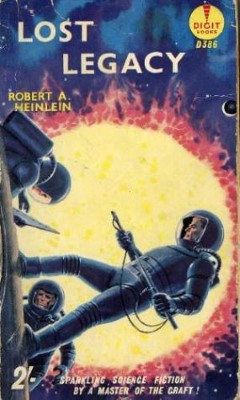
I had chosen Shasta almost out of the blue. In fact,
I'd only heard of it once: In a Robert A. Heinlein
novella, Lost Legacy. In this story, written in
the 1940s, three friends go hiking on Mt. Shasta in
October. They are caught in a snowstorm and nearly die;
but are rescued by a brotherhood of mystics who secretly
live in a network of caves they've built into the
mountain. These mystics are nearly immortal; one of them
is Mark Twain! Another is Father Junipero Serra, the
Spanish missionary who was the first white man to see
the mountain. And, in the story, the mountain, itself,
contains an ancient, psychic recording, that reveals to
the friends the origins of the human race.
I would never have given the story a second thought—just a good tale,
y'know?—but I caught a curious cross link with another work of Heinlein's,
Farmer in the Sky, about the colonization of Ganymede. When kids on the
lengthy trip to Ganymede start a Boy Scout troop, one of the patrols is named
after Junipero Sera, and the main character is disappointed his patrol
didn't have first crack at that name, the name of such a wonderful man.
Junipero Serra so highly regarded? I remembered the name, of course, from
fifth grade history but had never thought of him as a particularly enlightened
or exceptional person.
Because of the way my mind works, I immediately suspected that Heinlein had
known something about Mt. Shasta, or Junipero Serra, or both, that most people
didn't know. Something psychic, at least. So, when I needed a place for Abel to
meet a space alien and be taken aboard a flying saucer, I decided on Mt.
Shasta…even though I had never been there and knew nothing of the place.
The stranger seemed to sense he was being watched. His head jerked up and
away from the fire; his eyes swept the area until they lit on Abel. They were
set oddly far apart, and their almond shape made him look Indian in spite of
his shoulder-length, ash blonde hair. He smiled, and Abel felt his pulse
quicken.
Now, as I said, I hadn't really done any research on the place. So it was
with some surprise that I discovered, later, that Mt. Shasta is, in fact, the
site of many UFO sightings and other metaphysical occurrences. It was considered
sacred ground to the Native Americans who knew of it, and is now home to a New
Age-type community, much as has happened to Arizona's Sedona.
How did Heinlein know about this? Or did he, also, find himself ascribing
special powers to an awesome mountain he might never have seen, either?
Heinlein had been roommates with the other famous science-fiction writer,
Isaac Asimov, and L. Ron Hubbard, also a science fiction writer but additionally, and mainly,
the founder of Scientology. Asimov didn't believe that coincidences had any
special meaning, but collected them anyway. Hubbard taught there is no such
thing as a random coincidence.
And here was I, by coincidence traveling a road I had started down a decade earlier.
Midnight Harvest ends with Abel returned to Shasta National Park,
unaware that he's been aboard a flying saucer and yet still changed by the
experience:
Abel was puzzled. The woods seemed more desolate than ever. He
peered intently over the surface of the pond, sure that if he only looked hard
enough, he would see the man floating somewhere. But there was no sign of him
at all.
Well, of course not. He'd only imagined the guy, after all. He
was lonely, but that was why he had come here.
It dawned on him that he didn't have to be lonely. He
could return to San Francisco any time.
But there was something to be said for separating yourself
from everyone else, to give yourself time to think.
Is that why I'm here? To give myself time to think? Did the Universe conspire
to put me out of work, so I would have to become a truck driver, so I would find
myself in this solitary existence, just so I would have time to think?
Or were the events of the past year just a meaningless coincidence, a decade or more in the making?
Is any coincidence meaningless?