|
By: Paul S. Cilwa |
Occurred: 4/15/2026 |
|
Page Views: 273 |
| Hashtags: #Politics #Revolution #History #Urukagina #Lugalanda #Lagash #FrenchRevolution #KingLouisXVI #LuigiMangione #Sumer #KingLi #RomanRevolution #LuciusTarquiniusSuperbus #TarquintheProud |
| You can ignore the people's hunger, but not its heat. |
| Estimated reading time: 10 minute(s) (2248 words) |

The wealthiest households, meanwhile, expanded their estates through a mix of legal maneuvering and
outright coercion. Land that had belonged to the same families for generations suddenly changed
hands after a dispute with a magistrate or a review
by an accountant. Widows and
orphans were especially vulnerable; their property could be seized under the pretext of "protecting"
it. Everyone knew what was happening, but speaking up meant risking everything.
Markets reflected the imbalance. Prices rose not because goods were scarce, but because
middlemen—appointed by the ruling class—took their cut at every stage. Farmers who produced the
grain earned barely enough to survive, while administrators who never touched a plow grew rich.
Even religious institutions, once trusted as neutral guardians of community welfare, became
entangled in the machinery of extraction.
People whispered about reform, but the system was too entrenched. The ruling inner circle
benefited too much from the status quo, and anyone who tried to expose corruption found themselves
fined, exiled, or quietly "removed" from public life. The sense of injustice simmered for years,
building pressure in every household, every workshop, every farm. Eventually, the resentment
reached a point where even the most cautious citizens felt they had nothing left to lose.
And that was what led Lugalanda, ruler of the Sumerian city-state Lagash, to his doom.
The year was 2340 BCE.
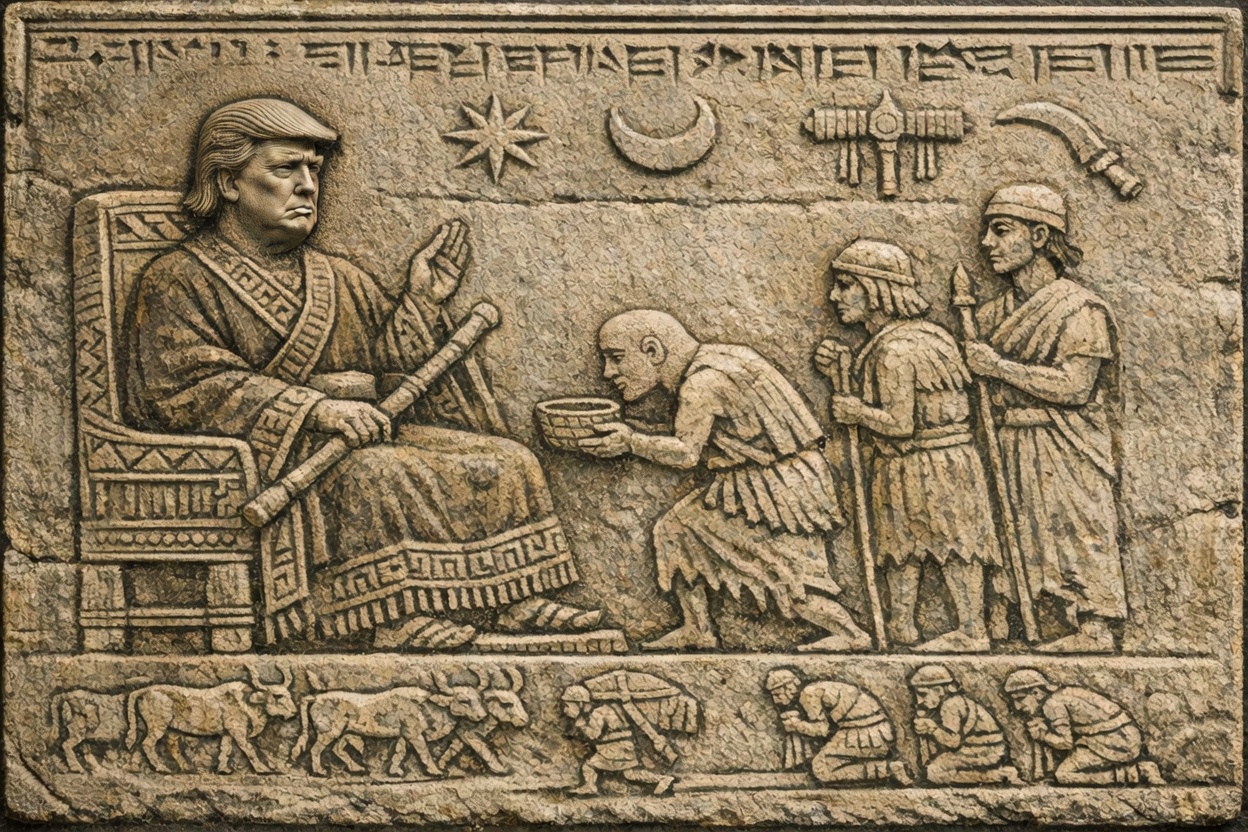
The breaking point came when the people finally realized the system would never
correct itself. Rumors spread that a military official—respected,
disciplined, and notably untouched by the corruption of the palace—was
willing to stand with them. Crowds gathered first in the marketplaces, then
outside administrative buildings, demanding an end to the extortion and the return
of property taken under false pretenses. When the palace guards refused to
suppress the demonstrations, the ruler's authority collapsed almost overnight.
Into that vacuum stepped Urukagina, carried by a wave of public fury and the quiet
support of those who had grown tired of watching their city hollowed out by greed.
Once in power, Urukagina moved quickly to dismantle the machinery that had enabled the
abuses. He issued sweeping reforms that limited what officials could charge for
basic services, abolished predatory fees, and restored lands that had been seized
from vulnerable families. He declared that widows and orphans were to be
protected, not exploited, and that temple administrators—long shielded by
religious authority—would be held accountable for overreach. His decrees
read like the first attempt in recorded history to codify the idea that government
exists to serve the public rather than enrich itself.
He also restructured the bureaucracy so that no single office could extract wealth
unchecked. Inspectors were appointed to monitor temple operations, tax collectors
were barred from imposing unauthorized levies, and the courts were instructed to
treat commoners and elites under the same standards. These reforms didn't just
address individual injustices—they attempted to rebuild the social contract
from the ground up, establishing a vision of civic fairness that was centuries
ahead of its time.
The Compatriots' Rebellion
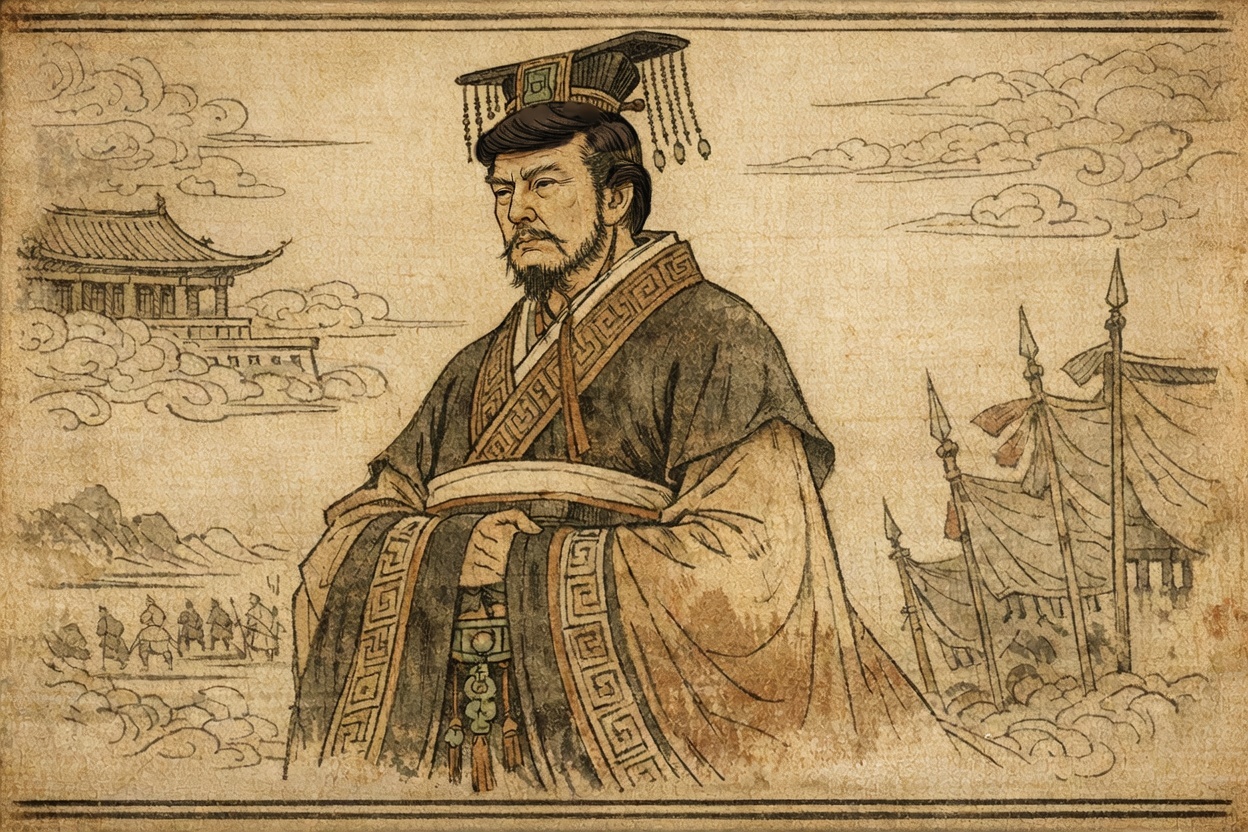
The Compatriots' Rebellion was the first firmly dated popular uprising
in Chinese history. It erupted in 841 BCE, when the residents of the
Zhou capital—commoners and nobles—rose up against
King Li of Zhou, whose oppressive economic policies and suppression of public speech had pushed
his society to a breaking point.
King Li's administration had become notorious for predatory extraction. Under the
influence of corrupt ministers, he monopolized forests, rivers, and hunting grounds,
resources that ordinary people depended on for supplemental food and income. Taxes
and levies increased even as the economy weakened, and artisans and farmers were
pushed toward destitution. Contemporary texts describe weavers without cloth and
cobblers without leather because the state had seized everything of value. This
economic squeeze made life impossible for both commoners and aristocrats.
The Zhou political system traditionally allowed citizens
(guoren)—urban
commoners—to criticize the ruler. King Li attempted to outlaw criticism entirely,
hiring a sorcerer (his Stephen Miller?) to spy on conversations and executing
anyone who complained. The city became so terrified that people dared not speak,
greeting each other with eyes alone.
One advisor, the Duke of Shao, warned him
that suppressing speech was like damming a flood: pressure would build until the
entire system burst. King Li ignored him, calling him the Chinese equivalent of being
"Low IQ".
By 841 BCE, the pressure finally exploded. Residents of the
capital—artisans, farmers, soldiers, and minor nobles—armed themselves
with tools and stormed the palace. King Li fled through a drainage tunnel and
escaped across the Yellow River to the region of Zhi, where he lived in exile. His
son had to be hidden by loyal ministers to prevent reprisals. With the king gone,
the Zhou dynasty entered the Gonghe Regency, jointly governed by the
Duke of Shao and the Duke of Wey.
Roman Revolution
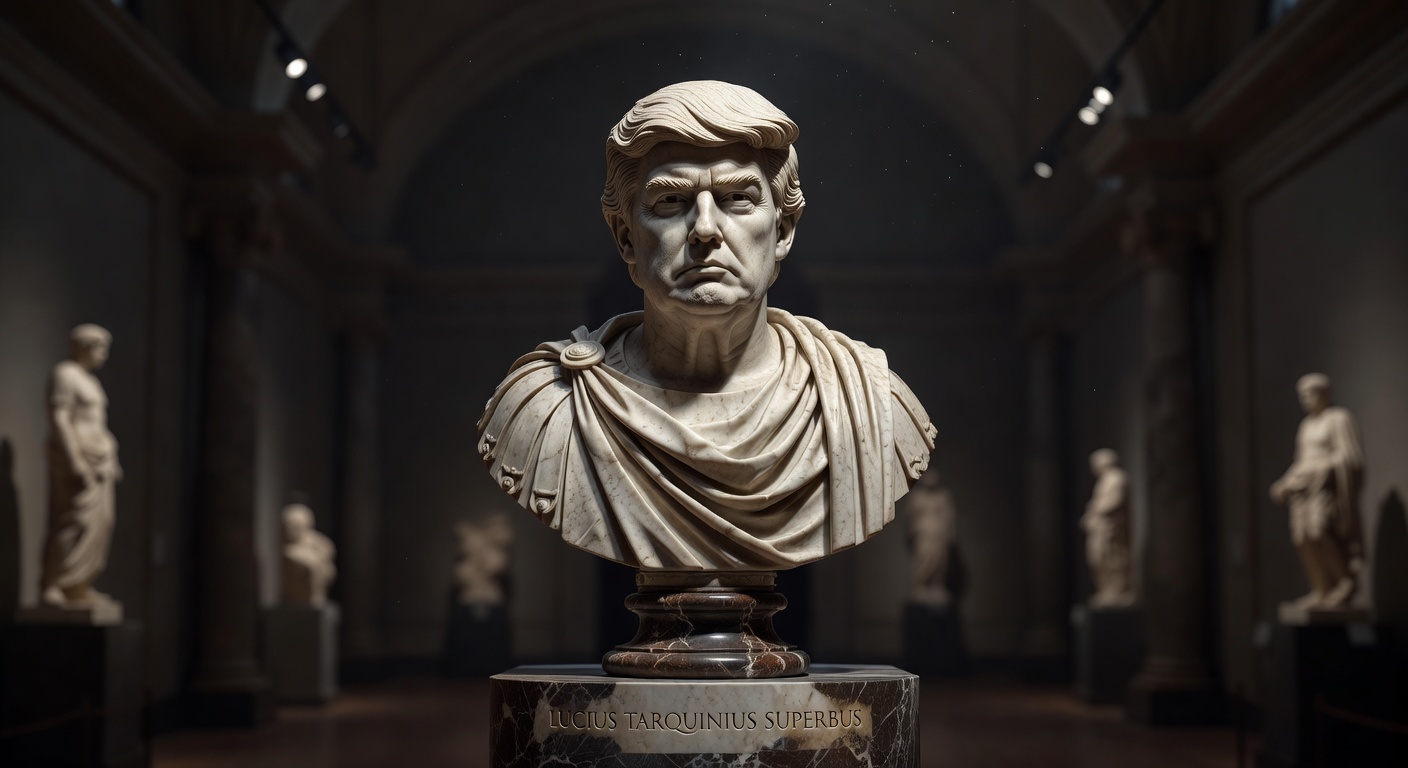
In the late sixth century BCE, Rome was a small but ambitious city-state
ruled by kings. The monarchy had lasted for centuries, blending Etruscan influence
with native Latin traditions. The king was not only a political leader but also
the chief priest and judge, commanding armies and presiding over religious rites.
Yet by the reign of Lucius Tarquinius Superbus—Tarquin the Proud
—the
system had hardened into tyranny. Tarquin ignored the Senate, executed rivals, and
filled offices with his own family. His massive building projects, including the
Temple of Jupiter on the Capitoline Hill, were funded by forced labor and heavy
taxation. The nobility, once partners in governance, were reduced to subordinates,
and the common people bore the cost of his ambition.
The immediate trigger was not a tax or a war but a personal outrage. Tarquin's son,
Sextus Tarquinius, assaulted Lucretia, the wife of a nobleman named Collatinus.
Lucretia's suicide after the attack shocked Rome. Her cousin, Lucius Junius Brutus,
who had long concealed his intelligence to survive under Tarquin's rule, seized
the moment. He held up Lucretia's blood-stained dagger before the assembled
crowd and swore that no Tarquin would ever rule Rome again. The
people—nobles and commoners alike—joined his oath. The army, weary of
Tarquin's arrogance, refused to defend him. The royal family fled into exile, and
the monarchy collapsed almost overnight.
In place of the king, Rome established a new system: two consuls, elected annually,
sharing power and accountable to the Senate. Brutus and Collatinus became the
first consuls in 509 BCE. This arrangement was revolutionary—not
because it created democracy, but because it institutionalized distrust of
concentrated power. No single man would ever again hold absolute authority. The
Senate regained its advisory role, and magistrates were chosen by citizens in
assemblies. The idea of res publica—the public thing
—was born,
defining Rome's identity for the next five centuries.
Of course, Tarquin did not accept defeat quietly. He sought aid from Etruscan allies and
attempted to retake the city by force. The Romans fought several battles to
preserve their new republic, most notably at Lake Regillus, where legend says the
divine twins Castor and Pollux appeared to lead Rome's army to victory.
Internally, the young republic faced its own tests: Brutus executed his own sons
for conspiring to restore the monarchy, a grim symbol of Rome's commitment to
liberty over blood ties. The tension between aristocratic control and popular
participation began here—a conflict that would define Roman politics for
centuries.
The Roman Revolution stands as one of history's most consequential political
transformations. It replaced divine kingship with civic governance, introduced
checks and balances, and established the principle that authority must answer to
law. Yet the same forces that toppled Tarquin—the ambition of elites, the
anger of the populace, and the manipulation of power—would reappear
centuries later when Julius Caesar crossed the Rubicon and ended the Republic.
Rome's first revolution thus became the template for every later one: a people's
refusal to be ruled by arrogance and excess.
The French Revolution
By the late eighteenth century, France was a kingdom rotting from the inside. The
First Estate (clergy) and Second Estate (nobility) lived in luxury, exempt from
most taxes, while the Third Estate—peasants, workers, and the entire middle
class—paid for everything. Bread prices soared after years of bad harvests,
and the monarchy's debts ballooned from wars fought for glory, not
survival. Louis XVI's government tried half-hearted reforms, but the
nobles blocked anything that threatened their privileges. The people starved while
Versailles glittered. The anger was not sudden; it was the slow accumulation of
every injustice, every tax, every humiliation inflicted by a ruling class that
believed itself untouchable.
Rather than a clear imperial oppressor, the French Revolution had a
class-based machine of exploitation. Louis XVI was not personally cruel,
but he was weak, indecisive, and utterly captive to the aristocracy. The real
villain was the Ancien Régime itself—an entire social order designed
to enrich the few at the expense of the many. The nobles refused to pay taxes, the
clergy hoarded wealth, and the monarchy demanded obedience without offering
justice. When the Estates-General met in May 1789, the privileged orders
tried to silence the Third Estate. Instead, the Third Estate declared itself the
National Assembly, claiming sovereignty in the name of the people. The old system
had finally pushed too far.
The spark came in July 1789, when Paris erupted after the king dismissed his
reform-minded minister Necker. Crowds stormed the Bastille on July 14, not
because it held many prisoners, but because it symbolized royal tyranny. Across
the countryside, peasants rose up in the Great Fear, burning tax records and
driving out landlords. By August 1789, the National Assembly abolished feudal
privileges and issued the Declaration of the Rights of Man and of the Citizen,
proclaiming liberty, equality, and the sovereignty of the people. The monarchy
staggered on, but its authority was mortally wounded. When Louis XVI tried to flee
the country in June 1791, the people saw it as proof that their king would rather
abandon France than accept equality.
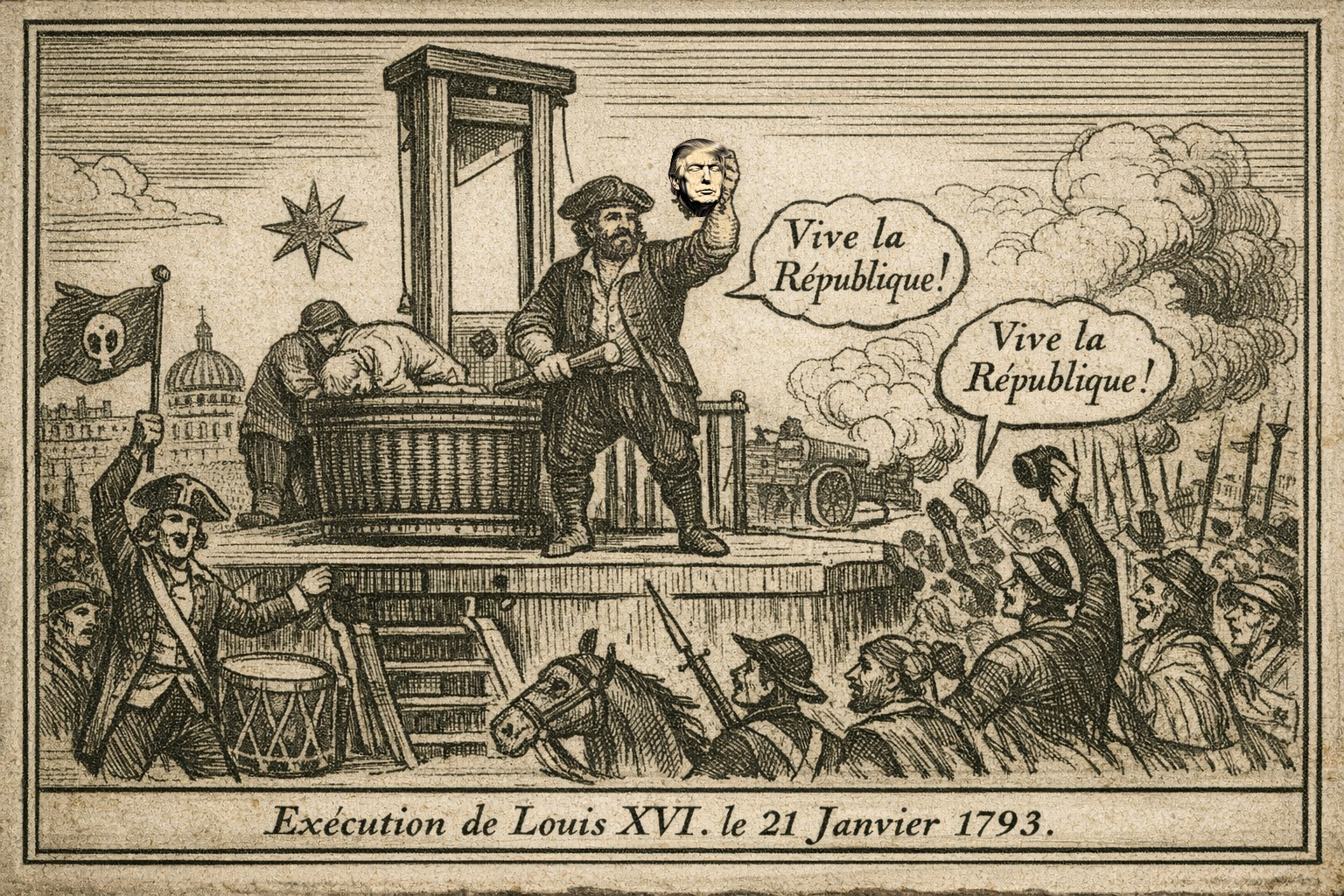
The losers of the Revolution were the ones who had ruled France for centuries. The
king was tried for treason and executed on January 21, 1793. Queen Marie
Antoinette followed in October. Hundreds of nobles fled into exile; those who
stayed risked the guillotine. The Church lost its lands and political power.
During the Reign of Terror (1793-1794), the Revolution devoured many of its
own leaders as well—Girondins, Hébertists, Dantonists—anyone
perceived as a threat to the Republic. The Terror ended with the fall of
Robespierre in July 1794, but the old ruling class never regained its former
dominance. The Ancien Régime was not reformed; it was dismantled piece by
piece.
The French Revolution reshaped the world. It destroyed feudalism, ended hereditary
privilege, and established the principle that sovereignty rests with the people,
not a monarch. It inspired revolutions across Europe and the Americas, terrified
every crowned head on the continent, and introduced modern political
concepts—citizenship, rights, secular government, and national identity.
France itself lurched through chaos: the Directory, then the rise of Napoleon
Bonaparte, who carried revolutionary ideals across Europe even as he crowned
himself emperor. But the core achievement endured. The Revolution proved that
ordinary people could overthrow an entrenched ruling class and remake society
according to principles of equality and justice. Its legacy is the modern world.
Luigi Mangioni's rise feels like the latest echo of a very old pattern: the moment
when a society's patience with privilege finally snaps. His sudden popularity—first
among workers, then among small business owners, then among the disillusioned middle
class—didn't come from charisma alone. It came from the fires.
When the first warehouse blaze lit up the night sky, it was dismissed as vandalism.
When the second and third followed, targeting storage facilities owned by
conglomerates that had just announced record profits and mass layoffs, the
pattern became impossible to ignore. Then came the attacks on billionaire
estates—not random acts, but symbolic ones. The message was clear: the wealth
that insulated the few had become intolerable to the many. Mangioni didn't order the
fires, but he spoke the language of those who lit them. He called them
the smoke of reckoning,
and the phrase stuck.
Every age has its Lugalanda, its Superbus, its King Li—men warned by their
own advisors that arrogance has a shelf life. Lugalanda ignored the cries of
Lagash's citizens until they rose behind Urukagina. Superbus dismissed Brutus's
quiet intelligence until it toppled his throne. King Li silenced his people until
they found their voices in revolt. Each believed his power eternal; each discovered
that exploitation is a fuse that burns toward the same end.
Mangioni's moment is not unique—it's the latest turn of the wheel. The
fires are not the revolution; they are the signal that one is coming. History
keeps whispering the same warning to those who rule by extraction and contempt:
You can ignore the people's hunger, but not its heat.