|
By: Paul S Cilwa |
Posted: 4/20/2007
Updated: 9/14/2017 |
|
Page Views: 2,506 |
| Hashtags: #GunControl |
| Are people really still talking about controlling access to guns? Because that ship has sailed. |
| Estimated reading time: 5 minute(s) (1068 words) |

On that venerable TV classic, Star Trek: The Next Generation, one of the technological developments
we are shown is the "Replicator," a device that creates items or food from stored data patterns.
It's implied in the series that the Replicator, which comes with its own fusion reactor and
can be used to build other Replicators, is the straw that broke the banksters' backs. With a Replicator,
one can make anything: A home, clothes, food, weapons (or more Replicators). In a Universe with unlimited
property (an endless number of "M-class" planets) and Replicators, money—indeed, labor—is
outmoded.
This works because of the Replicator's fusion engine, which provides enough power to actually create matter.
We aren't quite there, yet. But imagine the uproar such an invention would cause!
How many years after the introduction of the Replicator would banks still be trying to entice customers in
with "free checking"?
But, while we can not yet create items from energy, we can create them out of what amounts to Lego blocks.
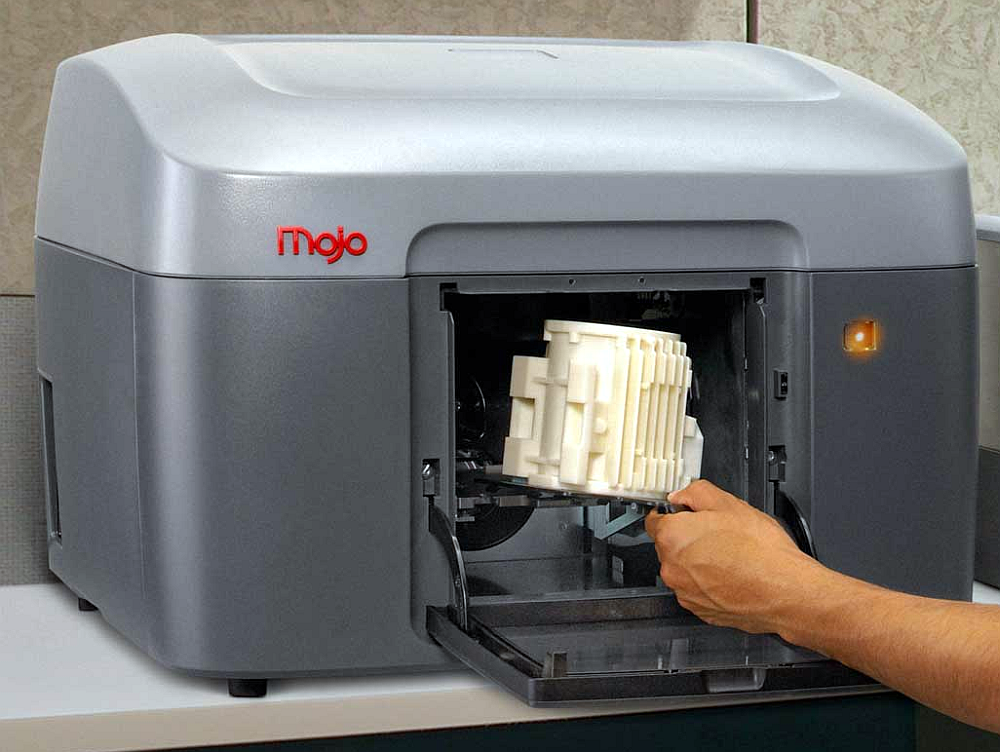
That gun will be unregistered. No one, not even someone else in the household, will know (unless told) that
there is now a gun on the premises. And, although printing the gun parts takes awhile, it will still take less
time than the "three day cooling off" period currently required in most states before buying a new gun.
Now, if you're thinking that only a computer nerd (in other words, someone who's harmless) would own a 3-D printer,
that might be more-or-less true today. But an
article published by
industry leaders in 2016 predicted 5.6 million 3-D printers will be in the hands of consumers by 2019.
Currently, all gun control efforts have been procedural. Gun owners must be licensed. In most cases they
cannot buy a gun without passing a background check.
But all this is now moot, simply because a person who is sufficiently pissed off can simply print
a gun if they want one. True, at this time ammunition cannot be printed. But let's face it, that's only
a matter of time, as well.
We will never be able to "control" guns. We must, instead, try to enlighten people
if we wish to be safe from mass shootings.
In 2007, I stated that the kids at Virginia Tech
would have been safer if they'd been allowed to carry weapons to school, as they can (and I'm sure, some do)
everywhere else in Virginia, including ball games and church services.
What I didn't go on to say, but will now, is that guns are a part of that set
of devices that are so potentially harmful, that no one should be
permitted to possess one without proof of successful training. This set already
includes automobiles, jet planes, and defibrillators; it should certainly
include handguns, rifles and AK-47s.
And yet, since we can no longer control access to guns (if, indeed, we ever could),
we must concentrate on controlling ignorant access to guns.
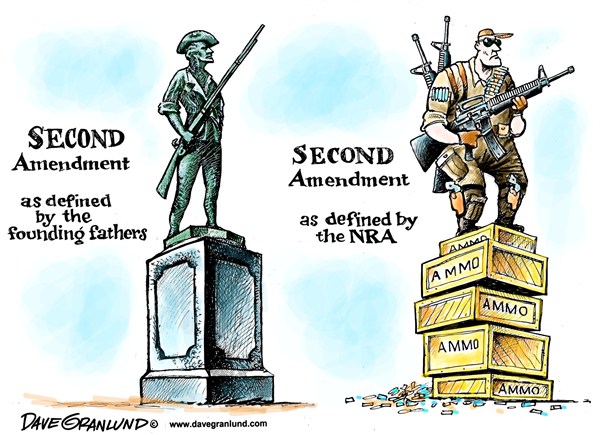
One can argue whether the Founding Fathers had AK-47s in mind when they wrote
the Second Amendment; but there's no arguing that, in the late 1700s, every boy
and girl had grown up with guns in the house, and had been shown from the
time they could walk how to fire one, what to fire at (and what not to), and the
A through Zs of gun safety. The idea of finding a person who had
never before held a gun would have been ludicrous.
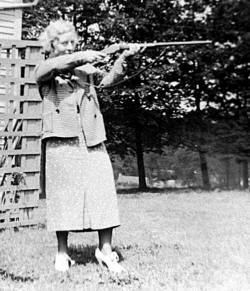
My Mom was raised that way. Though a city girl, she spent summers in the country and her father made
damn sure she knew how to shoot and how to be safe. She died last year at 93, so
I guess guns didn't significantly shorten her life. (And, more to the point, her use of them
didn't shorten anyone else's.)
So ingrained in her were the rules
of how to handle a gun safely, that Mom began inculcating them into me with
toy guns, which she would never allow me to aim at any living thing. I was
allowed to aim toy guns at targets, but not to play Cowboys and Indians or Cops
and Robbers or any other game where the point was to shoot someone or something
you didn't intend to eat.
If we, as a nation, are going to get serious about security, we're going to
have to—pardon the phrase—"bite the bullet" and accept the fact that
no one else can do it for us. We have to keep alert and able to defend ourselves at
any given moment. That's what freedom is about, and why "freedom isn't
free." But a gun is not an effective defense against another gun,
any more than polio is defense against the flu.
Schools have drivers' education. They should also have gun education, and it
should be compulsory. No one should be forced to carry a gun if he or she
doesn't want to, but everyone should know how and then make an informed
decision.
The Second Amendment is meaningless. Gun control advocates are trying to lock the barn
door after the horse has gone missing. We cannot put that genie back into the bottle.
Guns are here to stay. If we want to be here to stay, we will need to
learn how to be safe despite the ubiquity of firearms.
And I think that's what (at least some of) the Founding Fathers had in mind.