|
By: Paul S Cilwa |
Posted: 11/18/2013 |
|
Page Views: 4,765 |
| Hashtags: #Television #LGBT |
| Let's reminisce about old TV shows and how they apply to the gay experience. |
| Estimated reading time: 8 minute(s) (1819 words) |
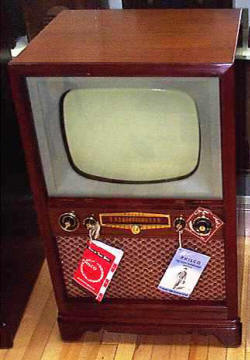
TV and I got started at about the same time. Although there were about
44,000 television sets in the United States in 1947, it wasn't until
1951 that network television was available from coast-to-coast; and
that was the year I was born. The first TV I remember, though, was a
1953 Philco that stood proudly in our living room. (It was
eventually replaced by a tabletop model, and the Philco, which had
died, was gutted and became a toy—I would get inside and put on "TV
shows" for my mom.)
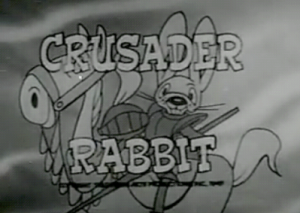
Apparently my first favorite show was Crusader Rabbit, a cartoon. I
don't really remember it specifically, but I do remember begging my
mother to pick me up and put me "in" the TV so I could play with the
cartoon rabbit.
However, somewhat later, when I was old enough to understand that
there weren't actually little people in my television set,
I had two shows that I do remember loving. One was Topper;
the other was The Adventures of Superman.
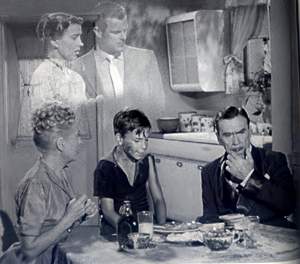
Few people remember Topper these days. It was about a stuffy banker who, despite his
wealth, is so repressed by his job, his wife, his boss and his
station in life that when two wild-and-crazy ghosts, George and
Marian Kirby (and their inebriated ghost-dog, Neil) haunt him, they
determine to introduce him to the joys of living.
Wow…what a concept. And, of course, I didn't
understand it at the time; I just got a kick out of watching the
ghosts appear and disappear. (The effects were pretty amazing for a
1953 TV show; they actually hold up pretty well today.) But the
underlying message, that one needn't be dead to have stopped living,
and that one needn't be living to be alive, has never left
me.
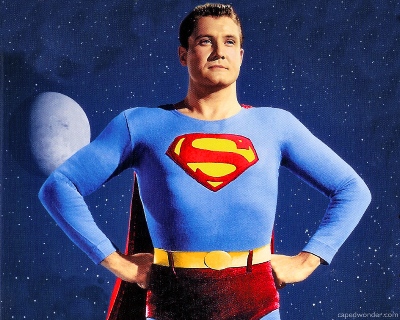
The Adventures of Superman has, of course, been just one incarnation of the most
popular superhero in history. But what was its appeal to me, as a pre-schooler?
Scholars usually go on about how little kids feel powerless and
so want to identify with this guy who can fly and lift cars and who
cannot ever be hurt. (The episode in which Superman is weakened by a
giant kryptonite meteor terrified me; I stopped watching the show
for weeks after that.)
But I don't think that was the appeal to me. My parents were not
abusive and, other than the loss of my baby sister to SIDS, I had
not yet experienced the kind of tragedy that might make me feel
powerless.
Rather, I think that even so young, I felt like an outsider. And
Clark Kent, born on a completely different planet, a man who looked
normal but had all those secret aspects to himself, was
someone with whom I could totally identify.
Why did I feel like an outsider? I have no idea I can
back up with evidence. Certainly, by five years old, no one had ever
treated me that way. Perhaps it was a bleed-through from other
lifetimes; it might even have something to do with my being
abducted by
aliens, although I only had a couple conscious memories of that
activity and neither of those was particularly unsettling, other
than the fact that my mother dismissed my experiences as "just
dreams."
However, in talking with various gay friends through the years, I
have found that pretty much all of us feel like outsiders.
Most assume it's because they knew they were gay, or at least, different,
from early childhood. (When I was in second grade, instead of talking to other kids, I
spent the bus ride home from school gazing out the bus window while picturing the boys
in my class naked.)
I watched other shows, of course. But when we moved to Florida,
our TV did not survive the trip. And so, my sisters and I were
forced to visit neighbors with television sets, such as the
Atkinsons. My sisters and I would babysit their toddlers, in
exchange for watching their TV. And that, in 1964, is where I first
saw Bewitched.
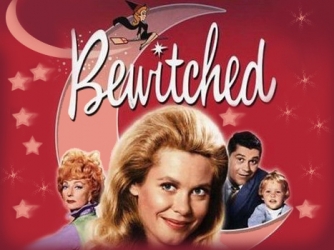
Bewitched is so gay it's no wonder that every gay man in the country loves it still,
whether on its original run, or in reruns. While straight folks
might have assumed the show was about Samantha, the witch who trades
in her broom for a vacuum cleaner; to us gay kids it was about this
secret society of fabulous people, with talents and style
incomprehensible to "mortals" and therefore kept secret from them.
Even some sports figures "came out" as "warlocks" in the series.
(Remember Willie Mays' appearance? When Darrin was astounded to see
the baseball hall-of-famer at a witches' convention, Samantha
responds, "Well, you didn't think he was an ordinary mortal,
did you?" As a 13-year-old viewer—who had no interest
in baseball, but even I recognized Willie Mays!)
This said to me that, somewhere out there, there might be a place for me in
which I could reveal my secret self.
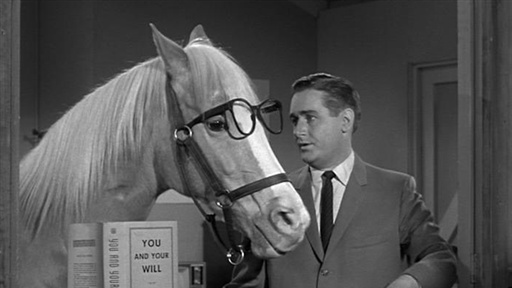
I didn't get to see Mr. Ed in its original run, for lack of a TV set. But I loved the
reruns. This was not a "gay" show; yet it featured yet another
magical being (a talking horse) and the one human who knew about him
(and who had to keep the horse's secret).
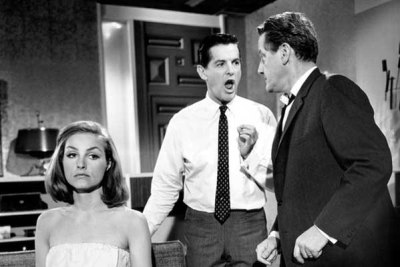
My Living Doll was considered so bad, even by its own producer, that he destroyed
the originals from many of the episodes from the show's one-season
run. Yet, I loved it. The notion of a mechanical woman who could be
made "perfect" by virtue of her doing whatever she was told, without
argument, meant nothing to me. But Rhoda (more correctly, project
AF-409) was a computer, and I am certain that my childhood
experience watching this show contributed to my becoming a computer
programmer.
Still, that Rhoda was a non-emotional computer appealed to me and
I copied her walk…publicly. And Sister Trinita, principal of my
grade school, pulled me aside to chide me for it. "I know you're a
real boy," she told me, without explaining how I could be
anything else. "But you have to walk like the other boys, or they
will make fun of you."
That's right. My grade school principal was worried by my walk.
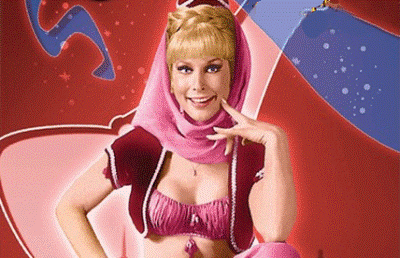
I Dream Of Jeannie, which was broadcast the same years as Bewitched,
is also commonly used as an example of gay shows. In fact, you can
buy decorative Jeannie
bottles right now, if you wish; they are made by the original
designer, who is, of course, a gay guy. But while Jeannie also was
an example of a secret society of super-powered people, they were
mostly Jeannie's relatives and were presented more as foils and
villains than as cool people. I watched, but never fell in love with
the series as I did with Bewitched.
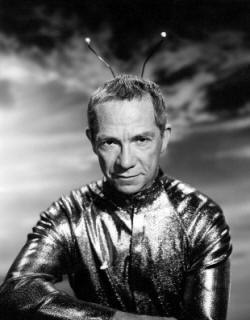
Then there was My Favorite Martian. From the same producer as My Living Doll,
Jack Chertoff, the show was about yet another magical
(alien) being on Earth, known to a single earthman who had to keep
the alien's presence a secret.
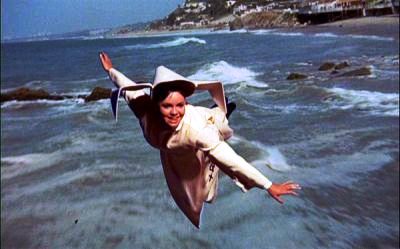
And by this time, there was a pattern that even my young, unsophisticated self could see. It
was to show up again and again: Someone (a horse, a Kryptonian, a Martian, a nun,
a witch, a genie) had special powers that became known to a
confidant, who then had to keep the secret. There were various
reasons given: Cosmo Topper and Tony Nelson didn't want to lose
their jobs; Darrin didn't want to win customers by any means other
than his own creativity; Tim O'Hara didn't want his Martian friend
to be dissected. Not even the Convent San Tanco wanted to risk the
"publicity" that would come if the fact
that one of its novices, Sister Bertrille, could actually fly
when the wind was right.
So, what got hammered into my head over a period of two decades,
was the idea that, if there was anything special about
me—for example, my attraction to other boys but also my
developing psychic abilities, and the occasional mysterious visits from
aliens—it must be kept secret, to be shared only with one other
person, who must be very carefully chosen for his or her ability to
keep that secret.
This concept probably kept me out of any amount of trouble while
I was growing up!—But it also, inevitably, exacerbated my feeling
of being an outsider.
The popularity of these shows (most of them, anyway) has always
been attributed to the "Eye of the Other". That is, these shows
provided a forum for an outside perspective on the human condition.
The fun-loving ghosts of Topper pointed out the futility of living a
repressed life only to guarantee continued access to material goods.
Mr. Ed was always good for a pointed barb directed at humanity
("Don't yell at me, Wilbur, I'm not your wife!") as was the Martian
("You Earthlings don't know how lucky you are. The only water we get
on Mars has to be squeezed from rocks.").
But I maintain that we all, gay, straight and in-between
have "powers" we keep secret. Some straight guys enjoy cooking but
keep it a secret because they were brought up to believe that
cooking was woman's work. Many people are psychic but have
learned it makes their friends nervous, and so keep their
perceptions to themselves. And how many girls were taught not to be
"tomboys" even when outdoors play was their preference?
In fact,
A lot of this is changing, of course. These days, only the
most backward of Americans would punish their son for expressing an
interest in cooking or fashion, or their daughter from participating
in sports. And I know a lot of younger straight guys who have
absolutely no intention of suppressing their talents, no matter what
they may be. By the time my grandchildren grow up, there may be no
greater percentage of gays who are hairdressers than mechanics.
And that will be a good thing. No one should have to hide
his or her self from the world. We Earth people need every talented
person we can find. And the fact that 90% of the population is
heterosexual should not stop non-gays from letting their lights
shine, too…Even if they no longer have the
Kirbys, Clark Kent, Jeannie, Rhoda, Uncle Martin, Sister Bertrille,
Samantha, or even a talking horse to guide them.