|
By: Paul S Cilwa |
Occurred: 10/31/2015 |
|
Page Views: 559 |
| Hashtags: #WhiteTankMountainRegionalPark #Hiking #Arizona #Travel |
| All the photos from today's hike in White Tank Mountain Regional Park. |
| Estimated reading time: 3 minute(s) (524 words) |
Waterfall Trail is just a mile long (and one-way; you'll be retracing your steps to
return to your car), and there is no great change in elevation, so it counts as a middling-easy hike.
After refreshing ourselves in the facilities, we paid our $6 admission fee and proceeded
into the park.
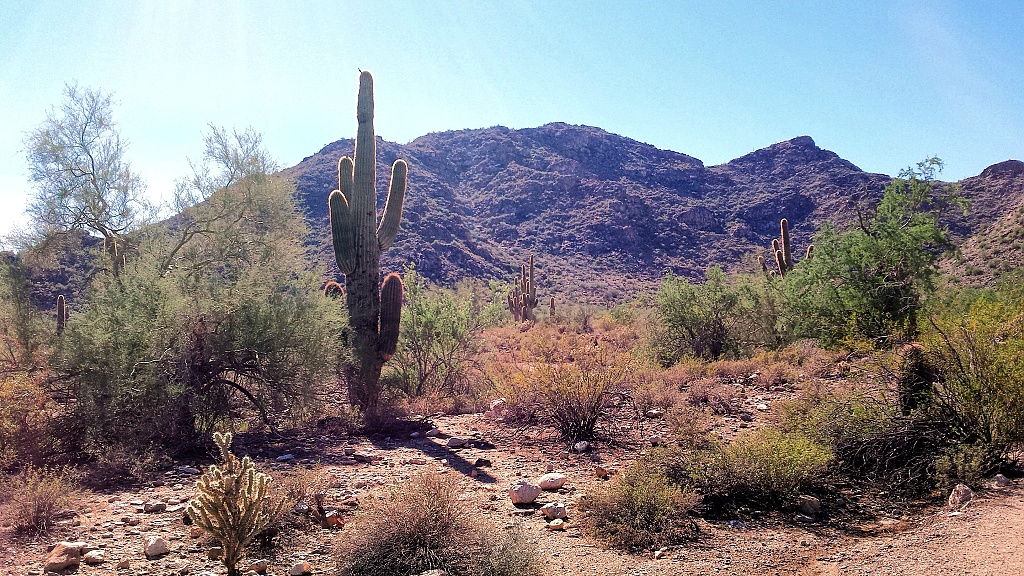
The parking area for Waterfall Trail is clearly marked, and includes a clean,
water-flushed restroom. (Many restrooms in Arizona are pit or vault toilets to
accommodate the fact that this is, after all, a desert.) The trail is also clearly marked,
and the first 4/10 mile of it is broad and accessible to people with disabilities as
it's wide and flat enough for a wheelchair or electric scooter.
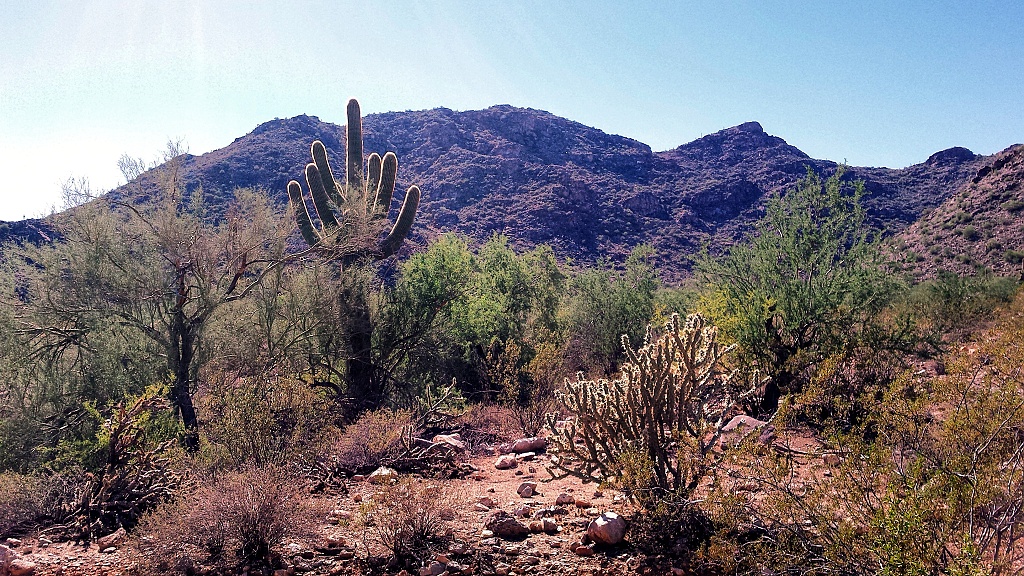
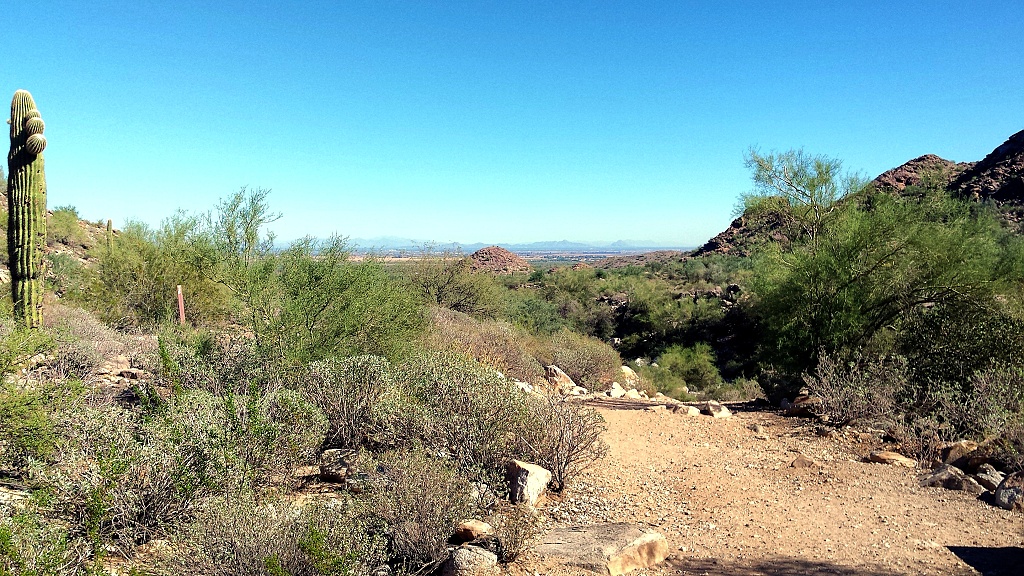
The air was unusually clear today, probably because of rains we had yesterday and the
day before. That gave me hopes the waterfall at the end of the trail would actually
be running. But whether it was or not, the view in every direction was nothing short
of spectacular.
About 500 years ago, the Hohokam people lived here. They liked to draw on rocks.
.jpg)
But they weren't the first. Earlier peoples, called today Meso-Indians. Some of the petroglyphs
are theirs, but most are believed to be Hohokam.
.jpg)
The Pima Natives now indigenous to this area gave the Hohokam their name, which means something like
Used Up People.
.jpg)
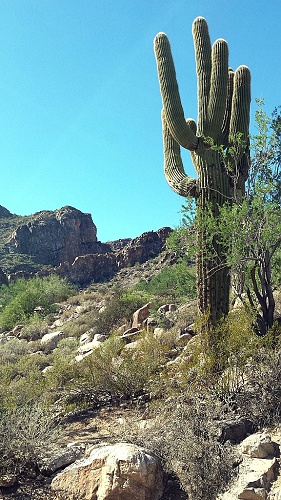
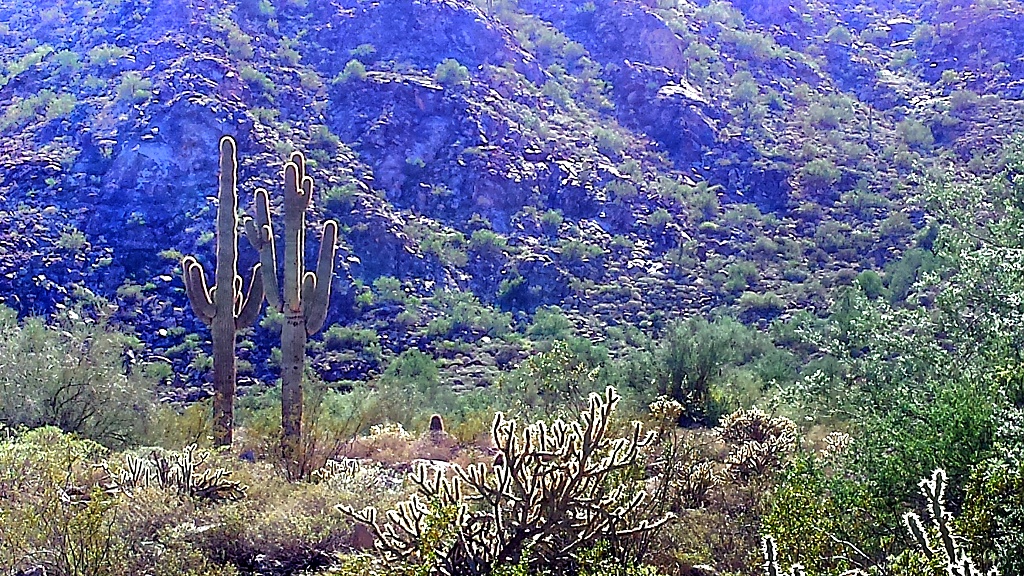
The hillsides are simply dotted with saguaro, enough to possibly count as a saguaro
forest.
.jpg)
.jpg)
But then the more sedate nature trail came to an end, with the final 6/10s of a mile
getting steeper—not very steep, but steep enough to discourage most wheelchair
drivers. The trail also narrows somewhat, as the walls of Waterfall Canyon start to close in.
.jpg)
Well, the waterfall was dry again this time (as it's been every other time I visited). The
only water left after the rain was in the basin at the foot of the dried cascade.
Keith found a wavy-line petroglyph. "It's not a snake," he said. "There are snakes all
over the place here, and wouldn't have required attention enough to make all that carving
worth the effort. It's actually a warning that a dragon lives here. Dragons are known to live
in pools of still water."
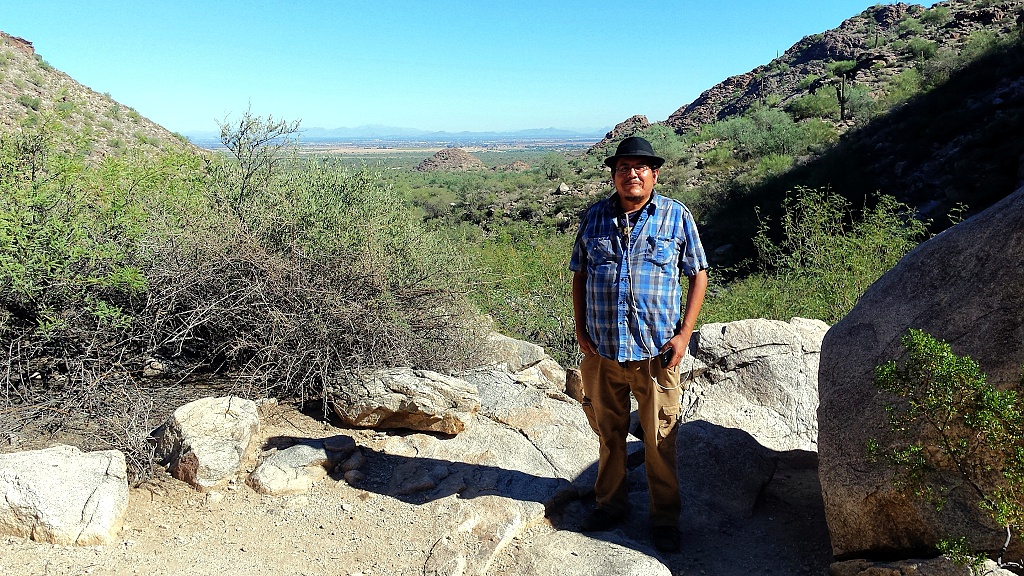
As a Navajo, Keith is privy to lots of information that anthropologists haven't thought
to ask. He was quick to point out, however, that Navajo are not indigenous to the Phoenix
area. Still, there are many concepts that were generally known
to the pre-Columbian peoples who lived across the continent.
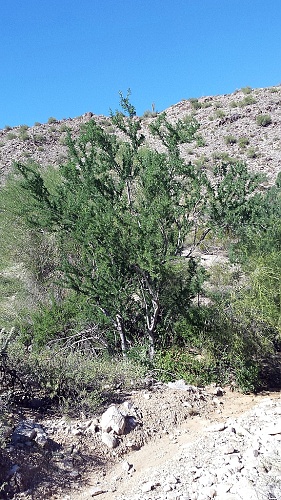
This is an ironwood tree. It's one of the four major types of tree in the White Tanks.
The others are the green-barked palo verde, the sticky creosote, and the prickly
saguaro, which is also our state tree.