|
By: Paul S Cilwa |
Occurred: 2/21/2009 |
|
Page Views: 1,830 |
| Hashtags: #Places #Photography #BoyceThompsonArboretumStatePark #Arizona |
| A visit to one of Arizona's lesser-known gems. |
| Estimated reading time: 5 minute(s) (1125 words) |
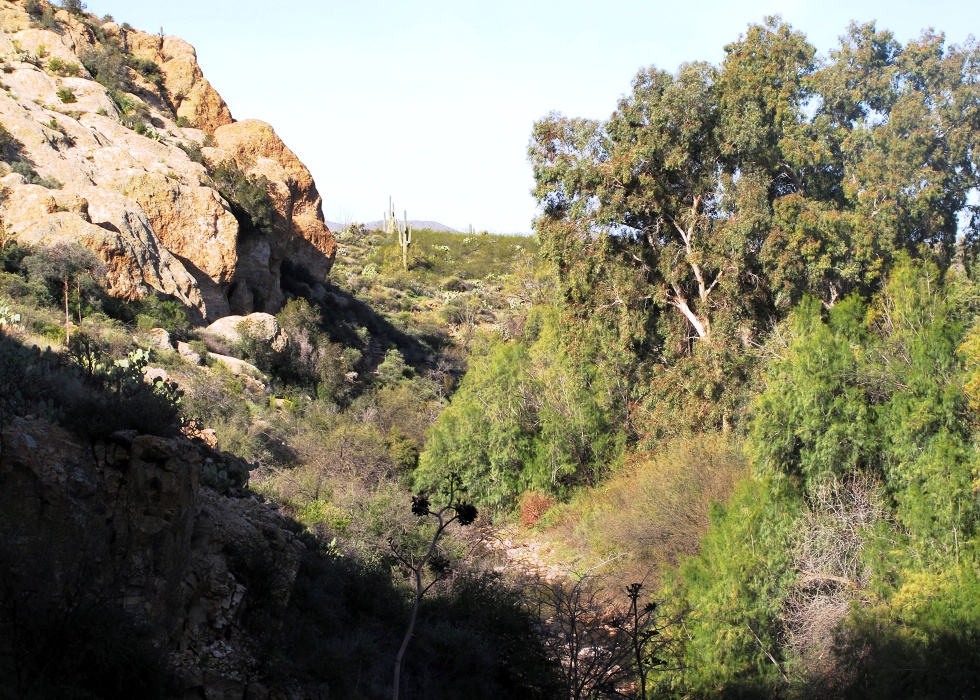
Looking over the place, it doesn't much look like a garden. In fact, it looks pretty wild.
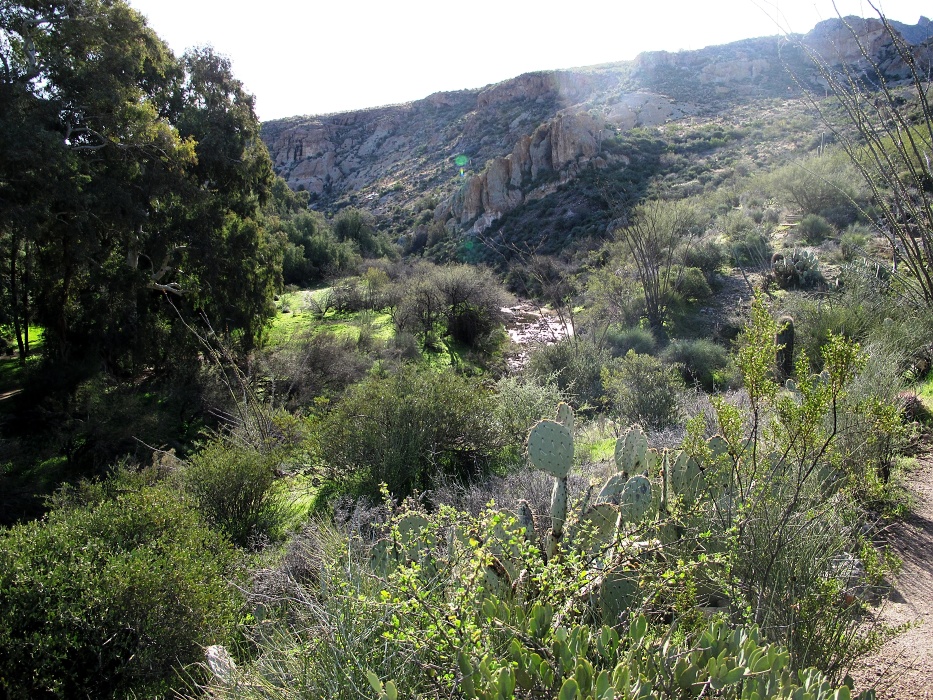
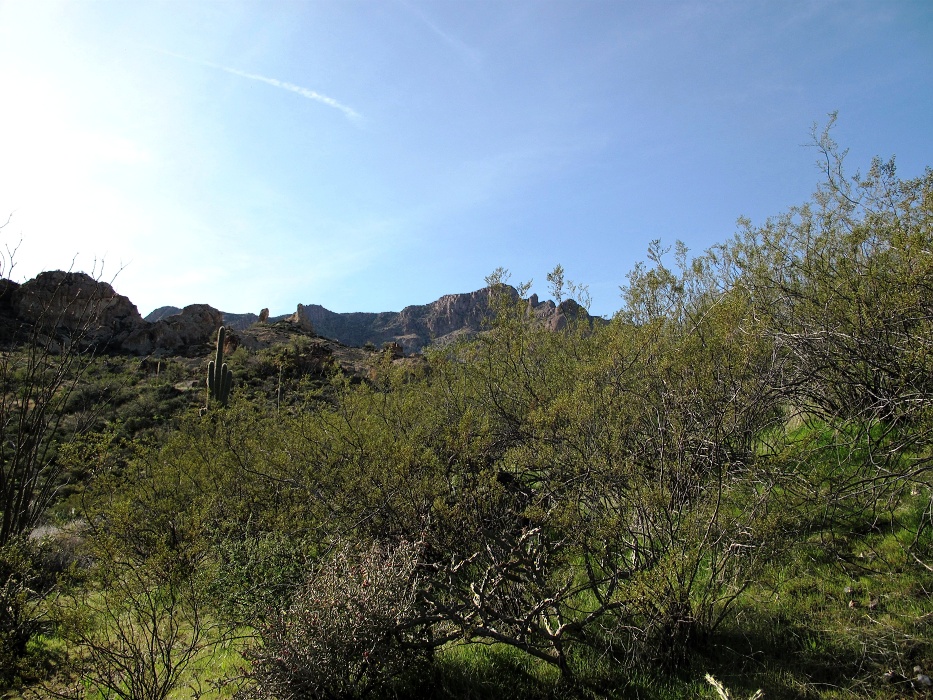
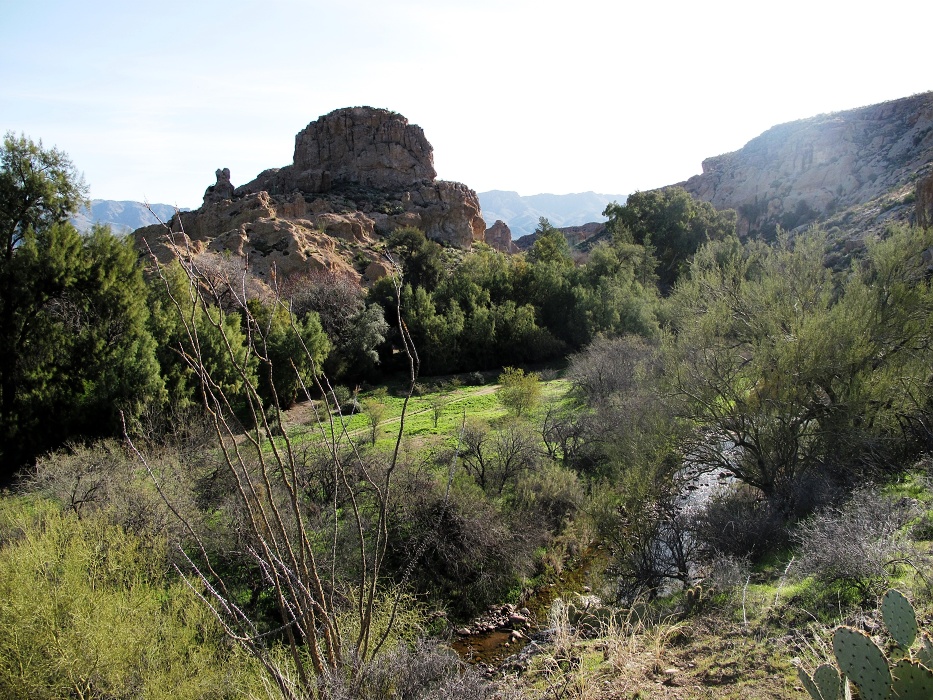
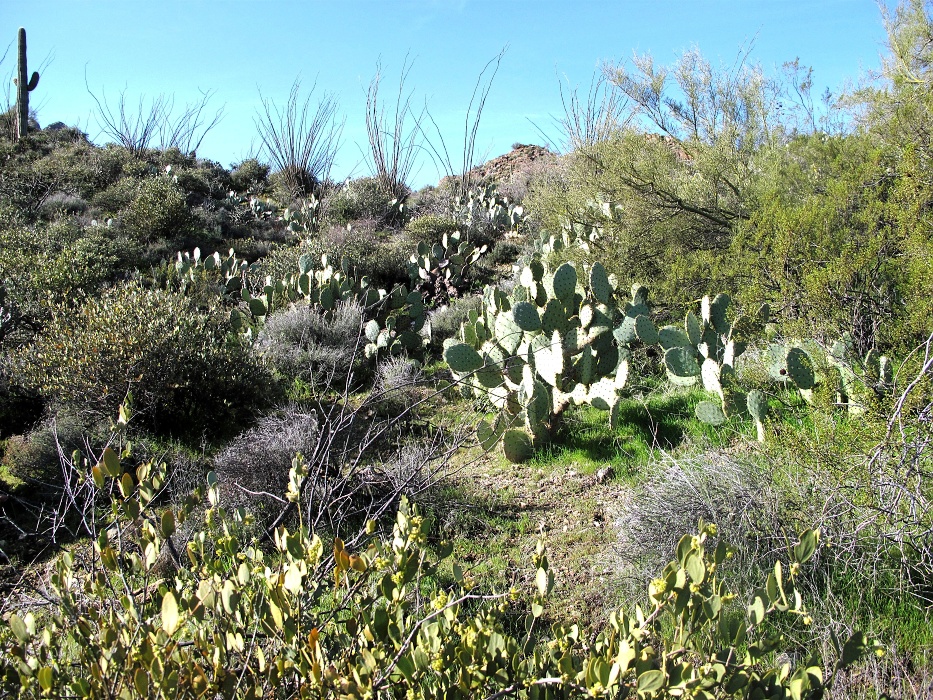
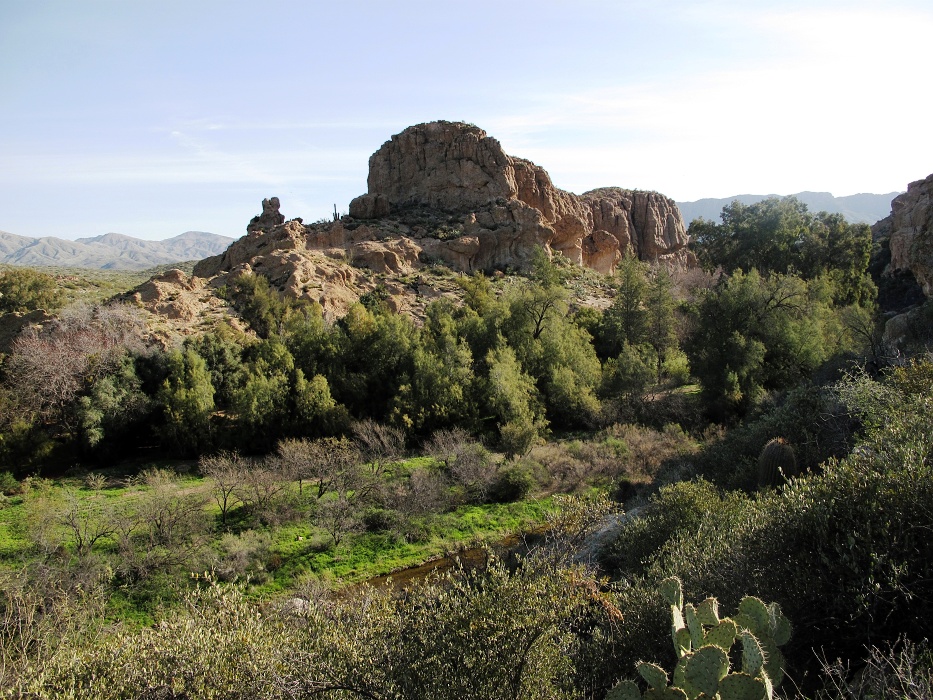
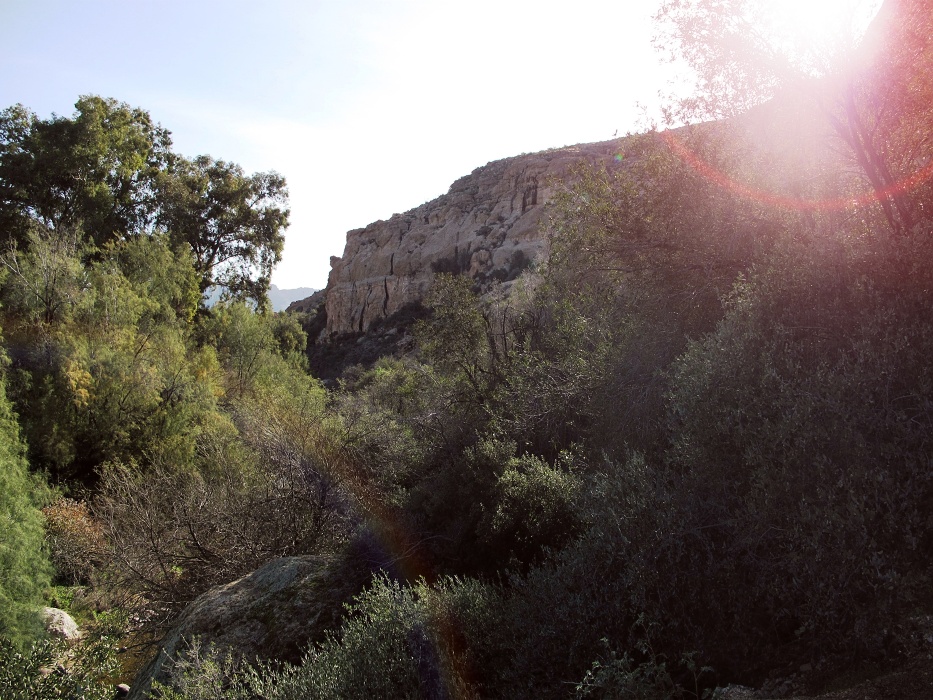
The place was amazingly green, something we don't usually see in Arizona. I
suppose it was because of the unusually wet winter we've had. In fact, it rained
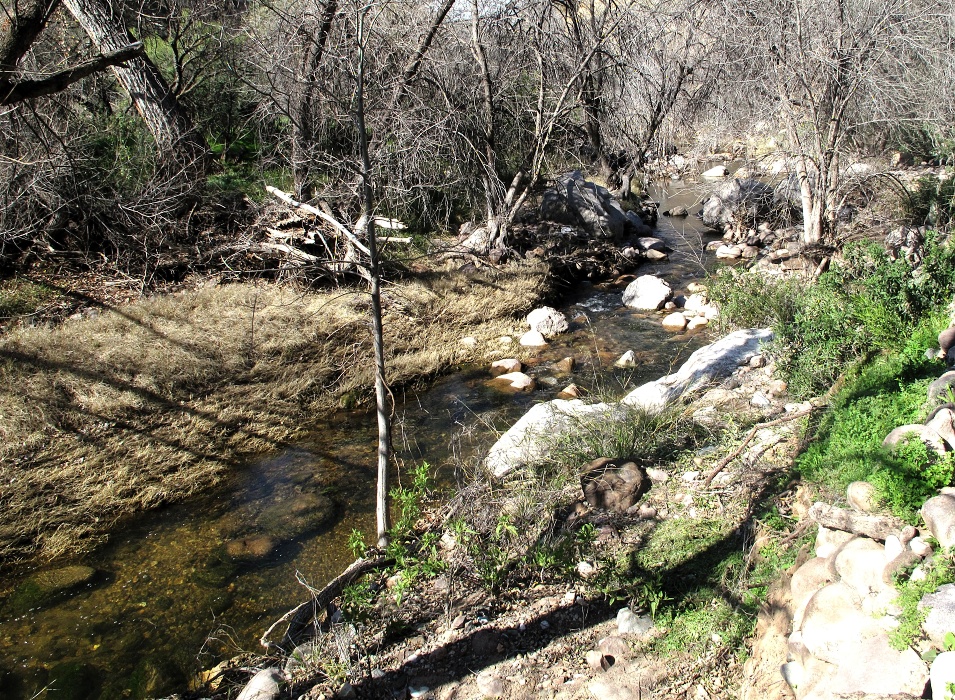
just a few days ago and Queen Creek was definitely running; the park people had
thoughtfully placed stepping stones across it to accommodate a relatively dry
walk to the "High Trail".
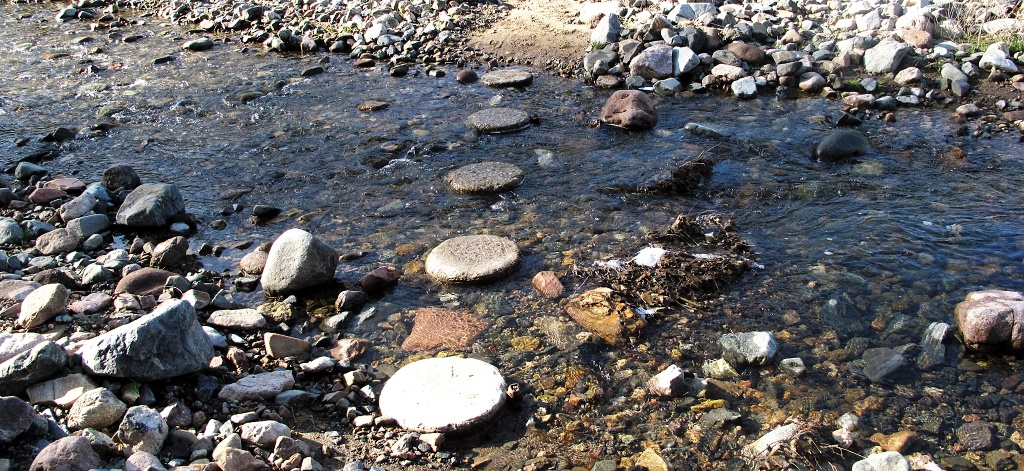
Therefore crossing was a piece of cake.
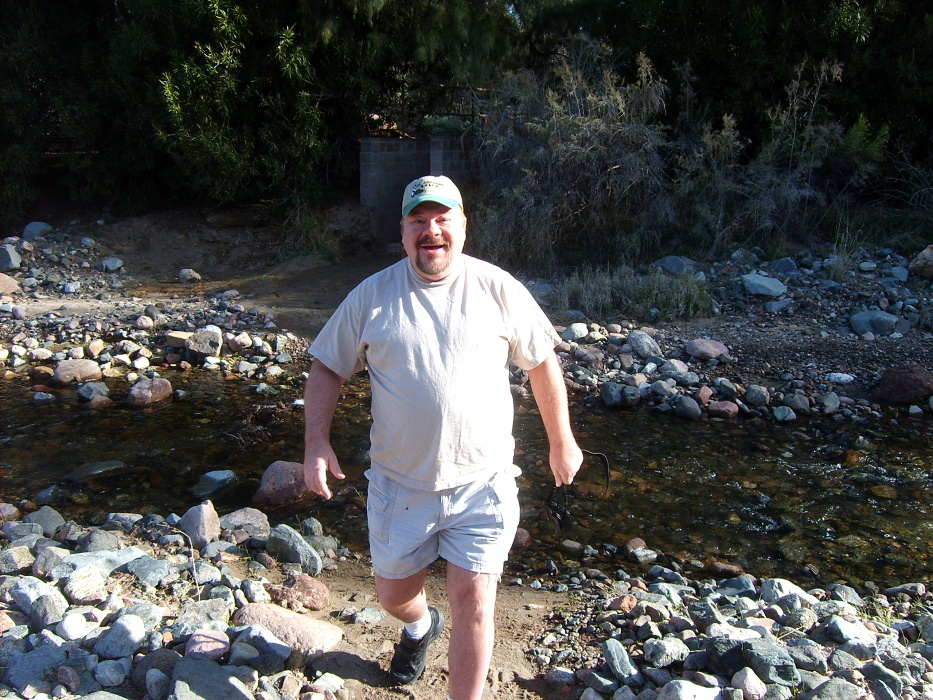
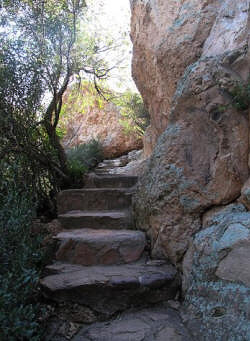
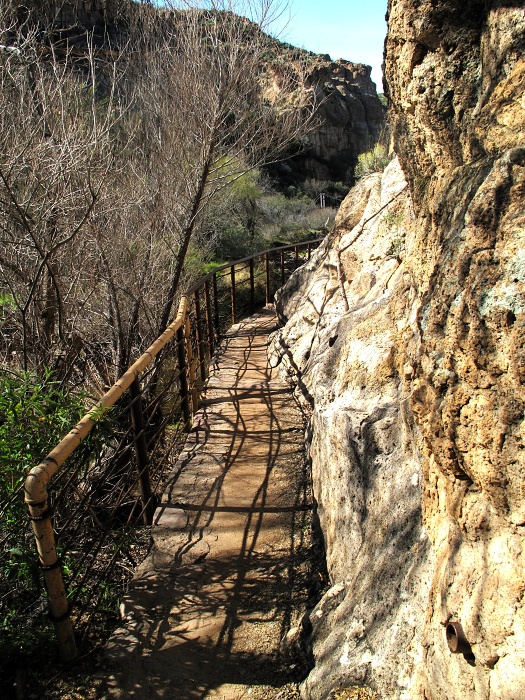
The High Trail isn't all that high, and not too steep. I would guess it's
probably equivalent to walking up three flights of stairs. (There are more level
trails for those who prefer them.) In fact, steps have been cut into the
steeper sections—something that wilderness purists might frown on. but families
with kids and/or dogs (dogs are welcome, as long as you keep them leashed and
pick up after them) will appreciate them.
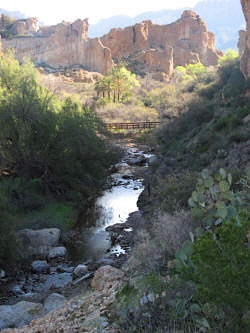
The reason to take the High Trail is, of course, to look down on the park. As I
said, it was unusually green this morning, and I should mention that the green
isn't due to anything so un-desert-like as lawn grass. As near as I could
tell, it was mostly native plants exuberantly enjoying the recent moisture.
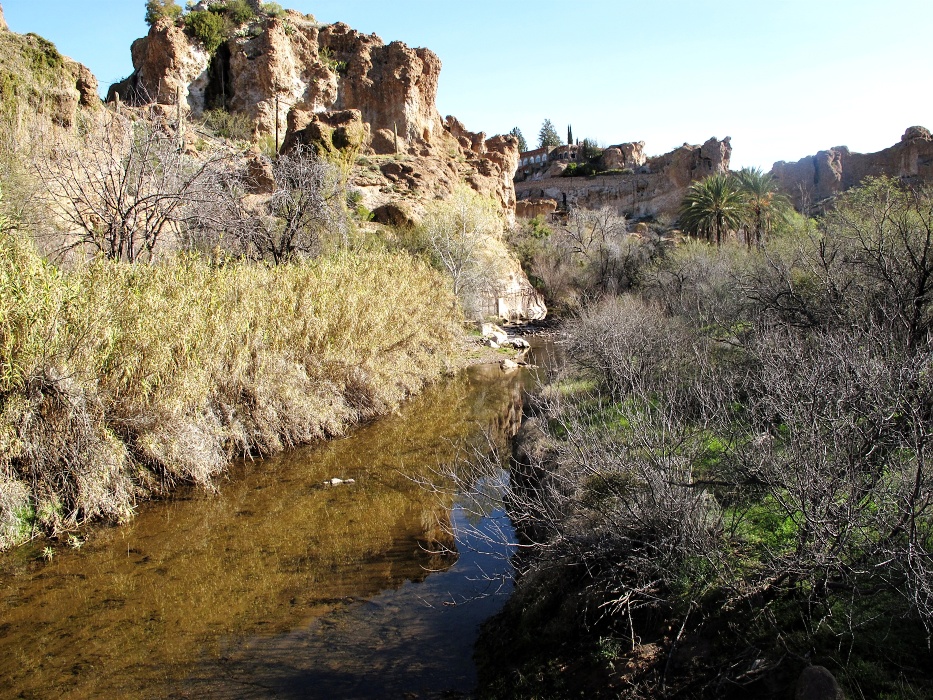
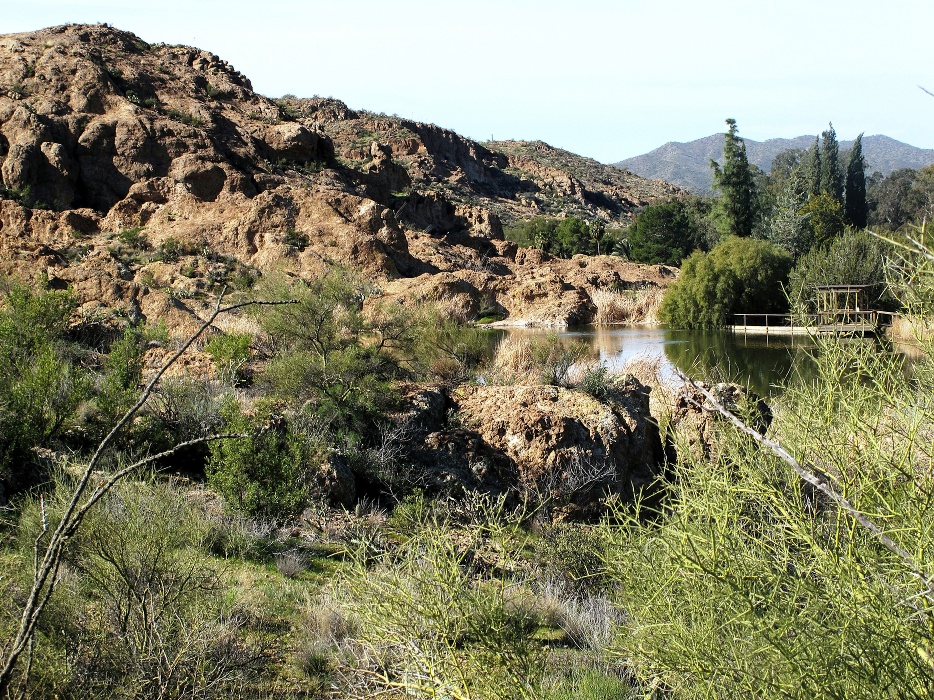
Queen Creek, which gives its name to a whole town some 30 miles downstream, runs
through the center of the Arboretum. It's picturesque and provides an unexpected
mirror at almost every turn. I suppose it dries up in summer or autumn, but it
was certainly running now, at times leaping over stones, at others reflecting
the mountains and sky like a perfect looking glass.
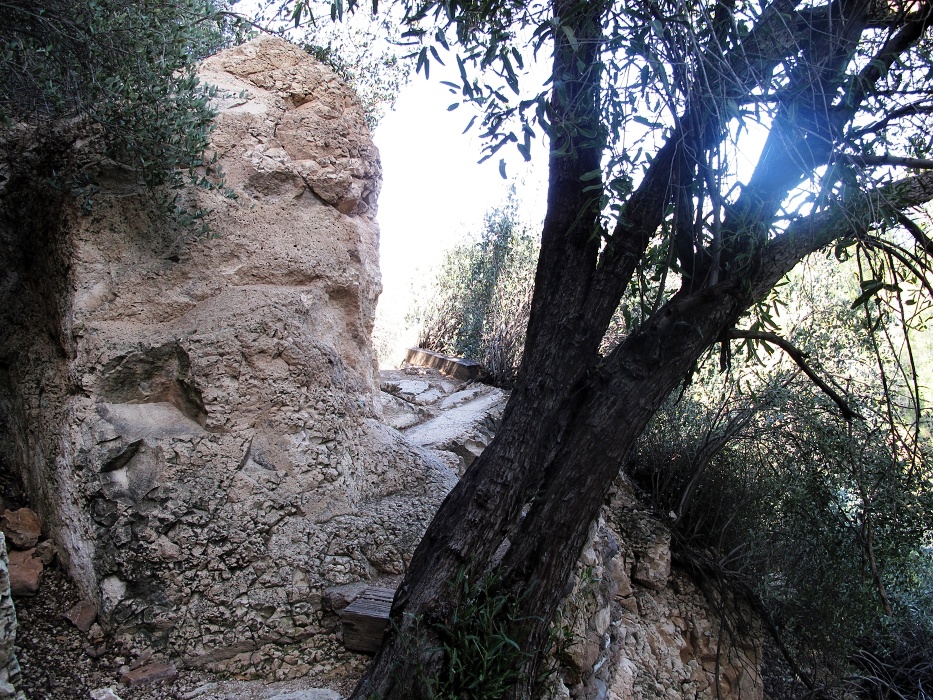
At that time of day, most of the trail was in cool shade.
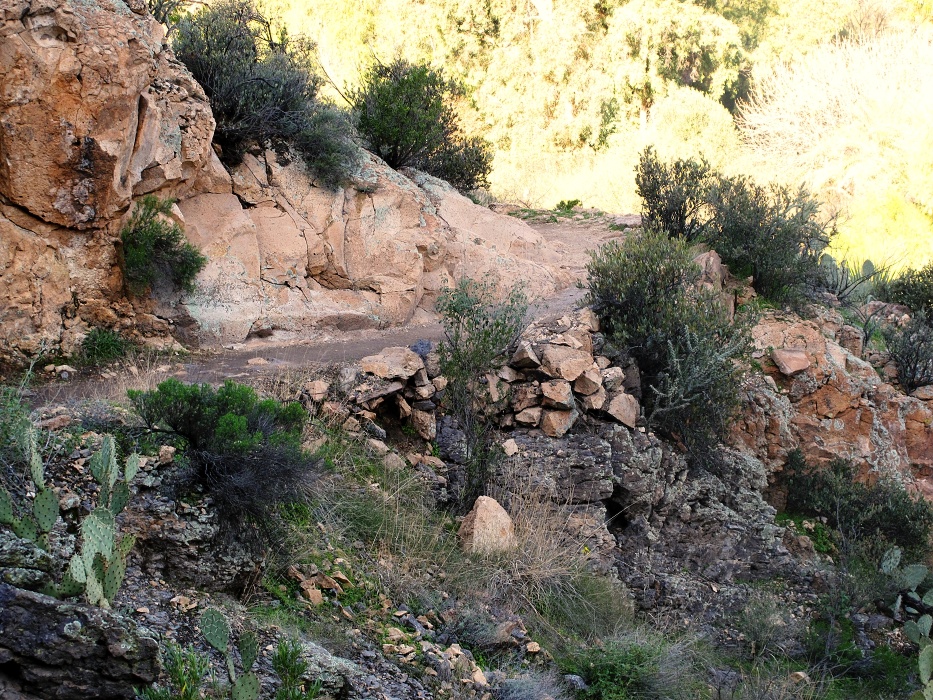
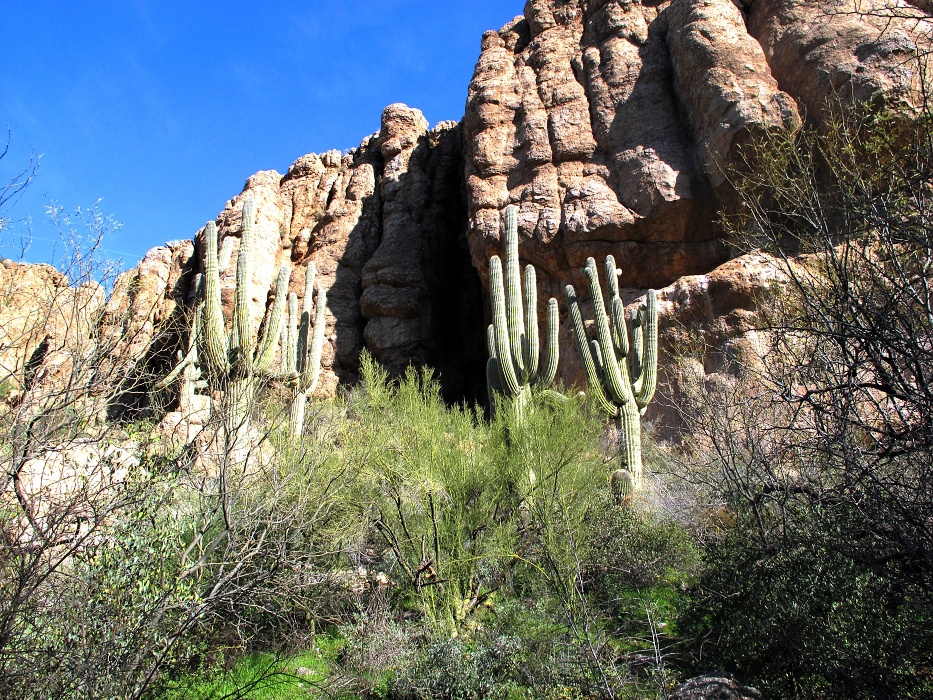
After coming down from the high section, it's only natural to turn
around and look back up.
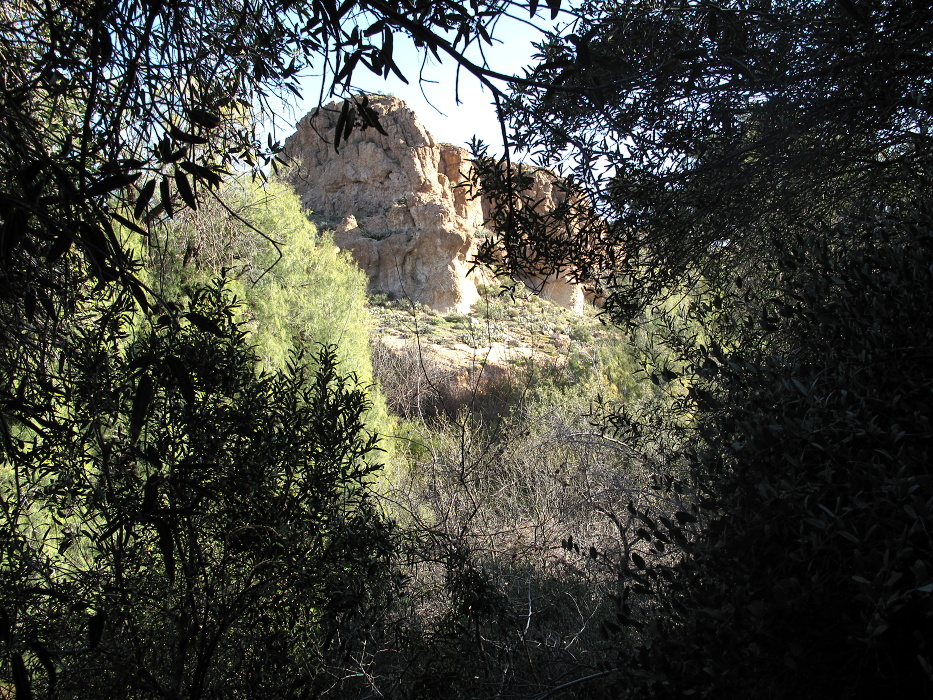
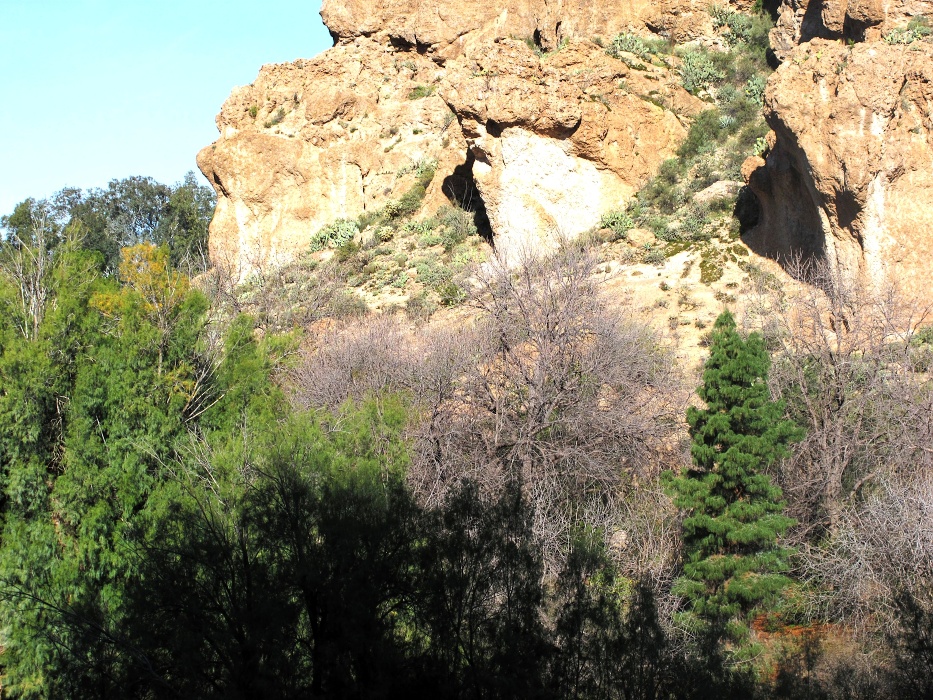
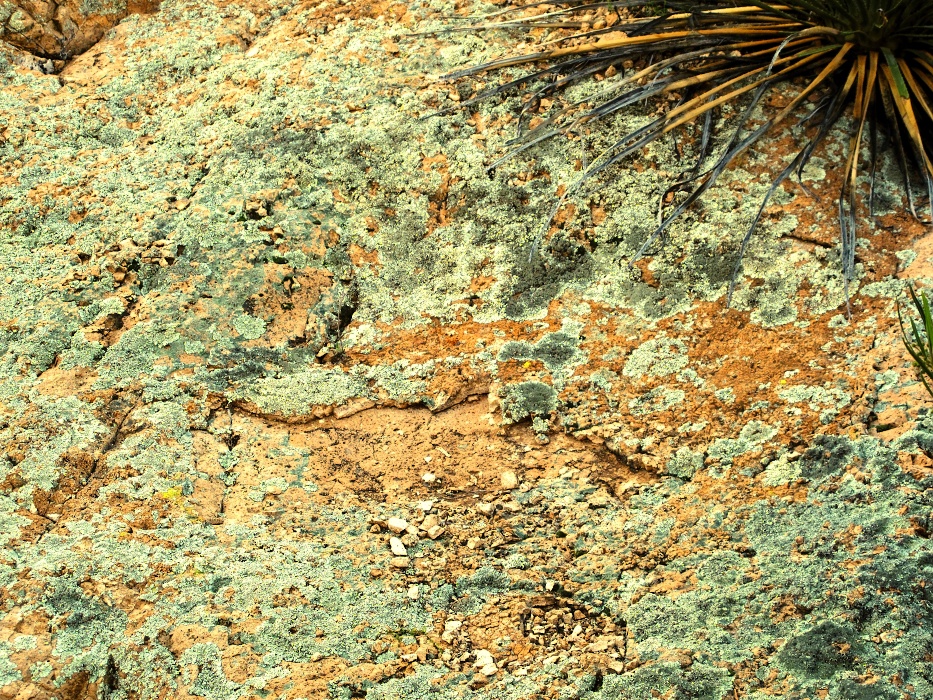
Many of the rocks were reddish (due to high iron content) and some were
nearly coated with green lichen, making an interesting contrast.
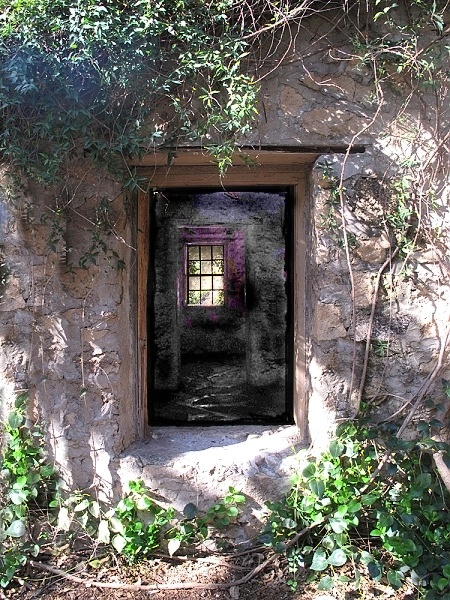
There were a number of buildings I didn't enter this trip, because I had a
limited time to hike. But next trip I'd like to enter the greenhouse
and see the "demonstration garden". There was also a little two-room
stone hut that had been built in the late 1800s by a homesteader.
When Boyce Thompson bought the property, he restored the hut to be a
playhouse for his children. Now it provides an interesting shadow
box effect, which my camera couldn't quite capture. But I tried.
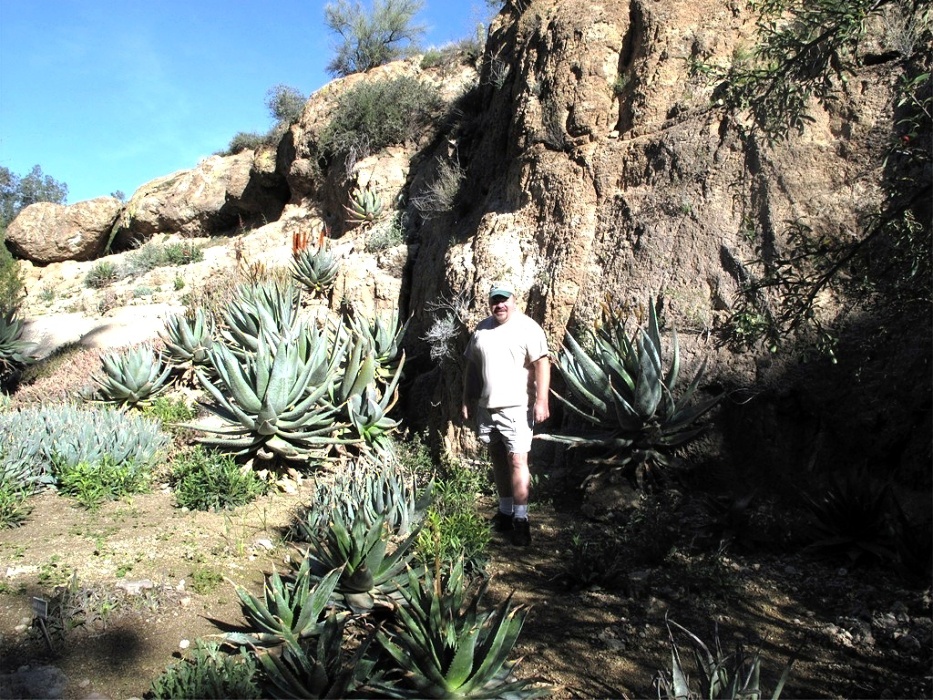
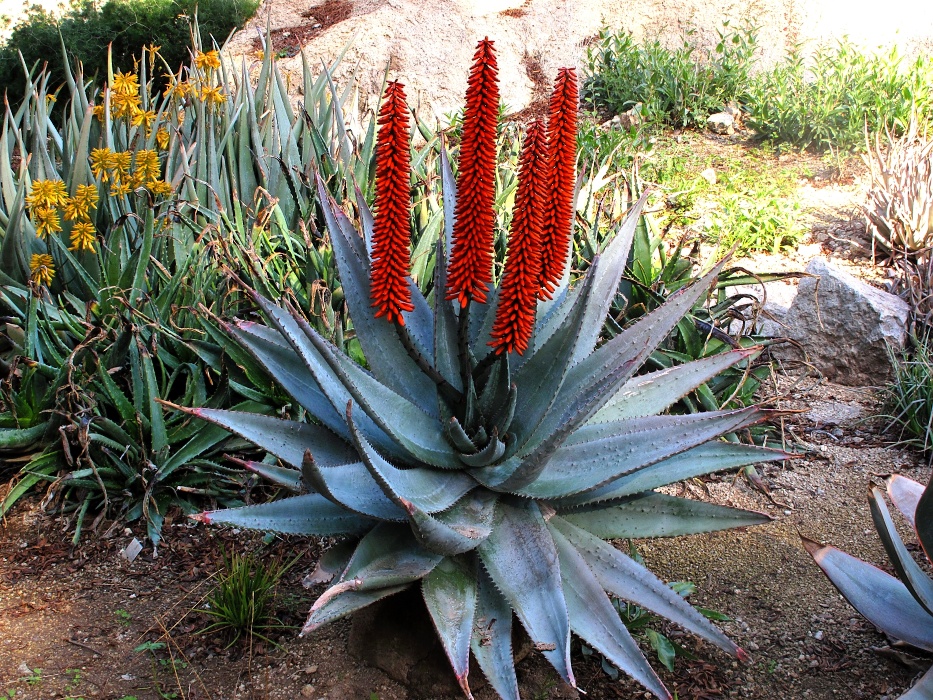
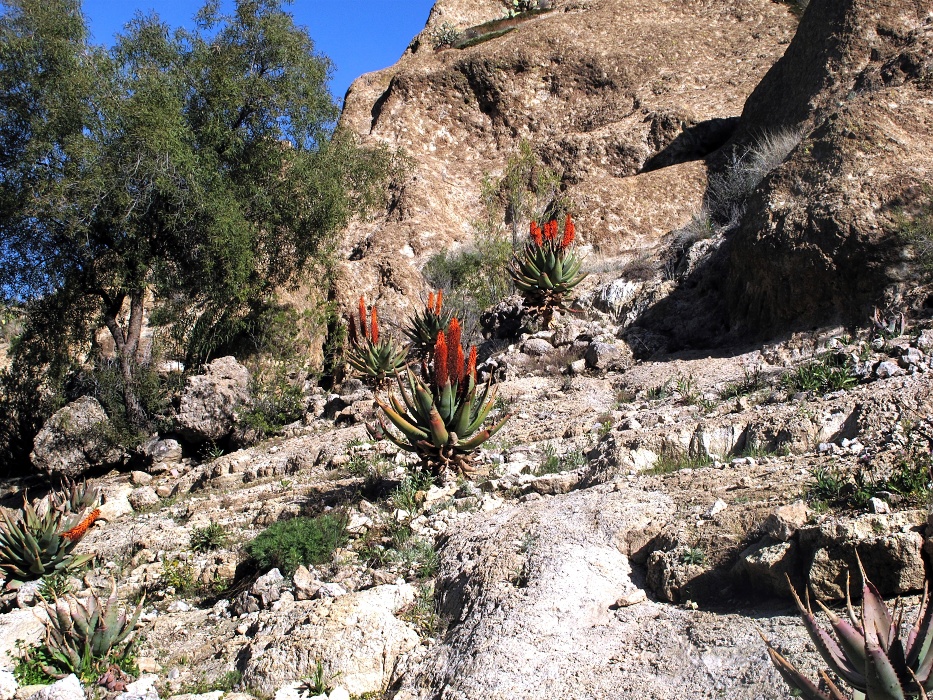
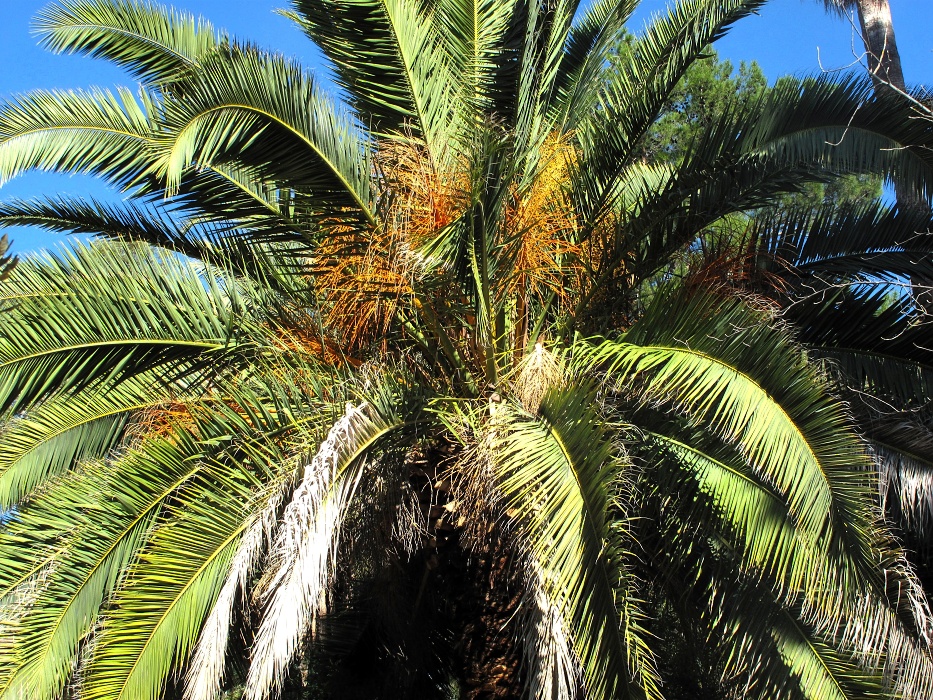
Nestled in the center of the grounds is a more park-like garden.
There's cropped grass and trees, with flowers around them. Even
though this is still central Arizona, the combination of altitude
and the presence of Queen Creek makes this a "riparian environment"
so the grass, flowers and trees are completely appropriate.
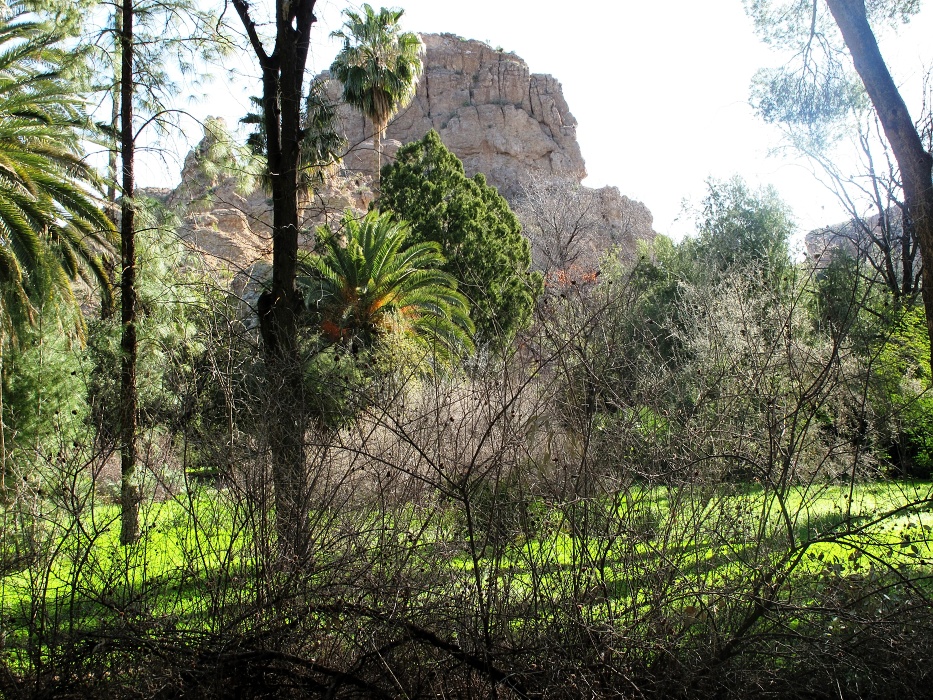
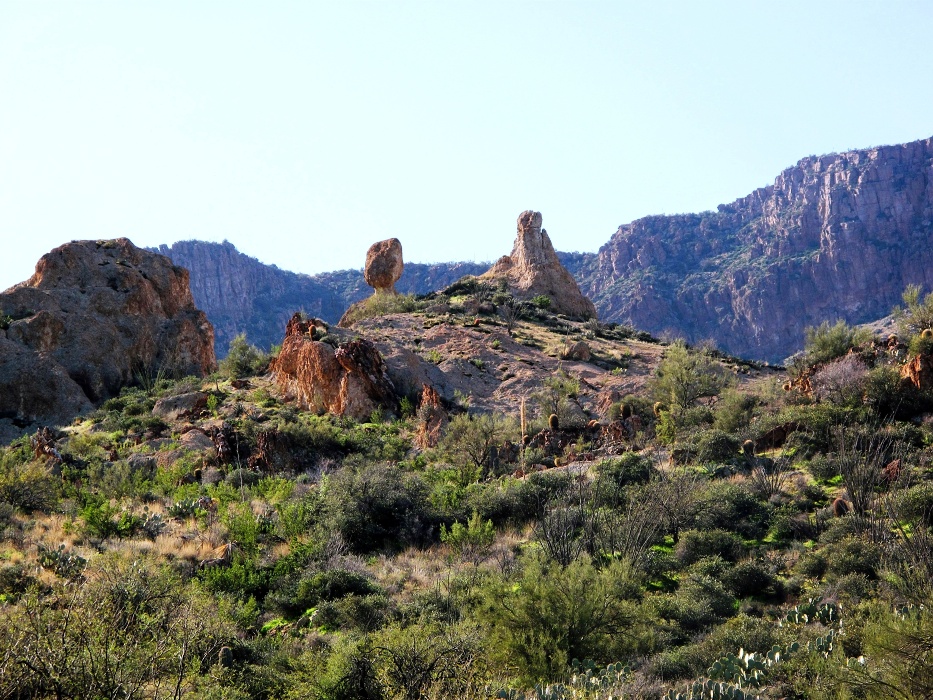
One of the reasons Arizona is so beautiful, is the contrasts visible
within a relatively small area. In one view, such as the one above,
you can see lush plant life and a barren massif at the same time. Or
you can turn around and see intricately-shaped rocks, boulders, and
hills of many colors, somehow turning chaos into beauty.
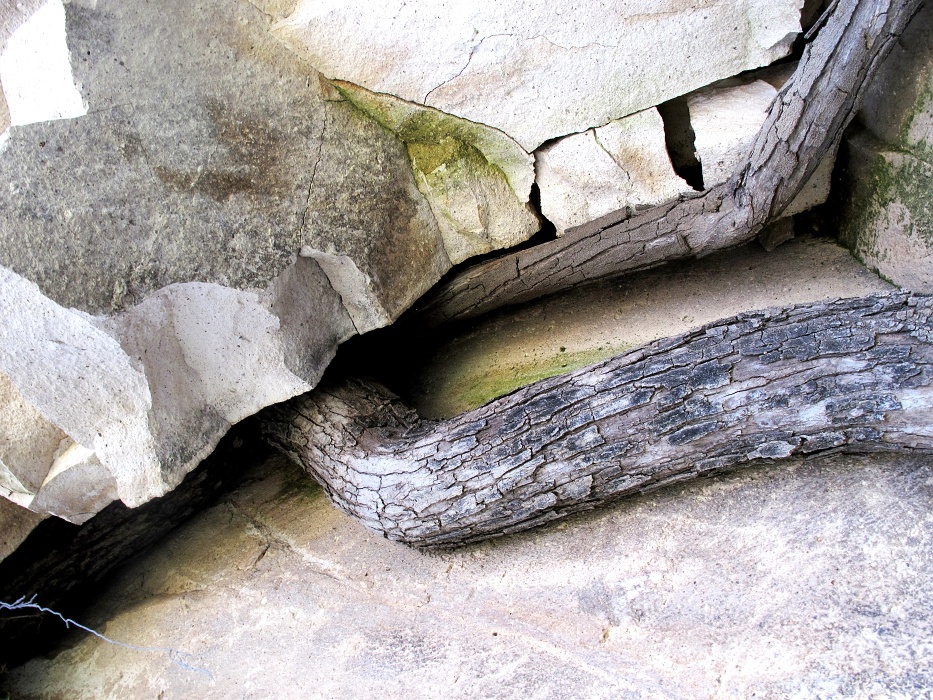
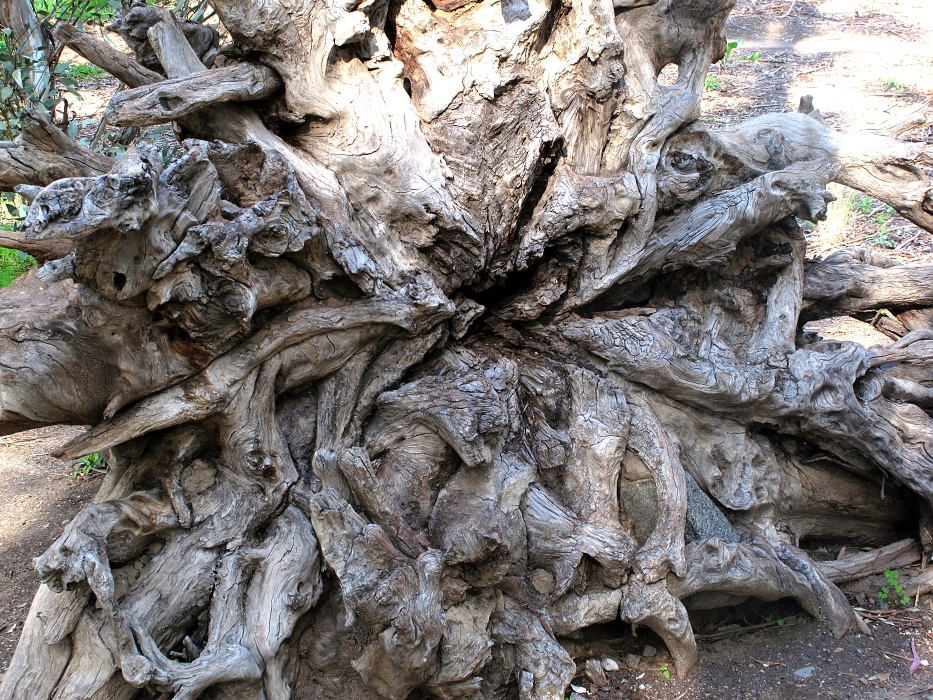
I was fascinated by the textures of the place. Nothing was smooth;
everything was intricate. For example, a tree had overturned some
time in the past, revealed its very involved root system.
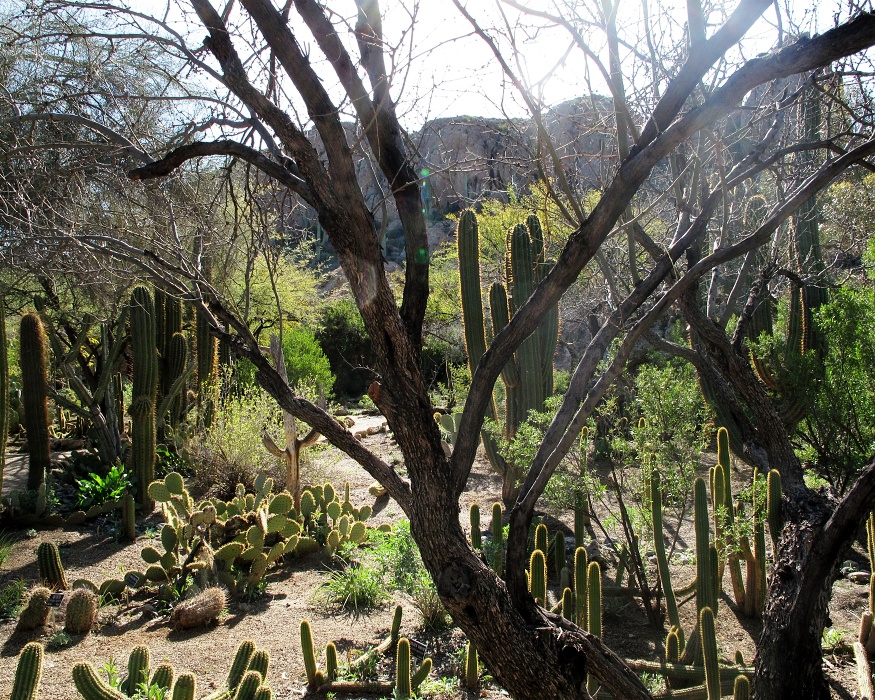
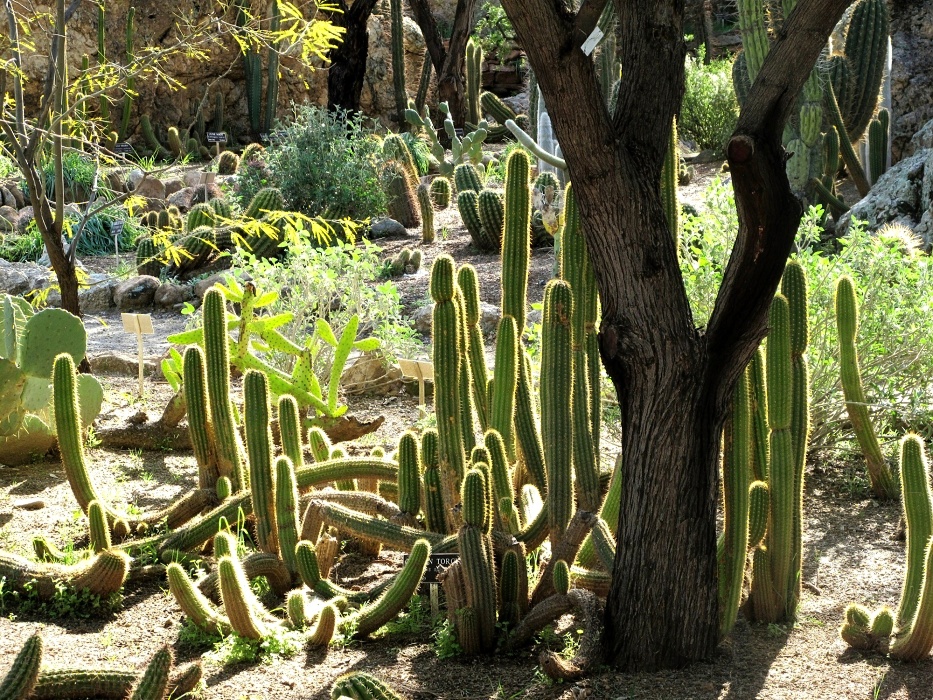
The sun was still low enough that I could get backlit shots of cacti
and other plants, and I was delighted that my new camera had no
problem capturing the detail in both shadow and light aspects of the
scene.
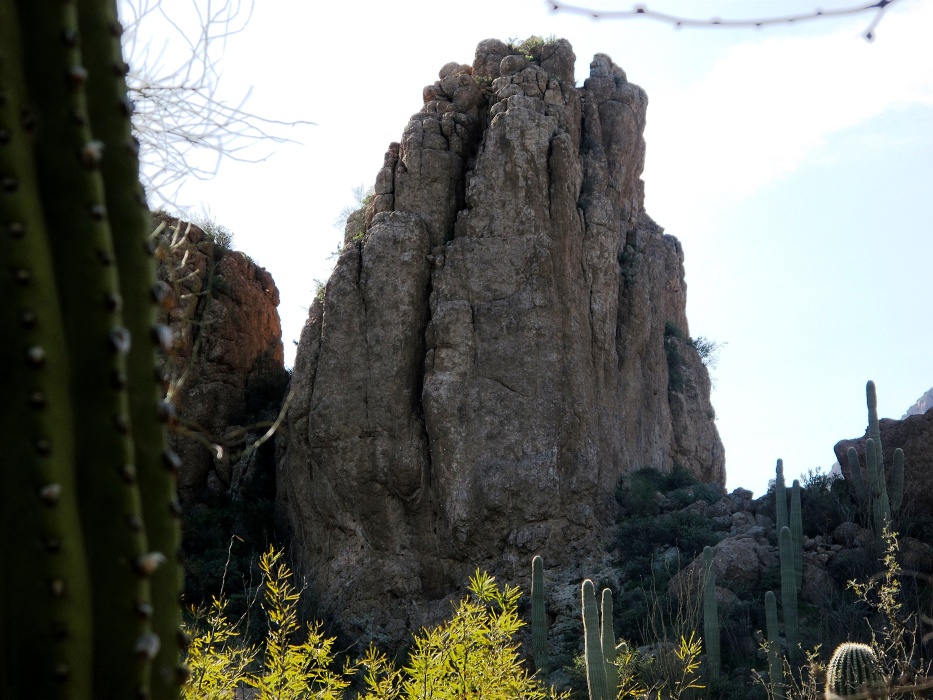
Some of the rock formations reminded me of the
Garden of the
Gods in Colorado Springs, Colorado, though of course they
weren't the same color.
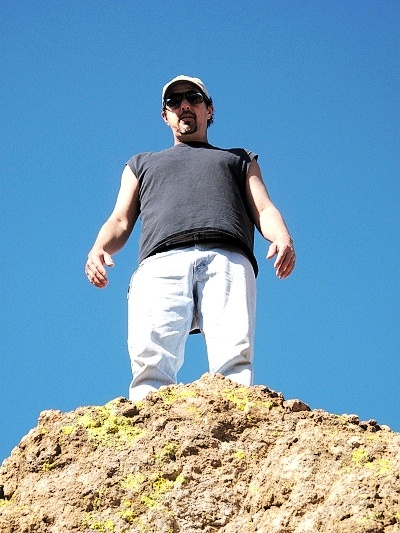
Along the way I met a guy from Superior named Ron. Ron has an annual pass to the
Arboretum and I gather he gets his money's worth from it.
Ron liked climbing and effortlessly clambered up a rock where I took the picture
at the left. I could've made the same climb but then I'd be blogging this later
this week probably from a hospital bed.
Ron strolled along with me for awhile. He knew where everything
was, and all the stories behind. He also generously waited as I took
photo after photo. He had his own camera and was doing the same,
though he'd been so many times there wasn't much new for him to
capture.
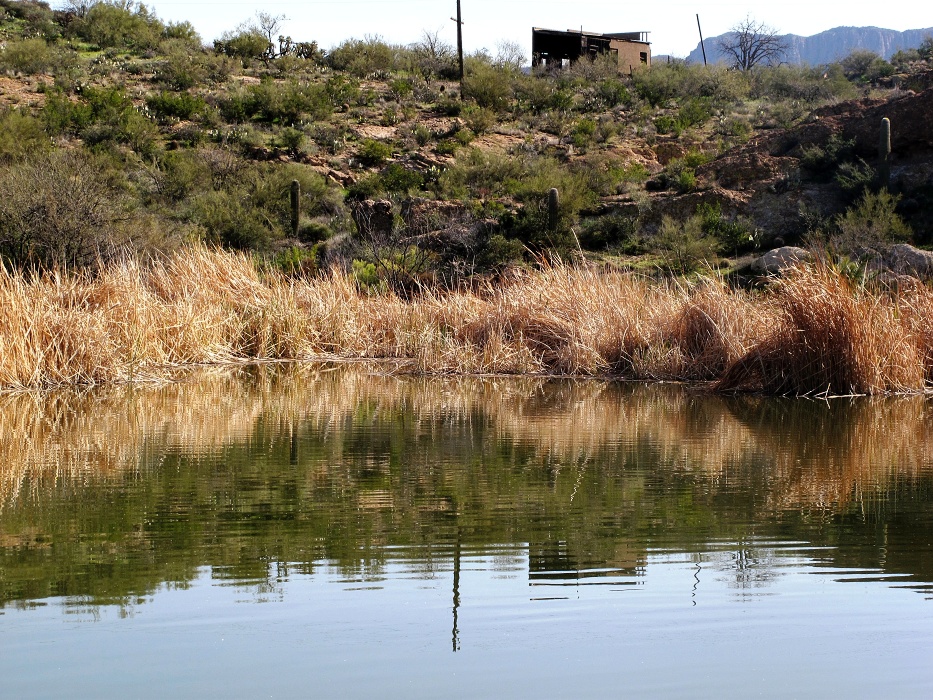
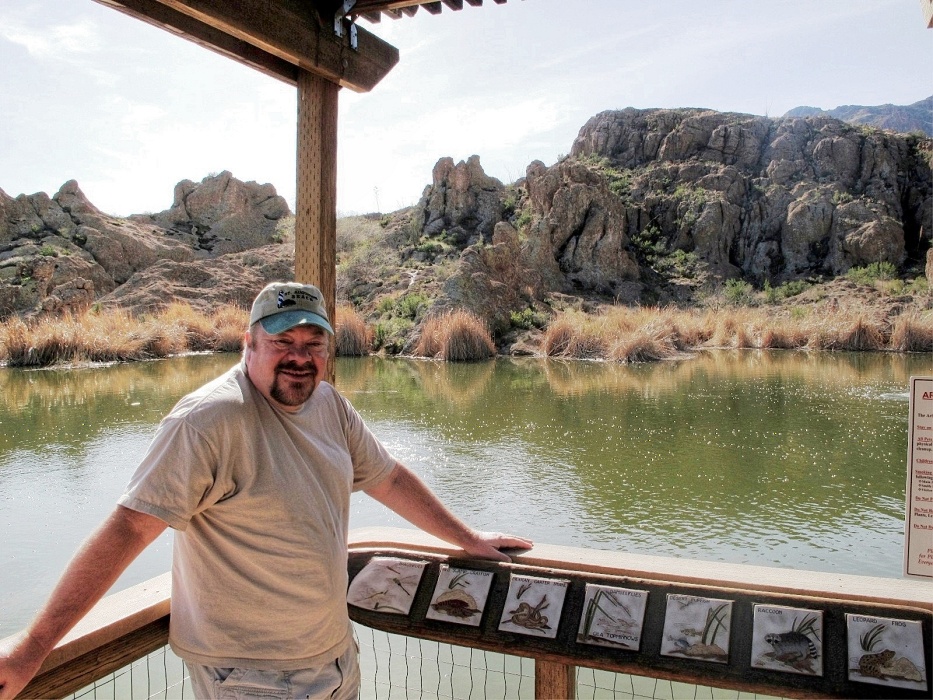
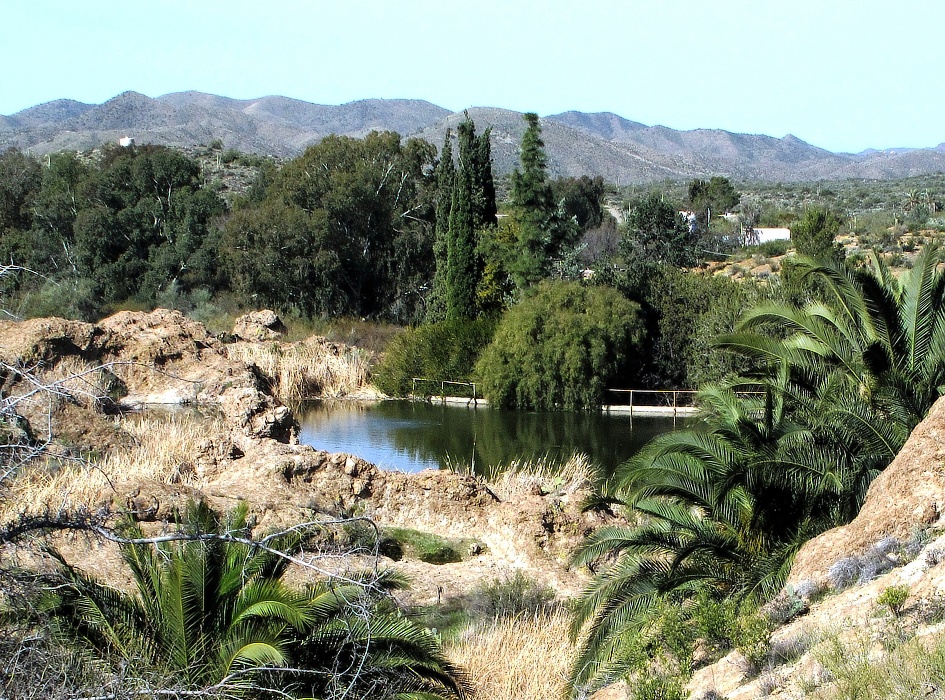
At one point Ron gestured and said, "Ayer Lake is that way."
Because I couldn't hear the spelling, I was puzzled. "A lake of…air?"
I asked. But it turned out to be a little pond punctuating Queen Creek.
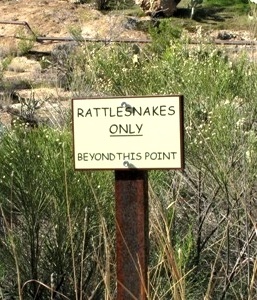
Another trail brought me to a slightly higher elevation. A sign warned to
stay on the trail to avoid rattlesnakes.
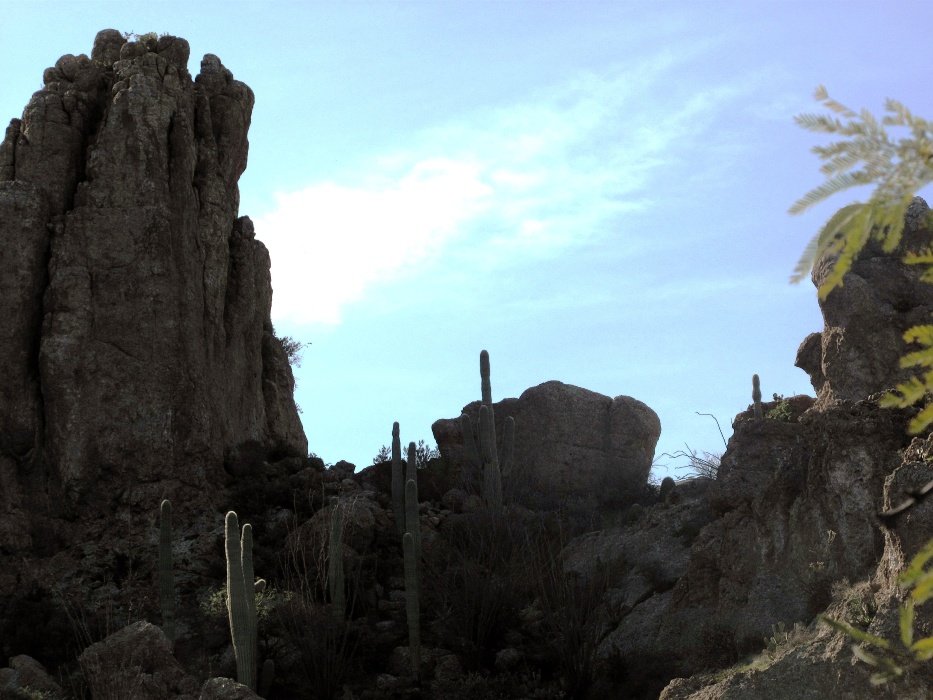
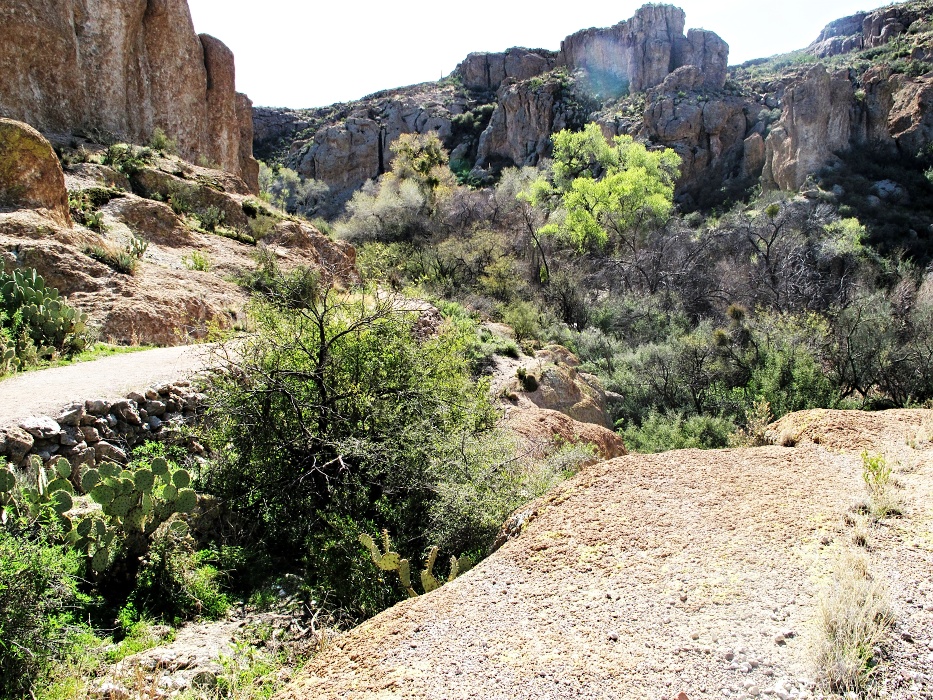
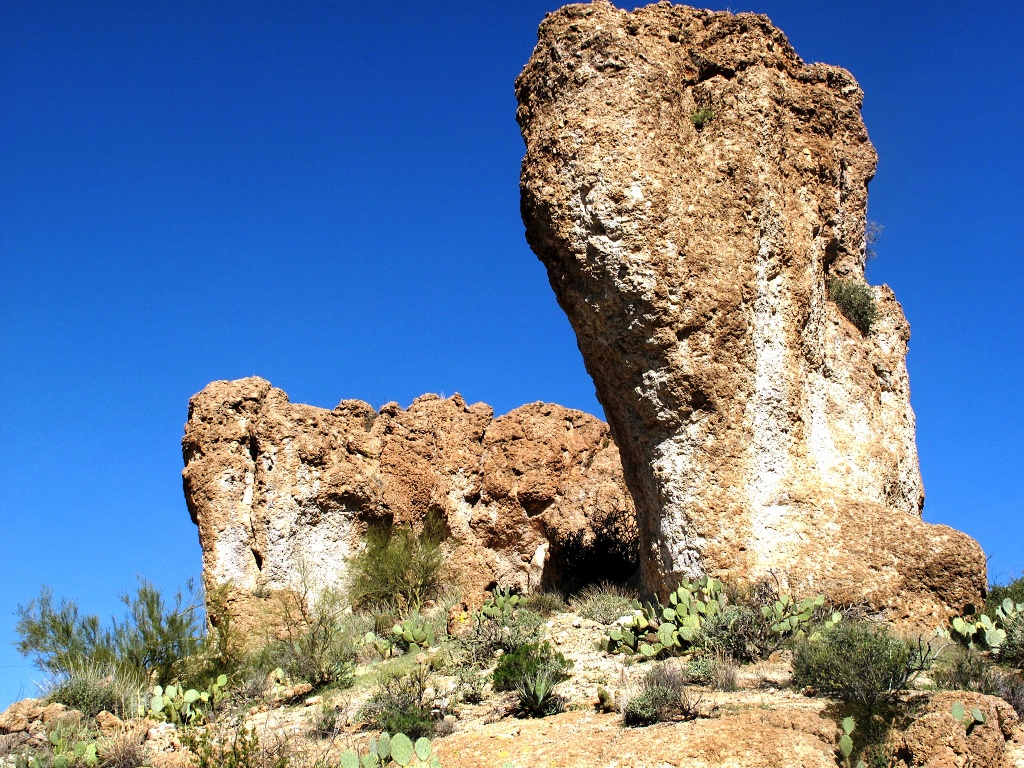
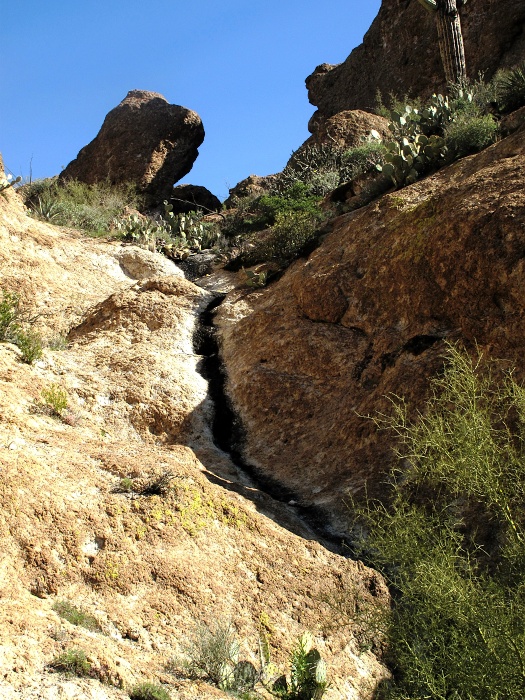
But I didn't have to leave the trail to enjoy the rock formations
along the way. Many were made of conglomerate, which is, as the name
implies, sedimentary rocks consisting of rounded fragments of
different types of rock which were, in ages past, broken apart by
geologic actions and then cemented together.
Conglomerates are differentiated from breccias, which consist of
angular clasts. Since rounded clasts are the result of pounding by
water (think river rocks), the presence of conglomerate indicates
the long-standing action of powerfully rushing water though this
canyon. Queen Creek must once have been much more voluminous
than it is today.
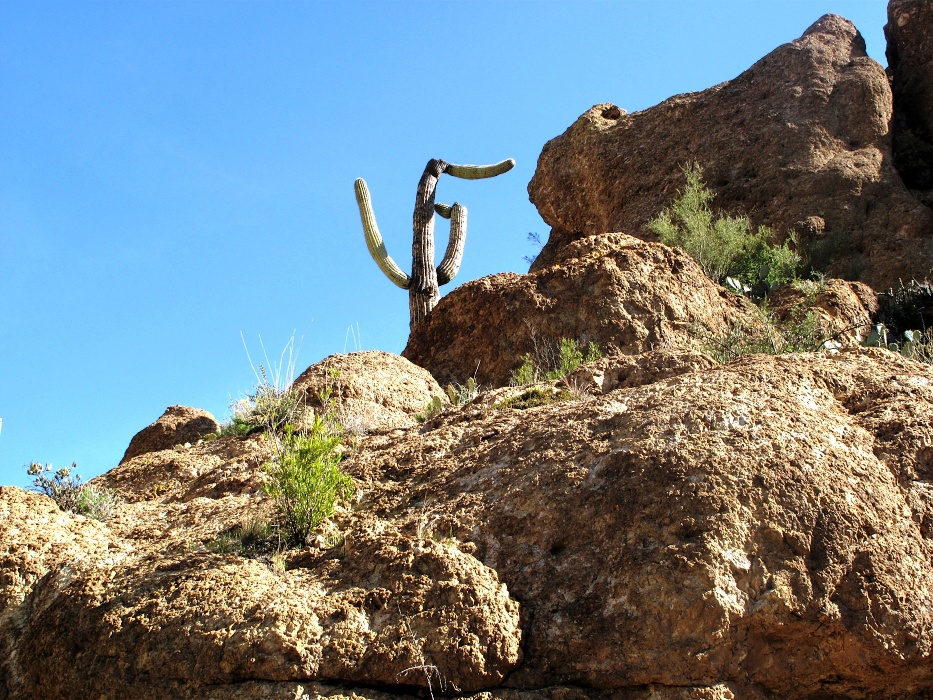
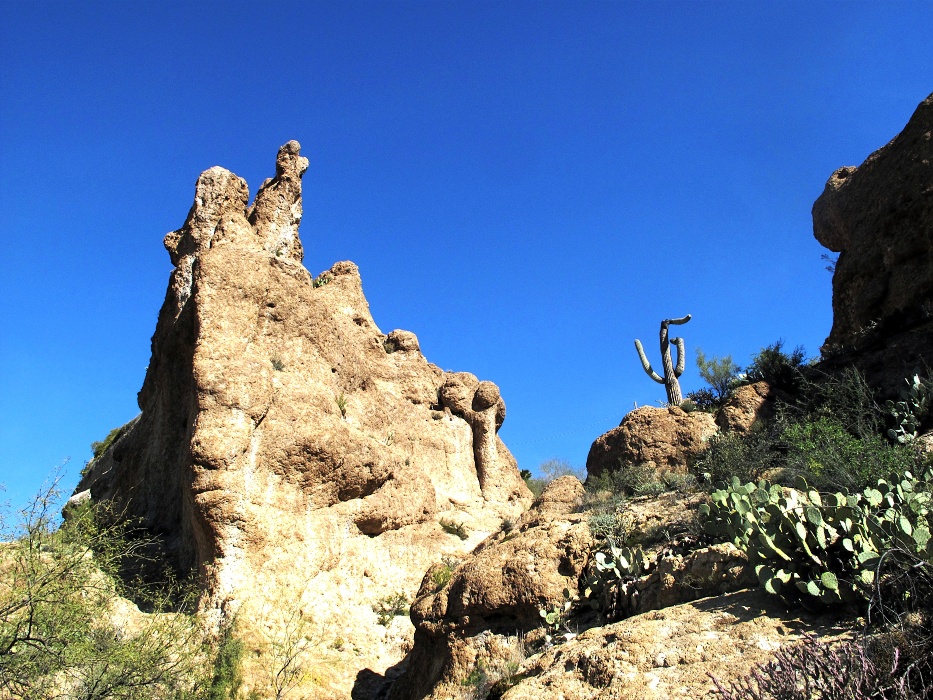
Just as the rocks tell the physical story of the canyon, the plants
tell a more recent tale of strong winds and minor accidents. One
can't help look at the below Saguaro cactus and wonder what injury
when it was younger left it with an off-kilter stance.
I could have stayed all day, but my camera battery was starting to
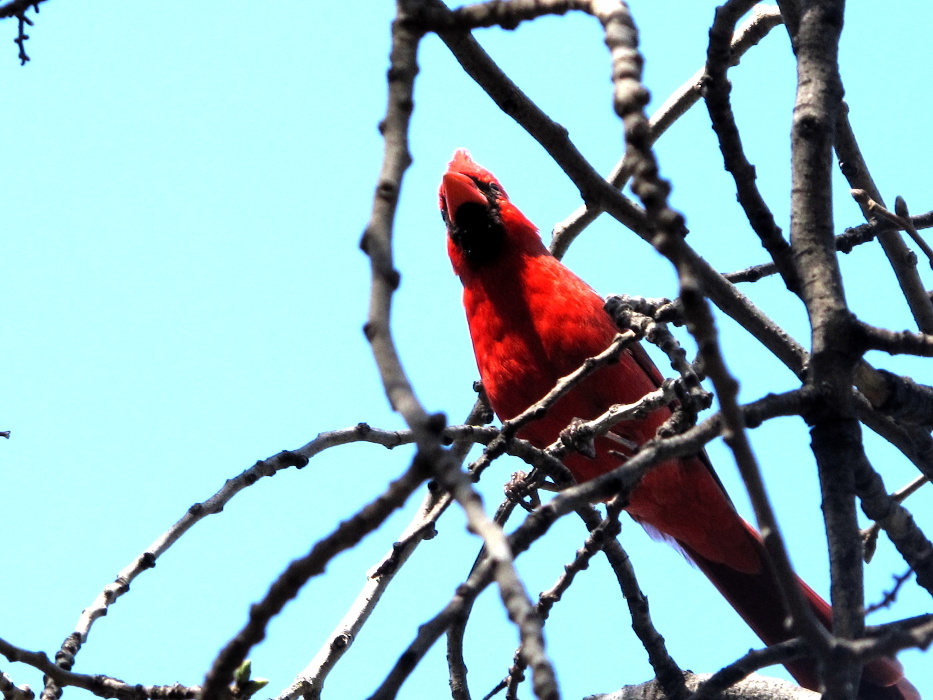
run down. My last connection with the plentiful life in this place
was a summons by a cardinal.
One of things I love about Arizona is the amount of life (both
animate and inanimate) that surrounds us here. The idea that a
desert is barren is so patently false. Boyce Thompson
Arboretum is one of many proofs of that.