|
By: Paul S Cilwa |
Occurred: 7/17/2009 6:00:00 PM |
|
Page Views: 1,870 |
| Hashtags: #Places #StAugustine #Florida #Zachary #AlligatorFarm |
| The second day of the East Coast trip I made with Michael and Zachary. |
| Estimated reading time: 5 minute(s) (1099 words) |
It was now our first day in St. Augustine, and there was so much to do! We
wanted to get a really early start. So we began by waking up at 11 AM.
We were staying with my sister Louise and her husband Mikey. So it seemed
reasonable to begin our visit by visiting my other sister, Mary Joan, who
lives about 15 minutes away. (I should add that, in St. Augustine,
everything is 15 minutes away from every other thing.)
Mary Joan lives in a charming little cottage just off Masters Drive.
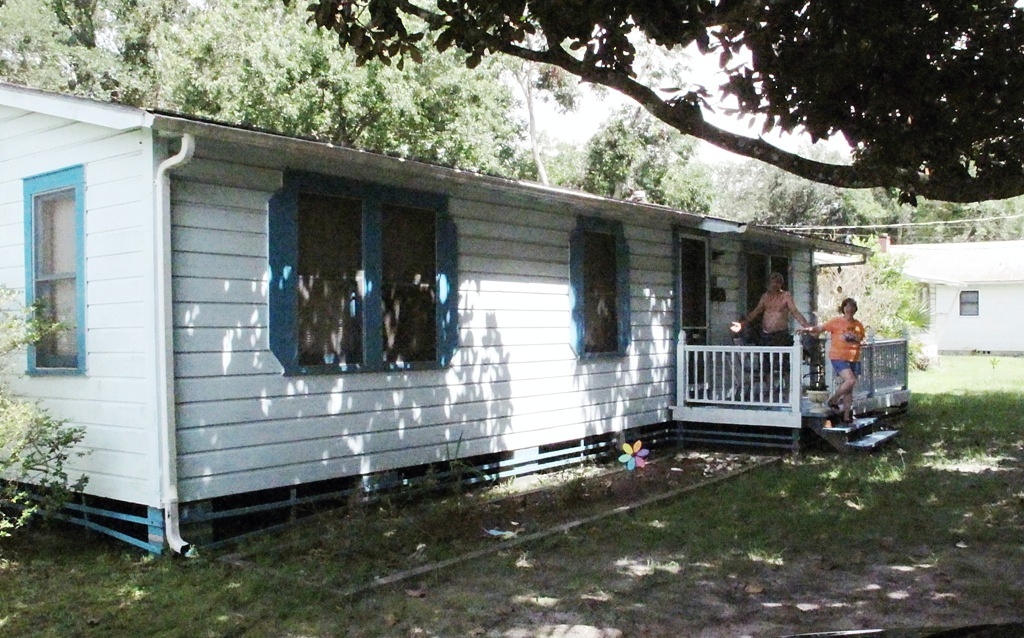

Mary Joan was entertaining her granddaughter Toni when we got there. Her husband and
brother-in-law were there, as well. Toni was very happy to meet her older,
second cousin Zachary for the first time.
Toni's mother, my niece Lisa, did
come by after awhile so we were happy to be able to see her, too,
as well as newest addition baby Jack. Jack is at the age where he
enjoys playing musical adults. That's the game where you reach for
an adult to be held, then immediately reach for another.
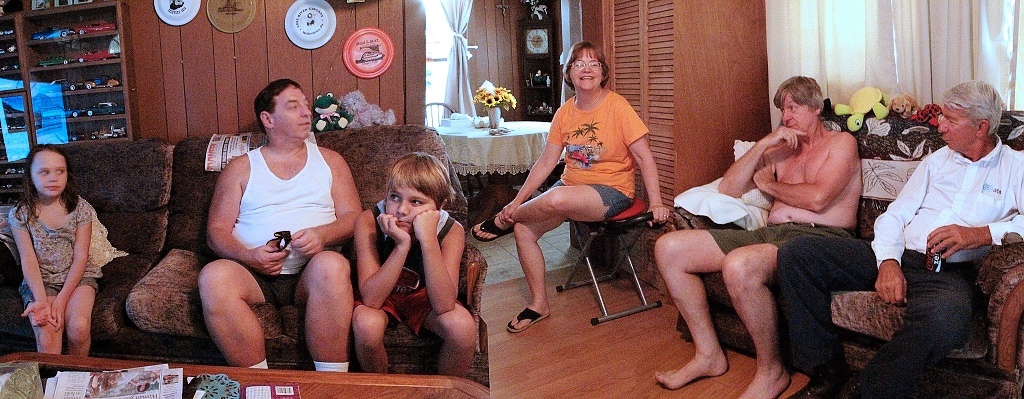
Calvin showed off his custom model car collection, which fascinated both
Michael and Zach; and Mary Joan explained where the various examples of her
souvenir Frisbees came from. ("They don't sell them anymore," she explained.
"The souvenir shops kept finding them on their rooftops.")
After a bit we left and met Mikey at his home, where we transferred into his truck.
Mikey works for the St. Augustine Record, the local newspaper, as a
printer—though his job is in its last week, as the printing operation has been
moved to Jacksonville. There were perks to that job besides a paycheck—not least
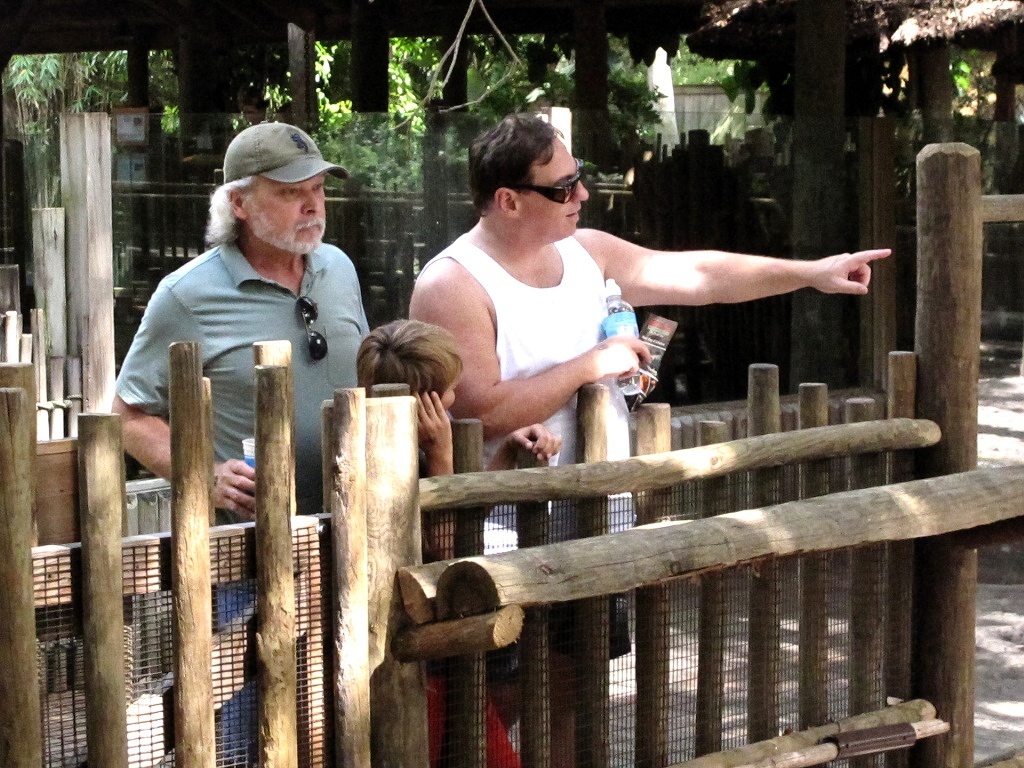
of which is access to local tourism promotions. So Mikey was able to take us for
free to the Alligator Farm.
The Alligator Farm has been a fixture in St. Augustine tourism since the days
in the late 1800s when Henry Flagler's Florida East Coast Railway first provided
Yankees with an easy way to come down here and visit. When I was a kid, locals
could go for free and even visitors only paid a couple of dollars a head to
visit. Now it costs $11 for kids and twice that for adults. On the other hand,
it's been years since any five-year-olds fell into the alligator pit and were
eaten alive. So there is that.
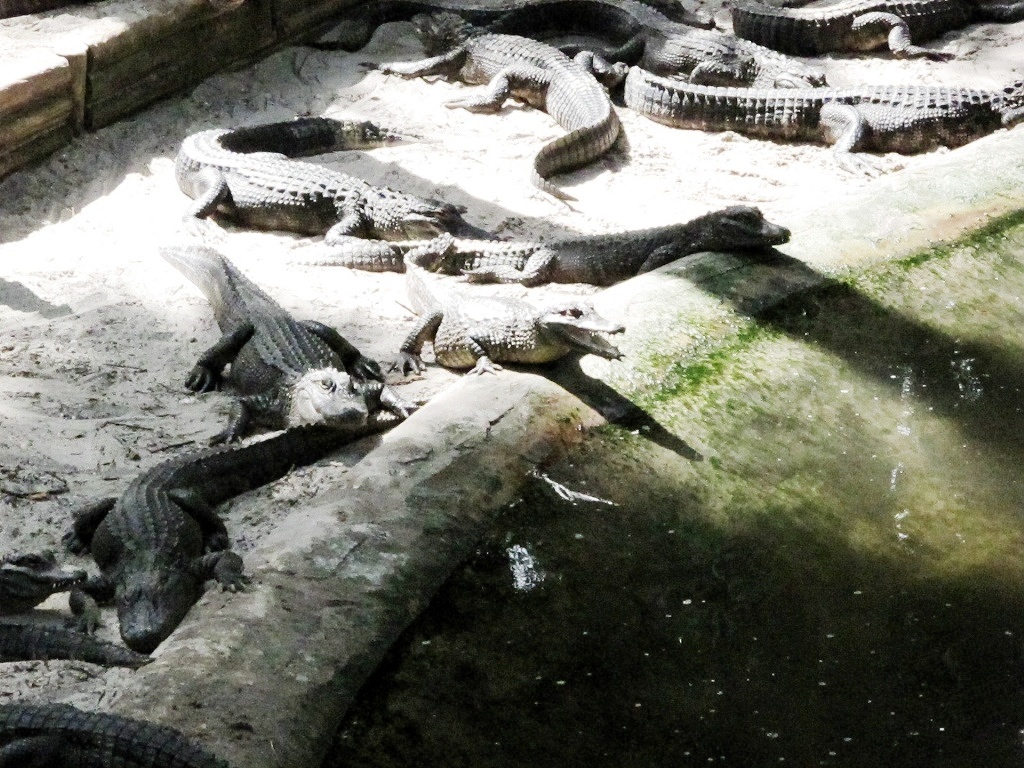
In addition to alligators, the Alligator Farm also houses crocodiles and
caimans. Collectively, such animals are called "crocodilians" and the Farm has
them from every country.
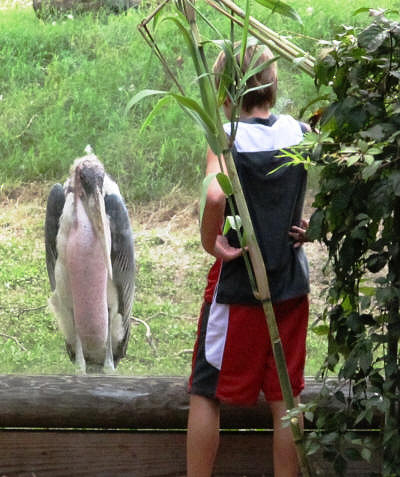
There are also a number of birds. Most of them are species native to Florida that make
their home here simply because it's an ideal environment for them. But some,
like the Marabou Stork, are exotics brought for their ability to attract
tourists.
The Marabou Stork is startlingly unattractive. From the top of its balding
head to the bottom of its excrement-covered feet, it's hard to imagine any
adolescent Marabou Stork gushing to its friends about how cute its new mate is.
And yet, the Marabou Stork on exhibit did have one endearing quality: It
seemed as interested in us as we were in it. It stood in front of the window
that protects it from too-enthusiastic tourists and simply gazed at us the
entire time we were there.
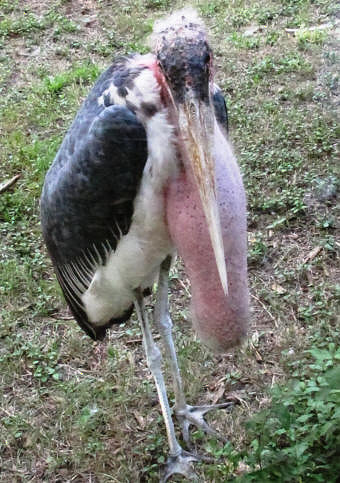
By the way, that growth hanging from under its beak is an air sack which
it inflates in order to look more attractive. There's another on the
back of its neck as well. Unfortunately, neither does the trick.
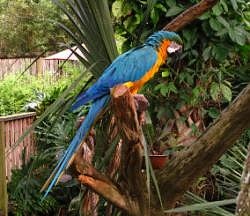
Fortunately, there are parrots and macaws hanging around to more than
offset the aesthetically-challenged marabous.
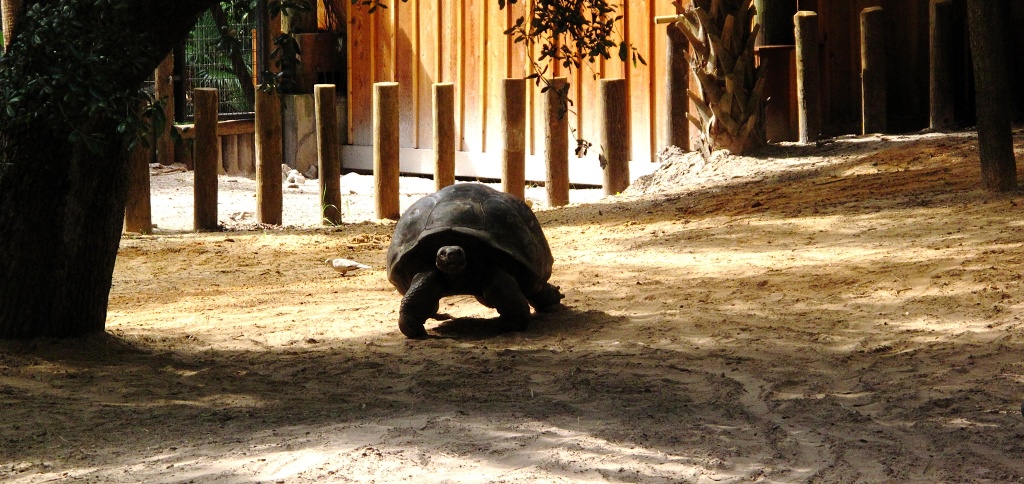
If things are moving too fast for you, you might want to ride a giant
tortoise. They used to allow people to do that at the Alligator Farm; I remember
that as being a mild thrill when I was a kid. Of course, you had to get on one
that was moving already, since they didn't tend to respond to yells of "giddy
up". But it turns out this was bad for the tortoises; they live a long time
(even longer than Dick Clark) and many of the tortoises living here still bear
the indentations of former riders.
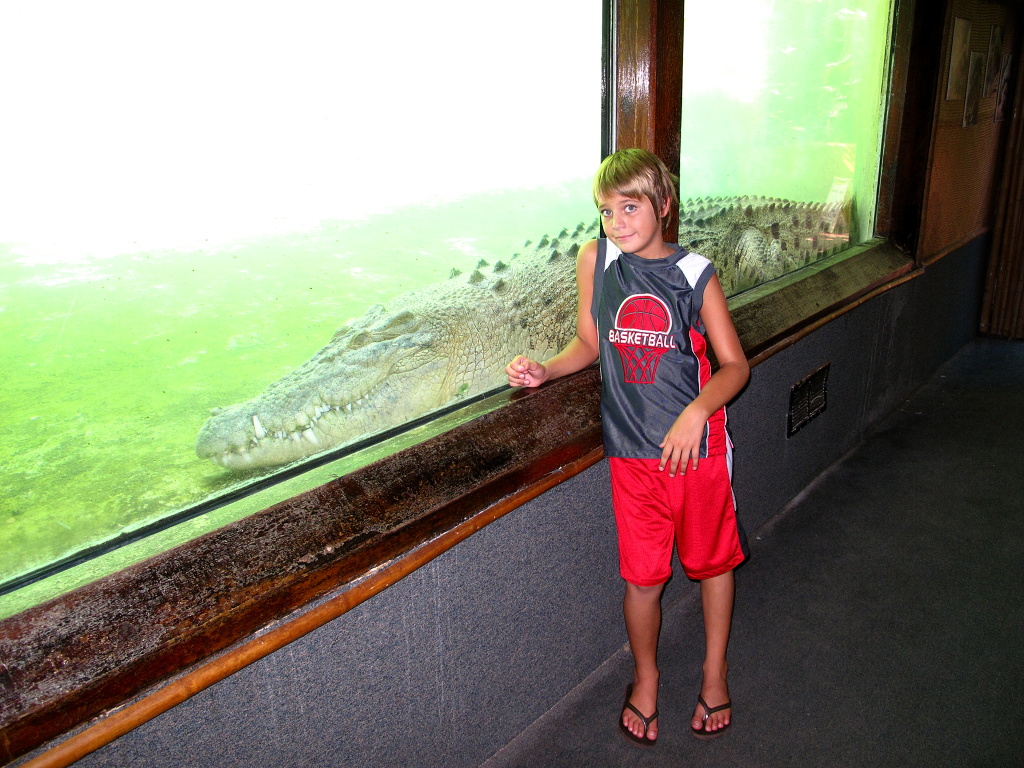
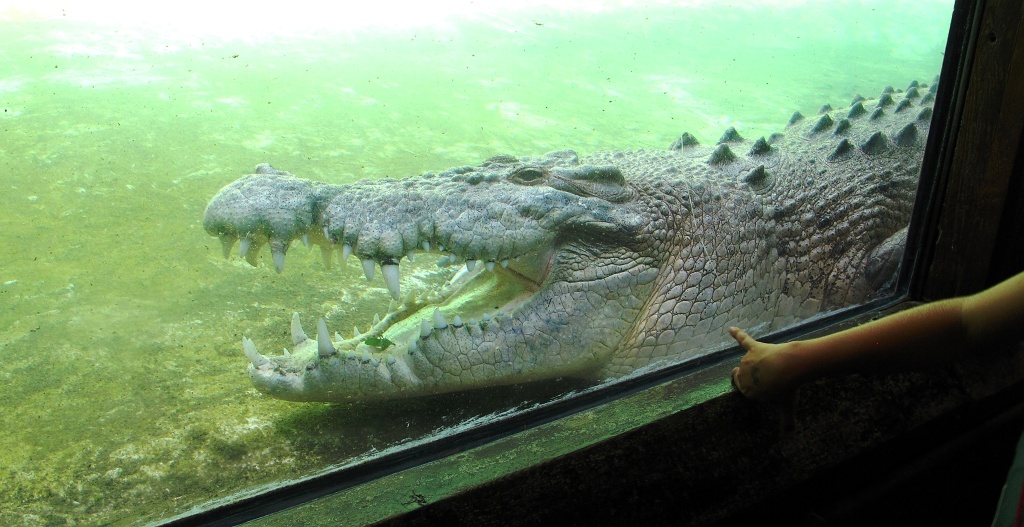
Alligators enjoy spending time in and under water, especially the
really big ones. A special tank lets visitors see them as they hold
their breaths, which, because of their size, is more fun than it
sounds.
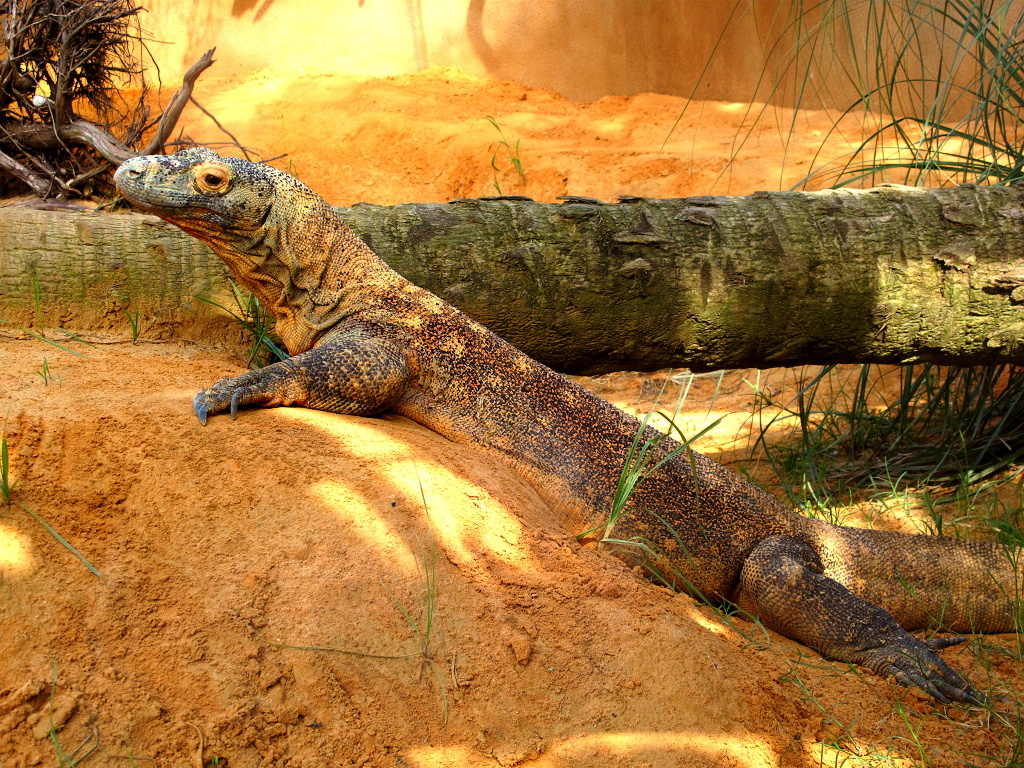
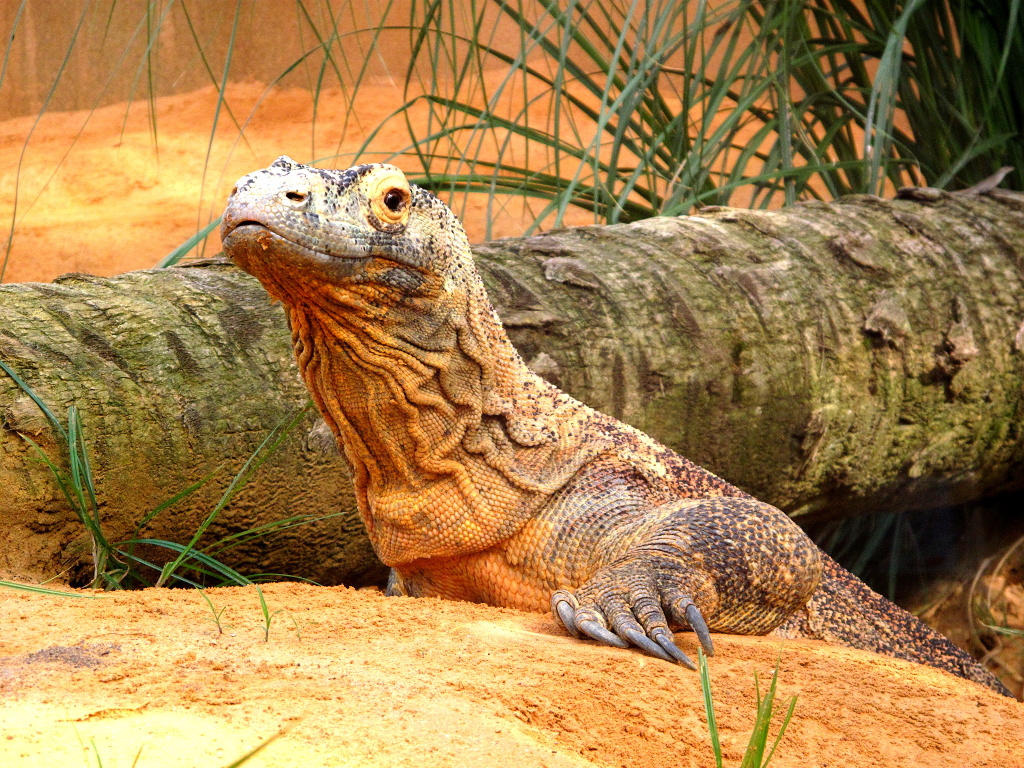
One of the Alligator Farm's prize exhibits is a monitor lizard.
These things, which come from Asia, are particularly large and
vicious. But they are also kind of pretty, in a reptilian sort of
way.
In the rookery were many birds—mostly local, as I said—raising their
babies. These nests are cleverly located directly above the
alligators, so any chicks that fall out of the nest are no longer
their parents' problem. As a parent with adult children living at
home, I have mixed feelings about this arrangement. Of course, my
kids are contributing to the household, both financially and in
helping keep things clean and organized. I see no evidence of either
behavior in birds.
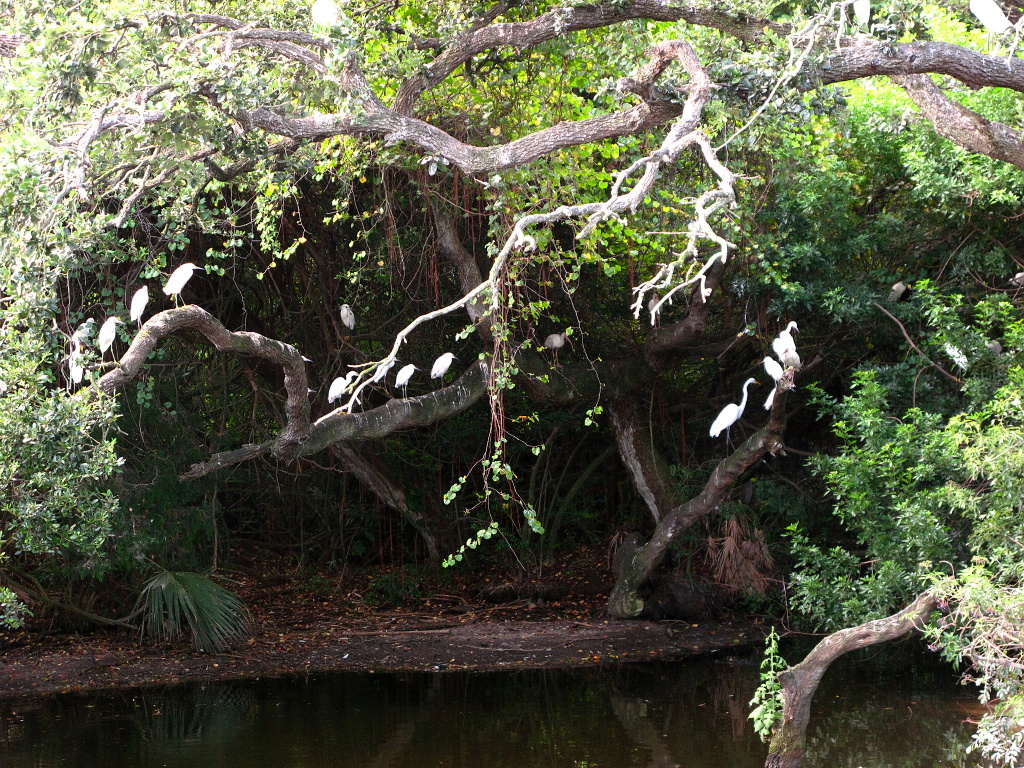
So many baby birds, so few alligators.
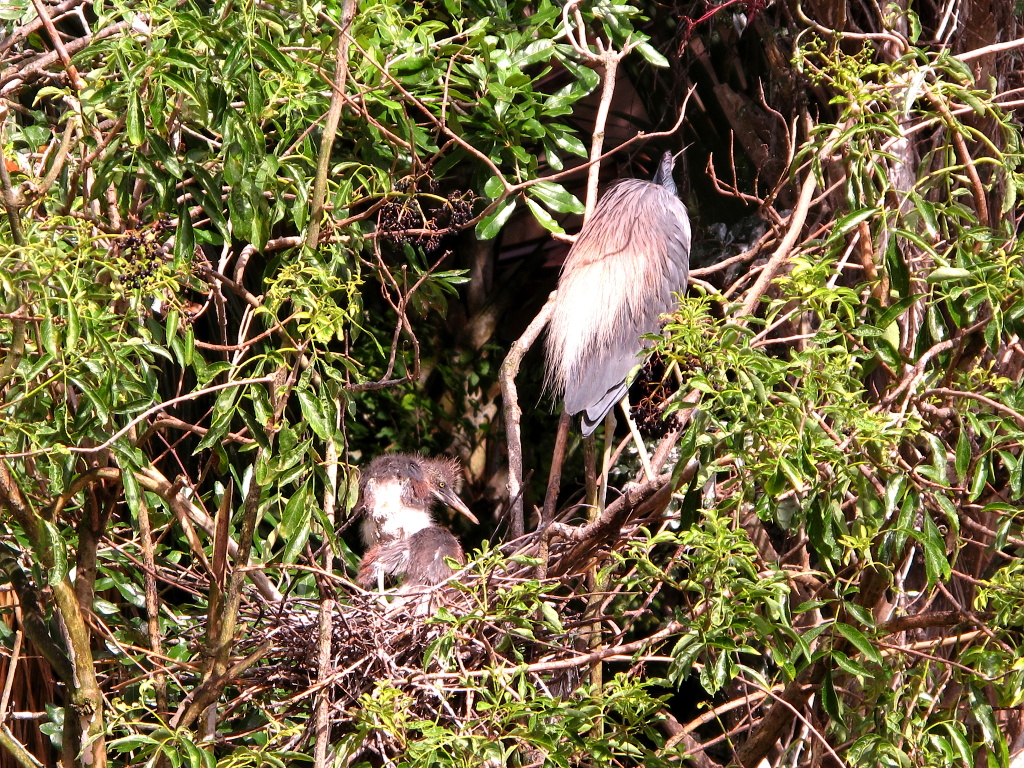
Baby birds.
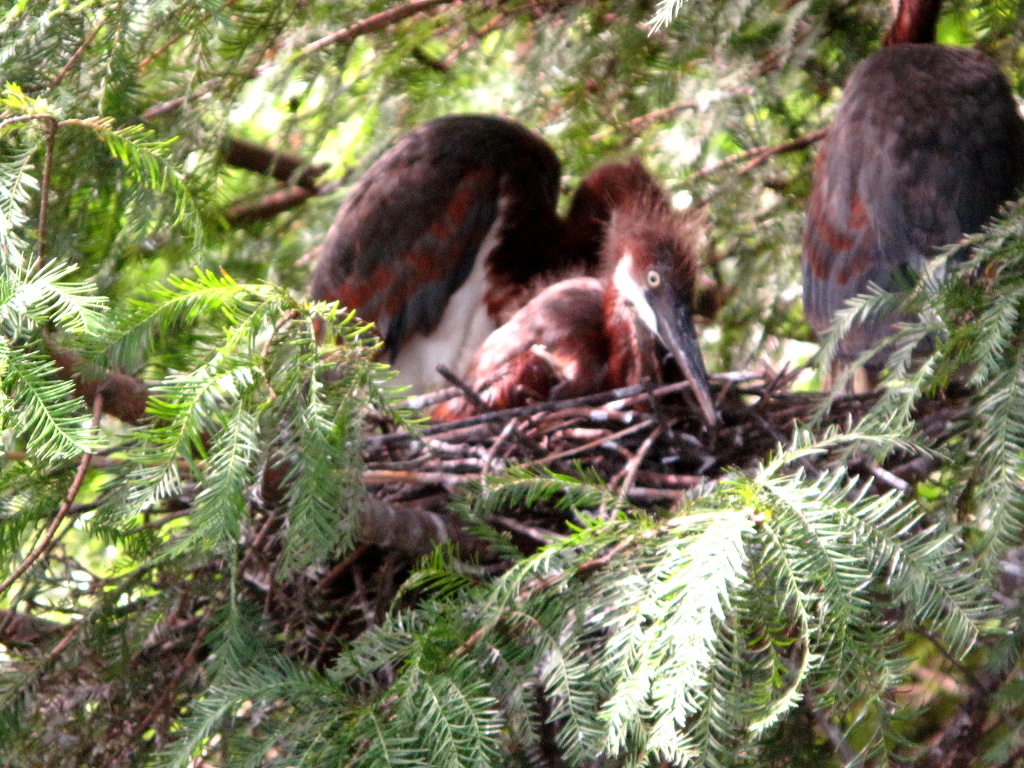
A face only a mother bird could love.
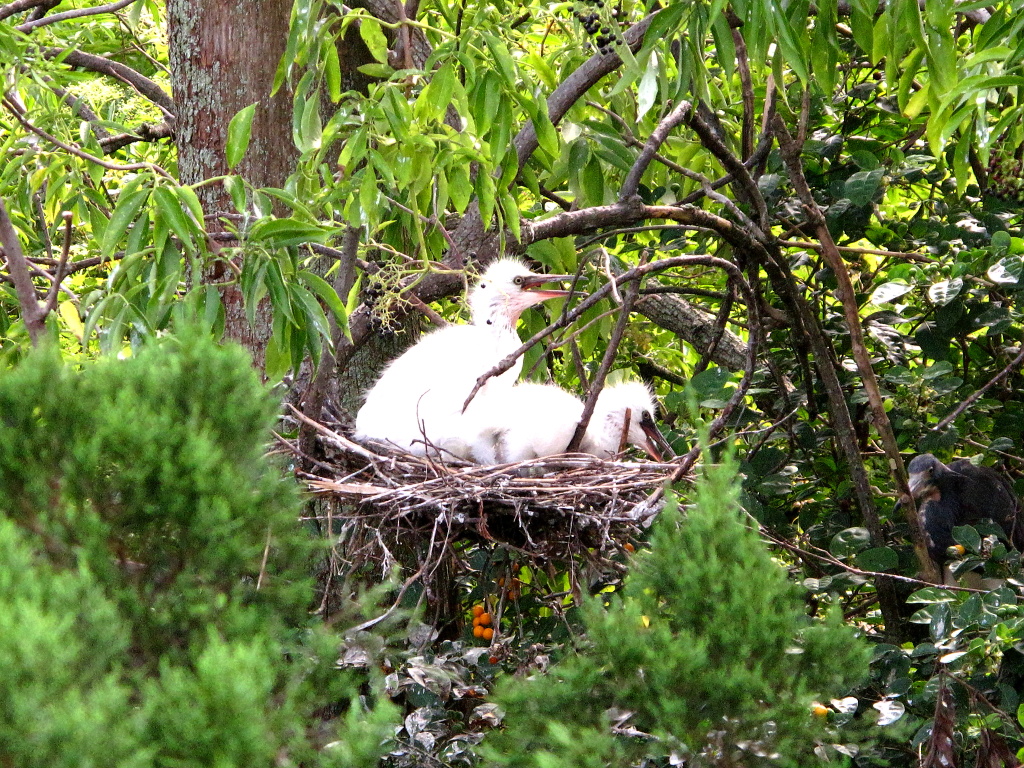
Waiting for Mom to come back from Bingo.
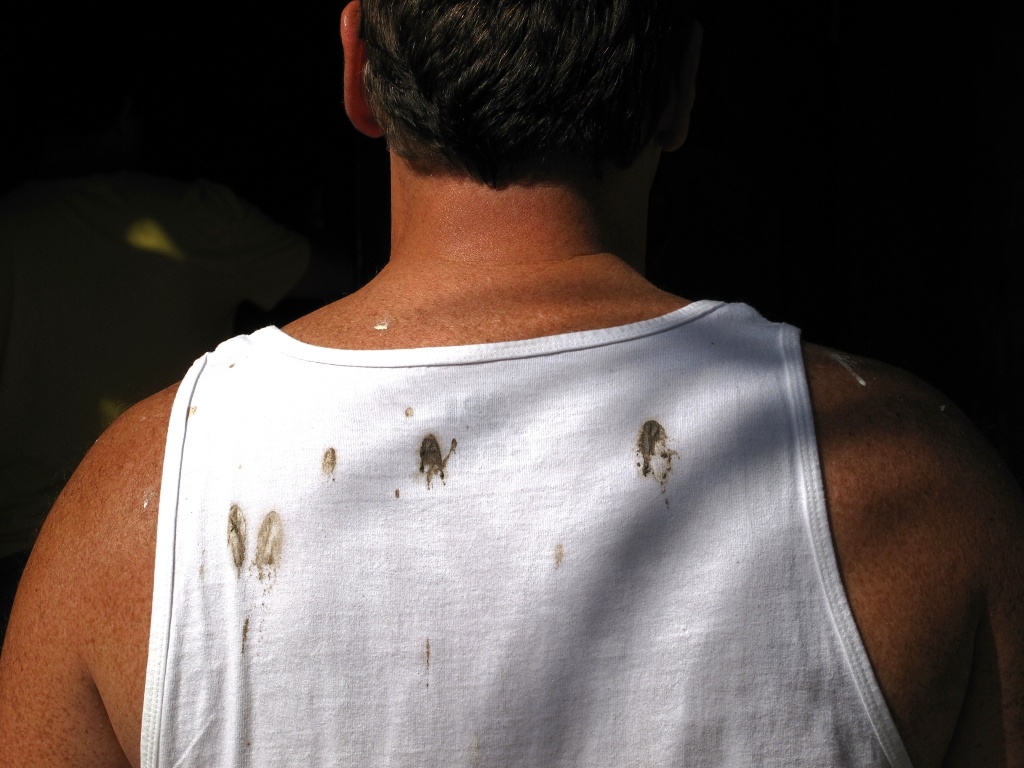
Of course, with all this avian activity around, it was inevitable that
someone would be hit by a bird bomb. And, since Michael was around,
it was inevitable that he be the target.
Luckily this happened about the time we'd decided to leave anyway. But Mikey
insisted that Michael either remove his soiled shirt, or ride home in the back
of the truck.
Michael chose to remove his shirt. And, since we were in Florida, that only
meant that he was appropriately dressed to receive visitors.