|
By: Paul S Cilwa |
Occurred: 8/21/2004 |
|
Page Views: 1,186 |
| Hashtags: #YellowstoneNationalPark #Ogden #Utah #GrandTetons |
| All about the fifth day of the trip Michael and I took Mom on to the last of the'48 states' she hadn't yet visited. |
| Estimated reading time: 3 minute(s) (614 words) |
Saturday, August 21, 2004
That relatively early bedtime didn't get us on the road any earlier.
Fortunately, the park is right at the edge of town.
There are many areas to Yellowstone, which was once the site of a Mt. St.
Helen's-sized volcanic eruption that leveled what had once been a huge mountain.
Most of the park is, therefore, the ancient caldera; overgrown, forested,
meadowed, but still geologically active—they get as many as twenty minor
earthquakes a day.
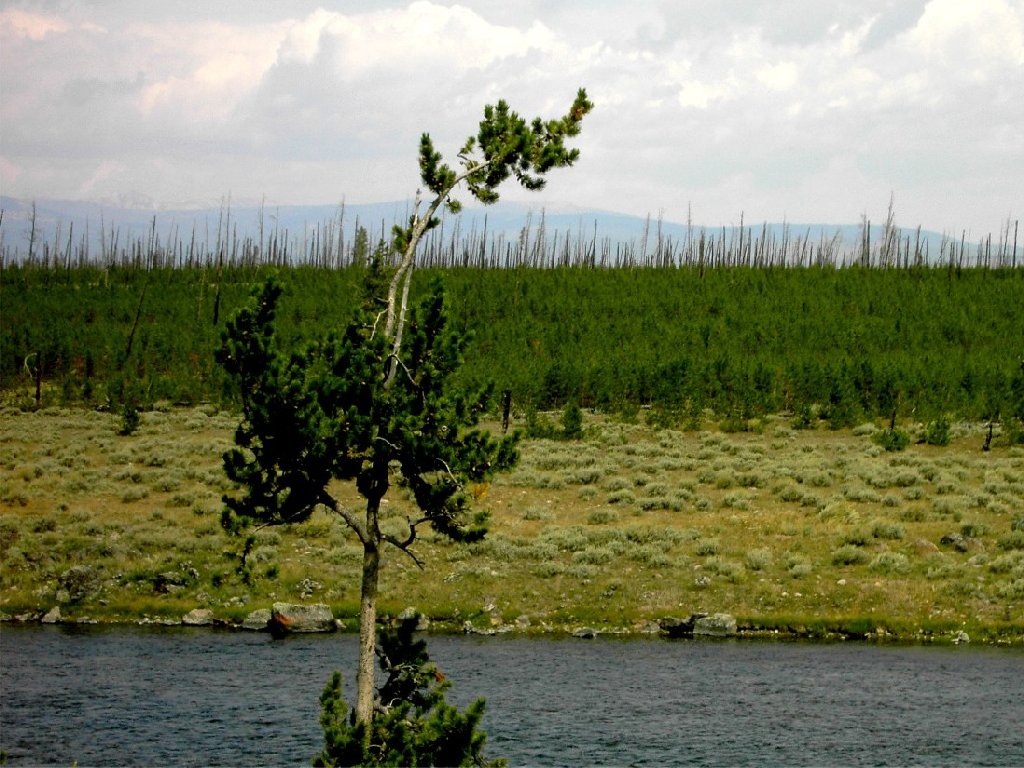
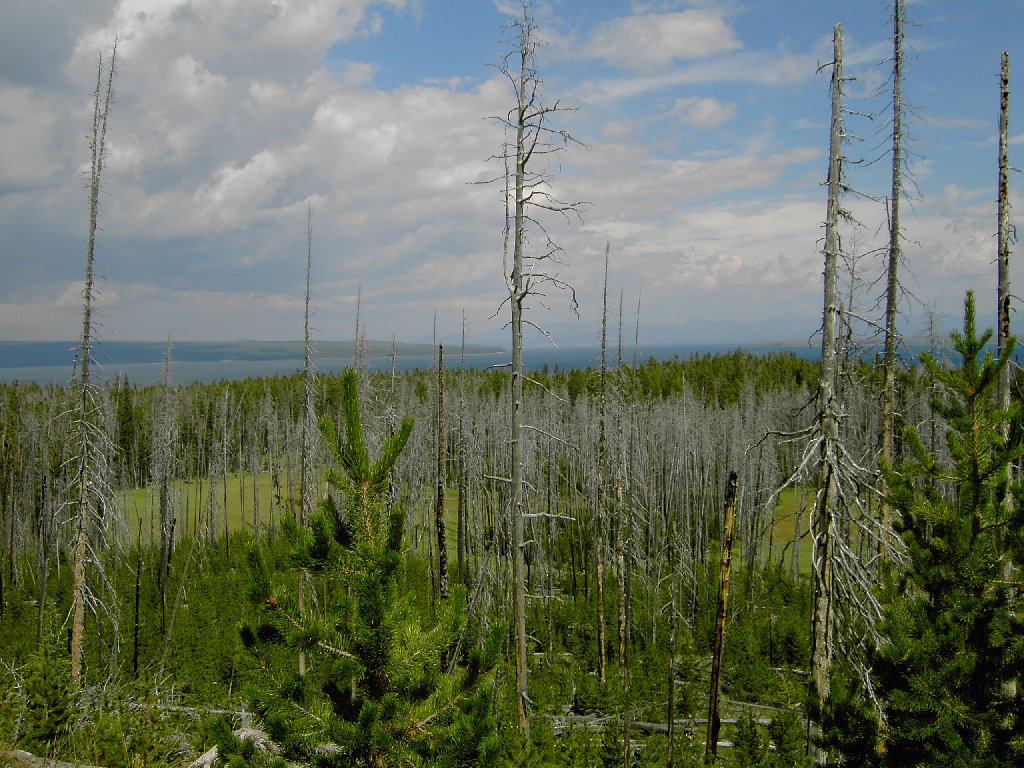
As we entered the park, we were greeted by a seemingly endless vista of
dead trees standing stark against the sky.
"Oh, no!" Mom cried, reading the brochure we'd been handed. "Eighty
percent of the park was destroyed by fire last year!"
"It's not destroyed," I pointed out. "It's here."
It turned out that "destroyed" wasn't quite the word the brochure had
used. The actual word was "burnt", and I had to explain that it's
necessary for period fires to destroy the old trees so that new trees
can replace them—a concept that, perhaps, came a bit too close to home
for Mom to find comfortable. Nevertheless, Michael and I tried to help
her focus on the exuberant new life that was pushing out from beneath
the burnt skeletons of its ancestors.
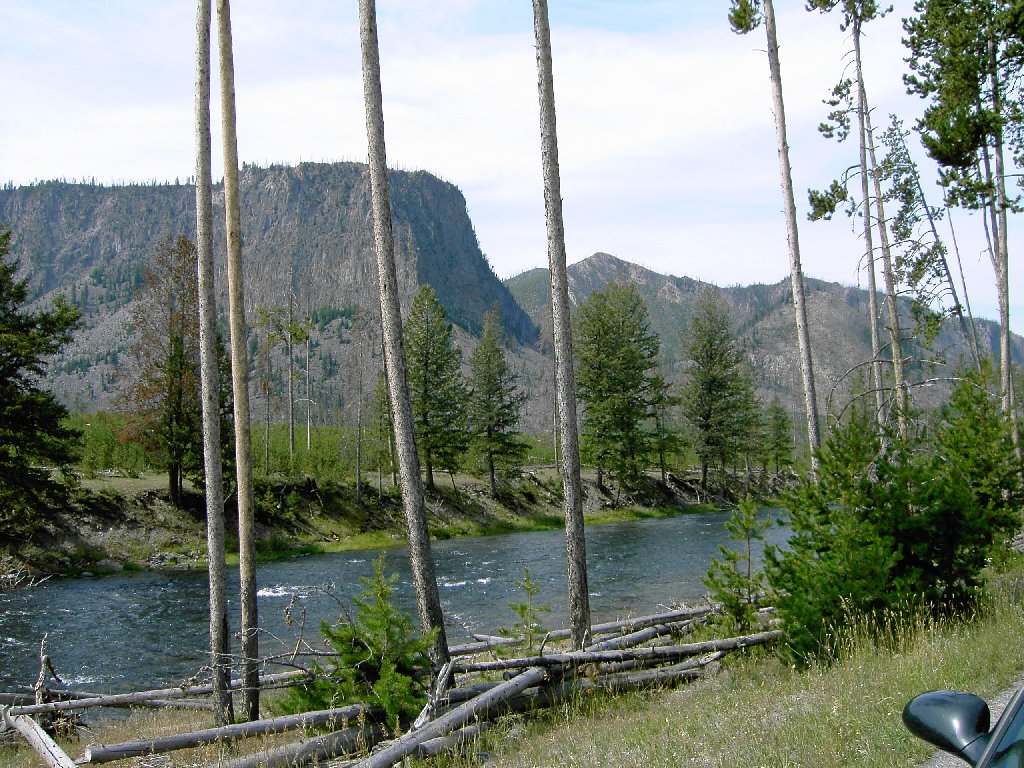
Mom was also uncomfortable with all the downed trees littering the forest floor.
She referred to the trunks as "lumber" and thought it should be picked
up. I explained that fallen trees provide homes for dozens of species of
plants and insects, as well as larger animals that live nowhere else.
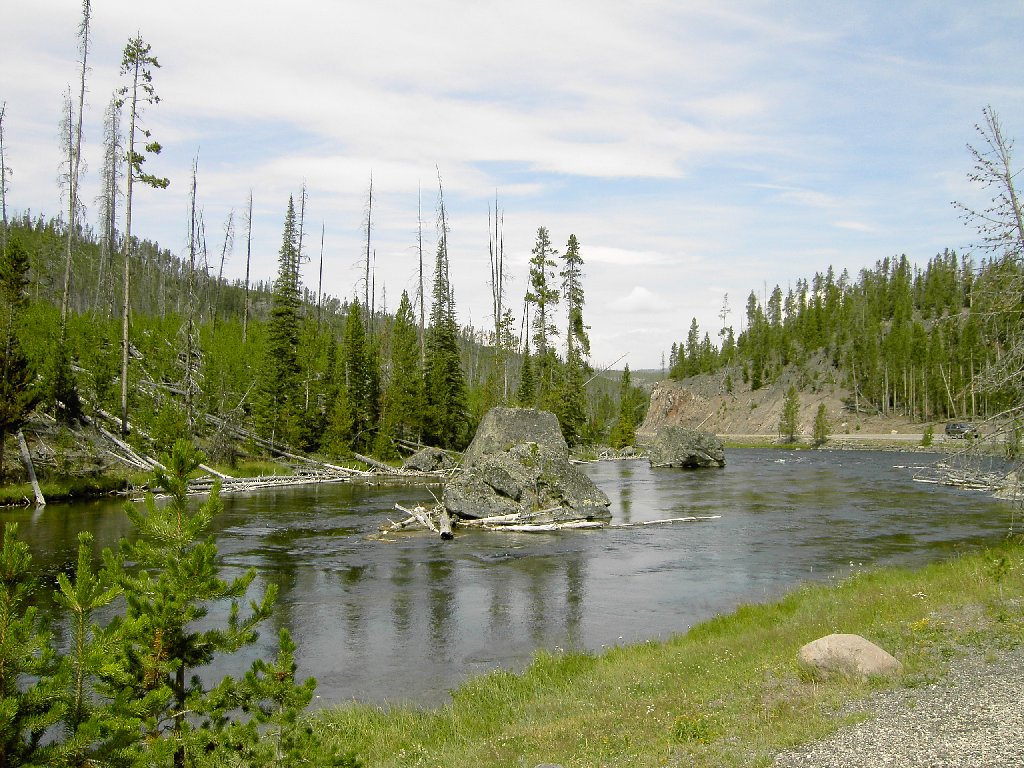
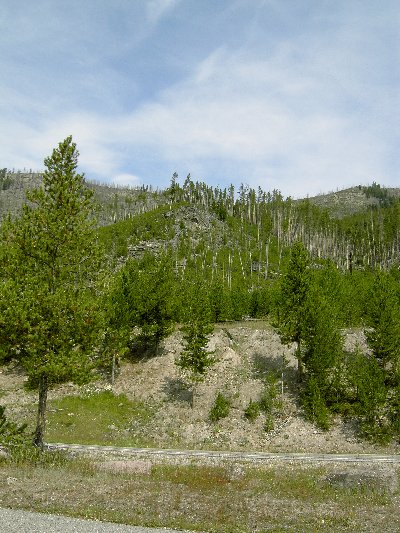
I'm not sure that even the park posters describing the cycle of life
in a natural forest, and the place of fire in it, convinced her. She
comes, after all, from the generation that believed Nature was
inherently flawed; that it needed to be subdued, and that Man was its
master.
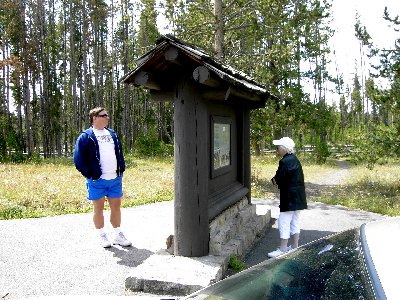
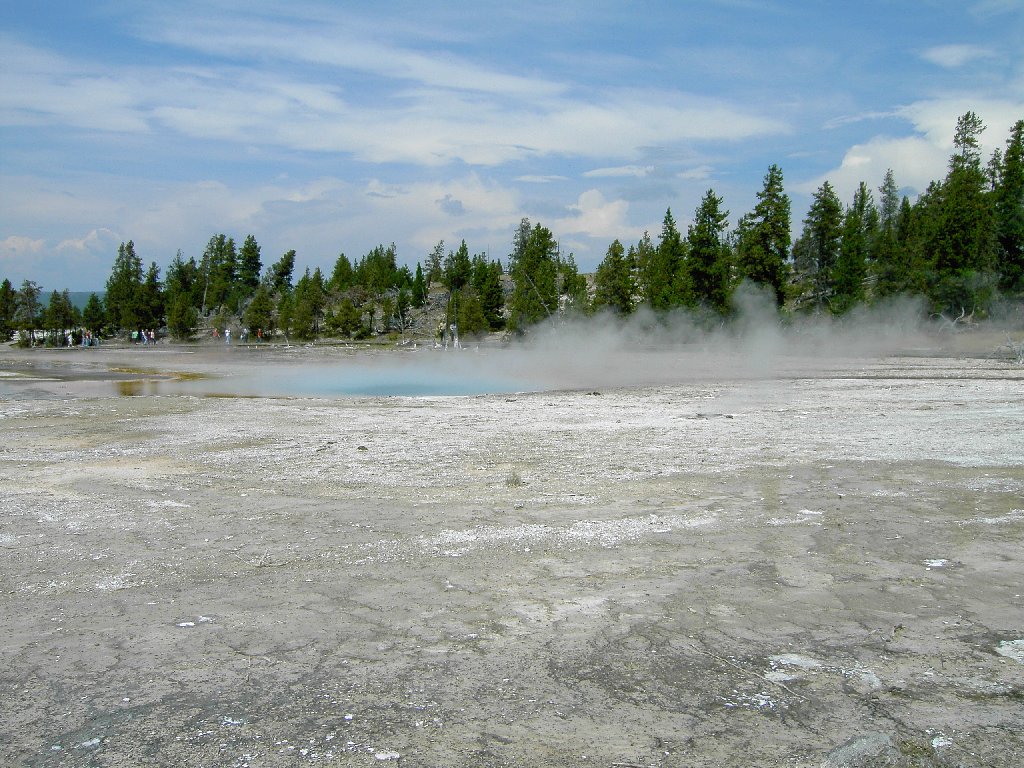
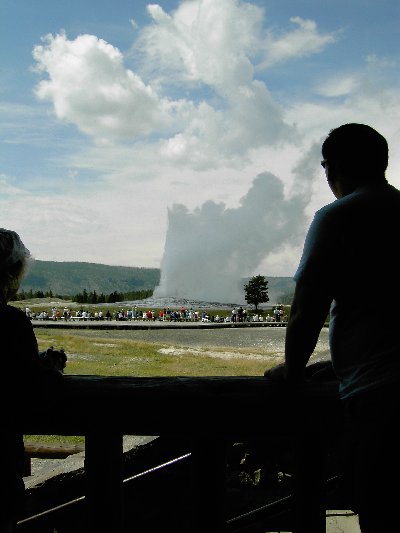
Next we came upon the geyser section of the park, where the crust of the
Earth is thinnest. This was the part Mom knew about. In fact, she explained, she
thought Yellowstone consisted only of Old Faithful!
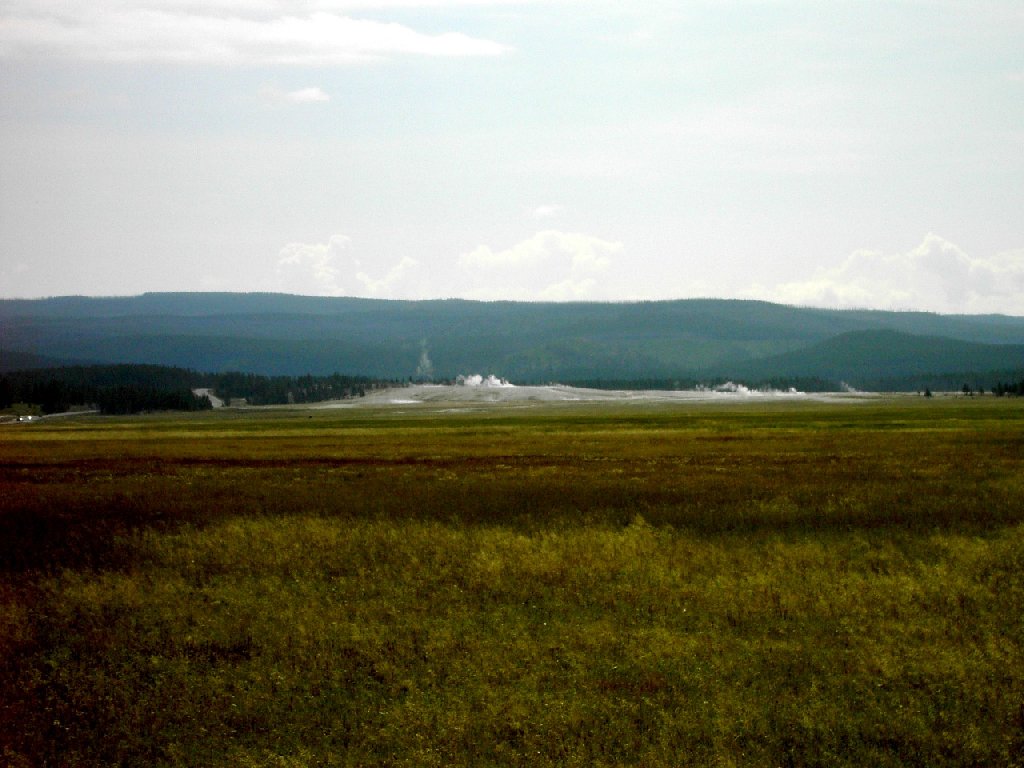
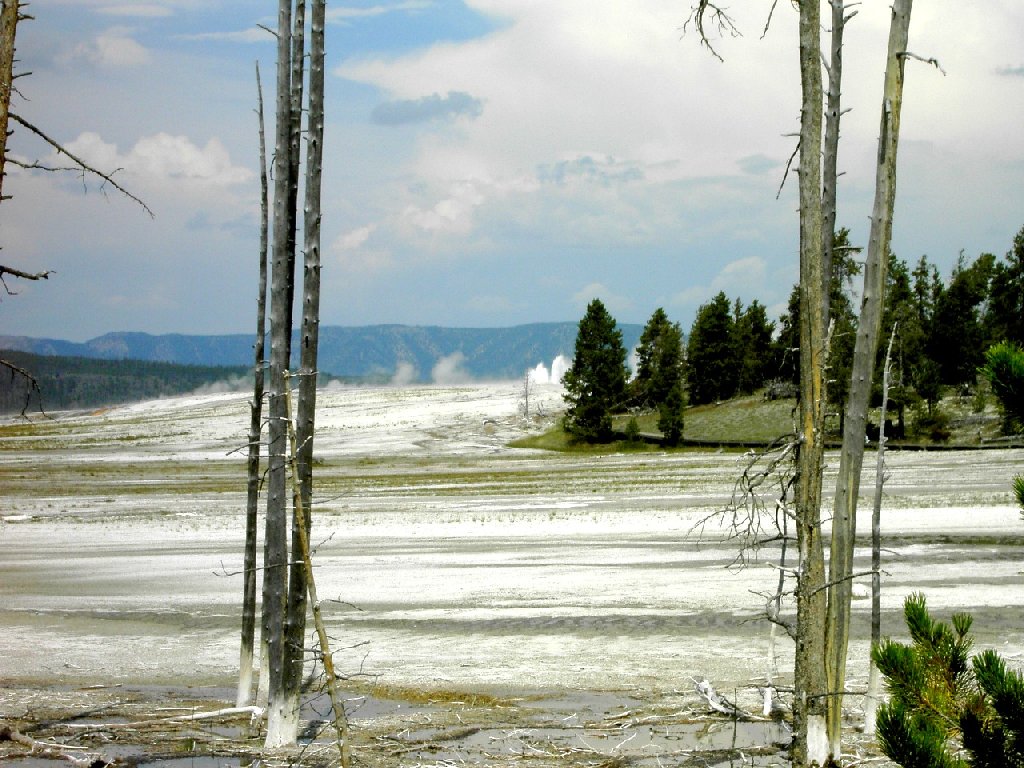
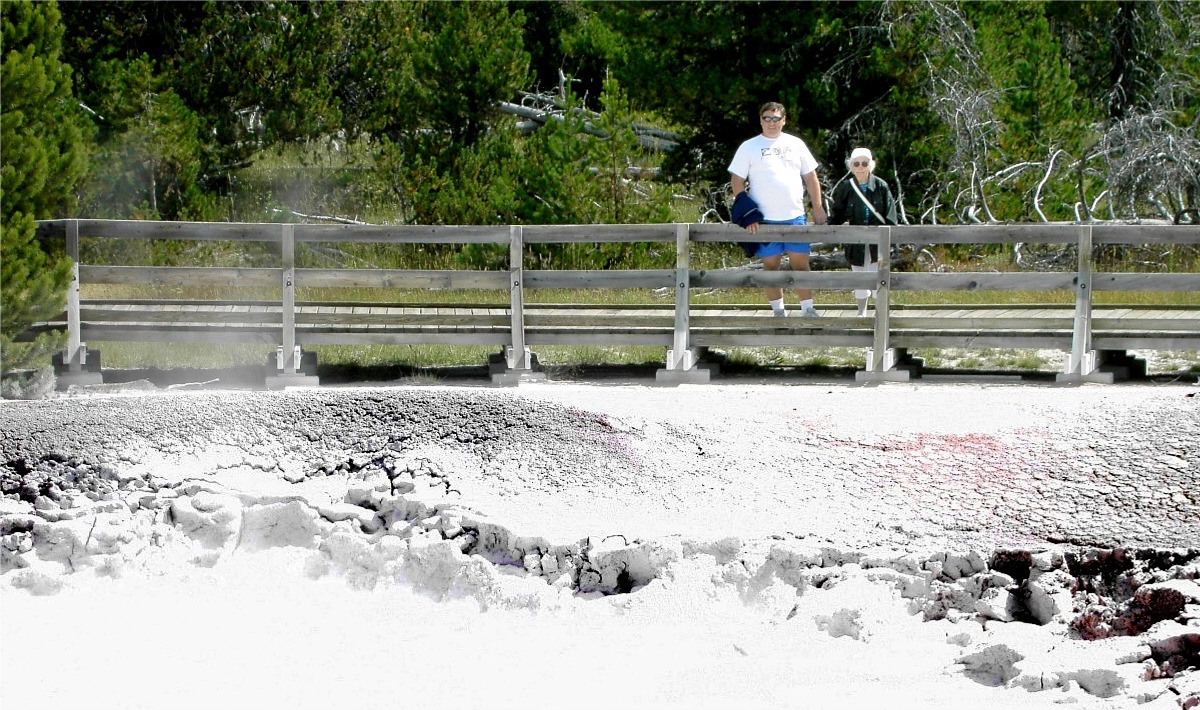
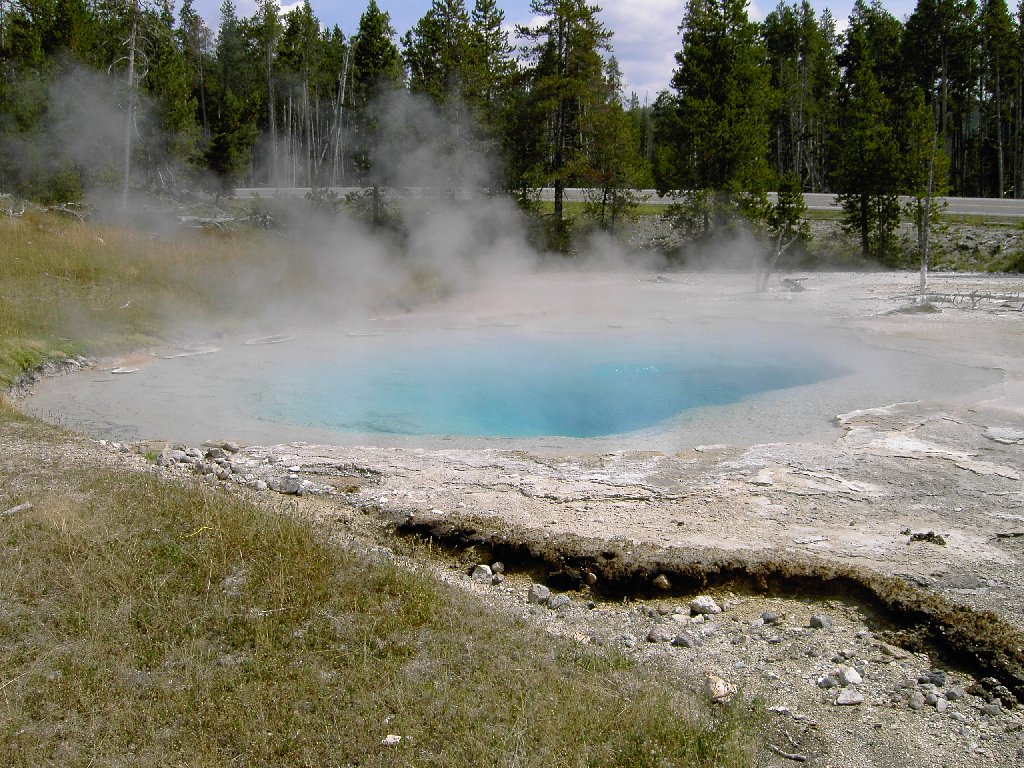
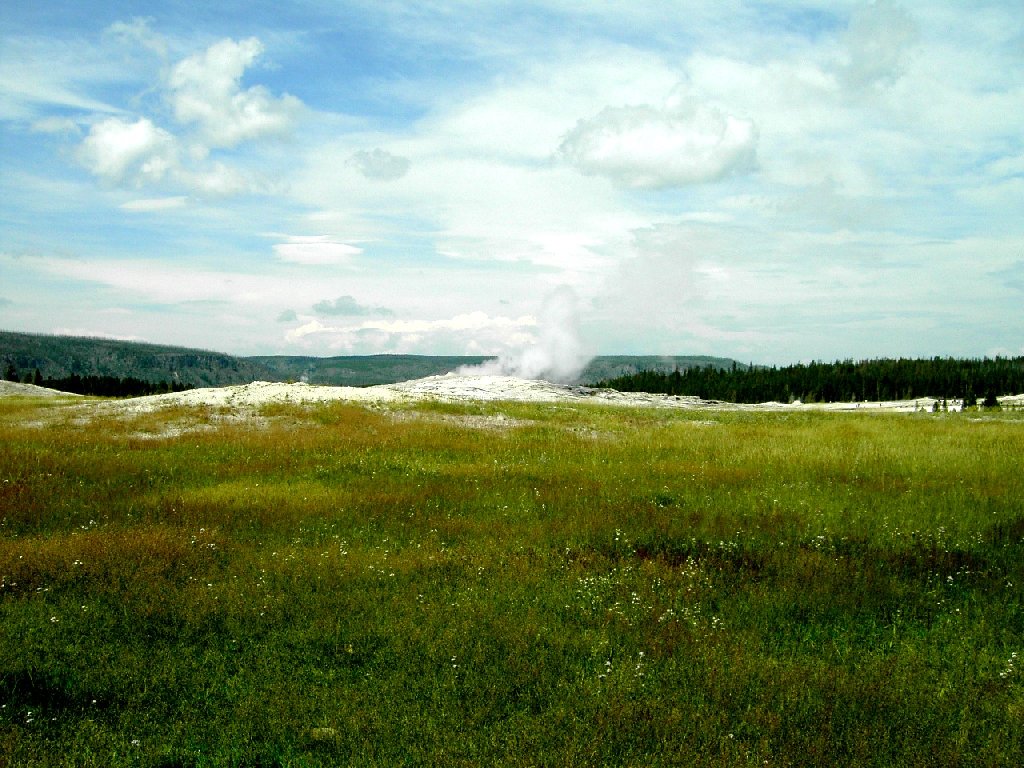
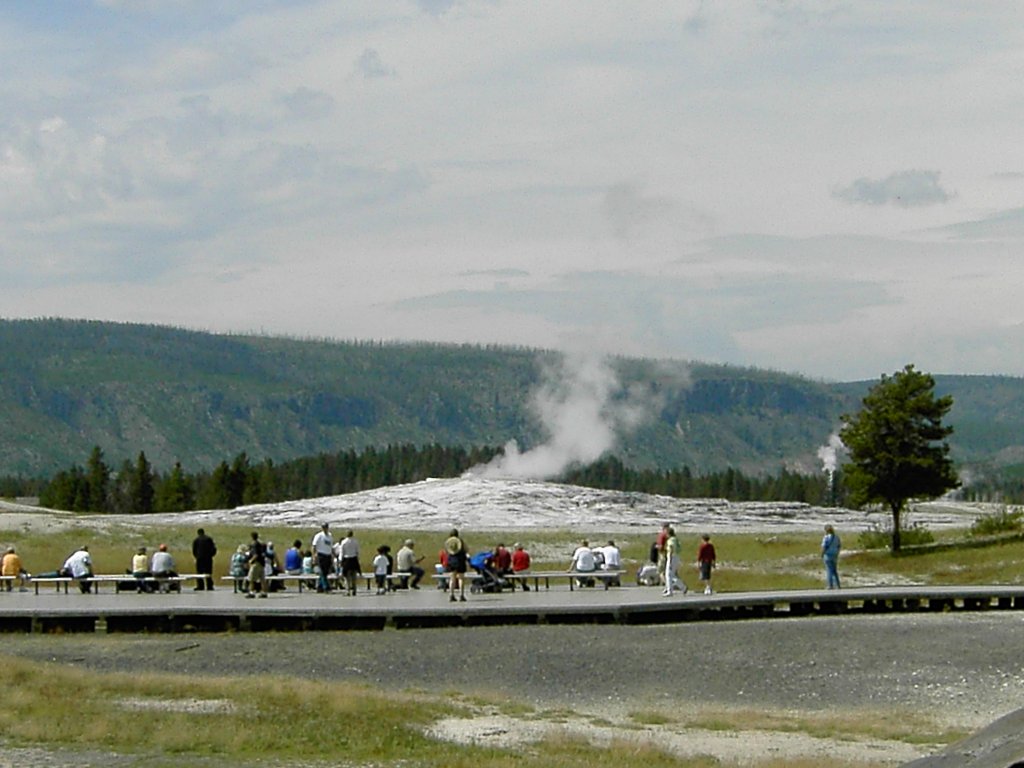
Old Faithful is the park's
centerpiece, of course, with a lodge and a cafeteria (with good
food, what a surprise!) and seating for hundreds to enjoy the geyser's
periodic eruptions.
The caldera section of the park is marked by rivers, streams, and ponds,
including the enormous Yellowstone Lake that fills its bulk.
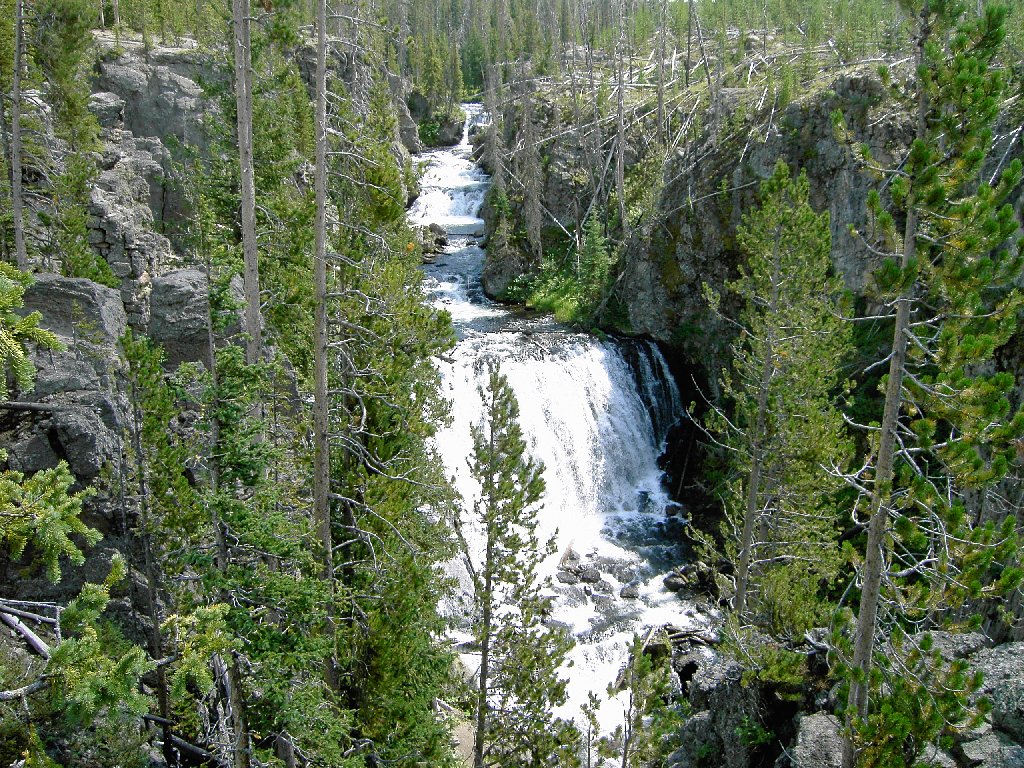
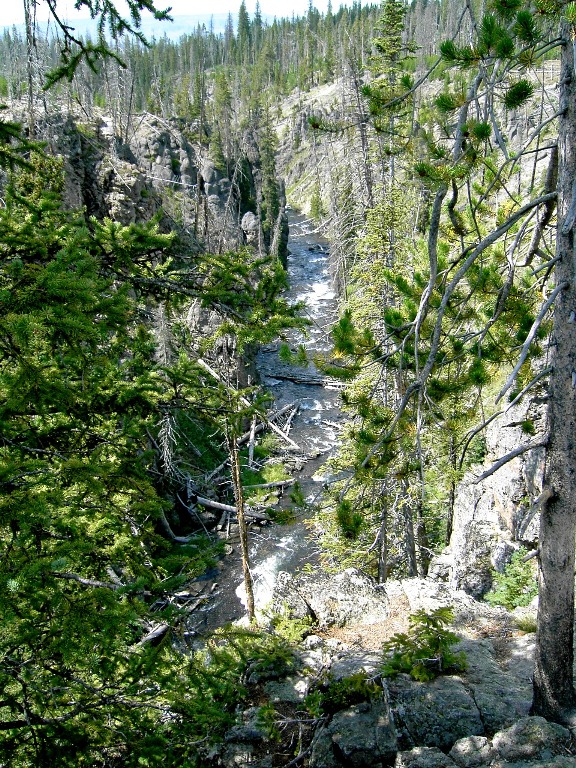
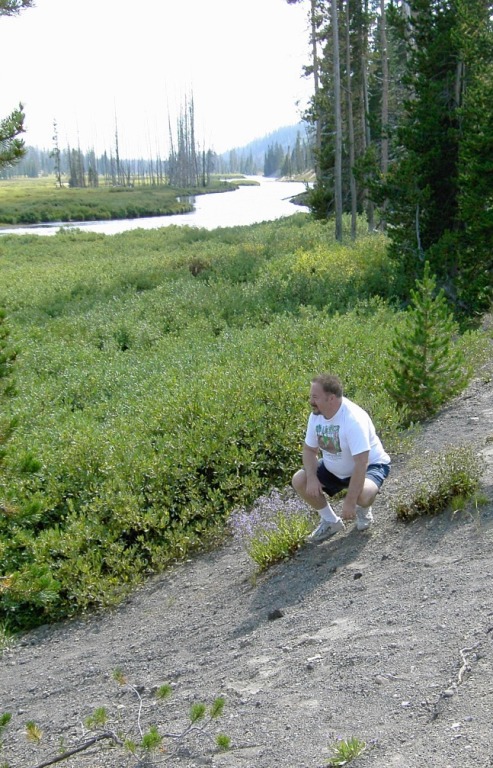
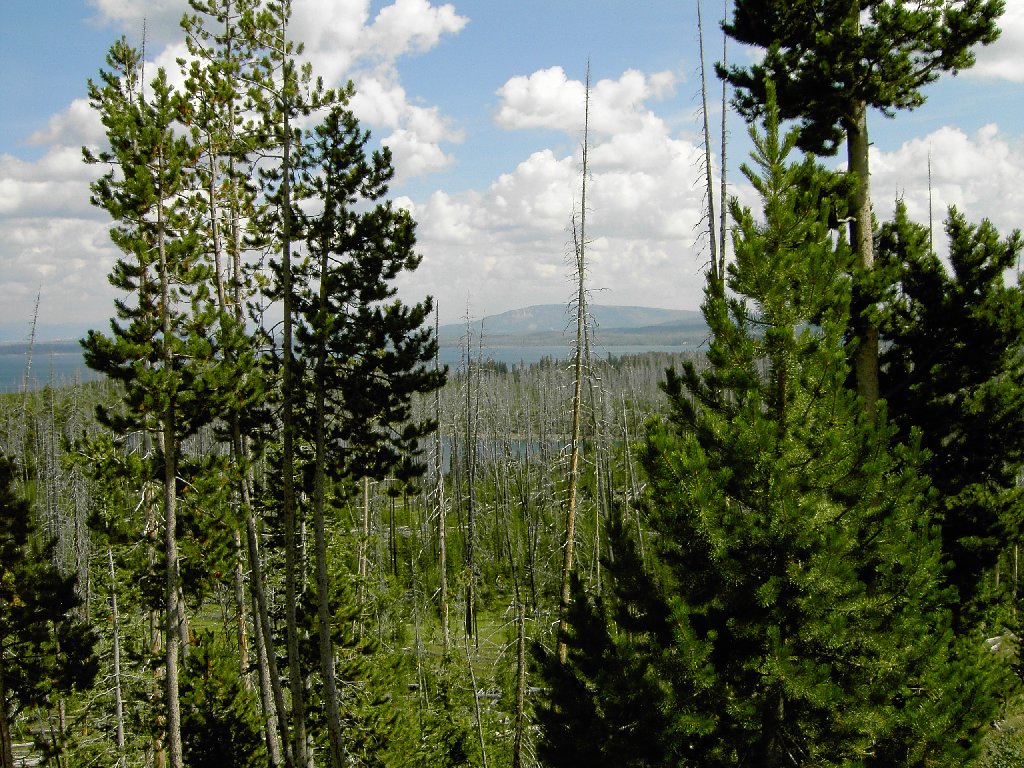
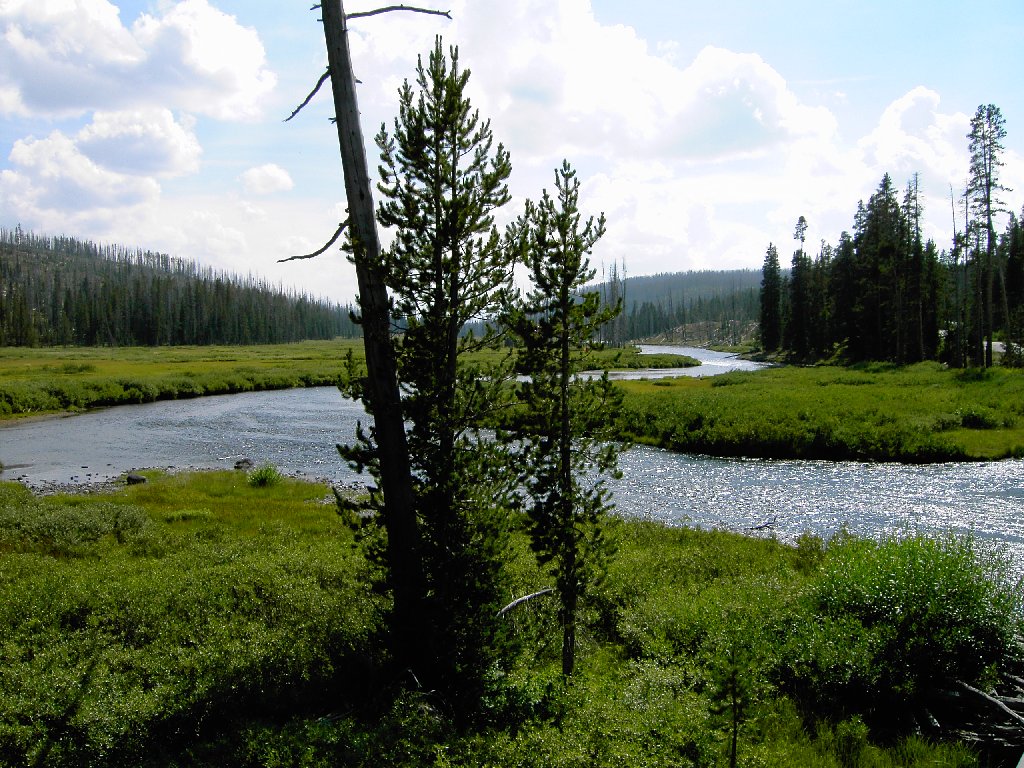
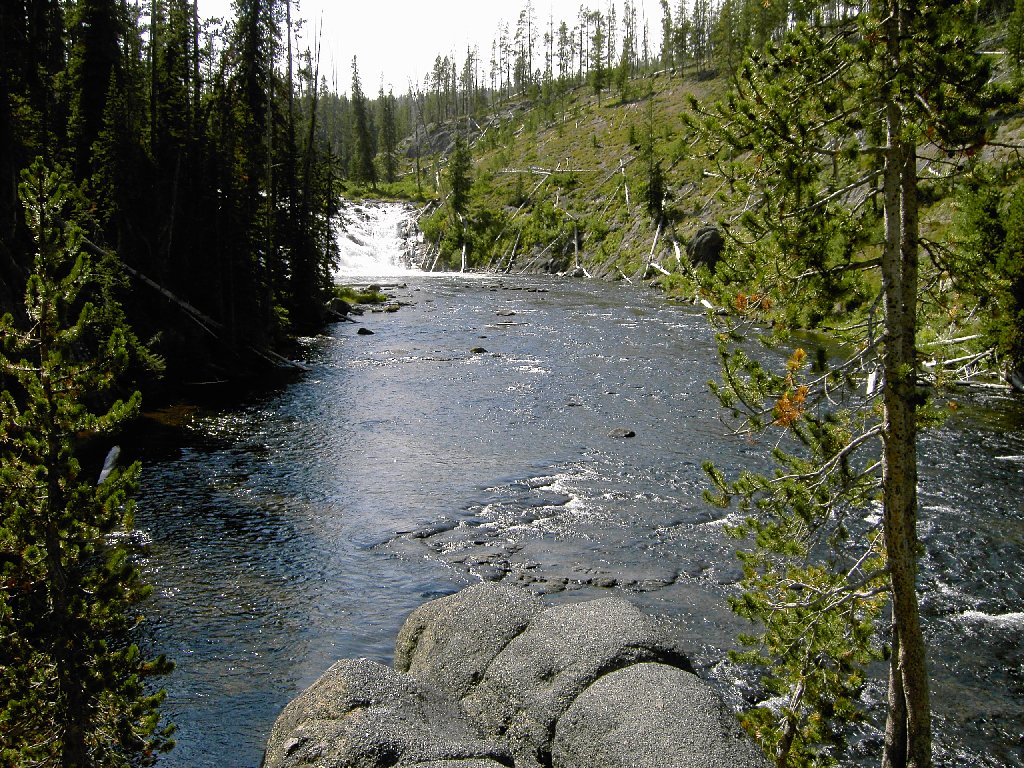
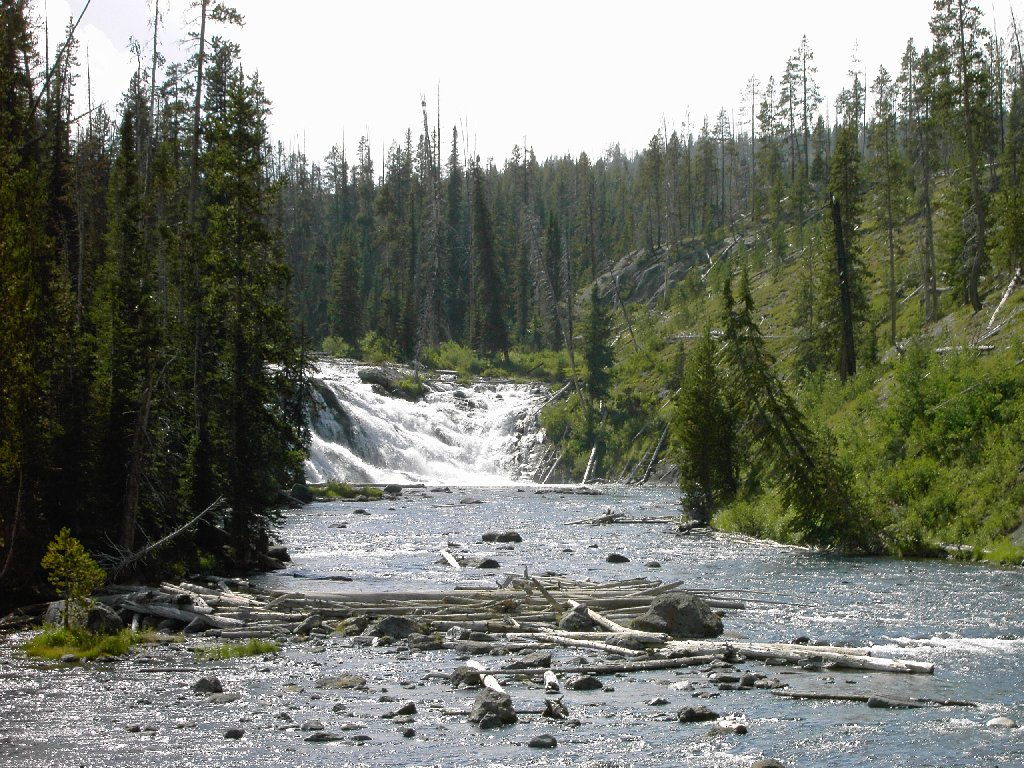
With this much beauty visible from the road, imagine how much
there is to see from the hiking trail or a kayak! Michael and I are
already planning a return.
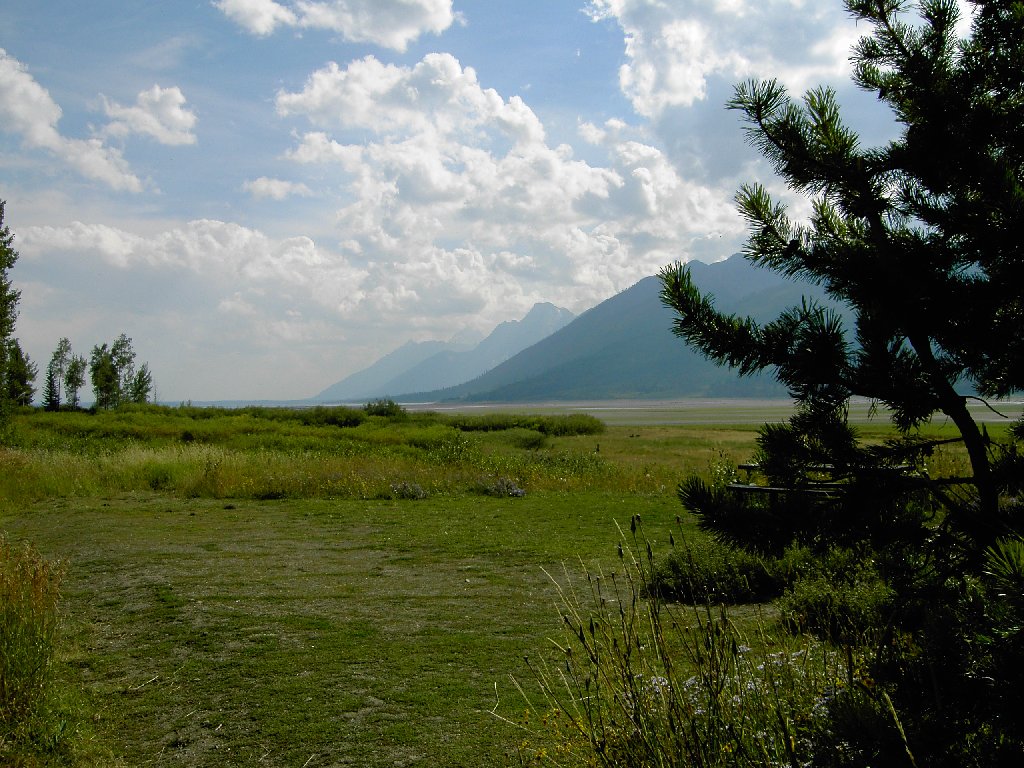
The Grand Tetons National Park
Just south of Yellowstone is Grand Teton National Park. These incredibly high
peaks provide a backdrop to the town of Jackson, Wyoming, home to many
celebrities, who are the only ones who can afford to live there.
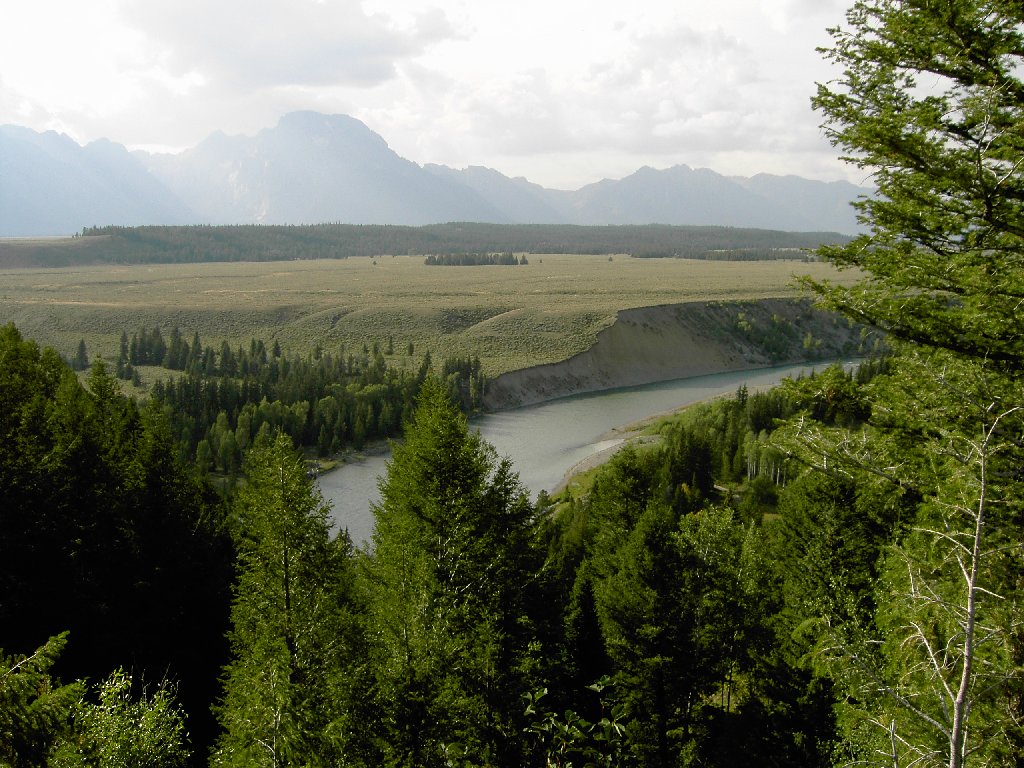
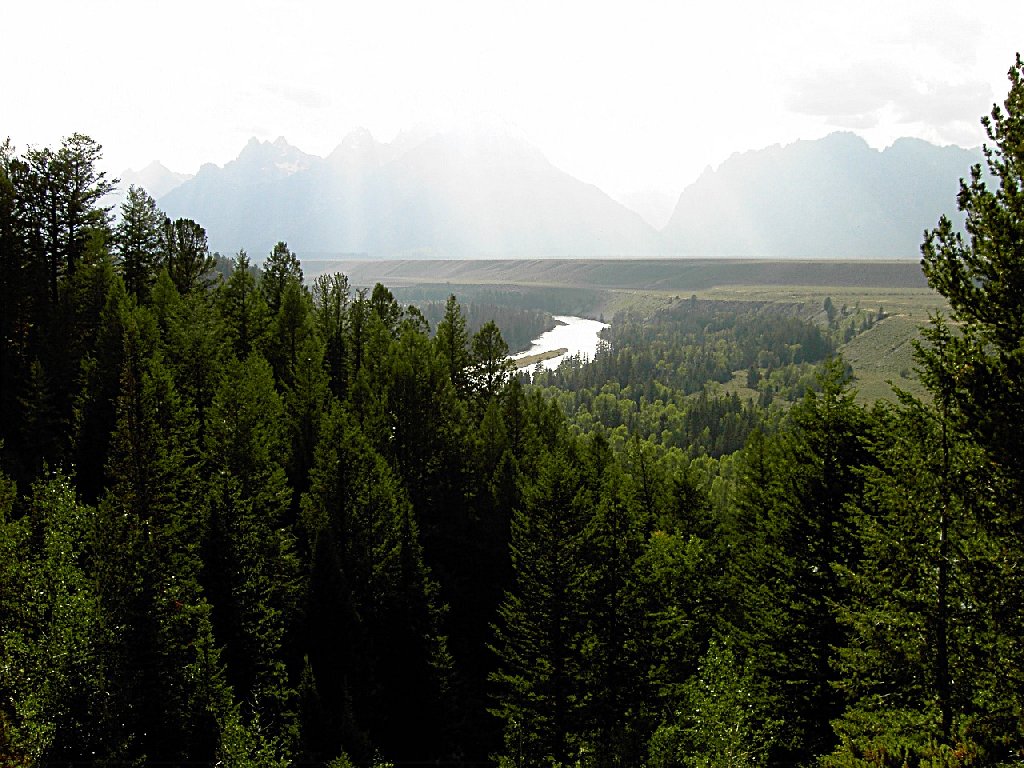
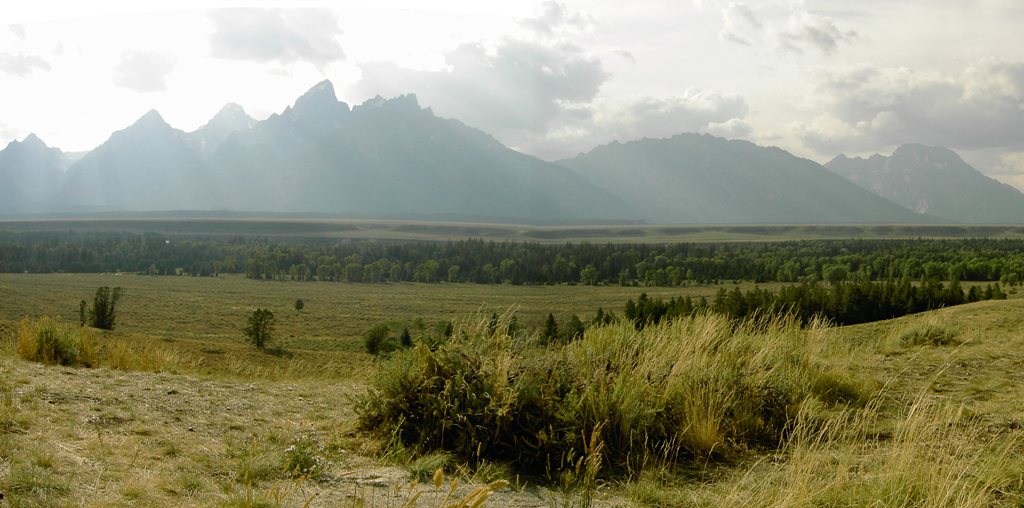
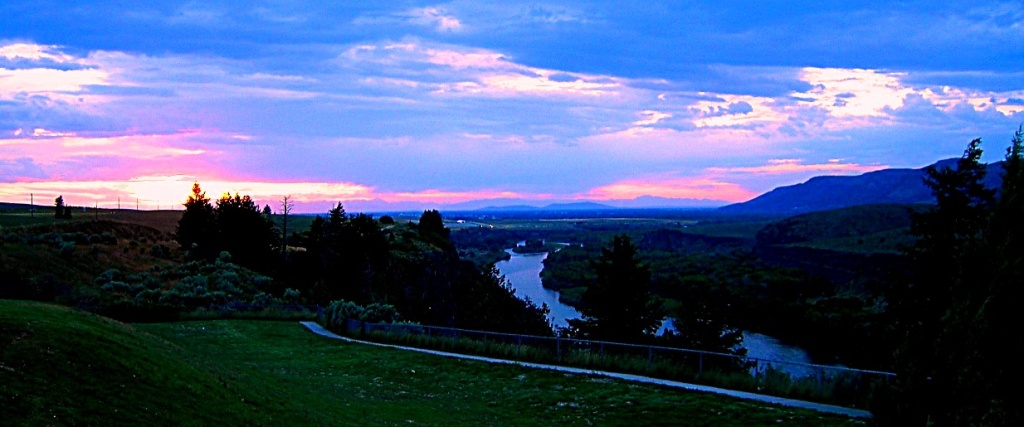
Our final trip requirement was to see Idaho; which we did by driving through
Idaho Falls. We didn't get to see the falls, but did enjoy the sight of the sun
setting over the Snake River that forms them.
Our original schedule had us driving all the way to Beaver, Utah, on this
day. Well, that wasn't going to happen! For the only time on this trip,
we cancelled our reservation and stopped "early" (though it was still after
midnight), in Ogden, Utah.