|
By: Paul S Cilwa |
Occurred: 9/30/1969
Posted: 5/5/2024 |
|
Page Views: 320 |
| Hashtags: #Places #CrossCountry #Travel #Darien #Connecticut #Virginia #Luray |
| And the heavens opened up, and we nearly drowned. |
| Estimated reading time: 6 minute(s) (1291 words) |
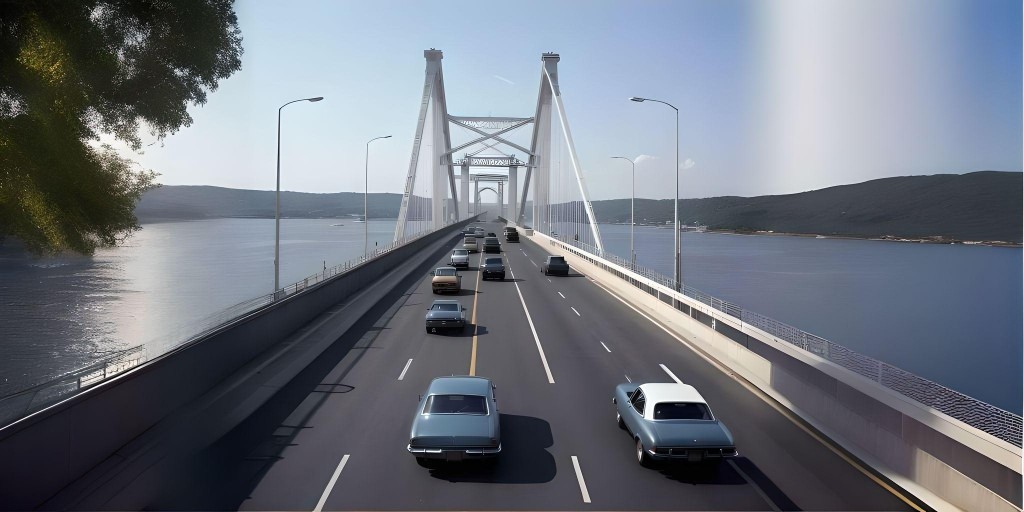
But first we had to get across the Hudson River, preferably without going
through New York City again. Our best bet was the Tappan Zee Bridge,
which was still in operation. The Tappan Zee Bridge, officially known
as the Governor Malcolm Wilson Tappan Zee Bridge, was a significant
cantilever bridge in New York State. It spanned the Hudson River at one
of its widest points, connecting South Nyack in Rockland County with
Tarrytown in Westchester County. The bridge was named after the Tappan
Native American tribe and the Dutch word zee,
meaning sea,
referring to the wide expanse of the river it crossed.
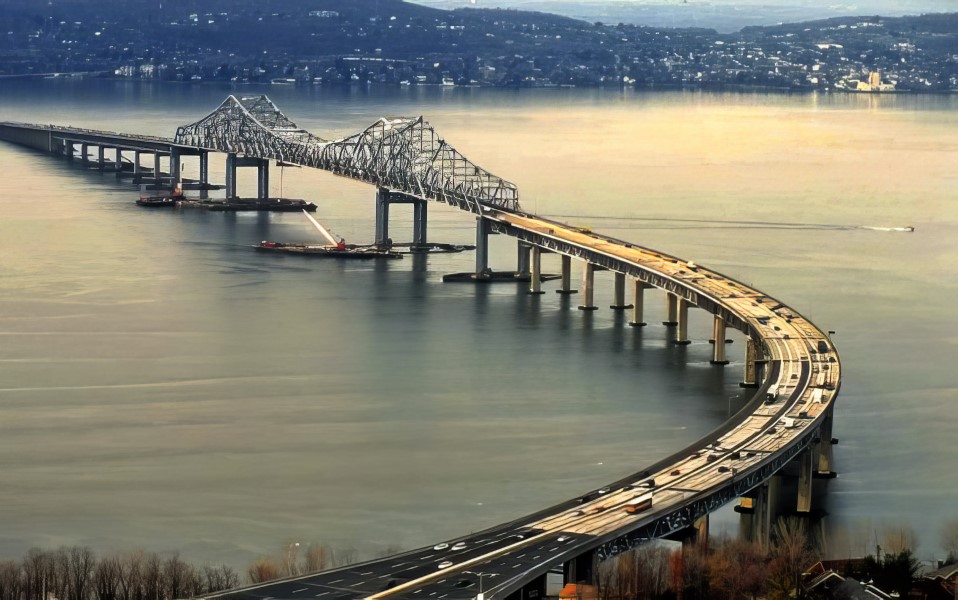
Construction of the original bridge began in March 1952, and it opened
to traffic on December 15, 1955. It was designed to handle a maximum of 100,000
vehicles per day but by the 2000s, it was carrying an average of 140,000 vehicles
daily. This heavy usage led to significant wear and tear over the years,
which is why it had to be replaced. The new bridge, with a different name,
opened in 2017 but people still called it the Tappan Zee Bridge
.
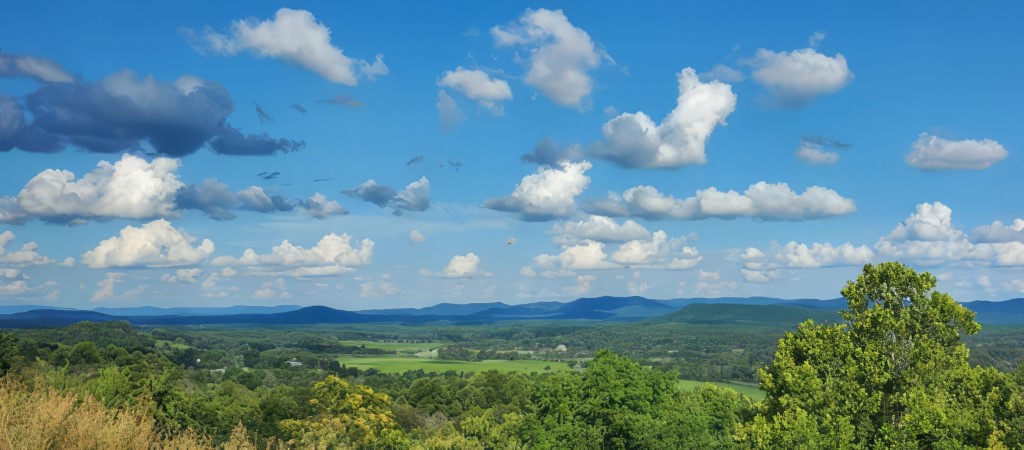
Eventually we got to Virginia, and I-81. This highway was supposed to have been finished,
and our map said it was; but in reality there were many sections still under
construction. Still, you couldn't say the views from the road weren't
spectacular!
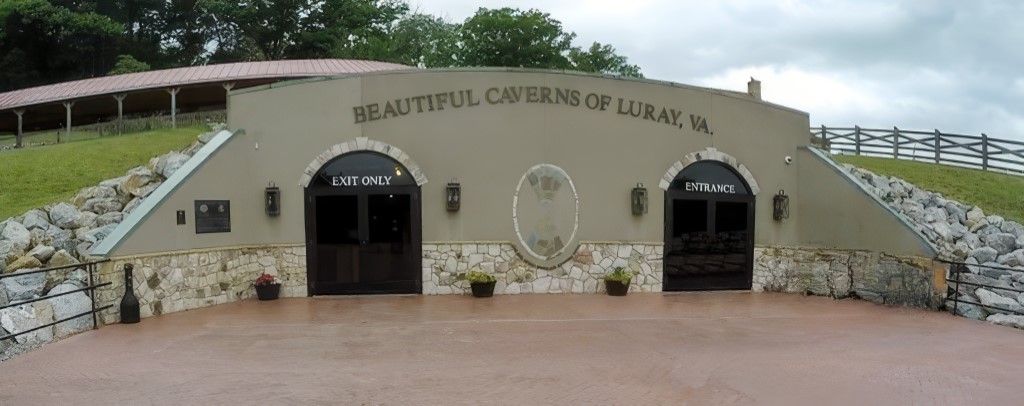
But, despite all that, we managed to get to Luray before the caverns closed,
mainly because the last tour was at six. (I had assumed a 5 PM closing time.)
So we took it!
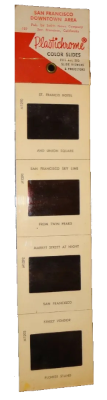
Now, of course I wanted to take photos. I had my camera, but hadn't realized
it was on its last frame of film, and I'd left the new roll in the car. However, in
the 1960s, color slides were a popular souvenir item sold at tourist attractions,
including Luray Caverns. Visitors could purchase strips of slides as a way to
remember their experience without the need for a camera or the skills to capture
the beauty themselves. These slides featured professionally taken photographs of
the attraction's highlights, allowing tourists to bring home a piece of their
adventure in a format that could be easily mixed in with their own travel slides
and viewed on a slide projector at home.
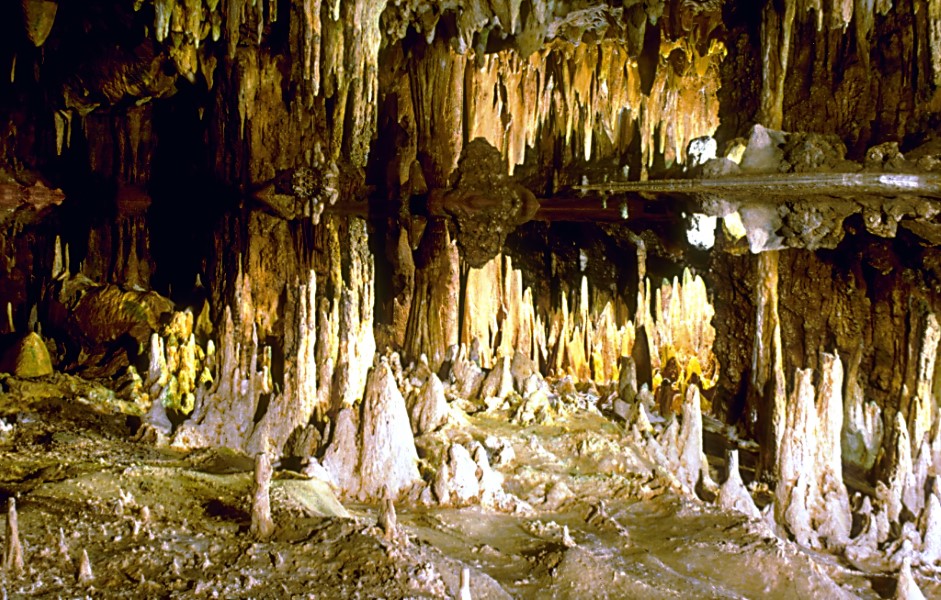
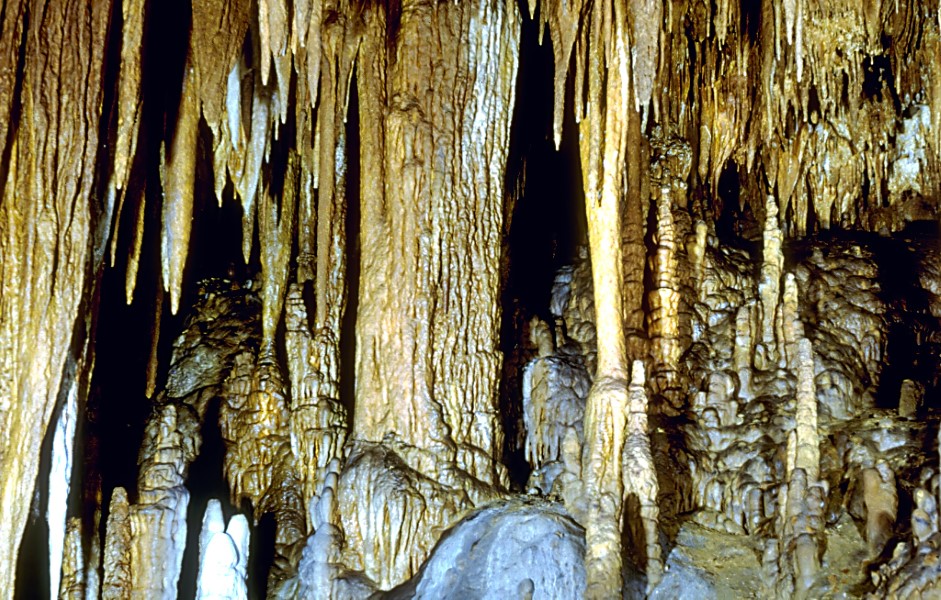
Which I did. To be honest, I can download far superior photos of Luray Caverns
from the web. But for historical accuracy, here are the five color slides I
purchased in the gift shop on our way out, for (as I recall) $1.25.
Now, across the road from the entrance to the caverns, was a bare dirt area
on which people were camping. There weren't many RVs in those days, but a number of
families had pitched tents on this area. And it was unmanaged, meaning there
was no charge! So that was good. However, it was actually somewhat crowded.
And I wasn't looking forward to trying to sleep on that rock-hard ground.
So here's where any experienced camper would start to see red flags. The bare
area inclined down into a sort of gully, where there were bunches of thick,
waving, green grass. And it just looked so soft. And that's where I
wanted to put the tent.
And Chris, with even less experience camping than I had, agreed.
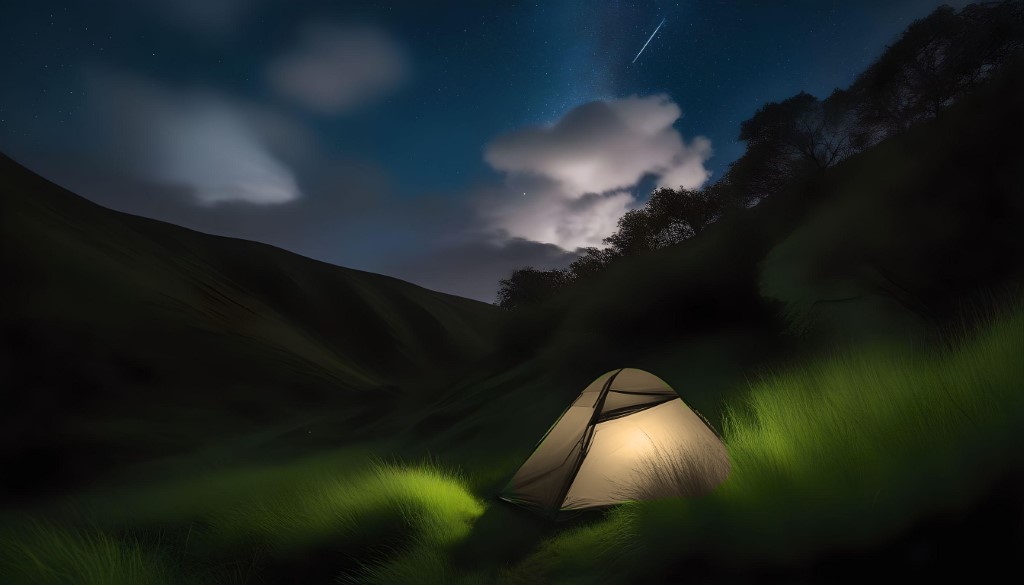
So, on the soft grassy ground, we went to sleep beneath a sky of brilliant stars,
and only one cloud on the horizon. We slept deeply, without a thought as to what
creates "gullies" and why would lush, tall grass grow at the bottom of one.
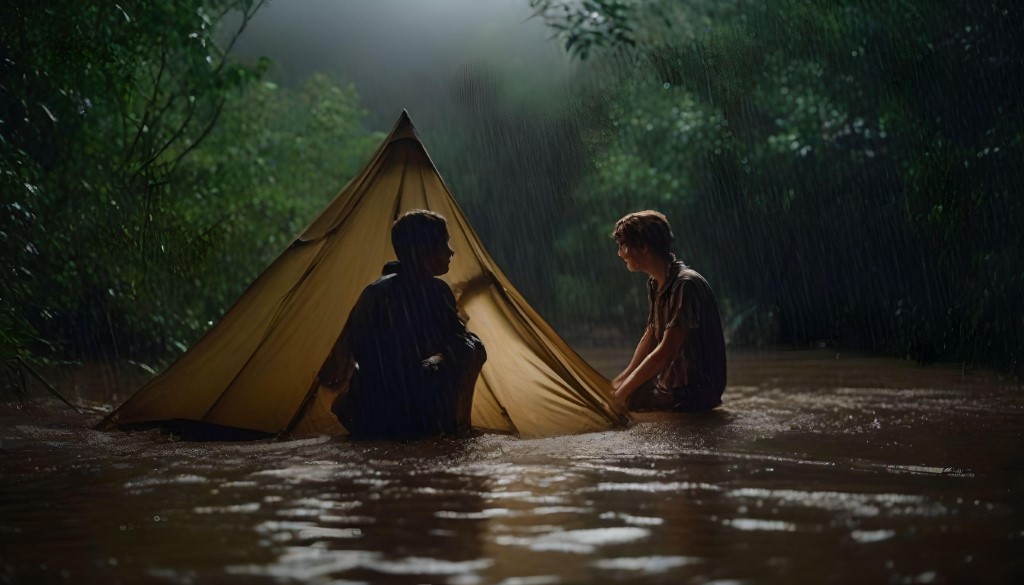
The next thing either of us knew, we were engulfed by water, the tent was being
dragged by a flash flood with us in it, entangled in our sleeping bags and
the tent itself. Somehow we both got out without drowning. Somehow we managed
to drag our sleeping bags and tent out of the flood. Luckily, most of our gear
had been left in the car, parked up where all the smart people had camped.
I mean, if I had only thought about it. Why was the grass in
that gully so green? When it rains, where else would the water go? And
why hadn't I realized the rills and gullies in the packed ground above
the result of erosion from probably frequent rains?
It was, according to the clock in my car, 4:10 AM. Obviously we weren't going
to get any more sleep this night. And if we wanted to get any the next
night, we were going to have to get this crap dried before then.
I remembered having seen a laundromat in the little town on our way to
the caverns and we headed for that.
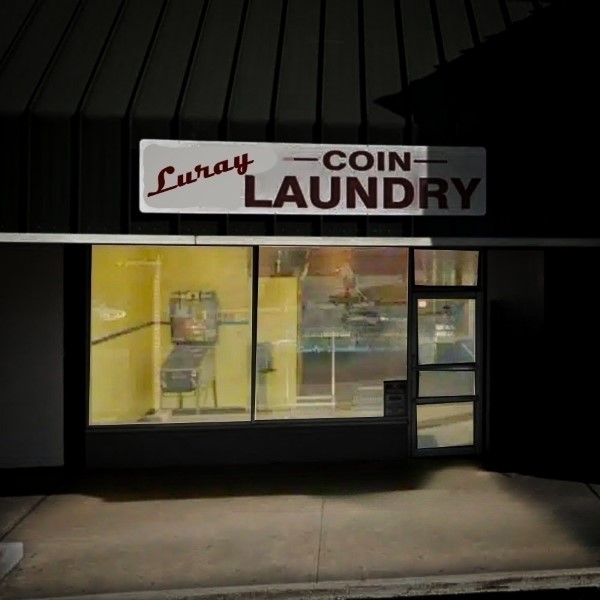
Luray being such a small town, I had figured we'd have to wait for the laundromat
to open. I was hoping that might happen as soon as 7. But it was actually a
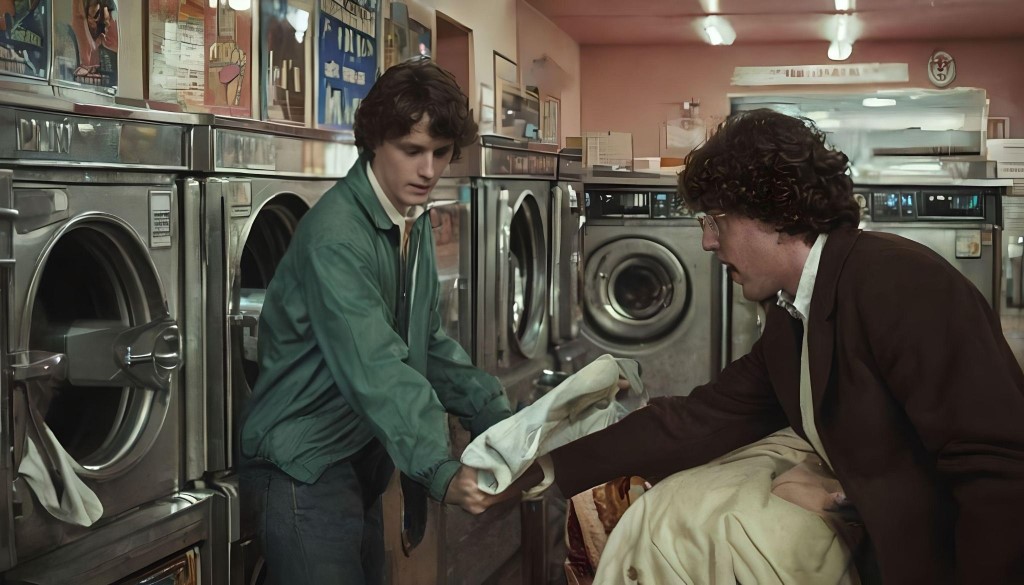
24-hour laundry! So Chris and I gathered all our change and loaded
our incredibly heavy, drenching wet sleeping bags, as well as the clothes we'd been
wearing, into driers.
Yeah, and no, I either didn't think of running the bags through a
washer to spin them drier, or didn't want to waste money on a whole
wash cycle when all I wanted was the spin. (I'm OCD about such things.)
So our stuff was all loaded into driers, and I had a quarter left over.
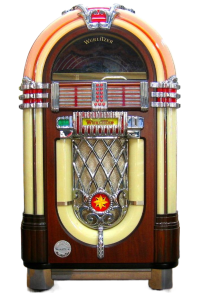
And the laundromat had a jukebox!
Yes, a good old-fashioned Wurlitzer loaded up with the latest in 45s.
And there was a new hit, a favorite, by the group The Archies.
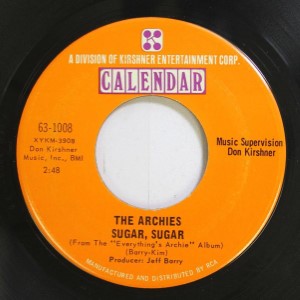
The Archies were a fictional band made up of characters from the
Archie Comics universe. They were created for a Saturday morning
cartoon show called The Archie Show,
which aired in the late
1960s. The band consisted of Archie Andrews on guitar and lead vocals,
Reggie Mantle on bass, Jughead Jones on drums, Veronica Lodge on keyboard,
and Betty Cooper on tambourine and backup vocals. Even though
they were cartoon characters, The Archies had real hit songs, with
their most famous being Sugar, Sugar
. It was a catchy tune that
became a number-one hit in real life, and many people loved to sing
and dance along to it.
So that's the one I spent my last quarter on.
And Chris and I listened and sang along while our sleeping bags dried.
And the jukebox got to the end of the song.
And it started to play again.
And when the song finished, it started to play again!
Apparently the jukebox was broken. And, as the hour went by and the
song continued to play over and over and over and over,
it quickly went from being catchy to being grounds for murder.
And then, adding insult to injury, the dryer stopped…
And our sleeping bags were still wet!
So now, we had to wait until the bank across the street opened, so
I could break a fiver and get change. (Yes, that's right; there
was no change machine in the laundromat in 1969!) Luckily I didn't have
to wait until 9 AM; a little restaurant next door opened at 7.
So we refueled the dryers and napped in the car while we waited
for the sleeping bags to be done, so we could actually start
our next-to-the-last-day.