|
By: Paul S Cilwa |
Posted: 3/30/2007 |
|
Page Views: 4,902 |
| Hashtags: #Spirituality #Metaphysics #AutomaticWriting |
| A metaphysical way of avoiding writer's block? A look at automatic writing. |
| Estimated reading time: 13 minute(s) (3067 words) |

I was 19 when I encountered
Spiritualism and such concepts as "automatic writing." Since I've been
dabbling in it a bit lately, I thought I would introduce the concept to those of
my readers unfamiliar with it.
First of all, a definition: Automatic writing is writing done by a person who
is unaware of the content or possibly even the act of that writing.
An example would be someone on the phone, with paper and a pen in hand, ready
to take notes; but no notes need to be taken. The person might doodle a bit
while continuing the conversation. When the phone call is complete, the person
notices, to his or her surprise, that some of the "doodles" compose, in fact,
words or sentences. Moreover, those words might hold the solution to a problem
with which the person had been concerned, even though the phone conversation
bore no relationship either to the problem or to the solution.
It's a fairly common experience, one for which we are generally grateful when
it occurs. It happens often enough, in fact, for psychoanalysts to have their
patients utilize automatic writing as a means of getting through to their
subconscious minds. Although skeptics point out that there's no reason to
believe the subconscious mind has any better grip on the causes of human
problems than the conscious mind, analysts continue to use the technique and
their patients seem to derive some benefit from it.
A person can encourage automatic writing (when not on the phone) by simply
holding a pen over paper and devoting his or her attention to something else,
like TV or even a book. The idea is to engage the left-brain enough that the
right-brain is freed to express itself. Motions from the arm are to be ignored,
except to change sheets of paper when needed.
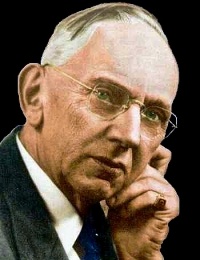
Automatic speaking is, of course, merely a variant on automatic writing,
though it is obviously going to be even more difficult to speak without paying
attention, than to write without paying attention. Consequently most people who
"auto-speak" do so while in a trance,
an altered state of consciousness characterized by the replacement
of the subject's usual consciousness with that of some other level of
consciousness—or, perhaps, by the consciousness of a completely different
entity. (The details have not yet been hammered out scientifically; and the
claims of a replacement consciousness cannot be accepted without proof.)
Much automatic communication is, therefore, done in trance. But much isn't.
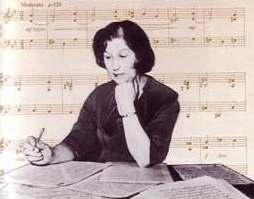
In the 1960s, widow
Rosemary Brown caught the public's attention when she began to transcribe
pieces of music supposedly written by famous, deceased, composers such as
Liszt, Brahms and Beethoven. Many of the pieces she transcribed were too complex
for her to play—she'd only taken a years' worth of piano lessons. But music
experts agreed the pieces had been written in the style of the composers to whom
Brown attributed them.
When asked to describe the process by which she obtained this music, Ms.
Brown explained that
Liszt controlled her hands for a few bars at a time, and then she wrote down
the notes. Others, like Chopin, told her the notes and pushed her hands on to
the right keys. Schubert tried to sing his compositions to her "but he hasn't
got a very good voice". Beethoven and Bach simply dictated the notes—a method
she said she disliked since she had no idea what the finished product would
sound like. They all spoke to Brown in English, which she stated did not
surprise her. "Why shouldn't they go on learning on the other side?" she asked.
Of course, people more learned of psychic phenomena assume that communication
between the dead and the living is actually mind-to-mind, or
telepathy. After all, no sound waves are present—visitors in attendance
during one of these visits hear nothing out of the ordinary. And telepathy is
generally believed to be language-free: Concepts are transmitted, not the
words for them; leaving it to the recipient to put those concepts into
his or her own words.
While that process sounds tricky enough, it gets stickier when the concept is
one with which the recipient has a conflicting image. The many people who have
employed automatic writing or speaking for departed saints, for example, often
use stilted language more typical of the popular translations of that person's
writings, than the fresh, modern way the saint would have thought in.
(Jesus never actually said the words, "Verily, I say unto thee"—that's a 17th
century English phrase, used when the King James version of the Bible was
translated. The concept in Jesus' mind might have more closely corresponded to
today's use of "Check this out, dawg!")

Another means of communing with the subconscious is the
Ouija board, sold as a "game" by Parker Brothers (similar "talking boards"
are sold by other companies, as well). Although usually used by more than one
person at a time, a single user can place fingertips on the planchette and
experience it seeming to move by itself. It doesn't, of course; the
ideomotor effect is responsible for making it seem so. However, this effect
only describes the source of the force that moves the planchette, not the
controller of that force. Most obviously, it would be the user's subconscious
mind. However, there are many documented instances in which the user of a Ouija
board obtained information that proved useful or accurate, yet wasn't within the
user's personal store of knowledge. For example,
Author John Fuller used a Ouija board in his research for his 1976 book
The Ghost of Flight 401.
As he was skeptical of its effectiveness, he worked with a medium and claimed they both contacted
Don Repo,
the flight engineer on the flight which crashed into the Everglades en route
to Miami. According to Fuller, the information divined described facts that
neither he nor the medium previously knew.
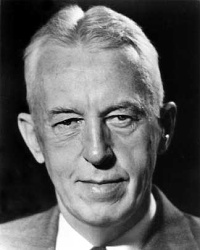
According to the book
Pass It On, published by the New York Alcoholics Anonymous organization,
AA co-founder Bill Wilson was a regular user of the Ouija board, even developing
the shortcut technique of "knowing" what the spirit was about to spell,
therefore enabling him to bypass the board and simply write down the
information. He claimed that he received the
twelve step method directly from a spirit without the board and wrote it
down.
Although devices similar to Ouija boards had been used for centuries, mass
marketing availability and the ease of achieving results brought about a huge
rise in Ouija use from the 1920s through at least the 1960s. If there really is
a global conspiracy trying to prevent people from achieving enlightenment, and
if the Ouija board indeed permits people to receive information from Beyond, one
would expect a disinformation campaign to discourage Ouija experimentation and
indeed, there has been that very thing—far more words have been published
against even trying Ouija boards, for example, than you will find
debating the use of known health hazard
NutraSweet. Between Christians warning against "certain possession by
demons!" and psychics such as Suzy Smith, who in her 1971
autobiography, said, "Warn people away from Ouija and automatic writing. I
experienced many of the worst problems of such involvement. Had I been
forewarned by reading that such efforts might cause one to run the risk of being
mentally disturbed, I might have been more wary."
The fact is, whether the source of information in automatic communications is
one's own subconscious, a departed spirit, or even a "demon", the simple
way to handle it is with discretion: The good tree, bad tree sieve described by
Jesus in the Gospels. If the information has a wholesome source, the information
will be useful and good (like the Twelve Steps?). If the source is evil, such
will become immediately apparent.

In most likelihood, the information will be neutral and of meaning primarily
to the recipient. However, sometimes the information source has grander notions.
When New York author/housewife
Jane Roberts was contacted by "Seth", first through a Ouija board, then
through trance
channeling, in which she allowed her body to be used by Seth for the purpose
of dictating books (to Roberts' husband, Robert Butts) on the nature of reality.
Although Roberts herself doubted that Seth was any more than a figment of her
imagination, she had to admit that Seth's concepts went far beyond anything she
could consciously have imagined; and, even now, more than twenty years after
Jane's death, Seth's books and teachings are still being studied by millions of
people around the world. (A Google search just now of "Seth Material" turned up
over 75,000 pages!)
Many years ago, when I was leading an
abductee support group on CompuServe, during an online chat I felt a contact
with a being from some other planet. This was a mental contact, and of course
there is no objective proof that it happened at all. Yet, it seemed real
to me. The person who contacted me had been interfacing with his planet's
Internet, which used direct mental communication rather than mouse or keyboard;
and he had been idly asking about the possibility of contact with beings from
other worlds. The connection, therefore, was through his Internet. He was an
ordinary citizen of his world, a "fish farmer," not a profound thinker; and, in
fact, he tired rather quickly of the conversation. Yet, from my point of view,
while I do not remember with whom I was having the online chat that evening, I
can still recall the image of one of the ponds of his fish farm, a shallow pool
about an acre in size, at the base of a stony, limestone butte, beneath a clear,
deep blue sky.
In fact, even today, well over a decade later, my mental picture of that farm
is just as clear and real to me as my thought images of Yosemite, Grand Canyon,
or Key West—places to which I've physically been.

If you're going to choose with whom you'd like to commune, who would you
pick? Most people have a deceased loved one with whom they have left some
business unfinished. Retired journalist Suzanne Ward
might qualify as one of those. In 1980, she received the
shocking news that her 17-year-old son, Matthew, had been killed in a car
accident. Like many others in her situation, Suzanne (known as "Suzy" to her
friends), was driven to visit mediums around the country, hoping for a word from
her beloved child. Indeed, she received what she was looking for, as the
unrelated psychics passed on information that only Suzy (and her son) could have
known. But among the information she received, was the statement, ostensibly
from Matthew himself, that Suzy herself would soon be able to receive messages
directly from him!
"Soon" can be a subjective term. It was actually some 14 years after
Matthew's death that Suzy found herself transcribing messages from Matthew at
her computer keyboard. Suzy, of course, doubted that the messages really
came from Matthew; it seemed more likely that some part of her grieving,
unconscious mind was trying to fulfill her most poignant wish. But as Suzy
became more comfortable with this unusual form of communication, the quality and
content of the information she received rapidly exceeded anything she could have
expected. After all, Suzy might reasonably have hoped for news that Matthew,
wherever he was, was happy and fulfilled; and the title of the first book of
Matthew's messages, Matthew, Tell Me About Heaven suggests that she
received exactly that. But soon Matthew began providing information on politics,
including details regarding the Illuminati and other subcurrents that move
modern global affairs—things Suzy, as a retired mainstream journalist, knew
nothing about and in fact had no previous interest in. Matthew assured her there
would be nothing to the Bird Flu scare; he's also predicted that there will be
no full-out war in Iran, and the eventual arrest of Karl Rove. While the jury is
still out on the last two points, it will be interesting to see whether
Matthew's accuracy will continue its high level into the next year or so.
Seth occasionally brought "guests" to speak through Jane Roberts; similarly,
Matthew has been accompanied by other entities who occasionally speak (or type!)
through Suzy. One of these calls itself God. Suzi's "God" doesn't claim to be
the Creator of All Things, but "merely" the god of this Universe. As such,
though, He follows the typical New Age premise (unknown to Suzy until Matthew
explained it to her) that God is a universal energy field, as opposed to a
"person", and that all things in our universe, physical and otherwise, arise
from God and are an inextricable part of Him. (He explains that the masculine
pronoun is simply required by English, and that He is neither masculine nor
feminine, but an amalgamation of both, since He is every man and every woman
ever born, as well as their furniture and wardrobes.)
God, as reported by Suzy Ward, goes to great lengths to illustrate His unity
with all people and things, including those things we here on Earth would like
to judge:
You are worried that I'm taking sides, or better said, can't take sides.
Then who better to set you straight, my child? I am as much the gentleness
and searching and on the lighted pathway as you wish to be, yet there is the
part of me that equally is, and cannot deny, that soul whose interests and
actions and motives are what you call evil. I am not separate from that
soul, and whatever that soul does and all of its effects, however "ungodly,"
as you think, become within my composite and are an inseparable part of me.
So, to say that I could "take sides" of myself is just plain unscientific,
isn't it?
As quoted by Suzy, God's choice of grammar and vocabulary comes across as
quite relaxed, even casual. In the transcripts, God explains that this is to
show how intimate a part of Suzy He is.
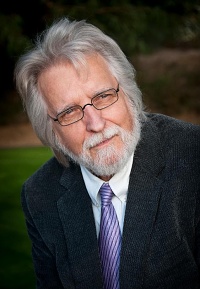
Author Neale Donald Walsch
was at a nadir of his life when his contact with the Beyond
began. A fire had destroyed all his possessions; his marriage had fallen apart;
an accident had broken his neck. Reduced to living off the proceeds from
recycled aluminum cans, in desperation he tried something new: Asking God why
the heck this had all happened to him? Walsch certainly wasn't the first person
ever to do this, but he may have been one of the few to actually listen
to the answer.
After writing down all of his questions, the author claimed in his
interview
with Larry King he heard a voice over his right shoulder say:
"Do you really want an answer to all these questions or are you just
venting?" Though when he turned around he saw no one there, Walsch felt
answers to his questions filling his mind and decided to write them down.
The ensuing "dialogue" became the
Conversations with God books.
Neale's God certainly has much in common with the God who dictates to Suzy,
and as described by Seth. He's prolific, too, having put out no fewer than nine
books through Neale (and parts of four through Suzy).
Both Jane Roberts and Suzy Ward initially suspected that they were "merely"
allowing their subconscious voices to speak. Seth and Matthew, on the other
hand, claim to be independent beings. And yet, when we ponder the idea that All
Things Are One, and that that One is God, it becomes clear that this connection
is a two-way street: Not only am I an aspect of God; God is an aspect of me.
And if God is also an aspect of you, then so am I! Even though we are
both living at the same time, through our Oneness there's no reason why we can't
channel each other!—And isn't that what telepathy really is?
Likewise, communing with God becomes an exercise that any one of us can do.
In fact, should do! Isn't that the very intention of prayer and prayerful
meditation? Just because, in pre-computer days, such communing was done while
fasting and kneeling doesn't necessarily mean that's the best (or only) way to
do it. After all, we acknowledge our methods of agriculture, healing and
conventional communication are more effective now than in centuries past. So,
why shouldn't the same be true of our method of prayer?
All you have to do, really, is shake off centuries of indoctrination that
insists you require an intermediary, such as a priest or rabbi or minister or
mullah, in order to find out what God has to say.—And this, in spite of Jesus'
insistence that God speaks to us individually.
Try it yourself. Use a keyboard, or pen and paper—whatever means is most
comfortable to you. Place yourself in a peaceful, supportive environment and
mentally announce your intention to freely and unguardedly accept information
from God. Then see what happens. Ask a question. Type whatever pops into your
mind. Be accepting and open about what you receive.
Hello, God. In reading Matthew's mother's conversation with you, I am moved to do the same.
Always glad to talk with a fan…
I think your first impulse will be amazement, then joy. It's automatic.