|
By: Paul S Cilwa |
Posted: 5/21/2008 |
|
Page Views: 4,507 |
| Hashtags: #Politics #Health #Reincarnation #Metaphysics #Spirituality |
| Are you actually, personally responsible for every child in the world? |
| Estimated reading time: 12 minute(s) (2622 words) |

As recently as a hundred years ago, American children were considered the
property of their parents, though not to the extent that they could be sold. (In
some other countries, they could be.) As property, children were required to do
as their parents commanded, could be physically punished (whipping or
"switching" was common), and any money they earned was turned over to the
household.
On the other side of the coin, parents were expected to feed, clothe, and
shelter their children—to not do so might lead to accusations of child neglect.
They were also expected not to "punish" their children so severely as to cause
permanent injury, though when that did happen, authorities generally looked the
other way. Parents also bore the responsibility for unruly children, having to
pay for damages a child caused to a third party.
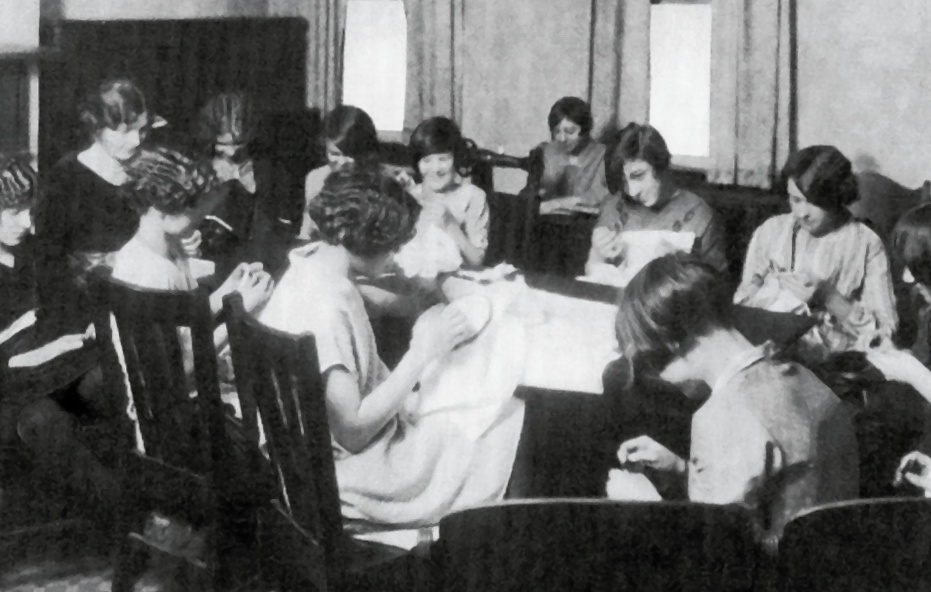
Parents were also responsible for their children's education. Girls were
required to know how to cook, sew, clean, and manage a household; these lessons
were taught by their mother or another female family member. Since women weren't
required to know more than that, few of them attended formal schools. Boys
generally attended a public school long enough to learn to read and write. At
that point, they either became apprenticed to their father to learn his trade,
or to the practitioner of some other trade the boy's father thought might be
more lucrative. Neither boys nor girls had much say in their future careers.
As the Industrial Revolution made itself felt, individual trades became less
significant. Boys could now go to work directly in factories, and many did so at
ages younger than we would like to think of children working. (Today in China,
it is common for three-year-olds to work in factories. Of course, the tots don't
do any heavy lifting—you need a five-year-old for that. Many of the cheap goods
we buy at Wal-Mart were made by three-year-olds—and our purchases there help
promote that system.)
According to the
International Labor Organization,
even today, there are an estimated 218
million children aged 5 to 17 in child labor worldwide. That figure excludes
child domestic labor.
Then we come to the topic of children's health. It seems likely there has
never been a time when humans went without health care of some sort. Indigenous
people today have a shaman or doctor who is trained (generally by his father or
her mother) in the herbs and treatments for most illnesses that affect his or
her people. Although American medicine pooh-poohs such specialists as "witch
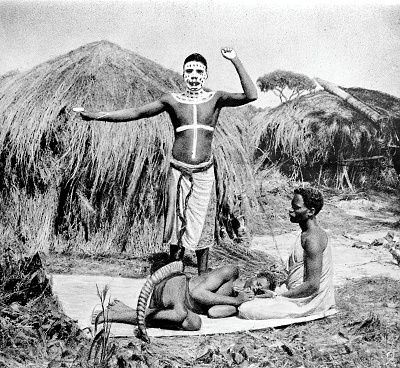 doctors", the fact is they are quite successful in most cases—if they were not,
they would be killed for their incompetence (which is something you should point
out the next time your doctor whines about his malpractice insurance payments).
While indigenous peoples always have doctors, they do not have lawyers; so,
suing is out of the question.
doctors", the fact is they are quite successful in most cases—if they were not,
they would be killed for their incompetence (which is something you should point
out the next time your doctor whines about his malpractice insurance payments).
While indigenous peoples always have doctors, they do not have lawyers; so,
suing is out of the question.
With the dawn of civilization in Sumer 5000 BCE, came more formally-trained
medical specialists. Medical texts from Sumer describe the "doctor of waters"
(he gave herbs) and the "doctor of oils" (he used enemas).
Whether they had access to shamans or doctors, parents, without such
high-level medical training, have always resorted to adding the power of prayer
to the medical specialists' expertise. That prayer may have been to Enlil, Enki
or Ninurta; or to the Sun or the Son or whatever.
Studies have shown
that prayer, no matter to whom it is directed, does impact the outcome of an
illness. Patients who are prayed for are statistically more likely to recover
from a serious illness. (People normally recover from non-serious illnesses,
such as colds, on their own; and of course they are too busy laughing to pray
for victims of ski injuries, which may be why Sonny Bono died.)
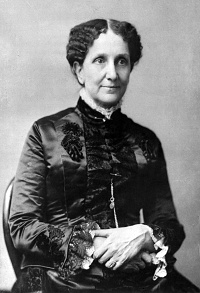
But in 1879 a new wrinkle evolved. A woman named Mary Baker Eddy, who had
experienced what she described as a "miraculous healing", founded a religion on
the premise that doctors were unnecessary—all that was needed to heal was
faith in the teachings of Jesus. She called her new religion Christian
Science; and it was immediately controversial. Mark Twain took it to task, not
because of its beliefs, but because he perceived it to be a cult devoted to Mary
Baker Eddy herself. And George Bernard Shaw famously described Christian Science
as "neither Christian nor scientific." Nevertheless, the church experienced a
rapid growth for the first few decades of its existence. It's currently
estimated to have a membership of under half a million adherents (though some
estimates are closer to a tenth of a million). That's not bad for a religion
whose members, opponents assumed, would all die of untreated disease within ten
years.
Christian Science claims to have over 50,000 testimonies of healing through
Christian Science treatment alone. But only the healings of children continue to
cause controversy, because, we assume, the child doesn't know any better and,
when ill, has no choice of treatment. This came out in a big way in 1988, when
Massachusetts prosecutors charged David and Ginger Twitchell with manslaughter
in the 1986 death of their two-year-old son Robyn. Robyn Twitchell died of
peritonitis caused by a bowel obstruction that medical professionals declared
would have been easily correctable. The Twitchells' defense contended that the
couple were within their First Amendment rights to treat their son's illness
with prayer and that Massachusetts had recognized this right in an exemption to
the statute outlawing child neglect. The Twitchells were convicted of
involuntary manslaughter and sentenced to ten years probation and required to
bring their remaining children to regular visits to a pediatrician. However, the
conviction was overturned in 1993.
Most Christians, and all atheists, were horrified at this point. In their
view, a person who does not care properly for their child, must be forced
to do so.
However, "proper care" is not an easily defined term. It's not a case of
either cure by prayer or see a pediatrician. Many people believe in
alternative medicine, rather than traditional Western allopathic medicine.
Families who have emigrated here from the Far East trust in Chinese herbal and
acupuncture treatments—as do billions who live, and are cured, there.
Folks who trust in chiropractic are also likely to avoid allopathic doctors
(though my own chiropractor didn't hesitate to take his son to the hospital when
he suffered an attack of appendicitis).
A more recent case is that of 11-year-old
Kara Neumann,
who recently died of complications from diabetes because her
parents' religious beliefs did not allow medical intervention. The case becomes
more complicated because her parents weren't actually members of the
religion in which they claim to believe, the "Unleavened Bread Ministries," a
little-known church that shuns western medicine in favor of prayer. As with
Christian Science, a failed cure is considered to have simply been "done" wrong.
Of course, that's the same thing we say when there's a failed treatment. It's
just easier (and more profitable) to sue a doctor than a faith healer…or God.
The point here, however, is not whether healings through prayer are more or
less effective than healings through medicine, whether Western, Eastern, or a
Sumerian oil enema. The question is, does the State have the right to demand
any particular medical treatment be applied to an under-aged patient? Or,
alternatively, do parents have the right to impose their belief system on their
children? And, if not, whose belief system is to be imposed?
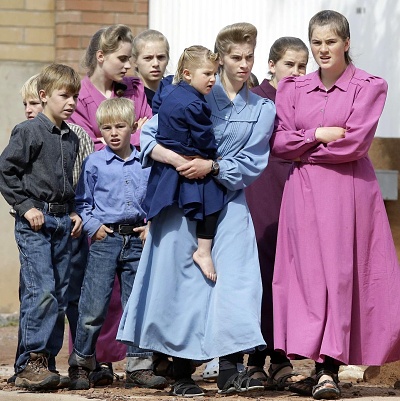
We come upon that same question when we examine the communities of the
Fundamentalist Church of Jesus Christ and the Latter-Day Saints. These folks
never accepted that God changed His mind about plural marriages, which
mainstream Mormons believe occurred in 1890. More to the point, they still marry
girls at the ages frontier girls married in 1890 (12 and younger). By today's
mainstream culture definition, that's child abuse. The reports coming out of the
community suggest that plenty of emotional blackmail went with the early
marriages. The girls, who live in a closed society with no TV and where even
radio is forbidden, had no way to know that not everyone in the world
believes that if they don't obey the commands of their
Prophet, and marry the person he says they should, when they should, they
will burn forever in Hell.
It's easy for us, who are not in that community, to say that the Prophet
Warren Jeffs overstepped his bounds. But Jeffs, himself, doesn't believe he did.
From his point of view, it was God Himself who gave Jeffs his direction. Hey,
George W. Bush attacked an innocent and sovereign nation and
killed at least 80,000 of its citizens, not to mention 5,000 of our own
soldiers, on the command of God, according to
his own words.
Since we all, collectively, supported him in that attack, we really have no call
to criticize Jeffs, whose crimes, if any, are far smaller in scope.
Religious folks, whether fundamentalist or not, will generally tell you that
God owns the children. But, if so, God is a fairly absentee parent. Small
children that wander away from home and aren't found soon, are generally found
dead. The odds of their wandering into a day care center, or being adopted by
wolves, seem to be all but non-existent. So religious parents stand in for their
god, and raise their children according to their interpretation of that
god's wishes. Unfortunately, the god's wishes seem to vary wildly. Some believe Allah wants
girl's genitals to be mutilated. Some believe Yahweh wants boys' genitals to be
mutilated. Brahma is willing to leave genitals alone but insists that no meat be
eaten.
And their followers are not content with applying their interpretations to
their own children; Yahweh's followers want Allah's followers jailed if they
have their daughter's genitals mutilated; Allah's followers are just as
horrified when Yahweh's followers don't chop off their daughters' foreskins.
A religious war is likely to ensue unless a government steps in, as ours has,
to attempt to keep the peace. Even then, it is a government of the cultural
majority, even when its constitution claims to protect the rights of the
minority, as ours does. And so, with America's mainstream Christian majority, it
is not surprising to find laws forbidding female circumcision, but none
forbidding the male variety.
But if we can't trust another parent's religion to care properly for our
children, and if a government can't be trusted unless one belongs to the greater
culture—who is responsible for a child?
I'm going to propose an answer that, at first blush, may seem heretical to
those who have always believed that the welfare of every child in the world is
their personal responsibility.

What if—and I say this in hushed tones—what if each child is, in fact,
his or her own responsibility, rather than ours? This comes from the
philosophy, to which I subscribe, that each of us is a bit of God, that
none of us are victims because we intentionally choose to be born into our lives
in order to balance karma and provide service to the whole. A child born into a
region destined to be ravaged by earthquake or a culture that practices genital
mutilation or ritual infanticide or even rampant materialism chose that birth
and those circumstances. Yes, even the children of abusive parents chose those
parents. (And the parents may not be "evil"; they may simply be fulfilling the
role required by their children to balance karma.
 Michael Rosenbaum
isn't really a bad guy; he just sometimes plays Lex Luthor on TV.
Michael Rosenbaum
isn't really a bad guy; he just sometimes plays Lex Luthor on TV.
Now, of course I do not mean that this means I should neglect my own
children. They placed themselves in my care. I will need to do the best I can,
even if I do not believe in genital mutilation. If I encounter a child who is
lost, or being mistreated, I will likewise do what I can (there being no
"coincidences"). I have been placed there at that time to lend a hand.
What I do mean is that children I've never met, like adults I have never met,
are not my responsibility. I don't need to attack their country and kill
the parents in order to "protect" those children. I don't need to bomb abortion
clinics either (even though I, personally, do not think abortion is a prudent
method of birth control).
This proposal will seem most shocking to Fundamentalist Christians who do
not, at heart, believe that God can be trusted to do His job and so certainly
don't trust any humans to do theirs. That's why they are always running
about, trying to pass laws to enforce their idea of morality. That's why they
feel compelled to defend "marriage"—an institution that, statistics and news
reports show, is in far more danger from their divorces and wife battering and
child abuse and extramarital affairs than it is from anyone outside their crappy
little circle. Unable to face their untenable position of faith in a man who
never existed and a set of myths that are irreconcilable with the simplest
scientific principles, they must direct their attention away from all that; and
one effective way is to build outrage over the way that others—let's call them
Muslims or members of the FCLDS, anyone who isn't a Fundamentalist Christian—and
ignore the part where their war in Iraq has orphaned millions of kids, or the
possibility that Warren Jeffs is as much the Lord's prophet as Pat
Robertson or the Pope or George W. Bush and that he hasn't made nearly as many
children miserable as the homophobic teachings that have made gay teenagers
commit suicide four times more often
than heterosexual teenagers.
The only effective means of change for a culture comes from within, just as
is the case with individuals. Miserable children grow to be miserable adults;
and, sometimes, miserable adults get sick and tired of being miserable and make
a meaningful change to their society. A Warren Jeffs jailed becomes a martyr; a
Warren Jeffs unjailed might well have been murdered by one of his child brides
grown older and fed up. The former changes nothing; the latter might be
the end of the FCLDS.
And what about the kids who, on occasion, die? Well, we only think this is a
shame because we have accepted the notion that death is a horrible thing that
must be avoided at all costs. This idea comes from the very same people who
say that Heaven is a glorious place where everyone is happy. Presumably God,
who invented death, doesn't think it's such a bad thing. Personally, I
feel a lot worse for a kid who has been orphaned or is starving than I do one
who no longer has to worry about such things. But, in any case, the premise of
reincarnation (the only philosophy with material proof) observes that we all
die; and our deaths are chosen and part of our soul contracts.
And if you still feel guilt over the plight of the world's
children—work for peace.