|
By: Paul S Cilwa |
Posted: 2/2/2010 |
|
Page Views: 3,066 |
| Hashtags: #Reincarnation #Metaphysics #Spirituality |
| Let's consider the ramifications of a belief in reincarnation. |
| Estimated reading time: 4 minute(s) (889 words) |
Many centuries ago reincarnation was a widely accepted belief. Early
philosophers and Christian fathers and saints believed in and supported that
concept in their writings. There is evidence that Jesus believed in it,
too—evidence that remains in the Bible.
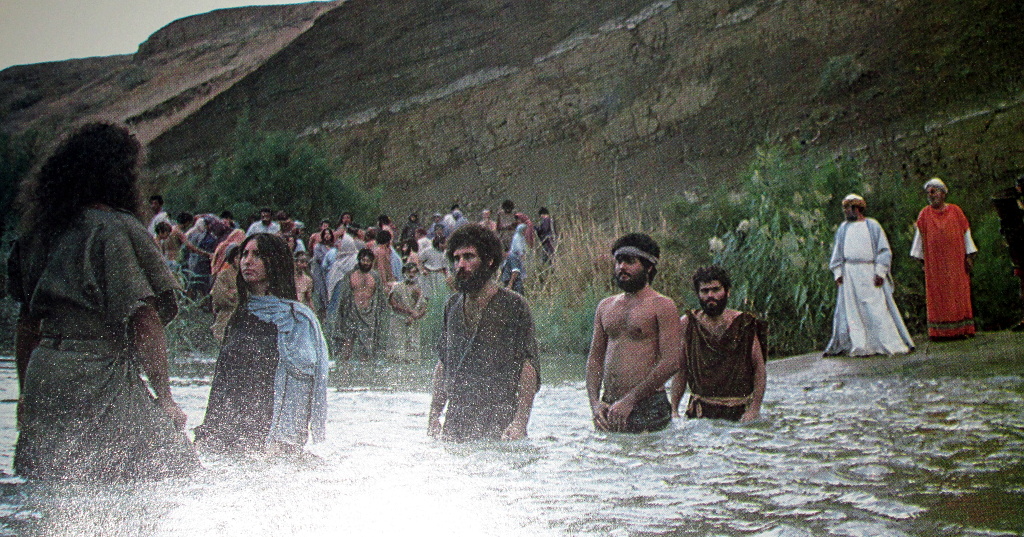
For example:
- Matt. 17:12-13: "I tell you that Elijah
has already come and people did not recognize him…Then the
disciples understood that [Jesus] was talking to them about John the Baptist."
- Matt. 11:14: "..and if you are willing to believe
their message,
John is Elijah, whose coming was predicted. Listen, then,
if you have ears!"
- John 3:6: "A person is born physically of human
parents, but he is born spiritually of the Spirit."
- John 9:1 The disciples asked Jesus: "Teacher, whose
sin caused him to be born blind? Was it his own or his
parents' sin?" (How could his fault be considered when he was
born blind?)
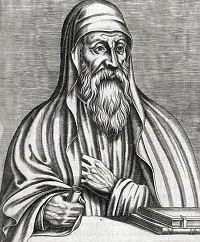
Note: History shows that early Christians generally accepted
the belief in reincarnation until the teachings of
Origen
became unpopular and the belief in reincarnation was banned (see
First Council of
Nicaea 325 CE and
Second
Council of Constantinople 553 CE).
Who were some others?
- Plato (428-348 BCE)
- Origen (185-254 CE)
- St. Clement of Alexandria (150-220 CE)
- St. Gregory (257-332 CE)
- St Augustine (354-430 CE)
So, what happened? At what time in religious history did the "you only live once"
concept originate? Who came up with this teaching?
During the first 300 years of the early Church, reincarnation was widely
accepted by many of the early Christians, including
Origen, whom the Encyclopedia
Britannica hailed as "the most prominent of the church fathers with the possible
exception of (Saint) Augustine." In addition, the Gnostic gospel,
Pistis Sophia,
quotes Jesus as saying that "…souls are poured from one into another of
different bodies of the world."
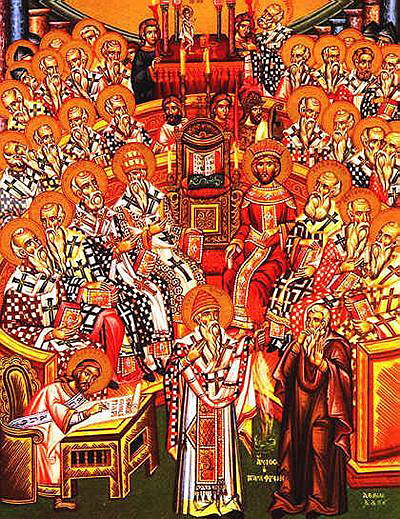
However, in the 4th century there arose a political pressure to remove the
concept from the religion of the day. In America, we are so accustomed to the
separation of church and state that it is hard to imagine a time when an emperor
could appoint a Pope; but when Constantine was the emperor of Rome, he appointed
a Pope named Damascus. In conjunction with that, Constantine and his puppet Pope
founded the
Council of Nicaea. Its ostensible purpose was to translate the Scriptures
from Aramaic into Latin, their contemporary language; but, as they did so, they
also attempted to purge everything out of the Scriptures of the New Testament
that spoke of reincarnation. Since some of the original Aramaic scriptures have
survived to this day, we have proof of this purging.
Then, in the year 553 CE Emperor Justinian called for the Fifth Ecumenical
Council of Constantinople. Such Councils had always been (and have been since)
convened by the Pope, not by secular leaders. That Justinian called this
Council—and that the Pope refused to attend—points out the secular nature of
this Council in spite of the fact that its results changed the Church forever
more.
The Council was convened with the express purpose of condemning reincarnation
once and for all. Here's how it was done. A total of 15 "anathemas" were
created. Think of them as condemnations. The first anathema was, "If anyone
assert the fabulous pre-existence of the souls (reincarnation), and shall assert
monstrous restoration which follows from it, let him be anathema." From that
point forward reincarnation was forbidden from Christian beliefs. Individuals
who chose to preach reincarnation were persecuted. The church's campaign of
terror and slaughter lasted until the 13th century when the last vestige
of the belief disappears from the literature…and has remained so ever since.
Understand the math? The concept of reincarnation was so ingrained in the
early Christian church that it took 800 years to wipe it out!
A related concept was the idea that Jesus was the Son of God rather
than a Son of God. That is, that he was different from the rest of us in
some fundamental way. The Council declared that anyone who declared otherwise
was, again, "anathema".
And yet, Jesus himself called himself "the son of man," and declared that
we would do greater things than he had! [John 14:12]
It's easy to see why the early Church and future Popes condemned this belief.
There would be no reason to follow their own man-made religion which was based
upon the dogma that God judges and punishes, sends us to heaven or hell, etc.,
requiring the Church's intercession so that one could miraculously be saved from
all of this, especially through generous donations. These dogmas of fear and
guilt made people totally dependent upon the church. Sadly, it's been that way
ever since.
Religious Sources
|
By: Paul S Cilwa |
|
|
Page Views: 1,691 |
| A surprising number of religious traditions, including Judeo-Christian, include references to reincarnation. |
| Estimated reading time: 2 minute(s) (287 words) |
John 9:1 The disciples asked Jesus: "Teacher, whose sin caused
him to be born blind? Was it his own or his parents' sin?"
(How could his fault be considered when he was born blind?)