|
By: Paul S Cilwa |
Posted: 6/28/2006 |
|
Page Views: 6,015 |
| Hashtags: #Spirituality #ReligiousPolitics #Metaphysics #Prayer |
| Why are Christians upset that science has proven the power of prayer? |
| Estimated reading time: 2 minute(s) (456 words) |
It's no surprise that this study was immediately challenged by the scientific
community. The surprise, to me, was the challenge from non-scientific,
religious groups—as well as non-scientific, atheist groups!
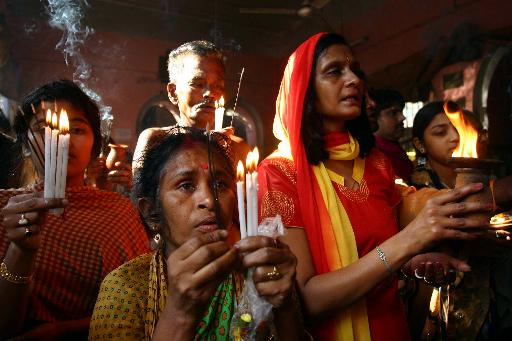
Now, you would think that folks like the Southern Baptists would embrace
proof that prayers are effective. However, the study (and others that followed)
found that prayer works even when Jesus is
not the one being prayed to. Prayers are equally effective when directed
to Mary, Buddha, the Earth Goddess, one's Higher Self, or (in one small and, in
my opinion, under-funded, study) Brad Pitt.
In other words, prayer seems to work but it doesn't require belief in any
particular deity, or any deity at all—and that was something the
Christian extremists found so unacceptable that they immediately began to muddy
the waters with their usual supply of pseudo-scientific "experts" who stated,
untruthfully but emotionally, that the original study had been "flawed."
(Now, it may have been—genuine experts are even still studying the matter,
with follow-up studies and new experiments. But that's not the same as simply
announcing a study has been flawed, without providing the details of what
that flaw was, or how it negates the study's results.)
Usually, in a case like this, we can rely on the atheist/rationalist camp to
keep the fundamentalist camp honest. However, that was not the case with this
study. The fact that one could pray effectively to oneself wasn't enough to
mollify the atheists, who don't like to admit there is
anything they can't explain. And so, they joined forces with the
fundamentalists, writing poorly-researched articles in The Skeptical Inquirer
that criticized in ways that indicated the authors had never even read the
original study.
Is prayer effective or not? I believe it is, but that's not my point. What I
care about, is that when evidence comes along that challenges our existing
beliefs, that we truly take the opportunity to "study the study," rather than
buy into unscientific challenges that come along simply because their claims
make us less uncomfortable.
Divinely created or not, this world is far too complex for easy answers and
snide put-downs to explain. We'll
never understand it if we ignore legitimate evidence that it may not
function in quite the way we want to believe it does.
And, if we can't understand the world in which we live, how can we ever hope
to understand ourselves?