|
By: Paul S Cilwa |
Occurred: 3/8/2026 |
|
Page Views: 27 |
| Hashtags: #Science #History #Money #Technology #SocialContract #Inequality #Automation #UniversalBasicIncome #HistoryofValue #AIEconomy |
| How we eventually wound up paying for cellphones. |
| Estimated reading time: 19 minute(s) (4512 words) |
The through-line is surprisingly simple. Every major technological
advance—from the hand axe to the algorithm—didn't just
change what humans could do. It changed how humans
shared, stored, and distributed value. The
technology always comes first. The money follows. And the social contract
catches up last, usually after a lot of pain and argument. What
follows is that story, from the very beginning—all the way to
where we appear to be going next.
Stone Tools and the Gift Economy (3,000,000–10,000 BCE):
What Happens When Nothing Keeps?

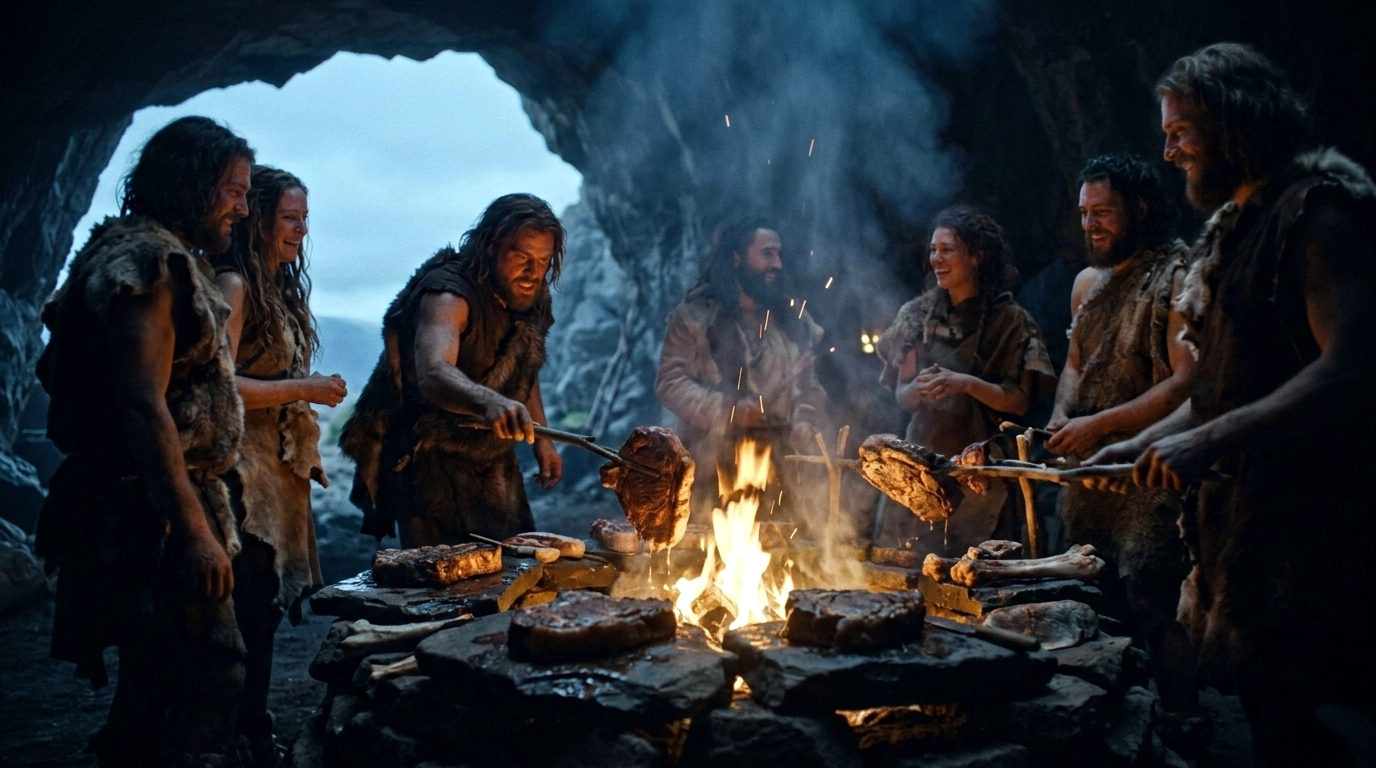
Long before anyone invented money, humans invented sharing—and
they didn't really have a choice. Picture a small band of a few dozen
people on the African savanna. One group of hunters gets lucky and brings
down something large. The meat won't keep more than a day or two in the
heat, and there's no way to carry more than you can eat. So you share.
Not out of some saintly communal impulse, but because it's the only
rational thing to do with a surplus that will literally rot before morning.
The Oldowan and Acheulean tool traditions—those knapped flint
hand axes and scrapers we find all over Africa and Eurasia—dramatically improved what early humans could do with a carcass. Better
butchering tools meant more usable meat from a kill. Fire meant cooked
food, which is both safer and more calorie-dense. But none of these
advances created durable wealth, because there was nothing to store value
in. You couldn't save your mammoth steaks for next winter. You
couldn't accumulate a fortune of flint.
What you could accumulate was reputation. The best hunters, the
most generous sharers, the people who gave more than they took—these
folks earned the trust and loyalty of the group. Anthropologists
call this a gift economy: a system built on reciprocity and
remembered obligations rather than prices and ledgers. The social
contract was brutally simple. We survive together. You help me today;
I help you tomorrow. Nobody keeps score out loud, but everybody keeps
score in their head.
There was no meaningful inequality of stuff, because there was
nothing durable enough to be unequal about. What inequality existed was
inequality of status—and even that was kept in check by the fact
that a leader who got too greedy would find their band suddenly very
interested in a different leader. It was a precarious, hand-to-mouth
existence by modern standards. But in one important way, it was
egalitarian almost by necessity.
And it worked, for a very long time.
Pottery, Storage, and the Birth of Inequality (10,000–5,000 BCE):
What Happens When Stuff Keeps?
Here's where things get interesting—and by "interesting," I mean
here is where humans first discovered that prosperity and fairness don't
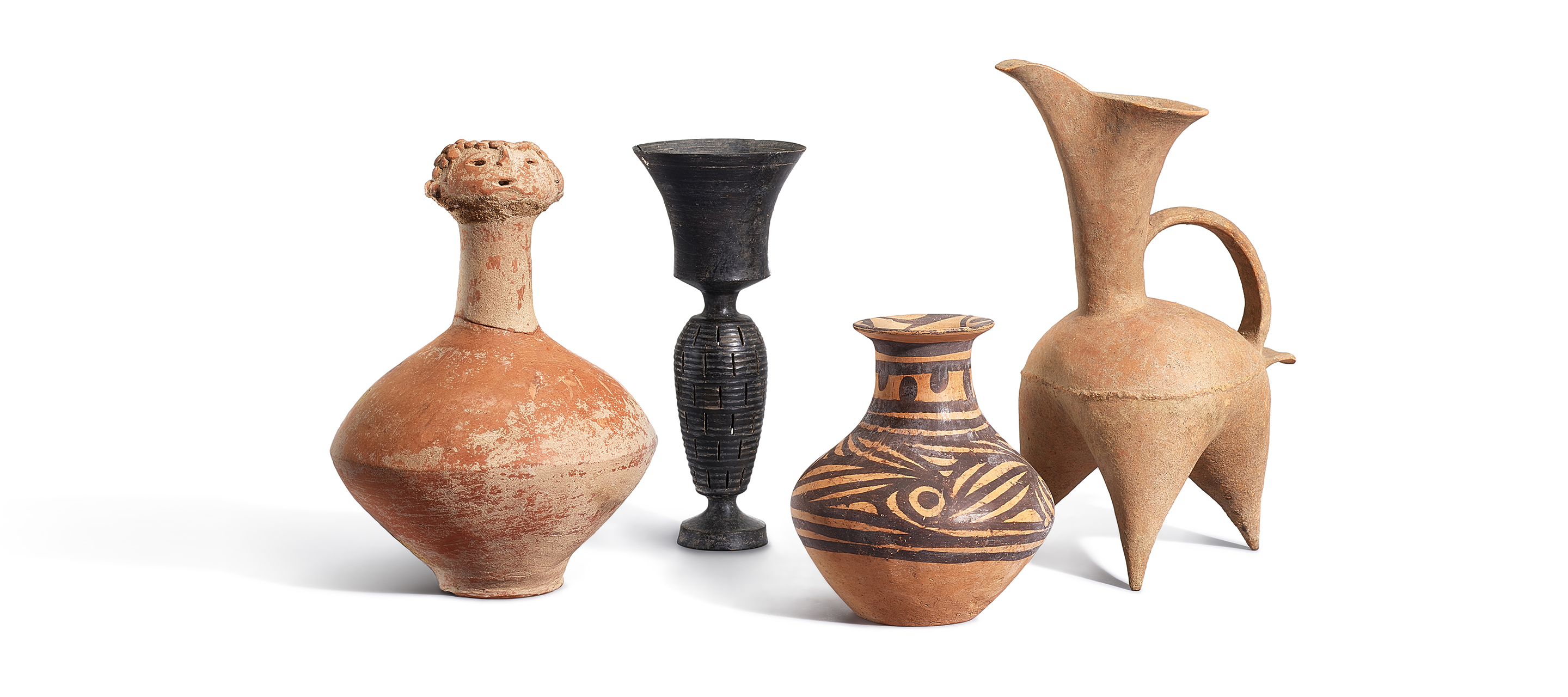
automatically go hand in hand. The invention of pottery around 10,000 BCE
sounds like a pretty modest achievement. Clay pots. Okay. But consider
what it actually meant: for the first time in human history, you could
store food. You could put grain in a sealed vessel and come back
to it months later. Surplus became wealth that could be accumulated
rather than immediately consumed.
The baskets came around the same time. Then granaries—shared
storage buildings for whole communities, which introduced the thorny
question of who controls access to the grain and on what terms. The
moment you can store surplus, you have proto-wealth. And the moment you
have proto-wealth, you have households that are better at accumulating
it than others, for whatever reasons: a larger family to work the fields,
a better-situated plot of land, a knack for trading, or just dumb luck.
Archaeological evidence from this period shows the first signs of
differential burial goods—some people getting buried with nicer
stuff than others. Some households with more cattle, more stored grain,
more tokens. Those tokens and tally sticks are particularly telling:
they're our first evidence of record-keeping, of humans needing
to track who had what and who owed whom. You don't need ledgers in a
world where everything perishes overnight. You very much need them in a
world where things last long enough to be argued over.
The social contract was shifting. "We survive together" was giving way
to something more like "some families have more than others, and that's
becoming a fact of life." Hierarchy was being born not from someone's
decree, but from the simple logic of durable storage. It wasn't
intentional. It wasn't a conspiracy. It was just what happens when
surplus sticks around long enough to become property.
Agriculture and the Rise of Centralized Redistribution (5,000–3,000 BCE):
The Temple Takes Its Cut

Irrigation changed everything. Not just because it grew more food—though it certainly did that—but because large-scale irrigation
requires coordinated labor on a scale that no single family can manage.
You need dozens or hundreds of people digging the same canal system,
maintaining the same levees, following the same schedule. And somebody
has to organize all of that. Somebody has to keep track of who worked
how many days, who gets how much grain from the collective stores, and
what happens to the person who takes more than their share.
In ancient Mesopotamia, that "somebody" was usually the temple. The
great temples of Sumer weren't just religious institutions—they
were the economic engine of the city. They collected grain and livestock
from farmers, employed full-time craftspeople and administrators, issued
rations to workers, and managed long-distance trade. They were, in modern
terms, part central bank, part warehouse, part employer, and part
government—all wrapped up in one big mud-brick building with a
ziggurat on top.
The plow and domesticated draft animals turbo-charged agricultural
output, which made the whole system more complex and more worth managing.
"Labor obligations"—the ancestors of taxation—became
formalized. You owed the temple a certain number of days of work per
year, or a certain fraction of your harvest. In return, the temple
provided protection, managed the irrigation system, fed you in times of
famine, and maintained the favor of the gods (which was also pretty
important to people at the time).
The social contract of this era is almost legible to modern eyes: you
give labor and produce to the center; the center protects you, feeds
you, and keeps the infrastructure running. It's recognizably a
government. The money of account that made it all trackable—those clay tablets and tokens—was recognizably money, even if
it looked nothing like a coin.
Copper, Bronze, and the First Trade Economies (3,300–1,200 BCE):
Value Gets Portable

Metallurgy handed humanity something genuinely new: wealth you could
carry in your pocket. Or at least on a donkey. Copper was the first
useful metal—soft enough to work, hard enough to be better than
stone for certain tools. Mix it with tin and you get bronze, which is
harder still and holds an edge better. Suddenly, a skilled smith could
produce tools and weapons that were both durable and
portable, and that had consistent, recognizable value anywhere
in a wide trade network.
The Bronze Age is when long-distance trade really took off. We have
evidence of trading networks stretching from the British Isles (tin) to
Afghanistan (lapis lazuli) to Egypt (gold) operating in this period.
Merchants were moving copper ingots across the Mediterranean in quantities
that boggle the mind—the Uluburun shipwreck, discovered off the
coast of Turkey, was carrying roughly ten tons of copper ingots when it
went down around 1300 BCE. Ten tons. On a Bronze Age ship!
Long-distance trade at that scale requires something that local temple
economies didn't need: a way to establish the value of your goods to
someone who doesn't know you personally. Weights and measures became
standardized. Metal rings and ingots of consistent weight functioned as
early money. Credit systems emerged—we have cuneiform tablets
recording merchants lending silver at interest, financing trade voyages,
and suing each other when deals went sideways. The world's oldest known
complaint letter, written on a clay tablet around 1750 BCE, is a merchant
in Ur writing to a supplier to complain about being shipped inferior
copper. Meet the world's first Yelp review!
A merchant class was becoming a real thing—people whose entire
livelihood was moving value from one place to another and capturing a
margin in between. That was new. In the gift economy, your status came
from generosity. In the temple economy, it came from position. In the
trade economy, it could come from cleverness. The social contract
was expanding to acknowledge that value could travel, accumulate, and be
created by exchange itself.
Iron, Empires, and State Money (1,200 BCE–500 CE):
Coinage and the Revenue Machine
Iron is a fascinating case study in how a technological advance can be
simultaneously democratizing and destabilizing. Bronze required tin, which
in most places
was relatively rare and controlled by whoever sat astride the trade
routes. Iron ore, by contrast, is everywhere. Once ironworking
techniques spread—and the process of
smelting iron is harder
than smelting copper, requiring higher temperatures and better
understanding of the chemistry—suddenly high-quality metal tools
and weapons were available to societies that had previously been locked
out of the Bronze Age.
The disruption that followed the Bronze Age Collapse around 1200 BCE—when the great palace economies of the Mediterranean simultaneously
imploded—is still not fully understood by historians
(except the ones who buy into Zecharia Sitchin's "War of the Gods"). What we do
know is that the Iron Age that followed was characterized by a different
kind of power: larger armies, cheaper weapons, and eventually, empires
big enough to need serious fiscal infrastructure.
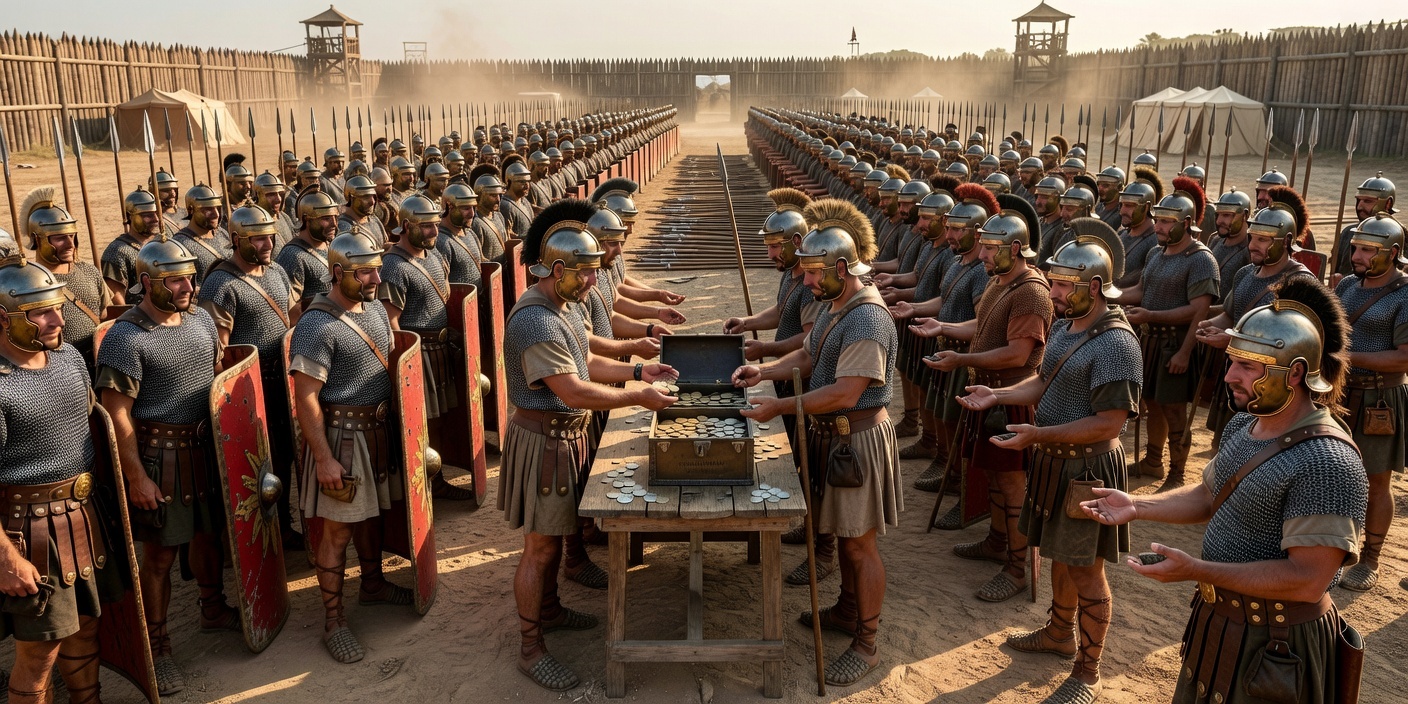
Big armies need pay. Big bureaucracies need salaries. Roads, aqueducts,
and city walls need funding. The solution—invented in Lydia and
perfected by Athens, Persia, and Rome—was coinage backed by
state authority. The genius of the coin wasn't the metal. It was the
stamp. The face of the king or the symbol of the city-state
certified that this lump of metal was worth exactly what it said it
was, and that anybody who tried to pass off an underweight or debased
coin would have the state to answer to. Money became, for the first time,
explicitly a government product.
And governments, it turns out, love any money they can control. Taxes
payable only in coin meant that everyone—farmers included—had to enter the monetary economy to survive. You couldn't just grow
your own food and opt out. You needed coin to pay your taxes, which
meant you needed to sell something to get coin, which meant you were
integrated into the imperial economy whether you liked it or not. The
social contract was blunt: you pay the state; the state maintains order.
Simple, scalable, and remarkably durable. Rome ran this playbook for
centuries.
The Industrial Revolution and the Wage Economy (1700s–1900s):
The Factory Whistle and the Social Safety Net
If you had to pick the single biggest rupture in the economic history
of the world—the moment when the most things changed for the
most people in the shortest time—the
Industrial Revolution is
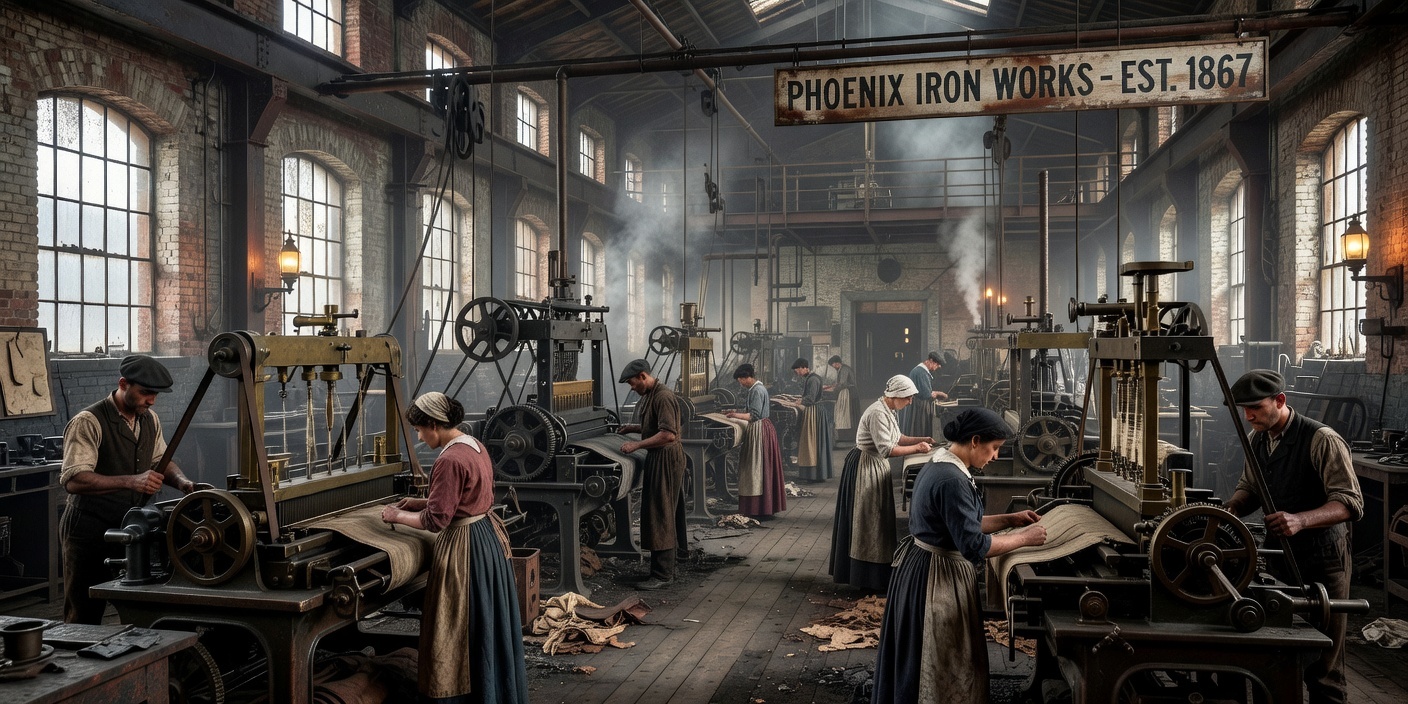
probably your answer. The steam engine didn't just automate a few tasks.
It replaced the fundamental energy source of civilization, which had
always been muscle power: human, horse, and ox. Suddenly, a machine the
size of a house could do the work of hundreds of men. And then came
railroads, which collapsed the cost of moving goods across distance.
And mechanized textile mills. And steel production. The whole thing
came in waves, each one faster than the last.
What it did to ordinary people was complicated. On one hand, over the
long run, industrialization created enormous wealth and eventually
raised living standards for nearly everyone. On the other hand, in the
short run—which for the people living through it was just
"life"—it was often brutal. People left farms for factories.
Artisans who had spent their whole lives mastering a craft found their
skills suddenly worthless because a machine could do the same work
cheaper. Children worked twelve-hour shifts. Cities became dangerously
overcrowded. Life expectancy in the new industrial cities was, for a
while, lower than it had been in the countryside.
Money evolved to match. National currencies and central banks came into
their own, providing the stable, large-scale monetary infrastructure that
industrial economies required. Checking accounts, commercial lending,
and bond markets scaled up. The gold standard—love it or hate
it—gave international trade a common reference point. Labor
became, formally and explicitly, a commodity with a price: the
wage. Your time and effort had a market value, and the market set it.
Here's the thing about turning labor into a commodity: Markets don't
automatically care whether the price of labor is enough to live on. The
social tensions that built up during industrialization eventually produced
the modern welfare state—pensions, unemployment insurance, child
labor laws, the forty-hour work week—most of it fought for by
labor movements over the course of a century. The new social contract,
hammered out through strikes and legislation and political upheaval,
went something like this: you work for wages; the state protects workers
from the worst outcomes; and the gains of productivity are, at least in
theory, broadly shared. It took about 150 years to fully negotiate. It
is, arguably, still being renegotiated.
The Digital Revolution and the Financialization of Value (1970s–2020s):
When Money Became Software
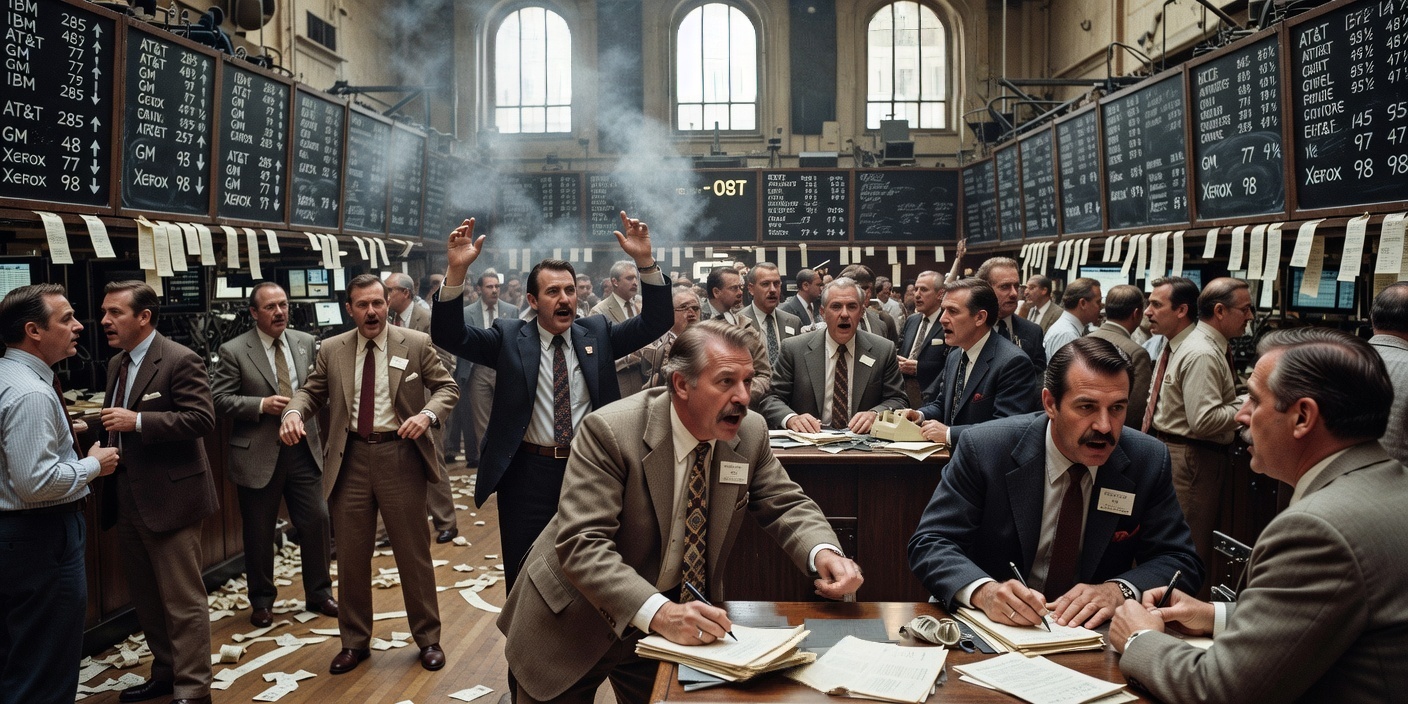
At some point in the late twentieth century, money quietly stopped being
a thing and became an entry in a database. This happened
gradually and then all at once, the way Hemingway described going
bankrupt. The Bretton Woods system—which had pegged the dollar to
gold since World War II—collapsed in 1971 when Nixon closed the
gold window. From that point on, the dollar was backed by nothing except
the full faith and credit of the United States government, which turns
out to be a surprisingly robust foundation, but which also meant that
money was now, fundamentally, a social agreement implemented in software.
Computers transformed finance the same way they transformed everything
else: by making it possible to do things at scales and speeds that were
previously unthinkable. Global currency markets now trade trillions of
dollars per day. Financial derivatives—contracts whose
value is derived from the value of other things—became so complex
that even the people selling them sometimes didn't fully understand what
they were selling. High-frequency trading algorithms execute thousands
of transactions per second based on patterns no human could detect in
real time.
Meanwhile, the internet was quietly dismantling the friction in
information markets, which had the effect of concentrating enormous wealth
in whoever owned the best data and the best algorithms. The platform
economy emerged: companies that produced almost nothing tangible but
were worth hundreds of billions of dollars because they controlled the
infrastructure through which other people bought, sold, communicated, and
organized their lives. A few of these companies became, by any historical
measure, the largest concentrations of economic power ever assembled.
Bitcoin appeared in 2009, in the wreckage of the financial crisis,
as a kind of manifesto-in-software: a currency that didn't require a
central bank, a government, or a trusted intermediary of any kind. The
blockchain—the distributed ledger technology underpinning it—was
a genuine technical innovation, a way to achieve consensus
and trust in a network without any single party being in charge. Whether
Bitcoin itself fulfilled its promise is still, to put it diplomatically,
a lively debate. But the underlying idea—that money might not
need the state as its guarantor—was a genuinely interesting
development in the history of value.
The social contract of this era is the one we're still living in, and
it's fraying visibly. Automation began eliminating routine jobs in both
manufacturing and services. The middle of the income distribution
hollowed out. The old deal—work hard and the economy will take
care of you—became less reliable for more people. And the
institutions built for the industrial era—unions, social
insurance, progressive taxation—struggled to adapt to an economy
that could shift faster than legislation.
AI, Robotics, and the Post-Labor Economy (2020s–2050s):
When the Machines Come for the Thinking Jobs
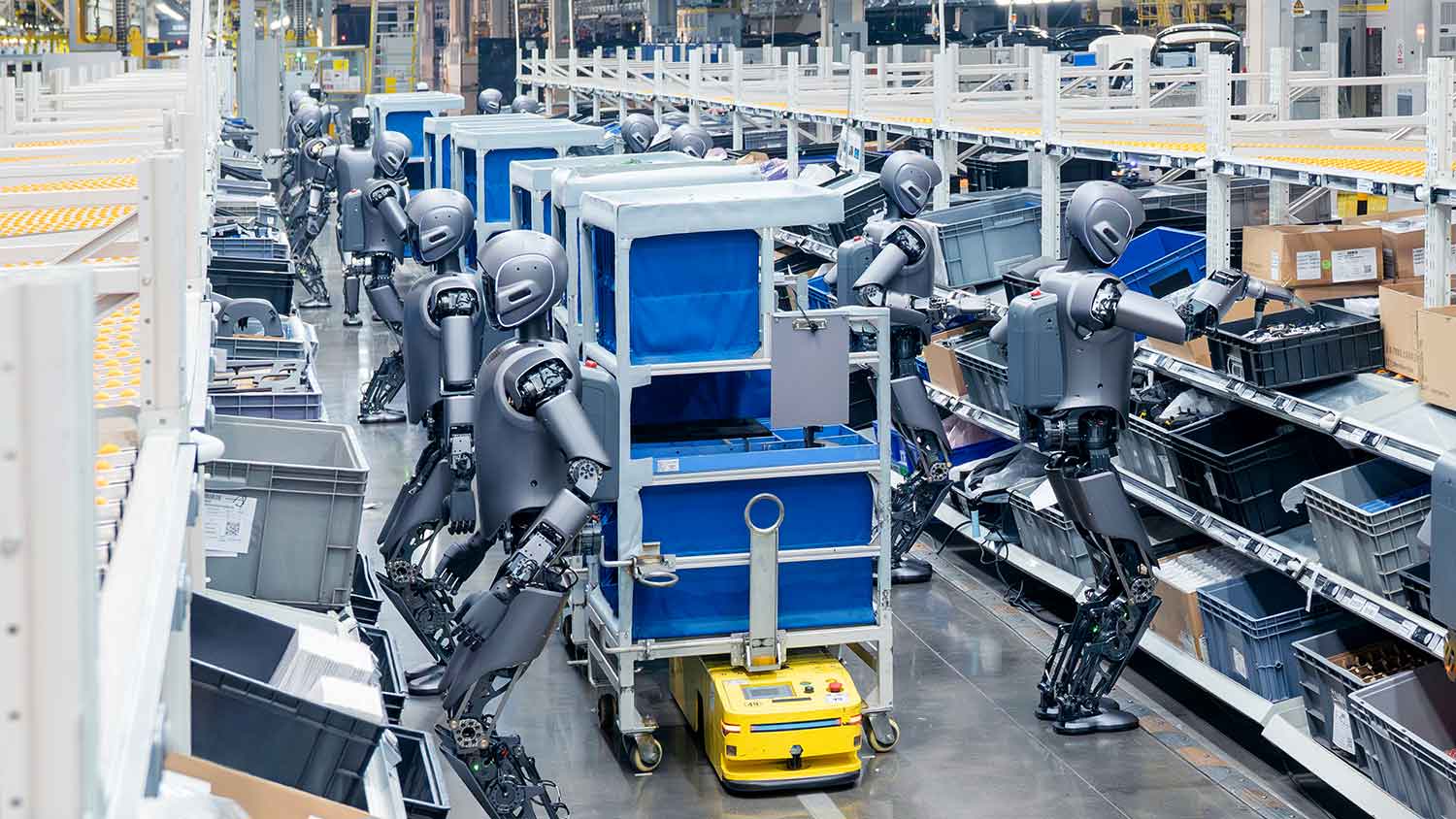
Every previous wave of automation displaced specific kinds of work. The
steam engine replaced muscle power for repetitive physical tasks. The
computer replaced certain kinds of clerical and calculation work. What's
different about modern AI is the breadth of what it can do.
Large language models can write, analyze, translate, summarize, code, and
reason at a level that, five years ago, most experts would have said was
decades away. Robotic systems are rapidly closing the gap on physical
tasks that require dexterity and situational judgment. The combination of
the two creates something genuinely unprecedented: automation that
competes not just with physical labor, but with cognitive labor.
The economic logic of this is fairly straightforward, even if the
implications are staggering. Once a machine can do a job as well as a
human and costs less to run than a human costs to employ, rational
economic actors will use the machine. This isn't cynicism; it's just
arithmetic. The productivity gains from this transition will be
extraordinary. We may be looking at a world where goods and services
are produced at a fraction of today's cost, with a fraction of today's
human labor input.
The distributional question is the uncomfortable one. Who benefits from
this productivity surge? Historically, the gains from automation have
flowed disproportionately to the owners of the capital—the
machines, the software, the patents—rather than to the workers
who were displaced. There is no invisible hand that automatically
redirects those gains toward the people who lost their jobs to a robot.
Without deliberate redistribution mechanisms, a high-productivity,
low-labor economy could look a lot like a small number of enormously
wealthy people and a large number of people with no reliable income.
That scenario has a name: the post-labor economy. It's not inevitable,
and it's not imminent—we are not looking at technological
unemployment on a massive scale this calendar year. But the trend
lines are clear enough that serious economists, technologists, and
policy thinkers are spending real energy on the question of what the
social contract looks like when paid work is no longer the primary
mechanism through which most people access the resources they need
to live.
The Emergence and Inevitability of Universal Basic Income:
History Repeating at a Higher Level
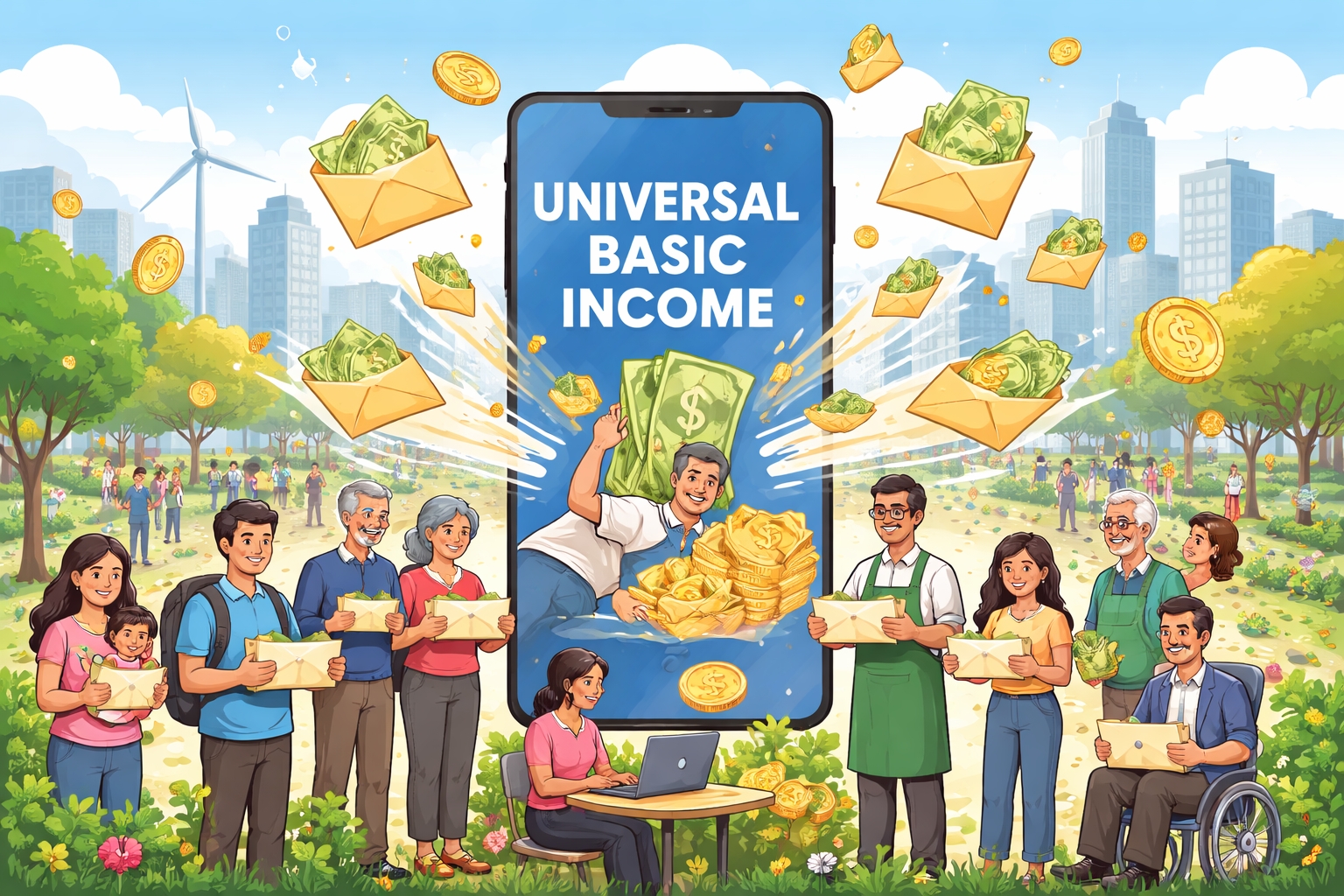
Here is where the pattern we've been tracing comes full circle. Every
time a technological revolution created a new distribution of productive
capacity, society eventually—after a lot of suffering and
gnashing of teeth—arrived at a new mechanism for distributing the gains.
The temple redistributed agricultural surplus. Coinage let empires
distribute the proceeds of conquest and taxation. The industrial welfare
state created unemployment insurance, pensions, and a social safety net
to ensure that the gains of industrial productivity didn't accrue
entirely to the factory owners. Each of these was, in retrospect,
the obvious adaptation to the new economic reality. Each was, in its
time, considered radical.
Universal Basic Income—a regular, unconditional cash payment to
every adult citizen—is the adaptation that the logic of the
AI era appears to be pointing toward. The core argument is simple. If
automation decouples productivity from human labor, and if human
labor is the primary mechanism through which people access income, and
if income is required for consumption, then you have a problem: a highly
productive economy with insufficient consumer demand because the consumers
have no money. This is not just my observation. It's essentially what
Henry Ford was getting at when he decided to pay his workers enough to
buy the cars they were building.
UBI could take several forms, and the details matter a great deal. A
robot tax or automation dividend would tax the productivity gains
from automation and distribute the proceeds directly to citizens—essentially making everyone a shareholder in the automated economy.
A data dividend starts from the observation that AI systems are
trained on data generated by human activity; if that data has value,
arguably the people who generated it should see some of the return.
Sovereign wealth funds—national investment funds that distribute
returns to citizens—are already operating in places like Norway
and Alaska. Central bank-issued basic income is a more exotic proposal,
but in a world where central banks already create money as a matter of
monetary policy, it's not obviously crazy.
The objections to UBI are real and worth taking seriously. It could
be fiscally ruinous if set too high. It could be inadequate if set too
low. It could reduce the incentive to work in ways that damage social
fabric (though evidence from pilot programs on this point points otherwise).
It could be politically weaponized.
These are legitimate concerns. But they are concerns about implementation,
not objections to the underlying logic. When the alternative is a
post-labor economy with no distribution mechanism at all, "this is
complicated" is not a satisfying response.
UBI is to the AI age what Social Security was to the Industrial Age: a
new social contract for a new economic reality, one where the old
assumption—that work is both widely available and sufficient for
survival—can no longer be taken for granted. Social Security was
also, in its time, considered impossibly radical right up until it wasn't.
Money as a Mirror: What All of This Actually Means

Look at the arc of this story. We started with shared mammoth steaks and
a social contract that amounted to "we survive together." We progressed
through clay tokens, silver shekels, bronze ingots, stamped coins, paper
bills, digital ledgers, and cryptocurrencies. Money changed shape at
every turn, molding itself to whatever the technology of the moment
required. Each form of money reflected a deeper change in how humans
produced and shared value.
AI and robotics represent something genuinely new in this story. Every
previous transformative technology replaced human effort—muscle, mechanical skill, clerical routine. AI is the first technology
that credibly challenges human cognition. That's a different
category of disruption, because cognitive work is what humans were
supposed to be uniquely good at. The things we said machines would never
do. The last redoubt.
If history is any guide, the transition won't be smooth. They never are.
There will be political battles over who captures the gains from
automation. There will be social disruption as people whose identities
are tied to their work find that work unavailable. There will be
experiments that fail and policies that overshoot and a lot of pain in
the middle. This is what transitions always look like, when you actually read
the history books.
But the endpoint that the logic of this transition points toward is
a society where the basics of survival are guaranteed, where work is
something humans choose for meaning and contribution rather than
scramble for out of desperation, and where the extraordinary productivity
of our automated future is broadly shared rather than concentrated in
the hands of whoever owns the robots. That's a future worth building
toward. And if the history of money has taught us anything, it's that
the form money takes eventually catches up to the reality of how
human value is actually created and shared.
We just usually have to
argue about it for a century first.