|
By: Paul S Cilwa |
Posted: 4/13/2010 |
|
Page Views: 9,621 |
| Hashtags: #Predictions |
| Let's learn what a prognosticator of 1900 thought the world of the 21st century would be like. |
| Estimated reading time: 19 minute(s) (4312 words) |
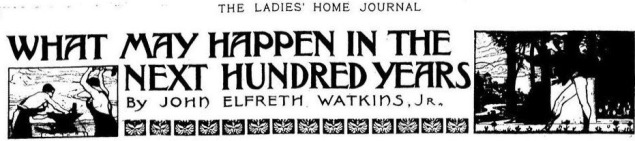
THESE prophecies will seem strange. almost impossible. Yet they have come
from the most learned and conservative minds in America…
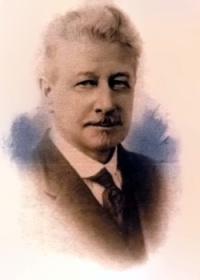
So Watkins began his essay, going on to explain how he had asked the "wisest
and most careful men in our greatest institutions of science and learning" for
their opinions on the advances they expected to occur in the upcoming century.
He then immediately leapt into his predictions.
Five Hundred Million People
There will probably be from 350,000,000 to 500,000,000 people in America
and its possessions by the lapse of another century.
According to the
United
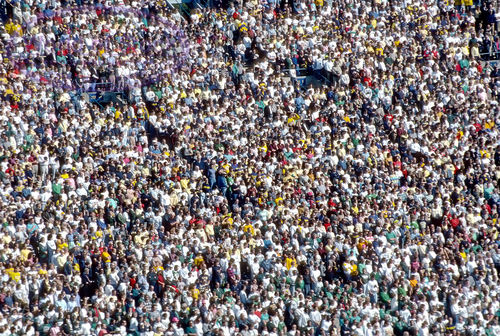
States Census, there were 76,094,000 Americans in the year 1900. A
population of six-and-a-half times that must have seemed truly staggering to the
reader of that year. Where would they all go? This figure was based on the
simple math, extrapolating the birth and death rates of the time. However,
neither Watkins nor his advisors foresaw the
Great Flu Epidemic of 1918 (since
renamed a "pandemic" in accordance with modern terminology). Somewhere between
20 and 40 million people died that year, more than had been killed in World War
I.
Thus the United States' population in 1999 was 272,690,813—still a figure
that would have staggered the average 1900 citizen, but still substantially
lower than Watkins' estimate.
Latin America Will Join The Union
Nicaragua will ask for admission to our Union after the completion of the
great canal. Mexico will be next. Europe, seeking more territory to the
south of us, will cause many of the South and Central American republics to
be voted into the Union by their own people.

The "canal" to which Watkins refers is not the one in Panama, which
had not yet been started; it is the alternate
Nicaragua Canal that
had been proposed as early as the minor years of the 1800s by Louis Napoleon.
Panama seemed an unlikely location for a canal, partly because the French had
interests in the area, and partly because the Panamanian swamps were breeding
grounds for malaria mosquitoes.
However, in the end, the French sold their interests to the United States;
the swamps were drained, and the idea of a Nicaragua Canal was abandoned.
The rest of this prediction is based on the early 1900s' conceit that
everyone else in the world wished they were American. And, considered the
influx of immigrants at the time, Americans can be forgiven for developing such
an idea. But the reality is, the age of Empire was in its final years. We are
now witnessing the last dregs, in which corporations buy the resources of
third-world countries directly instead of involving governments (other than the
occasional overthrow of regimes, such as those in Afghanistan and Iraq, that
will not sell).
The American Will Be Taller
…by from one to two inches. His increase of stature will result from
better health, due to vast reforms in medicine, sanitation, food and
athletics. He will live fifty years instead of thirty-five as at present—for
he will reside in the suburbs. The city house will practically be no more.
Building in blocks will be illegal. The trip from suburban home to office
will require a few minutes only. A penny will pay the fare.

The average height of a male American in 1900 was 5'6". Interestingly, this
represents a decrease in height from the 1700s, when the average fellow
was a towering 5'9". The reason for the reduction in height is generally
accepted to be the result of deteriorating environmental conditions resulting
from industrialism in the late 19th century, coupled with the pouring of
(shorter) immigrants into the gene pool.
So, even in 1900, it was acknowledged that things like medicine, sanitation,
and higher quality food could add to a person's height. I have no idea what
effect Watkins thought athletics would have. And, indeed, by 1990 the average
height of a white, male, American was 5'10"—and increase, not of a mere 2
inches, but of 4!
Watkins underestimated the effects of environmental improvements.
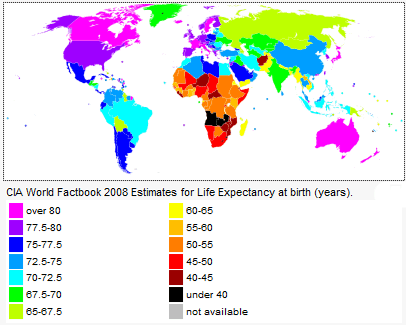
Now, it's very interesting that Watkins' information on longevity
was incorrect for his time. He thought the average lifespan in 1900
was 35, but in fact it already was 50. However, he foresaw a fifteen-year increase. According to the
CIA Factbook, average life expectancy of Americans today is
between 77 and 80 years, which is slightly better than Watkins
guessed. (In Europe, Canada, Australia and Japan—countries with
government-run public health care—the lifespan is even longer,
averaging well over 80 years.)
As far as moving to the suburbs goes, Watkins was right about that. Too bad
his estimated commute time of "minutes" and a fare of a penny didn't work out as
well.
There will be no C, X or Q in our every-day alphabet
Spelling by sound will have been adopted, first by the newspapers.
English will be a language of condensed words expressing condensed ideas…

Watkins expected these letters to be "abandoned because they are
unnecessary." He also predicted that English would be more extensively spoken
than any other in the world, with Russian ranking second.
Obviously, Watkins underestimated the inertia of language. Languages do
change and evolve—how often do you now hear the United States referred to as
"the Union"?—but spelling seems to be more resistant. Indeed, it took founding a
new country to take some of the more archaic spellings out of English, like the
unneeded "u" in "colour" or "neighbour".
And as far as English speakers go, Watkins was again fooled by his jingoism
into thinking that English might ever be the dominant language on the
planet.
There are approximately 6900 different human languages spoken on Earth, most
by a mere handful of speakers. And the number of speakers is the only way to
measure a language's use. What's more, you have to go by a person's primary
language; because secondary use varies so widely as to be a useless statistic.
The most remote grandmother in the mountains of Japan may know what "Mickey
Mouse" means but that doesn't make her a speaker of English.
Thus, as of 2005, the most widely spoken language on Earth was Mandarin
Chinese, with 873 million individuals using it every day, and over a billion
people using it every day or as a second language.
Hindi is second, with 370 million speakers; Spanish is third, with 350
million. English is fourth, with a mere 340 million speakers. Russian is number
8 on the list! And, interestingly, Arabic is number
5.
Hot and Cold Air from Spigots
Hot or cold air will be turned on from spigots to regulate the
temperature of a house as we now turn on hot or cold water from spigots to
regulate the temperature of the bath. Central plants will supply this cool
air and heat to city houses in the same way as now our gas or electricity is
furnished. Rising early to build the furnace fire will be a task of the
olden times. Homes will have no chimneys because no smoke will be created
within their walls.
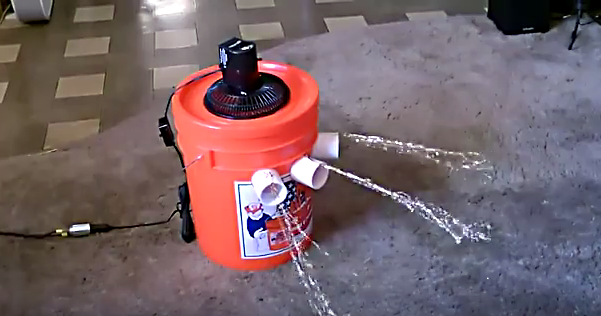
Well, at last Watkins has got one almost completely right! Here he correctly
describes what we now call central heat and air conditioning. I do find it
interesting that he imagines the majority of his readers have electricity; in
1900, only homes in cities were wired and even then most of them were not. He
does correctly see the implication of furnaceless homes—no chimneys—though he's
wrong about them completely disappearing; the romantic aspect of a
fireplace apparently didn't occur to him. He didn't realize that a home with
a fireplace (and chimney) would someday sell at a premium to people who want
the ambiance of a blazing log in the living room.
No Mosquitoes nor Flies
Insect screens will be unnecessary. Mosquitoes, house flies, and roaches
will have been practically exterminated. Boards of Health will have
destroyed all mosquito haunts and breeding grounds, filled in all
swamp-lands, and chemically treated all still-water streams. The
extermination of the horse and its stable will reduce the house-fly.
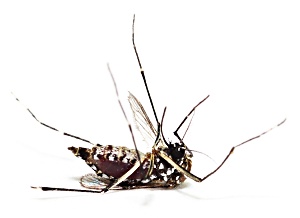
So much for Watkins' winning streak.
What neither Watkins nor any others of his age understood, was the great Web
of Life that includes flies and mosquitoes. Without them, what would most birds
and frogs and toads and lizards eat? Swamplands are home to many species other
than mosquitoes, species that also have a place in the web of life. Every
species that is driven to extinction makes our own position on Planet Earth all
the more precarious.
Instead, we now build homes that are more nearly bug-proof. Modern buildings
are not riddled with the chinks and crannies bugs used to use to enter. Few
homes of today even have mice, let alone rats. And effective insect repellant
allows outdoors enthusiasts to enjoy their pursuits without being unduly eaten
alive by flying pests.
Ready-Cooked Meals will be Bought
…from establishments similar to our bakeries of to-day. They will
purchase materials in tremendous wholesale quantities and sell the cooked
foods at a price much lower than the cost of individual cooking. Food will
be served hot or cold to private houses in pneumatic tubes or automobile
wagons. The meal being over, the dishes will be packed and returned to the
cooking establishments where they will be washed. Such wholesale cookery
will be done in electric laboratories rather than in kitchens. These
laboratories will be equipped with electric stoves, and all sorts of
electric devices such as coffee grinders, egg-beaters, stirrers, shakers,
parers, meat-choppers, meat-saws, potato-mashers, lemon-squeezers,
dish-washers, dish-dryers, and the like. All such utensils will be washed in
chemicals fatal to disease microbes. Having one's own cook and purchasing
one's own food will be an extravagance.
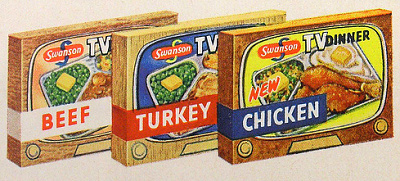
Back on his winning streak, in this paragraph Watkins has foreseen an amazing
number of inventions and conventions that did, indeed, come to be. The only
thing he missed was the freezing of the pre-cooked food, something that
never happened in 1900 by intention. Well, and the prices of frozen dinners
aren't quite as reasonable as he supposed. Clearly, Watkins never imagined the
coming of the Corporation, whose product is Profit rather than service to its
customers.
But don't overlook his prediction of electric labor-saving devices, including
the dishwasher and electric blender and coffee maker. That's pretty amazing from
the vantage point of 1900. And he thought of antibacterial washes, too!
No Foods Will Be Exposed
Shopkeepers who expose food to air breathed out by patrons or to the
atmosphere of the busy streets will be arrested with those who sell stale or
adulterated produce. Liquid-air refrigerators will keep great quantities of
food fresh for long intervals.

Let's concentrate on the point here: Vacuum packed and sealed food, which is,
indeed, the norm. What Watkins didn't foresee was the food factory, which
eliminates the "shopkeeper" from having the choice over whether to "seal" the
food or not. A notable exception: The bakery and butcher's which, while now
engulfed by the modern supermarket, and powered by electricity, have not
otherwise changed much since Watkins' day.
Coal Will Not Be Used For Heating Or Cooking
It will be scarce, but not entirely exhausted. The earth's hard coal will
last until 2050 or 2100; its soft-coal mines until 2200 or 2300…Man will
have found electricity manufactured by water-power to be much cheaper. Every
river or creek with any suitable fall will be equipped with water-motors,
turning dynamos, making electricity. Along the seacoast will be numerous
reservoirs continually filled by waves and tides washing in. Out of these
the water will be constantly falling over revolving wheels. All of our
restless waters, fresh and salt, will thus be harnessed to do the work
Niagara is doing to-day: making electricity for heat, light and fuel.
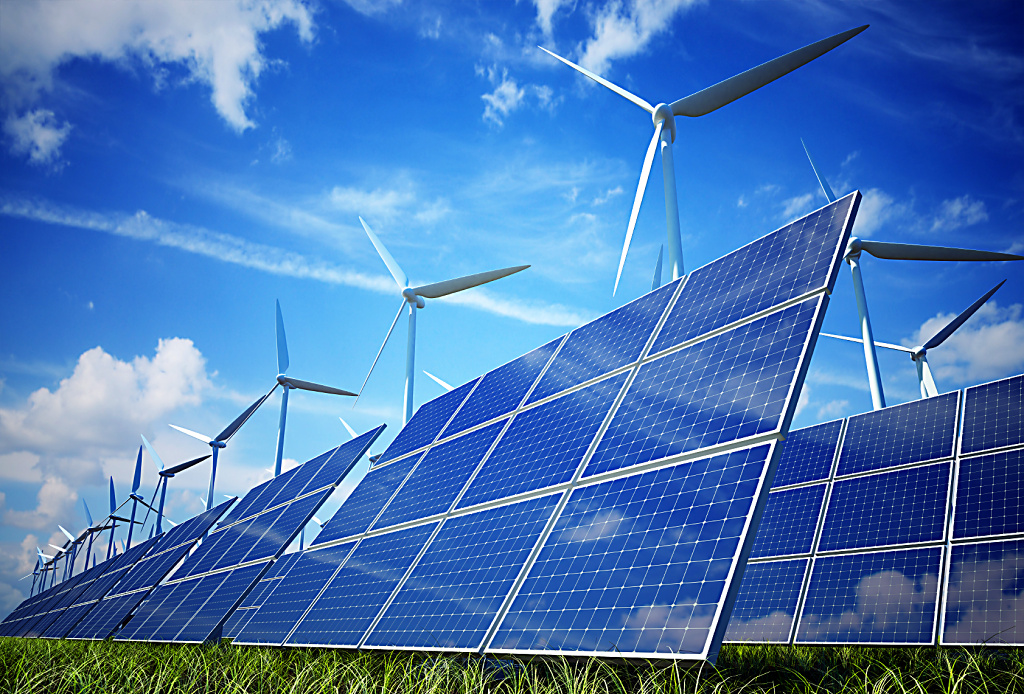
This should be true. Why isn't it? Watkins didn't foresee the greed of
the fossil fuel industry. In Watkins' day, almost everyone thought that the free
market would let the people vote with their pocketbooks, and only good things
would result. It never occurred to anyone that corporations would buy each
other, creating effective monopolies that could (and would) buy political
power and pressure the passage of laws that benefited the corporation to the
detriment of the corporation's very customers.
Dynamos are now so efficient that the wind can generate a family's
electrical needs. Every homeowner should have a windmill in his or her backyard.
That we don't is proof the system is flawed.
There Will Be No Street Cars In Our Large Cities
All hurry traffic will be below or high above ground when brought within
city limits. In most cities it will be confined to subways or broad tunnels,
well-lighted and well-ventilated, or to high trestles with "moving-sidewalk"
stairways leading to the top. These underground or overhead streets will
teem with capacious automobile passenger coaches and freight wagons, with
cushioned wheels. Subways or trestles will be reserved for express trains.
Cities, therefore, will be free from all noises.
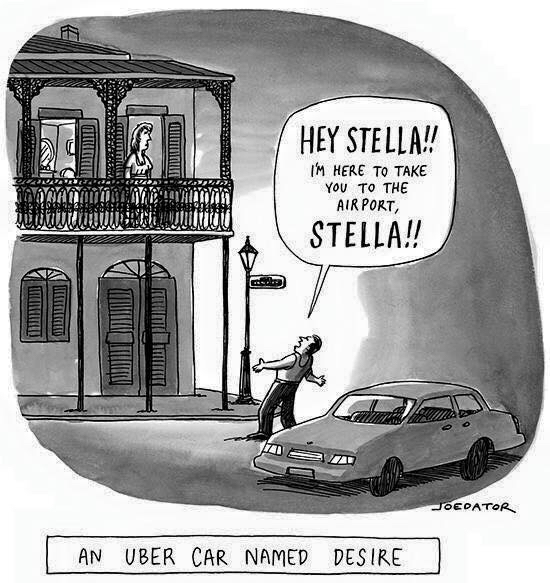
Watkins struck out with this one. 1900 was the heyday of both subway and
elevated train construction; not much has been added since, with a couple of
exceptions (Washington, San Francisco). The "automobile passenger coach" (bus)
rides on surface streets, along with individual automobiles. Watkins did foresee
the rubber tire ("cushioned wheels"), so this point isn't totally wrong.
But it's pretty close.
Photographs Will Be Telegraphed From Any Distance
If there be a battle in China a hundred years hence snapshots of its most
striking events will be published in the newspapers an hour later. Even
today photographs are being telegraphed over short distances. Photographs
will reproduce all of Nature's colors.
The second sentence of this point is curious, because it wasn't true.
Attempts had been made but distance wasn't the issue; technology did not exist
that could scan a photograph and transmit the darkness values of its pixels,
much less recreate an original from the transmitted data. It wasn't until 1920
that the first attempts, called Telephoto, were actually made, and the result
was so fuzzy and faded that it was useless. In 1935
Wirephoto debuted
with photos of a crashed plane in the Adirondacks. The technology was
essentially similar to that employed by fax machines in the 1980s, and scanners
now.
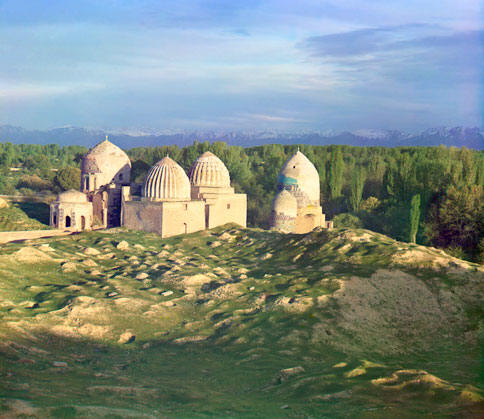
On the other hand, unknown to Watkins, a
photographer in Russia had already experimented with full-color
photographs. While his technique, essentially the same one employed
by Technicolor 30 years later (shooting on three monochrome
negatives, each filtered by one of three colored lenses), couldn't
be reproduced until modern digital techniques made it possible, the
results today look as breathtakingly fresh as if they'd been taken
yesterday.
In any case, color film for the masses (Kodachrome) was also introduced in 1935.
Trains 150 Miles An Hour
Trains will run two miles a minute normally; express trains one hundred
fifty miles an hour. To go from New York to San Francisco will take a day
and a night by fast express…
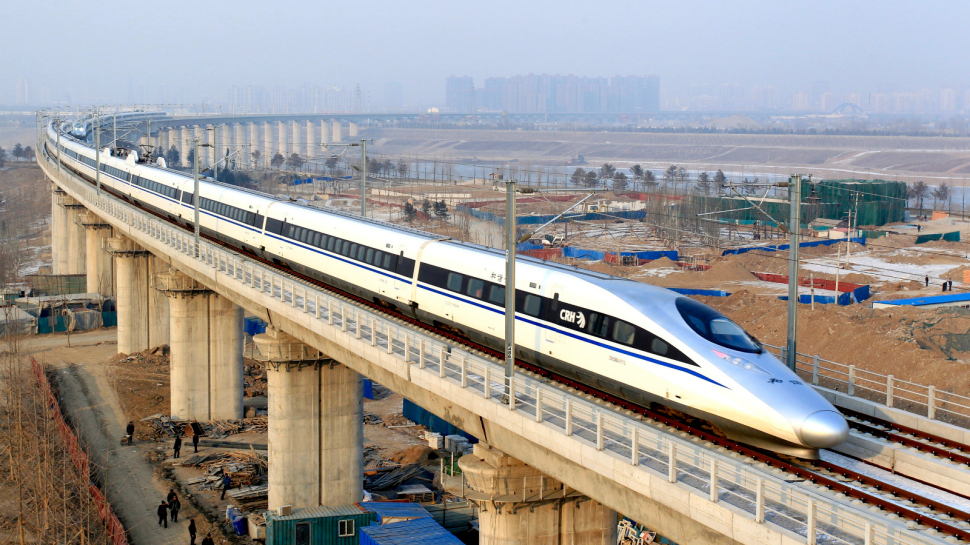
He goes on to describe the efficient engines that don't burn coal, and, like
houses, are artificially cooled. But of course, he missed the real point: That
trains, themselves, would be made all but obsolete by air travel just a few
decades after he wrote this.
Yet, that said, other countries, notably China, Japan, and several European countries do
have high-speed rail, with trains exceeding 300 mph!
Automobiles Will Be Cheaper Than Horses
Farmers will own automobile hay-wagons, automobile truck-wagons, plows,
harrows and hay-rakes. A one-pound motor in one of these vehicles will do
the work of a pair of horses or more. Children will ride in automobile
sleighs in winter. Automobiles will have been substituted for every horse
vehicle now known. There will be, as already exist today, automobile
hearses, automobile police patrols, automobile ambulances, automobile street
sweepers. The horse in harness will be as scarce, if, indeed, not even
scarcer, then as the yoked ox is today.
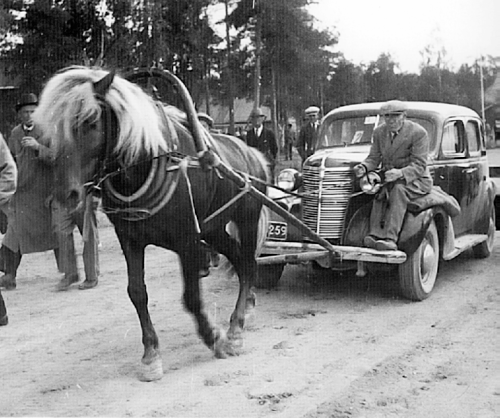
I was not able to determine how much horses cost in 1900. But I'm pretty sure
they did not take the owner five years to pay off; nor did they wear out in
four. Again, Watkins assumed that because something could be done, it
would be done.
On the plus side, he did predict skidoos!
There Will Be Airships
…but they will not successfully compete with surface cars and water
vessels for passenger or freight travel. They will be maintained as deadly
war-vessels by all military nations. Some will transport men and goods.
Others will be used by scientists making observations at great heights above
the earth.
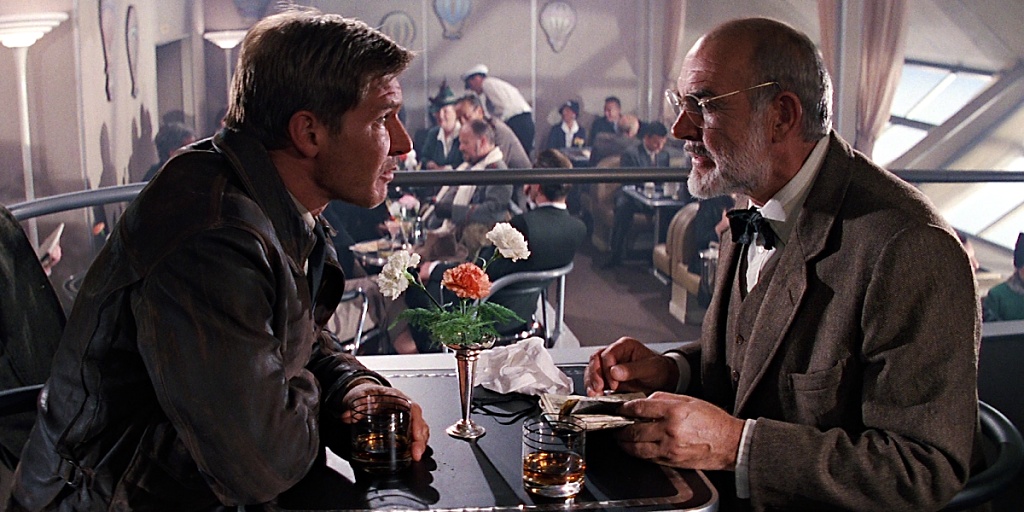
On the plus side, Watkins foresaw the military use of planes, as well as their
use for passengers and freight. This wasn't as revolutionary a guess as some of his,
as the demonstration of the aeroplane came just three years after he published his article.
There Will Be No Wild Animals
…except in menageries. Rats and mice will have been exterminated…
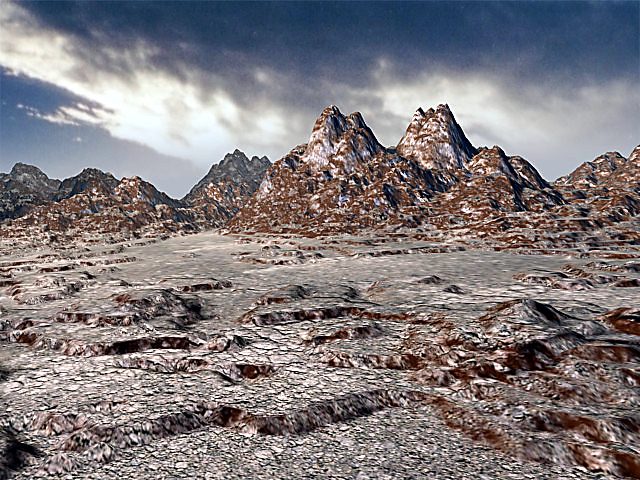
He goes on to describe the genetic modification of domesticated species: no
horns, for example. As previously noted, Watkins didn't understand the sanctity
of the Web of Life, or that a world with "no wild animals" would be unable to
support us.
Man Will See Around The World
Persons and things of all kinds will be brought within focus of cameras
connected electrically with screens at opposite ends of circuits, thousands
of miles at a span. American audiences in their theaters will view upon huge
curtains before them the coronations of kings in Europe or the progress of
battles in the Orient. The instrument bringing these distant scenes to the
very doors of people will be connected with a giant telephone apparatus
transmitting each incidental sound in its appropriate place. Thus the guns
of a distant battle will be heard to boom when seen to blaze, and thus the
lips of a remote actor or singer will be heard to utter words or music when
seen to move.
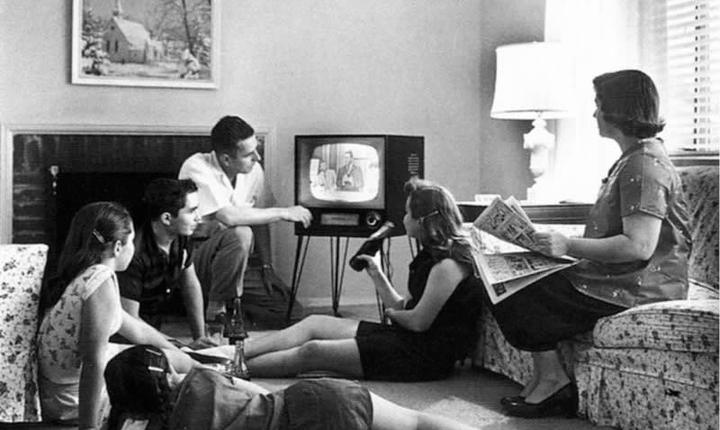
Watkins here has not only foreseen television and television networks (which, as
recently as the 1960s and '70s were linked by the telephone system), but stereo
sound transmission.
Please note that this prediction was made almost thirty years before the invention
of synchronized sound for movies.
Telephones Around The World
Wireless telephone and telegraph circuits will span the world. A husband
in the middle of the Atlantic will be able to converse with his wife sitting
in her boudoir in Chicago. We will be able to telephone to China quite as
readily as we now talk from New York to Brooklyn. By an automatic signal
they will connect with any circuit in their locality without the
intervention of a "hello-girl."
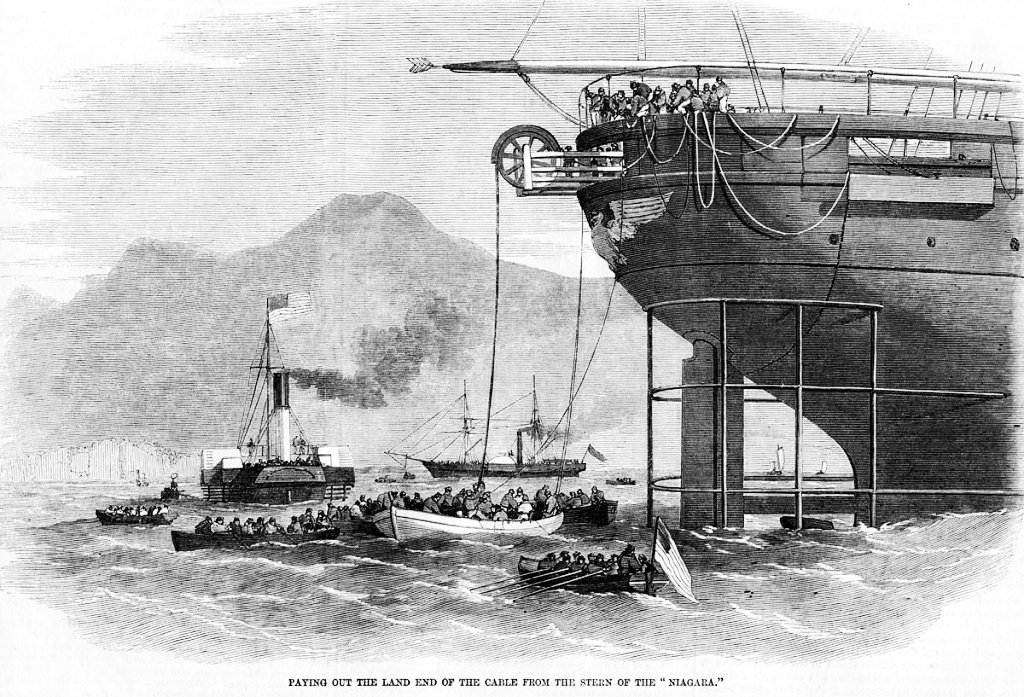
The rotary dial
telephone, which eliminated the "hello-girl", was already patented by 1900 but
not introduced into actual use until 1904 and not used by the Bell System until
1919.
The
first intercontinental telegraph cable was laid in 1858 but operated only a
month; an 1866 attempt was more successful. Once the telephone was invented it
was technically feasible to send a single phone call across it (but telegraph
traffic would never have allowed this).
Radio-based trans-Atlantic telephone service was offered in the 1920s. That
would count as wireless. Marconi, inventor of radio, incidentally began with
wireless telegraphy.
It wasn't until 1955 that a trans-Atlantic telephone cable was successfully
laid, making telephone calls between America and Europe practical.
The problem with transmitting radio around the world is that the Earth's
surface is curved, and radio waves, like light waves, want to travel in a
straight line. Luckily, they can be bounced off the ionosphere, a layer in the
upper atmosphere. But they can't be bounced all the way around the world. The
placement of satellites in orbit around the earth provide a means to finally
fulfill Watkins' prediction. Calls can now be made from anywhere except a cave,
to anywhere else, including a ship at sea.
In other news, we no longer have "boudoirs."
Grand Opera Will Be Telephoned
…to private homes, and will sound as harmonious as though enjoyed from
a theatre box. Automatic instruments reproducing original airs exactly will
bring the best music to the families of the untalented. Great musicians
gathered in one enclosure in New York will, by manipulating electric keys,
produce at the same time music from instruments arranged in theatres or
halls in San Francisco or New Orleans, for instance. Thus will great bands
and orchestras give long-distance concerts. In great cities there will be
public opera-houses whose singers and musicians are paid from funds endowed
by philanthropists and by the government. The piano will be capable of
changing its tone from cheerful to sad. Many devices will add to the
emotional effect of music.
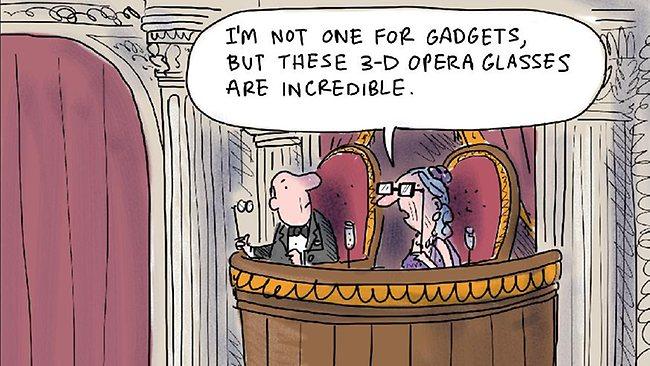
This is an odd prediction, considering that Watkins had already described the
transmission of stereo sound. If read carefully, this prediction seems to state
that musicians would play keyboards which would cause sound to be created,
not transmitted, in the homes of the listeners.
That is now possible with MIDI keyboards and was, indeed, a way of
transmitting music in the early days of personal computers. But it's never been
very satisfying. Meanwhile, the recording and transmission of the original
sounds of an orchestra have been perfected to the point that a good sound
system can reproduce sounds indistinguishable from the original.
Don't miss Watkins' description of a "piano capable of changing its tune."
That's got to be the modern keyboard synthesizer, right?
What Watkins predicted correctly is the general notion that performances
would be broadcast and enjoyed in the home, and that musical performances would
be enhanced by "devices"—which I assume refers to lasers, smoke, mirrors, and
Lady Gaga's costumes.
How Children Will Be Taught
A university education will be free to every man and woman. Several great
national universities will have been established. Children will study a
simple English grammar adapted to simplified English, and not copied after
the Latin. Time will be saved by grouping like studies. Poor students will
be given free board, free clothing and free books if ambitious and actually
unable to meet their school and college expenses. Medical inspectors
regularly visiting the public schools will furnish poor children free
eyeglasses, free dentistry and free medical attention of every kind. The
very poor will, when necessary, get free rides to and from school and free
lunches between sessions. In vacation time poor children will be taken on
trips to various parts of the world. Etiquette and housekeeping will be
important studies in the public schools.
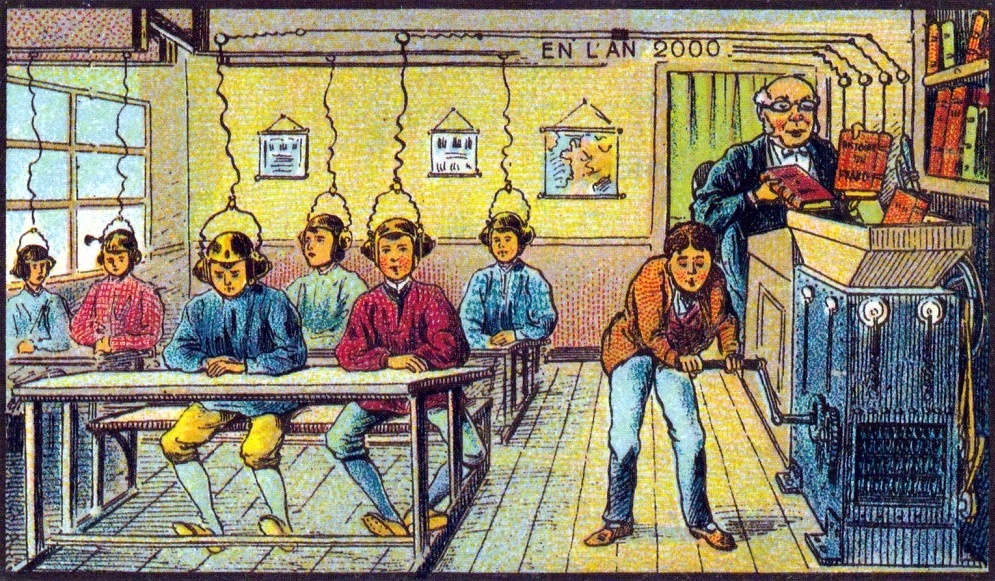
It wasn't until the 21st century (slightly beyond the scope of Watkins' essay)
that some European countries started providing free university-level educations
to their citizens, and Bernie Sanders' presidential campaign that anyone suggested
doing that here in the USA.
Oranges Will Grow in Philadelphia
Fast-flying refrigerators on land and sea will bring delicious fruits
from the tropics and southern temperate zone within a few days. The farmers
of South America, South Africa, Australia and the South Sea Islands, whose
seasons are directly opposite to ours, will thus supply us in winter with
fresh summer foods, which cannot be grown here. Scientists will have
discovered how to raise here many fruits now confined to much hotter or
colder climates. Delicious oranges will be grown in the suburbs of
Philadelphia. Cantaloupes and other summer fruits will be of such a hardy
nature that they can be stored through the winter as potatoes are now.

This prediction consists of two parts: The transport of seasonal fruits and
vegetables from one hemisphere to the other, and the genetic manipulation of
species so that they can be grown in climates not (in 1900) supportive of them.
Our fruits and vegetables have come from distant lands for many years, for
exactly the reason Watkins gives. Who knows any more when blueberries are "in
season", when fresh blueberries are available in the supermarket every day of
the year?
As it turns out, the success of the first part of this prediction made the
second part unnecessary. While there has been some work done with genetic
modification of plants, not much has been done to make oranges resistant to cold
(to which farmers in Florida can attest).
And so on…

Watkins' remaining predictions involved more genetic manipulation to produce
"strawberries as big as apples" (which has almost come true), peas as large as
beets (who would want them?), and black roses (not yet produced) and blue roses
(genetically modified in 2004).
In general, Watkins was accurate when he described a technical advance that
could be used to make money. His predictions failed when they would limit a
corporations' profits, or challenge the fear some people have that makes them
resist allowing others opportunities equal to their own.
But maybe, we can overcome that fear in the next hundred years, and finally
achieve the wondrous world Watkins envisioned.
Except, let's not get rid of the wildlife!