|
By: Paul S Cilwa |
Posted: 12/8/2025 |
|
Page Views: 244 |
| Hashtags: #Vitamins #Supplements #Glycine #HyaluronicAcid #TMG #Trimethylglycine #VitaminC #Magnesium |
| Looking at glycine, hyaluronic acid, and TMG, as well as old favorites Vitamin C and magnesium. And why do people take supplements, anyway? |
| Estimated reading time: 14 minute(s) (3136 words) |

Even if food were as nutrient-rich as it once was, our bodies change with age. Digestive efficiency
declines, stomach acid production drops, and the enzymes that help us break down and absorb
nutrients become less robust. At the same time, our ability to synthesize certain
compounds—like collagen, glutathione, and coenzyme Q10—diminishes. This means that even
when those nutrients are present in food or even supplements, our bodies may not be able to use them as effectively.
This explains why, although I took collagen suuplements from 2020 through 2023, my skin remained
like parchment, subject to bruises or even cuts any time I banged my arm or was touched by a dog.
Beyond soil depletion and the natural decline in absorption that comes with age, modern life adds
several other obstacles to getting the nutrients we need. Chronic stress, poor sleep, and sedentary
habits all increase the body's demand for vitamins and minerals. Many commonly prescribed
medications interfere with absorption or actively deplete certain nutrients, leaving gaps even in
otherwise balanced diets. Environmental toxins and pollution raise oxidative stress, which means
our systems require more antioxidants to stay resilient. And of course, the prevalence of highly
processed foods means that while calories are abundant, true micronutrient density is often
lacking.
Taken together, these realities explain why supplementation has become more than a wellness
trend—it's a practical strategy for maintaining vitality. Supplements don't replace
healthy eating, but they help bridge the gap between what our bodies need and what modern
life provides. For those seeking to age gracefully, targeted nutrients can support energy,
resilience, and longevity in ways that food alone no longer reliably delivers.
Not all supplements are created equal, and it's important to recognize that some are more hype than
help. The wellness industry is massive, and marketing often outpaces science. A glossy label or
celebrity endorsement doesn't guarantee effectiveness, and in some cases, supplements can even be
harmful—either because they're contaminated, dosed improperly, or interact negatively with
medications (or other supplements). The real value lies in evidence-based nutrients that have been studied in
peer-reviewed trials, not just promoted through anecdotal success stories. Looking for clinical
data, published research, and transparency in sourcing is the best way to separate genuine science
from clever advertising.
Equally important is how you approach supplementation personally. Even when a supplement is safe
and supported by research, everyone's body responds differently. That's why it's wise to introduce
one supplement at a time rather than stacking several new ones at once, tempting as that may be—especially
if you are just starting out on the supplement journey. This way, if you notice
changes—whether positive effects like better sleep or negative ones like digestive
discomfort—you can reasonably identify which supplement is responsible. It's a slower
process, but it's far more reliable, and it helps you build a personalized routine that truly
supports your health rather than chasing trends.
When evaluating supplements, there are several warning signs that suggest you may be looking at
marketing hype rather than genuine science. If a product makes sweeping promises like "miracle
cure" or "instant results," that's a red flag. Supplements that rely heavily on celebrity
endorsements or glowing testimonials without offering clinical evidence are also suspect. Another
concern is when labels list "proprietary blends" without disclosing exact ingredient amounts,
leaving you in the dark about what you're actually taking. A lack of third-party testing or
certification for purity and potency should raise caution, as should supplements sold through
unregulated sources or with vague claims that cover too many unrelated benefits at once. In short,
if the promotion sounds too good to be true or avoids transparency, it's wise to be skeptical and
look for products backed by published studies, clear ingredient lists, and independent testing.
The positive signs that a supplement is worth considering are often subtler but reassuring once you
know what to look for. A good product will be backed by published, peer‑reviewed studies that
demonstrate clear benefits in humans rather than relying only on animal data or anecdotes. The
label should be transparent, listing exact ingredient amounts rather than hiding behind vague
"proprietary blends." Reputable supplements are also tested by independent third parties, with
certifications that confirm purity, potency, and freedom from contaminants. Another encouraging
sign is when the claims are specific and realistic—supporting joint comfort, improving sleep
quality, or aiding nutrient absorption—rather than promising to cure everything at once.
Finally, trustworthy supplements are sold through established retailers or directly from companies
that disclose their sourcing and manufacturing practices. When these green flags are present, you
can feel more confident that the supplement is both safe and genuinely useful.
As long-time readers know, I've been taking handfuls of supplements for years, and, to be honest,
I'm not certain all of them are worth the money. They are said to have long-term benefits, and they
may. But I'm here today to tell you about the five supplements I take that I know
have given awesome results that were immediately noticeable.

Vitamin C w/Bioflavinoids
When Nobel Prize winner Linus Pauling began promoting vitamin C in the early 1970s, he was
convinced by his own experiments and observations that high doses of this nutrient could
dramatically reduce the incidence of colds and other viral infections. What is often overlooked is
that Pauling worked with natural forms of vitamin C, which occur in whole foods and are accompanied
by synergistic compounds like bioflavonoids. Many of the subsequent studies that claimed to
disprove his findings relied instead on isolated, synthetic ascorbic acid. While chemically
similar, synthetic vitamin C lacks the natural cofactors that help activate and enhance its effects
in the body, making it a very different molecule in practice.
For decades now, I've taken 6 grams a day of natural vitamin C, always paired with rose hips or
bioflavonoids to ensure activation. The results have been striking: I haven't had a cold or flu in
all the decades I've been taking it. Even during the COVID‑19 pandemic, I received all my vaccinations
like the rest of my family, but while they experienced mild cases more than once, I never developed symptoms and never
tested positive. Vitamin C is known to play a direct role in supporting immune defenses and
specifically in targeting viral activity, so it makes sense that maintaining consistently high
levels could provide a protective edge. In my experience, the difference between synthetic and
natural vitamin C is not just theoretical—it's practical, and it has kept me resilient
through decades of viral seasons.

Magnesium
Magnesium is one of those minerals that quietly underpins nearly every system in the body, yet it's
often overlooked. It works in close partnership with calcium and phosphorus to maintain strong
bones, regulate muscle contractions, and keep the heart rhythm steady. When magnesium is out of
balance with these other minerals—too little magnesium alongside high calcium intake, for
example—the body can experience stress at the cellular level, leading to problems ranging
from muscle cramps to cardiovascular strain.
The challenge is that many people don't get or absorb enough magnesium. Modern diets are heavy on
processed foods, which strip away magnesium-rich components like whole grains and leafy greens.
Agricultural soil depletion has also lowered the magnesium content of produce compared to decades
ago. On top of that, absorption can be impaired by factors such as aging, gastrointestinal
conditions, or medications like diuretics and proton pump inhibitors. Even when magnesium is
present in food, the body may not be able to utilize it efficiently.
I've experienced firsthand how critical magnesium is. Less bioavailable forms, such as magnesium
oxide, often pass through the digestive tract with limited absorption, leaving the body still
deficient. Switching to magnesium bisglycinate—a chelated form bound to
glycine—improves absorption and reduces gastrointestinal side effects. Taking 200 mg nightly
has clearly made a difference for me: the pounding heart, migraines, and kidney stones that
plagued me before have stopped since I corrected the deficiency. That's a powerful example of
how the right form of magnesium, taken consistently, can restore balance and prevent serious
symptoms.

Methyl Folate
Methyl folate was something I hadn't really considered until my pharmacist friend Arthur pointed me
toward it. I started taking a fairly high dose—15 mg daily—and the effect was immediate
and unmistakable: my mood lifted in a way I hadn't experienced from anything else. It was almost as
if a fog had cleared. I'm still not entirely sure what other effects it may have had, but the
change in how I felt emotionally was so striking that it convinced me this was a supplement worth
keeping in my routine.
From what I've learned since, methyl folate is the active form of folate, the B‑vitamin that plays
a central role in methylation, neurotransmitter synthesis, and DNA repair. Unlike folic acid, which
has to be converted in the body, methyl folate is ready to use immediately, which is especially
important for people with genetic variations (like MTHFR mutations) that make conversion
inefficient. That might explain why I noticed such a dramatic difference—it bypasses the
bottleneck and goes straight to work.
I suspect it's doing more than just improving mood. Methyl folate supports the production of
serotonin, dopamine, and norepinephrine, all of which are critical for emotional balance and mental
clarity. It also contributes to cardiovascular health by helping regulate homocysteine levels, and
it plays a role in cellular repair and detoxification. I can't say I've tracked all of those
effects directly, but knowing the science behind it gives me confidence that it's supporting my
overall health in ways I may not immediately feel.
Glycine
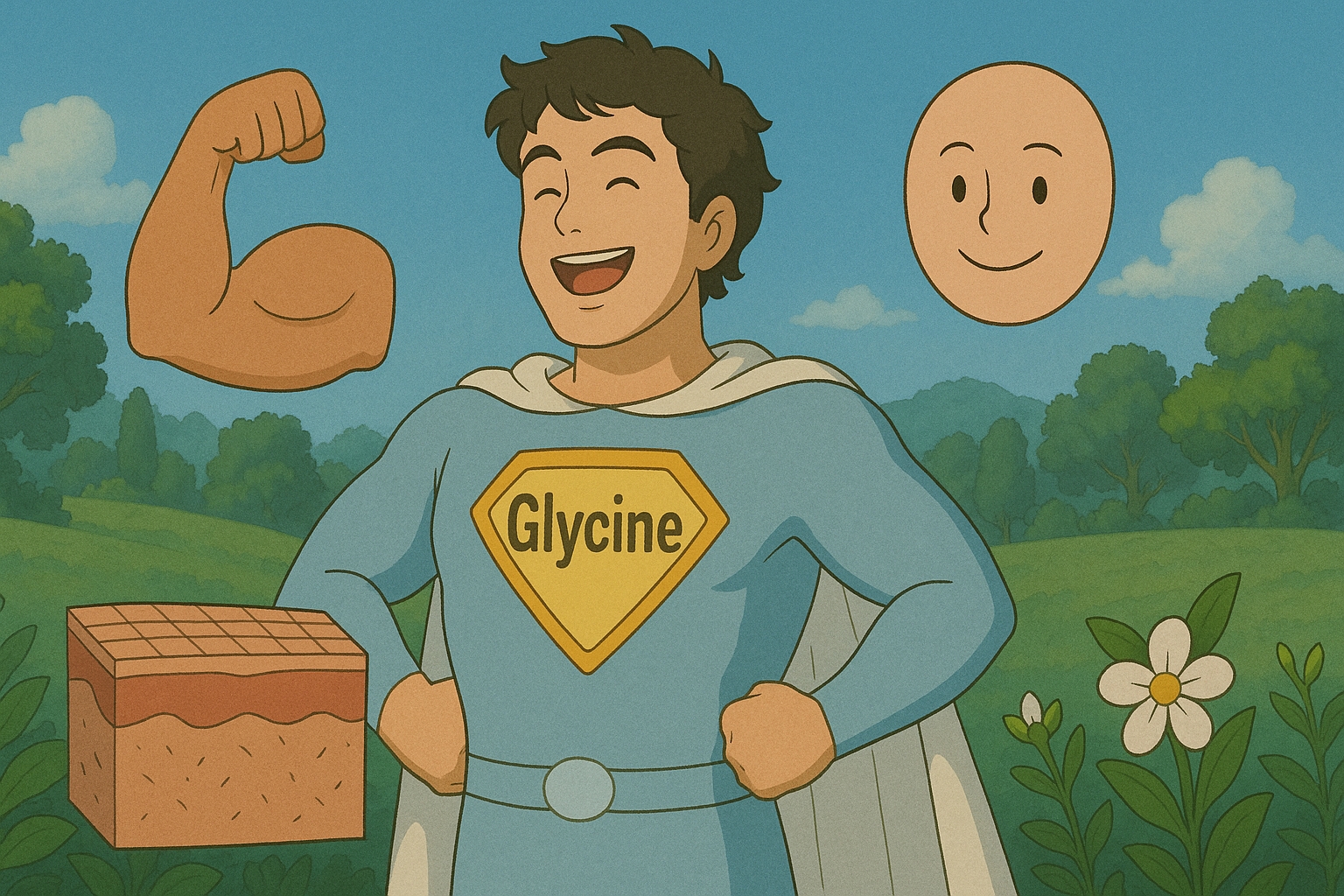
I just started taking Glycine a few days ago, and already it has become one of the most important
supplements in my daily routine, and I've come to
appreciate just how many roles this simple amino acid plays. At first glance it seems almost too
basic: it's the smallest amino acid, something the body can technically make on its own. But I
learned that our natural production often isn't enough, especially as we age, and that's when
supplementation can make a real difference.
I started taking glycine because of its reputation for supporting collagen and glutathione, and I
quickly noticed that it helped me sleep more deeply and wake up feeling more rested. Glycine acts
as a calming neurotransmitter, so it quiets the nervous system at night. It's also doing more
behind the scenes: it's a major component of collagen, which keeps skin,
joints, and connective tissue strong, and it's a precursor to glutathione, the body's master
antioxidant. That means it's helping me fight oxidative stress and inflammation—two of the
biggest drivers of aging.
(Let me note, I also supplement with glutathione and collagen, but I haven't had the dramatic
effects from them alone that I attribute to the addition of glycine.)
What fascinates me most is the research showing glycine's role in longevity. In animal studies,
it's been linked to extended lifespan, and in humans, combinations like GlyNAC (glycine plus
N‑acetylcysteine) have shown improvements in mitochondrial function, oxidative stress, and even
markers of aging itself. I can't measure those things directly in myself, but knowing that glycine
supports autophagy, balances methionine, and reduces "inflammaging" gives me confidence that
it's contributing to my long‑term health. Meanwhile, the short-term benefits in terms of how I
just feel are undeniable.
For me, glycine has been more than just another supplement—it's a foundation. It's easy to
take, well tolerated, and it touches so many systems at once: sleep, skin, joints, metabolism, and
cellular repair. That's why I've added it to my regimen and consider it one of the most valuable
tools in my anti‑aging strategy.
Hyaluronic Acid
As I've aged, I've been troubled by dry eyes, and dry and fragile skin.
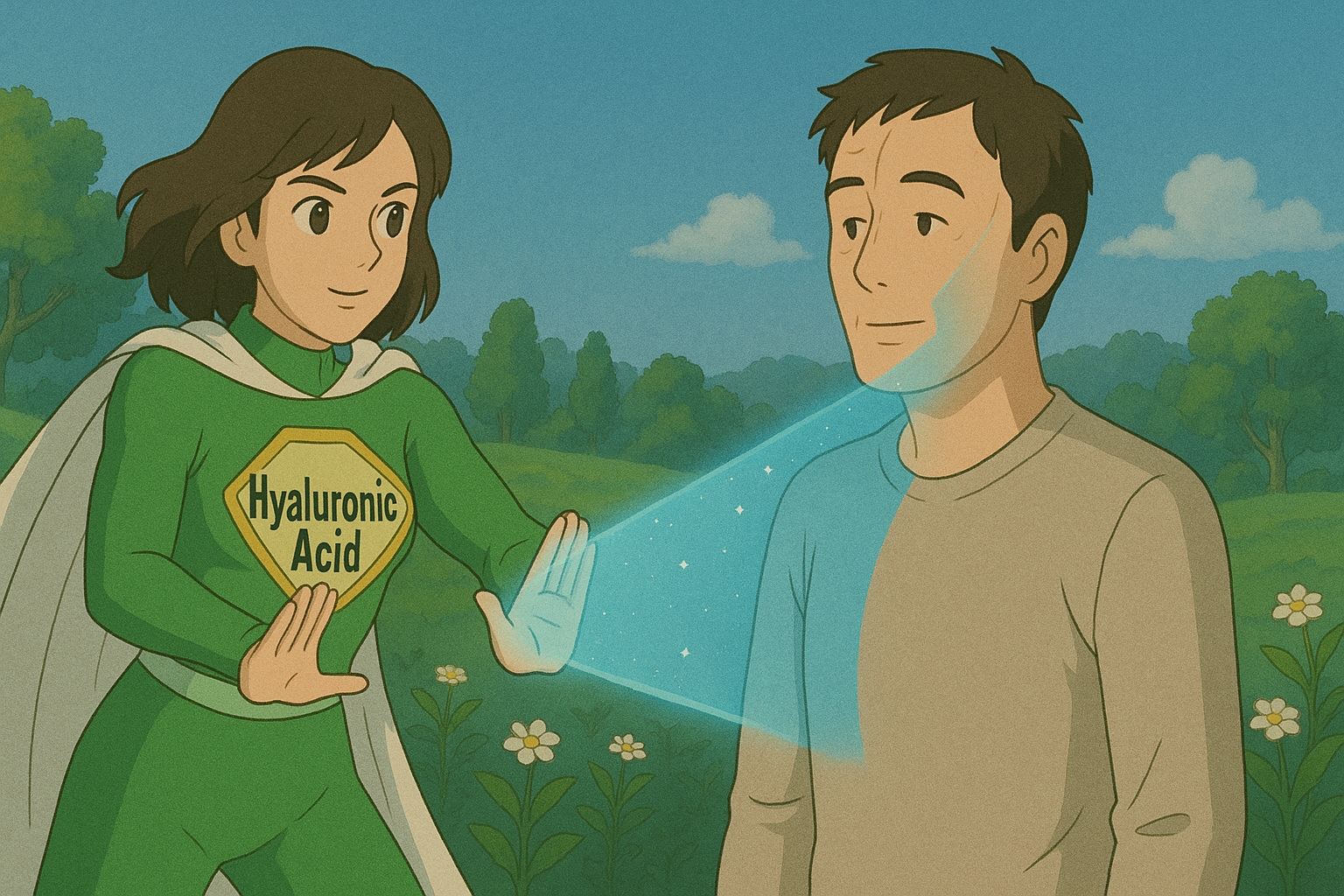
Hyaluronic acid is one of those supplements I didn't know existed, but once I learned how
much it contributes to the way we look and feel as we age, I felt I had to try it. It's a substance
a young body naturally produces, especially in the skin, joints, and eyes;
and its unique ability to hold enormous amounts
of water is what keeps tissues hydrated and resilient. The problem is that our natural levels
decline steadily with age, which is why skin becomes drier and less elastic, joints start to feel
stiff, and even eyes can suffer from dryness.
When I began supplementing with hyaluronic acid, I noticed the difference most clearly in my
skin—it felt more hydrated and looked healthier—and this was mere days
after I started using it. I also found that my arthitic joints seemed to move
more smoothly, which makes sense since hyaluronic acid is a key component of synovial fluid, the
lubricant that cushions movement. What fascinates me is how it doesn't just plump and hydrate; it
also stimulates fibroblasts to produce collagen and elastin, strengthening the underlying structure
of skin and connective tissue. That means it's working at a deeper level to slow down visible signs
of aging.
You can think of hyaluronic acid as the body's natural "water magnet." By keeping tissues
hydrated, it reduces inflammation, supports repair, and helps maintain the youthful resilience that
otherwise fades with time. For me, it's been a subtle but steady addition to my anti‑aging
regimen—less dramatic than something like methyl folate's immediate mood lift, but quietly
powerful in maintaining comfort and appearance.

TMG (Trimethylglycine)
Trimethylglycine, or TMG, was a supplement I came to after learning more about methylation and how
it changes with age. It's essentially glycine with three methyl groups attached, which makes it a
powerful methyl donor in the body. That means it helps regulate homocysteine, supports DNA repair,
and keeps detoxification pathways running smoothly. I started taking it because I wanted to
strengthen those underlying processes, and I've found it fits naturally into my routine alongside
things like methyl folate and glycine.
What makes TMG interesting to me is how many people don't realize its importance until they look at
the science. Elevated homocysteine is linked to cardiovascular risk, and TMG helps convert it back
into methionine, reducing that burden. It also supports liver health, protecting against fat
buildup and aiding detoxification. Athletes sometimes use it for performance and recovery, but
for me it's more of a longevity tool—something that keeps the methylation cycle humming so my
cells can repair and function properly.
I take it with the understanding that methyl donors work best in balance. Folate, B12, and TMG all
interact in the same pathways, so it's not about piling on huge doses but about giving the body
what it needs to stay efficient. For me, the effects haven't been as immediately obvious as with
methyl folate's mood lift or magnesium's relief of migraines, but I trust that TMG is working
quietly in the background—keeping my homocysteine in check, supporting my liver, and helping
my cells age more gracefully.
Pills, Pills, Pills
Looking back over the supplements I've added to my routine, I see how each one addresses a
different dimension of aging, yet together they form a kind of mosaic. Glycine gives me deeper
sleep and supports collagen and glutathione, quietly reinforcing the body's repair systems.
Hyaluronic acid keeps my skin hydrated and my joints moving smoothly, acting like a natural
reservoir of resilience. Magnesium restored balance where deficiency had caused pounding
heartbeats, migraines, and kidney stones, reminding me how essential mineral equilibrium is. Methyl
folate lifted my mood almost instantly, showing me the power of methylation in neurotransmitter
balance and mental clarity. And TMG, though subtler in its effects, strengthens the methylation
cycle and helps keep homocysteine in check, protecting my cardiovascular system and supporting
detoxification.
Taken together, these supplements don't feel like isolated fixes but like a coordinated strategy.
Each one fills a gap left by modern diets, aging physiology, or the stresses of daily life. I don't
expect miracles, but I do expect continuity—the ability to keep living with energy, clarity,
and comfort. By choosing carefully, paying attention to how my body responds, and respecting the
science behind each compound, I've built a regimen that feels both personal and practical. It's not
about chasing trends or piling on pills; it's about restoring what time and environment have
eroded, and giving my body the tools it needs to continue being a kickass through my
seventies and beyond.