|
By: Paul S Cilwa |
Posted: 4/13/2007 |
|
Page Views: 3,649 |
| Hashtags: #Conspiracy #History #HealthCare #Health |
| Let's look at the controversy over the new HPV vaccines. |
| Estimated reading time: 7 minute(s) (1515 words) |
The world of previous centuries was one in which disease was rampant.
Smallpox was especially vicious; Native Americans didn't have it until the
Europeans brought it here and, with no natural immunity to the virus, dropped
like flies—some estimates are that 90% of the native populations of North and
South America were killed by smallpox alone, which spread faster than the
explorers could travel, and thus rendered two continents available for
colonization. (As the Church Lady would say, "Isn't that con-veen-ient!")
Europe in the 18th century was a largely rural place in which cows were a
form of wealth and nearly every family had at least one, as well as "milkmaids"
to care for them. Smallpox periodically made its way across the continent. It
was well-known that, if a person survived smallpox, he or she would never get it
again. Unfortunately, survival rates were not high; as the
World Health Organization notes:
The disease, for which no effective treatment was ever developed,
killed as many as 30% of those infected. Between 65?80% of survivors were
marked with deep pitted scars (pockmarks), most prominent on the face.
Each time a smallpox epidemic spread, it left survivors who were
immune to later infection—but that immunity was not passed on to
children born after the epidemic. And so, each generation, a new
epidemic would mount, killing the rabble with no less ferocity than
the royal:
Smallpox killed Queen Mary II of England, Emperor Joseph I of
Austria, King Luis I of Spain, Tsar Peter II of Russia, Queen Ulrika Elenora
of Sweden, and King Louis XV of France.
Now, it was common knowledge, in this land of cows and
milkmaids, that most milkmaids, independent of smallpox epidemics,
came down with a mild disease called cowpox. The survival rate of
this illness was near 100%. But the interesting thing was, once a
person had had cowpox, that person was immune to smallpox!
Milkmaids, therefore, could and did safely nurse their employers
when the latter succumbed to the more severe disease.
When a smallpox epidemic raged around him in 1774, farmer
Benjamin Jesty inoculated himself, his wife and his children by exposing
them to the dried pus from smallpox victims, a method that had been practiced by
the Chinese for centuries and by
European royalty as early as two years earlier.
Jesty's wife became ill, but recovered. He and his children never even got
sick.
It was shortly afterwards that
Edward Jenner discovered that cowpox inoculations also conferred smallpox
immunity, and with fewer side effects. Nevertheless, it was Cotton Mather who
led the first inoculations of citizens in the New World. From
Wikipedia:
Cotton Mather
in Boston had a description of the African practice of
inoculation from his slave Onesimus and encouraged its application, with
considerable controversy and strife. Fearing the outbreak of an epidemic, the
editor of the South Carolina Gazette published a detailed description
of the inoculation process in the April 22, 1721 issue. In Boston, there was
opposition from churchmen regarding the practice who regarded it as "bidding
defiance to Heaven itself, even to the will of God".
[Italics mine.]
At this point, it might be worthwhile to remind the reader that "churchmen"
have long resisted efforts to improve the lot of mankind.
Now, two hundred years later, no one believes that God's will can be thwarted
by a lightning rod. And yet, there are still organizations who rail against
vaccinations—and they are mostly religious, and yes, they argue that
vaccinations thwart the will of God!
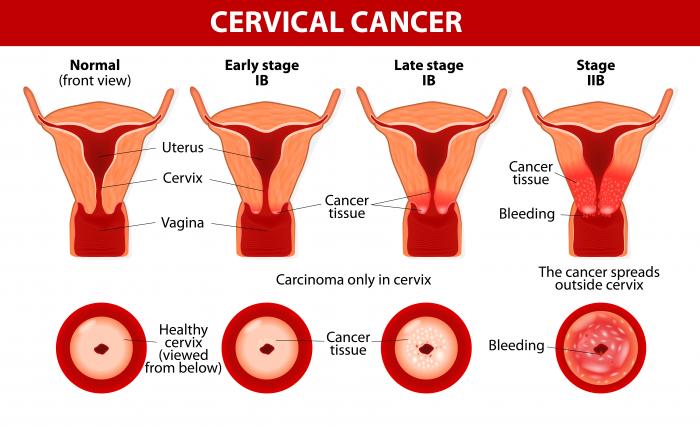
The issue has come up again with the development of two new vaccines against
the Human Papilloma Virus (HPV) that causes cervical cancer in women, and
genital warts in both men and women. Although the religious extremists no longer
complain about smallpox, measles or whooping cough vaccines given to our
children, they have taken up arms against these new vaccines. Why? Because they
remove yet another "punishment from God" (for having sex).
The virus, you see, is spread sexually; and thus the vaccine must be
administered to young girls (and probably boys as well, if future tests show
effectiveness) who have, hopefully, not yet had sex. And while any normal person
would applaud any advance that will certainly prevent deaths
(HPV killed
almost 5,000 American women in 1998, but the disease is much more
deadly in the rest of the world, killing well over half a million women a year,
worldwide), that doesn't faze the religious extremists who believe God needs
their help in punishing the sinful.
So, just as their ancestors attempted to prevent the inoculation of Americans
against smallpox, today's religious extremists want to prevent the inoculation
of American girls against a disease that will almost certainly kill a percentage
of them when they grow—if they ever have sex, whether consensually or
not.
It is an ongoing tactic of religious extremists that they lie about who they
are and what their motivations are. A typical group has the website
http://www.novaccine.com. The front page looks normal enough, and even
informative. I found them in an attempt to balance this essay by looking for
objections to taking any vaccines. But when I went to the page labeled "
authorities Speak Out," it says,
While the medical profession appears to
be unified in praise of vaccination, there are thousands of doctors,
historians, researchers and government authorities who do have hesitated to
voice the truth.
he "thousands" of authorities are
not named, and there is no citation—a common practice of the
Christian extremists, who lie to support their positions far more
often than they rely on any objective truth. Moreover, the above paragraph is
followed by four pages of quotes from supposed "authorities".
But, guess what: except for two, the remaining quotes all come from
last century…and most of them come from the year 1900 or before.
And one of the two 2002 quotes comes from the
Christian Digest,
not generally considered to be a peer-reviewed scientific source.
Too bad there isn't a vaccine against religious extremism.
Now, this is not to say there is no controversy over
the efficacy, or safety, of vaccines. A particular element of concern is the
preservative thimerosal, a mercury
compound, which used to be used in all vaccines and, in some countries, still
is. It was also found in eye drops; but when related cases of mercury poisoning
(and resulting autism) were revealed, it was immediately removed from eye drops
and began to be phased out of vaccines.
Many countries, such as Denmark, no longer allow thimoersal in any vaccines. However,
in 2002,
This came immediately after passage of the Homeland Security bill, which contained a
clause designed to protect Eli Lilly,
the drug company giant that developed thimerosal, from lawsuits involving the additive. The bill
specifically removes all liability from the pharmaceutical industry
and health officials for the injuries and death resulting from the
preservative. And now, use of thimerosal as a vaccine preservative
is again on the rise, at least in the United States.
However, even with the danger thimerosal presents—and it is possible to
request from your doctor thimerosal-free vaccines for your children—the odds are
in favor of an inoculated child, versus an un-inoculated one, when it comes to
contracting a childhood disease. And it seems likely that your little girl,
should she grow to womanhood and become confronted with the pain (and possible
death) of cervical cancer, would wish you'd allowed her to be vaccinated when
she was young.
She might even wish a pox on the houses of those who prevented it.