|
By: Paul S Cilwa |
Posted: 6/15/2010 |
|
Page Views: 5,745 |
| Hashtags: #Health #NaturalHealth #Toxins |
| How environmental toxins are the secret cause of all our fat woes. |
| Estimated reading time: 7 minute(s) (1503 words) |
Am I the only one who's had this experience? I get frustrated
with my weight, and I go on a diet, which works well for a few weeks
and I start slimming down. But then, four or six weeks into it, when
my weight loss should have me feeling light and terrific,
instead I am achy and tired, and get depressed and hopeless at the
very idea that I will be able to stick with the diet. So I wound up
going off it…and staying off longer than I intended…until I've
put all the weight I lost, back on. Then I feel progressively
guiltier until the entire cycle repeats.
If this sounds familiar to you, don't be surprised. Apparently,
as everyone from me to Kirstie Alley can attest, it's pretty much
what happens to everyone who diets (except those imaginary
models on diet food ads). The good news is, there's a doctor who has
figured out the actual, underlying cause to this pattern. He's
written a book about it. And I have an appointment with his office
next Monday.
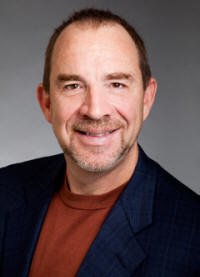
One of the instructors at the
Southwest College of Naturopathic
Medicine (SCNM) is Dr. Walter
Crinnion, who is the world's premiere expert on environmental
toxins. Some years ago, he began to examine the link between the
toxic substances that surround us all every day, and weight gain.
In order to understand how these substances can affect us, it's
first important to understand what toxins are. Dr. Crinnion
expands the scientific
use of the word, which is limited to poisonous substances
created by living creatures, to the more intuitive meaning of any
poisonous substance that can get into the body in minute
amounts, unnoticed in its effects until, suddenly and seemingly
unrelatedly, cancer or heart attack or obesity occur. Since the
ingesting of the toxin may have occurred many years before, or
imperceptibly for a long period of time, the connection isn't
generally obvious and, indeed, few doctors ever make it.
Toxins aren't new. Mold is a toxin. Poisonous mushrooms contain
toxins. Various bacteria emit toxins as waste products, which is why
infections make us feel sick. But it's no secret that today's world
contains a vast array of chemicals that are also toxic, for all that
their manufacturers downplay that fact. How can we imagine that
insecticides, sprayed in the house to kill cockroaches and ants,
would have no effect on us? That antiseptic sprays, designed
to kill germs, would have no effect on our own,
structurally-identical cells? When I was little, I asked my mom, who
never encountered a spray can she didn't trigger, about this and she
explained that we were safe from insecticide because we were so much
bigger than cockroaches. True enough. But we also live a
thousand times longer, and the toxins that instantly kill a
cockroach, remain in our bodies through the years, accumulating
until they kill us, too.
But first, they affect our health in a variety of ways. Because,
when it comes to toxins, it's not a binary matter of alive-or-dead.
There is an infinite range of states between perfectly healthy
and perfectly dead, and very few of us are at either
extreme end of that spectrum.
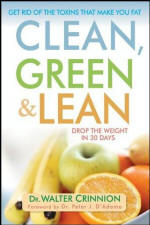 I
heartily recommend Dr. Crinnion's very readable book,
Clean, Green, and Lean: Get Rid of the Toxins That Make You Fat
for the details; but here's the premise in a nutshell.
I
heartily recommend Dr. Crinnion's very readable book,
Clean, Green, and Lean: Get Rid of the Toxins That Make You Fat
for the details; but here's the premise in a nutshell.
First, you must understand that toxins are not like rocks. They
consist of single molecules, which makes them millions of times
smaller than a single cell. But they affect the workings of a cell
in the same way that a rock tossed into a complex machine can
prevent it from working.
Second, like almost all other substances, toxic molecules are
either fat-soluble or water-soluble. The first type
dissolves in fat; the second, in water. Remember how "oil and water
don't mix"? That's an expression relating to this basic property.
Third, the water-soluble toxins pose no problem, because if they
get into our bodies we pee them right out. But the fat-soluble
toxins are another problem entirely. Our bodies, which use fat as a
precious resource, have no easy way to flush out fat-soluble toxins.
Moreover, the body, which recognizes these petite poisons as deadly,
tries to put them somewhere that they will cause the least harm.
Since they are fat-soluble, there's only one place for them: In fat.
So, the body adds to its fat reserves by encouraging adipose
tissue to get jiggy on us and fill with all the fat it can hold. The
toxins then move into this tissue, where they stay quietly and
harmlessly for years.
And if all the toxins you were ever exposed to didn't amount to
much—that is, you actually lived in the Garden of Eden—you would
never get noticeably overweight and you'd stay healthy.
But if you live where there's motor traffic you breathe exhaust
fumes. If you live in a town or city you drink chlorinated water.
Even in the country, you probably drink water drawn through PVC
pipes or, if it's a really old place, lead pipes. Then
there's the insecticides in your house and on the produce you eat,
growth hormones in your meat, mercury in your fish, and even room
deodorizers and trash can spray sanitizers and hand sanitizers and
perfumes and colognes and chlorine in your toilet paper and swimming
pools and DDT molecules in the air you breathe…
Suddenly, it seems like a miracle that any one of us can survive
living in this deadly soup with which we've surrounded our planet.
Well, it is a miracle: The miracle of our bodies, safely
storing those toxins in body fat. But wait—this mechanism was
designed for the world of our ancestors, with far fewer toxins. So
what happens? We become obese, as our bodies must build up more and
more fat to store these massive quantities of toxins.
But, wait: Not everyone is obese. What makes them so
special?
Well, we have a tendency to think that everyone eats like we do
and lives similar lifestyles. But if you ask, you'll find that
thinner folk are either younger (less time to accumulate
toxins) or live a less-toxic lifestyle (live in the forest,
don't eat extra-toxic fast food, eat more produce and fewer
products, don't use scented soaps and sanitizers, etc.).
Now, here's what happens when you diet.
It doesn't matter what diet you use—Atkins, The Zone, Grapefruit
or whatever. When you take in fewer calories, your body burns stored
fat to make up the difference. But when the fat disappears, the
toxins it stored aren't burned with it. Instead, they are released
to roam around the bloodstream, until eventually they encounter a
cell and, like a rock thrown into a factory machine, get caught in
the cell's machinery (called
mitochondria)
where they gum up its works. If this only happened to one cell,
you'd never notice. But as your diet progresses, it happens to
millions and, then, hundreds of millions of cells.
As it happens, the mitochondria of the cell is the mechanism that
converts blood glucose (which, in a diet, largely comes from
converted fat) into actual, usable energy. But each cell that is
gummed up with a toxic molecule can't do its job. The result is
fatigue, diabetes, loss of healing ability, aches and pains,
irritability and depression. (And, at an extreme, it can also be
cancer, atherosclerosis, and even more severe effects.)
Now, this isn't bad news. That's because, finally
understanding the mechanism behind persistent obesity means it can
be defeated. The trick is, simply, to induce the toxins to leave
the body entirely. And Dr. Crinnion knows how. And, best of
all—when the toxins are gone, the body itself releases the
stored fat it no longer needs. You don't have to make an effort to
diet or exercise.
As I go through this process, I'll share what I learn with you.
But first, in tomorrow's post, I will use myself as an example of
how a normal, relatively clean-living life can nevertheless
accumulate enough toxins by middle age to result in a middle-aged
spread.