|
By: Paul S Cilwa |
Posted: 6/29/2024 |
|
Page Views: 304 |
| Hashtags: #Slavery #HumanTrafficking #Scams |
| If you've ever gotten a text message seemingly to someone else, you've been contacted by a slave. |
| Estimated reading time: 5 minute(s) (1103 words) |

So there are potentially two victims here: The enslaved person who texted you, and you, if you fall for it.
I mean, just for starters, why would anyone fat finger a phone number to someone close enough to buy tickets for
instead of just picking up on the conversation to begin with? When is the last time you bought tickets for someone
who wasn't in your contact list???
But let's say you reply. The scammer will thank you for your kindness, but try and continue the conversation
(probably describing how worried they are about Alex). Most of us will cut it short; we have lives.
But a few will keep on, over a period of days, or even weeks. If you have a male-sounding name, the person will
provide a female-sounding name, or vice versa. They may even offer to trade photos, with racially and ethnically
appealing pictures to match your name. Guess which of the below photos you'll be sent if you tell them your name
is Barry Allen, as opposed to Grace Choi?
(Besides, they can make a good guess at your ethnicity from your phone number.)
Anyway, if you stick with them, eventually there will be an emergency, a lost passport or
stolen wallet or whatever. And they'll need money, which, for a perfectly logical reason
they supply, must come from you. Or… they have a business deal that
they wouldn't share with just anyone, but will with you. Because you're such good friends!
The same thing applies to cloned Facebook profiles. You are are surprised to see someone you thought you
were already friends with in your list of Friend Requests. But, you think, maybe they accidentally
unfriended me, and want me back. So you accept their request, and one day they text you on Messenger
with their lost passport/stolen wallet emergency.
Those of us who've learned (generally, the hard way) about these scams and scammers, have
mostly assumed plain old mobsters were behind it. And they are, but mobsters aren't typing those
messages. Recent investigations have uncovered that many people involved in cloning Facebook profiles and
sending scam messages are actually victims of human trafficking, particularly in Southeast Asia.
Large compounds in countries like Myanmar, Laos, and Cambodia have been identified where trafficked
individuals are forced to participate in these online scams.
These operations are sophisticated and often involve creating fake profiles to build trust with unsuspecting
victims through social media and messaging apps. The victims, often under threat of violence, are coerced into
engaging in fraudulent activities such as convincing people to invest in fake cryptocurrency schemes.
The notorious KK Park compound in Myanmar, for example, has been linked to these operations, where
trafficked individuals live in harsh conditions and are monitored constantly by armed guards.
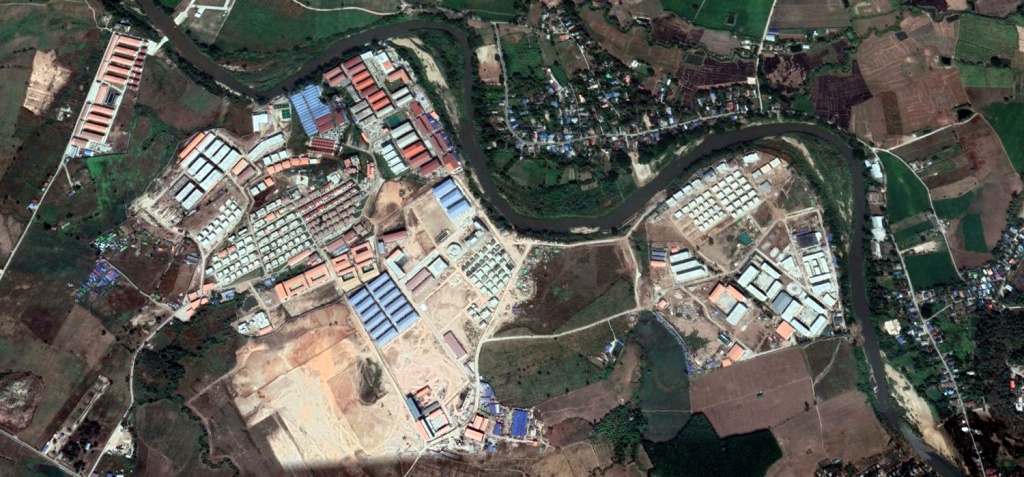
These trafficked individuals are typically educated and technologically savvy, often
lured by fake job advertisements promising legitimate work. Once they are transported
to these compounds, their passports and phones are confiscated, and they are subjected
to inhumane working conditions, including long hours and physical abuse if they
fail to meet their targets.
To protect yourself from scam SMS texts and cloned Facebook profiles, here are several practical steps you can take:
Protecting Against Scam SMS Texts
- Do Not Click on Links
Avoid clicking on links in unsolicited messages.
Scammers often use links to direct you to malicious websites
or to steal your personal information.
- Verify the Sender
If you receive a message from an unknown number, do not respond or
engage with the message. If it claims to be from a known company or
service, verify it through official channels.
- Use Spam Filters
Enable spam filters on your phone. Most smartphones have
built-in features or apps that can help filter out suspicious messages.
- Report Spam
Report spam messages to your carrier. Many carriers have a designated
number to which you can forward spam messages for review.
- Install Security Apps
Use reputable security apps that can help detect and block spam and scam messages.
- Be Cautious with Personal Information
Do not share personal information, such as banking details or social security numbers, via SMS.
- Keep Software Updated
Ensure that your phone's operating system and apps are up to date to protect against vulnerabilities.
Protecting Against Cloned Facebook Profiles
- Strengthen Privacy Settings
Adjust your privacy settings to limit who can see your friends list, posts, and
personal information.
Go to your profile settings and select Privacy Settings and Tools
to review
and update your settings. :
- Be Cautious with Friend Requests
Verify friend requests from people you don't know personally.
Check if you are already friends with the person who is sending the request.
If you don't know the person, at least check their wall to see if the
account was created yesterday.
- Report Cloned Accounts
If you find a cloned account, report it to Facebook immediately. Use the Report
option on the fake profile to alert Facebook.
- Limit Public Information
Avoid sharing too much personal information publicly. Restrict access to your
photos, personal details, and friends list to only trusted friends.
- Monitor for Duplicate Accounts
Regularly search for duplicate profiles using your name and photos to
ensure no one is impersonating you.
- Educate Friends and Family
Inform your friends and family about the signs of a cloned profile
and encourage them to report suspicious accounts.
Ending Slavery
There are a number of non-profits devoted to ending human trafficking. But, ironically,
I think that AI is actually going to be the solution to this particular problem.
Even slaves have to be fed, clothed and housed; and this is expensive. A properly-trained
AI (and this is so easy to do) could easily replace a thousand slaves, and at virtually
no cost to the actual scammers (the people running the scam, the enslavers). In many cases,
AI would be able to carry on the facade of being an American more easily than a Chinese slave,
however well-educated.
Now all we need is an AI app on our phones to carry on the converstion with the other AI,
never sending money or real info, of course, until the scammers finally give up!