|
By: Paul S Cilwa |
Posted: 3/31/2024 |
|
Page Views: 440 |
| Hashtags: #Autobiography |
| You call it Easter, but most of the world knows it as the Spring Equinox. |
| Estimated reading time: 9 minute(s) (1916 words) |
The word Easter
is believed to have derived from the Old English word Ēastre
,
which was the name of a goddess of spring and fertility. Eostre, also called Ostara or Eastre,
is a Germanic goddess associated with spring and the dawn. She is particularly known in Anglo-Saxon
and Old High German traditions. The festival of Ostara evolved into Easter as Christianity
spread and pagan beliefs faded.
Notably, there is limited historical information about Eostre, and much of what is known comes from Bede,
an English monk and historian from the 8th century. In his work De temporum ratione
(The Reckoning of Time), Bede mentions Eostre as the name of a month corresponding to April
and suggests that the festival of Easter may have been named after this goddess. However,
he doesn't provide extensive details about her.
Eostre is generally associated with themes of fertility, renewal, and the changing of the seasons,
as her name is etymologically linked to words related to dawn and the east, from where the sun rises.
She is often depicted with symbols of spring, such as eggs and hares, which have become integral
elements of the modern Easter celebration.
While Christianity is the single largest religious denomination in the world, its
members still comprise well under one-third of all humanity. So, while we're celebrating
Easter, what is everyone else doing?
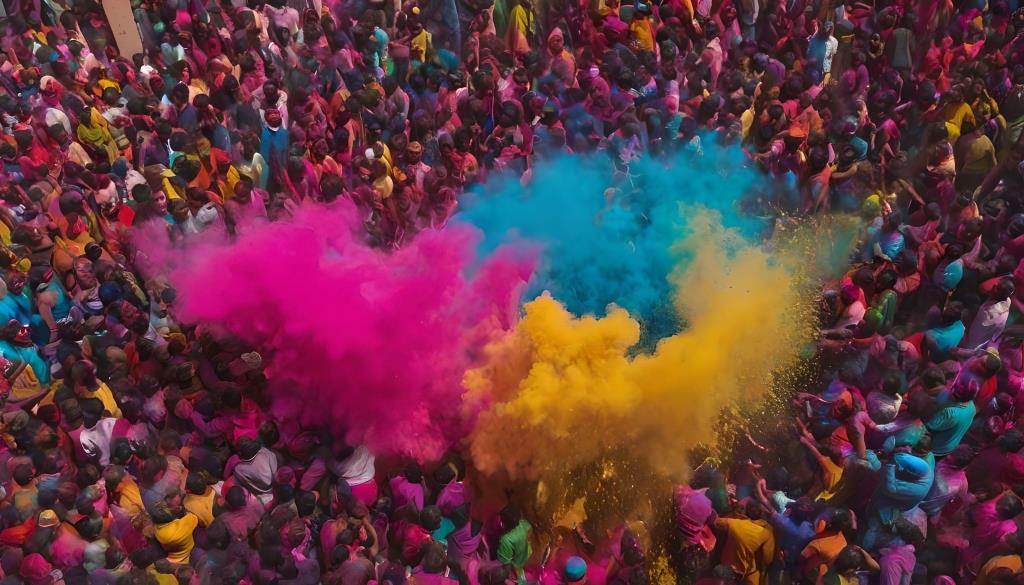
In India and Nepal, they're celebrating Holi: This festival of colors
falls close to the spring equinox and is celebrated by Hindus. People take to the
streets to throw colored powders and water over each other, symbolizing
fertility and love. Wood and dung cakes are burned to represent the triumph
of good over evil. (I dunno, a dung cake sounds pretty evil to me!)
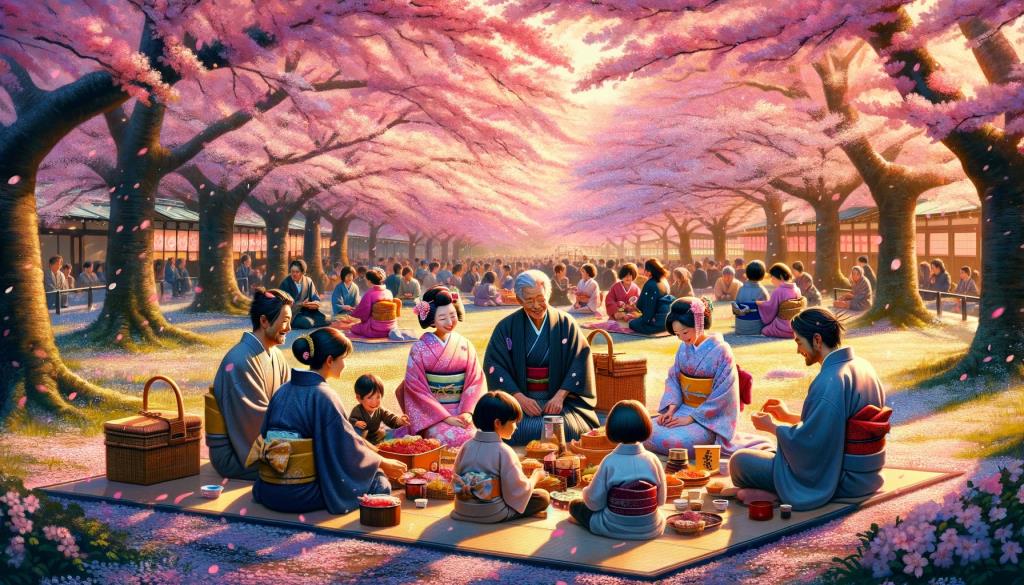
Higan is a Buddhist holiday in Japan celebrated during the equinoxes, both
spring and autumn. It lasts for seven days, three days before and after
the equinox. The holiday is observed by nearly every Buddhist school in Japan.
People often return to their hometowns to pay respects to their ancestors.
They clean family graves, offer prayers, and leave flowers.
It is a public holiday, so many businesses are closed.
The mild weather during the equinoxes is seen as a symbol for Buddhists
to change their lives in order to achieve enlightenment.
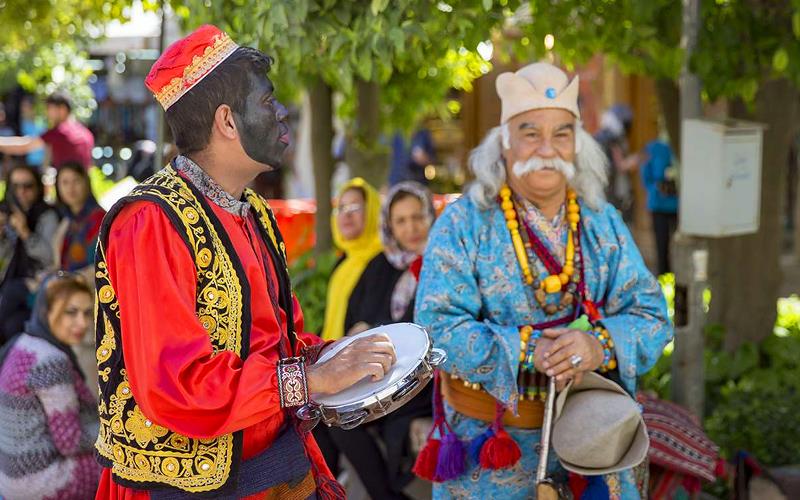
Nowruz, the Persian New Year, ushers in the spring with a celebration of
nature's rebirth, family gatherings, and communal harmony. As the vernal
equinox breathes new life into the dormant earth, people of all ages engage
in the joyful traditions of khaneh tekani, or spring cleaning, symbolizing
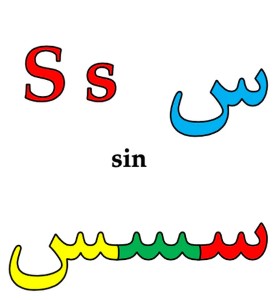
a fresh start. Homes are adorned with the vibrant Haft-Sin table, where
seven items beginning with the Persian letter sin
are artfully displayed,
each embodying the hopes for the new year: health, love, patience, prosperity,
rebirth, beauty, and fertility. Fire-jumping rituals cleanse the spirit
of the past year's misfortunes, while the aroma of sumptuous feasts fills the air,
inviting families to bond over ancestral recipes. Children revel in the break
from school, basking in the warmth of extended kinship. For thirteen days,
the spirit of Nowruz infuses communities with a sense of renewal, as the
ancient rhythms of life align with the natural world's awakening.
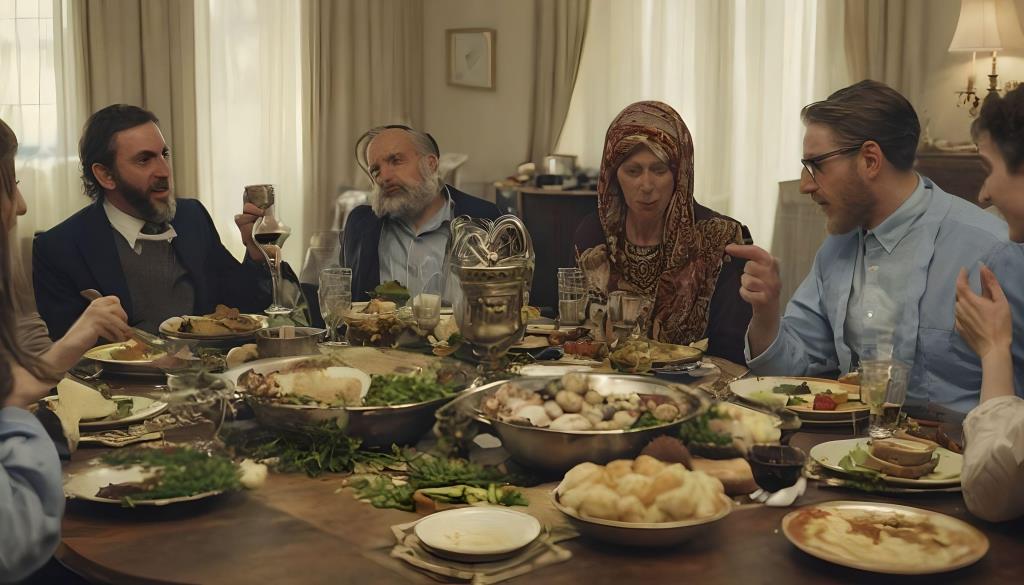
Passover, or Pesach, is a deeply revered Jewish holiday that commemorates the
liberation of the Israelites from Egyptian slavery, as told in the Book of Exodus.
Around the world, Jewish families gather for the Seder, a ritual feast that marks
the beginning of Passover. During the Seder, participants read from the Haggadah,
which narrates the story of the Exodus, and partake in symbolic foods placed
on the Seder plate. These include matzah, the unleavened bread symbolizing
the haste of the Israelites' departure; maror, bitter herbs representing
the bitterness of slavery; and charoset, a sweet mixture evoking the mortar
used by the Israelite slaves. The meal is interspersed with songs, prayers,
and discussions, fostering a sense of community and continuity. Wine is
consumed throughout the evening, symbolizing joy and celebration. Passover
is not only a time of historical remembrance but also a period of spiritual
introspection and renewal, as individuals reflect on themes of freedom and redemption.

Songkran, the Thai New Year, is a jubilant celebration that marks a time of
cleansing and renewal. From April 13th to 15th, the streets of Thailand
come alive with the laughter and joy of people engaging in water fights,
symbolizing the washing away of the past year's misfortunes. It's a time
when families gather, homes are cleaned, and Buddha statues are bathed
with flower water. The festival is deeply rooted in tradition, where
younger Thais show respect to monks and elders by gently pouring water
over their hands. Amidst the revelry, there's also a sense of spiritual
reflection, as Thais visit temples to pray and offer food to monks,
carrying out a practice of merit-making. Songkran is a blend of the sacred
and the festive, embodying the spirit of purification, family, and community.
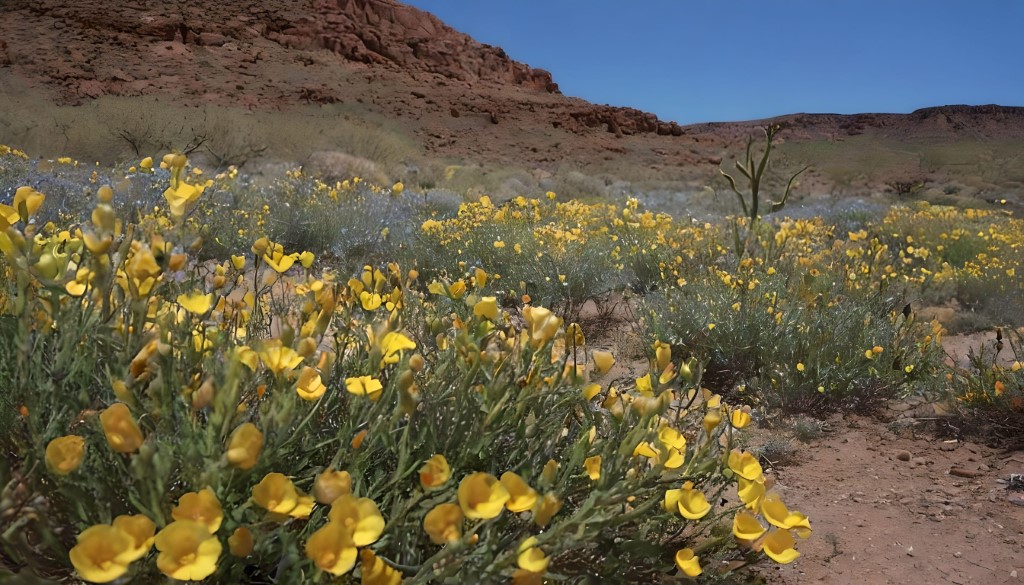
Equinox celebrations tend to favor Spring in the higher latitudes,
where winters are more brutal. In the lower latitudes, the spring and
fall equinoxes are more equally appreciated.
But what is an equinox anyway?
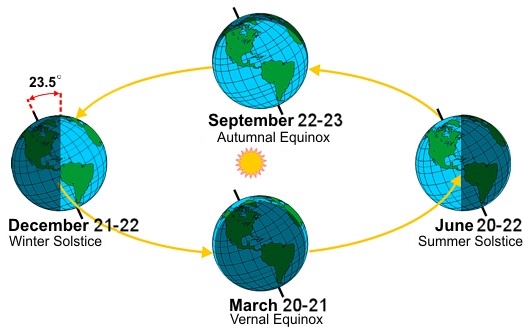
Technically, an equinox is an astronomical event in which the Earth's equator
lines up directly with the center of the Sun's disk. This occurs twice a year,
around March 21 and September 23, and results in both the Northern and Southern
Hemispheres experiencing roughly equal amounts of daylight and darkness.
During an equinox, the tilt of the Earth's axis is perpendicular to the
Sun-Earth line, meaning there's no tilt toward or away from the Sun,
and the day and night are very nearly equal in length.
The term equinox
comes from the Latin words aequus,
meaning equal,
and nox,
meaning night, reflecting this balance of light and dark.
It's a significant time
for everyone; for, no matter how hard we try to hide in our cities and virtual
realities, we cannot escape the world of which we are a part.
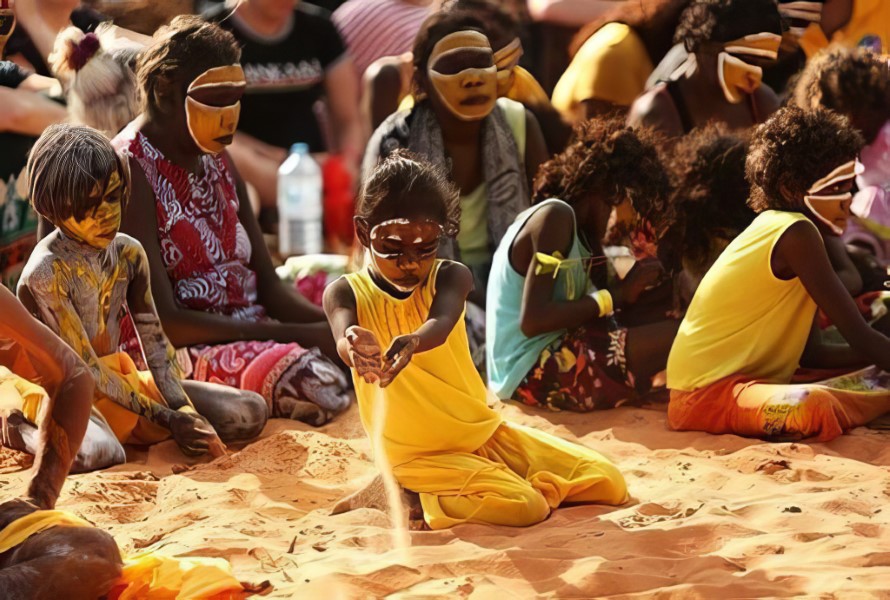
Indigenous Australians have a rich cultural astronomy that includes observations
of the sun, moon, stars, and planets, which are deeply intertwined with their
traditions and knowledge systems. While the concept of the equinox as understood
in the Eurocentric four-season calendar is not directly applicable,
Indigenous Australians do observe significant solar points along the horizon
for timekeeping and as a predictor of seasonal change.
Their knowledge is highly sophisticated, with a focus on the scientific and
social information encoded within their astronomical observations. This
includes understanding the complex motions of celestial bodies and their
relationship to the environment and seasons.
Different Indigenous groups have their own unique ways of acknowledging the equinox,
often involving ceremonies, dance, and song that express gratitude for the
Earth's bounty and the renewal of life. For example, they
celebrate the Dreamtime ceremony during the Spring Equinox,
commemorating the Earth's creation and the start of life. This ceremony
involves singing, dancing, and storytelling to share cultural traditions
and beliefs passed down through generations.
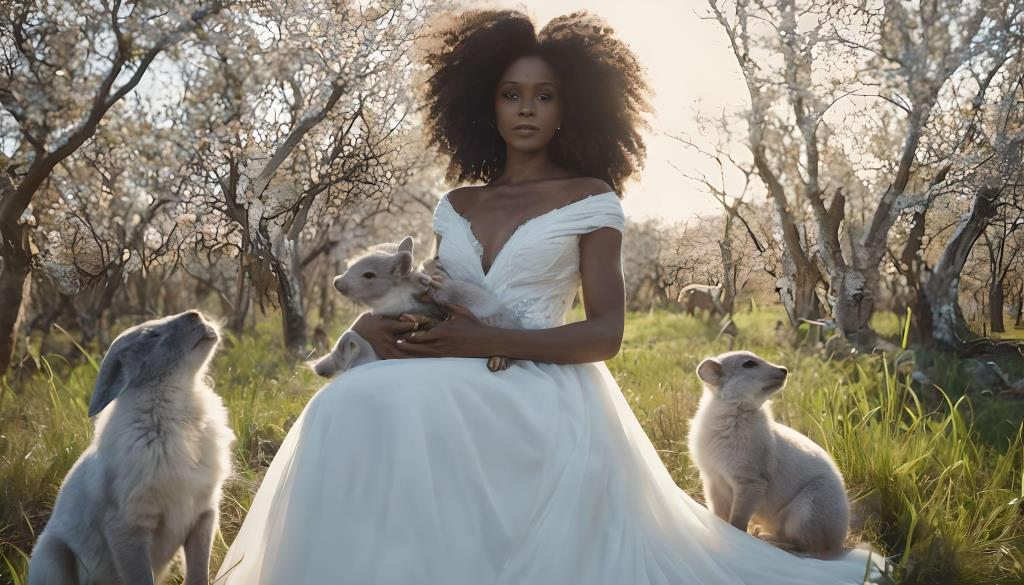
Clearly, the celebration of the Equinox (especially spring) far predates
any traditions of Christianity, which is where the Easter Bunny came from.
The Easter bunny, or Easter hare as it was originally known, comes from
European folklore, in which the hare was a symbol of fertility and new life,
obviously aligning with the themes of spring and rebirth. The tradition of
the Easter hare began in Germany, where it was said that the Osterhase
or Oschter Haws
would lay colored eggs for well-behaved children.
As for the eggs, they are an ancient symbol of new life and have been associated
with pagan festivals celebrating spring. Decorating eggs for Easter is a tradition
that dates back to at least the 13th century. The practice of decorating eggs
and the myth of an egg-laying hare were brought to America by German immigrants
in the 1700s, particularly in Pennsylvania. These symbols were eventually
incorporated into Christian traditions, with the Easter bunny and eggs
becoming a part of the celebration of Easter Sunday. Over time, these
elements have become a cultural association of the Easter holiday, especially
for children, who enjoy Easter egg hunts and receiving chocolate eggs and bunnies.
(Who doesn't?)
When Christianity spread to Europe, it encountered a tapestry of pagan traditions,
which often included symbols like the hare or rabbit, associated with fertility
and springtime. People love their holidays and traditions, and the Church had
learned that when you can't beat 'em (or burn 'em at the stake), join 'em.
So to make the teachings of Jesus Christ more palatable to those outside the
faith, early Christians incorporated some of these pagan symbols into
their own practices, where the heathens would find them at least familiar.
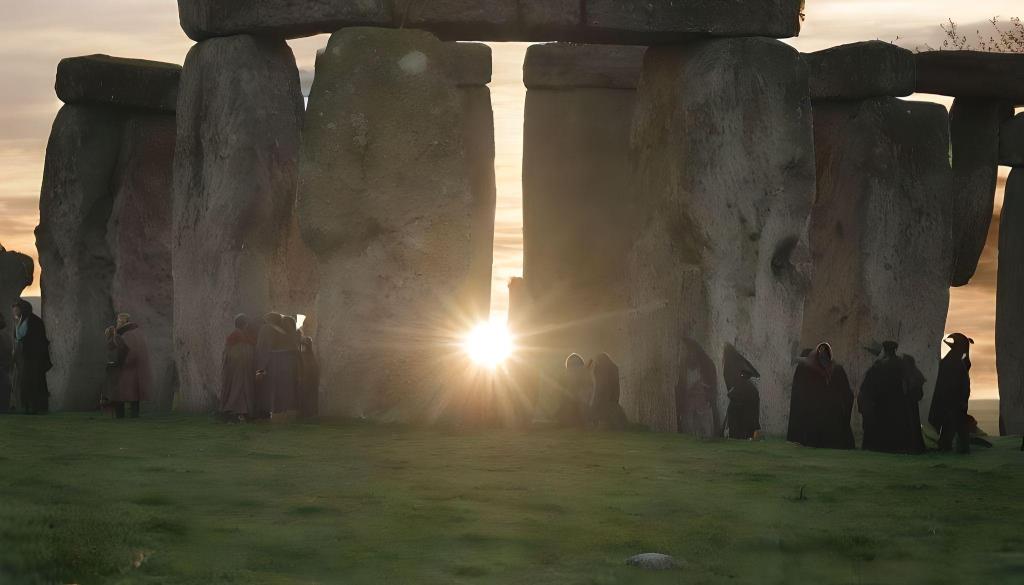
But for those who cling to the old ways, at Stonehenge, a sense of ancient
continuity fills the air. This prehistoric monument, aligned with the movements
of the sun, welcomes modern-day druids, pagans, and revelers who gather to
witness the first sunrise of spring. The stones stand silent, casting long
shadows as the sun ascends, marking a time when day and night are in perfect
balance. The atmosphere is one of reverence and celebration, with chanting
and drumming often accompanying the ceremony.
For a few precious hours, English Heritage opens the site for public access,
allowing people to stand among the megaliths and connect with a tradition
that dates back thousands of years. (Construction of Stonehenge began around
3100 BCE.)
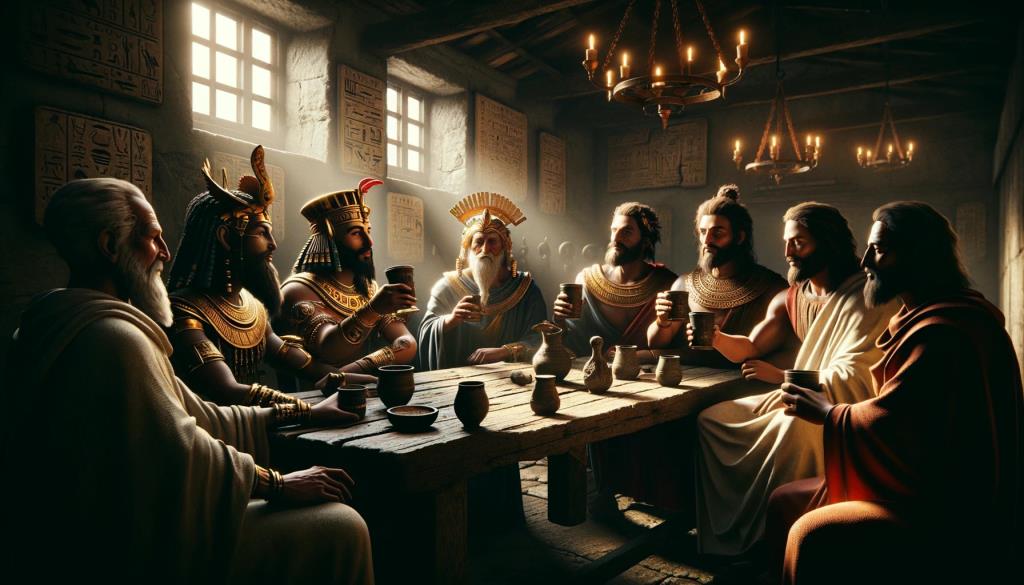
And as we celebrate the world as it comes back to life after the dead of winter,
let's appreciate the deities associated with the theme of death and resurrection,
particularly in relation to agricultural cycles and the equinox. Here are a few:
- Osiris (Egyptian)
In one of the most famous resurrection stories, Osiris was killed and
dismembered, then resurrected by his wife, Isis, to become the lord
of the underworld and judge of the dead.
- Tammuz (Mesopotamian)
Also known as Dumuzid, he was a god of fertility who died annually
during the summer and was revived in the spring.
- Attis (Phrygian)
A god associated with vegetation, he was believed to have died and
been reborn each year during the spring equinox.
- Adonis (Greek)
Similar to Tammuz and Attis, Adonis died and was resurrected,
and his myth is associated with the seasonal cycle of crops.
- Persephone (Greek)
While not a deity who died in the traditional sense, she spends
part of the year in the underworld with Hades and returns to the
surface in the spring, symbolizing the rebirth of vegetation.
- Jesus (Roman)
Not originally a deity (Jesus refers to himself as the Son of Man
throughout the Gospels), competition with other Christian offshoots
led the Council of Nicea to declare Jesus to be Divine.