|
By: Paul S Cilwa |
Posted: 9/27/2009 |
|
Page Views: 6,818 |
| Hashtags: #Humor #Recovery #WINR #JennyCilwa |
| Let's walk down a major intersection carrying banners to show how normal we are. |
| Estimated reading time: 5 minute(s) (1148 words) |
Although WINR is a sponsor of the event and provides the venue, the Recovery
Walk actually includes participants from any number of recovery centers, as well
as alumni and faculty. Each year the participation has increased; Patty
Henderson, founder of WINR, remarked during
the afternoon that next year they may need to find a more spacious location.
When we arrived, friendly people at a table had us sign in. We learned later
that, by signing in, we were agreeing to walk. Apparently Michael was
somewhat surprised by that.
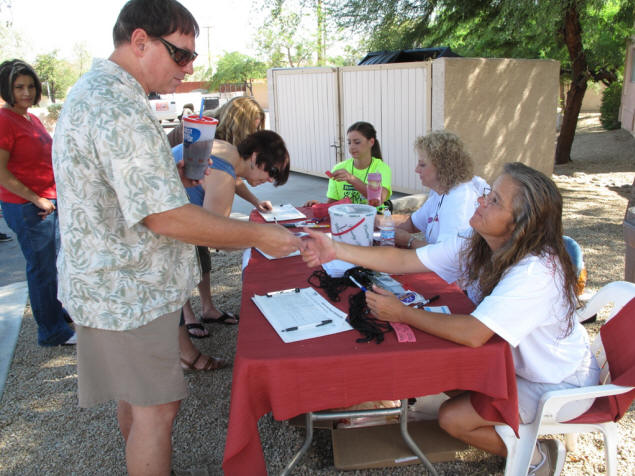
But we were also entered into a raffle for a T-shirt.
We ran into Jenny straightaway, who of course had arrived early to help set
up.
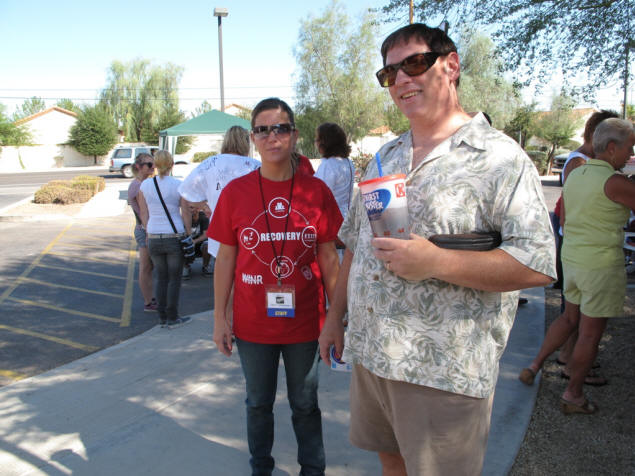
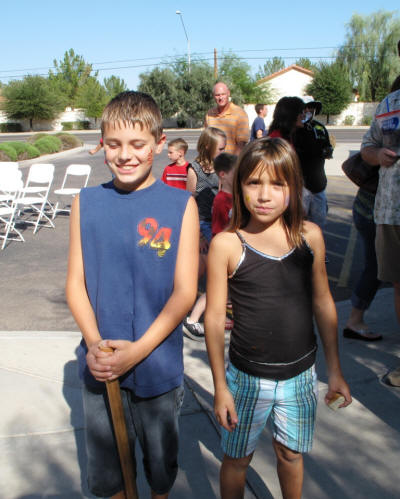
Zach and his friend Madison were also there, where they played with the
other kids and had their faces painted.
Children are a big part of the recovery process; it's for their
children than many addicts come to be in recovery. Some of these kids
remember what it was like to have an out-of-control parent. It's not unusual for
these kids to have seen their parents unconscious, or taken off in handcuffs by
the police.
Those of us who are not addicts and have not been directly impacted by those
who are, may still be working under old societal judgments that addicts are
morally flawed, and the whole thing is best not spoken of at all. But like so
many judgments foisted upon us by religion, this is another lie. There's a
reason why I can have a glass of wine, or not, and not really care one way or
another while another person plans out his or her life around the next drink, or
hit, or shot, or whatever. While the entire mechanism is not yet understood,
it's clearly biochemical in nature. A certain percentage of the population
consists of addicts waiting to stumble upon the substance to which they have a
potential addiction. Those who happen to encounter their substance, then become
addicts and it will take time in recovery to learn to live without indulging
their addiction.
Who knows? I might easily become a heroin addict if I ever tried heroin. I
might be a potential meth addict. 47 million Americans are nicotine addicts.
That's why avoiding addictive substances before becoming addicted is such
a good idea.
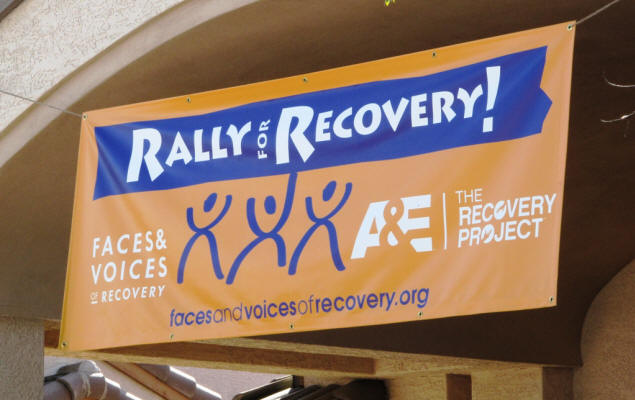
The Recovery Walk thus serves two purposes: One, to give passersby
another view of the addict than our culture provides. And, two, to
provide encouragement to addicts who are not in recovery,
to let them know that recovery is not only possible, but far more
fun than being a slave to one's addiction.
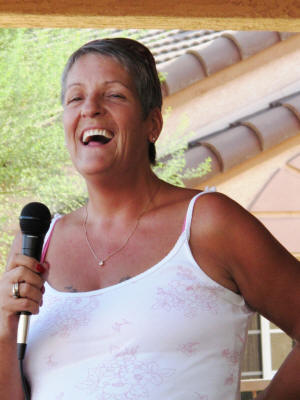
The face of the woman to the right, Stacy Schaeffer, who spoke of her battle
for sobriety, is a good indicator of how happy a person in recovery can be.
Interestingly, Stacy did not dwell on her blackest experiences. Often people
who are just beginning their recovery process do. That's understandable, because
part of that process is coming to understand themselves and the effects of their
behavior on those who love them. Addictive behavior can be dreadful, and the
effects can be long-lasting. Meth users often lose their teeth. Alcoholics often
lose their families. Any addict can lose his or her life. As can any of us; but
the clouded judgment of an addict often leads to life-shortening choices.
All these folks are lucky to be living now, when the problems of addiction
are not hidden like they were when I was a kid. I remember my grandmother
pressuring my mother-in-law to have a second Scotch. "A bird can't fly on one
wing!" she'd chortle. Once, when I was tired enough to know that a drink would
put me to sleep, Gramma got quite cross because I wouldn't drink with her.
Nowadays, so many people don't drink or use drugs from choice or because they
are in recovery, that choosing not to imbibe usually doesn't raise a single
eyebrow. That, plus the availability of a wide variety of successful recovery
programs, make the chances of a successful recovery a lot more likely than they
once were.
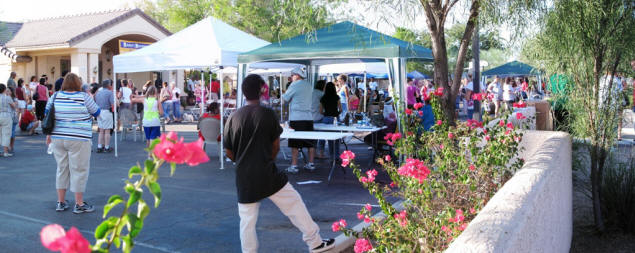
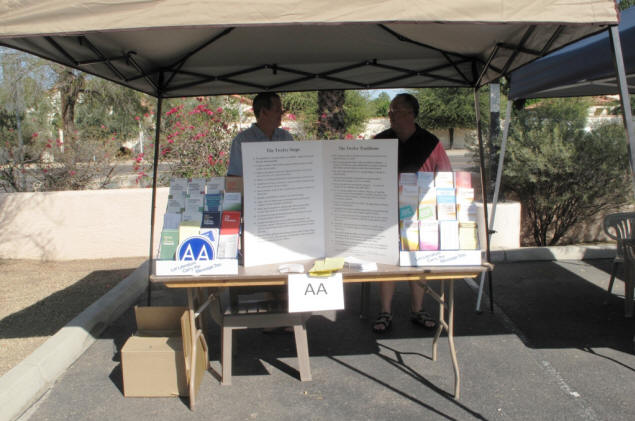
Many of these organizations and programs were represented at today's
event; canopies and tables were set up where visitors and
participants could ask questions or offer to volunteer.
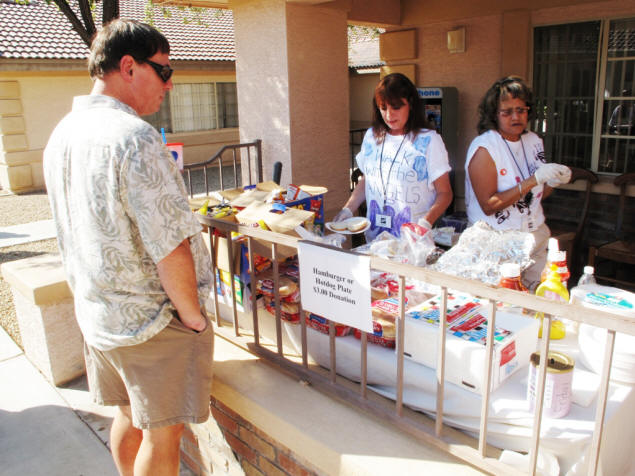
As in previous years, hamburgers and hot dogs were grilled and sold
for a modest donation.
And then awards were handed out, mostly by founder Patty but also
one was delivered to Patty, by my daughter Jenny, who always
handles the microphone with the polished poise of a pro and who
always amazes me when she does. You'd think I'd be used to it by
now, but it's hard to remember she's no longer my "little girl".
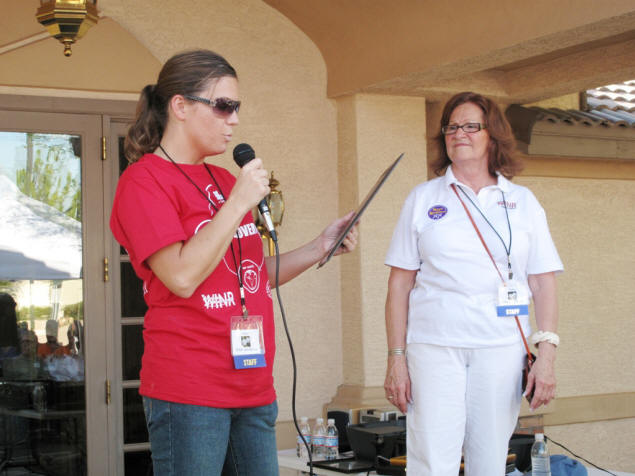
My youngest daughter, Jenny, encountered her addiction early but her
mother and I didn't recognize it. And so she went through years that
she should have spent learning to live in society, not
learning how to do that. In her late twenties she was still
addicted, still prone to disastrous decisions, still committing
crimes and putting herself and her baby boy in danger.
People in recovery have a saying, that you have to hit "rock bottom" before
being ready for recovery. Of course, for each person, "rock bottom" has a
different meaning. For her, it was a stretch of time in prison, during which we
had the privilege of caring for our grandson.
She'd been in jail before. But this time, she went directly into the program
at WINR and this one worked. It's an intense, peer-counseled program with a high
rate of success that teaches the women in it, not only to manage their
addictions, but to live life successfully when they've done that. They learn how
to get and keep a job; how to organize themselves; and how to live and work
cooperatively with others.
In Jenny, the result is something she has every right to be proud of. Each
year when I attend these things, and watch her managing, instructing, organizing
and doing it all with grace and humor, it's all I can do to not embarrass her
with tears of joy.
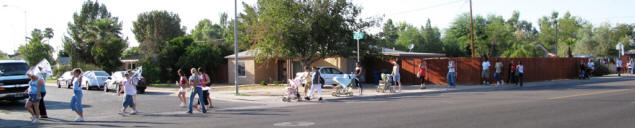
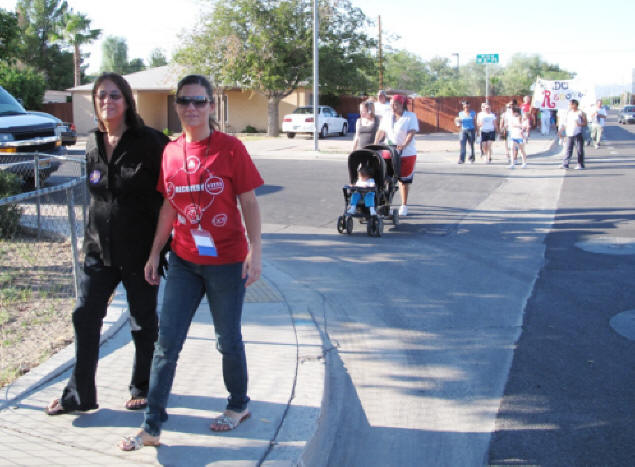
So then the actual walk got going. Each group (and house from WINR)
had their own home-made banner. Passersby got to see the "faces of
recovery" which is what the event was about. Normal people, folks
with kids, teens, grandparents, men, women, blacks, whites, Natives,
Asians…any kind of person you can imagine, was there.
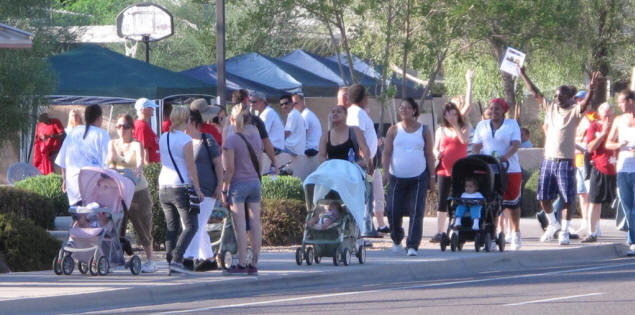
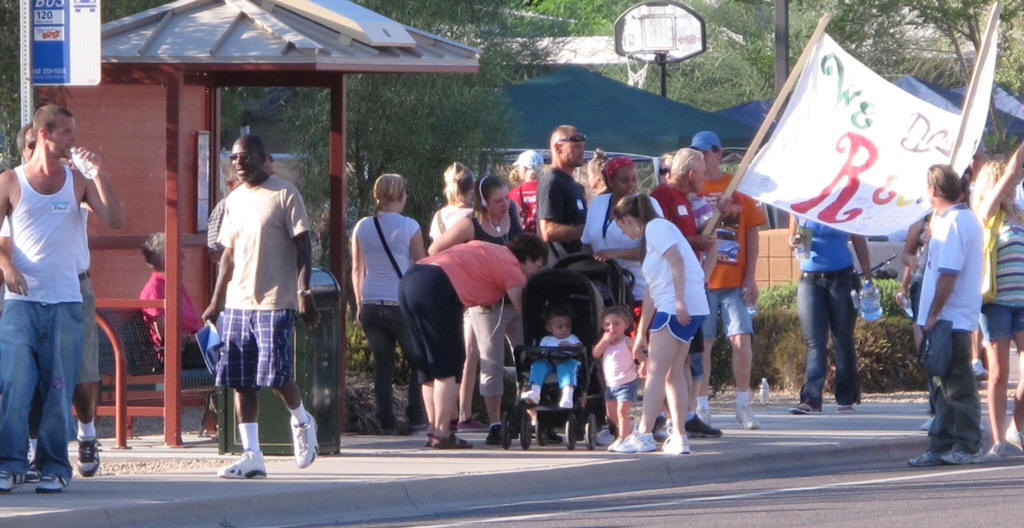
Because the "faces of recovery" are ours. ANYONE can be an
addict.
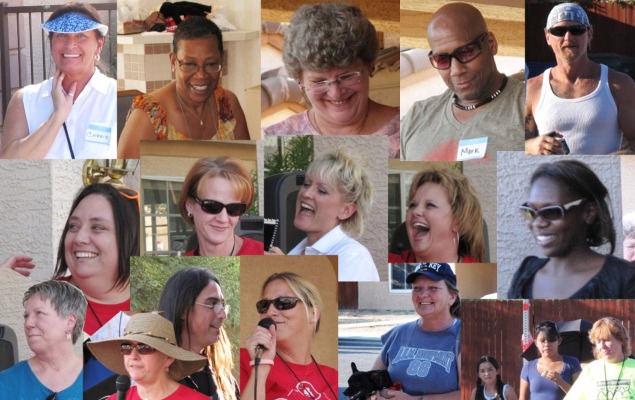
And any addict can be in recovery.