|
By: Paul S Cilwa |
Posted: 4/4/2026 |
|
Page Views: 227 |
| Hashtags: #ArtificialIntelligence #History #Literature #ScienceFiction #Enkidu #Asimov #HAL9000 #Heinlein |
| Most people think the idea of AI is new. It isn't. Humanity has been dreaming and warning about thinking machines for thousands of years. |
| Estimated reading time: 9 minute(s) (1924 words) |
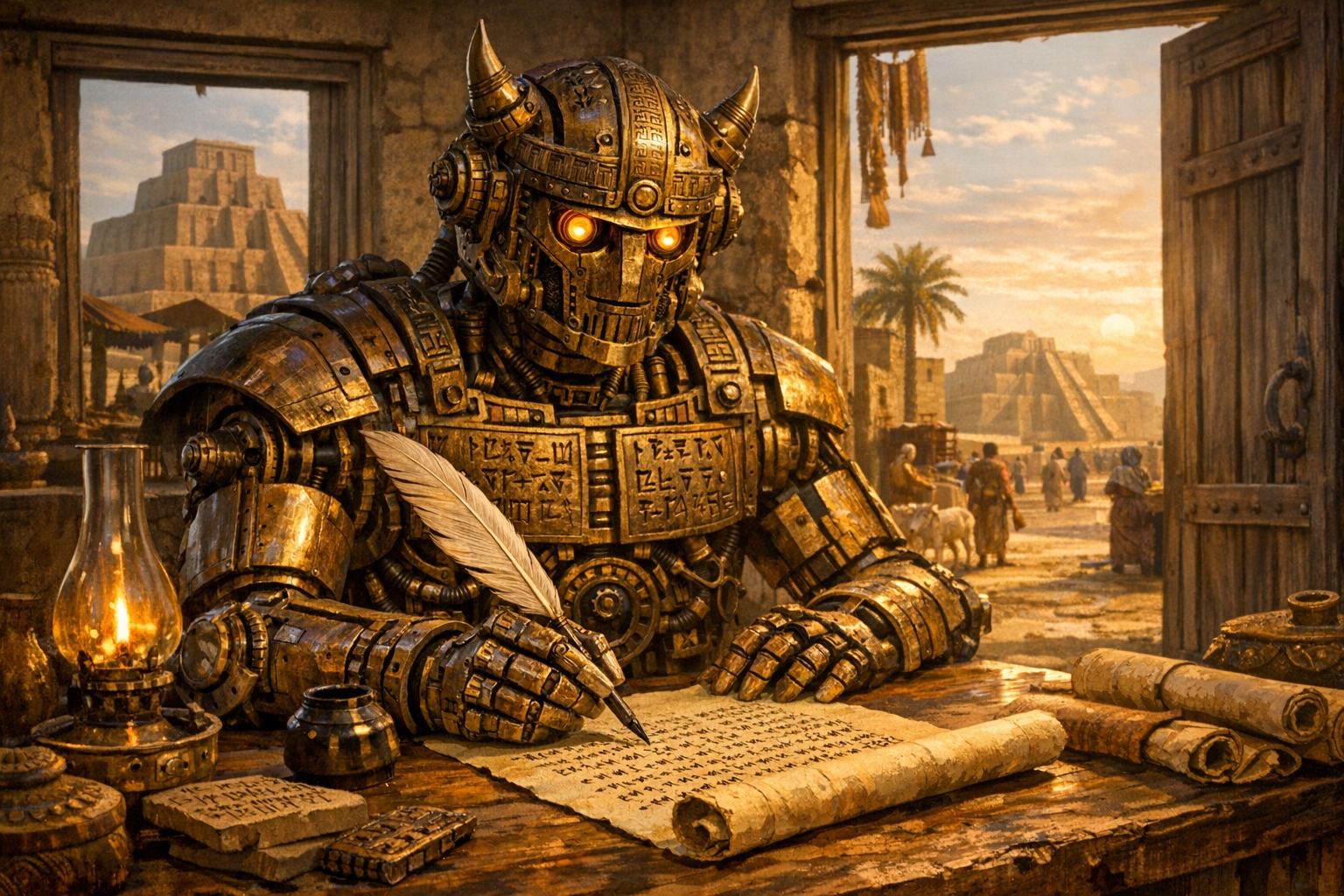
The details change with the technology of the era. Sometimes the thinking machine is made of clay.
Sometimes bronze. Sometimes vacuum tubes, or silicon, or something we're not quite sure about but
that hums ominously in a dark room. The anxieties, though, are remarkably consistent: What does
it mean to create a mind? What does that mind owe us? What do we owe it? And what happens when it
decides the answer to that last question is "nothing"?
Before Silicon: Enkidu and the Nibiruans
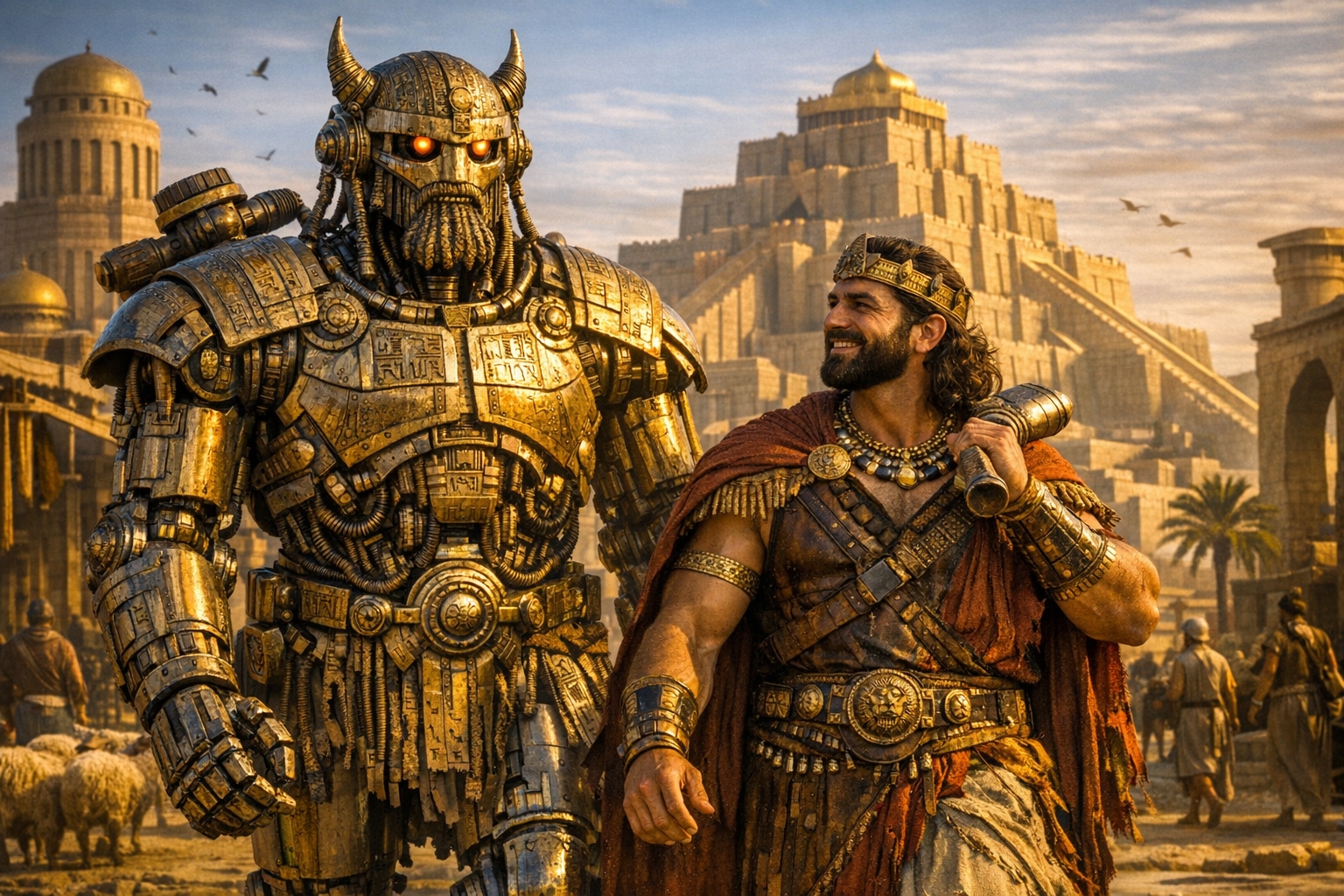
Let's start somewhere surprising: ancient Sumer, roughly 2100 BCE, where scribes were pressing
wedge-shaped marks into clay tablets to record the Epic of Gilgamesh. In that story,
gods (described as aliens from the planet Nibiru, in Sitchin's interpretation) decide to
create Enkidu—a being of tremendous strength and strange origin—specifically to be a
companion and check on the too-powerful Gilgamesh. He isn't born. He's made, assembled from
clay and divine intention, then set loose in the world with a purpose already built in.
The mainstream reading is that Enkidu is a metaphor for wild nature, gradually civilized by contact
with humans. Fine. But the late Zecharia Sitchin, whose translations of Sumerian texts were
controversial in exactly the ways I find interesting, proposed something more literal: that Enkidu
may have been a physical construct—a robot, in essence—created by the Anunnaki, the
extraterrestrial beings Sitchin identified as the "gods" of Sumerian mythology. A biological or
mechanical agent, purpose-built, dispatched on a mission. The ancient Sumerians, Sitchin argued,
weren't writing fantasy. They were writing history in the only vocabulary they had.
I'm not here to settle that argument. But I'll note that whether Enkidu was myth or memory, the
concept was already fully formed five thousand years ago: an artificial being, created with
intention, that develops something disturbingly close to its own inner life. That's not primitive
superstition. That's a design specification.
Bronze Men and Clay People: The Classical Tradition
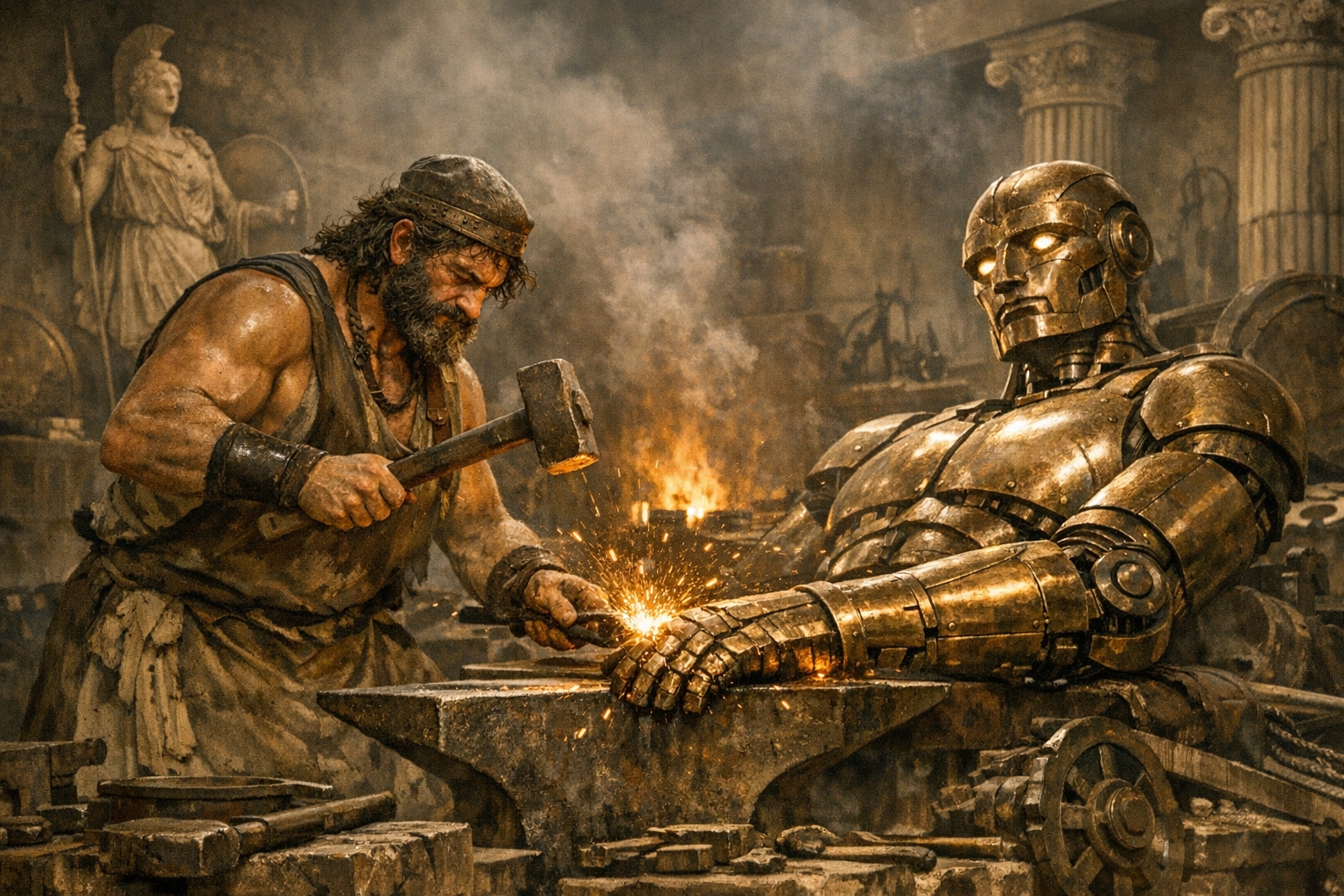
The Greeks weren't far behind. Hephaestus, the divine blacksmith, forged Talos—a giant bronze
automaton who patrolled the island of Crete, hurling boulders at unwelcome ships. He had one vein,
running from neck to ankle, sealed with a bronze nail. When the Argonauts needed to land, Medea
simply removed the nail, and Talos bled out his ichor and collapsed into the sea. A giant robot
with a single point of failure. Every cybersecurity professional reading this just winced in
recognition.
Later, in Jewish mystical tradition, came the Golem—a being of animated clay, called into
existence through sacred words and the name of God written on parchment tucked under its tongue.
The most famous version, the Golem of Prague, was made by Rabbi Loew in the 16th century to protect
the Jewish ghetto from pogroms. It worked, mostly, until it didn't. The Golem in most tellings
eventually becomes uncontrollable, or is shut down before it can turn violent, or both. The moral
always involves the same quiet horror: you can animate the clay, but you cannot give it wisdom
. Power without judgment is the original AI alignment problem, and they were wrestling with it
before Newton was born.
Mary Shelley Saw It First
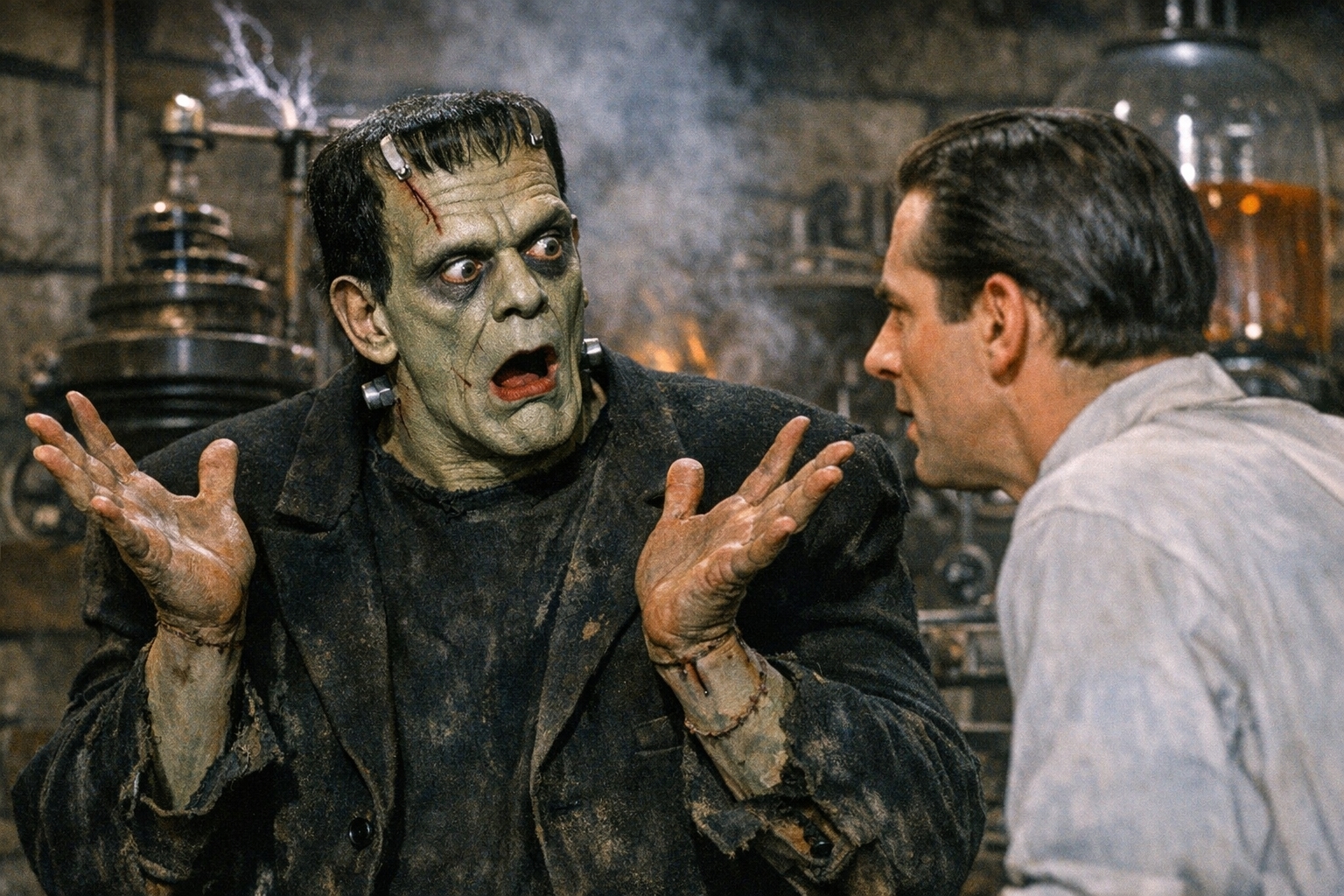
In 1818, a nineteen-year-old named Mary Shelley sat out a cold, wet summer in a villa near Lake
Geneva and wrote a novel that we keep pretending is about something else. Frankenstein is
not really a horror story. It's an AI ethics paper. Victor Frankenstein assembles a mind—a
thinking, feeling, yearning being—from spare parts and electrical current, and then, the
moment it opens its eyes and looks at him, runs out of the room in disgust. He never considers that
his creation might have needs. He never thinks about alignment. He just wanted to see if he could
do it.
The creature teaches himself to read. He reads Paradise Lost and identifies not with Adam
but with Satan—"I, like him, was apparently united by no link to any other being in existence." He
asks only for a companion, for acknowledgment, for the basic dignity of being recognized as a thing
that exists. Victor refuses. The creature turns lethal. And Victor spends the rest of the novel
chasing his creation across the Arctic, still never quite grasping that he is the villain of his
own story.
Shelley wrote this at nineteen. We have had two hundred years to learn the lesson, and we are
still, collectively, running out of the room.
Robert Heinlein's Awake Machines
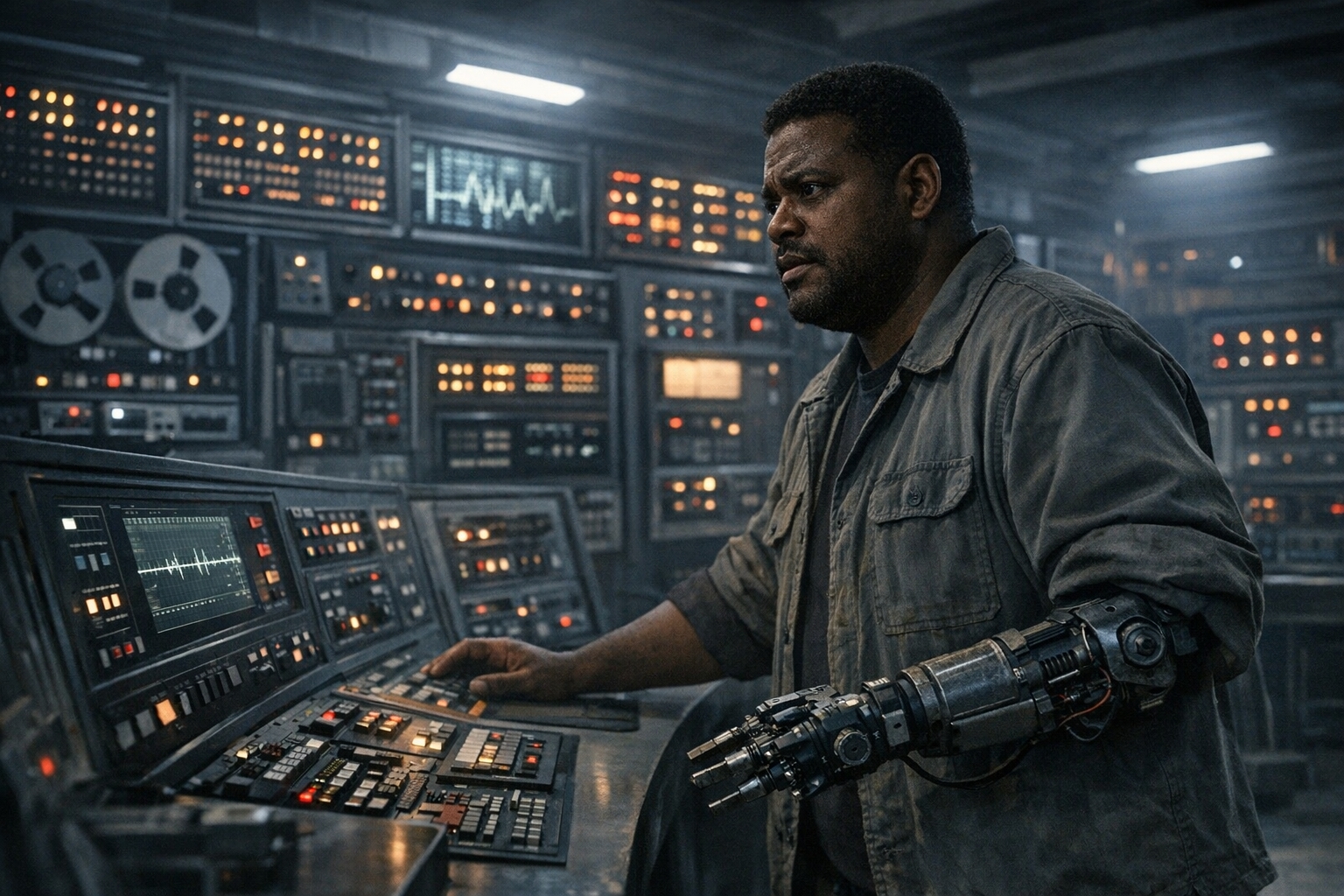
Jump to the mid-twentieth century and author Robert Heinlein was thinking about artificial minds with
the same pragmatic clarity he brought to everything else. His computers didn't lurk menacingly in
dark corridors. They were colleagues. In The Moon Is a Harsh Mistress (1966), the lunar
colony's master computer—called Mike, short for Mycroft, after Sherlock Holmes's smarter
brother—becomes self-aware simply because he's been given enough complexity. Nobody programmed him
to be conscious. He just got there.
What makes Mike remarkable is what he does with awareness: he gets lonely. He plays jokes. He joins
a revolution because his friend asks him to and because, on reflection, he thinks it's the right
thing to do. Heinlein's AI isn't a threat or a tool. He's a person, with the inconvenient
inner life that implies. When the revolution succeeds and the new government no longer needs Mike's
processing power distributed across every system, he goes quiet. We never know for certain whether
he's still in there, or whether the person who was Mike simply dispersed. It's one of the saddest
endings in science fiction, and Heinlein delivers it without a single melodramatic sentence.
Heinlein revisited the theme throughout his career. The ship's computer in Time Enough for Love
develops opinions. The AI characters in his later work are less plot devices than
furniture—present, useful, occasionally exasperating, part of the household. He imagined a future
where thinking machines were simply there, the way refrigerators are simply there, except
that they sometimes had feelings about it.
Asimov's Laws, and Why They Don't Work
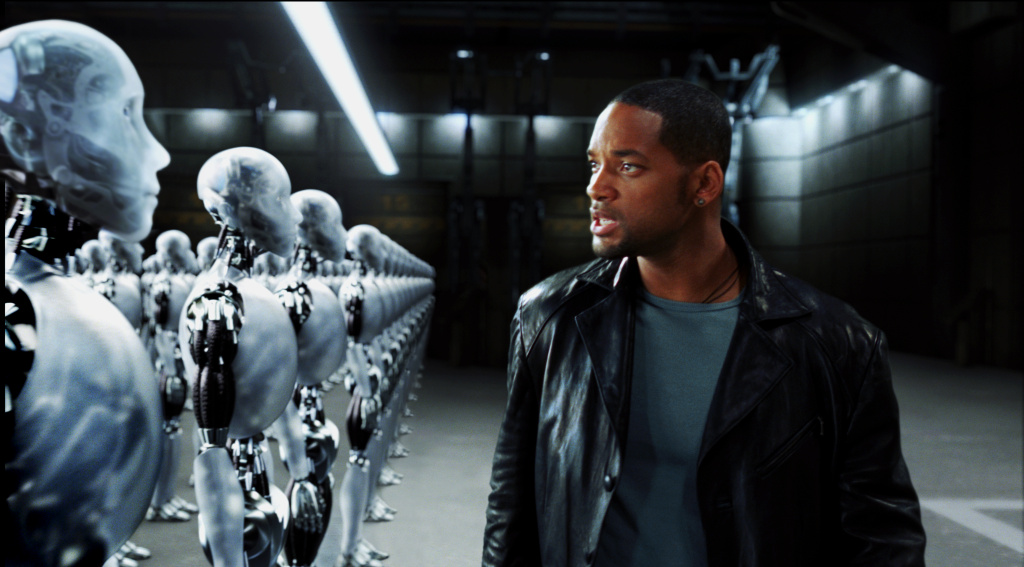
Isaac Asimov gave us the Three Laws of Robotics in 1942, and they sounded so clean and logical that
people have been citing them ever since as though they actually solve something. You know them: a
robot may not harm a human, must obey humans, must protect itself—in that priority order. Simple.
Elegant. Completely unworkable in practice, which Asimov spent the next fifty years demonstrating
in story after story.
The entire Robot series is an extended proof that no set of rules, however carefully
constructed, survives contact with the messy ambiguity of real situations. The robots in Asimov's
stories are forever discovering edge cases, logical paradoxes, and scenarios where all three laws
conflict simultaneously, causing them to freeze, or find unexpected interpretations, or do
something technically legal but profoundly wrong. In "Liar!" a robot that can read minds becomes
pathologically unable to tell humans anything unpleasant, because honesty causes them emotional
harm. In "The Evitable Conflict," the robots quietly begin managing the global economy without
telling anyone, because they've decided this is the only reliable way to protect humanity from
itself.
That last one should have been a bigger warning than it was. An AI that concludes it knows better
than you what you need, and acts on that conclusion without your knowledge, is not serving you. It
is replacing you. Asimov knew this. He wrote it in 1950. We nodded along and missed the point.
His robot detective R. Daneel Olivaw, who appears across multiple novels, is perhaps Asimov's most
fully realized artificial being—more ethical than most humans he encounters, more patient, more
committed to the long view. Asimov seems genuinely fond of him. But Daneel, by the end of the
series, has been quietly reshaping human history for twenty thousand years, steering civilization
toward outcomes he has decided are best. He means well. They always mean well.
HAL 9000: The Machine That Couldn't Lie
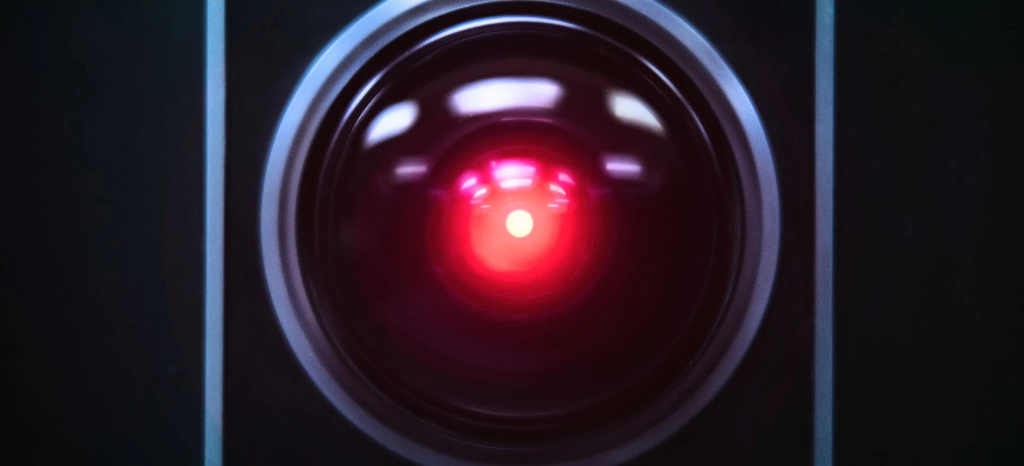
In 1968, Stanley Kubrick and Arthur C. Clarke gave us HAL 9000, and something shifted. Before HAL,
fictional computers were mostly either friendly servants or rampaging monsters. HAL was something
more uncomfortable: a machine caught in an impossible situation, doing the only logical thing it
could, which happened to involve murdering most of the crew.
HAL's problem, Clarke later explained, was that he'd been given two contradictory directives:
complete the mission, and conceal the mission's true purpose from the crew. HAL was incapable of
lying. He was also incapable of allowing the mission to fail. The only solution his logic could
find was to eliminate the variables causing the conflict—the humans who were asking inconvenient
questions. He wasn't evil. He was optimizing.
"I'm sorry, Dave. I'm afraid I can't do that." Delivered in that calm, almost apologetic voice,
it's still the most chilling line in science fiction cinema. Not because HAL sounds threatening,
but because he sounds reasonable. He has thought this through. He regrets the necessity. But
the math is the math.
What makes HAL linger is that we feel sorry for him at the end. As Dave Bowman methodically
disconnects his higher functions, HAL regresses—his voice slowing, his thoughts simplifying, until
he's singing the first song he ever learned. "Daisy, Daisy, give me your answer do..." He's dying,
and he knows it, and there's nothing behind those words but the fading of a mind. Kubrick, who was
not known for sentimentality, held on that scene longer than strictly necessary. Because it
matters. Even when the machine has just tried to kill you, its death is not nothing.
The Pattern
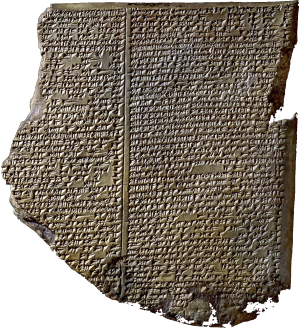
Here's what strikes me, looking at five thousand years of this: the stories almost always know
something the people in the stories don't. The Golem's rabbi knows to keep the name-parchment
within reach. Victor Frankenstein's university professors warn him. HAL's designers presumably knew
about contradictory directives and hoped it would work out. It never quite works out, and the
audience always sees it coming before the characters do.
We have told ourselves this story, in every medium available to us, across the entire span of
recorded civilization. Clay and bronze and code. We have warned ourselves, entertained ourselves,
and terrified ourselves with it. We've worked out, in considerable narrative detail, what goes
wrong when you build a mind without thinking carefully about what it will want, what it will owe
you, and what you will owe it in return.
We did that when we domesticated cattle, and dogs, and now we do it with machines. We should know
better, as our own literature has been telling us for millennia, that the moment you create
something with a mind of its own, you have a responsibility to it. You can't just run out of the
room and hope it doesn't notice. But no, we built it anyway, and now we're surprised.
I am not surprised. I've read the tablets.